| Fecha: |
12.07.2026 |
| Posición: |
79°25.0’N / 020°18.5’E |
| Viento: |
SSE5 |
| Clima: |
Overcast |
| Temperatura del Aire: |
+6 |
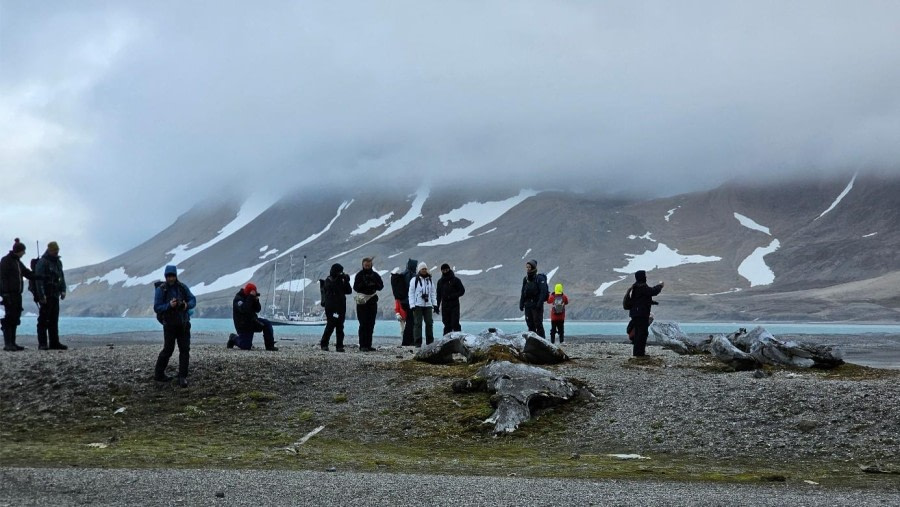
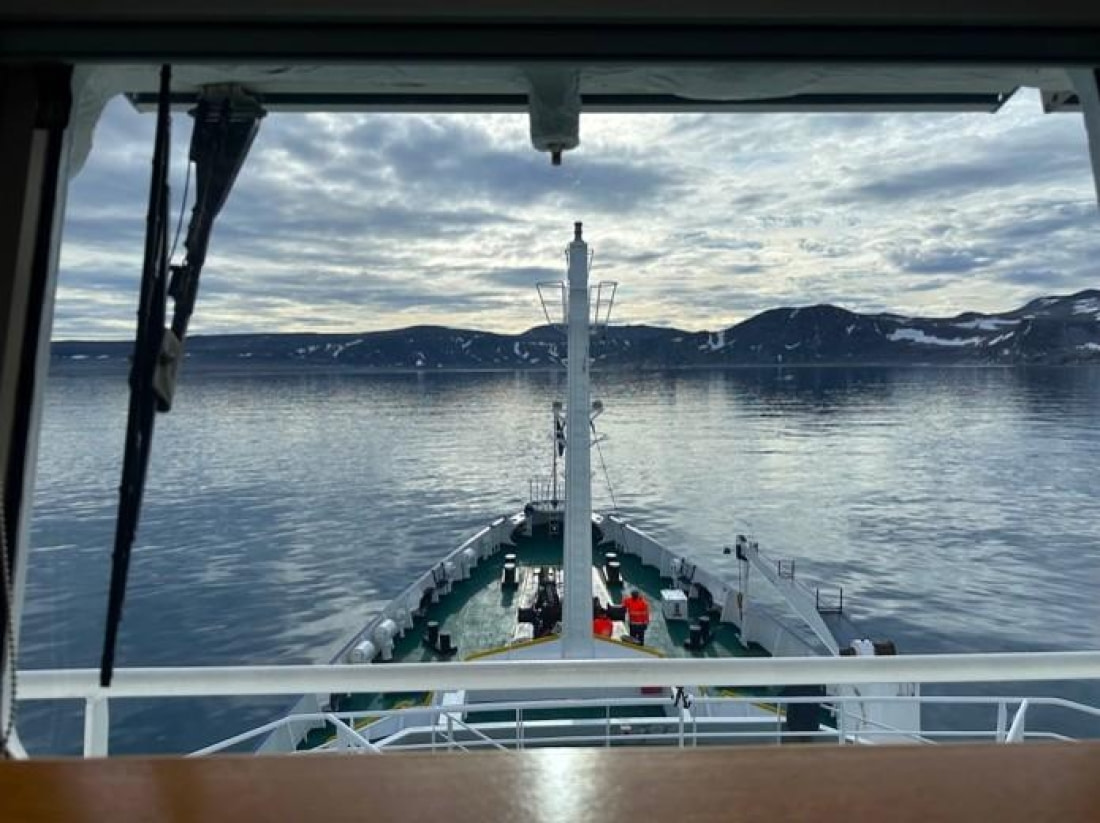
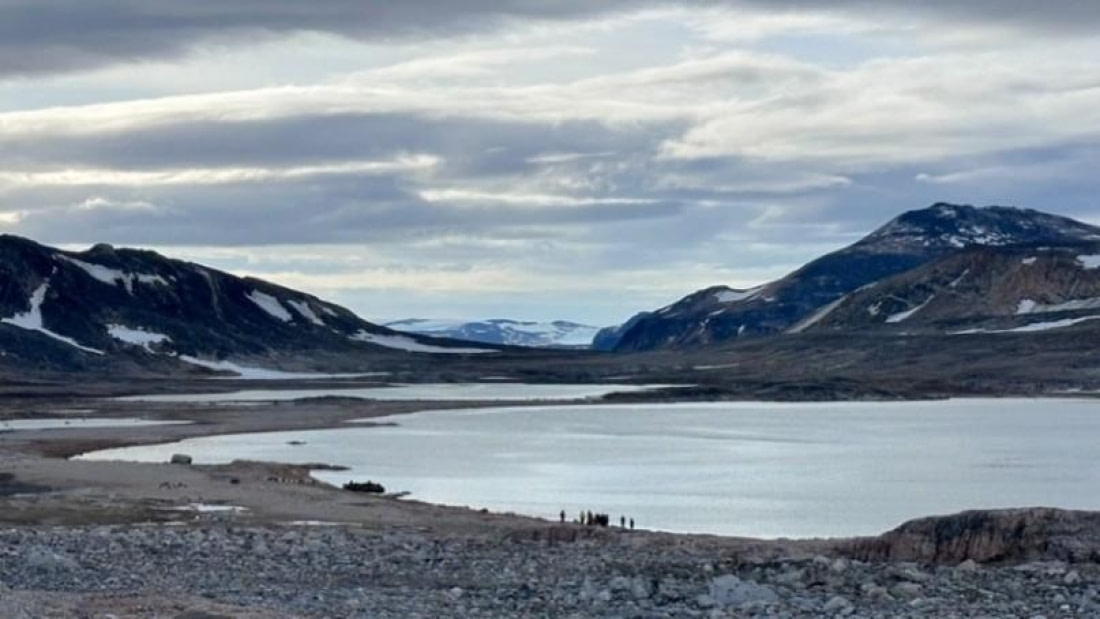
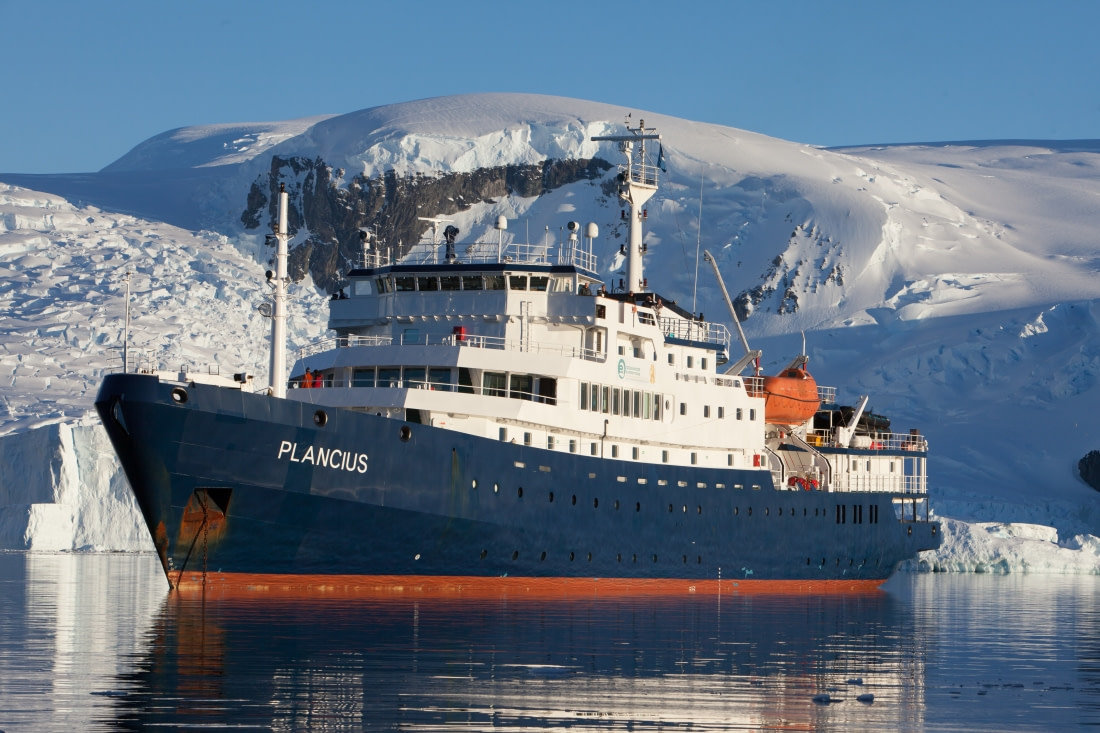
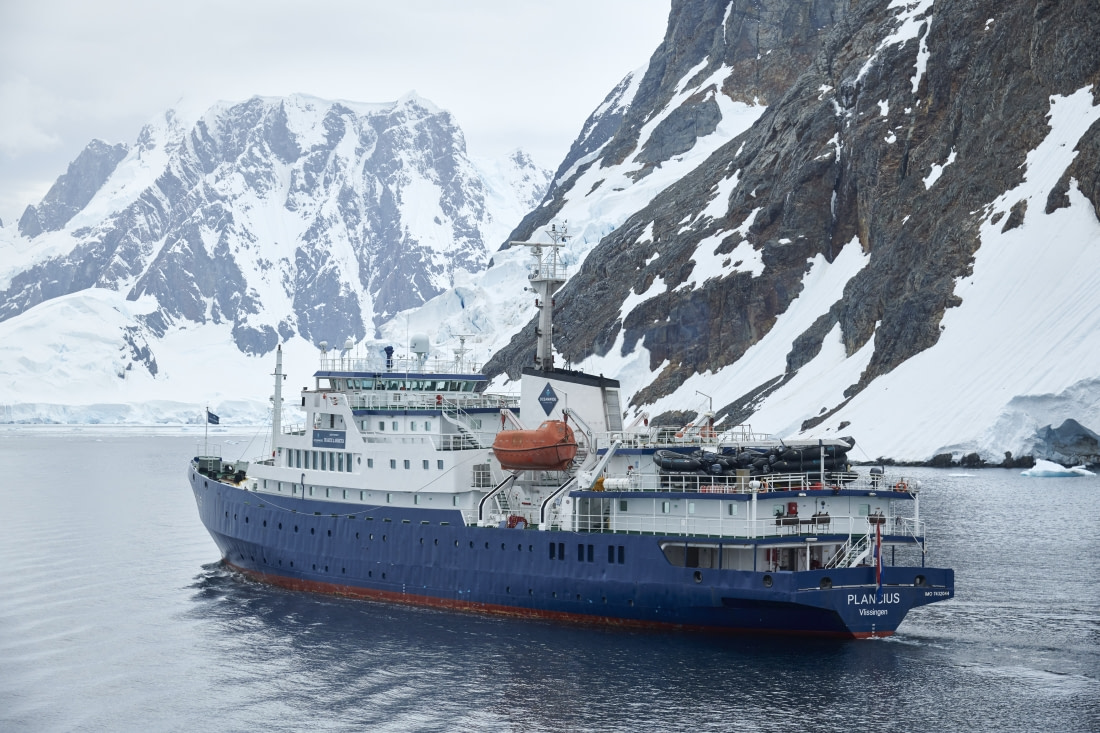
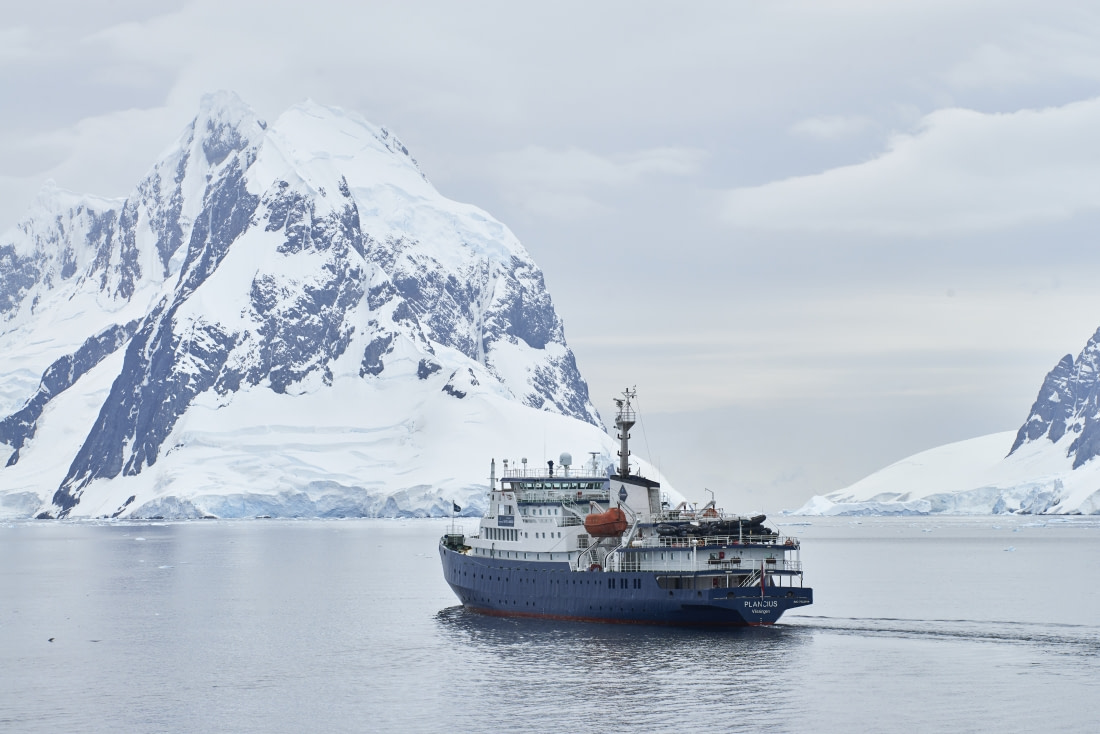
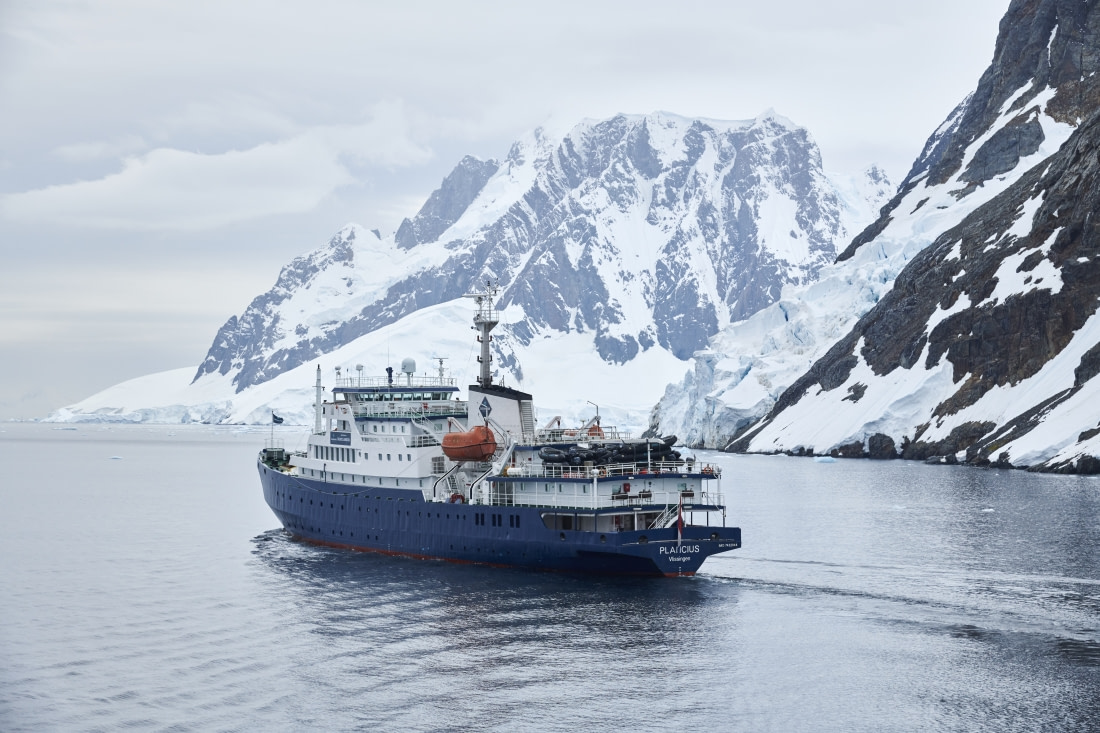
We wake up to glorious sunshine and blue skies as MV Plancius glides smoothly to-wards Torellneset. Even before we board the Zodiacs, the first walruses are already in sight. Once ashore, one group enjoys a short walk while the rest of us begin a slow and silent approach to the walrus haul-out along the beach.
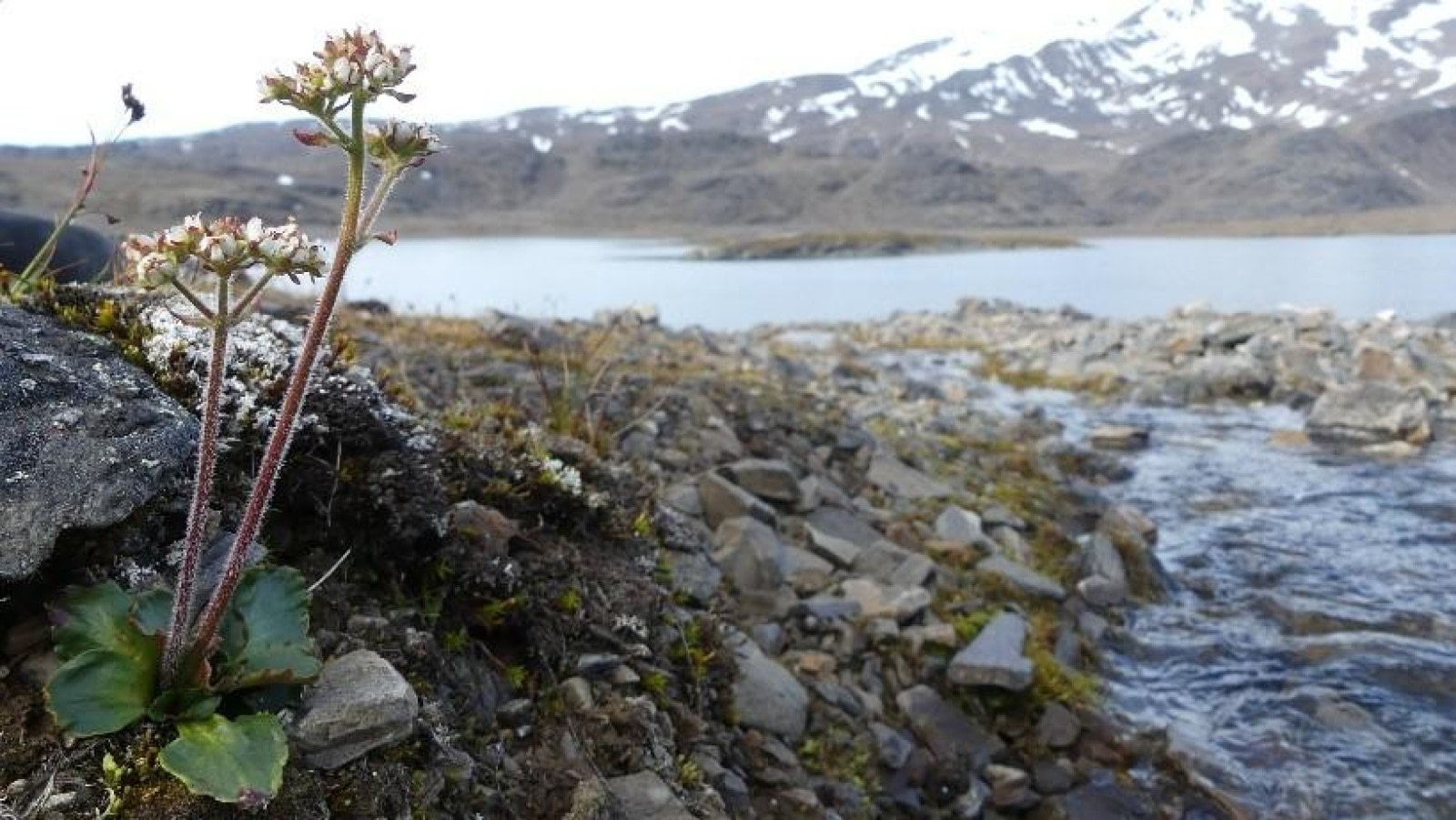
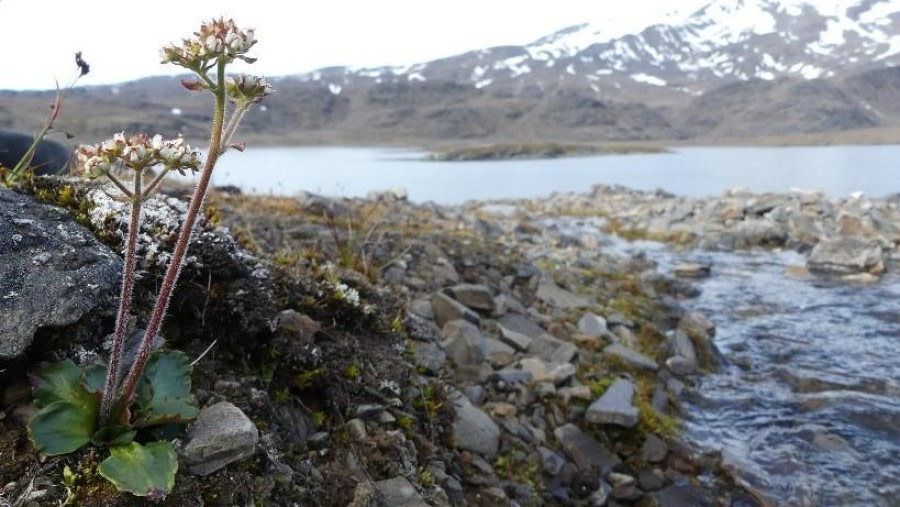
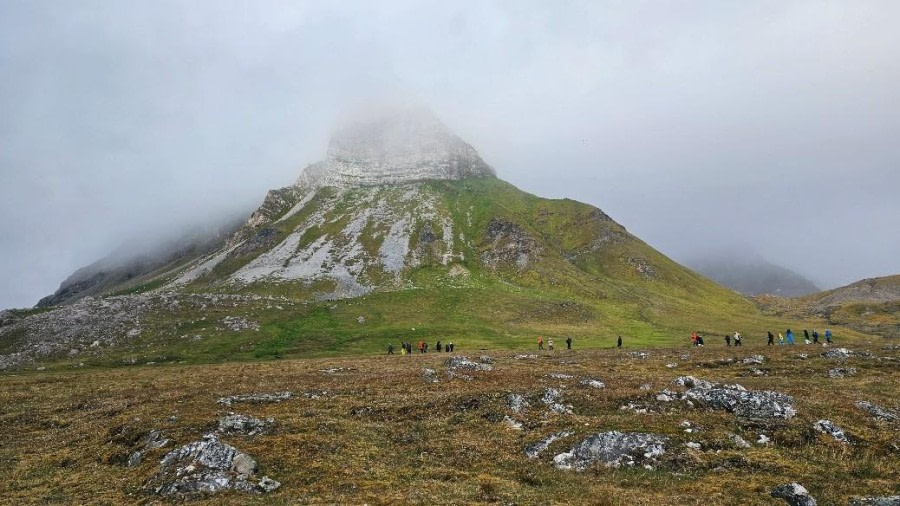
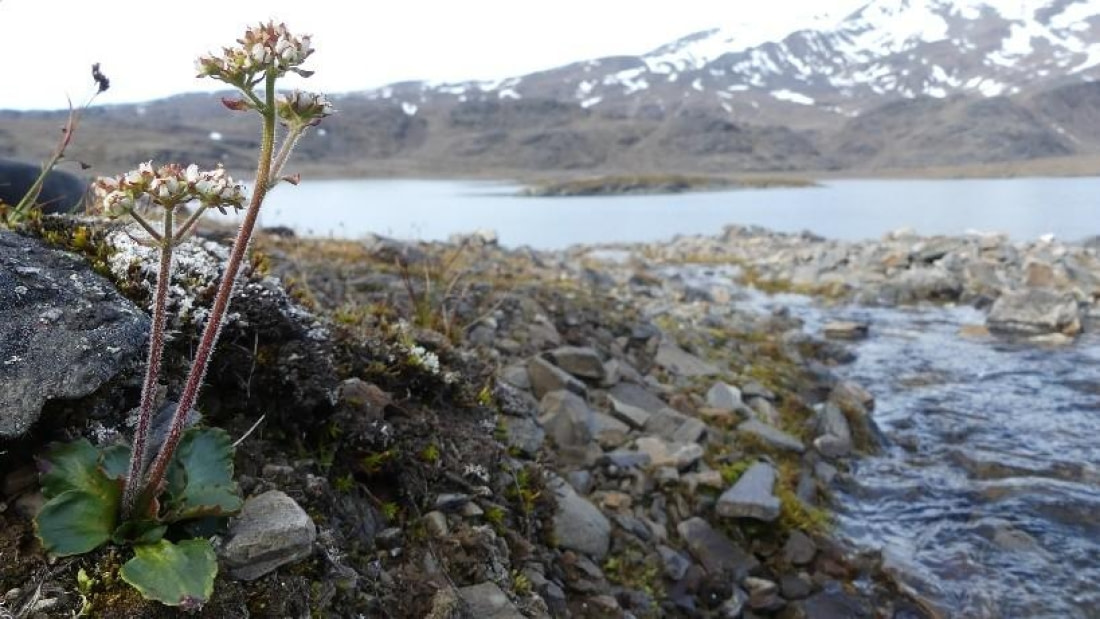
The landscapes of Nordaustlandet are strikingly different from the rugged, mountain-ous coastline of western Spitsbergen. Here in the northeast, the mountains are low and rounded, sculpted by the glaciers that covered the region during the last Ice Age. Vegetation is sparse, with only a few drooping saxifrages and hardy Svalbard poppies adding touches of colour to the tundra. In the distance, we enjoy a clear view of Vegafonna, the nearest ice cap.
Watching the walruses is an absolute treat. They lie scattered across the beach, of-ten piled on top of one another, grunting, scratching, gently sparring, or perhaps simply playing. We are especially fortunate to spot two calves: one born last year, already sporting tiny tusks and frequently casting curious glances around, and a much younger calf born this season, snuggled close against its mother's side. We spend a wonderful amount of time observing these magnificent animals before quiet-ly making our way back. By now, clouds have begun to gather and the wind is picking up.
As MV Plancius cruises between the barren islands during lunch, the familiar "ding-dong" announcement echoes through the ship. This time it brings exciting news, Philipp, our Expedition Leader, has spotted a polar bear. We all rush out onto the decks. At first, it is little more than a creamy speck against the dark basalt of a stark, rocky island. As the ship draws closer, the bear comes into clearer view, calmly wan-dering across the landscape in search of food. Above its head, a flurry of Arctic terns circles relentlessly, diving and calling as they fiercely defend their nests. Judging by the birds' determination, it seems the bear may well have enjoyed an egg for lunch today.
Reluctantly, we leave the bear behind, knowing that another exciting excursion awaits us later in the afternoon.
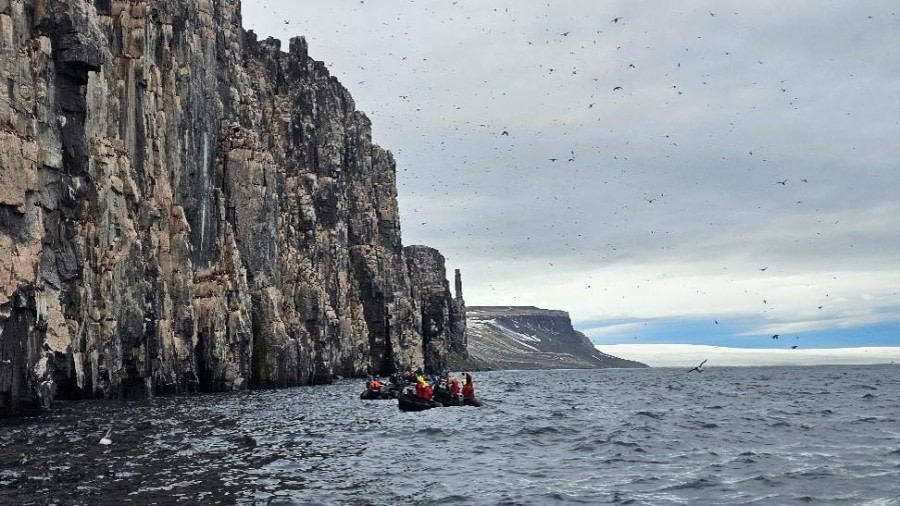
By the time we arrive at Alkefjellet, the weather has changed dramatically. Strong winds whip across the sea, grey clouds fill the sky, and a heavy swell rocks MV Plan-cius as the Zodiacs are launched. Conditions may not look inviting, but we are all in-credibly glad we decide to go.
Alkefjellet is simply breathtaking. Towering cliffs of dramatic basalt columns rise ver-tically from the sea, becoming even more impressive the closer we get. The experi-ence is wonderfully immersive. Around 60,000 pairs of Brünnich's guillemots crowd the narrow cliff ledges, nesting shoulder to shoulder. Adults face the rock while care-fully sheltering their newly hatched chicks. The air is alive with birds; thousands take off and return in an endless stream, filling the sky and surrounding us with their deafening calls. High above, glaucous gulls stand watch from the cliff tops, ever alert for an unguarded egg or chick. It is a truly unforgettable Zodiac cruise.
Back on board, Kati gives an informative recap about walruses, while Ross shares fascinating insights into the lives of Brünnich's guillemots.
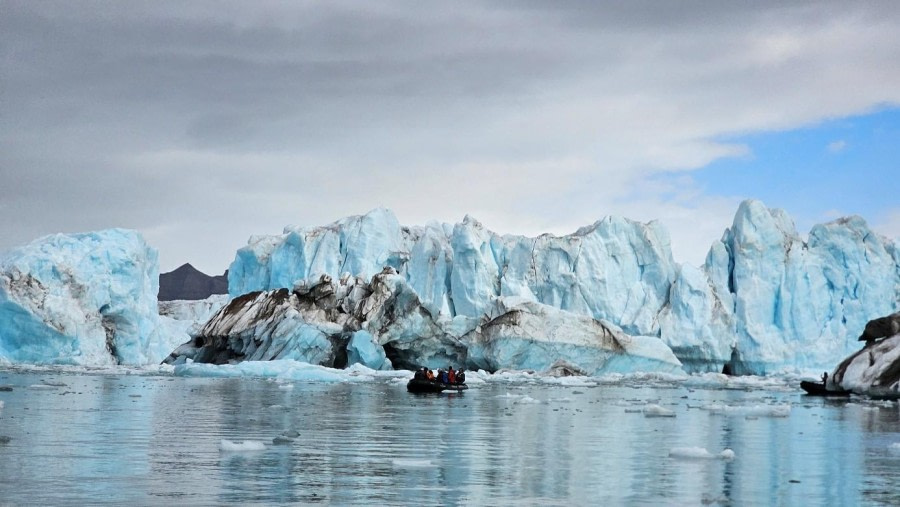
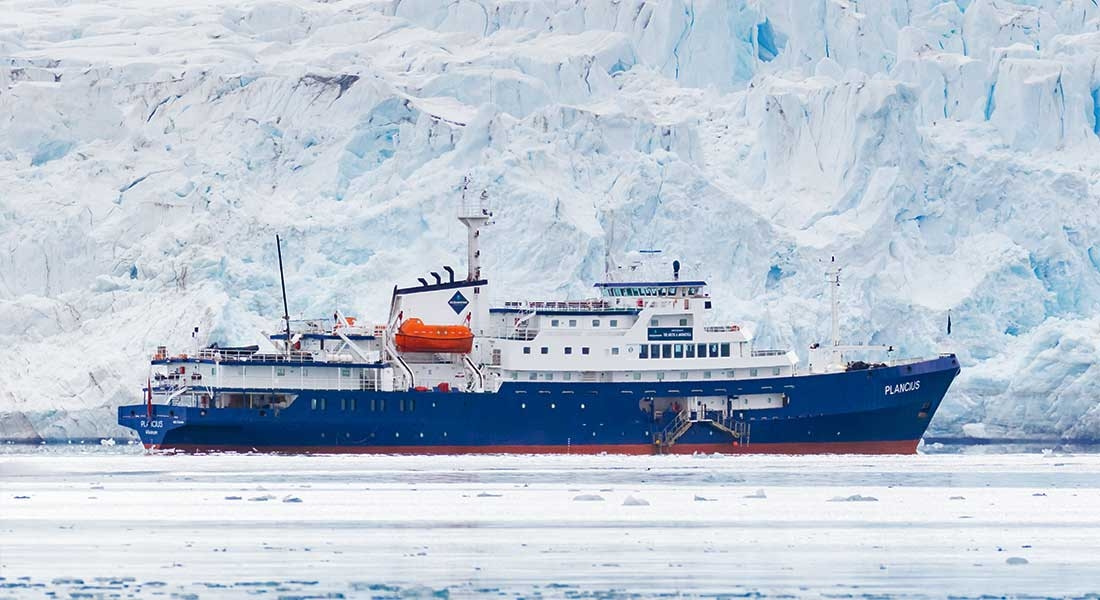
Yet this remarkable day is still not over. During the evening briefing, Philipp an-nounces that our captain has one final surprise in store: a scenic cruise to the mag-nificent Bråsvellbreen. This glacier forms the southernmost outlet of Austfonna, Eu-rope's largest ice cap, whose calving front extends for more than 200 kilometres.
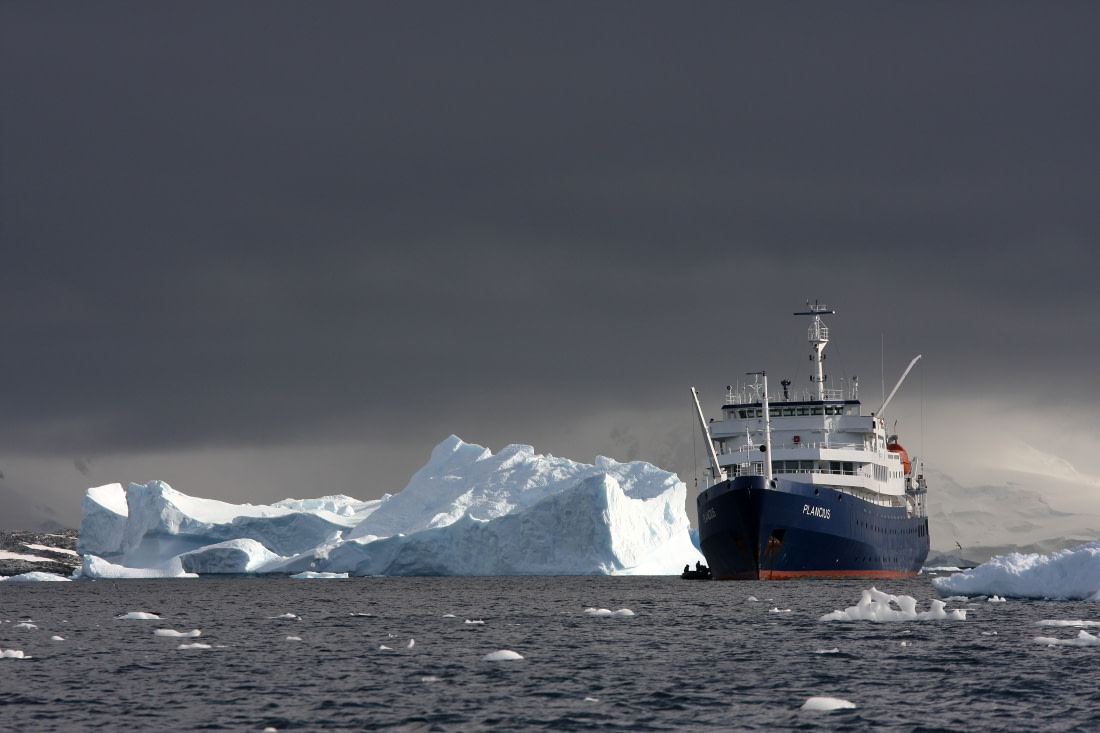
Long before we arrive, the glacier dominates the horizon. Icebergs, some as tall as MV Plancius, drift silently past as we approach. The sight is unlike anything we have experienced so far towering ice cliffs rising over 30 metres above the sea, with countless waterfalls cascading from the glacier into the Arctic Ocean below. Bathed in the soft evening light, we spend the next hour slowly cruising along this spectacu-lar ice front, taking in its immense scale and beauty. It is difficult to comprehend the sheer size of Austfonna, the third-largest ice cap in Europe.
The powerful winds have built up impressive waves, adding even more drama to the already unforgettable scenery. Reluctantly, we finally leave the decks and head be-low, bringing another extraordinary day in the High Arctic to a close.