| Fecha: |
08.07.2026 |
| Posición: |
79°24.5’N / 020°29.2’E |
| Viento: |
SE-3 |
| Clima: |
Cloudy |
| Temperatura del Aire: |
+3.2 |
The day began as usual with Adam’s friendly announcement over the PA system, sharing details on our latitude, longitude, and the outside temperature. However, things changed rapidly, reflecting, once again, the true spirit of an expedition travel.
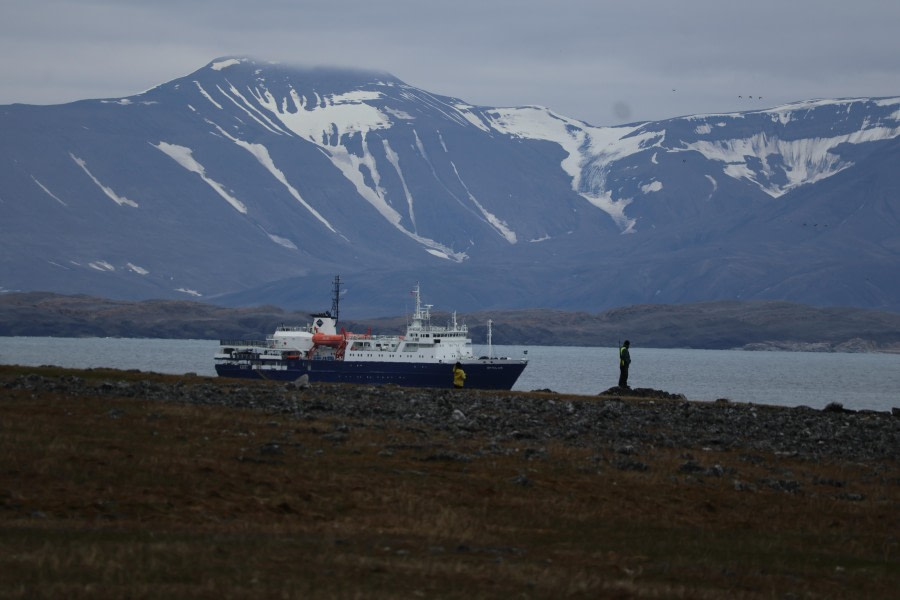
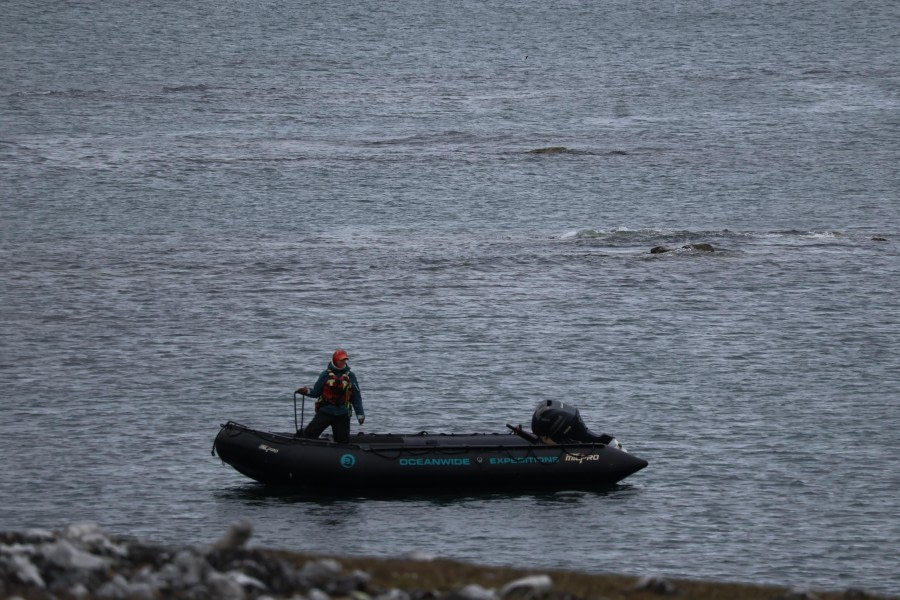
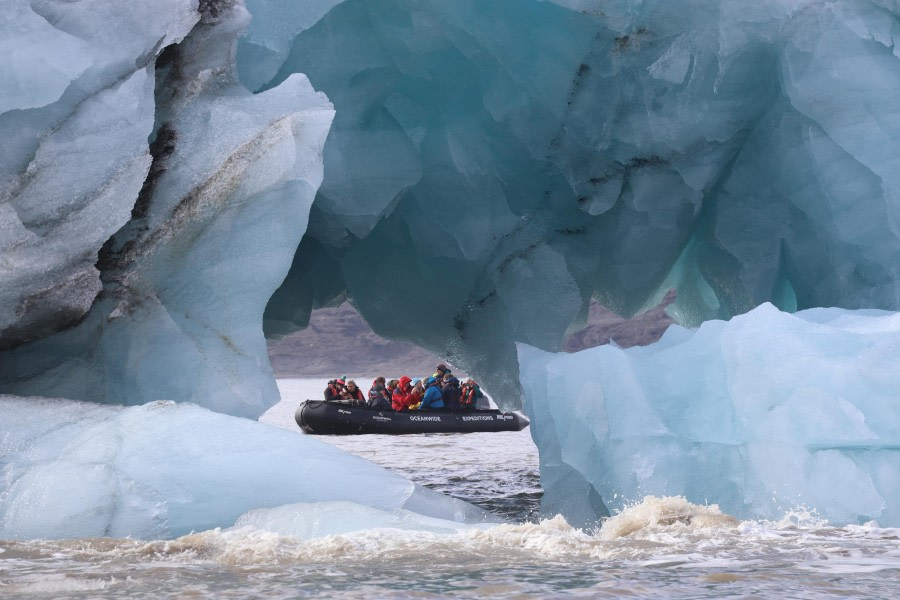
During our breakfast, the scouting team spotted a polar bear near our planned landing site, prompting an immediate switch to "Plan B": we boarded the Zodiacs and headed out onto the water. For a moment, our excitement and energy dipped; the morning fog obscured the mountain peaks, and with them, the bear, which had already wandered far enough away to slip out of sight. It was shaping up to be a disappointing morning.
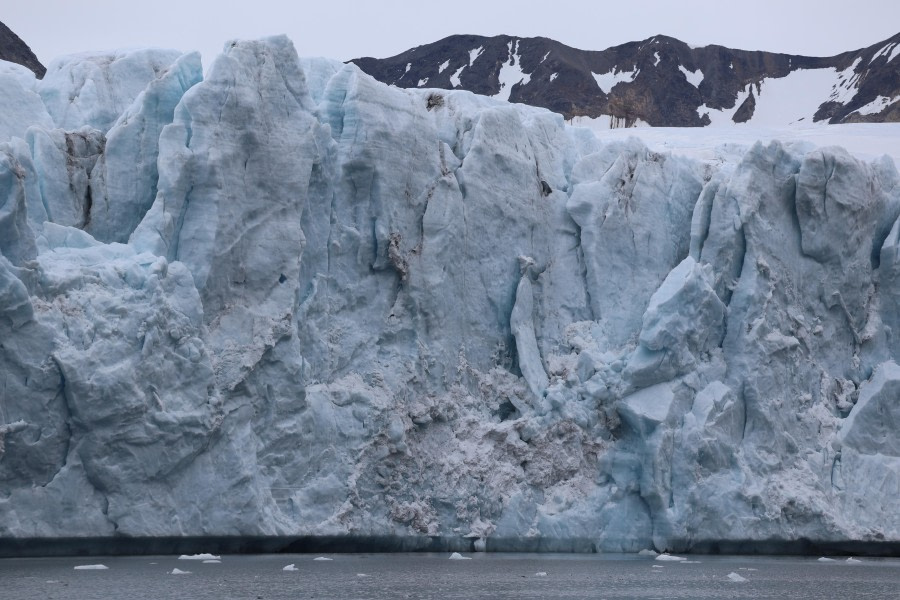
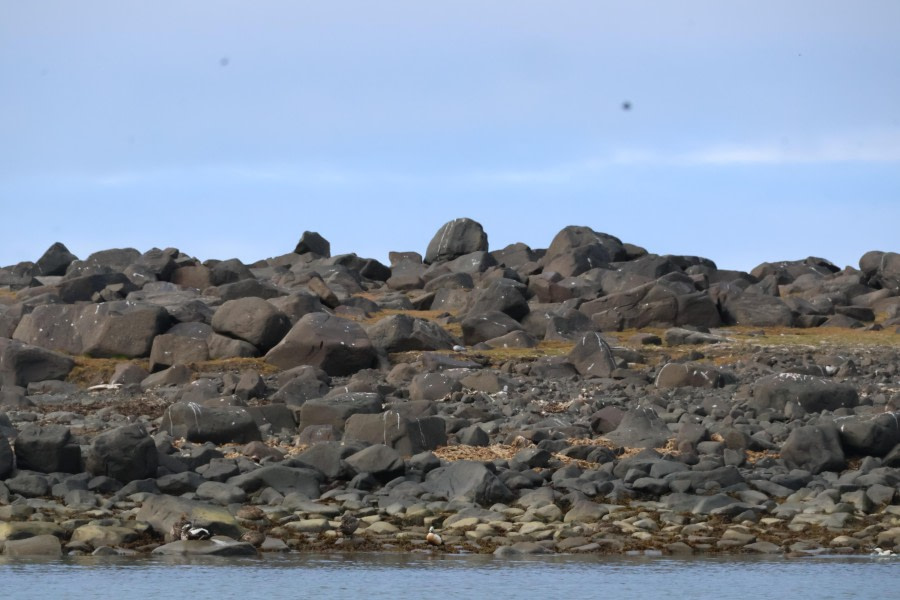
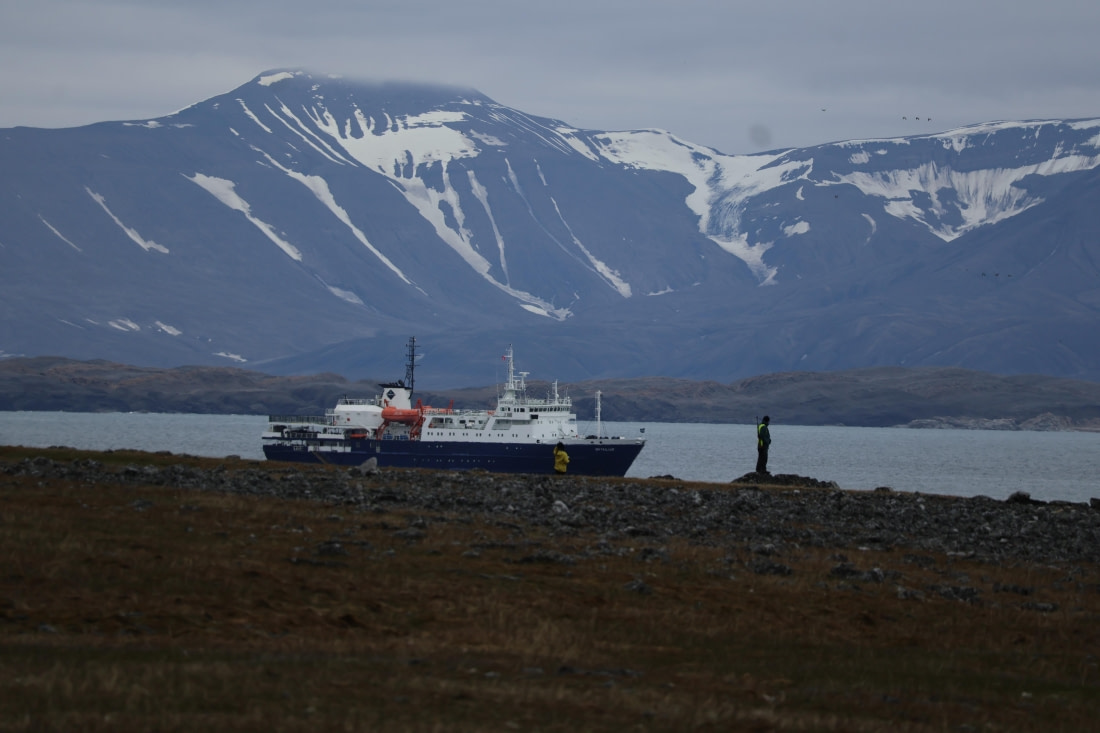
We continued by cruising West towards Torellneset, the triangular cape squeezed in between the southern end of Vegafonna, one of the four ice caps that cover Nordaustandlet. Nordaustlandet is the second-largest island in the Svalbard archipelago and is located northeast of the main island, Spitsbergen. It is dominated by ice and the polar desert with very little vegetation, but it is home to Arctic wildlife such as polar bears, walruses, reindeer, and Arctic foxes. Because of its harsh climate and untouched landscape, Nordaustlandet is an important area for scientific research and nature conservation.
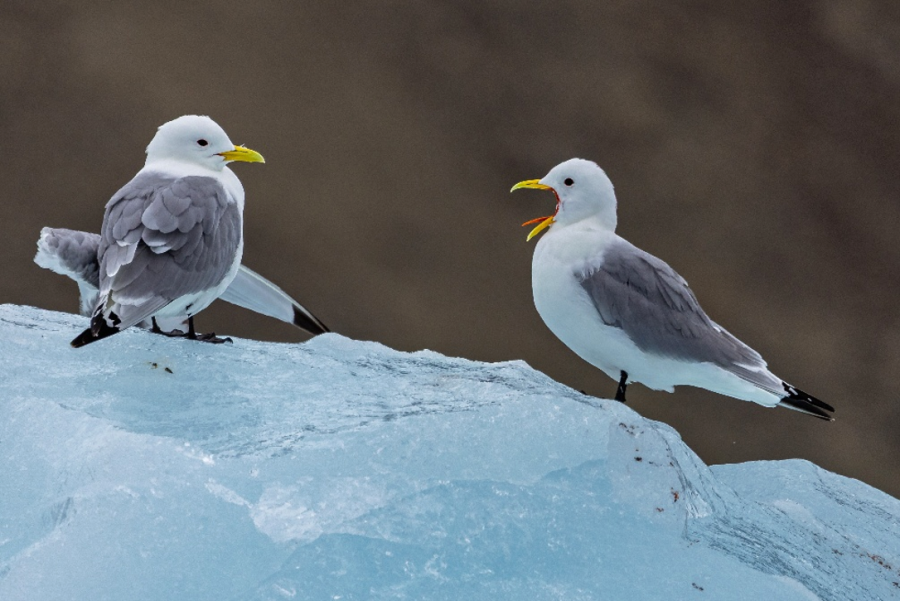
Our attention caught by a few birds, until a mother walrus and her calf suddenly appeared before us. We were able to witness the fragility of nature and see how life finds a way to thrive in such a hostile environment. Almost in sync with the walrus sighting, the warm air began to clear the mist, and a ray of gentle sunlight pierced the dense clouds, lifting the group's spirits.
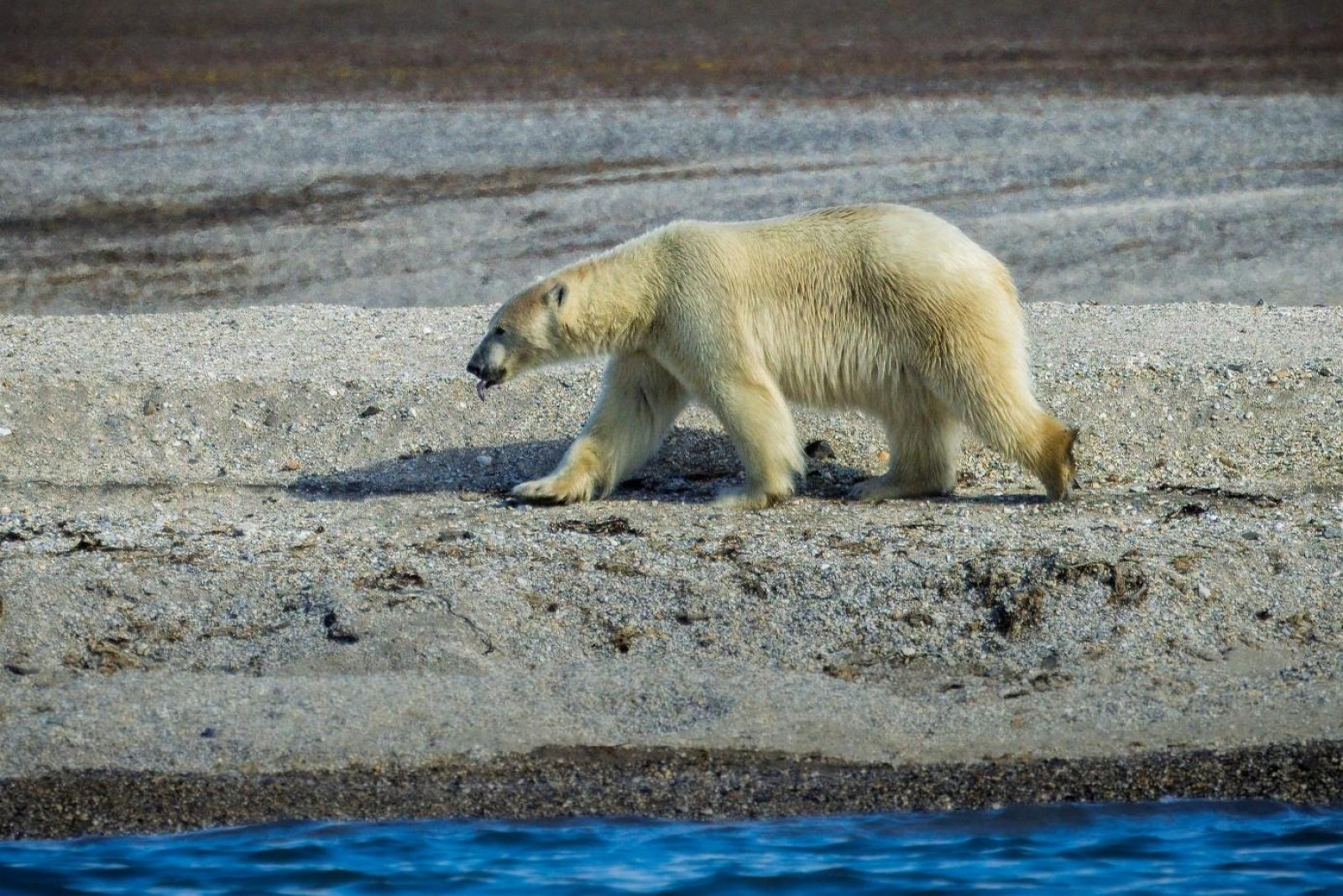
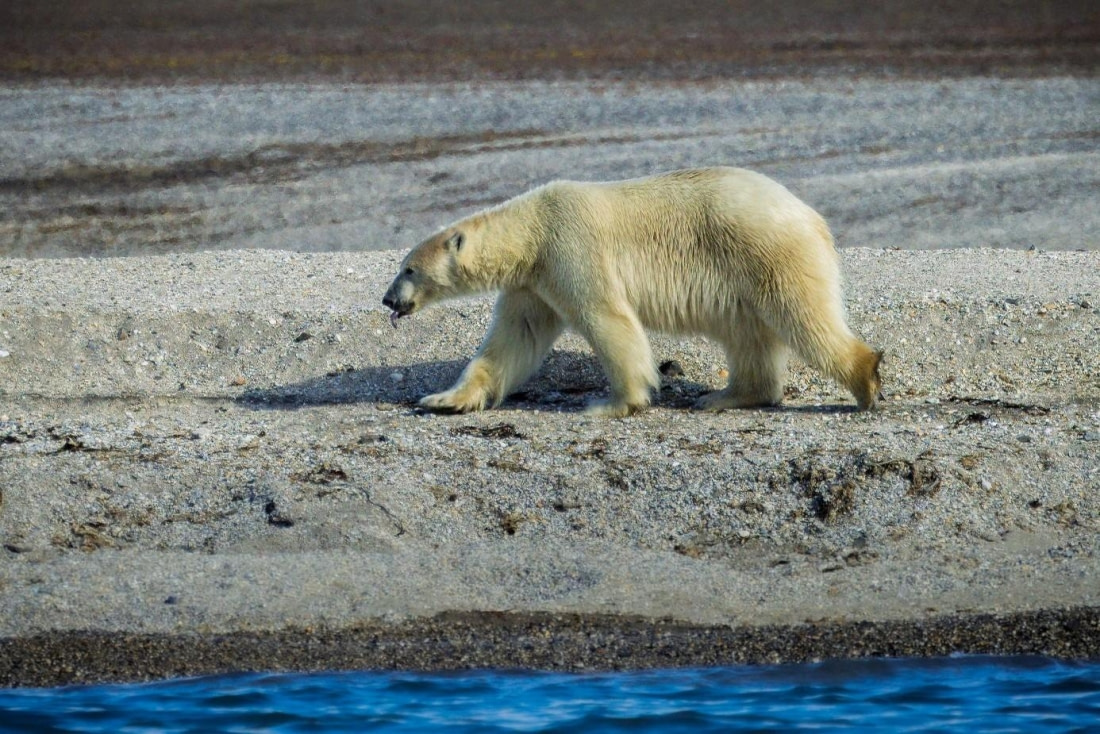
Moments later, with the sun already having worked wonders on our mood, Marco on the radio announced that the bear had been spotted nearby, making its way down the mountain toward the sea. And sure enough, we watched it descend to the coast, swimming in front of the ice cap, and finally emerging from the water to walk a few hundred meters.
Polar bears are powerful Arctic predators that spend much of their time roaming across sea ice in search of food. They mainly hunt seals, using their excellent sense of smell to locate breathing holes or resting seals on the ice. Polar bears can travel many kilometers each day and may swim long distances between ice floes when necessary. Their roaming patterns change with the seasons, following the movement of sea ice where hunting is most successful. These strategies help them find enough food to survive in the harsh Arctic environment.
What a spectacle, what a beautiful animal, so imposing yet so cute. It was a striking, emotional, and deeply moving experience, without a doubt, the best morning we’ve had so far.
After a delicious lunch and a brief rest, we arrived at our afternoon destination: a cliff teeming with birds. You could feel the energy; some guests mentioned having been there before, and bird enthusiasts recognized the site's name. We boarded the Zodiacs, ready for a cruise to spot some birds. It turned out to be so much more than that.
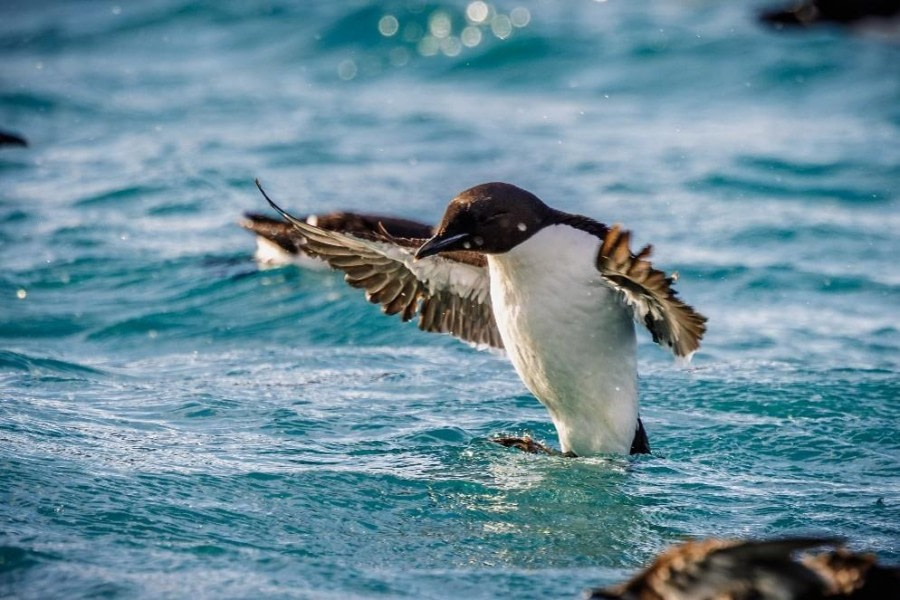
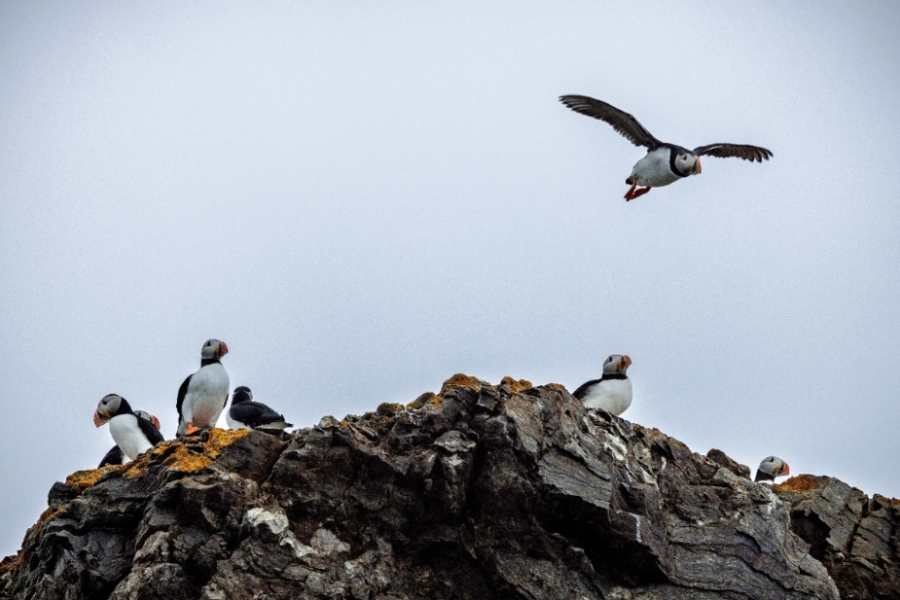
The Brünnich's guillemot is a seabird that lives in the Arctic and breeds on steep coastal cliffs in large colonies. During the breeding season, each pair lays a single egg on a narrow cliff ledge without building a nest. Both parents take turns incubating the egg and caring for the chick. After about three weeks, the young bird jumps from the cliff to the sea, where the male parent continues to protect and feed it. Brünnich's guillemots have black-and-white feathers, a pointed bill, and strong wings that help them dive deep underwater to catch fish and other small marine animals.
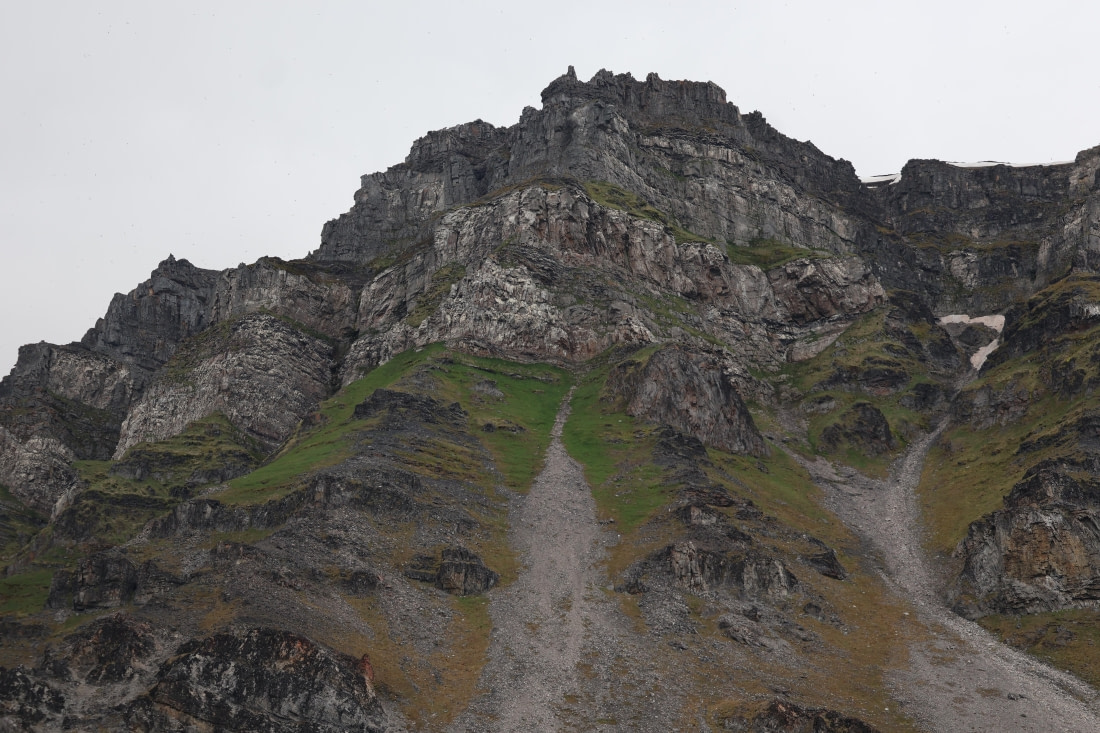
A few thousands of them soared above the towering vertical dolerite rock face, while waterfalls cascaded all around, creating a breathtaking and surreal landscape. For over two hours, we navigated along that captivating wall, moving beneath the shifting shade cast by the birds in flight. Almost as a parting gift, another polar fox delighted us with its presence near the end of the tour.
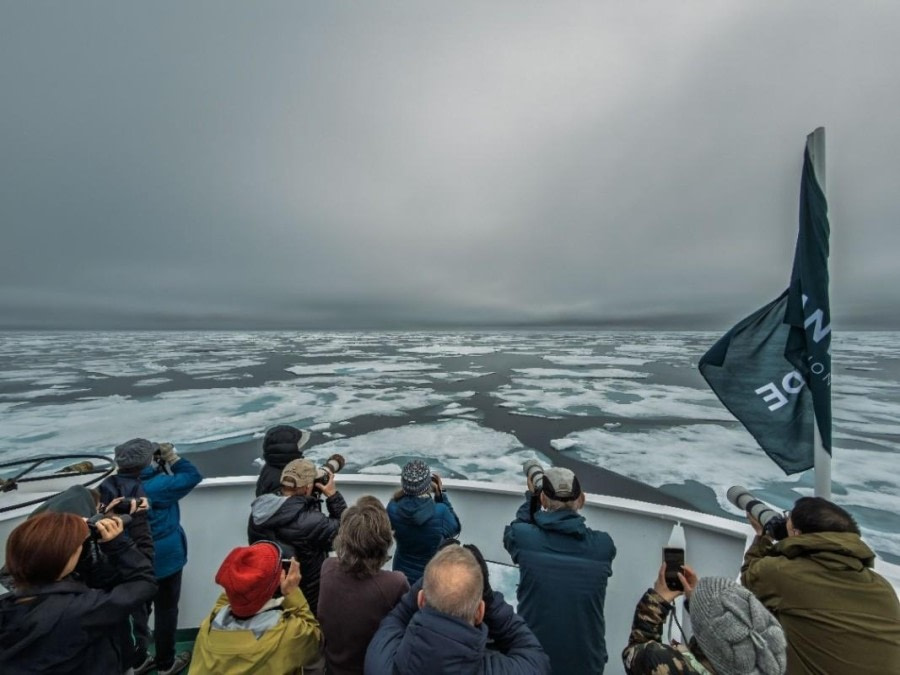
This magical day never stopped delighting us, right after dinner, the bridge and staff team invited us to the outer decks to observe a scattered group of Blue whales spouting at the northern entrance of the Hinlopen strait. The blue whale is the largest animal ever known to have lived on Earth, reaching lengths of up to around 30 meters. It is a marine mammal found in oceans around the world, including cold Arctic and Antarctic waters. Despite its enormous size, the blue whale feeds mainly on tiny shrimp-like animals called krill, which it filters from the water using baleen plates. They migrate between feeding and breeding areas, spending summers in colder waters where food is plentiful and winters in warmer waters to reproduce and care for their young.