HDS04-26, trip log, North Spitsbergen Explorer - Versatile landscapes, sea ice & wildlife

by Oceanwide Expeditions

Galería de fotos

Bitácora

Day 1: Longyearbyen: Setting Sail into the Arctic wilds

Longyearbyen: Setting Sail into the Arctic wilds
Fecha: 13.06.2026
Posición: 78°12.6’N, 014°42.1’E
Viento: NNE2
Clima: Overcast
Temperatura del Aire: +9

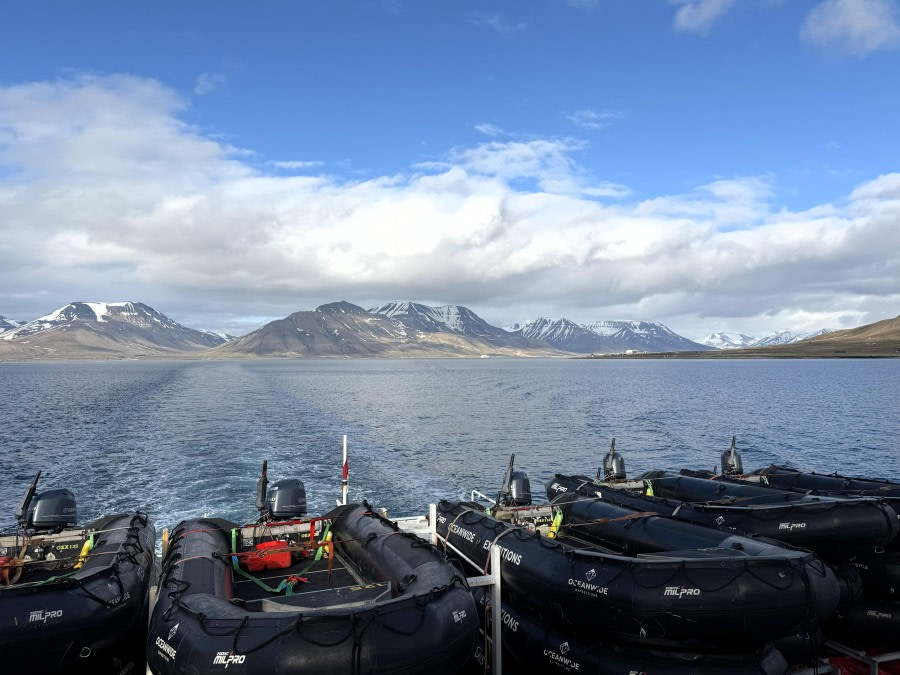
Our Arctic adventure began beneath a blanket of cloud hanging low over Longyearbyen. The small port bustled with anticipation as fellow travelers gathered, eager to begin our voyage aboard Hondius. In the afternoon, we boarded the waiting Zodiacs, their sturdy inflatable hulls carrying us across the cold, steel-grey waters. The ride offered our first taste of the expedition spirit—wind on our faces, the scent of the sea in the air, and the unmistakable excitement of heading toward the ship that would be our home for the days ahead. 

As Hondius came into view, a sense of adventure swept through the group. We were warmly welcomed aboard by the crew and escorted to our cabins, where we quickly settled in and familiarized ourselves with our surroundings. The ship hummed with quiet energy as passengers unpacked, explored the decks, and watched the dramatic landscape of Svalbard drift by beyond the windows. 

Before long, we gathered in the lounge for the mandatory safety briefing. The bridge team guided us through the procedures and protocols that would ensure a safe voyage as we ventured into one of the most remote regions on Earth. The briefing also heightened our anticipation; every instruction seemed to hint at the remarkable experiences that awaited us among the fjords and the pack ice.  

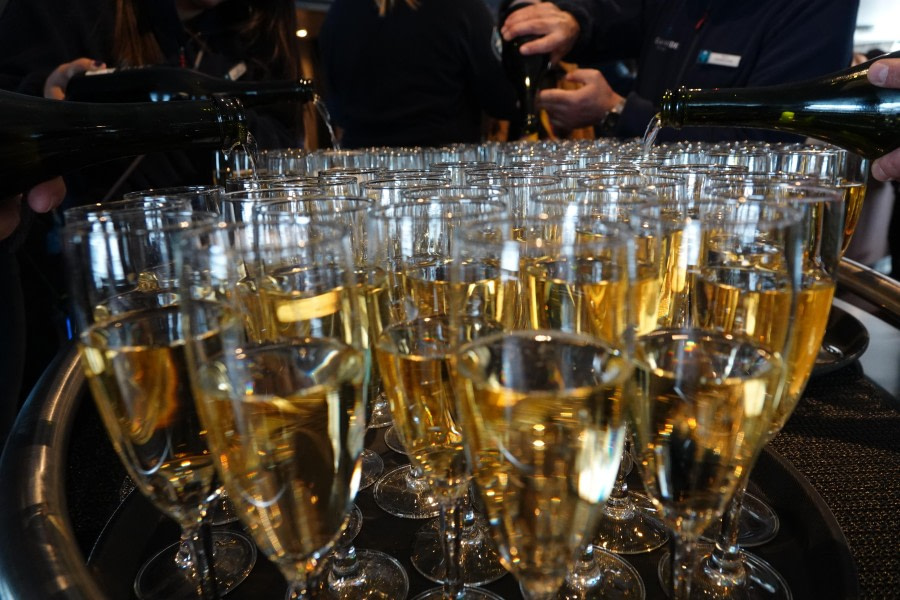
Soon afterward, we were invited to the Observation Lounge for a welcoming drink and snacks. There we met the expedition team, whose enthusiasm for the Arctic was infectious, along with the hotel manager and key members of the ship’s staff. Introductions, laughter, and conversation filled the room as strangers quickly began to feel like companions on a shared adventure. 

Our first dinner onboard followed, marking the true beginning of life at sea. As we enjoyed a delicious meal, Hondius continued her course through Isfjorden. Outside, the clouds gradually parted and a beautiful Arctic light spread across the landscape. Golden rays illuminated the mountains surrounding the fjord, casting soft shadows across their rugged slopes. It was a breathtaking welcome to Svalbard—a moment of quiet beauty that accompanied us into the evening and perfectly set the tone for the extraordinary voyage ahead.
Day 2: Smeerenburg & Alicehamna

Smeerenburg & Alicehamna
Fecha: 14.06.2026
Posición: 79°18.0’N, 010°24.2’E
Viento: NW7
Clima: Snow
Temperatura del Aire: -1

The day began with the very first wake-up call from Expedition Leader Chris, a moment that marked the true start of the adventure. Outside, waves, wind, and drifting snow offered everyone their first real taste of Arctic weather, a reminder that they had arrived in one of the most remote and fascinating regions on Earth. 

After breakfast, we gathered for the mandatory AECO, bear safety, and Zodiac briefings. With the essential information covered and everyone eager to explore, were finally ready to begin their Arctic adventure. 

As the ship sailed northward, the Expedition Team kept a constant watch for wildlife. Then, the magic happened. Excited voices echoed through the ship as the first polar bear of the voyage was spotted. We hurried to our cabins for jackets, cameras, and binoculars before gathering on deck to admire this magnificent Arctic icon.

The bear was walking calmly along the shoreline, seemingly unfazed by its audience. Then it entered the water and began playing with a large piece of kelp, providing a spectacular and unforgettable wildlife encounter. For many, it was a dream come true and a moment that perfectly captured the wonder of the Arctic. Smiles, excitement, and camera shutters filled the air as everyone enjoyed the extraordinary show.

Eventually, it was time to continue sailing and resume the search for more wildlife. The encounter had already made for an incredible start to the voyage and left everyone eager for what might come next.

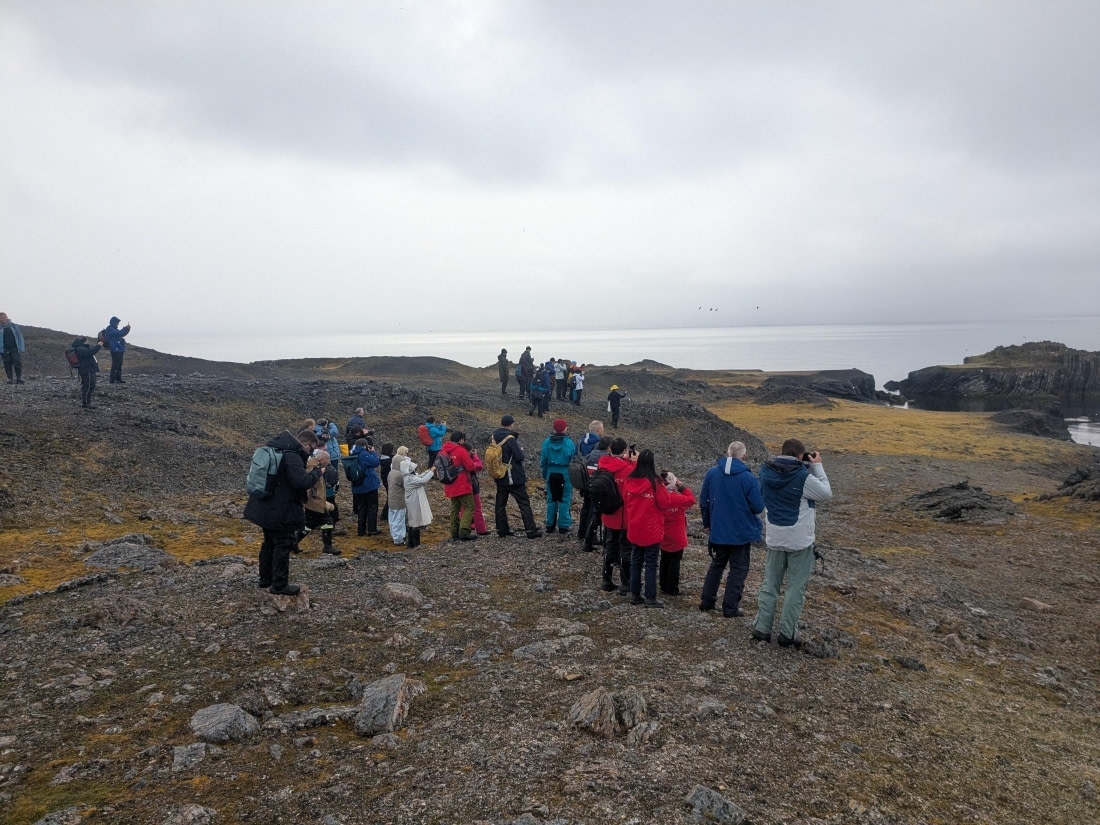
During the afternoon, it was finally time to stretch their legs and explore the tundra of Alicehamna. We set out in hiking groups, each enjoying the landscape at their own pace while taking in the magnificent views of mountains, glaciers, and the surrounding fjord. Along the way, we discovered a place rich in both natural beauty and human history. Named after Princess Alice of Monaco, Alicehamna became associated with Prince Albert I of Monaco's pioneering scientific expeditions to Svalbard in the late 19th and early 20th centuries. The area is also home to Rauðfjordhytta, a relatively recent cabin, and the remains of an old trapper’s hut built by the Norwegian trapper Sven Olsson in the 1920s, offering a fascinating glimpse into the challenging lives of those who once spent winters in the High Arctic. A light rain shower accompanied part of the excursion, providing yet another authentic taste of Arctic weather and adding to the atmosphere of the afternoon.

The day concluded with the daily recap. Chris presented the plans for the following day, building excitement for the adventures ahead. Valeria shared useful tips and tricks for capturing better photographs with mobile phones, helping us making the most of our memories. Bill then delivered an inspiring talk, encouraging everyone to see, feel, think, and engage deeply with the remarkable experiences unfolding around them throughout the voyage.

After a memorable day, we gathered for dinner, sharing stories and photographs from our first true day of exploration. 

Day 3: Texas Bar & Monacobreen

Texas Bar & Monacobreen
Fecha: 15.06.2026
Posición: 79°36.6’N, 012°43.8’E
Viento: SW5
Clima: Overcast
Temperatura del Aire: +3

We began the morning with the traditional wake-up call from Chris, welcoming us to a beautiful day in Svalbard. Sunshine filled the landscape while a brisk Arctic wind reminded us where we were. With perfect conditions for exploration, we headed ashore at Texas Bar, the iconic trapper's hut built by the legendary Norwegian trapper Hilmar Nøis.

Once ashore, guests spread out across the tundra with their guides according to their preferred pace. Our long hikers ventured further into the landscape, while medium and short hikes allowed everyone to enjoy the stunning surroundings. Along the way, we were rewarded with magnificent views of glaciers, mountains, and the bay below. Some lucky observers even spotted Rock Ptarmigans and Snow Buntings, two remarkable bird species specially adapted to life in the Arctic.

Back at the landing site, it was time for one of the highlights of any polar expedition: the Polar Plunge! With plenty of enthusiasm and perhaps a little hesitation, many brave guests took the leap into the freezing Arctic waters. The air was filled with laughter, cheers, and a few surprised shouts as swimmers emerged refreshed and exhilarated from their icy adventure.

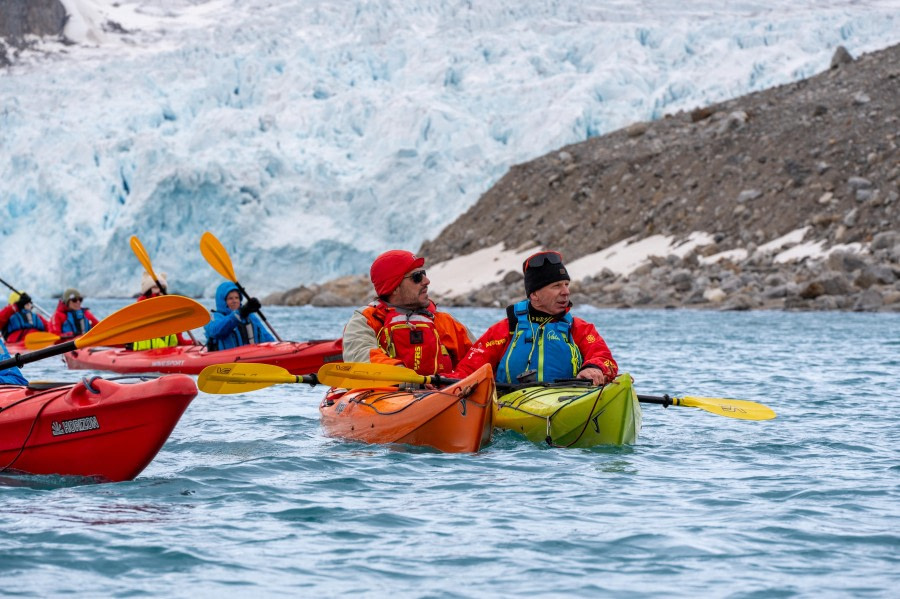
After warming up and enjoying a well-earned lunch on board, we set course for the spectacular Monacobreen Glacier. There, we boarded the Zodiacs for an unforgettable cruise among the ice. Calm waters reflected the dramatic glacier front, while a cold breeze flowing from the ice reminded us of the immense frozen world surrounding us. We carefully navigated through icebergs and brash ice, taking time to appreciate the scale and beauty of the glacier walls.

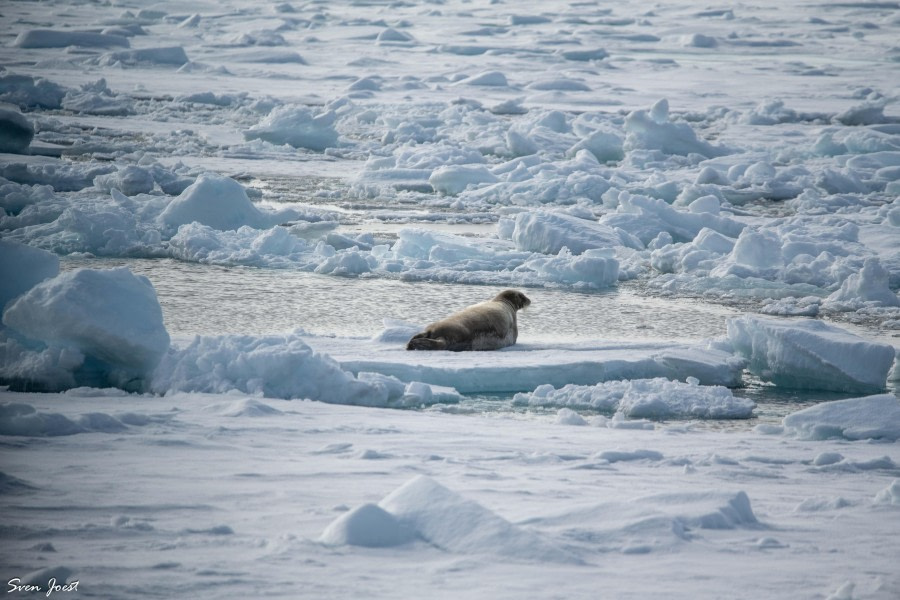
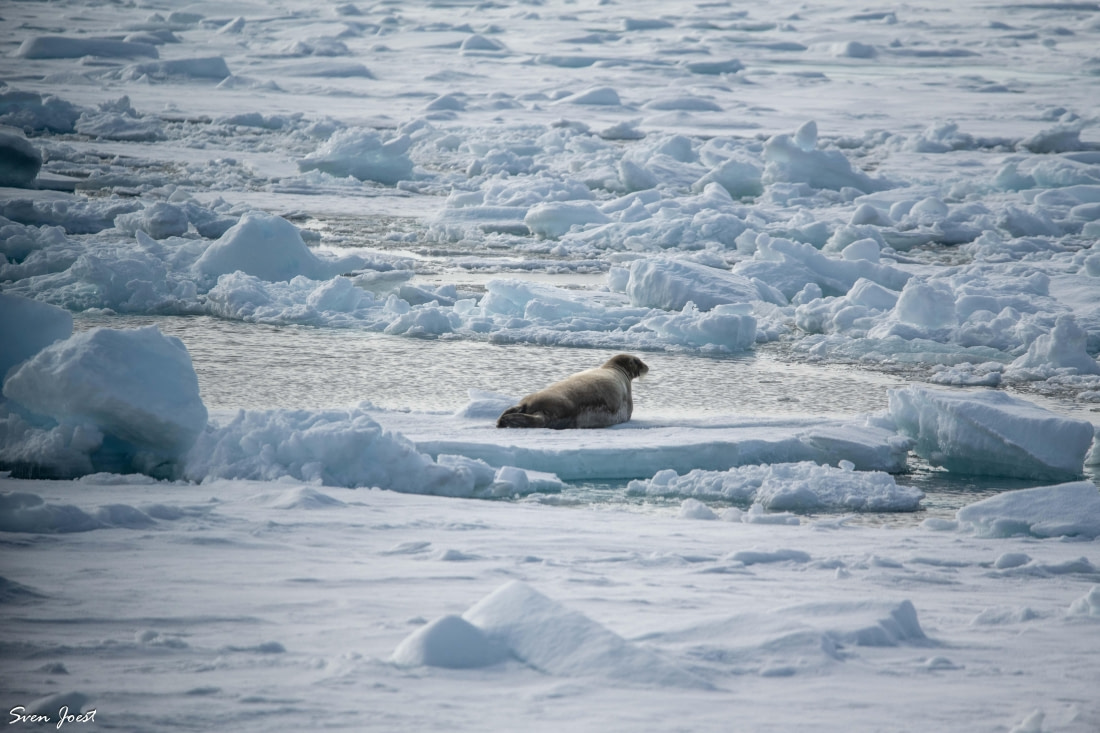
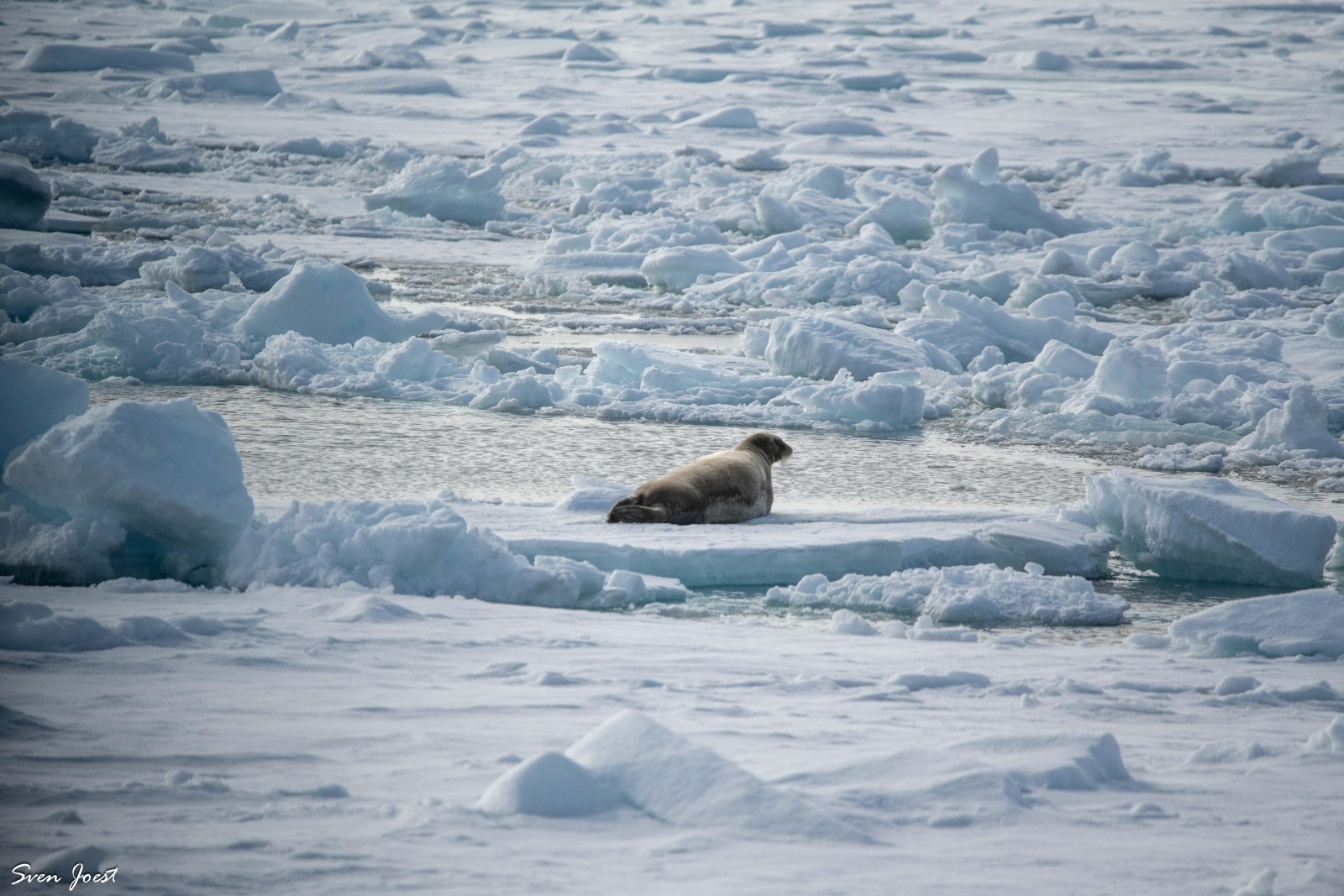
Nature provided another special encounter when we spotted a Bearded Seal swimming among the ice. Several guests were also fortunate enough to witness (or at least hear) the thunderous sound of glacier calving as ancient ice broke away and crashed into the sea, a powerful reminder that these frozen giants are constantly changing.

Back on board, we gathered for the daily recap with the Expedition Team, reflecting on the day's adventures and looking ahead to what tomorrow might bring. But the day was not over yet. After putting our jackets back on, we headed outside once more for a true Arctic celebration: the deck barbecue!

Surrounded by spectacular polar scenery, we enjoyed delicious food, drinks, dancing, and wonderful company. The atmosphere was filled with smiles, laughter, and good vibes as we celebrated another unforgettable day in Svalbard.

Day 4: Alkjefellet & Torellneset

Alkjefellet & Torellneset
Fecha: 16.06.2026
Posición: 79°36.5’N / 018°28.0’E
Viento: N4
Clima: Part.Cloudy
Temperatura del Aire: +3

As we woke up the ship was already close to the Hinlopen straight entrance. We enjoyed our lovely breakfast on the ship and got ready for our first activity of the day, zodiac-cruising Alkefjellet. Alkefjellet (literally named Auk-mountain) definitely lives up to its name as around 60.000 pairs of Brunich-guillemots reside and breed in the cliffs and is one of the busiest bird cliffs in all of Svalbard. It truly was a sight to behold, with 100–120 meter cliffs towering over us and countless guillemots flying past as we cruised the cliffs with the wind from north to south.

But there were more things than guillemots around, a lone brown Arctic fox was seen at one of the edges of the cliffs, walking around the shoreline scanning the waterline for anything eatable that might be brought in by the tides. Glaucous gulls also breed in these cliffs, especially on the lower levels, and they are quick to take advantage of any dead birds or unattended eggs. Other birds in the general area included Arctic skua, Snow bunting, Kittiwake and Fulmar. Who all in one way or another benefit from the bird cliff (or prey on their inhabitants). 

Back on board and enjoyed our lunch buffet and had a short rest before our next activity of the day focused on Torellneset. Torellneset is a headland projecting to the south  west into Hinlopen straight from the island of Nordaustlandet. The place is known as a Walrus haulout and thus a point of interest for us. We split into two groups according to our color codes, half of us went on land while the other half took an exploratory zodiac cruise of the coast or neighboring island.

The Walruses appeared quite relaxed by our visit, with most of them not even looking up from their naps. About twelve Walruses lay bundled together, and with the animals packed so closely, it was sometimes difficult to tell where one Walrus ended and the next began. Occasionally, one would raise its head to inspect the new bipedal arrivals dressed in Gore-Tex. It was a calm and rewarding observation. The Walruses we saw were all males, as the females mostly remain around Franz Josef Land at this time of year, where they raise their calves.

During the zodiac cruise, some of us explored the coastline to see what wildlife we could find, while others visited the island of Behmøya. The island hosts abundant birdlife, and we observed Arctic terns and Common Eider ducks, but the highlight was definitely the Grey Phalarope, also known as the Red Phalarope. This remarkable species breeds in the high Arctic and migrates long distances to the southern hemisphere where it winters off the coasts of South-America, Africa.

As we had dinner we cruised around the island of Wahlbergøya where we got got lucky with a Polar bear sighting. First we saw only one Polar bear sleeping in the snow, but as our eyes were focused on the sleeping polar bear in the distance, the crew spotted a second swimming Polar bear that swam suprisingly fast past our ship and to the island where our first Polar bear woke up to the new arrival. After measuring each other up the first Polar bear decided to leave the area, hopefully well rested after its nap. When we got ready to leave the area a third Polar bear was spotted in the water swimming the opposite direction. A very lucky observation for sure.

With a good day of activities in the Hinlopen Strait behind us set course north, into the ice!

Day 5: A day in the Ice

A day in the Ice
Fecha: 17.06.2026
Posición: 80°29.4’N / 013°08.8’E
Viento: E3
Clima: Part.Cloudy
Temperatura del Aire: -2

The day began with breakfast at 08:00 before we gathered on deck for an enjoyable ice day, as M/V Hondius navigated through the drifting sea ice in search of Arctic wildlife. Under bright sunshine and calm conditions, we spent much of the day outside enjoying the spectacular icy landscape while the expedition team continuously scanned for wildlife. During lunchtime, the ship was rewarded with a remarkable sighting of a Bowhead Whale, one of the Arctic’s rarest marine mammals and a true highlight for everyone on board.

At 11:15, Charlotte presented an engaging lecture on Polar bears, covering their biology, ecology, and the challenges they face in a rapidly changing Arctic environment. 

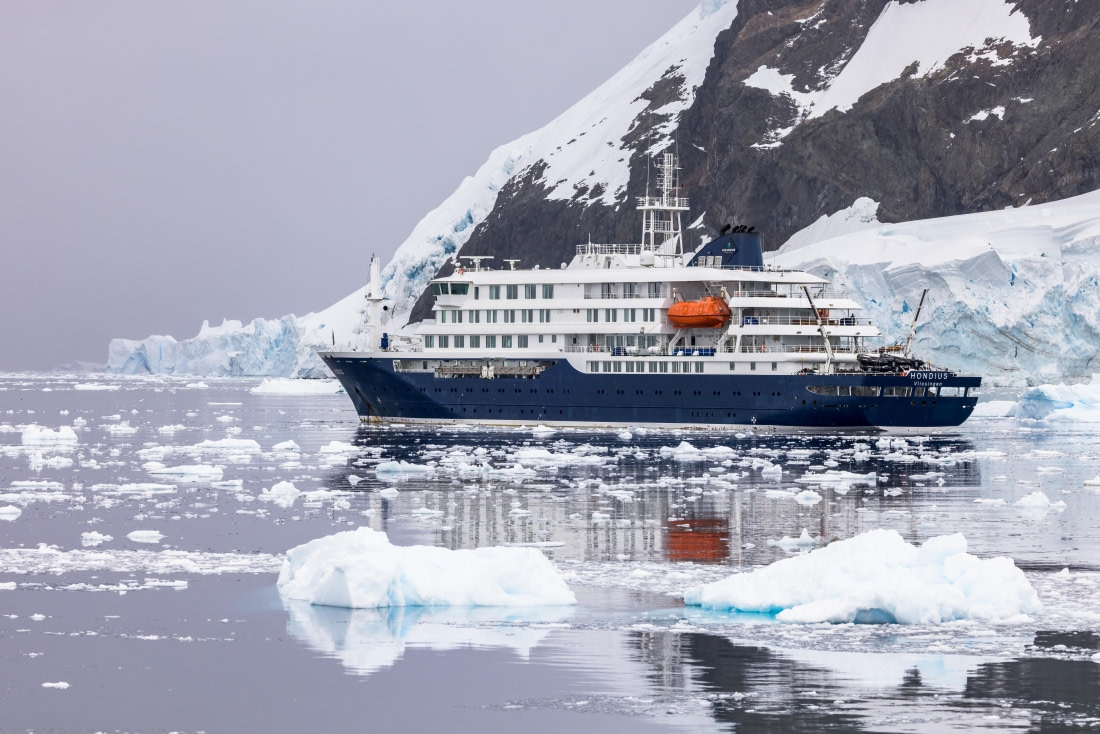
In the afternoon at 15:30, Bill delivered a lecture about Arctic sea ice, explaining the differences between freshwater ice and sea ice, and discussing the ongoing reduction of sea ice around Svalbard as a consequence of climate change. He also gave a fascinating historical overview of the first people to venture into these waters during the 17th century. Early whalers arrived in ships that were poorly suited for navigating ice-covered seas and hunted whales on an industrial scale, leading to dramatic declines in their populations. Bill contrasted these early vessels with M/V Hondius, which is specially built for polar operations and holds Ice Class 6, allowing her to safely navigate through first-year sea ice.

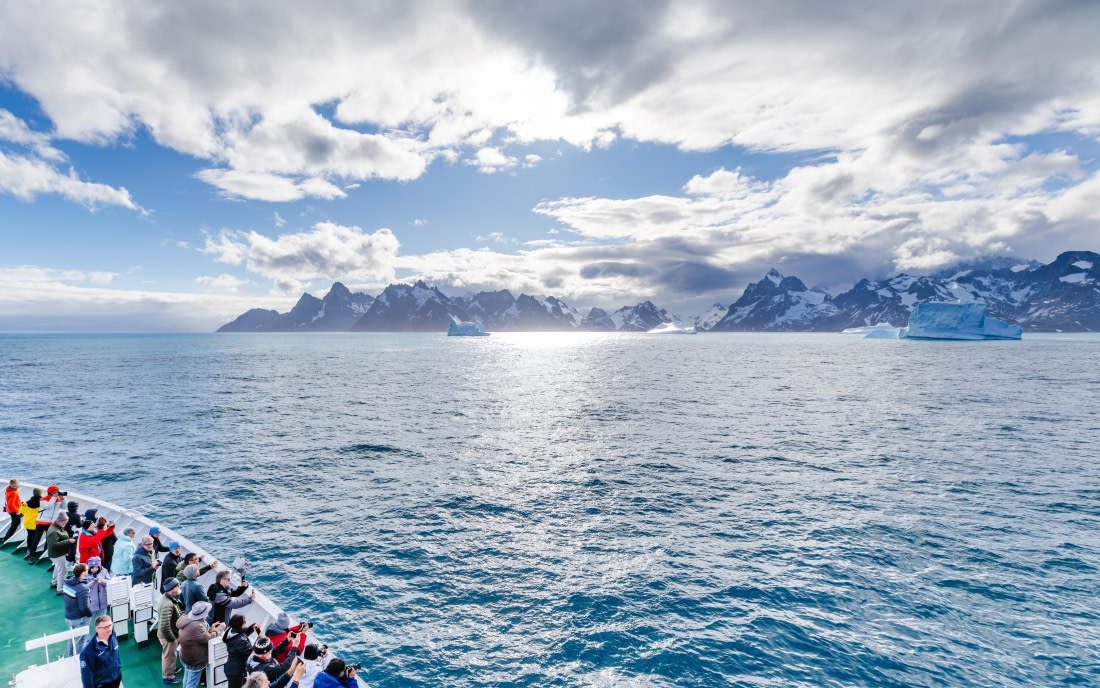
At 17:00, the expedition team served hot chocolate with a splash of rum on the bow. WE enjoyed the warm drinks while taking in the stunning scenery under brilliant sunshine, making for a memorable Arctic afternoon.

Pierre returned to the morning's unforgettable Bowhead Whale sighting, explaining its unique anatomy and plankton-based diet. He highlighted that the Spitsbergen population is estimated at only around 300 individuals, making the encounter an exceptionally rare privilege.

Bjarni then continued with the history of bowhead whaling. He described how an estimated population of approximately 120,000 bowheads inhabited these waters during the 17th and 18th centuries before intensive commercial whaling drove their numbers to near extinction. Using a humorous live demonstration with expedition staff acting as the rowing crew, harpooner, and even the whale itself, he illustrated how these hunts were carried out and explained the many historical uses of whale oil, including lighting and soap production.

Finally, Andi introduced guests to the Beluga Whale, one of the Arctic’s toothed whale species, which many guests had already enjoyed observing on the first day of the voyage. She explained that belugas use echolocation to locate their prey and are easily distinguished by their lack of a dorsal fin, instead possessing a dorsal ridge that helps them navigate beneath sea ice. She also noted that the Svalbard population is largely coastal, spending most of its time close to shore rather than in open waters.

The day combined excellent weather, fascinating lectures, and memorable wildlife encounters, providing guests with a deeper understanding of the Arctic environment and its remarkable marine mammals.

Day 6: Sea ice and sailing South

Sea ice and sailing South
Fecha: 18.06.2026
Posición: 80°52.9’ N, 013°02.7‘E
Viento: NE3
Clima: Overcast
Temperatura del Aire: -1

During the night, the vessel drifted quietly within the Arctic pack ice, surrounded by a mesmerizing landscape of ice floes bathed in the golden light of the midnight sun. The stillness of the polar environment provided a unique opportunity to experience the Arctic at its most pristine. Throughout the drift, the expedition team maintained a vigilant watch for wildlife, and guests were encouraged to listen for onboard announcements regarding any sightings.

In the morning, we continued exploring the sea ice, taking in the ever-changing patterns, textures, and colors of the frozen Arctic Ocean before gradually turning south and beginning our transit toward Alkhornet, located at the mouth of Isfjorden. The journey offered spectacular views of the ice edge and the surrounding polar seascape as we left the pack ice behind.

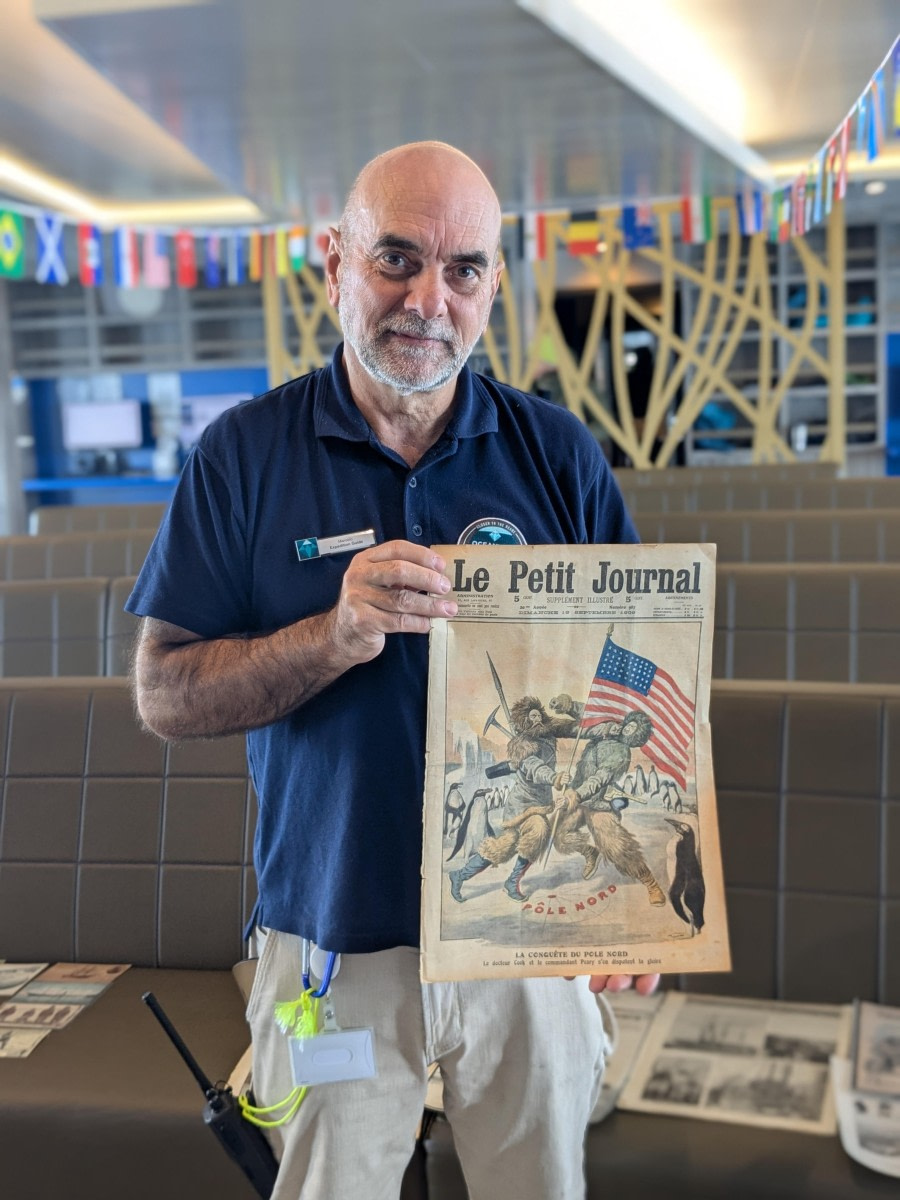
Following breakfast, guests joined Marcello for an engaging Arctic history session, which explored the fascinating stories of exploration, hunting, scientific discovery, and human activity throughout the High Arctic. The presentation provided valuable context for understanding the region we have been navigating during the expedition.

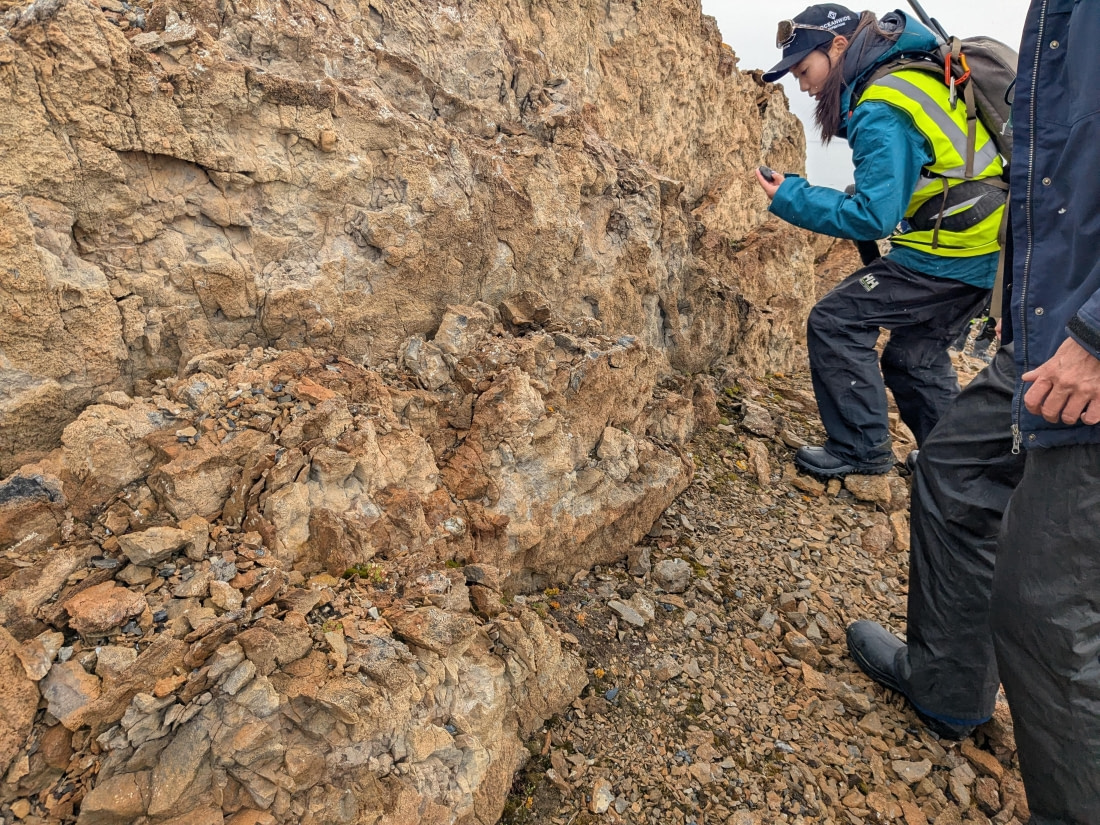
Later in the morning, Sven delivered an insightful lecture on the geology of Svalbard, explaining the geological processes that have shaped the archipelago’s dramatic mountains, fjords, and glaciers over millions of years. The presentation enhanced guests’ appreciation of the remarkable landscapes visible throughout the voyage.

After lunch, the ship continued its southbound transit toward Isfjorden. Guests enjoyed time on deck observing seabirds, scanning for wildlife, and appreciating the vast Arctic scenery while reflecting on the unique experience of drifting amongst the sea ice under continuous daylight.

In the afternoon, Meike presented a lecture on the Auks of the Arctic, introducing guests to this remarkable group of seabirds and discussing their adaptations, breeding behavior, and ecological importance within the polar marine ecosystem.

Before dinner, the expedition team hosted the daily recap session, sharing highlights from the day, discussing wildlife observations and ice conditions, and outlining plans for the next stage of the expedition.

The evening concluded with Bill’s presentation, Paintings of the Sea, an engaging journey through maritime art and the ways artists have captured the beauty, drama, and changing moods of the world's oceans. It was a fitting end to a day spent immersed in the unique environment of the Arctic pack ice.

Day 7: Ymerbukta & Alkhornet

Ymerbukta & Alkhornet
Fecha: 19.06.2026
Posición: 78°14.9’ N, 013°57.3‘E
Viento: SE1
Clima: Cloudy
Temperatura del Aire: +4

Our final day in Svalbard dawned beneath a blanket of low clouds, with occasional flurries of snow and light rain sweeping across the landscape. While the weather may have hidden some of the dramatic peaks, it lent the Arctic an atmosphere of mystery and wild beauty—an unforgettable setting for our last adventures ashore.

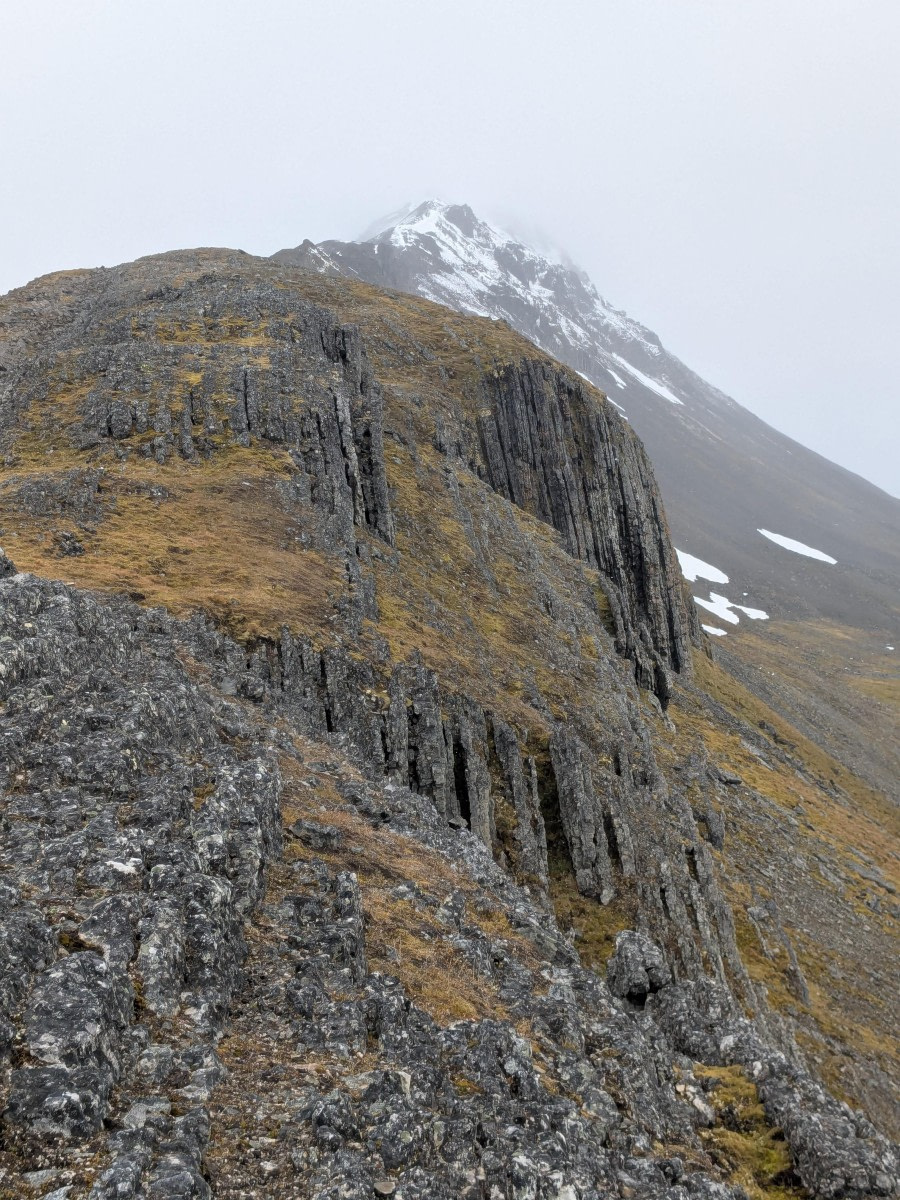
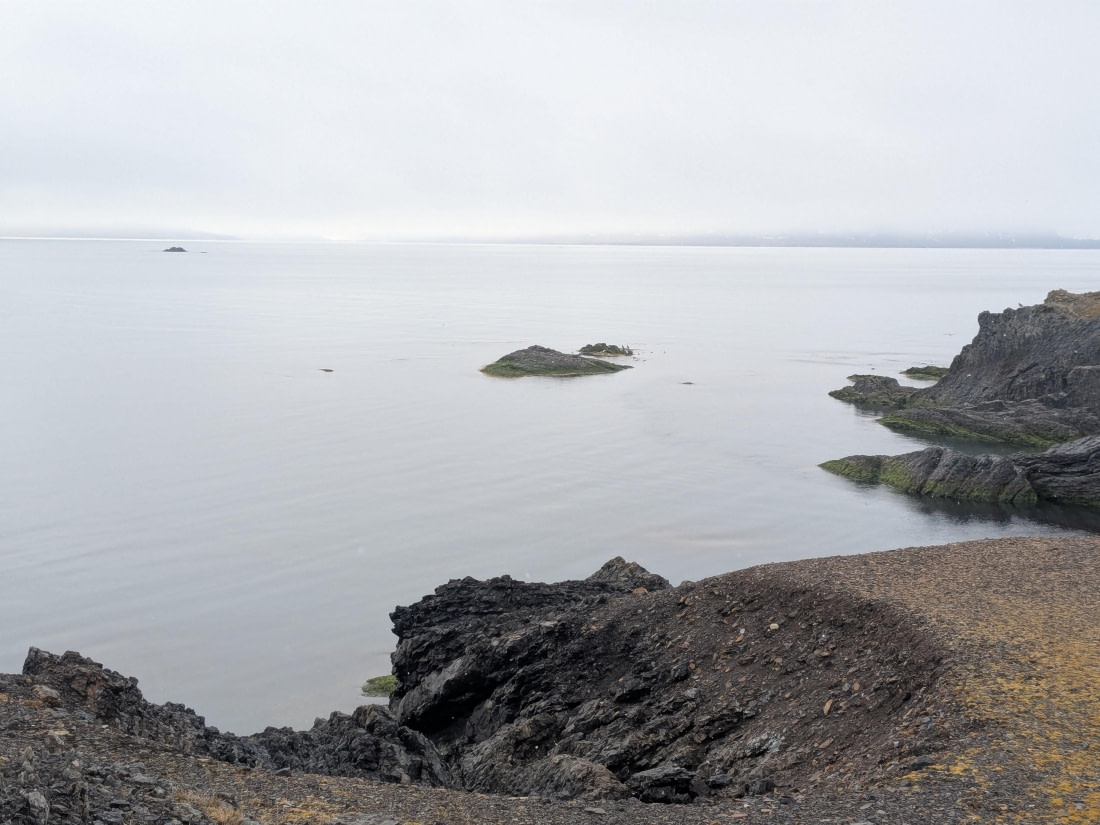
Our first landing took place in Ymerbukta, a beautiful bay named after Ymir, the giant of Norse mythology. After landing, we divided into several hiking groups, each setting off to explore the tundra at its own pace. The terrain was often boggy underfoot, but every step revealed signs of the short yet vibrant Arctic summer. Tiny Purple saxifrages, among the first flowering plants to bloom after the snow melts, dotted the ground alongside cheerful Arctic buttercups, bringing splashes of colour to the otherwise muted landscape.

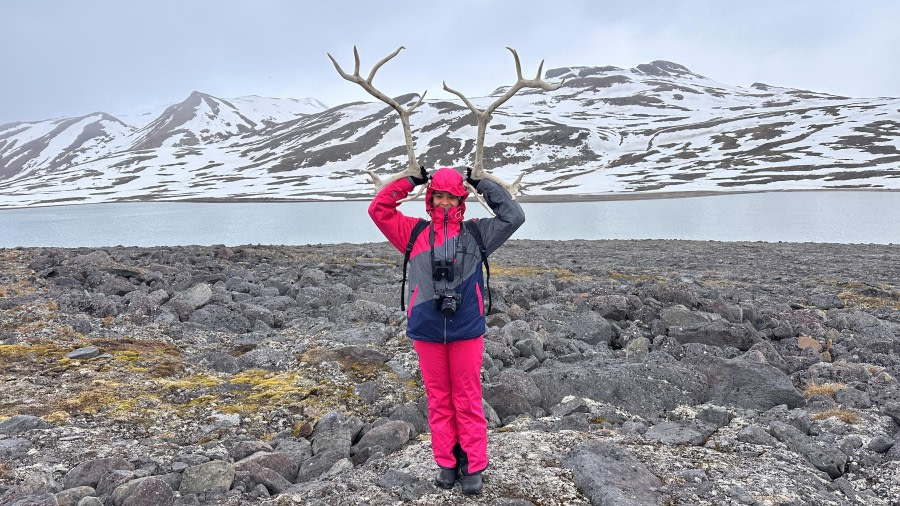
Wildlife accompanied us throughout the morning. We encountered Rock ptarmigans, perfectly adapted to life in the High Arctic, as well as Skuas patrolling the skies overhead. Groups of Pink-footed geese and Barnacle geese grazed across the tundra, while Reindeer wandered calmly through the valleys. Far out on the water, a few Harbour seals could be seen resting and surfacing between the waves.

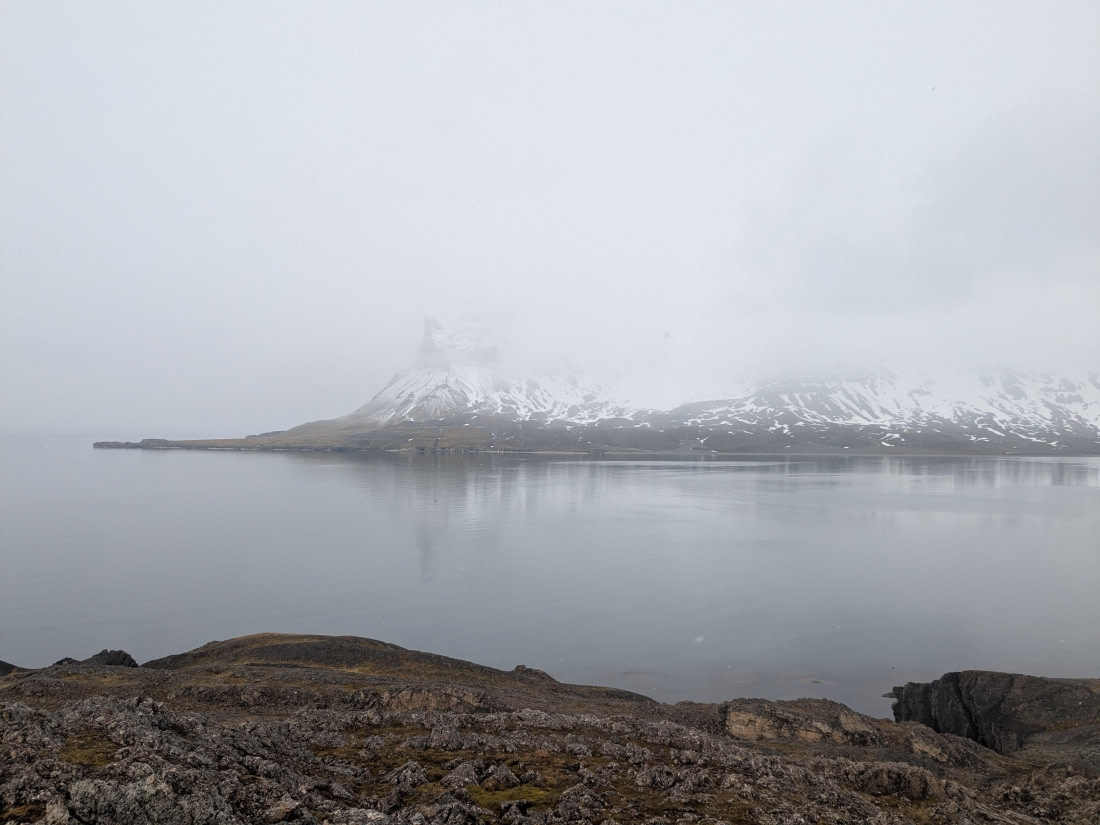
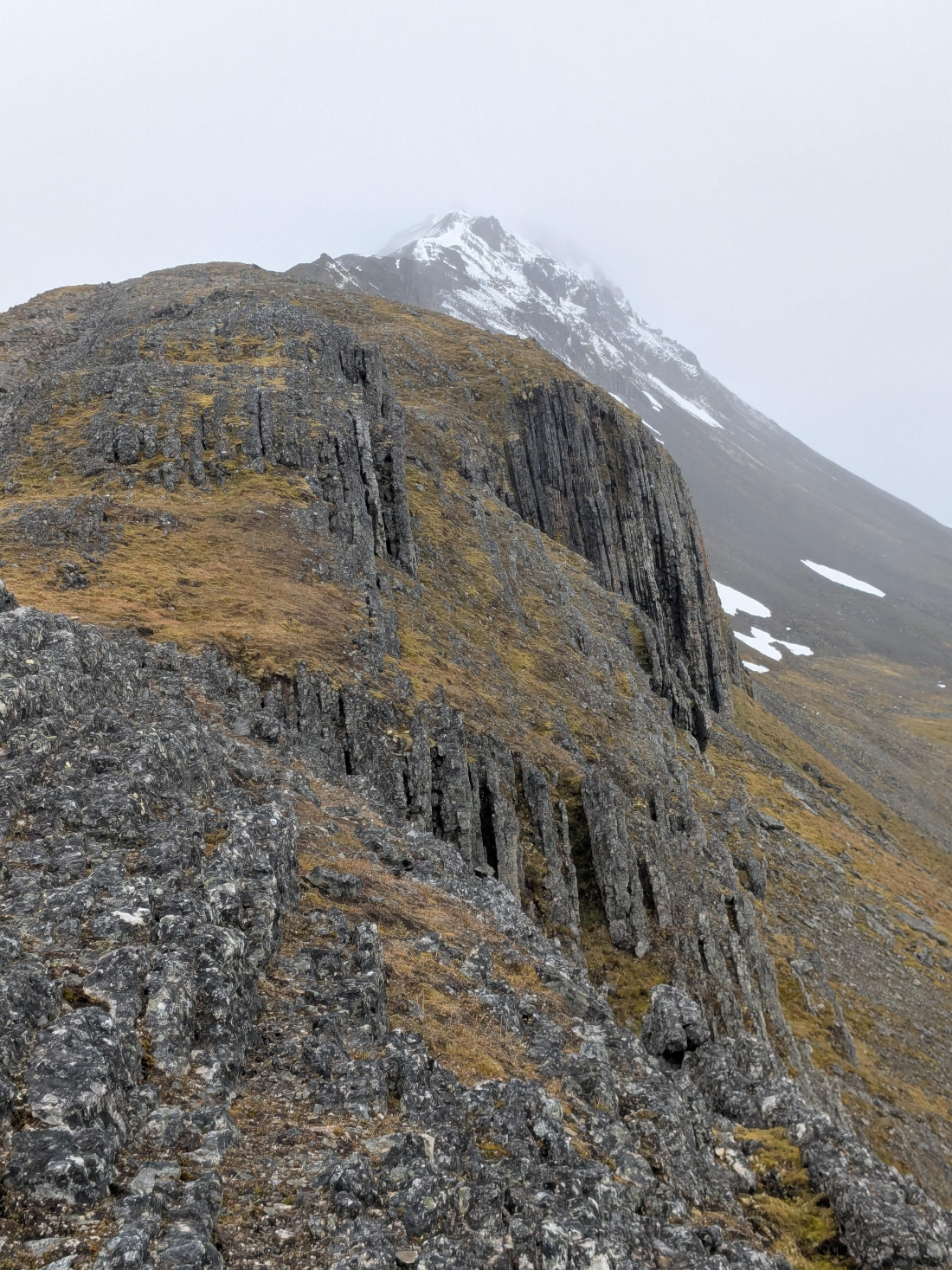
After lunch aboard Hondius, we headed ashore once more, this time at Alkhornet, one of Svalbard’s most iconic bird cliffs. The mountain’s summit remained hidden behind clouds when we arrived, creating an almost mythical atmosphere. Yet the wildlife more than compensated for the lack of views. Reindeer were plentiful, but the highlight of the afternoon was undoubtedly a fox den. There, to everyone’s delight, several Arctic fox pups emerged to play, tumble, and curiously observe their visitors—a magical encounter and a fitting farewell gift from Svalbard.

As the hike drew to a close, the weather finally relented. The clouds gradually lifted, revealing the towering cliffs of Alkhornet and the sweeping landscapes beyond. Bathed in soft Arctic light, the scenery appeared even more spectacular after having been hidden for most of the day.

Back aboard Hondius, we gathered one final time for the Captain’s Farewell. Glasses were raised, stories were exchanged, and memories were celebrated. The evening concluded with a wonderful plated dinner, providing the perfect ending to an extraordinary journey through the Arctic wilderness of Svalbard.

Day 8: Farewell from the Arctic: Disembarkation in Longyearbyen

Farewell from the Arctic: Disembarkation in Longyearbyen
Fecha: 20.06.2026
Posición: 78°14.2’ N, 015°03.4’E
Viento: NNW2
Clima: Cloudy
Temperatura del Aire: +3

In the soft light of early morning, we arrived in Longyearbyen. As we gathered for one final breakfast on board, there was a quiet sense of reflection in the air. Outside, the crew gently unloaded our suitcases, a silent reminder that our Arctic adventure was drawing to a close.

Over these past days, the Hondius has been far more than a ship—she’s been our shelter, our launchpad into the wild, and our floating home. Within her walls we’ve shared laughter, awe, and moments that will stay with us for a lifetime.

Together, we ventured deep into the high latitudes, witnessed landscapes sculpted by ice and time, and encountered wildlife most only dream of—polar bears, walrus, whales, and the mesmerizing dance of seabirds in the Arctic skies. Along the way, strangers became companions, and companions became friends.

Now, with hearts full and cameras brimming, we begin the journey home. Though we leave the ice behind, its spirit travels with us—etched into memory, carried in stories, and felt in quiet, unforgettable moments.

Thank you for joining us on this remarkable voyage. Your curiosity, warmth, and camaraderie made this journey truly special. Wherever your path leads next, we hope it brings you back to these wild places—and perhaps, one day, back to us.

Until we meet again—safe travels, and fair winds.

Detalles

Código del viaje: HDS04-26
Fechas: 13 jun. - 20 jun., 2026
Duración: 7 noches
Barco: El Hondius
Embarque: Longyearbyen
Desembarque: Longyearbyen

¿Ha estado en este viaje?

A bordo El Hondius

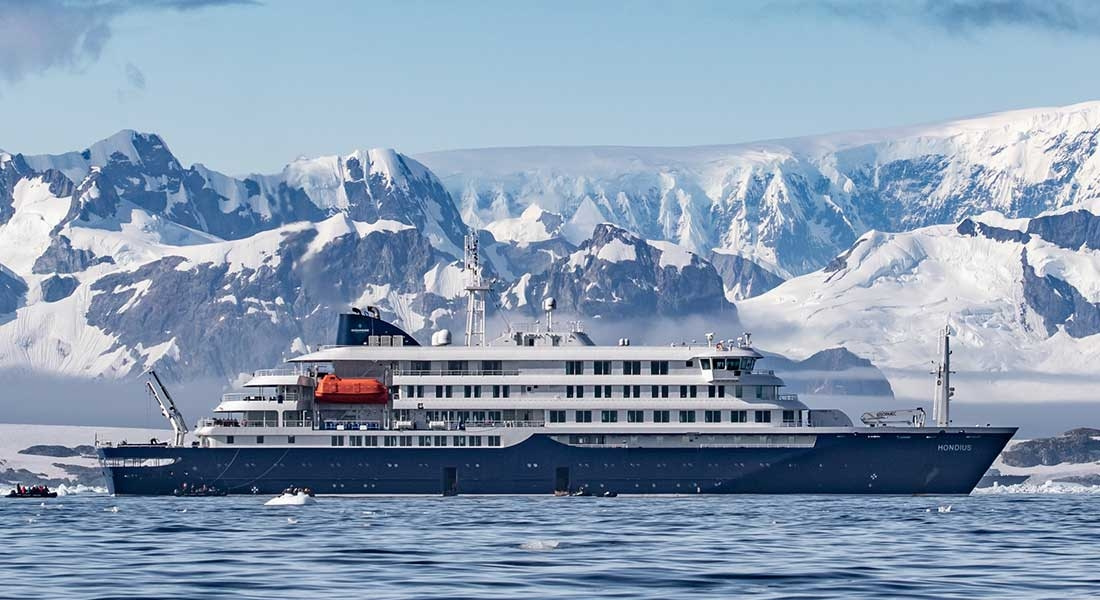
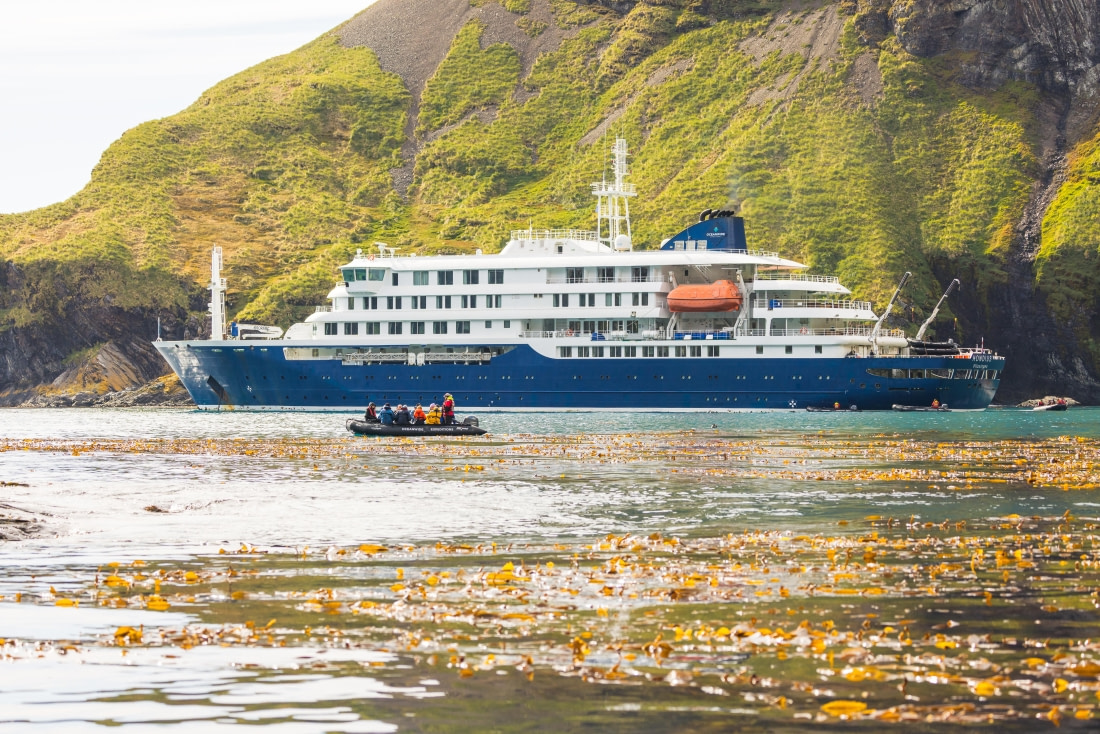
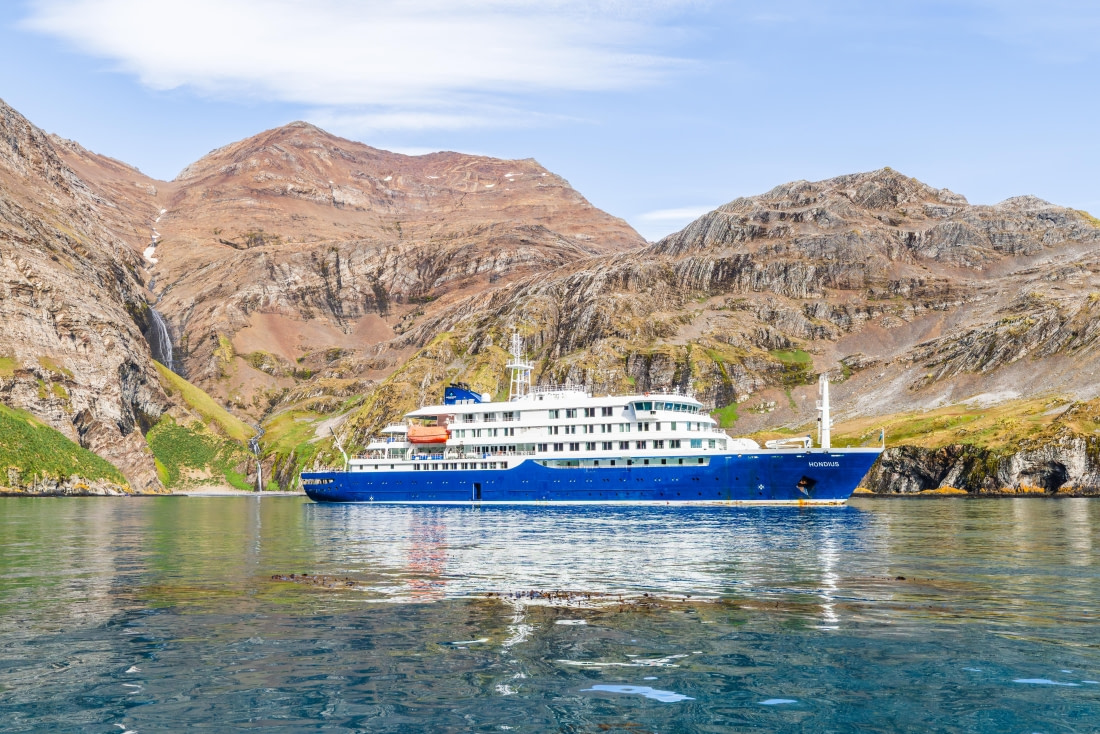
El Hondius es el primer barco de clase polar 6 registrado en el mundo y fue construido desde cero para cruceros de expedición.

Más información El Hondius »
Loading