OTL04-26, trip log, North Spitsbergen Explorer - Into the pack ice - Polar Bear Special

by Oceanwide Expeditions

Galería de fotos

Bitácora

Day 1: Longyearbyen, Embarkation Day

Longyearbyen, Embarkation Day
Fecha: 12.06.2026
Posición: 78°14.6’ N / 015°32.6’ E
Viento: N 3
Clima: Overcast
Temperatura del Aire: +7

The sky above Adventfjorden was covered by a thick layer of clouds. At times they would sink lower, turning into fog and making the airport staff nervous; at other times they would rise higher, giving us a chance to admire the still snow-covered peaks on the far side of the fjord from Longyearbyen. The local residents, ignoring the otherworldly beauty around them, which had long since become familiar to them, hurried about their business, while those of us who had arrived in Longyearbyen the day before enjoyed the views and gradually grew accustomed to the cold realities of the far Arctic as we wandered along the pedestrian street in the center of the settlement, sat in cafés, or simply looked out at the street from the hotel window.

From time to time, the hum of a low-flying aircraft reached our ears, announcing the arrival of yet more travelers in Spitsbergen. Each plane, with its arrival, seemed to breathe life into the deserted airport — it would instantly come alive, filling with people, bustle, joy, and anxiety: many were worrying about the success of their upcoming journeys around the archipelago. Would the weather be kind? Would we manage to see whales? And, of course, everyone was tormented by the main question: would we manage to see a polar bear?

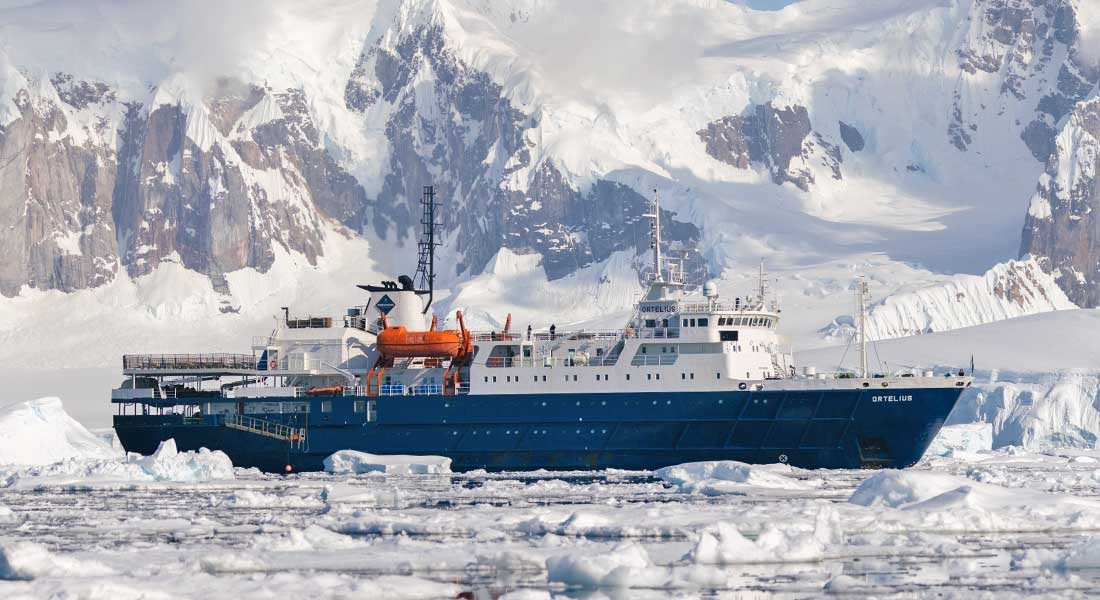
Ortelius was moored at the coal pier — a distant dock you could not even reach on foot, because that is prohibited. After all, what if a bear suddenly appeared from behind the cliff and you did not have a rifle with you? So a shuttle was arranged for us, departing from the main pier at 4:00 p.m. — safe, and no need to walk for half an hour.

And there she was, our ship! Standing there beautifully at the pier. The sailors were busy, members of the expedition team were hauling our luggage back and forth, and the hotel manager and his charming assistant were gradually collecting our passports.

Since it was impossible to check everyone in at once, a queue formed in front of the gangway. Pippa, the expedition leader’s assistant, kept a strict eye on us, making sure we boarded in groups of ten. It must be said that the process moved very quickly, so within about a quarter of an hour we were all on board.

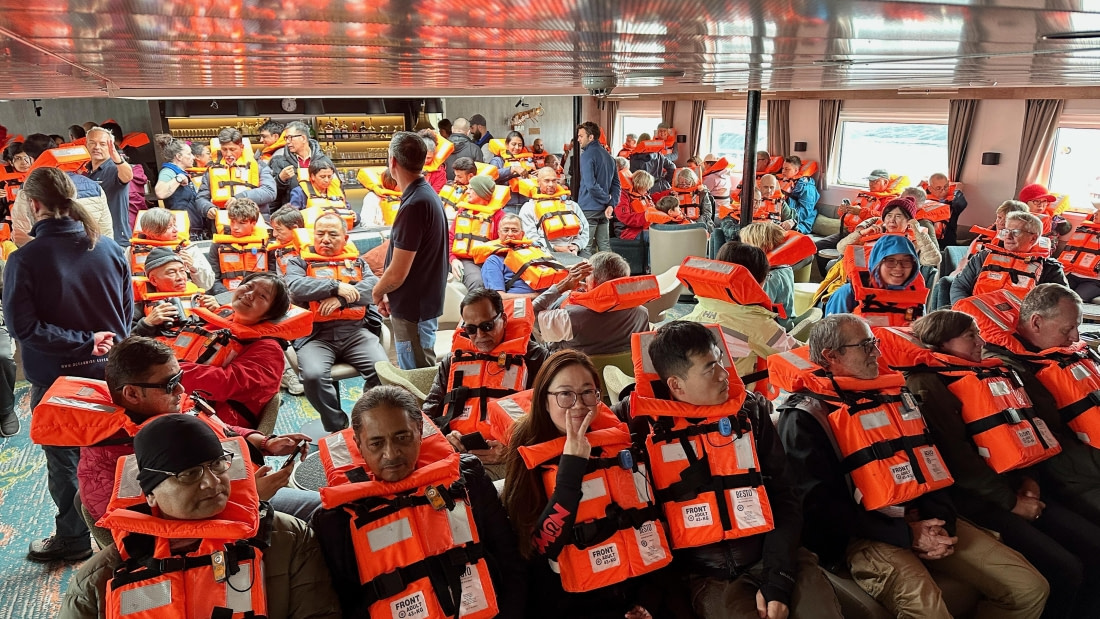
Once we had all received the keys to our cabins and made sure that all our suitcases were with us as well, the mandatory part began — the safety briefing, followed by the abandon ship drill. We all gathered in the observation lounge on Deck 6, where a video covering all aspects of safe life on board was shown to us, after which Chief Officer Don addressed us. Then we were told to return to our cabins and, once the signal was given, take our orange life jackets and come back to the observation lounge.

The alarm sounded, and one of the watch officers addressed us over the loudspeakers, instructing us to begin the procedure for abandoning the ship. Needless to say, it was also made clear that all of this was taking place purely for training purposes. We were escorted to the lifeboats and then dismissed.

After putting our life jackets back in their place, we went out onto the open decks to watch the sailors busily winding up the mooring lines with the winches. The engine roared, Ortelius gently rocked, and slowly began to move away from the pier. The journey had begun!

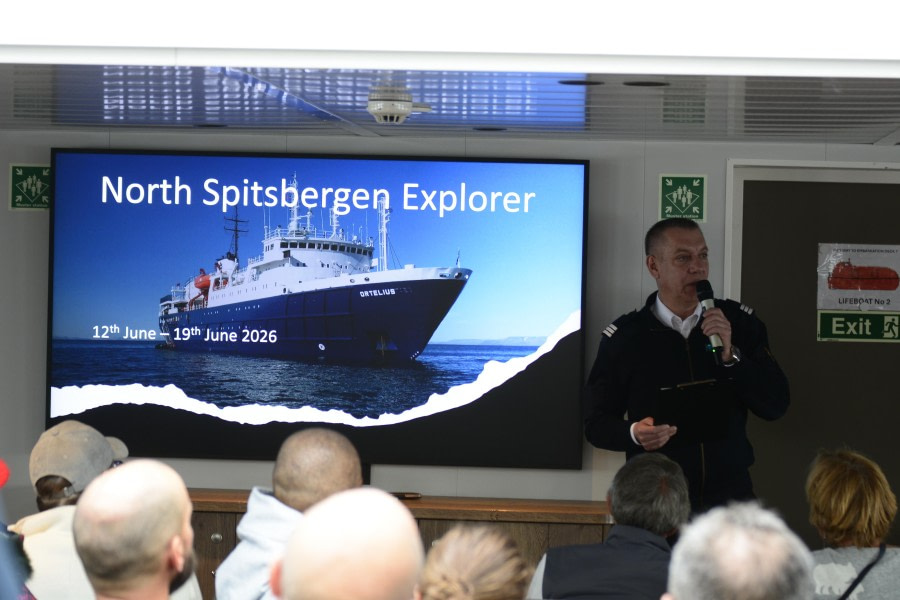
After some time we were invited back into the observation lounge, where refreshments and a glass of champagne awaited each of us. Our hotel manager Vova spoke to us, as did our expedition leader Ali Liddle, and, of course, Captain Ernesto Barria himself.

And so, amid the bustle and in a fairly intense rhythm, the first couple of hours of our stay aboard Ortelius passed. At 7:30 p.m. we were invited to dinner, and after dinner we were given our Muck Boots. Meanwhile, Ortelius had left Isfjorden and set course north!

Forward, toward adventure!
Day 2: Fuglefjorden & Alicehamna

Fuglefjorden & Alicehamna
Fecha: 13.06.2026
Posición: 79°47.1’N / 011°23.5’E
Viento: NE 3
Clima: Cloudy
Temperatura del Aire: +0

This early morning found us off the north-west corner of the Svalbard archipelago in very good weather. The mountains to the east of us looked magnificent. At around 06:30 Captain Ernesto turned Ortelius in towards the land for a scenic transit through a narrow channel called Sørgattet (Southern Strait). These waters are only for the most competent mariners, as the channel is peppered with shoals and rocky reefs. As we made our way through, the land on our starboard side was Spitsbergen, the largest island in Svalbard. And off to our port side was the island of Danskøya (Danes Island). Many of us were really torn when the breakfast announcement came!

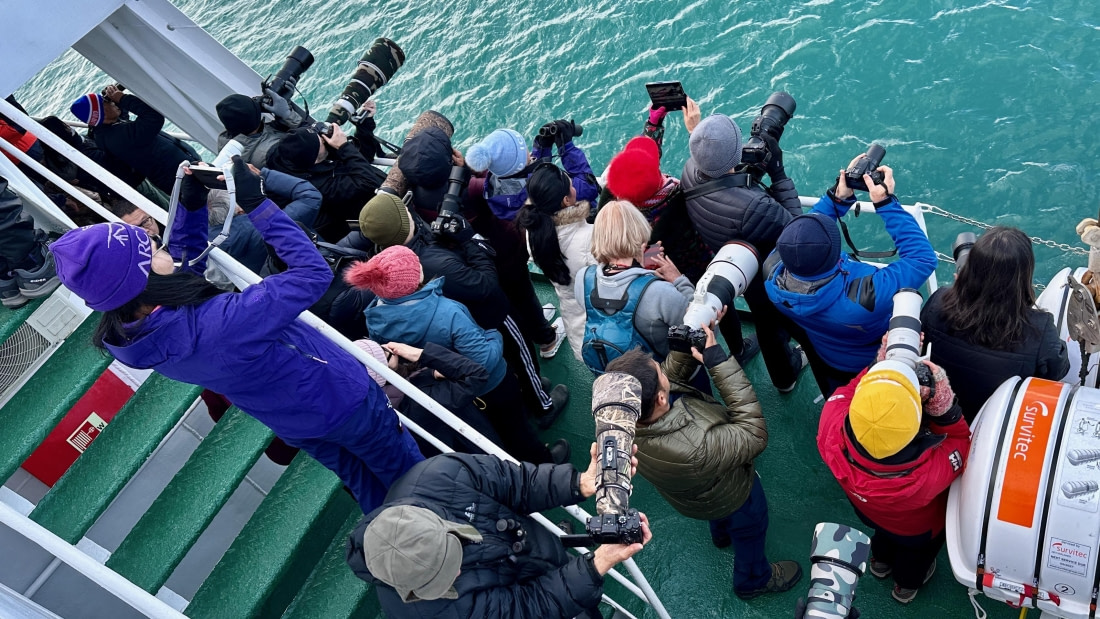
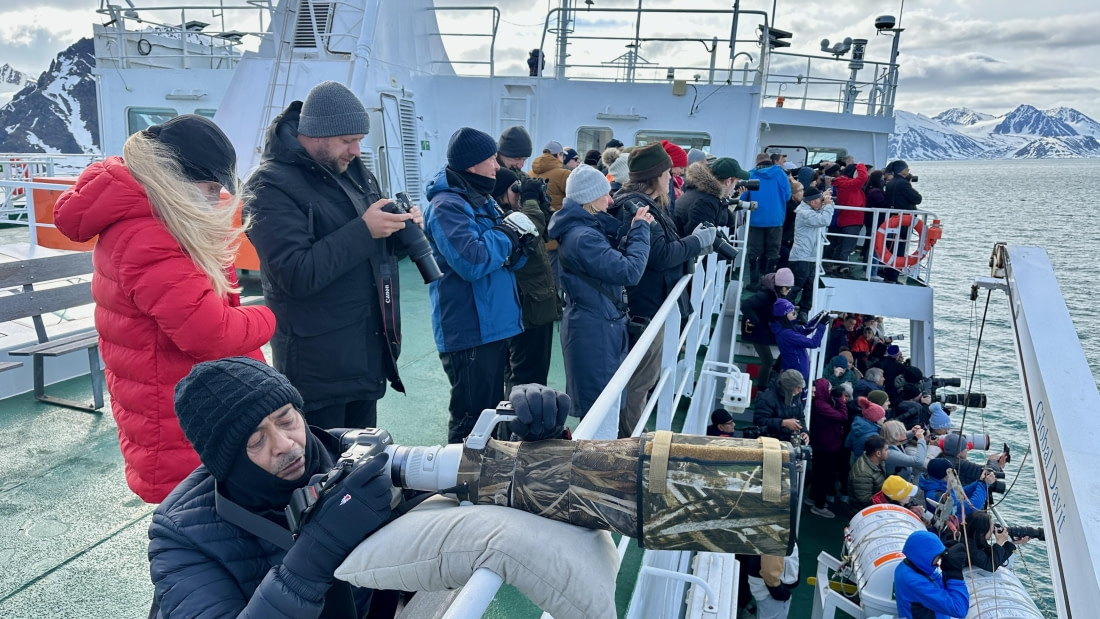
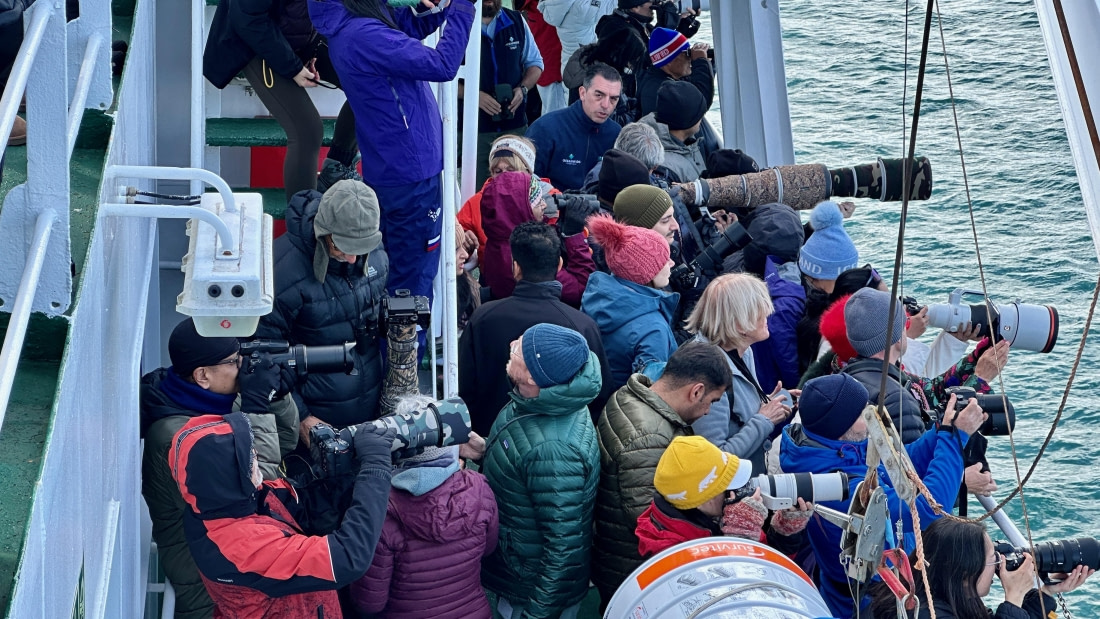
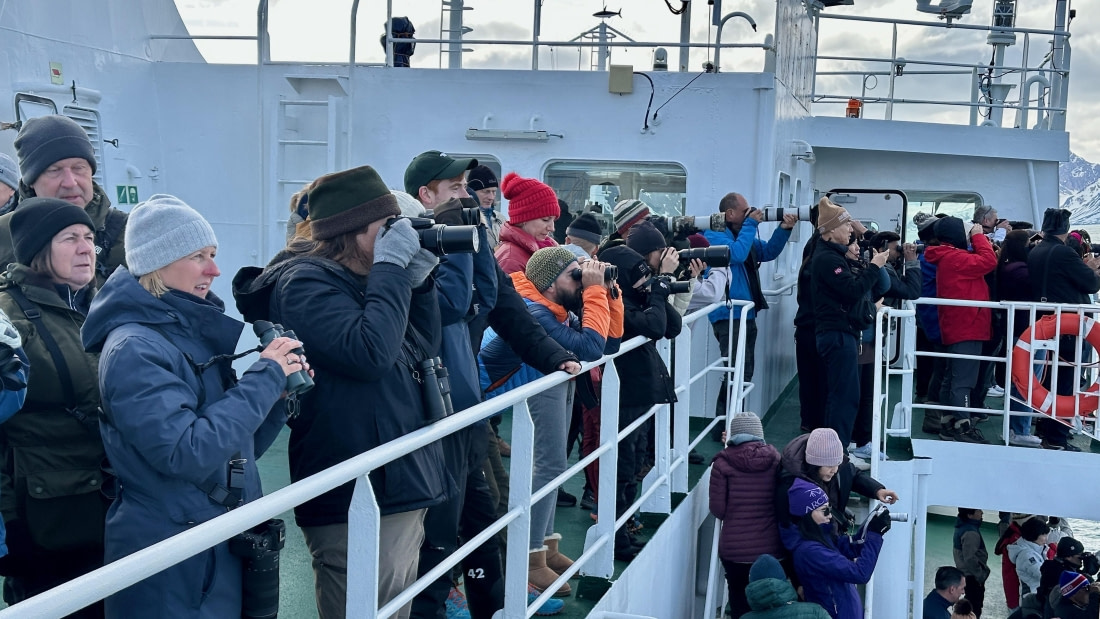
Exiting the east end of the channel, we entered Smeerenburg Fjord, with the mighty Smeerenburg Glacier visible at its head a few miles to the south-east of us. Ortelius was turned north while the expedition team scoured the land for polar bears. As we drew level with the north-east corner of Danskøya, Expedition Guide George spotted something moving just above the shoreline near Cape Pike. It was a polar bear! By then, Expedition Leader Ali was just about to start with a session of mandatory briefings in the bar, which is where we were all gathered. Although the bear was a very distant one, she quickly decided to get everyone outside for a look. The guides moved around the decks, giving guests instructions on how to find it in the vast landscape, using large boulders with an obvious shape and distinctive snow patches as reference points.

Over the course of 30 minutes, as the polar bear slowly walked south along the shoreline of Danskøya, it seemed as though everyone had eventually gotten their eyes on it. For many, this highlighted what a challenge it is to find polar bears in the vast Arctic wilderness. With it getting further away from us, the decision was made to resume our course and continue northwards out of the fjord. Ali called everyone back to the bar for the mandatory briefings on Zodiac Operations, Polar Bear Safety and the Arctic Visitor Guidelines.

As the briefings came to an end, Ortelius was slowly entering Fuglefjorden (Bird Fjord) with the large island of Fugløya (Bird Island) off our port side. The Expedition Team was already mobilised and clad in full outdoor gear, and was collecting the firearms before heading out to the Zodiac deck. One by one the Zodiacs were lowered and, over the public address system, Ali invited us to go out for a Zodiac cruise. At last, it was time to climb into our outdoor gear and get outside for a more up-close and personal experience with Svalbard’s nature. Soon we were descending the gangway and boarding the marvellous Zodiacs. Since it was our first Zodiac excursion of the voyage, the drivers gave a safety briefing before getting down to the fun of cruising and exploration.

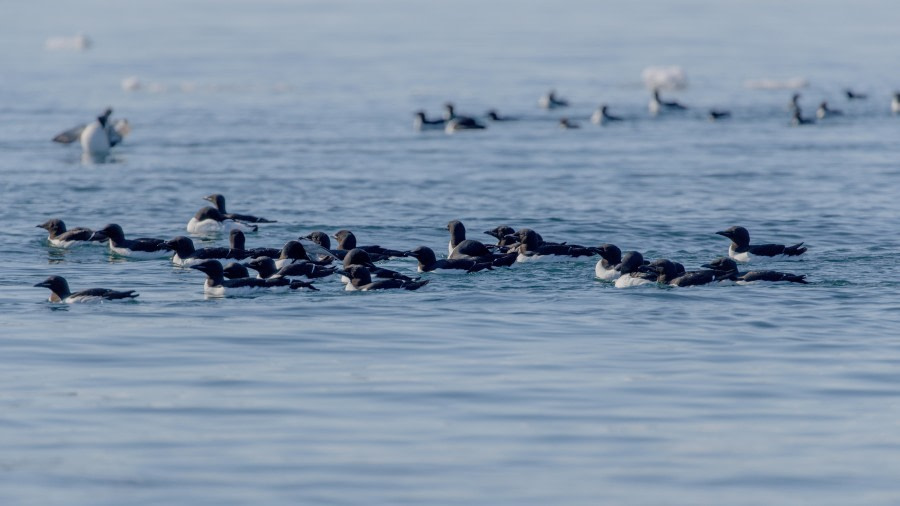
Initially we spent our time around the south end of Fugløya, where Common Eiders, Black Guillemots, Snow Buntings, Glaucous Gulls and Brünnich’s Guillemots were the main bird species seen. A few puffins were also spotted, the charming and colourful “little clowns of the Arctic”. A few Harbour seals popped their heads up for a look now and then, surprising and delighting guests with their brief appearance. It was cold, just as it should be in the high Arctic. After all, we were just 613 nautical miles (1,135 km) from the North Pole.

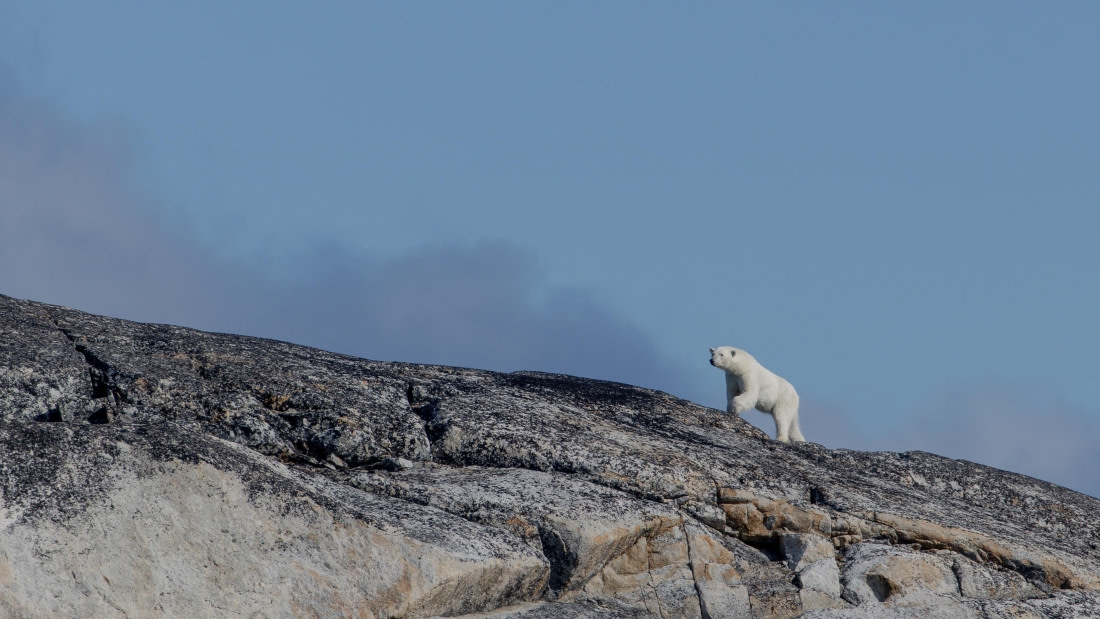
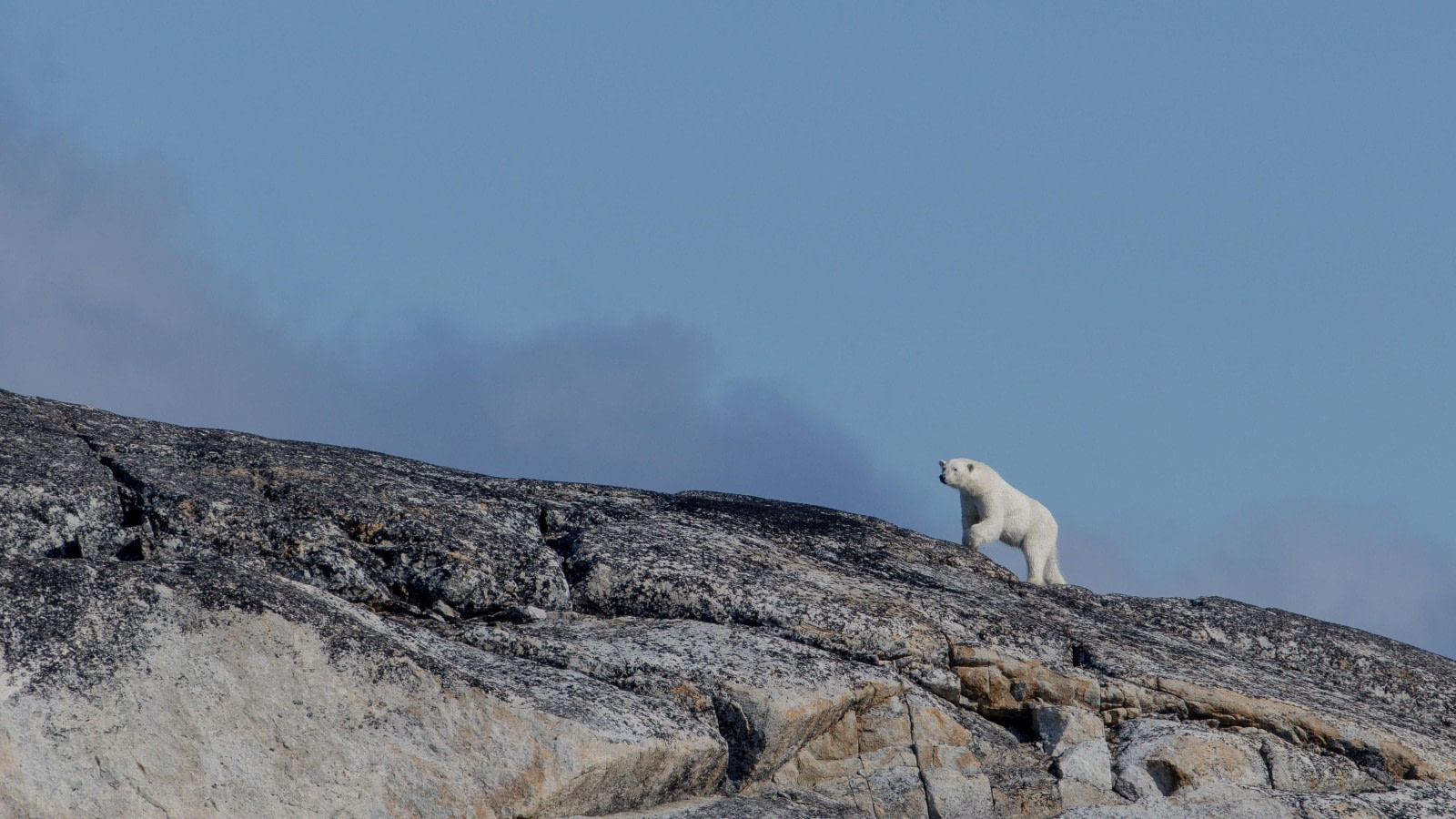
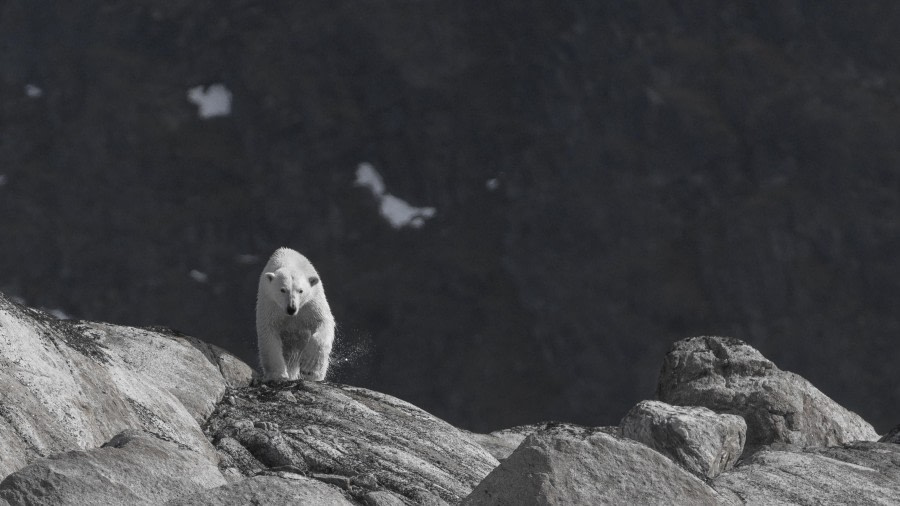
And then….. over the staff radios came the call of polar bear! Assistant Expedition Leader Pippa found it on a small unnamed rocky island off the south end of Fugløya. The Zodiacs all turned in that direction and moved closer. As the boats passed through the narrow channel between the two islands, the bear entered the water, splitting the fleet of Zodiacs in two. It swam across the channel and climbed out onto the rocks of Fugløya. It was a beautiful female bear. The Zodiac drivers did their best to manoeuvre into good viewing positions, while all the time taking instructions from the Expedition Leader that ensured we were operating within the strict laws and guidelines of the Svalbard territory. Boat speeds had to be minimal, and we were not allowed to pursue the bear. We had to maintain a distance of 500 metres at all times. When the bear was in the water, we had to back off even more. And she did return to the water. After walking partway along the rocky shoreline of Fugløya, our beautiful polar bear decided it was easier to swim. She was last seen heading across the channel to the mainland.

At this point Ali instructed her team to leave the area so the bear could swim in peace, as per the guidelines. It was a brief but fantastic encounter with the one animal we had all hoped to see on this voyage. Now we had seen two, and it wasn’t even lunch time on our first day.

Incredible! The Zodiac drivers whisked us across the water and deeper into Fuglefjorden where we got up close and personal with a magnificent glacier front named Svitjodbreen (Svitjod is an old name for the central part of Sweden, and ‘breen’ is Norwegian for ‘glacier’). We took a drive along the front of the glacier, taking the opportunity to have our photo taken with this breath-taking backdrop. All too soon it was time to head back to the ship, as lunch beckoned. After a thrilling high-speed ride back to Ortelius, we were soon climbing up the gangway and heading back to our cabins to peel off all the layers that had kept us warm outside. It had been a very exciting morning, and the dining room was filled with chatter. Following lunch there was a little downtime as we continued around the north coast towards Raudfjorden (Red Fjord), named so because of red-coloured sediments found on the east side of the bay. The sun shone down on the dramatic landscape that was close off our starboard side as we travelled around the coast. At around 15:45 Ortelius slowed to a stop in Alicehamna (Alice Harbour), and the Zodiacs were lowered. The Expedition Team headed ashore and soon declared the area safe for a landing. By 16:15 the first guests were descending the gangway for a choppy ride ashore, created by a moderate wind that blew into the fjord. The weather changed quickly and soon it was overcast and cold.

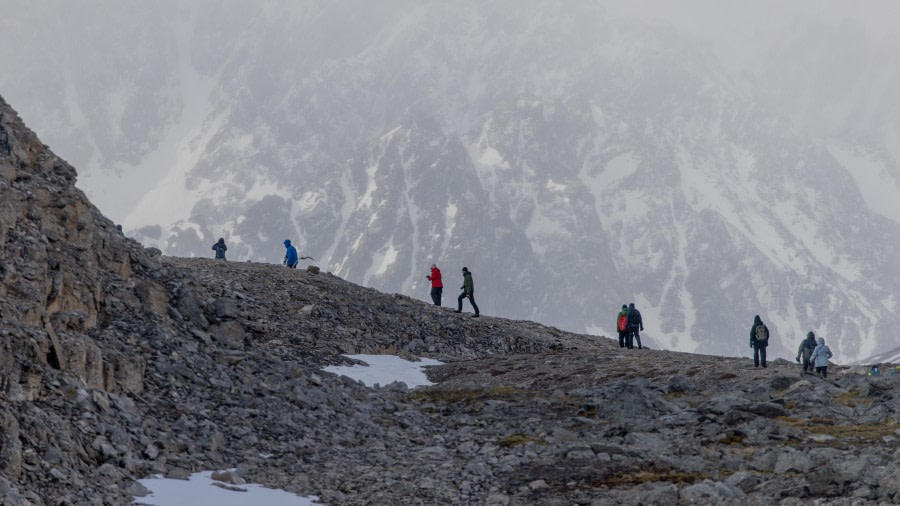
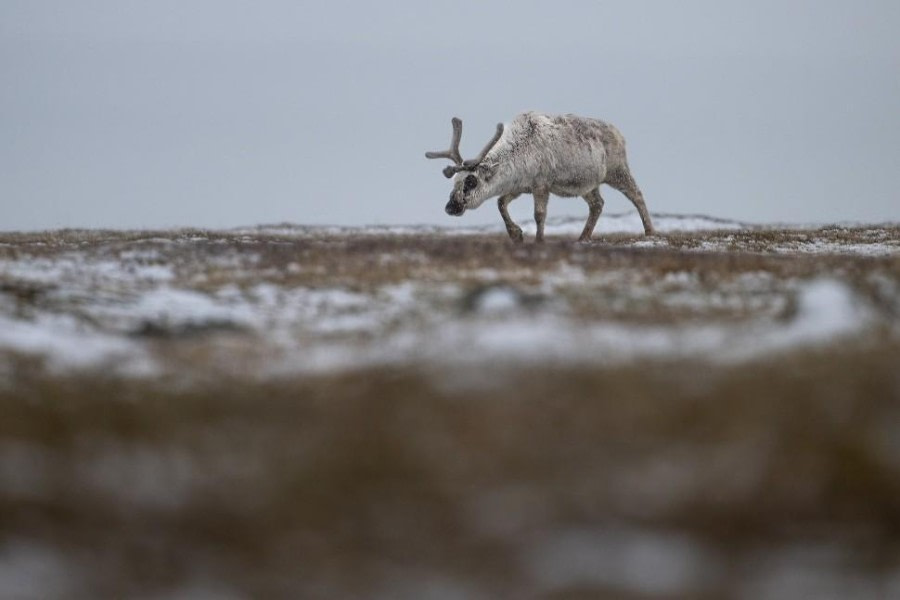
Once ashore we divided into groups for long, medium and leisurely hikes. The long hikers headed off first, escorted by Expedition Guides Marco and Allan. Theirs was a circular route that reached a viewpoint with fantastic scenery in all directions. From their lofty perch they saw several reindeer and a couple of Rock Ptarmigan. The wind up at the viewpoint was bitterly cold so it wasn’t a place to dwell too long. Descending to the coast, they circled back to the landing site via the hilltop grave of Norwegian Captain Erik Matillas who died from scurvy while overwintering in 1907-08. The final stop on the way back to the landing site was the preserved wooden hut built in the 1920’s by Swedish trapper Sven Olsen, commonly known as ‘Stockholm Sven’.

The other groups focused on the beach area and lower elevations, also taking in the hut and the grave site. They focused more on the geology and flora, with the latter dominated by the beautiful Purple Saxifrage. They also saw some Arctic Terns, Purple Sandpipers, Snow Buntings and Arctic Skuas. After 2½ hours the biting cold was being felt by many, who spoke enthusiastically about seeing the hot chocolate machine in the bar. The Zodiacs ferried us all back to the warmth of Ortelius through the choppy waters, and no sooner was everyone back on board, dinner was announced. After dinner we joined Ali in the bar to hear all about the plans for tomorrow. And so ended a truly remarkable first day in Svalbard.

Day 3: Texas Bar & Monaco Glacier

Texas Bar & Monaco Glacier
Fecha: 14.06.2026
Posición: 79°36.6’N / 012°43.1’E
Viento: Var 3-4
Clima: Cloudy
Temperatura del Aire: +2

The day began under overcast, but beautiful Arctic conditions as Ortelius sailed deep into Liefdefjorden, calm seas creating perfect mirror-like reflections of the surrounding mountains. With hardly a ripple disturbing the water, guests gathered on deck to enjoy one of those rare Svalbard mornings when the landscape seemed almost impossibly serene.

The first destination of the day was Texas Bar, one of Svalbard's most famous historic trapping cabins built by the Nois family of trappers in 1927. The expedition team offered long hikes for those eager to explore further into the surrounding landscape, two medium hikes; one tailored toward photography enthusiasts, and a leisurely walk for those wanting a gentle leg stretch to enjoy the breathtaking scenery.

The historic cabin attracted plenty of attention. Inside, visitors discovered the eclectic collection of drinks traditionally left behind by travelers over the years, creating a unique and ever-changing display that has become part of Texas Bar's character and charm.

The tundra surrounding the cabin was alive with colour. Purple and Tufted Saxifrage were in flower, adding vibrant patches of colour to the rocky landscape. Equally striking were the countless fluffy seed heads of Mountain Avens, remnants from the previous summer that still covered large areas of the ground. Behind the cabin, a pair of Arctic Skuas were clearly beginning to establish a nesting territory. Meanwhile the singing Snow Buntings provided the contrast soundtrack to the morning, accompanied by the occasional pair of Pink-footed Geese flying over.

For those on the short and medium hikes, an Arctic Fox delighted the photographers as they moved across the rocky slopes and tundra. Meanwhile, the long hikers enjoyed a spectacular climb to a jagged ridgeline, perched 300m above the shoreline, with stunning views of Monacobreen Glacier. After a morning of activities, many some brave chose to participate in one of expedition cruising's most memorable traditions: the polar plunge. Cheers and laughter echoed across the shoreline as brave participants ran into the frigid Arctic waters before making a rapid return to dry land and dry towels.

After returning to Ortelius for lunch, the ship repositioned to our afternoon destination at Monacobreen glacier, one of the most impressive tidewater glaciers in the region. As the ship approached the glacier front, signs of Arctic wildlife quickly appeared. Black-legged Kittiwakes dotted the ice, while Common Eiders and Black Guillemots paddled through the calm waters between the floating bergs.

Once the Zodiacs were launched, guests headed out for a closer look at Monacobreen's towering ice face. The glacier's brilliant blue crevasses and heavily fractured front revealed a landscape in constant motion. Throughout the zodiac cruise, the glacier regularly reminded everyone of its power as chunks of ice calved from the face, crashing into the fjord below, sending waves rolling across the water. The water was littered with ice from the glacier, some crystal clear, others dirty with sediment picked up by the glacier. The range of shades of blue in the ice kept everyone’s cameras clicking.’

After a wonderful cruise amongst the ice, we returned once again to the warmth of Ortelius. As the ship departed Liefdeforden and continued its voyage through the Arctic wilderness, the evening recaps given by expedition guides on geology, glaciology and Arctic Foxes allowed guests to reflect on a day that perfectly captured the magic of expedition cruising in Svalbard. Spectacular scenery, exceptional wildlife encounters, fascinating history, and unforgettable personal memories had combined to create a day that few would soon forget.

Day 4: Hinlopenstretet: Bjornsundet & Wijkanderøyane

Hinlopenstretet: Bjornsundet & Wijkanderøyane
Fecha: 15.06.2026
Posición: 78°59.4’N / 020°21.4’E
Viento: E 1
Clima: Clear
Temperatura del Aire: +3

This morning we woke up to friendly skies and calm seas. Our plan A for the morning was a zodiac cruise around Wahlbergøya. It’s an island situated in the Hinlopen Strait between Spitsbergen and Nordauslandet. Our intention was to cruise the beautiful scenic shoreline and pass by a haul out of walrus to observe these magnificent big blubbery animals. However, when we arrived in the area it seemed the walrus weren’t at home this morning. As such our expedition leader Ali decided to continue sailing south to our afternoon’s destination; Wilhelmøya.

As we continued sailing the cloud cover really opened up and with the warmth of the bright sun rays and little wind, it was incredibly nice to be out on deck and take in the stunning scenery. M/V Ortelius gracefully navigated through patches of sea ice, while we could observe many areas of fast ice as well. Fast is ice that is connected to the mainland and to be able to witness the fast ice in mid-June is truly special.

On the bridge the expedition team were continuously scouting the area in search of wildlife. We saw many seals lying on ice floes, whereas big flocks of Brünnich’s Guillemots regularly flew past the ship. We enjoyed this ships’ cruise tremendously.

Right before lunch Pippa spotted something on the ice that looked creamy colored and seemed to be moving. How she ever spotted that will remain a mystery, but with her many years of experience she definitely has a very well-trained spotting vision.

The bear must have been at least more than 5km away, but she got it! And to make ensure this was not just a lucky moment, she soon after spotted a second bear. Our excitement grew as we were very keen on seeing more of these resilient and magnificent creatures. The ship approached slowly, but the fast ice became a natural border. In Svalbard it is not allowed to break the fast ice with a ship as it is an eco-system in itself where seals find resting places and bears might roam in search of food.

It was decided to do a zodiac cruise and hope for the bears to move a bit closer into our direction. However, our guides made us aware that we should not just focus on the bears alone, but that we should also enjoy the experience of cruising along the fast ice, taking in the fantastic landscapes and enjoy seeing bear footprints for example.

At some point the bears stood up and seemingly they were walking into our direction. But soon they changed course once again and they remained so called pixel bears. After some time, the bears approached each other and through binoculars it looked as if there was a short amorous encounter. We got some action after all!

Then it was time to return to the ship. We had a recap where Pippa talked about the walrus and George entertained us with geopolitical stories involving the council of Arctic countries.

After dinner Ali invited us to go onto the outside decks as it was a gorgeous evening with beautiful patches of sea ice and fabulous views.

Little did we know that the best part of the day still lay ahead of us. Within minutes after Ali’s announcement George spotted a polar bear on a small island ahead of the ship.

The bear was difficult to see as it had laid down, but every now and then it lifted its head. While our bridge team was maneuvering the ship into a better position, a second bear was spotted… And then a third bear walking on the ice and then a fifth and sixth bear walking together towards the water side! What an incredible ending of the day!

Most likely there is a carcass somewhere on the island that has attracted all these bears. Polar bears have an incredible sense of smell and they can smell a carcass from more than 30 km away. What a day, fantastic landscapes, sunny skies and in total 8 polar bears sighted! It doesn’t get much better than this!

Good night everyone!

Day 5: In the Pack Ice

In the Pack Ice
Fecha: 16.06.2026
Posición: 80°36.9’N / 013°20.9’E
Viento: N 4
Clima: Overcast
Temperatura del Aire: -1,3

An early wake-up call came once again today. At around 7:00 a.m., the bridge and expedition staff spotted several distant blows near the edge of the sea ice to the north. The water vapour lingered in the air for several seconds, suggesting the presence of the largest marine mammals in Arctic waters. A few minutes later, the sighting was confirmed: a fin whale and a pair of blue whales had been spotted from the bridge. Ali promptly announced the marvelous discovery over the PA system, a little earlier than the scheduled wake-up call.

The blue whale is the largest animal ever known to have lived on Earth, reaching lengths of up to 30 meters (98 feet) and weighing more than 150 tons. Despite its enormous size, it feeds mainly on tiny krill, filtering them from seawater through specialized baleen plates. Blue whales are generally peaceful and spend much of their time swimming alone or in small groups. They are famous for their long-distance migrations between feeding and breeding grounds and for their deep, low-frequency calls, which can travel hundreds of kilometers underwater. Although once heavily hunted, blue whales are now protected and remain among the most remarkable creatures in the world’s oceans.

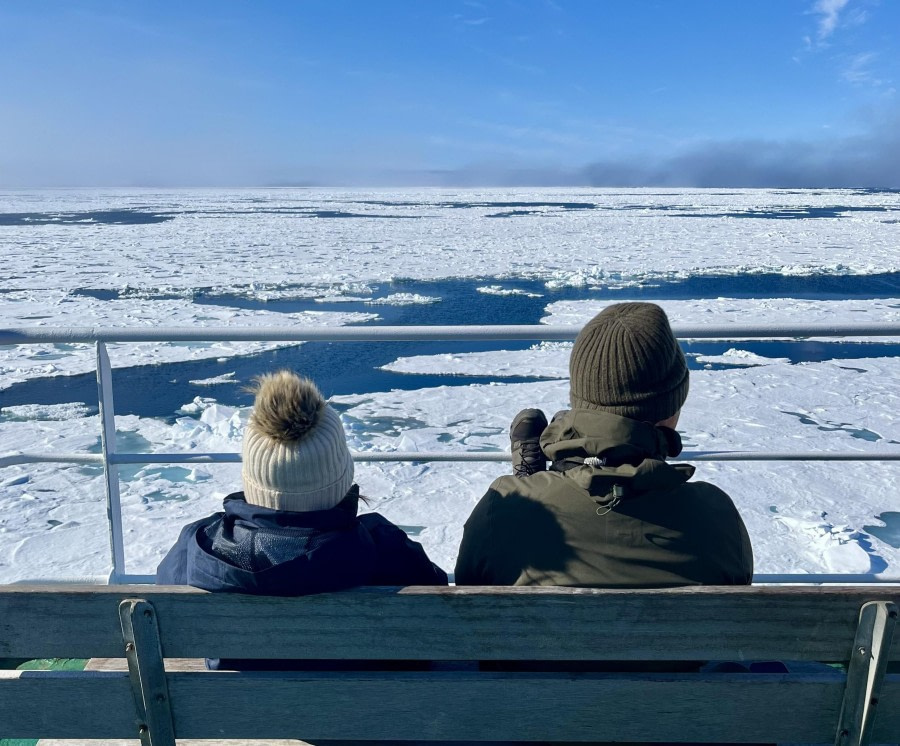
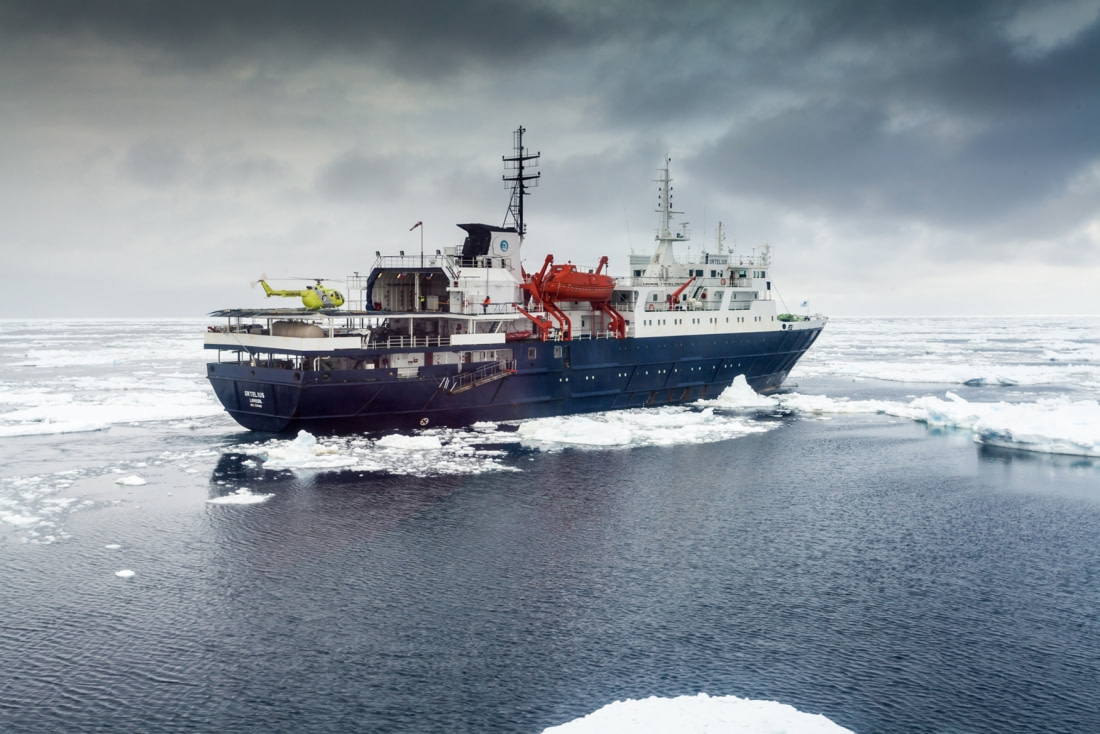
Soon afterwards, breakfast was served and MV Ortelius began entering the pack ice, a unique landscape that can truly be appreciated here in the High Arctic. Sea-ice floes stretched out on both the port and starboard sides of the ship as she made her way into the realm of the polar bear. At first, the floes were relatively small, only a few meters across and about a meter thick, but they quickly became larger and brighter. Later, we learned that the increasing albedo effect of the sea ice was reflecting between 85 and 90 percent of the incoming solar radiation.

Sunglasses were essential while walking around the outer decks and taking the first photographs of the day among pressure ridges and melt ponds scattered across the surface of the ice. As MV Ortelius ventured deeper into the pack ice, the first polar bear of the day was spotted. However, the animal was not keen to share its environment with us and spent the next half hour steadily moving away from the ship. The decision was made to leave the bear undisturbed, and we continued northward, accompanied by occasional flocks of kittiwakes and Brunnich’s guillemots. The ever-changing sunlight cast shifting shades of grey and brilliant highlights across the extraordinary Arctic landscape before us.

By mid-morning, we gathered in the lounge, where Marco shared fascinating insights into the formation and dynamics of sea ice in the Arctic Ocean. Lunch was served shortly afterwards, followed by a brief period of rest before we returned to the lounge for Pippa’s lecture on polar bears—the iconic animals of the Arctic.

Meanwhile, the expedition staff continued their diligent search for wildlife from the bridge. Eventually, their efforts were rewarded. Expedition Leader Ali, assisted by the staff team, spotted two polar bears resting on the pack ice. Captain Ernesto and Chief Officer Don skillfully maneuvered the ship to approach the bears quietly and respectfully.

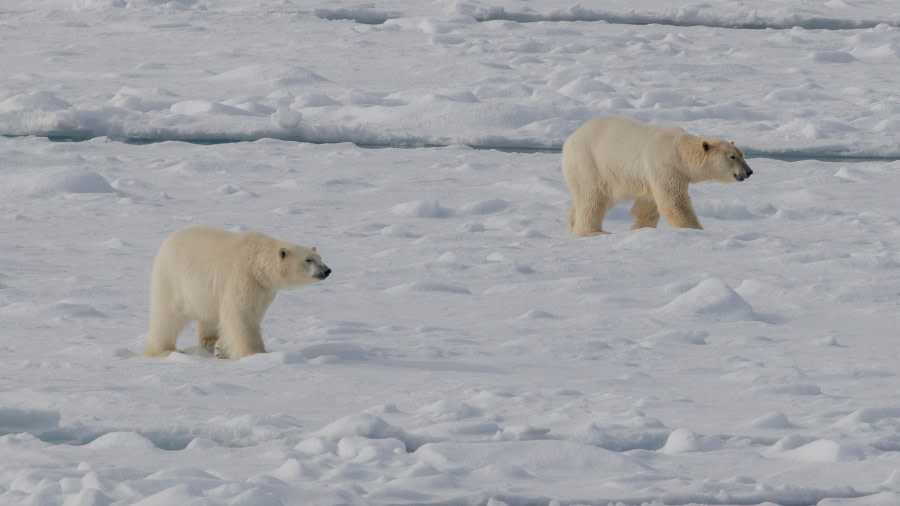
The bears, a male and a female, soon stood up and began wandering away from the ship, moving together in what appeared to be an amusing and intriguing mating dance. At times they moved farther away, while at others they approached the ship, coming surprisingly close. Everyone, armed with smartphones and powerful camera lenses, was able to capture these precious moments that will undoubtedly be cherished forever.

As the sunlight slowly faded into the endless Arctic horizon, the bears eventually settled down to rest on the sea ice while the ship remained at a respectful distance. The day concluded with a short recap led by Ali, who outlined the plans for the following day and invited everyone to the helideck for a special Arctic dinner.

The Arctic barbecue was prepared and served by the friendly galley and restaurant team. Although the evening was cold and breezy, everyone enjoyed warm food, good company, and lively conversation outdoors. A glass of mulled wine and the pale glow of the midnight sun during the Arctic summer solstice provided a welcome touch of warmth.

It was certainly another unforgettable day of an expedition filled with endless surprises.

Day 6: In the pack ice & At Sea

In the pack ice & At Sea
Fecha: 17.06.2026
Posición: 80°39.4’N / 012°42.3’E
Viento: NE 3
Clima: Fog
Temperatura del Aire: -2

The morning began in absolute, breathtaking stillness. As the gentle wake-up call echoed through the ship at 0745, many of us woke to a sensation that has become rare in modern travel: complete silence. Throughout the night, the ship’s engines had been turned off, allowing us to drift in harmony with the frozen world. We had spent the night suspended in the embrace of the pack ice, stationary, quiet, and entirely at the mercy of the Arctic currents.

Stepping out of our cabins, we were greeted by a radiant, blinding sun reflecting off the endless white landscape. Nature treated us to a spectacular, unexpected phenomenon—a vibrant fogbow, or "white rainbow," spanning across the ice, casting an ethereal glow over our morning. After fueling up at the breakfast buffet in the dining room, everyone eagerly bundled up and headed out to the observation decks around 10:00 AM. There, cutting through the vast frozen desert, we spotted a familiar silhouette on the horizon: our sister ship, the Hondius. The two vessels exchanged distant, warm greetings across the frozen expanse before we continued our slow, deliberate push forward through the floes.

At 11:00 AM, the morning's intellectual journey began as Allan gathered us in the lounge to present the legendary Fridtjof Nansen – Arctic Drift Expedition. Hearing how Nansen intentionally froze the Fram into this very same pack ice between 1893 and 1896 gave us a profound appreciation for the historic, unforgiving waters we were currently navigating.

"By noon, the expedition leader, Ali, delivered a bittersweet announcement: our time in the deep pack ice was drawing to a close. We had only a few hours left before the bow would turn back toward the rugged coastlines of Svalbard."

To celebrate our final hours in the ice, the galley team surprised us with Mexican-themed lunch buffet featuring fresh tortillas and an array of flavorful toppings that warmed everyone up from the inside out.

By early afternoon, we officially left the ice edge behind. The afternoon became a dual pursuit of education and wildlife spotting. While keeping a sharp lookout on the horizon for whales against the backdrop of the reappearing Svalbard peninsula, we enjoyed two spectacular presentations. First, Koen held an insightful photography workshop in the lounge, teaching us how to better capture the unique exposure and contrast of polar landscapes. Shortly after, Sasha took the stage to share deeply personal, fascinating stories of his past life as the manager of Pyramiden—the haunting, abandoned Soviet ghost town on Svalbard.

We concluded this magnificent day at 18:30 with our daily recap in the lounge. As the ship sailed southward, the expedition team briefed us on the grand finale awaiting us tomorrow: a planned landing to see the magnificent colonies of walruses on the fantastic shores of Prince Karls Forland. Anticipation is high as we head into dinner , looking back on a perfect Ice Day and looking forward to the wild coastlines ahead.

Day 7: In the pack ice

In the pack ice
Fecha: 18.06.2026
Posición: 78°15.5’N / 012°36.4’E
Viento: SE 4
Clima: Rain
Temperatura del Aire: +2

After an early breakfast, we made a morning landing at Poolepynten, arriving ashore in the soft light of the Arctic day. Our goal was to observe the walrus haul-out, and we were rewarded with excellent views of these remarkable animals resting along the shoreline. The calm atmosphere allowed us to appreciate both their impressive size and the unique wildlife spectacle that makes this site so special. It was a memorable start to the day and a wonderful opportunity to experience one of Svalbard’s most iconic species in its natural habitat.

As the weather began to deteriorate, we repositioned the ship and adjusted our plans accordingly. Despite the challenging conditions, the afternoon brought an unforgettable experience when we landed at Alkhornet. What followed were two extraordinary hours exploring the tundra beneath the dramatic bird cliffs. The highlight was undoubtedly the Arctic foxes: several adults were actively foraging, while playful cubs could be seen around their den, providing exceptional wildlife encounters and countless photographic opportunities. Surrounded by spectacular scenery and abundant birdlife, the landing at Alkhornet became one of the standout moments of the voyage, a perfect reminder of the resilience and richness of Arctic nature even in unsettled weather.

Time flies when you’re having fun and after a week full of adventure, fantastic hikes, zodiac cruises and wildlife, our last evening onboard began. Ali invited us to the bar for our so-called Captain’s Cocktail during which we toasted the trip together with the captain, the hotel managers and the expedition team. Marco had made a fantastic slide show which was shown at the end and right before dinner. It was a wonderful video and a beautiful memory to take home with us.

After dinner we enjoyed the outside scenery while the ship steadily made its way back to Longyearbyen. What a fantastic trip it has been!

Day 8: Disembarkation Day

Disembarkation Day
Fecha: 29.06.2026
Posición: 78°14.6’ N / 015°32.6’ E
Viento: NE 2
Clima: Overcast/Snow
Temperatura del Aire: +2

It was a quiet, peaceful Spitsbergen morning. Ortelius was slowly making her way into Adventfjorden. Light snow drifted through the air, reflecting the gentle sadness of the farewell that lay ahead. Many of us had woken up early so that, while enjoying a morning cup of coffee in the bar on Deck 6, we could savor the final moments of the voyage.

The outlines of the airport and the metal structures along the shore, remnants of the era when coal mining was still active, became increasingly distinct. Stretching along the mountainside was the old aerial tramway, now preserved solely as a cultural heritage site.

And there was the coal pier. It seemed as though only yesterday a bus had brought us there and we, filled with excitement and anticipation for the journey ahead, had climbed the gangway aboard Ortelius. And now here we were again, mooring at the same pier so that we could leave our temporary, yet so painfully familiar floating home.

Ali, our expedition leader, woke us at 7:15 a.m. We placed our packed suitcases outside our cabin doors and headed for breakfast, while members of the expedition team collected our luggage and arranged it in neat rows on the pier.

Soon the bus appeared in the distance once again. Slowly pulling up to the gangway, it opened its doors, and we took our seats, saying goodbye to the expedition team. Our unforgettable adventure had come to an end. Polar bears, Arctic foxes, walruses, seals, ice, cliffs, tiny flowers, Zodiacs, decks, binoculars, cameras, and rubber boots—all of it was now becoming part of the past.

But it is never too late to return.

So, until next time, Ortelius! Until next time, Spitsbergen! This is not goodbye.

Total distance sailed on our voyage: 868 nautical miles

Most northern point sailed: 80°39.524’ N, 012°51.939’ E

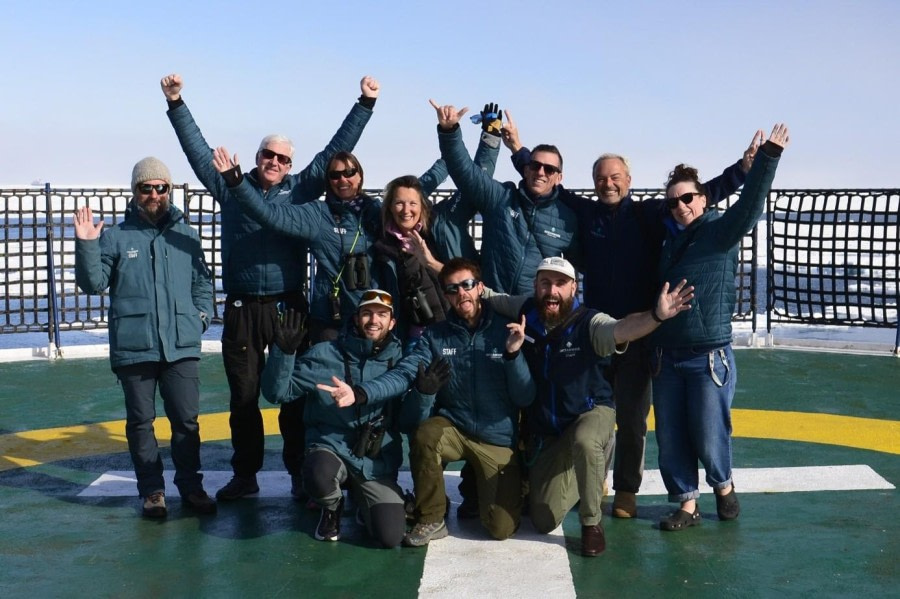
On behalf of Oceanwide Expeditions, Captain Ernesto Barria, Expedition Leader Ali Liddle, Hotel Manager Volodymir Cherdnychenko and all the crew and staff of M/V Ortelius, it has been a pleasure and a privilege travelling with you. Your Oceanwide Expeditions Team Sasha, Allan, Ali, Dr. Marieke, Claudio, Koen, Pippa, Enric, Marco, George

Detalles

Código del viaje: OTL04-26
Fechas: 12 jun. - 19 jun., 2026
Duración: 7 noches
Barco: El Ortelius
Embarque: Longyearbyen
Desembarque: Longyearbyen

¿Ha estado en este viaje?

A bordo El Ortelius

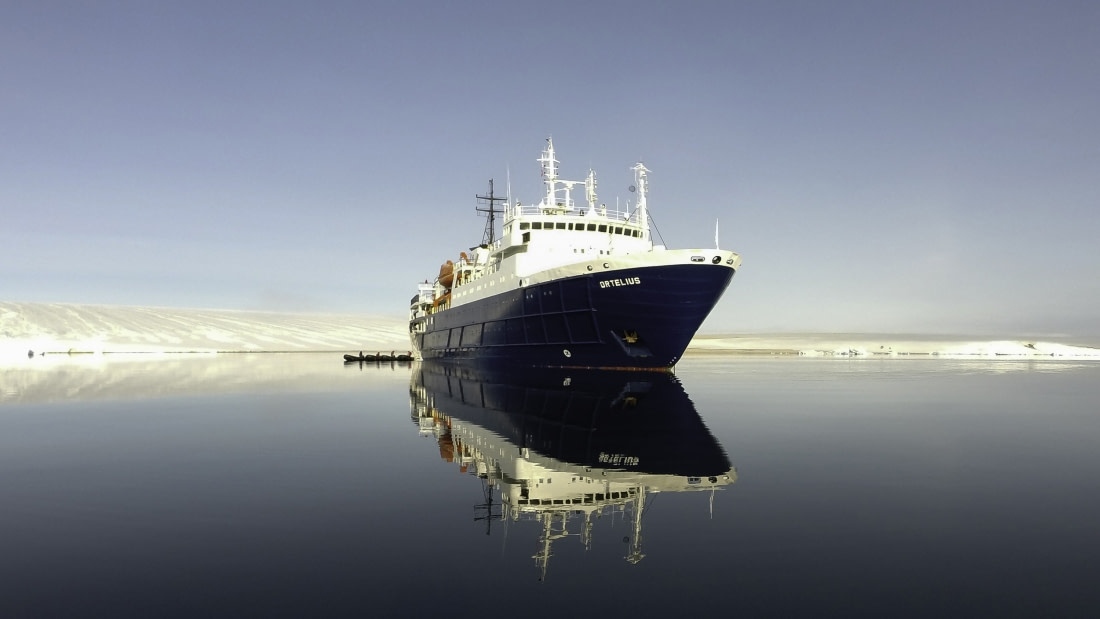
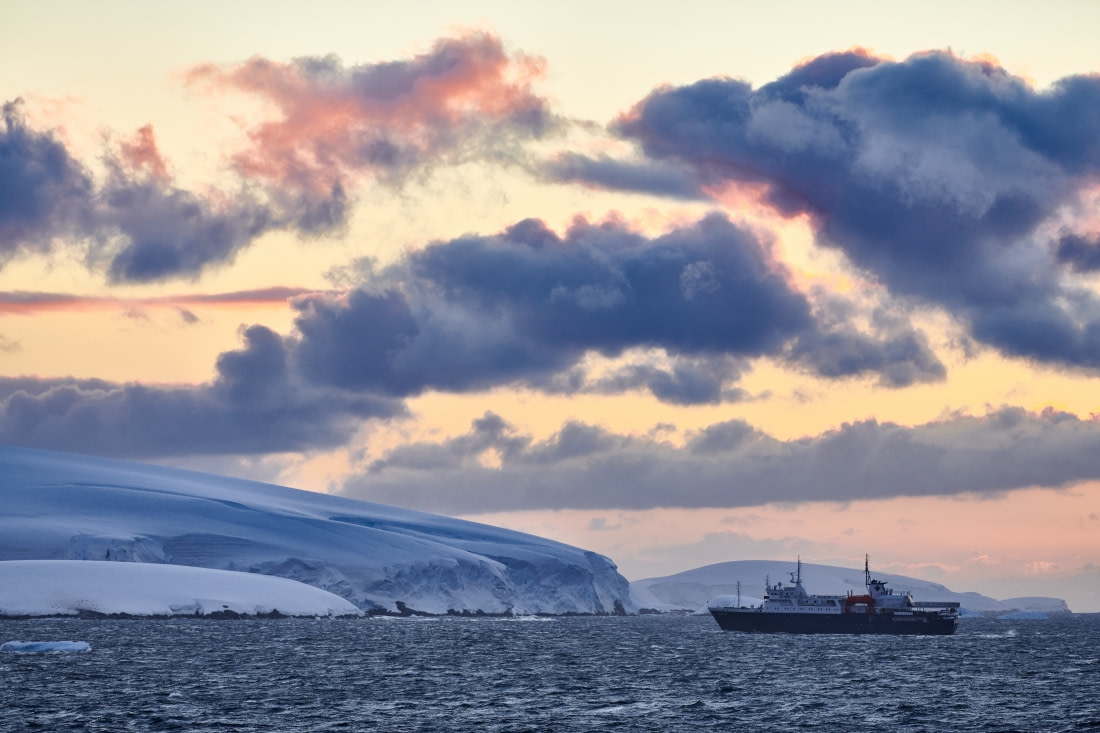
El Ortelius, reforzado para navegar en el hielo, está completamente equipado para la exploración polar y, en caso necesario, para vuelos en helicóptero.

Más información El Ortelius »
Loading