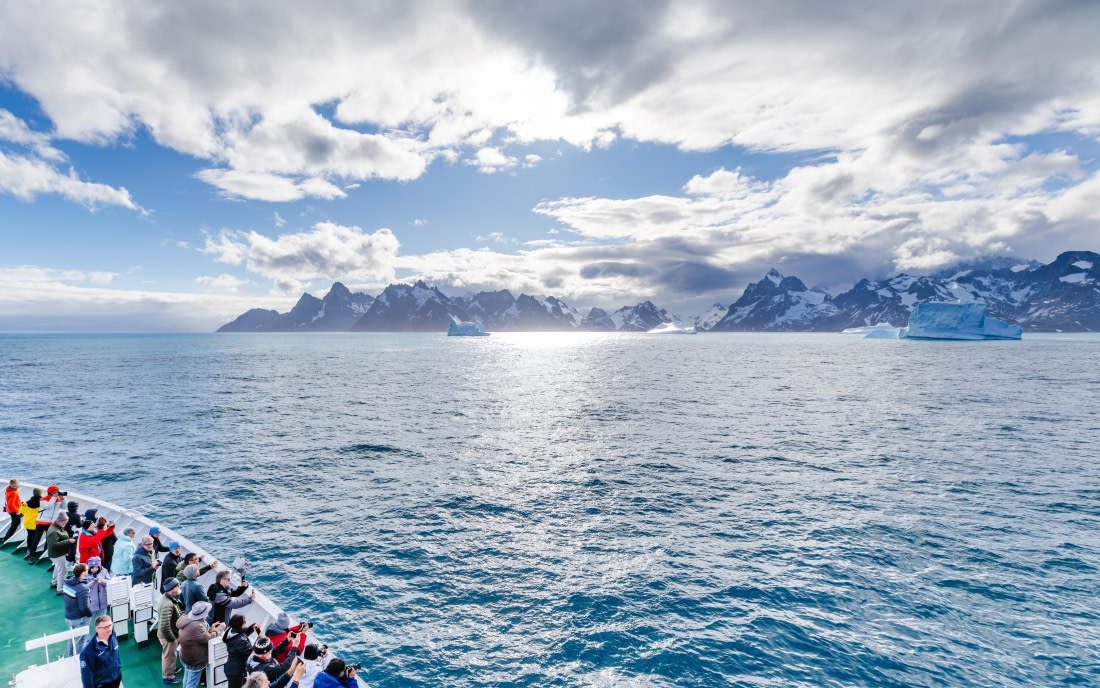
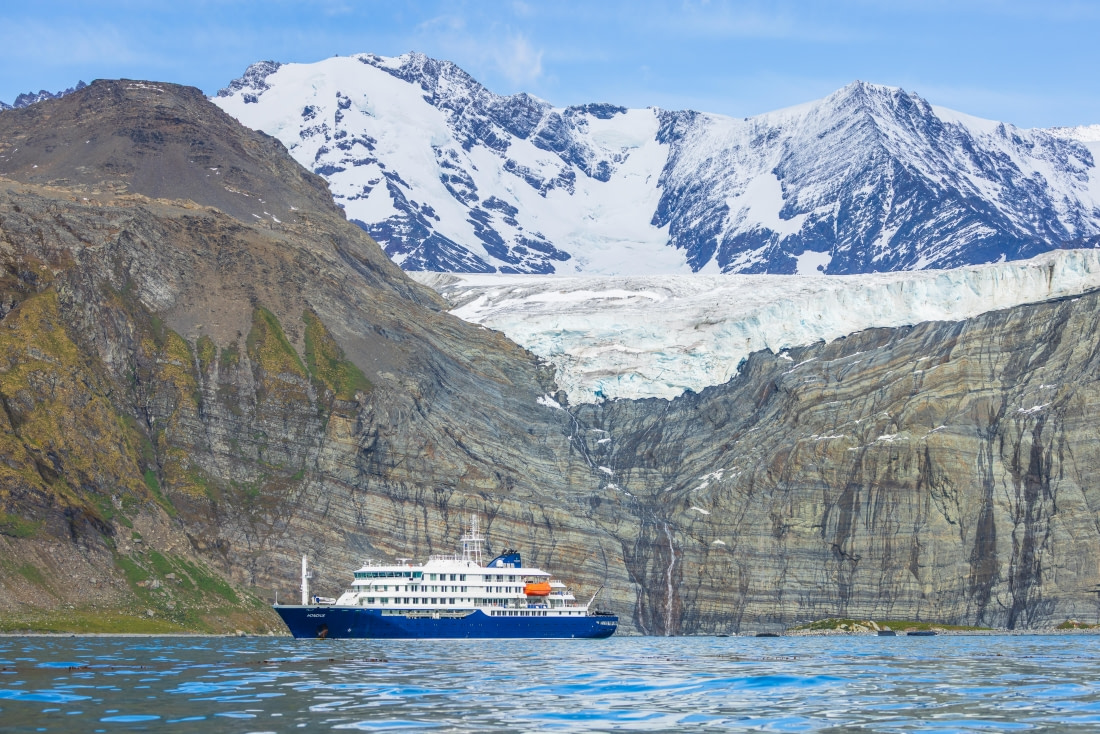
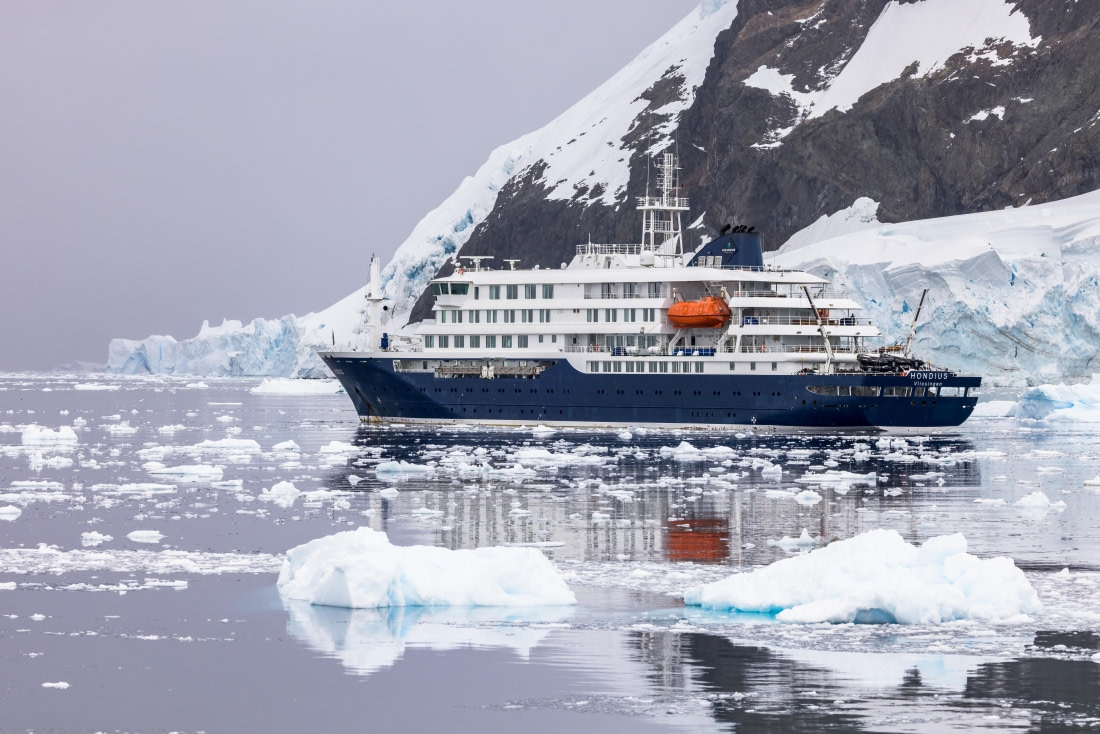
HDS27-26, trip log, Antarctica - Discovery and learning voyage

by Oceanwide Expeditions

Galería de fotos

Bitácora

Day 1: Ushuaia, Embarkation Day

Ushuaia, Embarkation Day
Fecha: 18.01.2026
Posición: 54°48.5 S, 068°17.9 W
Viento: W4
Clima: Overcast
Temperatura del Aire: +8

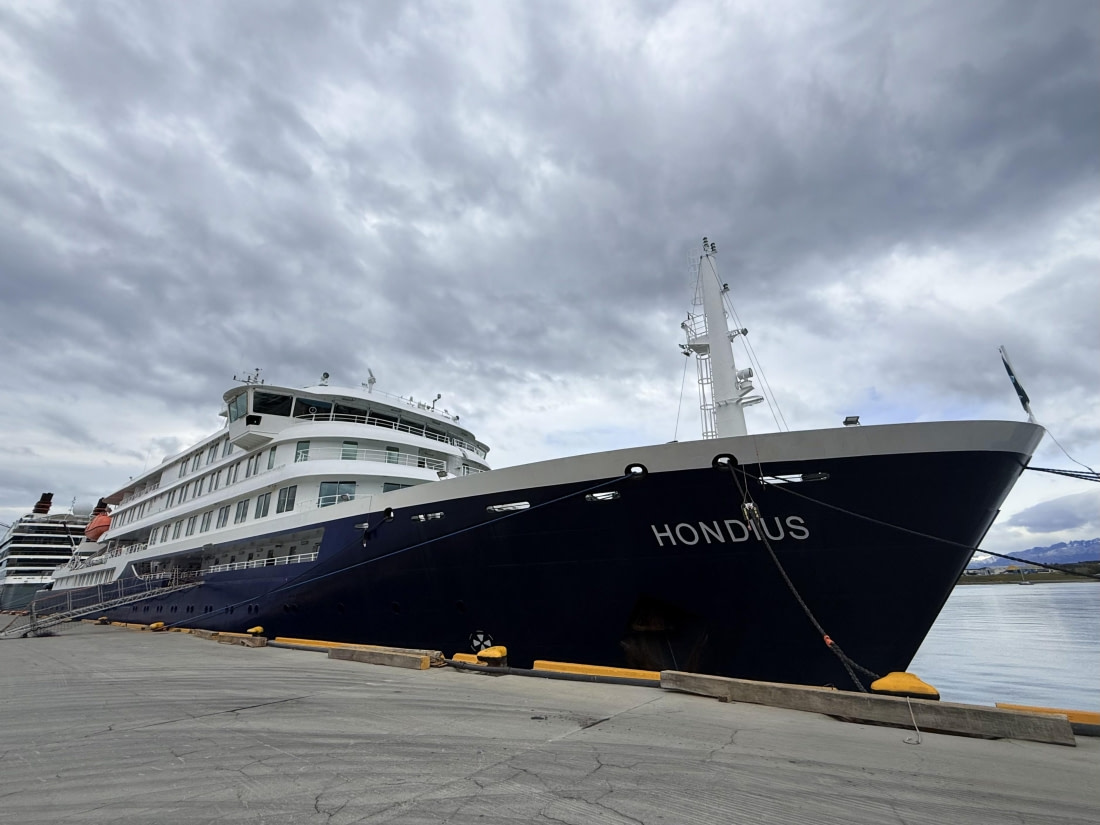
Our first day of the expedition began with everyone boarding the ship full of excitement about our journey to Antarctica. After settling into our cabins and making sure our luggage had arrived safely, most of us gathered in the lounge, where tea and coffee were waiting.

Soon, our Expedition Leader, Marcel, called us together to explain ship safety. We took part in a mandatory abandon-ship drill, putting on our life jackets and learning exactly what to do in case of an emergency. Once the drill was complete, Captain Ernesto welcomed us to the observation lounge with an inspiring speech.

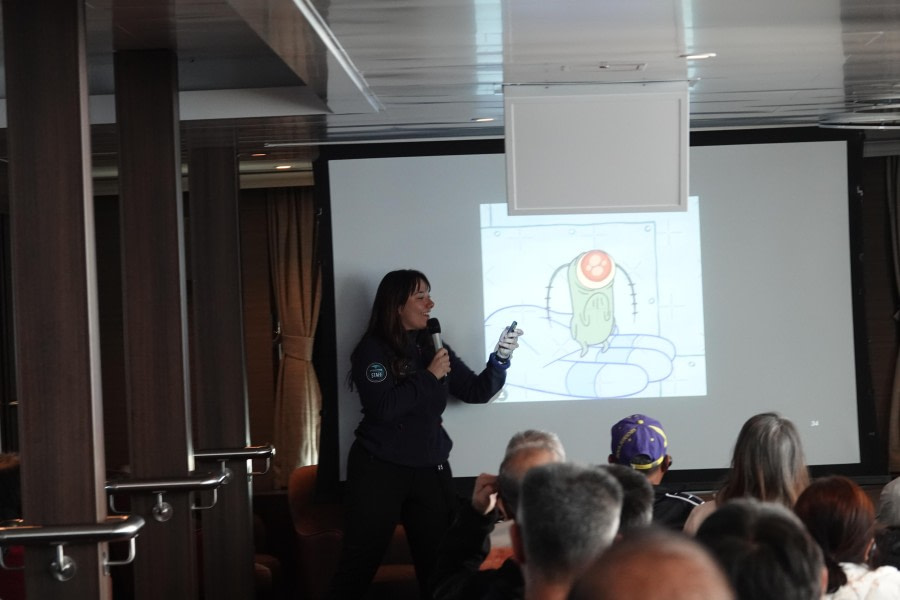
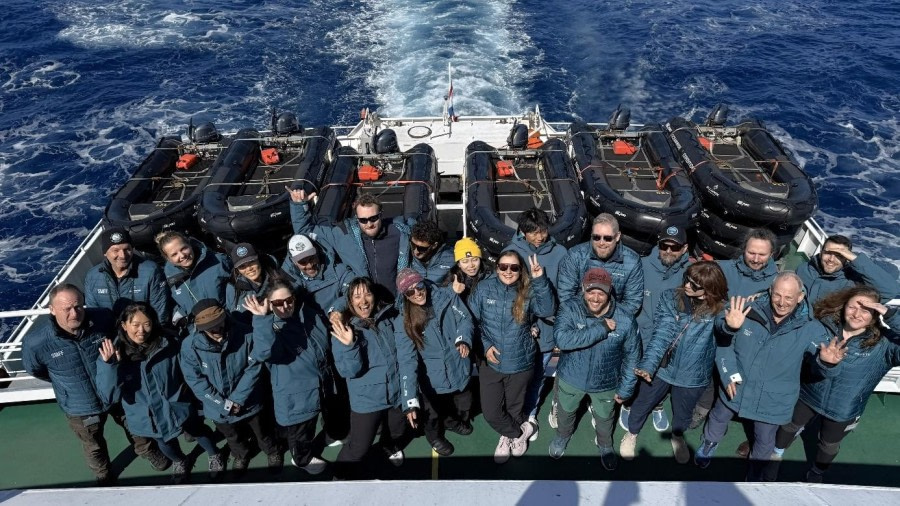
Marcel then told us what we could expect from the adventure ahead, and the expedition team introduced themselves. The team had an impressive range of knowledge, specialties, and education, and together they spoke 13 languages. It was exciting to know we were in such experienced hands.

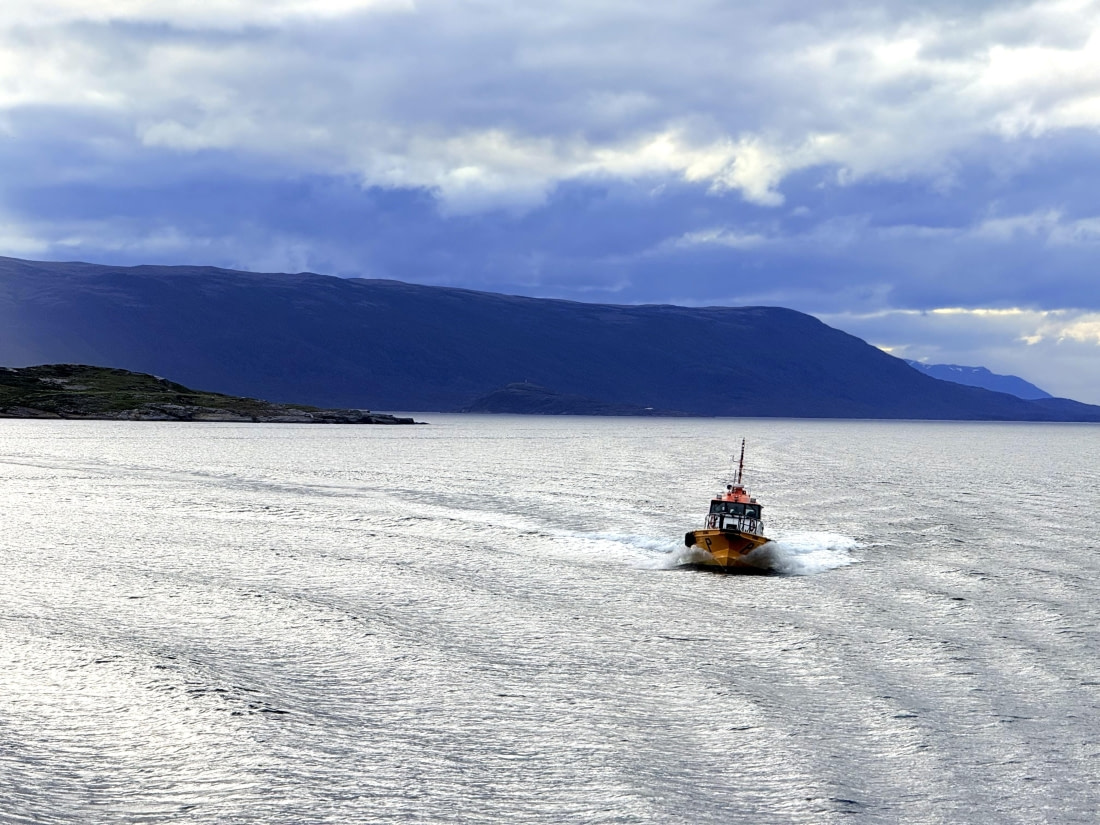
As we sailed through the Beagle Channel, we spotted our first wildlife. Dolphins followed alongside the ship, and we were lucky enough to see a minke whale. This was an exciting start to the journey.

Before going to bed, we secured our belongings as instructed, knowing we would soon be sailing onto the open sea, into the famous Drake Passage. A storm was approaching, so the captain decided to run at full speed using two engines. At 16 knots, we successfully outran the storm. The ship rolled strongly, and we could feel every movement, but we were lucky to avoid the worst waves.

It truly felt like the beginning of the adventure — a mix of excitement, sea air, and the pleasant uncertainty of what the next days would bring.

Day 2: Drake Passage

Drake Passage
Fecha: 19.01.2026
Posición: 58°20.05’S / 65°45.3’W
Viento: WSW4
Clima: Partly cloudy
Temperatura del Aire: +5

The first day of MV Hondius’ southbound crossing of the Drake Passage began with a clear sense of anticipation and respect for one of the world’s most infamous stretches of ocean. The day before departure, passengers were carefully briefed on the rough weather conditions forecast ahead. As a result, sea-sickness medication was in high demand, and cabins and communal areas echoed with the sounds of gear being secured and loose items stowed. There was a shared understanding that preparation would be key to a comfortable and safe crossing.

When morning arrived, the Drake lived up to its reputation—though perhaps not in the way many expected. Instead of grey skies and chaos, passengers awoke to a beautiful, sunny morning, the ship bathed in crisp southern light. Beneath the calm appearance, however, the ocean was very much alive. Rolling 4–5m swells set the ship into a steady rhythm of pitching and rolling, a gentle reminder that this was no ordinary sea. Despite this, spirits remained high. Most passengers were up and about, navigating corridors and stairways in various states of balance and fitness, bravely adapting to their sea legs.

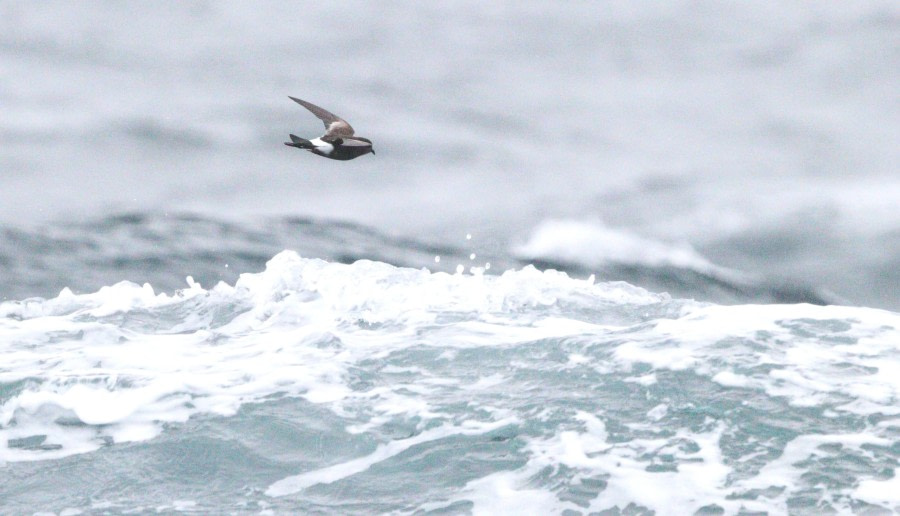
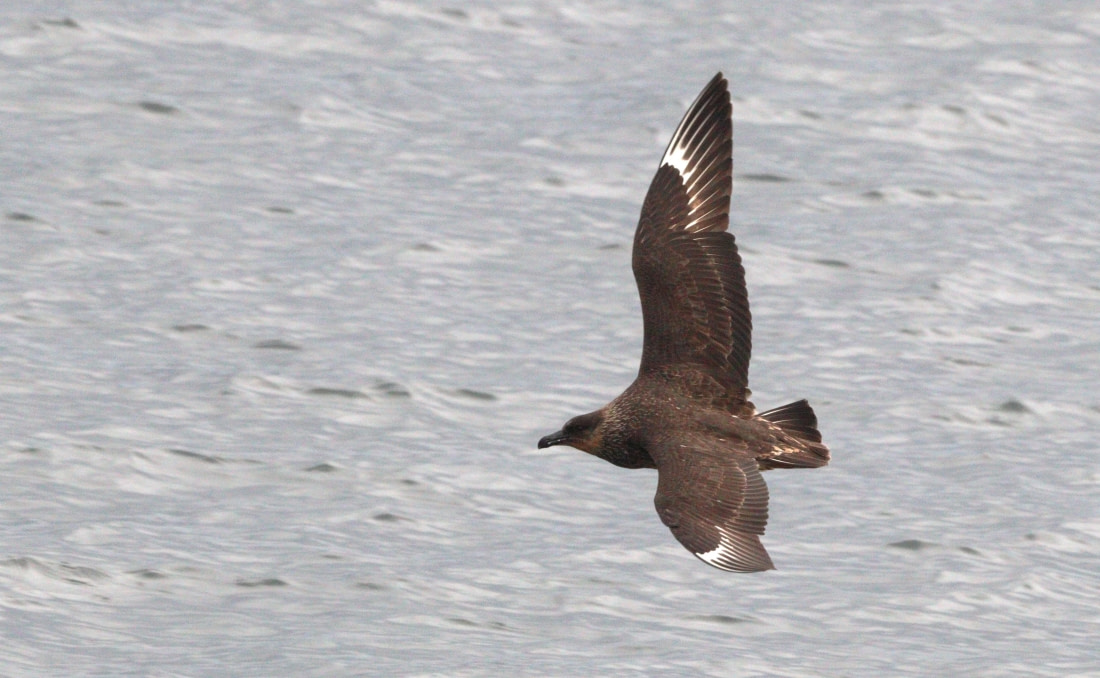
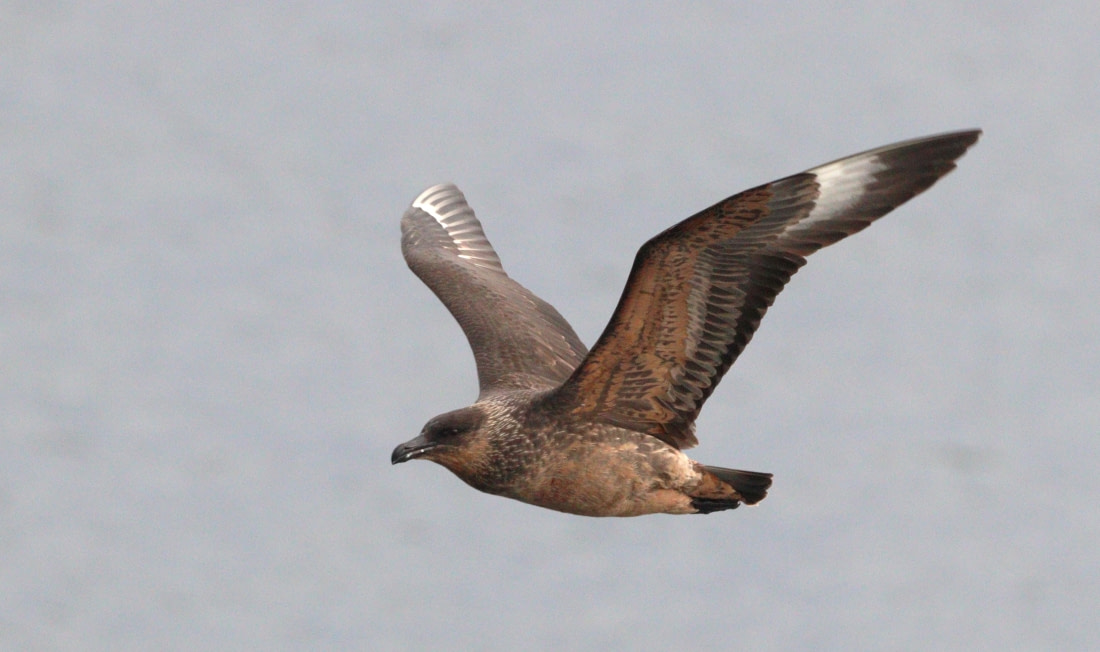
Wildlife sightings were limited throughout the day, but quality made up for quantity. Two Southern Giant Petrels accompanied the ship almost continuously, effortlessly gliding alongside Hondius as if guiding her south. Their impressive wingspans and confident flight drew many observers out onto deck, where they were well appreciated despite the ship’s motion.

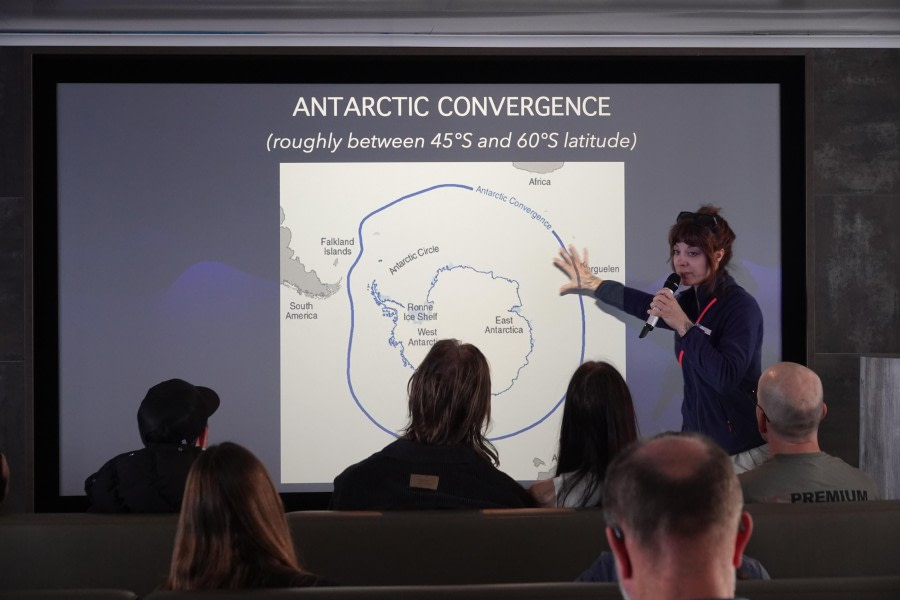
As the day progressed, the ship’s lecture program became a focal point, with attendance steadily increasing as passengers grew more comfortable on their feet. Simon opened the day’s talks with an engaging presentation on the albatross species likely to be seen during the voyage, setting the tone for wildlife encounters ahead. This was followed by informative sessions on whales and dolphins by Andi in English and Jerry in Mandarin, ensuring accessibility for the ship’s diverse group of travelers.

After lunch, attention turned to upcoming adventures ashore with a mandatory briefing for those planning to participate in Antarctic camping with Brian and Hana. The excitement was palpable as passengers learned what to expect from this unique experience. Later in the afternoon, Jodi (in English) and Rose (in Mandarin) transported listeners back in time with a fascinating lecture on early Antarctic exploration, with particular focus on Jean-Baptiste Charcot’s pioneering expeditions in the early 1900s.

By evening, the ship felt noticeably livelier. Most passengers had emerged from their cabins, gathering in lounges and on deck to enjoy the dramatic seascape. Though Hondius continued to rock and roll, the conditions were undeniably beautiful, and the shared experience of conquering the Drake on its first day brought a growing sense of camaraderie and excitement for the Antarctic days ahead.

Day 3: Drake Passage

Drake Passage
Fecha: 20.01.2026
Posición: 63°00.6’S / 061°53.2’W
Viento: WNW7
Clima: Overcast
Temperatura del Aire: +4

The Drake Passage granted us a rare gift for our final day at sea: tranquility. The restless Southern Ocean, infamous for its fury, settled into a gentle sway that allowed for a deep, restorative sleep. We began our day at 8:00 AM, gathering at the buffet to fuel our bodies—a quiet moment of preparation for the monumental days lying just over the horizon.

To help us do justice to Antarctica’s haunting beauty, Valeria hosted a specialized photography workshop. She showed us how to outsmart our cameras, adjusting the white balance so the brilliant snow remains pure instead of fading into a muddy grey. We practiced finding scale, using our ship or a lone figure to reveal the true height of the icebergs. Most importantly, we learned wildlife patience.

By mid-morning, the expedition felt tangible as we were fitted for our Muck Boots. These heavy, insulated guardians are more than just footwear; they are our ticket to the ice, designed to keep us bone-dry during wet landings and shielded from the biting polar chill.

After a brief afternoon rest, the tone shifted toward our responsibilities as visitors. At 3:00 PM, we attended the mandatory IAATO and Zodiac briefing to learn the strict protocols of polar travel. This was followed by a biosecurity session. We became a community of cleaners—vacuuming pockets, scrubbing Velcro straps, and inspecting every fold of our clothing. In such a pristine ecosystem, a single stray seed or foreign spore could be a biological invader. This ritual is our promise to the continent: to leave nothing behind but footprints.

We closed the day in the lounge for our final "Recap." As the expedition team mapped out tomorrow’s landing, the air crackled with anticipation. The long wait is nearly over. Tonight, we share one last dinner and a final night of rest at sea, knowing that when we wake, the majestic silhouette of the Antarctic Peninsula will be waiting.

The adventure of a lifetime begins tomorrow.

Day 4: Cuverville and Orne Harbour

Cuverville and Orne Harbour
Fecha: 21.01.2026
Posición: 64°37.9’S / 62°35.5’W
Viento: SW3
Clima: Partly cloudy
Temperatura del Aire: +5

Grey skies, mountain peaks wrapped in cloud, glaciers, icebergs, and the slightly rippled surface of the Gerlache Strait — this was how our first morning on the Seventh Continent greeted us. Our first encounter with Antarctica, our first true expedition day. We were mentally prepared, equipped with knowledge and skills, and gazed eagerly at the cold, inhospitable shores — oh, how we longed to set foot on land!

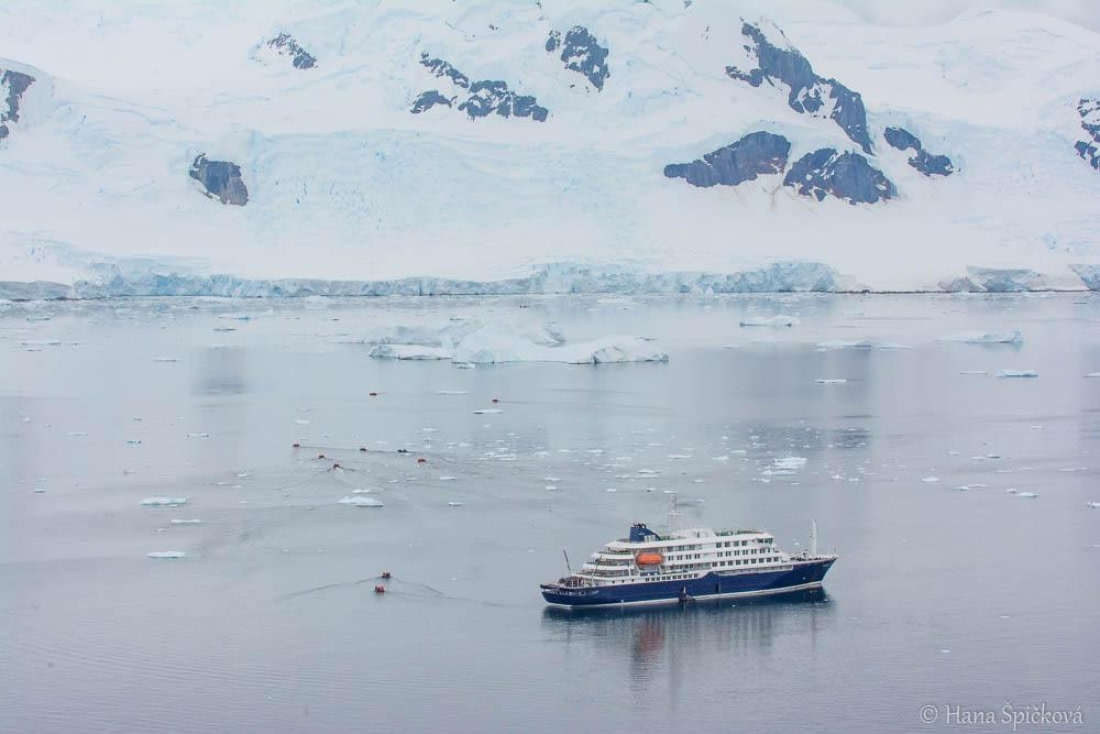
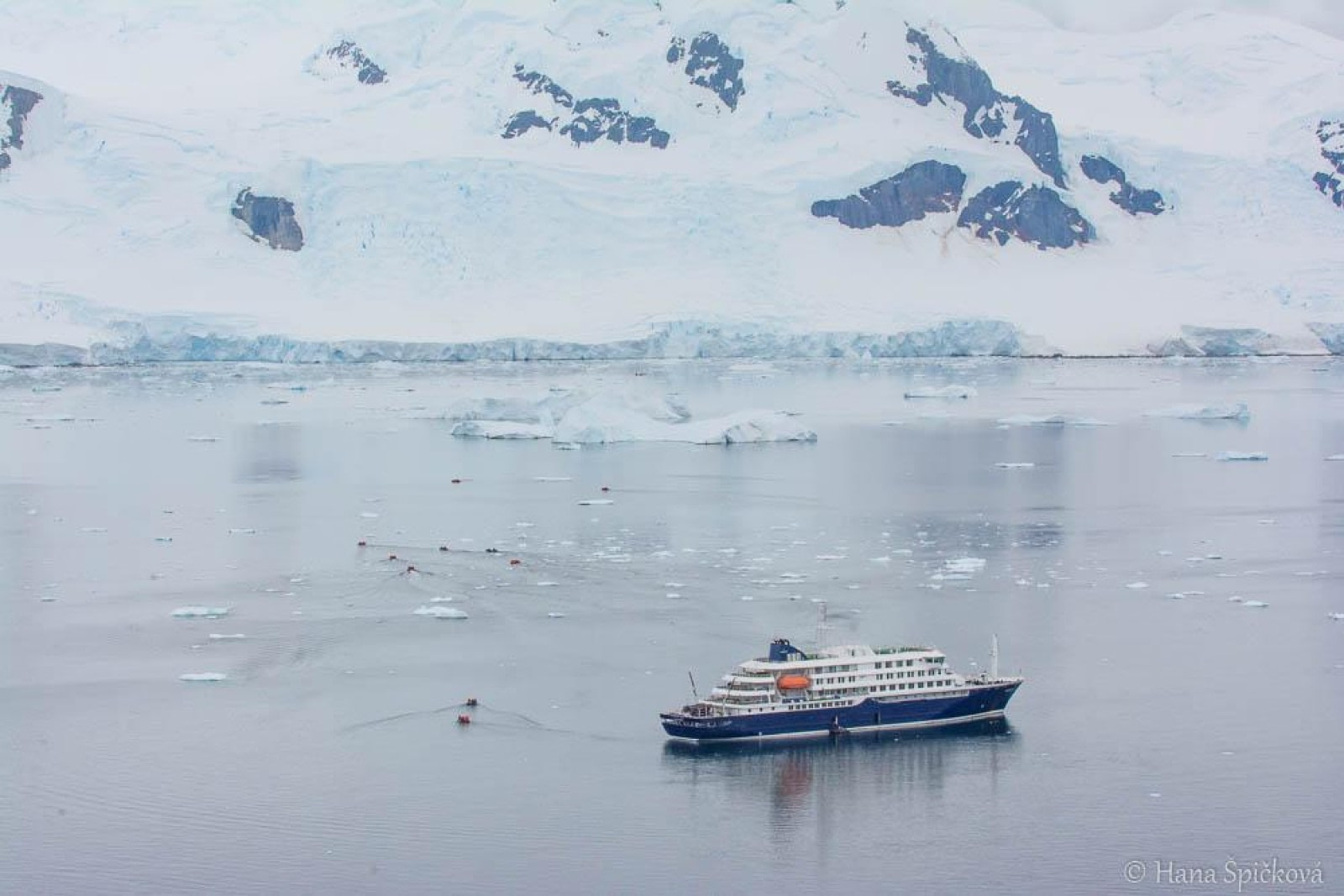
Hondius, our ship and our home for the coming days, dropped anchor near Cuverville Island — a small landmass resembling a mountain rising straight out of the sea, a rugged fragment of land with steep, forbidding shores, here and there covered in eternal ice. The northern coast, however, was relatively gentle and suitable for landing, and that was where we were headed. The main attraction of the island was, of course, the penguins — and not just any penguins, but the largest colony of Gentoo penguins on the Antarctic Peninsula, and perhaps even in the entire world.

After breakfast, we all gathered in the Zodiac boarding area and gradually began making our way ashore. The rules for visiting Antarctica state: “No more than one hundred visitors at a time!” — and there were far more of us than that. So we divided into two equal groups: while one group explored the shore on foot, the other examined the surroundings from the water during a Zodiac cruise, after which we swapped places.

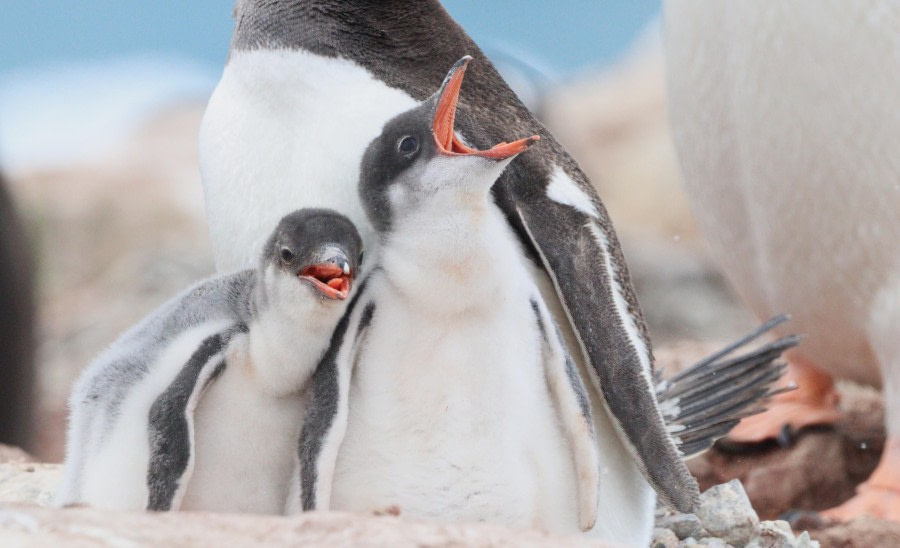
It was the second half of January, so all the penguins had already produced offspring and were tending to their chicks — grey, fluffy, comical, and clumsy little creatures. Bustling back and forth along the shore, the adult penguins were always in a hurry — some heading out to sea to feed on krill, others returning from the water, full and content, to feed their young. In short, everyday penguin life. We tried to capture every moment, taking photographs and shooting video.

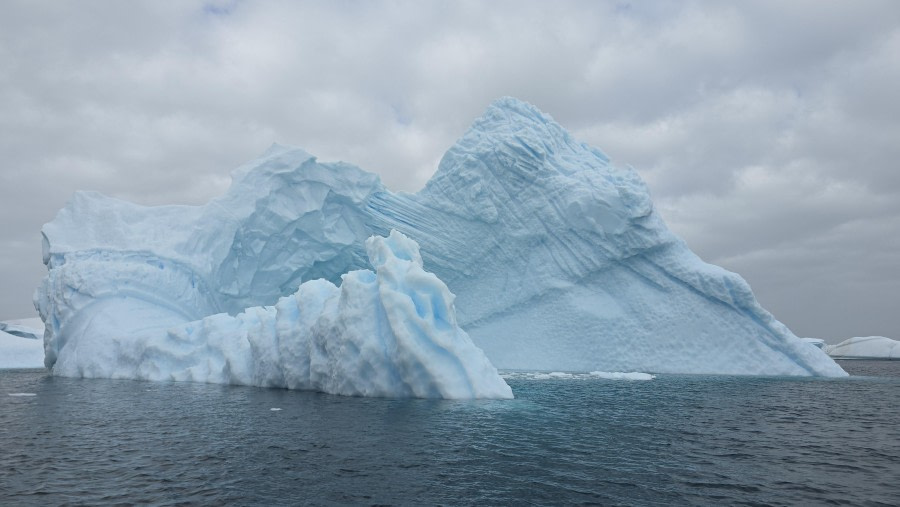
The Zodiac cruise was no less fascinating. We meandered around small icebergs, admiring the bizarre shapes of the ice, and watched penguins darting playfully through the water. The weather was calm — an ideal start to the expedition.

Returning to Hondius, we headed to the restaurant on Deck 4 for lunch. While we satisfied our hunger, the ship was already underway, crossing the waters toward the site of our second activity — Orne Harbour.

A landing at Orne Harbour is more than just a landing; it is an opportunity to step directly onto the Antarctic continent itself. This is one of the key differences between Orne Harbour and Cuverville Island.

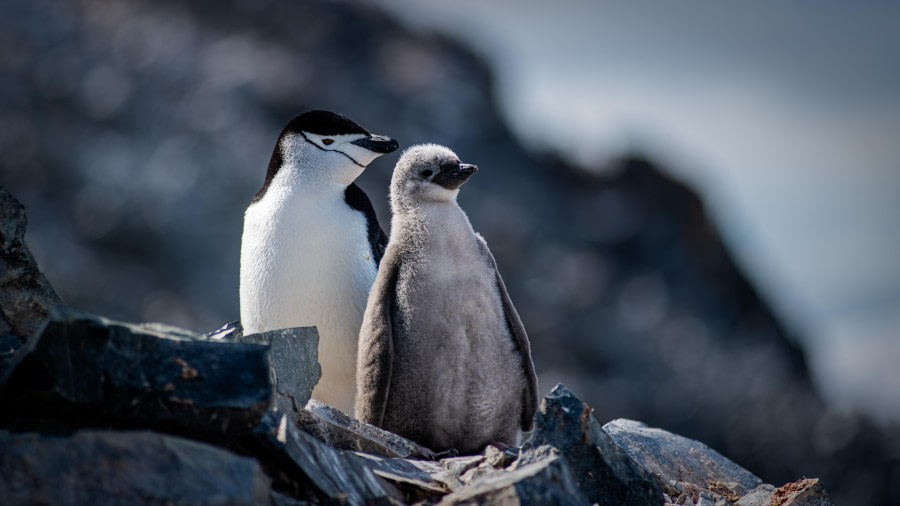
Naturally, one of the main attractions here was again the penguins — how could it be otherwise! — but this time they were not Gentoos, but Chinstrap penguins. They are slightly smaller and have a somewhat different coloration.

To see them, we had to undertake a genuine ascent — climbing more than one hundred metres uphill. Penguins, honestly! Of all places, they had chosen to establish their colony at such a height. Didn’t they get tired of trekking up and down, back and forth, every single day of their lives?

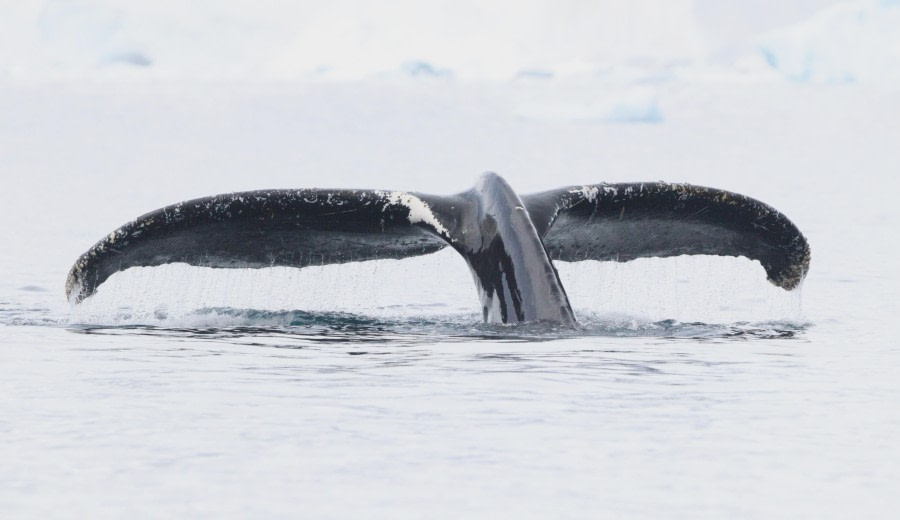
The climb was no easy task. Out of breath, sweaty, and exhausted, we hauled ourselves up the trail with our last reserves of strength. But at the top, a reward awaited us for our efforts — a breathtaking view of the surroundings. We could see the mountains, the glaciers, the surface of the Gerlache Strait, where humpback whales could be spotted here and there, sending fountains of spray into the air and waving their tails at us. Below, Zodiacs carried those among us who had begun the afternoon program with a Zodiac cruise.

The Chinstrap penguins zealously guarded their chicks, snapping their beaks and shouting at skuas circling overhead. We, in turn, clicked our camera shutters. After taking in the beauty, we descended and, swapping places with the second group, set off on our own Zodiac cruise to get a closer look at the whales.

Upon returning to the ship, we were met by a recap with the expedition team, followed by dinner.

Incredible! And this was only the very first day! It is almost frightening to imagine how many more wonders still await us!
Day 5: Fournier Bay and Neko Harbour

Fournier Bay and Neko Harbour
Fecha: 22.01.2026
Posición: 64°41.5’S / 62°36.2’W
Viento: SSW2
Clima: Overcast
Temperatura del Aire: +5

Today we woke up under bright sunshine — is this Antarctica or the Maldives? Hard to tell just by looking out the window… until a penguin jumps by. Yes, it is really Antarctica.

The expedition team had another full day of activities planned for us. Overnight we arrived at Fournier Bay, and even before launching the zodiacs, we spotted numerous whales around the ship while enjoying breakfast.

We set off on a full-ship zodiac cruise, and the morning was exceptional. Humpback whales surrounded the bay, allowing us to spend several unforgettable hours among them. Some of us were lucky enough to experience incredibly close encounters, with especially curious whales circling around and even swimming beneath our zodiacs.

It was a moment many of us will remember forever. Even some of the guides mentioned that, after working here for many years, they could count on one hand the number of close interactions like the ones we experienced this morning.

Turning back to Hondius wasn’t easy, but lunch awaited, and we needed to reposition the vessel for the afternoon’s plans.

Later, we arrived at the famous Neko Harbour. Half of us went ashore while the others enjoyed a zodiac cruise, and midway through the afternoon we swapped.

The landing was magical. We climbed a snowy hill to a stunning viewpoint overlooking the impressive glacier front of Neko Harbour. Some of us witnessed loud glacier calving, while others spent time observing the gentoo penguin colony. It was the perfect combo of “antarctiness” : icebergs, penguins, a towering glacier front, and whales in the background.

As the afternoon went on, the wind picked up, just as the team had warned us — a true taste of Antarctic weather. It didn’t stop everyone from enjoying the zodiac cruise, especially when we were surprised by a passing zodiac from the hotel team, offering hot chocolate with rum. A perfect way to warm up as the conditions turn colder.

We then returned to our floating home, where Marcel and the team welcomed us back on board with the daily recap, followed by a buffet dinner. Once again, whales accompanied us as we sailed toward our next destination.

A truly magical expedition day, one we will cherish forever.

Day 6: Lemaire Channel, Pleneau Island and Petermann Island

Lemaire Channel, Pleneau Island and Petermann Island
Fecha: 23.01.2026
Posición: 65°09.8’S / 64°05.6’W
Viento: N2
Clima: Overcast
Temperatura del Aire: +5

We were gently awakened at 06:45, knowing something extraordinary awaited us. As we stepped on deck, Hondius was already approaching the Lemaire Channel, often called the most photogenic passage in Antarctica. Towering mountains and sheer glaciers rose on either side, some reaching hundreds of meters high, their icy faces reflecting in the glassy water. At barely 11 kilometers long and only 1,600 meters wide at its narrowest point, the channel felt intimate and dramatic, like sailing through a frozen corridor carved by time.

After soaking in the scenery, we enjoyed breakfast, still buzzing with excitement. Soon after, we boarded the Zodiacs for a cruise around the iceberg graveyard near Pléneau Island. The area was filled with grounded and drifting icebergs, many glowing deep blue where ancient ice was exposed. These colors formed as air bubbles had been compressed out over thousands of years, turning the ice crystal-clear and intensely blue. Navigating between these giants felt like drifting through a floating art gallery.

Wildlife was everywhere. Crabeater seals lounged on the ice, despite their name feeding almost exclusively on krill and being one of the most abundant seal species on Earth. We spotted Weddell seals resting peacefully, perfectly adapted to the cold and capable of diving over 600 meters. A sleek leopard seal appeared, its powerful presence reminding us that it was the top predator among Antarctic seals. Gentoo penguins surrounded us in lively rafts, porpoising through the water with incredible speed, the fastest of all penguins, reaching up to 36 km/h.

Then came the giants. A humpback whale surfaced nearby, its blow hanging in the crisp air before it arched its massive back and disappeared. These whales migrated thousands of kilometers from tropical waters to feed on Antarctic krill. Toward the end of our cruise, our hearts raced as a pod of orcas briefly appeared. Their tall dorsal fins cut through the water with silent authority, giving us a fleeting but unforgettable encounter with the apex predators of the Southern Ocean.

After lunch, we headed to Petermann Island. This small, rocky island felt alive with sound and movement. We walked among large colonies of gentoo penguins, watching adults shuttle back and forth feeding their chicks. Most special was seeing the northernmost Adélie penguin colony, with fluffy grey chicks huddled together, still guarded closely by their parents. Adélies are true Antarctic specialists, living only on the continent and nearby islands.

We ended the day with the daily recap and then an unforgettable Antarctic BBQ on deck, warmly dressed and full of excitement. As if the day had not already been magical enough, the orcas appeared once more during our dinner, gliding past Hondius and turning our barbecue into a once-in-a-lifetime wildlife spectacle. Their return made the night truly extraordinary and sealed this day as one of the most special of our entire Antarctic journey.

Day 7: Wilhelmina Bay, Punta Sucia

Wilhelmina Bay, Punta Sucia
Fecha: 24.01.2026
Posición: 64°38.1’S / 61°59.6’W
Viento: E4
Clima: Rain
Temperatura del Aire: 0

Even had we not been dodging storms, our luck has been very good this trip. Taking into account that we have been playing hide-and-seek with a massive Purple Monster, our luck morphs into the extraordinary. This morning was a prime example. Though we were not able to land at Nansen Island as hoped and snow began to fall, Wilhelmina Bay nonetheless treated us to a glorious abundance of humpback whales. Sleeping whales, whales having breakfast, whales in pairs and triplets, adult whales, juvenile whales. So. Many. Whales. As a momentary distraction, a waddle of about a dozen chinstrap penguins squabbled on an iceberg. A few of the occupants obviously did not care for the presence of some of the others and tried to force them off the berg, while several penguins in the water tried to leap onto the berg. “Tried” is the operative word here; they did not all succeed, some missing by a rather wide margin. Then it was back to more whales. All the while, rafts of gentoo penguins swam around the zodiacs, eating and bathing. It was a magical morning. It even stopped snowing early on, the sun flirting with showing itself.

Back aboard the Hondius, our afternoon break was extended as the weather dictated a further change in plans. Our original destination, Foyn Harbour, had swells and wind that prevented us from being able to safely zodiac cruise, so we sailed on. During the break, Andi gave a fascinating lecture about orca, diving into the different subtypes, sexual dimorphism, and their impressive intelligence. She concluded the lecture with a memorable video demonstrating the hunting techniques orca employ to catch seals. It was simultaneously thrilling and terrifying. The planning, communication, and coordination required to effectively use these techniques surely put to rest any contention that orca are merely “dumb beasts.”

Arriving near Punta Sucia, the weather had turned expedition-style. Snow had begun to fall, and the swells made boarding and disembarking the zodiacs interesting, but the wind had fallen and whales were again to be found in all directions. We boarded the zodiacs for a full-ship zodiac cruise, and though it was relatively short at only one and a half hours, most of us were ready to head indoors by the time it was finished. Soaking wet, glad we wore waterproof outer layers, and grinning broadly, we watched whale after whale surface feed, listened to the eerie whistle of their breathing, and cheered every time the leviathans showed their flukes. We could not watch them all; there were simply too many. It seemed that every time one group went under the surface, another group showed themselves. It was, in a word, glorious.

Day 8: Whalers Bay, Deception Island

Whalers Bay, Deception Island
Fecha: 25.01.2026
Posición: 62°59.8’S / 060°31.7’W
Viento: NW6
Clima: Partly cloudy
Temperatura del Aire: +5

We woke up at 6:45 this morning, knowing today would bring something extraordinary. By 7:00, Hondius was already gliding through Neptune’s Bellows, the narrow gap between two towering cliffs that leads into the flooded caldera of Deception Island. As we sailed deeper into the island’s core, we stood on deck, mesmerized by the dark, jagged cliffs that rose from the sea like ancient sentinels.

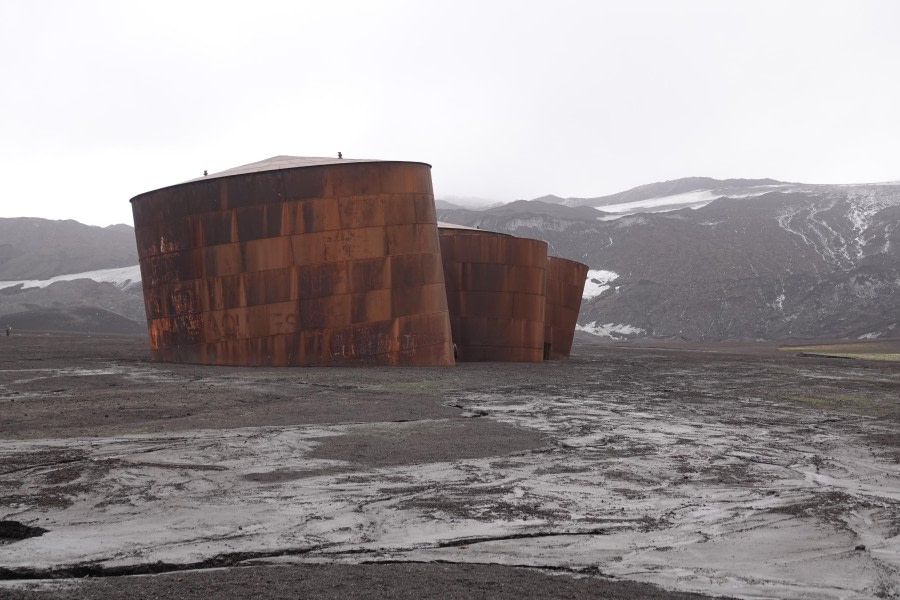
After breakfast, served as the landscape slowly revealed itself, we prepared for our landing at Whalers Bay, one of the most iconic sites in Antarctica. The air was cold, crisp, and filled with the scent of salt and history. Whalers Bay was once the site of a bustling whaling station, where thousands of whales were processed during the early 20th century. The remnants of this station still dot the beach: rusting boilers, decaying structures, and old machinery scattered across the volcanic black sands. It felt surreal to walk among these silent reminders of the past, knowing that this place was once alive with the sound of industry.

The history of Whalers Bay is a harsh one. The station was established in 1906 by the Compañía Argentina de Pesca, a company that built a large whaling operation in the caldera, drawn by the abundance of whales in these waters. By the 1930s, the station was a key hub in the whaling industry, processing hundreds of whales each year for their oil and meat. But as whale populations dwindled and newer, more efficient whaling technologies emerged, the station eventually closed in 1931. Today, the rusted remnants of the whaling station serve as a powerful reminder of the impact humans had on this delicate ecosystem — and how much has changed since those days.

At the end of the landing, some of us braved the legendary Polar Plunge, jumping into the icy Antarctic waters. It felt ridiculous to strip down in such a freezing place, but the shock of the cold gave way to exhilaration, and we emerged from the water shivering but laughing. It was cold, but it was unforgettable.

Back on board the ship, we warmed up and listened to a fascinating geology lecture. Rose and Enric explained how this volcanic island was formed by eruptions and ice over millions of years, shaping the landscape we had just explored. Standing on a volcano, surrounded by ice and sea, felt even more extraordinary with this new knowledge.

Lunch gave us a chance to thaw out and share our thoughts about the morning’s landing. By mid-afternoon, we returned our muck boots to the deck, marking the end of another successful landing. Later, we gathered for a lecture on the Race to the South Pole. Jerry and Jens each shared gripping stories about the early explorers who dared to conquer this frozen wilderness, making us realize just how much history surrounded us.

As the evening approached, we met in the Observation Lounge for the daily recap, watching as Deception Island faded into the distance. The ship began to rock more as we entered open waters, and we were reminded to secure our belongings and move carefully around the ship.

After dinner, we settled into the lecture room for a documentary about Deception Island’s last volcanic eruption, which happened in 1970. As the footage flickered on the screen, showing lava and ash spewing from the caldera, it was impossible not to feel the raw power of the island. We were reminded, once again, that this land is anything but dormant.

Today, we stepped onto the edge of the world, walked through a piece of history, and braved the icy waters — a day we’ll all carry with us forever.

Day 9: Drake Passage

Drake Passage
Fecha: 26.01.2026
Posición: 59°15.3’S / 062°29.1’W
Viento: NE3
Clima: Clear
Temperatura del Aire: +4

Our sea day aboard Hondius began in the famous Drake Passage. Known as one of the most tempestuous stretches of ocean on Earth—where the Atlantic, Pacific, and Southern Oceans collide—the Drake is often associated with roaring winds and towering waves. Thankfully, on our first sea day, the Drake was kind to us. The ship rocked and rolled gently, and with our sea legs already found, the observation lounge was full of guests enjoying the view.

In the morning, Pierre invited us to an amazing lecture about humpback whales. He shared incredible underwater footage of these gentle giants, the same whales we were honored to observe during our voyage.

Shortly after, Luce presented her fascinating lecture, What Is Going on Below the Surface: Antarctic Underwater Habitats and the Food Web. Through her talk, we experienced Antarctica from a diver’s perspective and learned about the hidden world beneath the ice and waves.

Throughout the day, Hondius continued to rock gently as we watched giant petrels gliding effortlessly around the ship, often passing very close by. In the afternoon,

Michael Green, the dive team leader, invited us to attend a presentation about whaling and krill. Our guides gave lectures covering topics such as plankton ecology, whaling history, krill, and marine biology. These talks provided valuable scientific background and helped us better understand the voyage.

The day ended calmly, with very little ship movement. Although the wind slowly increased, conditions remained comfortable and well within safe limits for all passengers until midnight. We began preparing for heavier swells expected the next day.

Day 10: Drake Passage

Drake Passage
Fecha: 27.01.2026
Posición: 55°29.3’ S, 065°59.8’W
Viento: NNE8
Clima: Overcast
Temperatura del Aire: +8

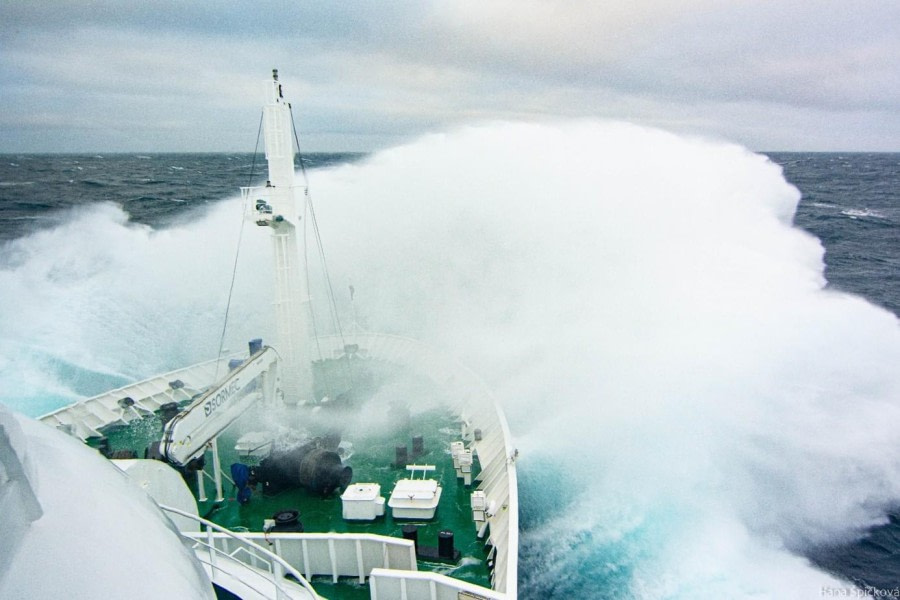
It was our second day at sea and the famous “Drake Shake” lived up to its name. Heavy swells reached up to 5 meters, with waves crashing as high as the bridge windows. Many of us gathered on the bridge to enjoy the show. Swells were expected to continue through most of the day as we crossed the Drake Passage.

In the morning, our dive guide Sid gave a lecture titled Life Beneath the Ice, sharing insights into the hidden world below the frozen surface. This was followed by Hana’s lecture, where she introduced us to the incredible world of icebergs.

After lunch, Pierre presented an overview of Oceanwide’s other exciting destinations, giving us plenty of inspiration for future voyages. Later in the afternoon, Valeria hosted a mate workshop in the observation lounge. She showed us how to prepare and drink traditional yerba mate, sharing traditions from her home country, Argentina.

In the evening, we celebrated with the Captain’s Cocktail and our farewell gathering. We raised a glass of champagne to toast an incredibly successful voyage, together with our captain, Ernesto, who safely guided us through some of the most remote places on Earth. The guide team had been documenting the journey throughout the voyage and surprised us with a slideshow, a special gift to help us carry the memories of this unforgettable adventure.

Day 11: Disembarkation

Disembarkation
Fecha: 28.01.2026
Posición: 54°48.4’ S, 068°18.0’W
Viento: N2
Clima: Overcast
Temperatura del Aire: +11

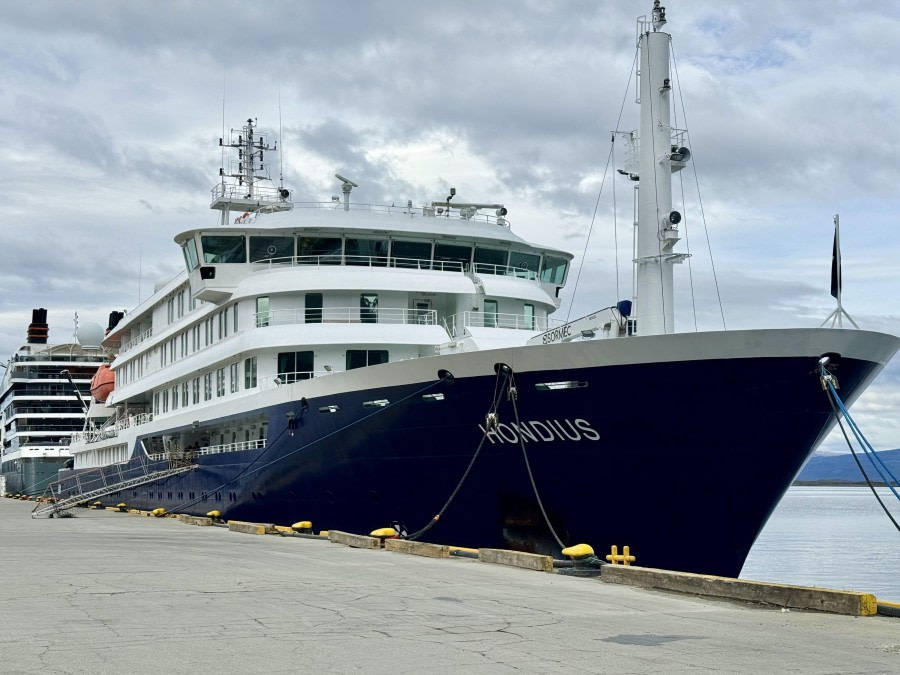
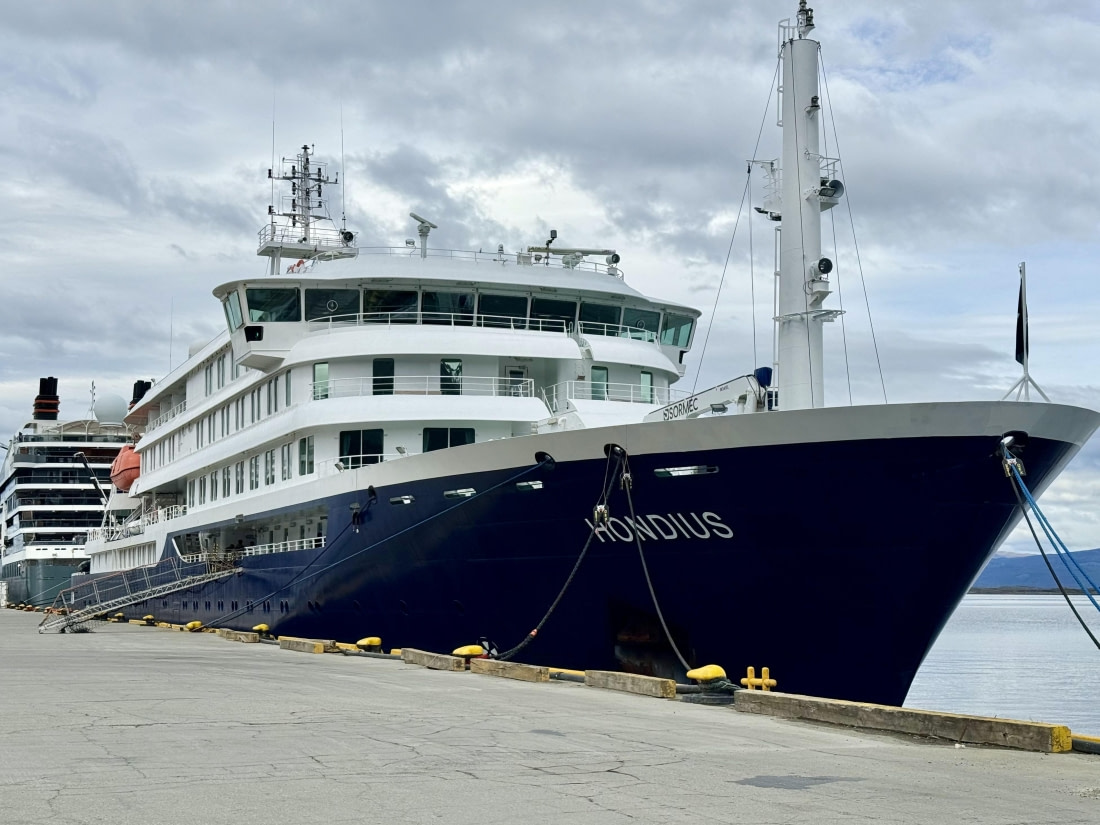
Our last morning came gently as the ship slipped back into the port of Ushuaia. Even before breakfast, suitcases lined the corridors outside our cabins, a quiet reminder that the voyage was ending. Breakfast was relaxed and comforting, filled with calm conversation and shared laughter as everyone revisited their most memorable moments of the journey. Not long after, we went ashore where our luggage awaited us neatly arranged on the pier. Goodbyes echoed through the group as travellers embraced, shook hands, and offered heartfelt thanks to the crew who had cared for us so thoughtfully throughout the expedition. Casting one last look at our dear Hondius that had carried us across the Drake Passage and through extraordinary days among the ice, we stepped into the cool Ushuaia morning, taking the memories of Antarctica with us, for life.

Detalles

Código del viaje: HDS27-26
Fechas: 18 ene. - 28 ene., 2026
Duración: 10 noches
Barco: El Hondius
Embarque: Ushuaia
Desembarque: Ushuaia

¿Ha estado en este viaje?

A bordo El Hondius

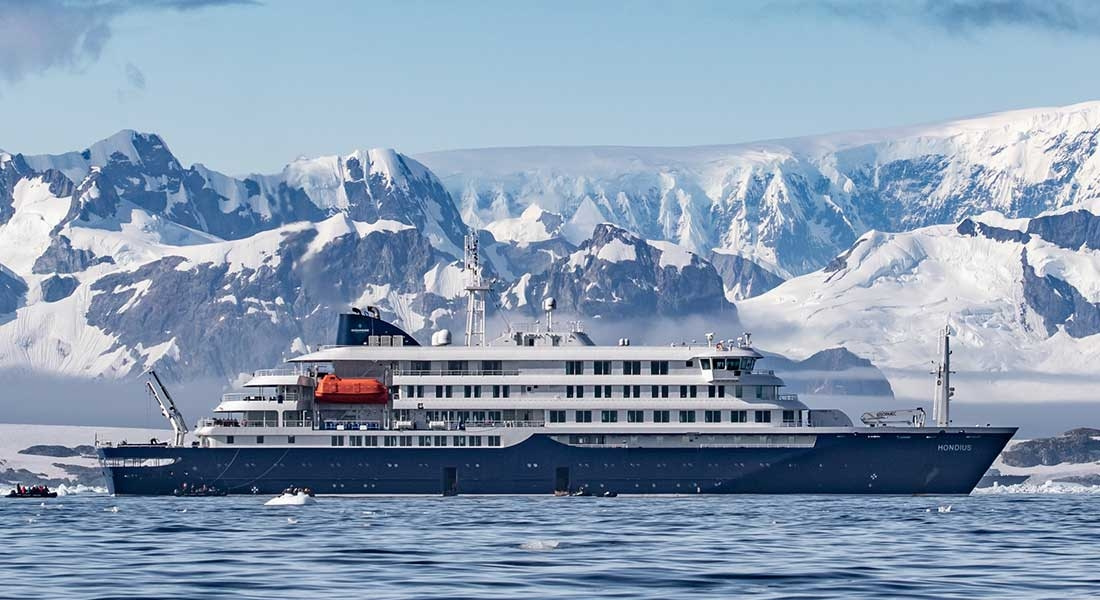
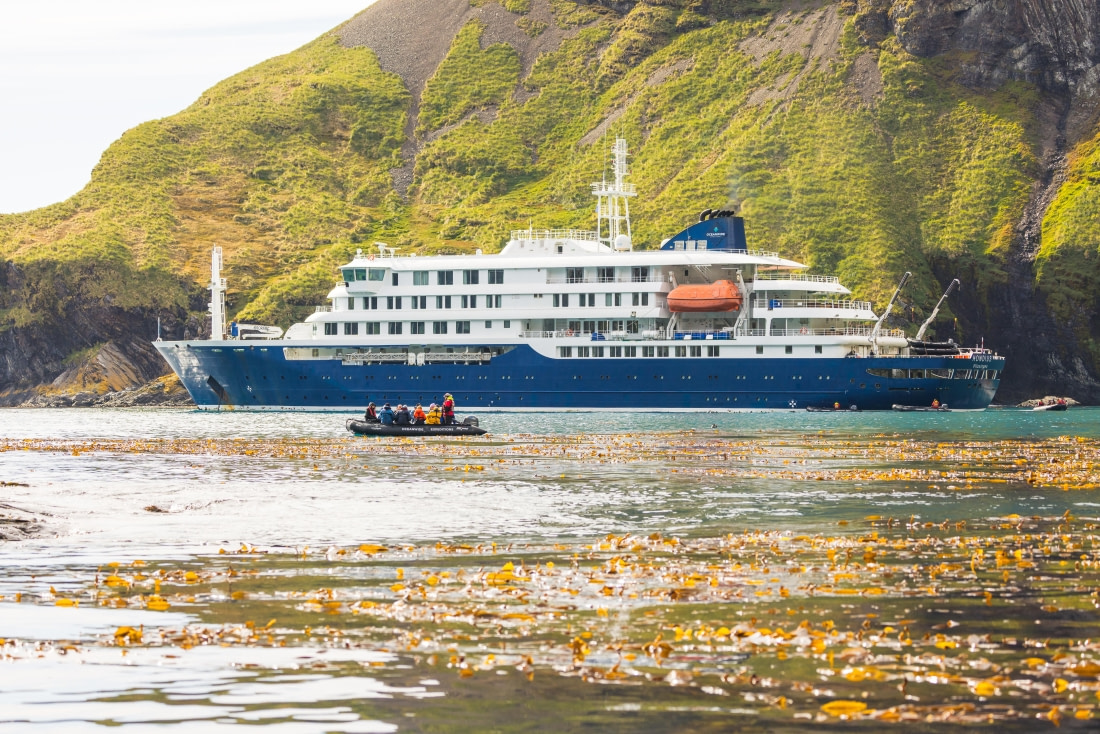
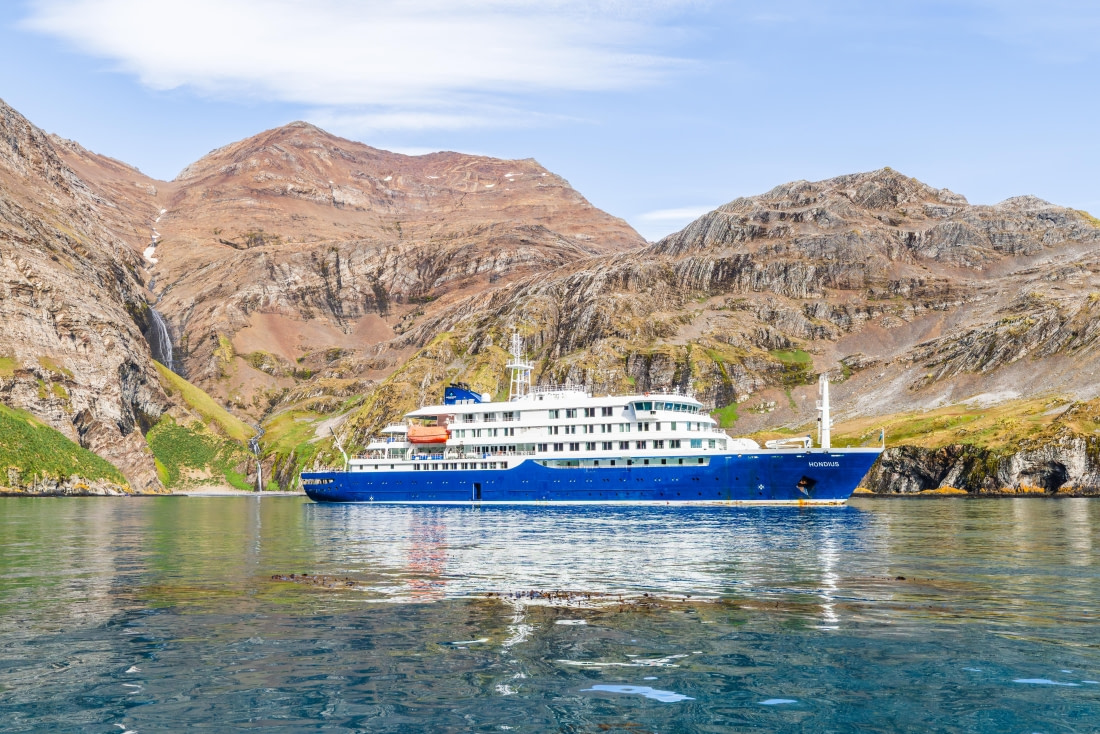
El Hondius es el primer barco de clase polar 6 registrado en el mundo y fue construido desde cero para cruceros de expedición.

Más información El Hondius »
Loading