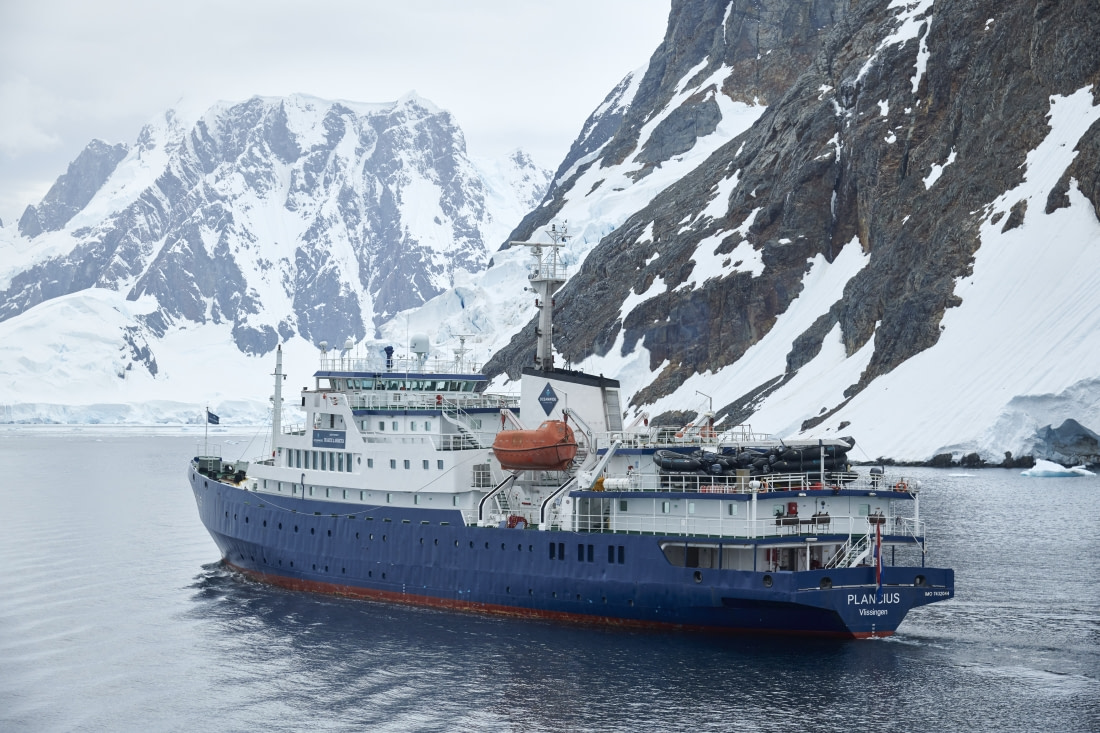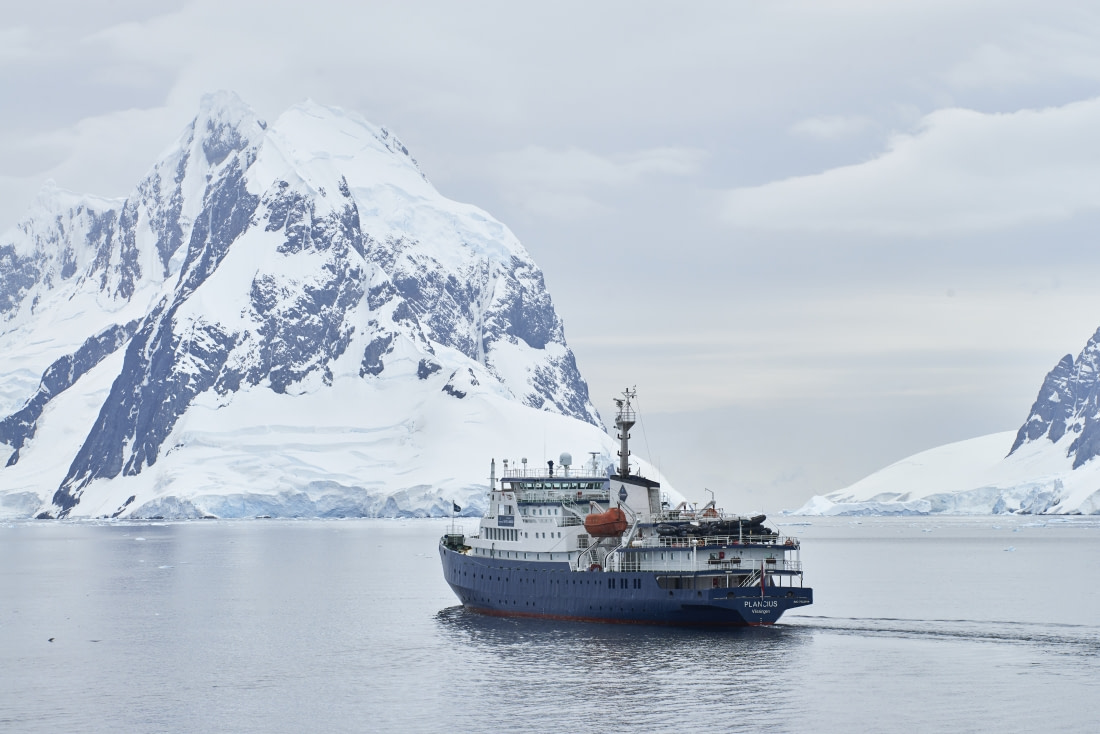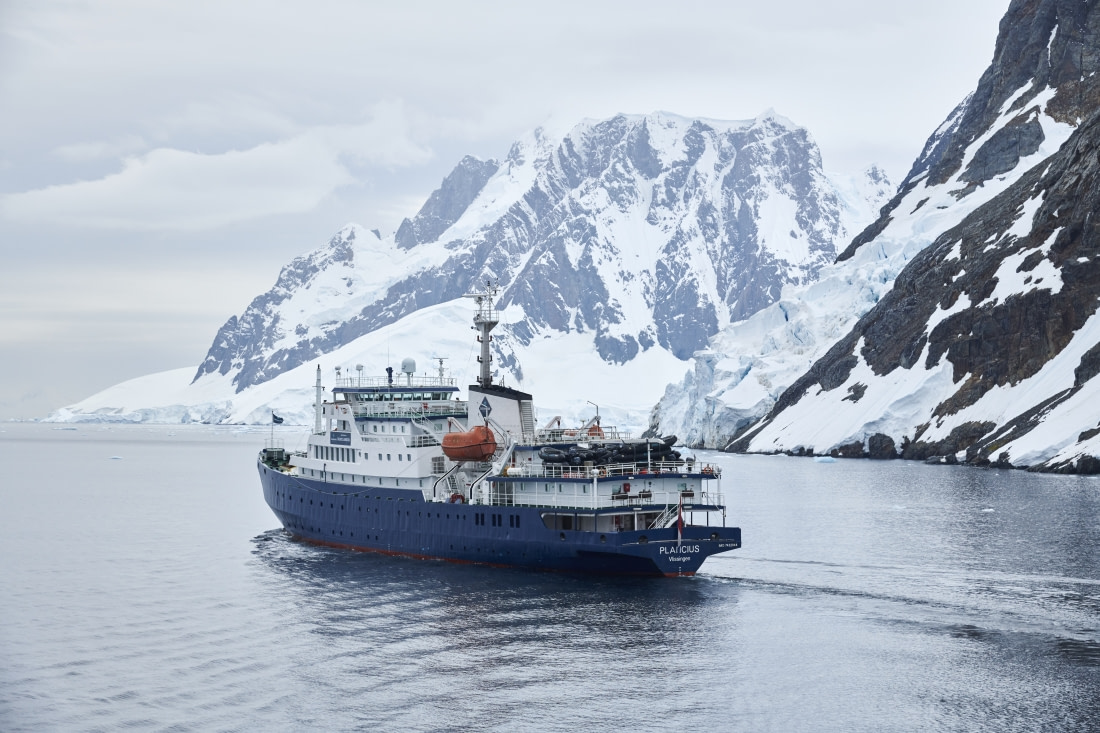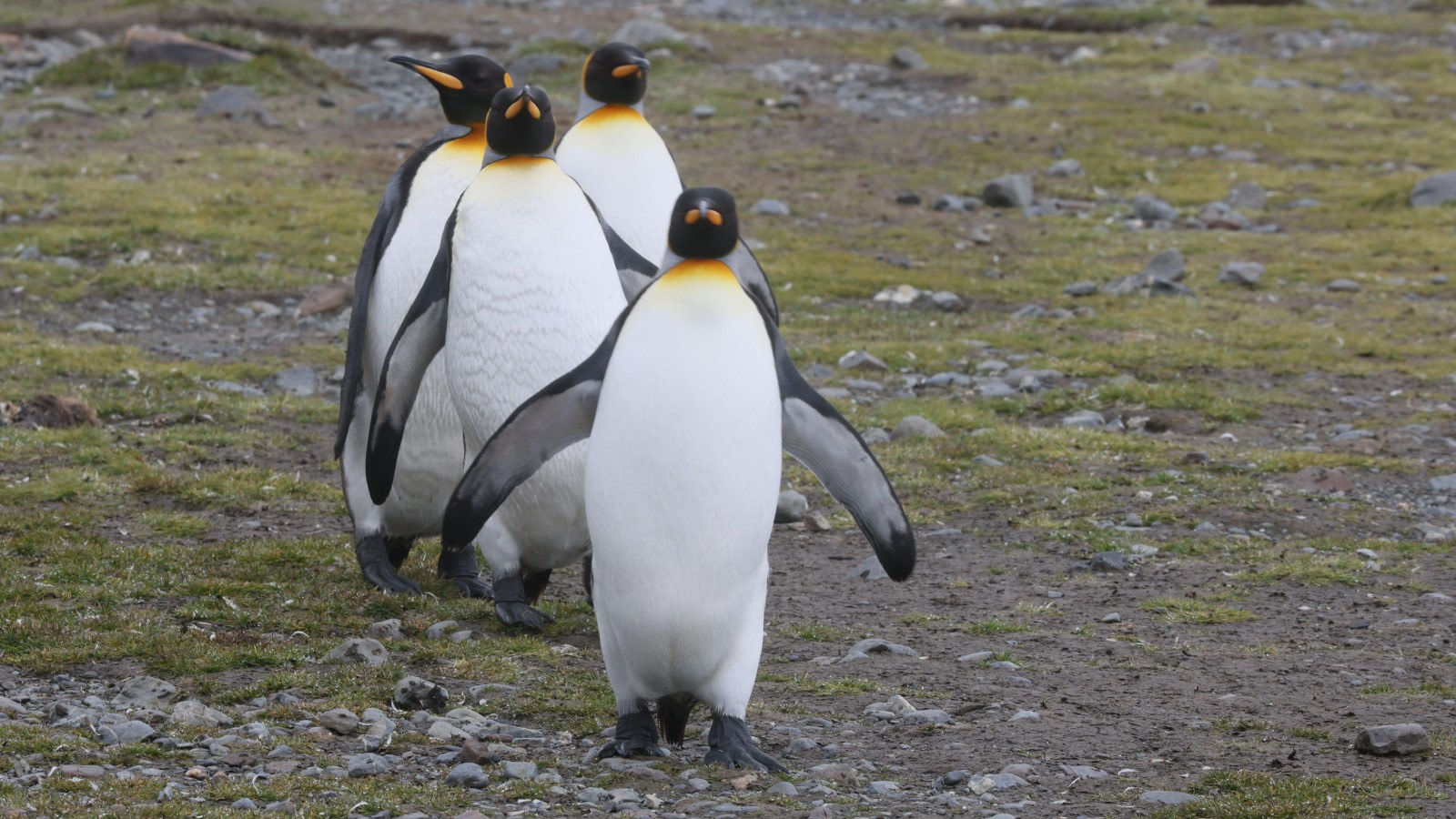
PLA23-25, trip log, Falkland Islands - South Georgia - Antarctica

by Oceanwide Expeditions

Galerie de photos

Journal de bord

Day 1: Ushuaia, Embarkation Day

Ushuaia, Embarkation Day
Date: 27.11.2025
Position: 54°48.6’S / 068°17.8’W
Le vent: NW-5
Météo: Mainly Sunny
Température de l'air: +6

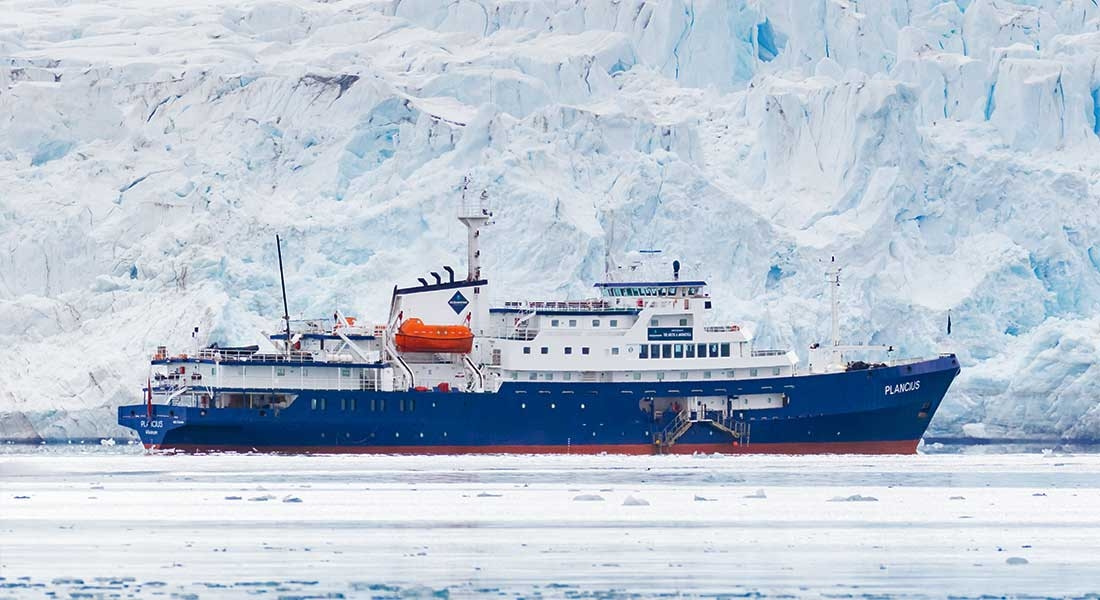
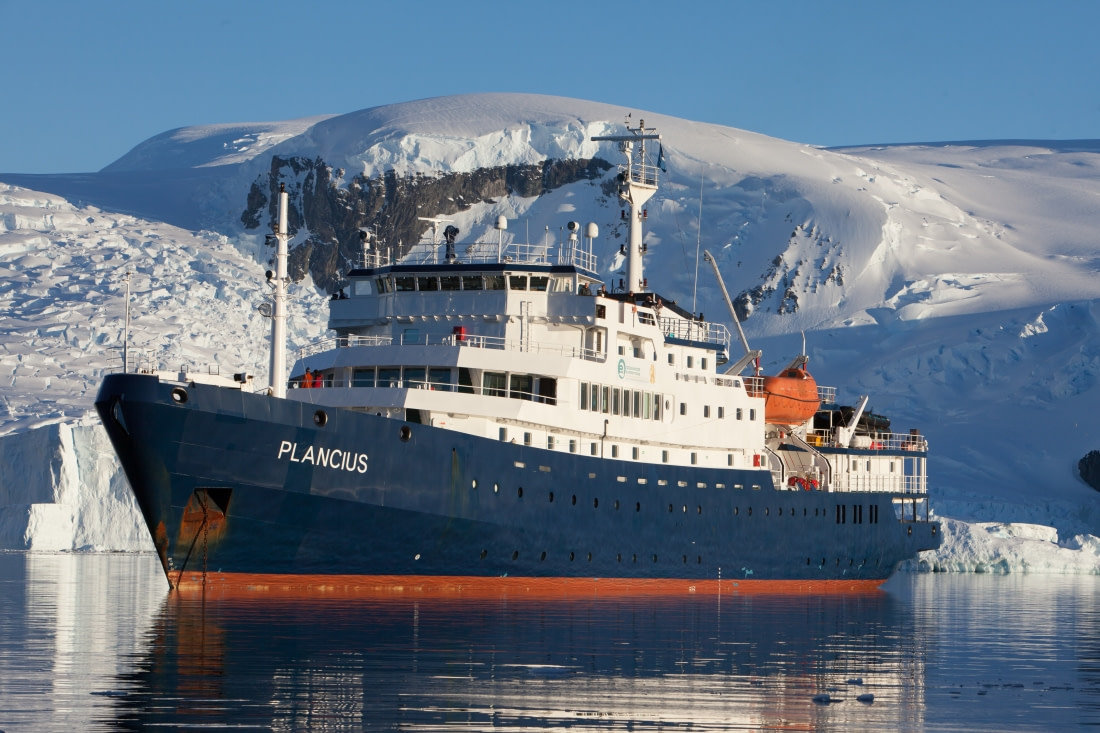
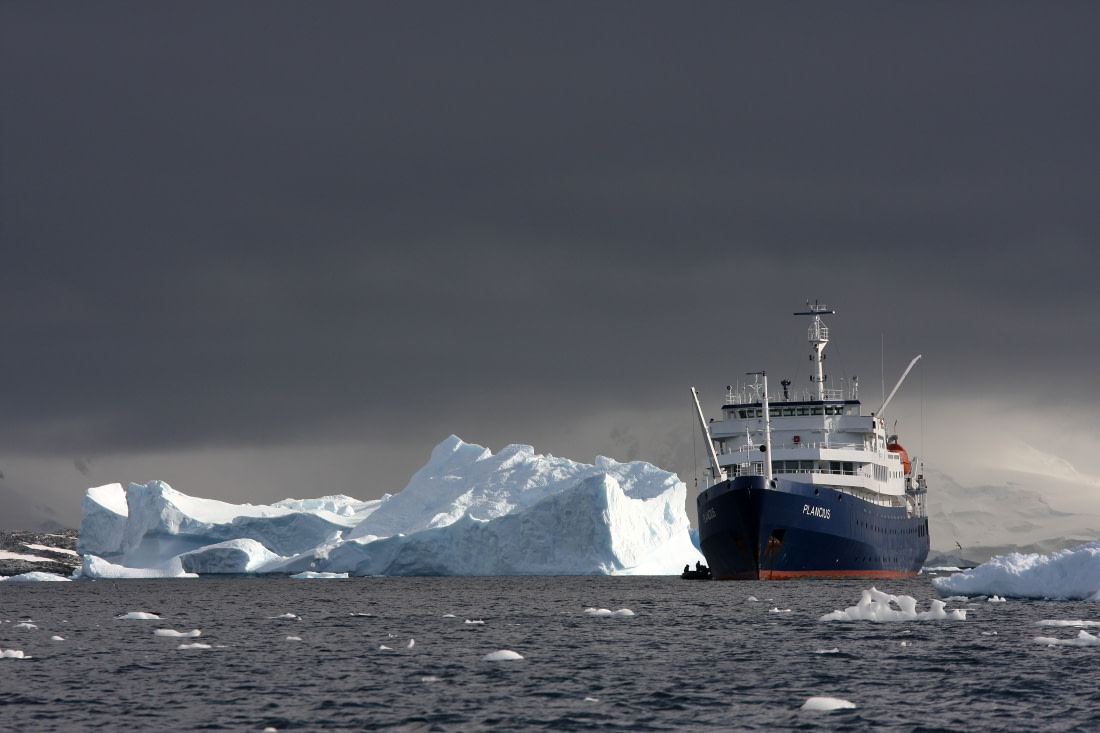
It's finally here! The day we have all been waiting for! Today we will set sail on our epic journey around the South Atlantic. At 4pm we made our way down to the port in Ushuaia and lined up to board our good ship Plancius. It was quite a nice sunny day although a brisk wind was sweeping across the jetty. As we boarded the ship we checked in and were shown to our cabins where our luggage was already waiting for us.

Once we were all aboard it was time for us to receive some important information. We were all invited to the lounge for some mandatory safety briefings and to take part in a drill of abandoning the ship. After we received our safety information, we all went to our cabins and grabbed our lifejackets and followed the crew to our assigned lifeboat. After the drill we were released to enjoy the ship leaving the dock.

After a little while we were invited again to the lounge to the “Captain's Welcome” event. We were treated to a glass of bubbles and some canapes while our captain; Captain Mattei welcomed us to the voyage and led a toast to our good travels. We then met our expedition leader Ali Liddle who in turn introduced to her expedition staff team. They were so excited to share their knowledge with us.

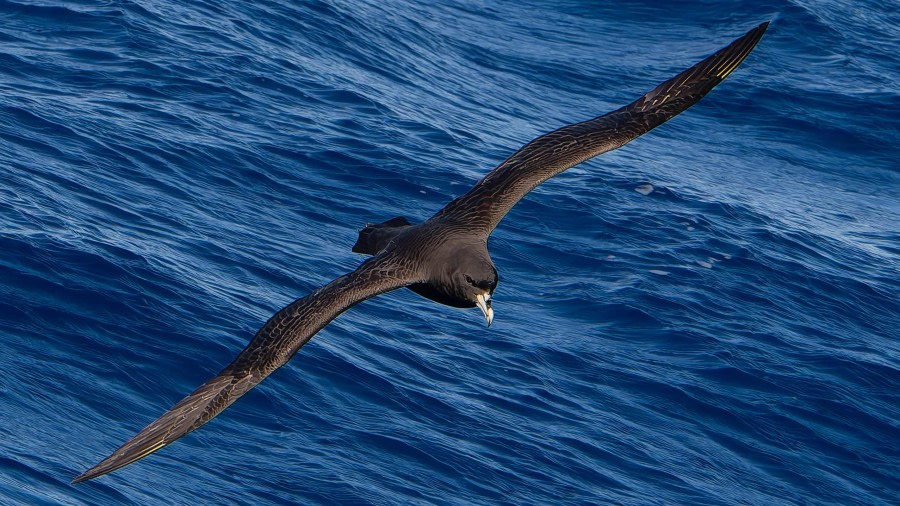
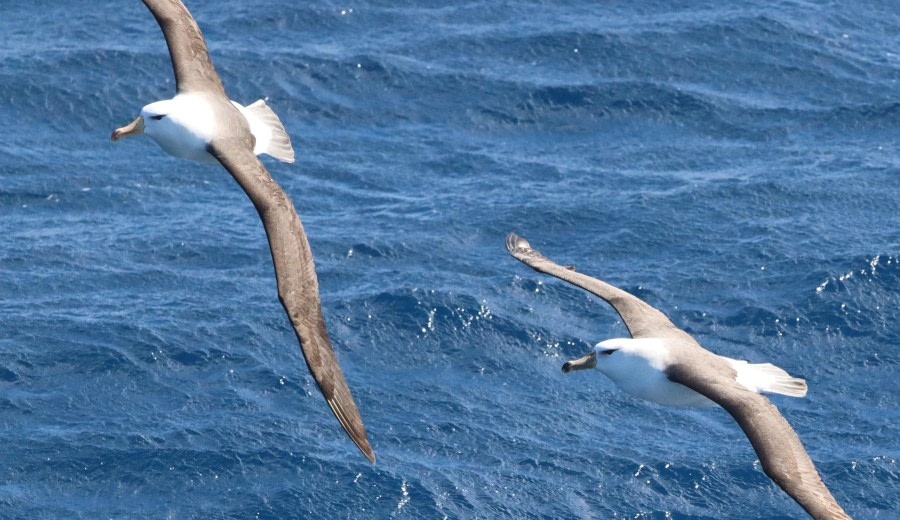
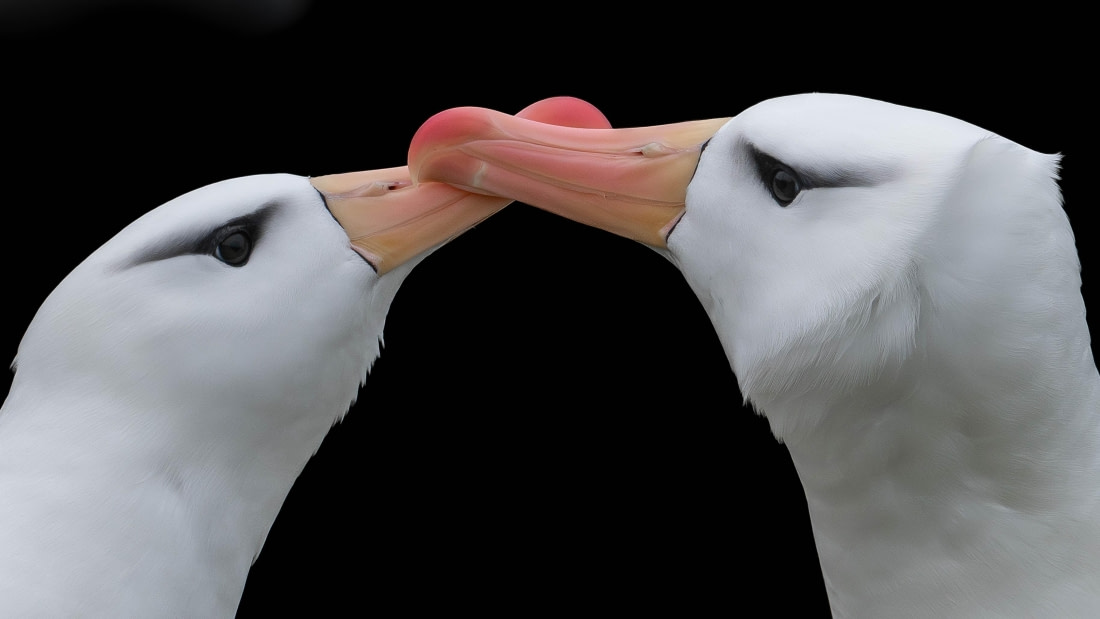
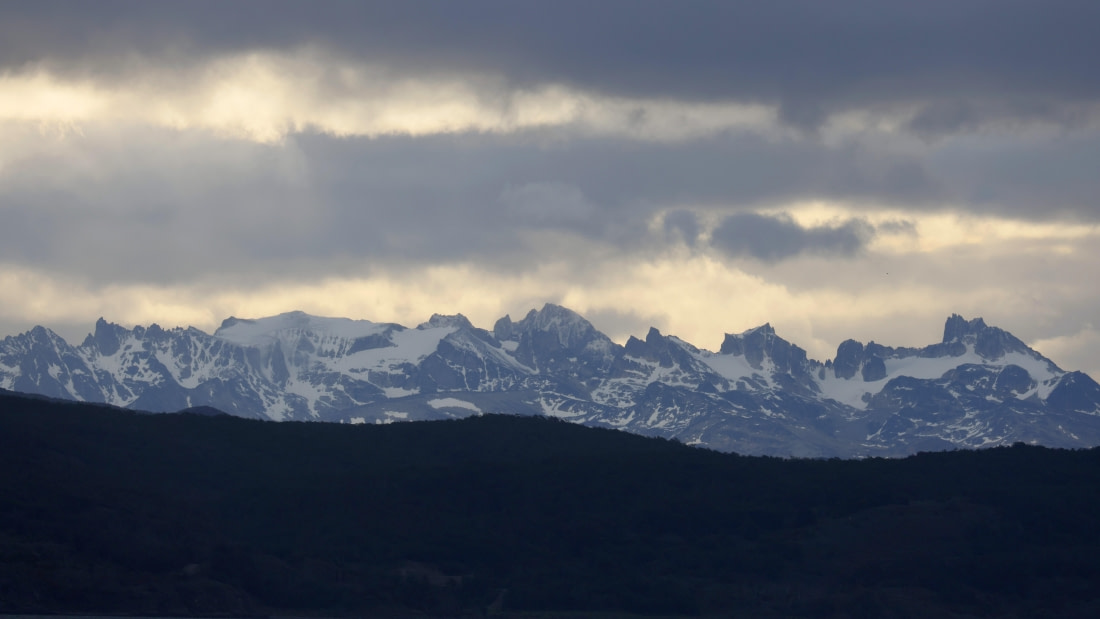
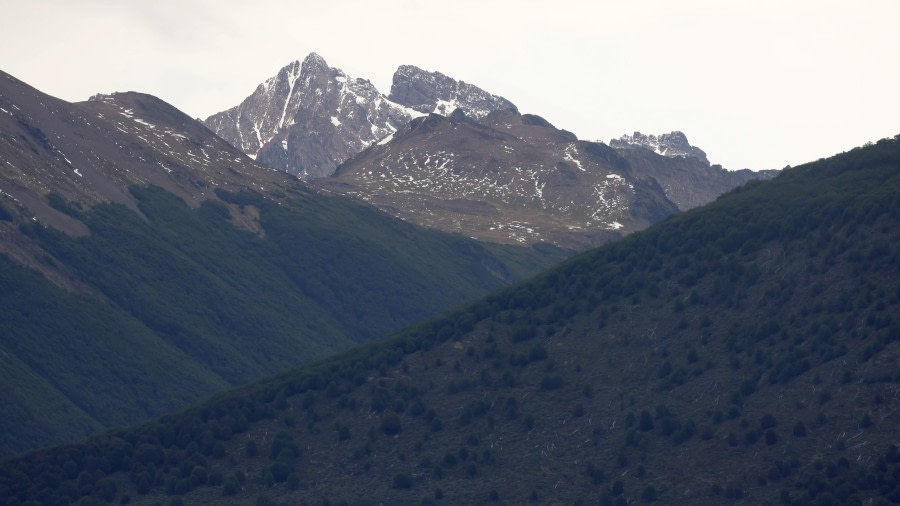
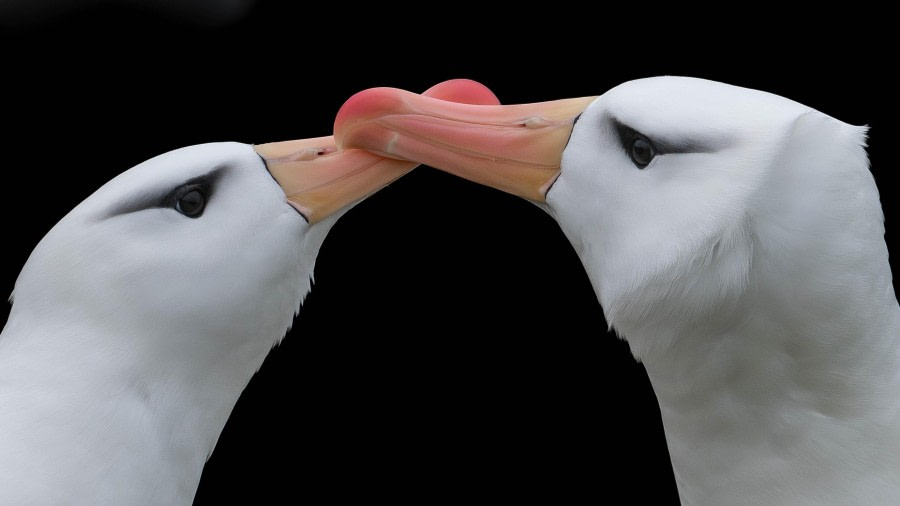
After the introductions Ali gave us the plan for tomorrow. The weather looks quite windy so tomorrow may be a bumpy ride over to the Falkland Islands. We would make sure to prepare for the journey. Once the briefing was finished it was time for us to take part in the last event of the day…dinner! We all filed down to the dining room to experience our first meal onboard. The galley team had prepared a feast for us, and we enjoyed it with much gusto with beautiful scenes of the Beagle Channel passing by along with our first taste of the wildlife that many of us had travelled here for. Black-browed Albatross and Giant Petrels flew around the ship whilst a few Magellanic Penguins were in the water. Afterwards we retired to our rooms to rest ready for tomorrow’s adventures. What a great first day!
Day 2: At sea, heading towards The Falkland

At sea, heading towards The Falkland
Date: 28.11.2025
Position: 53°45.1’S / 063°43.2’W
Le vent: SW 5-3
Météo: Sunny
Température de l'air: +7

Our northbound transit toward the Falkland Islands unfolded as a classic Southern Ocean day, beginning with bright sunshine, a brisk wind and the kind of lumpy seas that remind us we are travelling through one of the world’s great wild waters. As the hours passed, however, conditions steadily eased. By late morning the wind had moderated and the swell dropped away, granting us a remarkably pleasant and stable day at sea—ideal for both wildlife viewing and the start of our lecture programme.

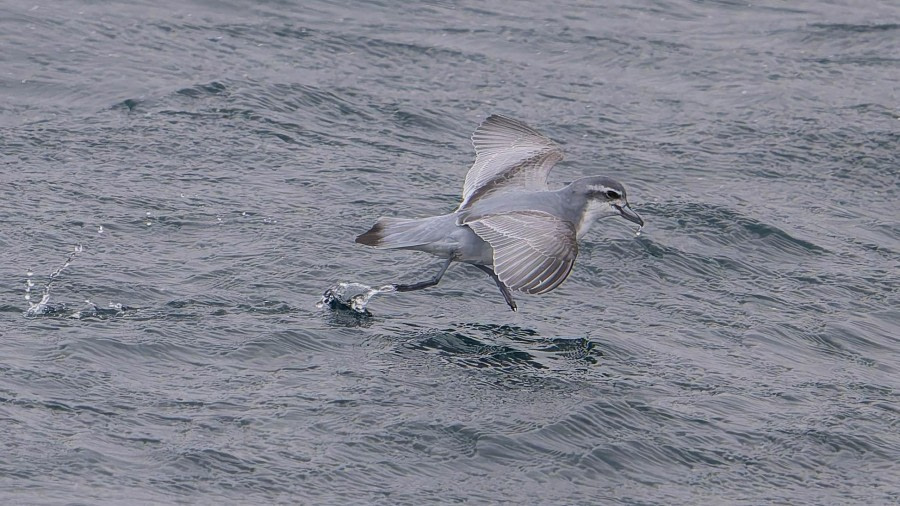
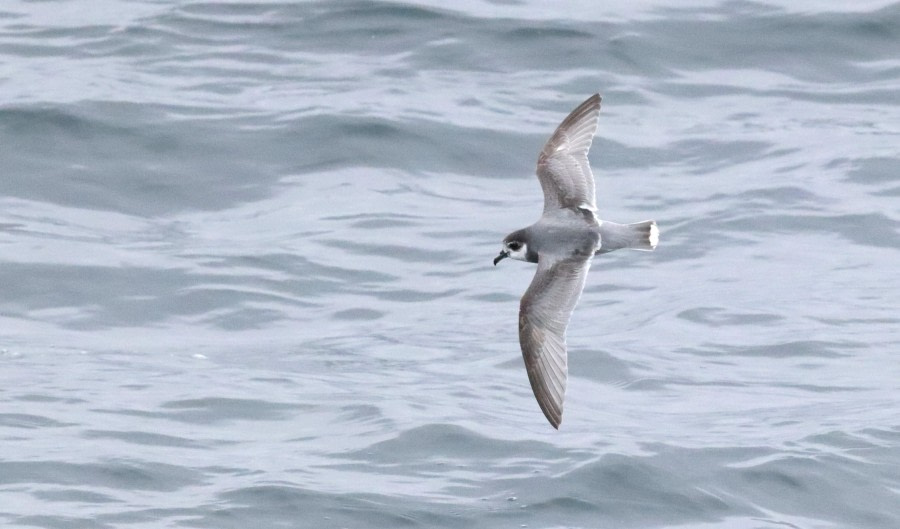
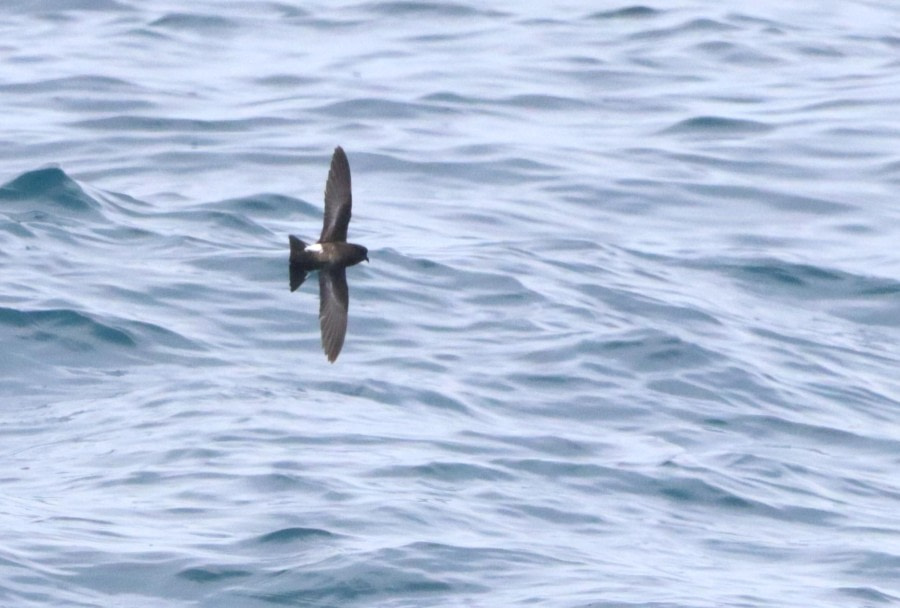
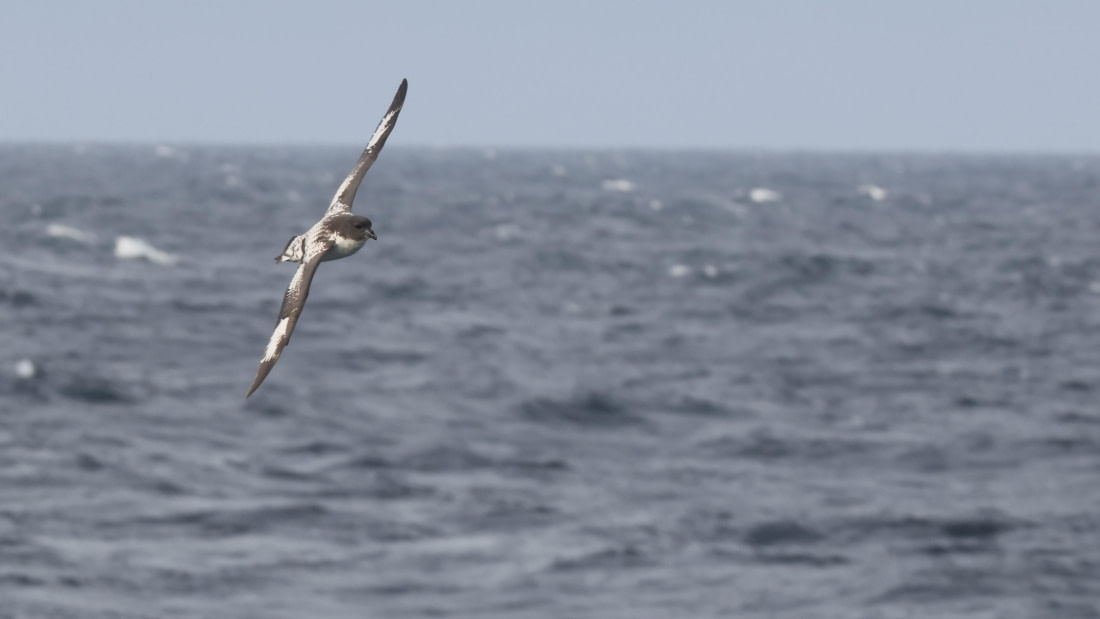
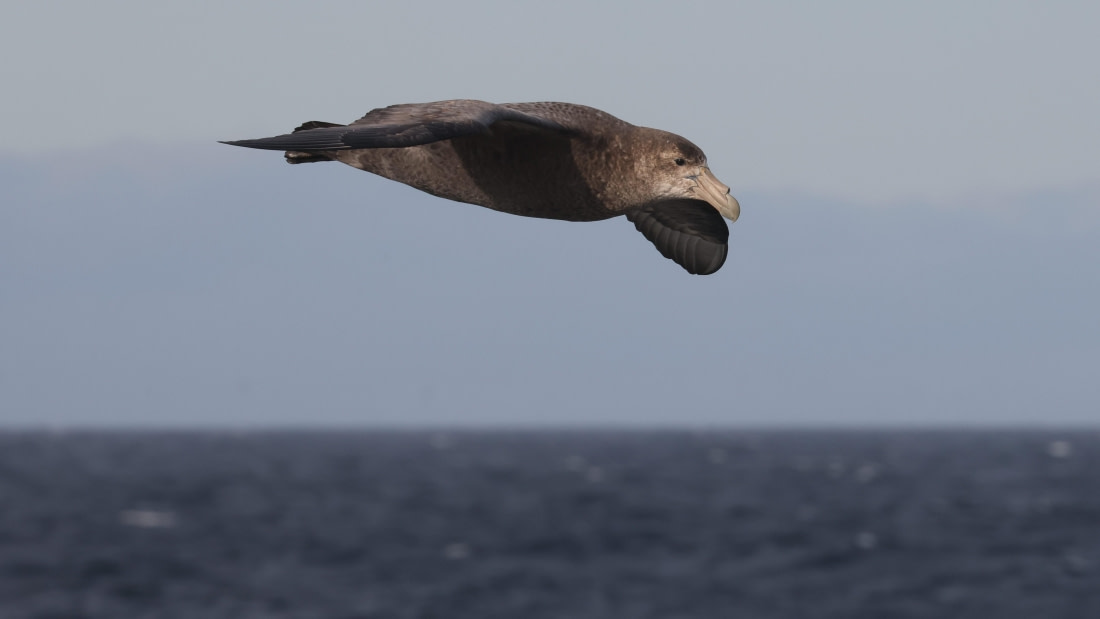
Wildlife was abundant from the first light. Throughout the morning, vast numbers of Sooty Shearwaters sheared low across the waves, their dark forms effortlessly riding the wind. They were accompanied by Southern Giant Petrels, impressive as always with their powerful wings and purposeful flight. Mixed flocks of Cape Petrels, Southern Fulmars, and delicate Wilson’s Storm Petrels added variety to the avian spectacle, giving passengers ample opportunity to practise their seabird identification skills before our arrival at the Falklands.

After breakfast, the lecture series began with Simon, who provided an insightful preview of the birdlife we can expect when we reach the Falklands tomorrow. His talk offered a helpful overview of key species and habitats, setting the stage for many guests’ first visit to the islands. He was followed by Ali, whose long-term residence—over fifteen years—in the Falklands gave her presentation an authenticity and richness that only lived experience can provide. Her introduction covered the islands’ history, culture, landscapes and wildlife, leaving guests both informed and eager for landfall.

The afternoon brought some of the most thrilling moments of the day: exceptional cetacean sightings. It began with lively groups of Peale’s Dolphins and Hourglass Dolphins, their distinctive patterns clearly visible as they darted around the ship. Before long, blows were spotted on the horizon, leading to close views of Fin Whales, and shortly afterwards a Humpback Whale surfaced nearby, raising excitement levels even further. For a fortunate few on the outer decks, the highlight came when two Blue Whales appeared briefly—an extraordinary sighting and one that will no doubt be remembered for years to come.

The afternoon lecture was delivered by Andrew, who spoke about the cetaceans we may encounter during our voyage. In a moment of serendipity, his talk was repeatedly interrupted as some of the very species he described appeared right outside the ship, prompting several mass exoduses from the lounge. It was as though the wildlife had decided to participate directly in the programme.

Though cloud cover increased later in the day, it did little to dampen the enthusiastic mood on board. Passengers remained animated, sharing stories of the day’s sightings and looking ahead with anticipation. With New Island on tomorrow’s itinerary—one of the Falklands’ most spectacular wildlife destinations—the excitement is palpable. The Plancius community goes to bed buzzing, grateful for an exceptional day at sea and eager for what lies ahead.

Day 3: New Island

New Island
Date: 29.11.2025
Position: 51°53.7’S / 061°17.2’W
Le vent: NW-6
Météo: Partly Sunny
Température de l'air: +8

We landed at New Island—our first landing in the Falklands—under clear skies and on calm, glassy water that made the approach feel almost effortless. The Zodiacs ran smoothly to the beach, where the rusting hulk of the Protector III, a former minesweeper, lay half-buried in the sand like a relic being slowly reclaimed by the island. Tim, who oversees and manages the island, met us at the landing site with a warm welcome. After gathering everyone together, our expedition leader Ali delivered a concise but informative briefing, setting the stage for the morning's exploration and outlining the short hike toward the Black-browed Albatross colony.

We set off along the one-kilometre track that wound gradually upward. Almost immediately, the landscape came alive with activity. The slope above us was dotted with nesting Black-browed Albatrosses, each pair locked into steady flight circuits as they alternated incubation duties. Their wings cut smooth arcs across the sky, and every landing seemed perfectly judged despite the gusts funnelled across the hillside. Rockhopper Penguins added their usual comedic energy to the scene, climbing determinedly over boulders and tussock grass, muttering and squabbling with one another as only rockhoppers can.

Along the shoreline below, Upland Geese and Kelp Geese grazed and loafed, their calls drifting upward on the wind. The birders in the group were quickly absorbed, identifying a rich mix of Falklands land birds. Dark-faced Ground Tyrants hopped confidently along the track, Falkland Thrushes flitted between low bushes, and Tussockbirds flashed through the grass. Overhead, the ever-present Striated Caracaras—intelligent, opportunistic, and perpetually watchful—patrolled the skies and nearby grasslands, scanning the colonies for any chance of an easy meal.

On our descent we stopped at the restored stone building that now serves as a small museum and shop. The attention to historical detail was impressive, especially considering the challenges of maintaining such a site in a remote location. The displays were simple but effective, offering insight into the island’s past and the people who once lived and worked here. It was an excellent first landing that set the tone for the journey.

During lunch the ship repositioned to North Harbour, still within New Island, giving us a new landscape to explore for the afternoon. We set out past a small freshwater lake, where the calls of Magellanic Penguins echoed from their burrows scattered across the gentler slopes. Many birds were tucked deep in their underground chambers, their braying vocalizations rising from hidden places beneath our feet. Farther on we reached a Gentoo Penguin colony bustling with activity. Newly hatched chicks huddled beneath their parents for warmth and protection, tiny heads occasionally poking out for a glimpse of the world. Adults returning from offshore feeding runs marched in determined, steady lines toward the colony, their white bellies still wet from the sea. Higher up the slope, another Black-browed Albatross colony occupied the cliff edge, where adults used the funnelling wind in the gully to launch and land with remarkable precision. Turkey Vultures and Skuas circled high overhead, opportunists assessing the colonies for any signs of vulnerability.

Clear weather stayed with us throughout the afternoon, and the hours passed quickly as we watched the wildlife and absorbed the rugged beauty of New Island. We returned to the ship at the scheduled time, satisfied and already looking forward to the next day’s adventures.

Day 4: Barren Island and George Island

Barren Island and George Island
Date: 30.11.2025
Position: 52°21.3’S / 059°40.8’W
Le vent: W-4
Météo: Mainly Sunny
Température de l'air: +8

We've reached the southern tip of East Falkland. From the ship, Barren Island lives up to its name—a flat, windswept landscape of sandy beaches and one prominent feature: the wide bay called ‘Useless Harbour' laid out before us. Anchored in the bay was a small work vessel, with a service boat closer to shore. These belong to Chris and Lindsay May, who own and farm both Barren and George Islands. Chris was waiting ashore, eager to guide us and share his knowledge of the land.
The approach to Barren wasn't without its challenges. Very shallow water, rocky patches hidden beneath thick kelp beds, required our guide to wade out and pull the Zodiacs in by hand. It was slow going, but a small price to pay for setting foot in such a rarely visited place.

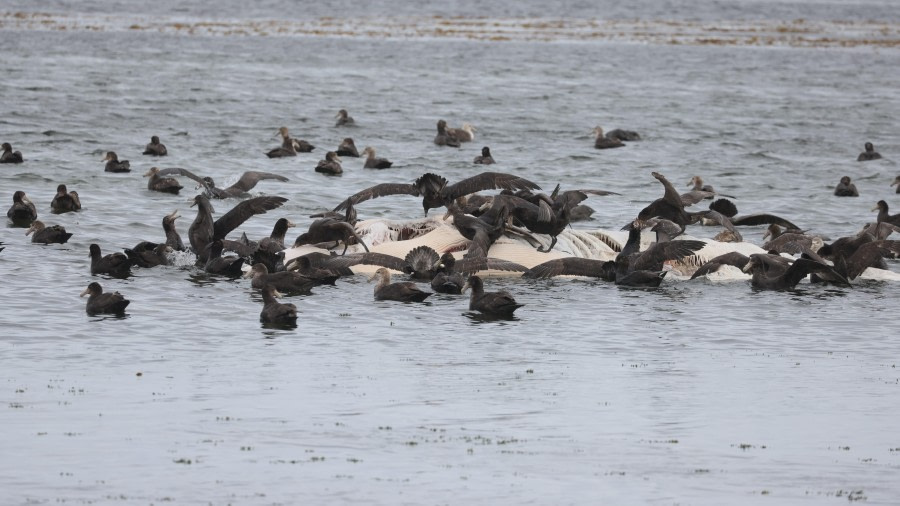
The island is a nesting site for Southern Giant Petrels—often called ‘the vultures of the south’—and they were certainly making the most of an opportunity. A young Sei Whale had stranded in the shallows several days earlier, and we witnessed nature efficiently at work. This unexpected bounty will likely contribute to a very successful breeding season for them.

Our guides had arranged a long loop hike, taking us along the beaches, past the whale carcass, and past the Southern Giant Petrel nesting area. The birds are remarkably well camouflaged; even lying in plain sight on their nests, they were far less visible than, for example, the striking Black-browed Albatrosses perched on their pedestal nests.

Along the walk, we spotted Sea-lions, Elephant Seals, Magellanic and Gentoo Penguins, Oystercatchers, Two-banded Plovers, Ruddy-headed Geese and—thanks to the island being rat-free—an encouraging number of small passerine birds.

All in all, Barren Island does stand by its name: barren in landscape, yet incredibly rich in wildlife. The density and diversity of species here were truly impressive.

After lunch, we relocated to George Island—and what a place! White sandy beaches, brilliantly blue water, a farmhouse and outbuildings nestled right by the shore, and a beautiful, long wooden pier stretching into the bay. The entire scene looked like a postcard, impossibly photogenic. This is the home of Chris and Lindsay May, who welcomed us with open arms.

We were treated to a live demonstration of sheep shearing. Chris expertly talked us through the entire wool production process, while Lindsay, with a practised flick of the wrist, laid out what was moments before the bundled coat of a sheared sheep—perfectly flat and ready for grading. A round of applause followed; she’s clearly done this before. Sheep farming, of course, requires herding, which is no easy task. Luckily, the Mays have a secret weapon: Meg. An experienced border collie with a taste for belly rubs and a two-time Falkland Islands Dog Trials champion, Meg proudly showed off her skills and thoroughly loved the audience’s attention.

Adding to the cuteness overload, we had the chance to feed a group of very young, orphaned lambs. Needless to say, they were utterly charming.

George Island also offered rich birdlife. Among the highlights were sightings of the endemic Cobb’s wren and the elegant white-tufted grebe. It’s worth noting that our visit served a purpose beyond our own recreation and entertainment. By visiting, we directly support this local family. Oceanwide pays a fair fee for such stops, providing a much appreciated and meaningful boost to their income, helping to diversify their livelihood.

Day 5: Stanley and then at sea

Stanley and then at sea
Date: 01.12.2025
Position: 51°41.3’S / 057°50.5’W
Le vent: W-3
Météo: Partly Sunny
Température de l'air: +7

We passed through the narrow entryway into Stanley in the early morning. Though a grey day, the weather held off for us. The Zodiacs began shuttling ashore in lively company — Commerson’s Dolphins, bright-bodied and swift, darted alongside us. They wove through the bow waves with effortless agility, giving us flashes of their striking black-and-white patterns. The dolphins greeted nearly every Zodiac in the harbour as if it were their personal duty to welcome us.

Once ashore, guests dispersed into Stanley at their own pace. The town felt peaceful and welcoming — its colourful rooftops standing bright against the subdued southern light. Some wandered along the waterfront, stopping into the small shops and cafés; others visited the cathedral and strolled through the extensive museum, absorbing the islands’ complex history and quiet charm as the morning eased into early afternoon.

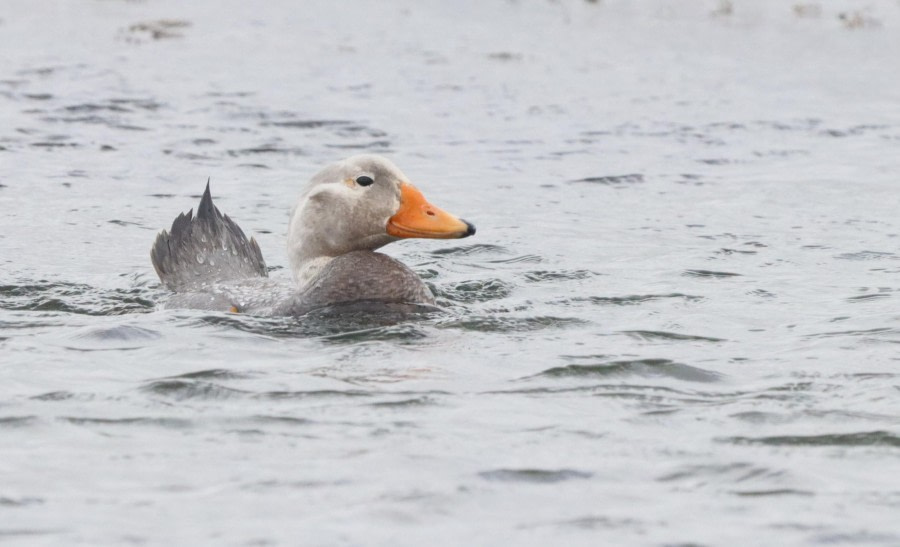
There was still time for more wildlife watching with Night Herons stalking the shore and family parties of Falkland Steamer Ducks dabbling in the water. This was only a side note though with visits to the famous gin distillery and the supermarket much more important in the moment. The wind by this time, had increased a little but the Zodiac ride back to the ship for lunch was still fine and relaxing despite the odd splash.

As soon as everyone was on board we set sail again, headed out of the narrow harbour entrance, out past Pembroke Head and away into the open ocean once again, bound for South Georgia. There was a good selection of wildlife to see us off with Penguins in the water, big feeding flocks of South American Terns being harassed by Brown Skuas and wheeling flocks of Sooty Shearwaters followed by Storm Petrels and Albatrosses as we headed further out away from land.

The afternoon was nice and relaxed in the pleasant conditions with the birders birding, the nappers napping and the readers reading only interrupted by Ali giving a talk about the time she spent on the Falklands. A great end to the wonderful islands we had just left, giving us time to look forward to the days at sea and eventually, South Georgia.

Day 6: At Sea

At Sea
Date: 02.12.2025
Position: 52°18.4’S / 051°01.6’W
Le vent: NW-3
Météo: Overcast
Température de l'air: +5

The day began under a deep grey sky, wrapped in a soft mist characteristic of these southern latitudes. As Plancius continued her steady course toward South Georgia, life on board settled into the gentle rhythm of a transit day: no landings today, but plenty of time to breathe, sort photos, and let the hours drift by with the swell.

In the morning, the expedition team offered a series of presentations that quickly filled the lounge with an atmosphere of eager learning. Régis opened the session with a fascinating talk on penguins, sketching vivid portraits of these remarkable swimmers and resilient polar specialists. He was followed by Steffi, who guided us into the world of seals— their surprising behaviours, hunting strategies, and the challenges faced by the species inhabiting the sub-Antarctic seas.

After lunch, Ali took the stage to give us a first glimpse of what awaits: South Georgia. Its dramatic mountains, abundant wildlife, and rich human history captured everyone’s attention. To deepen the immersion, the afternoon continued with a BBC documentary showcasing the polar regions and their extraordinary fauna—a perfect complement to the day’s lectures.

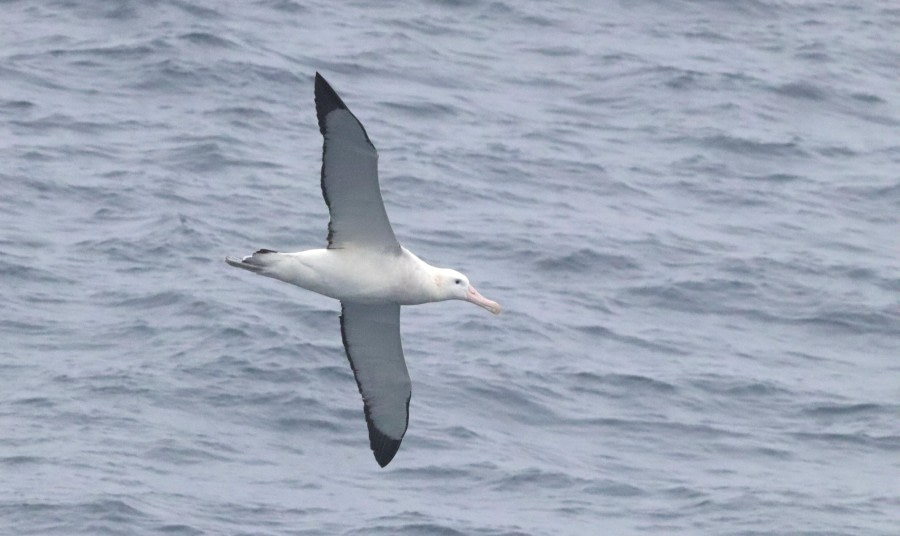
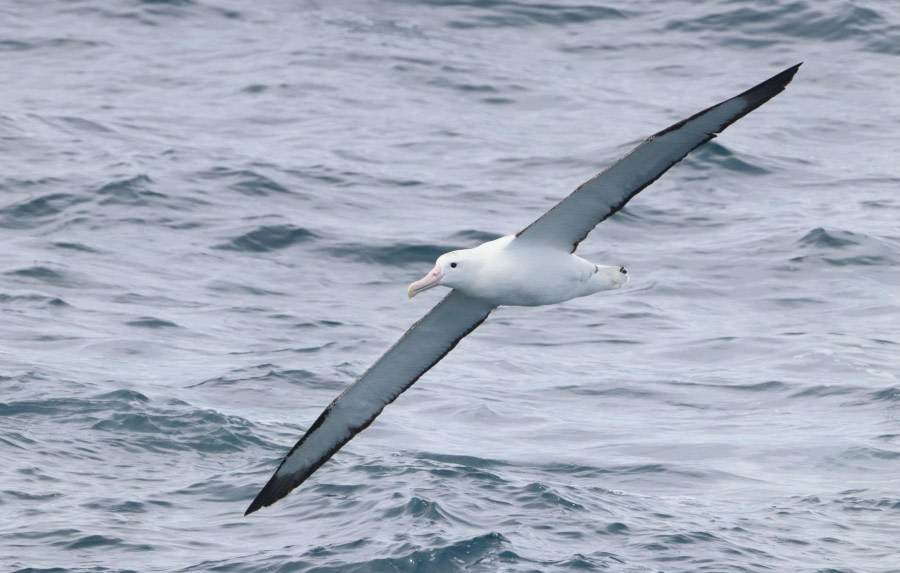
Outside, for those willing to brave the cool, damp air on the aft deck, nature provided its own show. Several birds, including majestic Wandering Albatrosses, soared effortlessly through the shifting winds, accompanied by tireless petrels. It was a true delight for the dedicated birders who savoured every sighting as the mist rolled across the sea.

As evening approached, we gathered for the customary daily recap, a warm and convivial moment during which the team hinted at the plans for tomorrow. In the soft glow of the austral twilight, Plancius pressed calmly onward, guided by the breath of the open ocean and the promise of a wild island rising somewhere ahead.

Day 7: At Sea

At Sea
Date: 03.12.2025
Position: 52°53.3’S / 044°23.2’W
Le vent: NW-3
Météo: Overcast
Température de l'air: +5

Our second full day at sea aboard Plancius brought a welcome sense of steadiness as we continued our south-easterly passage toward South Georgia. The ocean, which can be notoriously unpredictable in these waters, remained mercifully calm. There was barely a roll to the ship, allowing everyone to move about comfortably and enjoy the day’s programme without the usual battles against the swell. Although the atmosphere felt peaceful, the weather itself stayed resolutely overcast. Low, wandering curtains of mist drifted around us, swelling and thinning throughout the day, occasionally breaking into gentle drizzle. Visibility shifted constantly—sometimes opening wide enough to take in the horizon, other times closing down to a soft, grey shroud.

We made the most of the clearer spells by spending time on deck, scanning the sea and sky for wildlife. These efforts were rewarded with a pleasing variety of seabirds accompanying the vessel. Several Wandering Albatrosses—the giants of the southern oceans—glided effortlessly alongside us, their wings barely moving as they rode the contours of the air. Light-mantled Albatrosses followed later, their elegant, smoky plumage always a highlight. Smaller species also made appearances: Black-bellied Storm Petrels flickered low over the water’s surface, while flocks of Antarctic Prions swept past in their characteristic bounding flight. For many onboard, these sightings marked the first real sense of entering the rich biological realm of the Subantarctic.

The primary purpose of the day, however, was more practical but critically important. Our team carried out comprehensive biosecurity checks on all guests’ outer clothing, boots, and backpacks. This meticulous process—vacuuming pockets, inspecting Velcro, and removing even the smallest seeds or soil particles—ensures we transport no contaminants to the fragile ecosystems of South Georgia. With global concern heightened following recent avian influenza outbreaks, preventing the introduction of disease pathogens is more vital than ever. The patience and cooperation of everyone made the operation smooth and efficient.

Midway through the morning, our biosecurity routine came to a delightful halt. Word spread quickly across the decks: whales off the starboard side. A pair of Sei Whales passed us with swift, purposeful blows, and shortly afterward a feeding group of Humpback Whales surfaced repeatedly, their exhalations hanging in the cool air. The sight of these great animals feeding and moving around the ship added energy and excitement to the day.

After lunch, we gathered in the lounge for our afternoon lecture programme. Rustyn opened with the remarkable tale of Ernest Shackleton’s Endurance expedition—his ship crushed in the Weddell Sea ice, the crew’s desperate march and boat journey to Elephant Island, and the extraordinary open-boat crossing to South Georgia that followed. Paolo then offered a sobering but fascinating overview of South Georgia’s whaling era, focusing on the lives of the men who worked in brutal conditions at the island’s remote stations.

As evening settled, a sense of anticipation grew throughout the ship. Tomorrow should bring our first glimpses of South Georgia’s rugged coastline—and, weather permitting, our first landing on this storied island. The excitement is unmistakable.

Day 8: Right Whale Bay and Possession Bay

Right Whale Bay and Possession Bay
Date: 04.12.2025
Position: 54°00.3’S / 037°50.1’W
Le vent: NE-5
Météo: Overcast
Température de l'air: +4

We arrived at our first South Georgia destination in the morning full of anticipation, but it was clear from the outset that operations would be tricky to say the least. There was a stiff wind blowing and the sea was far from calm. The staff were trying their best with much deliberation about the swell at the gangway and then the swell with big, dumping waves on our landing beach. Two Zodiacs were launched and the staff headed deeper into the bay to check things out but as suspected, the conditions were too rough for our planned landing. It was on to plan B.

A short transit down the coast accompanied by squadrons of seabirds including huge Wandering Albatrosses and graceful Grey-headed Albatrosses led us to our next spot which was the famous Salisbury Plain in the Bay of Isles. Here, the staff didn’t even have to think for long, it was clearly too rough for any operations but here, the disappointment was more keenly felt as we could all see the tens of thousands of King Penguins on the land, just out of reach. The big breaking waves all along the shore and the big, rolling swells persuaded most people that the decision was indeed the right one after all. So, plan C then.

Further transiting down the coast brought us to our final spot of the day, that of Possession Bay where, in 1775 Captain Cook landed for the first time and claimed this new land for Britain.

This was obviously more promising, the very sheltered bay was almost immediately calm, and we could see that this was the place! Zodiacs were lowered and we made our way across for our first landing in South Georgia at the third attempt.

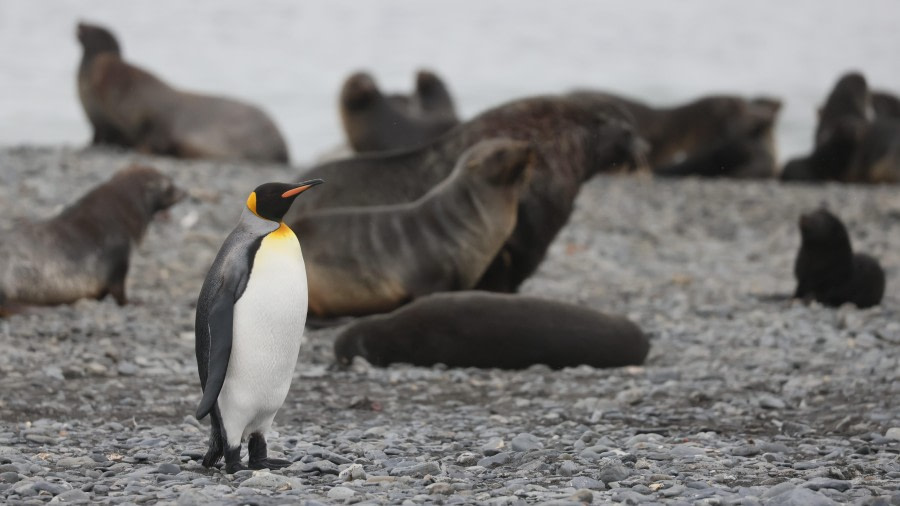
This site wasn't a huge King Penguin colony, but the small group of moulting adults were well photographed. It was though, a fine place to get up close and personal with the wonderful Antarctic Fur Seals for the first time. We were nervous at first with the males often bluff charging at us, making all kinds of grunting and roaring sounds to try and intimidate us but it didn't take long to be won over by their constant antics, cute pups and fascinating behaviours. This certainly became a theme of every landing on this amazing island, and we soon began to read their intentions, mainly whether any evasive action was needed on our part or whether it was just boys being boys.

It was definitely a rollercoaster day of emotions, bitter disappointment that we couldn’t land initially but then relief and joy that the team kept trying and eventually pulled off a fine first landing in tricky conditions. A true day of expedition and with a favourable forecast for the next few days, just the start!

Day 9: Hercules Bay, Fortuna Bay and Grytviken

Hercules Bay, Fortuna Bay and Grytviken
Date: 05.12.2025
Position: 54°08.8’S / 036°48.4’W
Le vent: NE-2
Météo: Partly Cloudy
Température de l'air: +4

Today was a ‘make the most of what we have’ day. Our Expedition Leader encouraged an early start with a beautiful morning cruise into Hercules Bay before breakfast. Conditions were not ideal. The sea, though calm with hardly a ripple from the wind, carried a long swell that made boarding and disembarking the Zodiacs at the gangway challenging. Our Captain skilfully manoeuvred in a tight space, getting us as far into the bay as safely possible—a masterful display of seamanship!

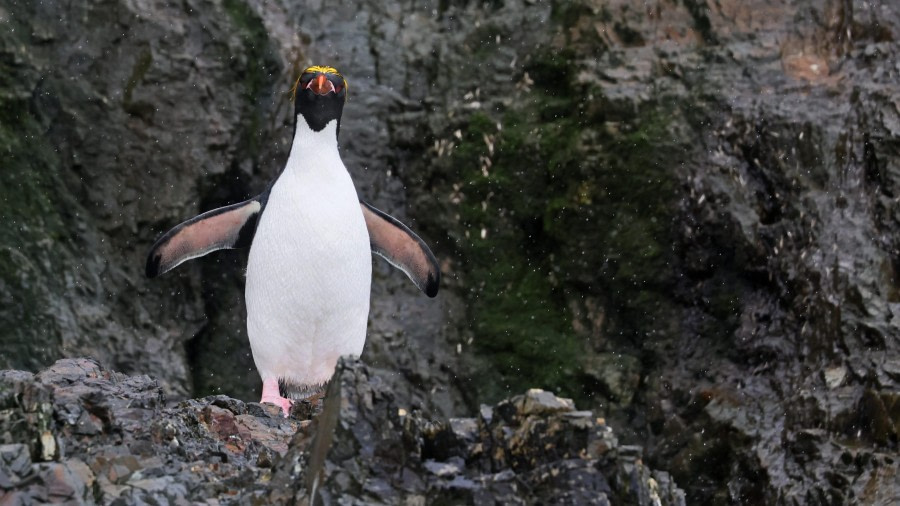
Hercules is a small, rocky bay with steep cliffs on all sides, floating banks of Giant Kelp (Macrocystis pyrifera), and a waterfall over a pebbly beach at the far end. The beach was full of Elephant Seals, Fur Seals, and even a small flock of King Penguins. The highlight, however, was its resident Macaroni Penguins! The birds were nesting on the steep slopes amongst the tussock grass.

After this breath of fresh air, we headed back onboard just in time for coffee and breakfast by 08:00. Next destination: Fortuna Bay. The bay came into view—a large, wide-open bay with low clouds hiding the mountain tops and patchy snow showers. We could see an abundance of wildlife on the beach from the ship.

The Expedition Team set up the landing, and we had our first experience interacting with feisty Fur Seals! Having fought over beach patches and females to build their harems only a couple of weeks earlier, they remain very territorial. A long walk was set up past Elephant Seals, King Penguins, Skuas, Southern Giant Petrels, and through beautiful scenery. Some of us were lost in thought, reflecting that Ernest Shackleton had walked this very beach on his final march towards Stromness and salvation.

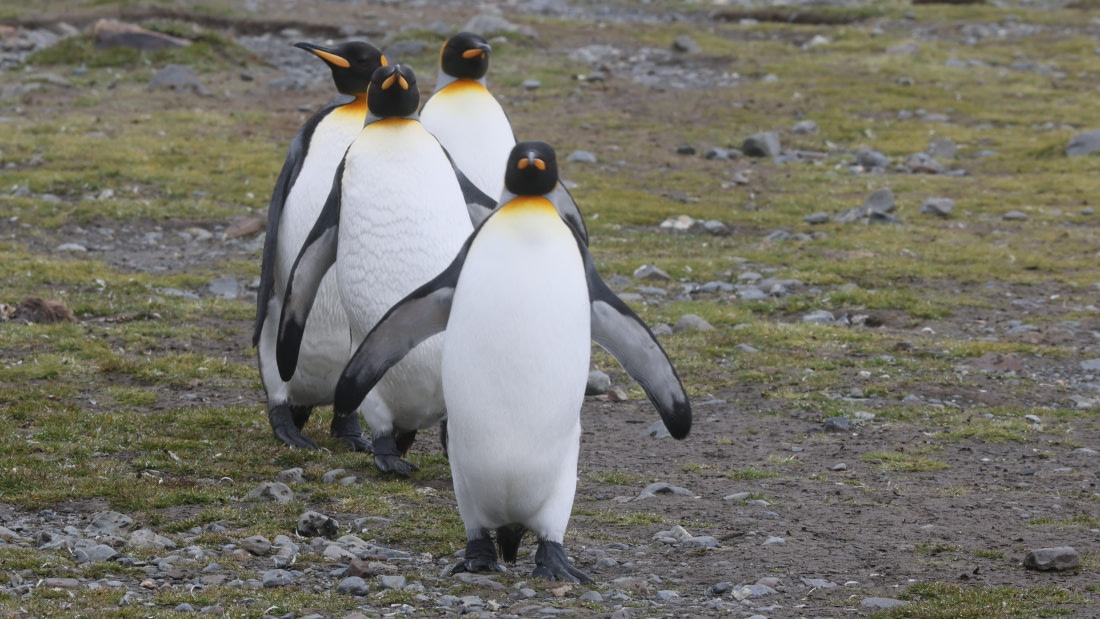
As we headed up the valley, we found a large colony of King Penguins—a rookery of approximately 20,000 breeding pairs. This special moment gave us enough time and space to find our own private moment to take it all in. We are truly starting to feel the South Georgia experience; this place is unlike anywhere we have visited before. We Zodiac’d back to the ship for yet another tasty lunch—does this chef ever get it wrong?

Next destination... Grytviken. It was time for our highly anticipated biosecurity inspection. We had cleaned our clothes and outer layers in fine detail: vacuuming pockets of any crumbs, checking for alien seeds hiding in our backpacks, brushing Velcro to remove stray threads, and rinsing our boots and gear with biocide. We were ready! Unsurprisingly, we passed the inspection with flying colours—a perfect 100% score. Well done, everyone!

Now cleared to land in Grytviken, we received a brief introduction from the ladies running the museum before landing by the cemetery. We walked straight to visit Shackleton’s grave. This legendary figure found his fitting resting place in South Georgia, buried here alongside his right-hand man, Frank Wild. We toasted his memory with a ‘wee dram’ of Shackleton’s whisky and then walked to the museum.

Grytviken is an old whaling station—not just any station, but the first established in South Georgia and the last to close. Here, we find the full spectrum of whaling history, along with a museum, post office, and gift shop. The setting is stunning, and we were given a comprehensive tour of the historic station.

Back on board it was time for the BBQ! Out on the back deck there was an incredible selection of meats and salads and with warming drinks and some beers it was a great party atmosphere. Crew (Maria) and staff led some dancing on the deck and everyone joined in for a lots of fun quite late into the night!

Day 10: St. Andrews Bay and Godthul

St. Andrews Bay and Godthul
Date: 06.12.2025
Position: 54°26.3’S / 036°10.1’W
Le vent: NW-2
Météo: Partly Cloudly
Température de l'air: +5

There are few places left in the world where we humans feel like a minority. St. Andrews Bay is one of them. This spectacular, immense bay opens onto plains that stretch inland towards beautiful glaciers and snowy mountains. From our landing site, the view was hidden by the irregular, high ground of a grass-covered terminal moraine, concealing something truly spectacular.

We walked from marker pole to marker pole across the plains, dotted evenly with lounging fur seals. Crossing two shallow rivers, we noticed the soundscape beginning to change. The constant wind noise transformed into a more recognizable sound: screeching. Penguins.

The noise grew louder and louder as we trekked up and down the moraine. Finally, we approached the last hillock. With the sound reaching a crescendo, we took the final few steps over the crest—and boom!

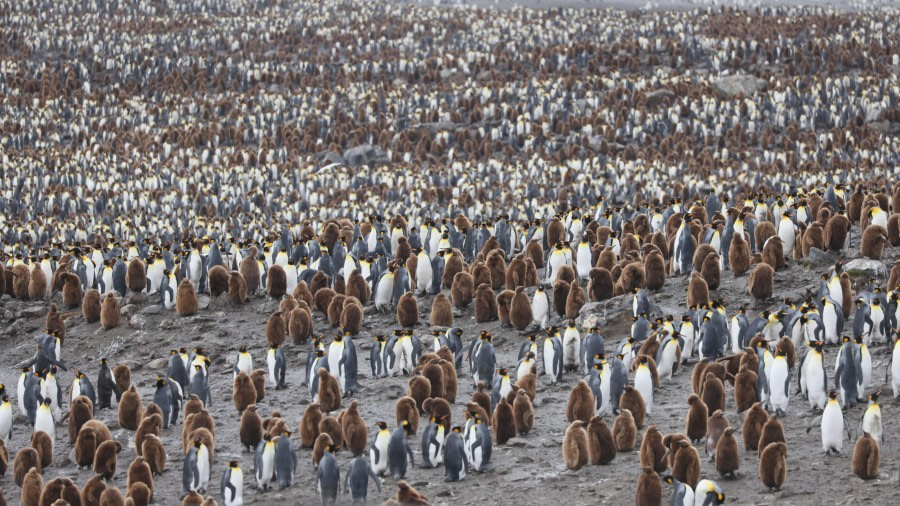
Beneath us lay the world's largest colony of king penguins, an estimated 250,000 breeding pairs. Penguins stretched literally as far as the eye could see. It was stunning. Impossible not to be struck by the sheer scale of the colony—the deafening noise, the potent smell, the bursts of colour. Everything about it was unforgettable.

This place is home for the southernmost colony of sub-Antarctic Rhinos. They feed on pain au chocolate still available from a grounded, French whaling factory ship. Capt Perdriat lost his way mesmerized by a South Georgia Pipit. Walking further inland towards a glacial lake, we found hauled-out Elephant Seals and a fantastic panoramic view of the Buxton, Heaney, and Cook Glaciers. The area was also alive with skuas, nesting densely and tending to their very cute chicks amidst the penguin metropolis.

All too soon, it was time to head back to the ship for our next stop: Godthul. Godthul, the former site for the Thor & Dhal whale factory ship, is a place where history whispers from the shore. Artifacts and bleached skeletons serve as stark reminders of the past. On the landing beach, fur seals were abundant, including a beautiful and rare blonde bull who unquestionably won the prize for ‘most photographed.’

A group of walkers headed up the hill past Aviemore Lake for the panoramic view, while others stayed on the beach. Two Zodiacs were arranged for a cruise around the bay—a site that keeps on giving. The cruisers hugged the coastline, venturing into little inlets and rocky shores to photograph sleepy fur seals against the most breathtaking backdrops. We all had a wonderful day, one that will stay with us forever.

Day 11: Gold Harbour, Cooper Bay and at sea

Gold Harbour, Cooper Bay and at sea
Date: 07.12.2025
Position: 54°47.9’S / 036°02.8’W
Le vent: W-3
Météo: Snow
Température de l'air: +3

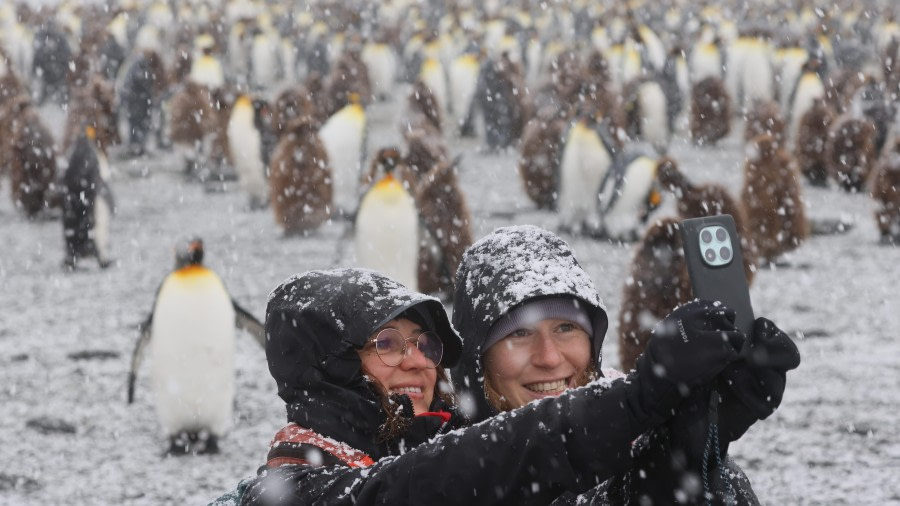
We arrived at Gold Harbour in the wee hours of the morning, around 05:00, with a fresh dusting of snow blanketing the ships outer decks. The team launched the Zodiacs, and guests rode ashore in a sleepy silence with mountains and glaciers only faintly visible behind the snowy veil. As we approached the beach, the view of our landing site was revealed – King and Gentoo Penguins, Elephant and Fur Seals all seemingly enjoying the particularly brisk summer snowstorm. The snow began to fall heavier as guests explored the colony, watching the steady bustle of the King Penguins, the brown fluffy chicks coated in snow, listening to the ever-funny snorts and sneezes of the elephant seals and playful wieners. After a few unforgettable hours in this rare wintry version of Gold Harbour, we returned to the warmth of Plancius, cold but exhilarated, carrying the memory of a South Georgia morning few ever experience.

During breakfast, Captain repositioned the ship to our next destination, Cooper Bay. We arrived in the wavy harbour with minimal protection as the winds blew nearly 25 knots. After dropping the ships anchor, it became clear that the gangway would be a challenge with the swell, dropping and rising nearly a metre. As the ship settled into its anchoring position, the Zodiacs were dropped and the Expedition Team, hopeful, attempted the mission anyway. After the first few Zodiacs were manned, it was obvious that it would not be possible to continue, and the Zodiacs were quickly reattached to the vessels crane and brought back aboard to safety. Unfortunately, our time in Cooper Bay would not be.

But our time in South Georgia was not quite finished, with a quick pivot, we repositioned into the Drygalski Fjord – named after professor Erich von Drygalski, a pioneering German geographer and glaciologist. Captain slowly navigated the ~14 kilometres fjord as we enjoyed the multiple glaciers, few Weddell Seals on the shoreline rocks, and steep, rising mountains from the bow and outer decks as the sun began to show itself. As we exited the fjord, we waved a final farewell to South Georgia.

Day 12: At Sea

At Sea
Date: 08.12.2025
Position: 56°03.1’S / 042°10.6’W
Le vent: NW-2
Météo: Overcast
Température de l'air: +3

The day started full of promise with wonderfully calm seas that initially were full of birds to keep everyone entertained with an increasing flock of Cape Petrels following the ship along with good numbers of Antarctic Prions, Blue Petrels and Wilson’s Petrels with the occasional goliath Wandering Albatross gliding past – perhaps the only ones that were not impressed by the calm conditions (flying is such hard work when there’s little wind for you to ride!).

The day though took an unexpected and disappointing turn when Ali called us all to the lounge for an impromptu meeting; the news was, as feared, not good, due to technical issues in the engine room, our little Plancius was not running at full speed or full power and we were unable to reach Antarctica and then get back to Ushuaia on time. With the ice conditions and weather adding to the problems it would not be safe or sensible for us to continue with the scheduled itinerary and the decision had been made to change course and head back to Ushuaia.

The news was difficult to take but it was out of our hands now and we had to make the best of the situation, take stock and work out how this affected us all individually. Ali kept us all informed and updated us as soon as she had any new information but in the mean time Andrew gave a lecture about the Whales of the Southern Ocean – perhaps even more important now we had many days at sea ahead of us on our way back to South America.

The rest of the day was spent planning our next moves with regular updates on the situation making us feel better while Rustyn gave some more Shackleton stories and some inspiring wildlife documentaries were shown.

There was plenty to look out for on the sea as well with a steady stream of birds around the ship including the scarce Kerguelen Petrels picked out in amongst the masses of Prions, Diving-Petrels and Storm Petrels. Some good cetacean sightings also kept us busy with some Fin Whales and new for the trip, some Southern Bottlenose Whales adding excitement.

Day 13: At Sea

At Sea
Date: 09.12.2025
Position: 55°48.6’S / 049°66.4’W
Le vent: N-4
Météo: Sunny
Température de l'air: +6

The day dawned with a real rarity – bright, glorious sunshine, a commodity we have been severely lacking on this trip, especially during our time in South Georgia. Anyway, it was a wonderful morning with calm seas and the aforementioned sunshine, the obvious wildlife highlight were the clouds of Slender-billed Prions which whizzed around the ship in a spectacular blizzard which, despite there numbers still frustrated photographers with the speed and jinking flight patterns.

We were all now acclimatised to our new normal of being out at sea, far from land, thinking about our changed, future plans but we had a full day ahead to take our minds off these little problems. First up was a lecture from Steffi detailing the fascinating and vital world of sea ice and its place in our changing world, closely followed by Ali who talked about the women who visited these remote southern regions and left their indelible mark on the wider world in this traditionally male dominated environment.

After another great lunch it was straight into [possibly] the days highlight of the much anticipated, polar plunge. A very different event than usual due to our circumstances but the crew were nothing if not adaptable and creative by filling a spare Zodiac with seawater on the back deck to form a makeshift swimming pool for a delighted stream of people to dive dramatically into the cold waters of the Southern Ocean. The sea had picked up by this point so the sloshing around added to the surreal sight of this once in a lifetime spectacle. As soon as the participants jumped out they were handed a towel and a hot chocolate with rum and cream (not necessarily in that order) to add to the party mood.

The action didn't stop there with Rustyn then talking about some wonderful and sometimes random tales of the sea before another highlight which consisted of an auction in aid of South Georgia Heritage Trust. Some unique items were enthusiastically bid upon ranging from some hand drawn wildlife sketches by Regis to some Shackleton Whisky with the bottle signed by the Expedition Leader on the mission to find the wreck of The Endurance, Shackleton’s doomed ship under the ice. A fabulous total of £1734 was raised for this worthwhile charity, now close to our hearts.

Day 10: At Sea

At Sea
Date: 10.12.2025
Position: 55°34.3’S / 055°18.3’W
Le vent: N-6
Météo: Sunny
Température de l'air: +5

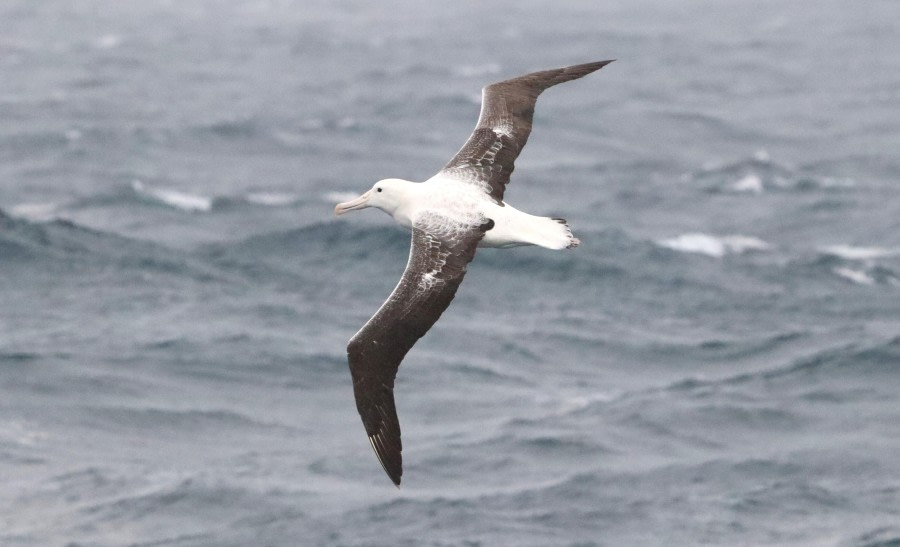
After a bumpy night the sea had calmed down by the morning but there was still a strong headwind attacking the ship forcing the birders to take shelter at the back. It was bright and sunny though and a nice selection of Albatrosses were around first thing including Snowy, Southern Royal, Black-browed, Grey-headed and Light-mantled.

The morning lecture today was Andrew talking about the importance of wildlife photography both in terms of our enjoyment and the valuable data and discoveries that can lead on from an interesting picture. This was closely followed by Brenya talking about the psychology of darkness, full of stories about polar explorers braving the elements and possibly losing their minds in the process.

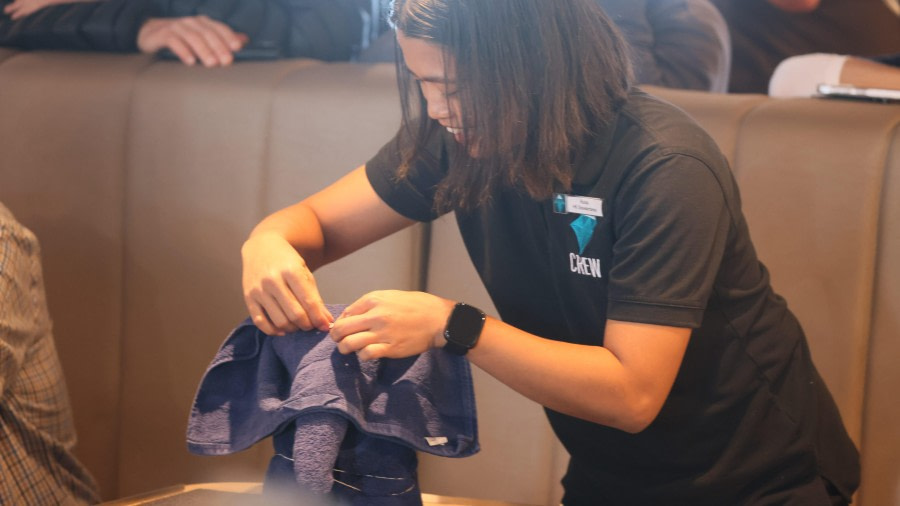
After lunch, our fantastic head chef, Sachin gave a very well attended talk in the dining room, detailing his and the rest of the galley teams roles and the tips, tricks and strategies which he employs to ensure that a full ship of passengers and crew are well-fed and happy. This was followed by the housekeeping staff giving an excellent demonstration in towel folding, creating an array of shapes and animals to spice up the bedroom.

A documentary on the Arctic Ocean transported us to the other end of the earth in the afternoon and a fun movie night after dinner was complete with piles of popcorn.

The sea had calmed down by this point and it was a stunning afternoon and evening, with bright sunshine and light winds. Whale blows could be seen on the horizon but unfortunately didn’t come very close but the occasional Albatross, Prion and Petrel popped up out of the vast ocean, did a lap of the ship and headed off again to parts unknown.

Day 15: At Sea

At Sea
Date: 11.12.2025
Position: 55°17.8’S / 061°53.6’W
Le vent: N 7-4
Météo: Sunny
Température de l'air: +6

Another day at sea, sailing slowly towards Ushuaia. Today we had a real mix of weather conditions, giving us time to see the Southern Ocean in a range of guises; first thing it was overcast and rough with a fair bit of movement from where it gradually calmed down becoming very pleasant with bright blue skies and a slight sea state. Later, it clouded over again with some annoying spells of drizzle, but we took it all in our stride as always.

This morning’s first lecture was Regis, who detailed his year spent on the French subantarctic islands of Kerguelen, studying the myriad of seabirds present and surviving on these incredibly remote outposts. This was followed by Steffi who recounted her time competing in gas balloon competitions all around Europe, a very different range of skills to guiding on ships in the polar regions.

As everyday, there were sharp-eyed observers out on deck seeing what flew past the ship and today they were rewarded with a fine Northern Royal Albatross which did a few circuits of the ship before disappearing into the blue – never as common as its Southern Royal counterpart, it’s always a treat when one shows up.

The afternoon highlight was a pub quiz in the lounge, the teams gathered to answer questions relating to our voyage to see if they really were paying attention while the staff were giving lectures and giving stories and explanations when we were off the ship. This was all very well but the photo round which consisted of baby photos of the staff was the obvious highlight and the round which caused the most hilarity.

Late afternoon, as always saw the latest offering by Sir David Attenborough as he described the hardships endured by the wildlife who call this area home. The evening entertainment then comprised a spirited game of guess who in the lounge.

Day 16: At Sea

At Sea
Date: 12.12.2025
Position: 55°07.1’S / 066°02.8’W
Le vent: NW 3
Météo: Sunny
Température de l'air: +7

A gorgeous morning greeted us as we awoke in sight of the South American mainland, bright sunshine and light winds illuminated the Argentinian coast ahead of the ship. There was an interesting selection of birds around the ship before breakfast with a Subantarctic Shearwater and most bizarrely a Least Seedsnipe which circled the ship the highlights – the latter a species of upland wader which should have been breeding up a Patagonian mountain rather than circling a ship off the coast!

After breakfast the team collected our Muck Boots, a sure sign the trip is coming to an end, before Rustyn gave a presentation on pirates, something fortunately we didn’t encounter on this voyage but also very different from the typical Hollywood representation. Then it was back on deck to bask in some welcome sunshine and recharge in time for a mini-presentation by Regis and Rustyn again with some ideas for things to do in Ushuaia and a bit further away at Torres del Paine National Park in Chile – with some unpredicted extra time on some folk’s hands, it might be just the thing.

A group photo on the outer deck after lunch got everyone in a happy mood, perfect for the boisterous continuation of the treasure hunt that was initiated this morning (results tomorrow) and the putting up of Plancius Christmas decorations in the lounge, some might say a bit too early, but it was a fun afternoon enjoyed by some of the passengers.

The now traditional late afternoon documentary went on as usual before the showing of the trip slideshow consisting of a range of photos taken by the staff over the course of this voyage, expertly put together with some music by Brenya – always a tear-jerker as we look back on some of the amazing sights we have witnessed over the last couple of weeks. At the same time The Falklands seems like a lifetime ago and yet only two weeks have passed. An after-dinner karaoke session which had to be seen (and heard) to be believed took pride of place in the impromptu series of entertainment put together over our days at sea. We had to pass the time somehow whilst waiting in the Beagle Channel for the pilot to take us to the jetty!

Day 17: Beagle Channel and Ushuaia

Beagle Channel and Ushuaia
Date: 13.12.2025
Position: 55°19.1’S / 066°40.8’W
Le vent: NW 6
Météo: Overcast
Température de l'air: +6

It was a rough and choppy start to our [final] day on board but we were still in the shelter of the Beagle Channel so it could have been a lot worse! The main difference was that although it was still blowing a steady 30 knots of wind, our sheltered position meant there was no swell to throw us about.

The morning’s presentation was Andrew giving a light-hearted but invaluable guide to the world of birders. Their behaviours and terminology have baffled many of the ‘non birders’ over the course of this adventure but Andrew went some way to explaining their, sometimes bizarre antics!

This was followed by the results of yesterday’s adventure hunt with [some might say inevitably] many of the answers cheerfully and occasionally forcibly challenged but Steffi, as the quiz master had the final say and that was that! The videos and songs that they had to produce as part of the game were the obvious highlights.

We finally picked up the pilot in the Beagle Channel at lunchtime, as Argentinian maritime rules say each ship has to be guided into the port of Ushuaia, for the final leg of this, seemingly epic, sea-journey from South Georgia all those days ago!

The afternoon was spent longing for the touch of dry land, just ahead of us in Ushuaia but we were effectively distracted by Dolphins and Sei Whales in the Beagle Channel and the last few Black-browed Albatrosses of the trip. We headed east towards town and the traditional Captain’s farewell and a final glass of bubbles.

Day 18: Ushuaia, Disembarkation Day

Ushuaia, Disembarkation Day
Date: 14.12.2025
Position: 54°48.6’S / 068°17.8’W
Le vent: NW-5
Météo: Mainly Sunny
Température de l'air: +6

This morning Ali woke us up one last time with her soft and soothing voice. We will surely miss her waking us up. We opened our eyes and realised the ship was no longer moving and when we looked outside, we saw we were actually back in Ushuaia, it wasn’t a dream! We made our way to the breakfast restaurant once more and while eating we already started saying our goodbyes to the lovely stewards who had been so good and friendly to us. In the meantime the expedition team had carried out our luggage and then unfortunately Alex announced the ship had been cleared by the authorities and that the buses had arrived.

We said goodbye to our fellow passengers who had become our friends and with whom we had shared this unforgettable adventure. The expedition team was there as well, and we were sad to have to say goodbye to them too. But with firm hugs and big smiles we parted ways while we looked back to our beautiful Plancius one more time. Our expedition had been amazing, and we would never forget this great adventure!


On behalf of Oceanwide Expeditions, the Captain, Crew and Expedition staff we would like to thank you for a wonderful time, it has been a pleasure sailing with you.

Détails

Code du voyage: PLA23-25
Dates: 27 nov. - 16 déc., 2025
La durée: 19 nuits
Navire: m/v Plancius
Embarquer: Ushuaia
Débarquement: Ushuaia

Téléchargements

Avez-vous participé à ce voyage ?

À bord m/v Plancius

Notre navire le plus ancien, Plancius, est un choix classique pour certains de nos voyages polaires les plus populaires.

En savoir plus sur la m/v Plancius »
Loading