HDS22-25, trip log, Antarctica - Discovery and learning voyage

by Oceanwide Expeditions

Galerie de photos

Journal de bord

Day 1: Ushuaia, Embarkation day: Setting Sail for the Antarctic

Ushuaia, Embarkation day: Setting Sail for the Antarctic
Date: 17.11.2025
Position: 54°48.6 S, 068°17.9 W
Le vent: SW4-5
Météo: Overcast
Température de l'air: +6

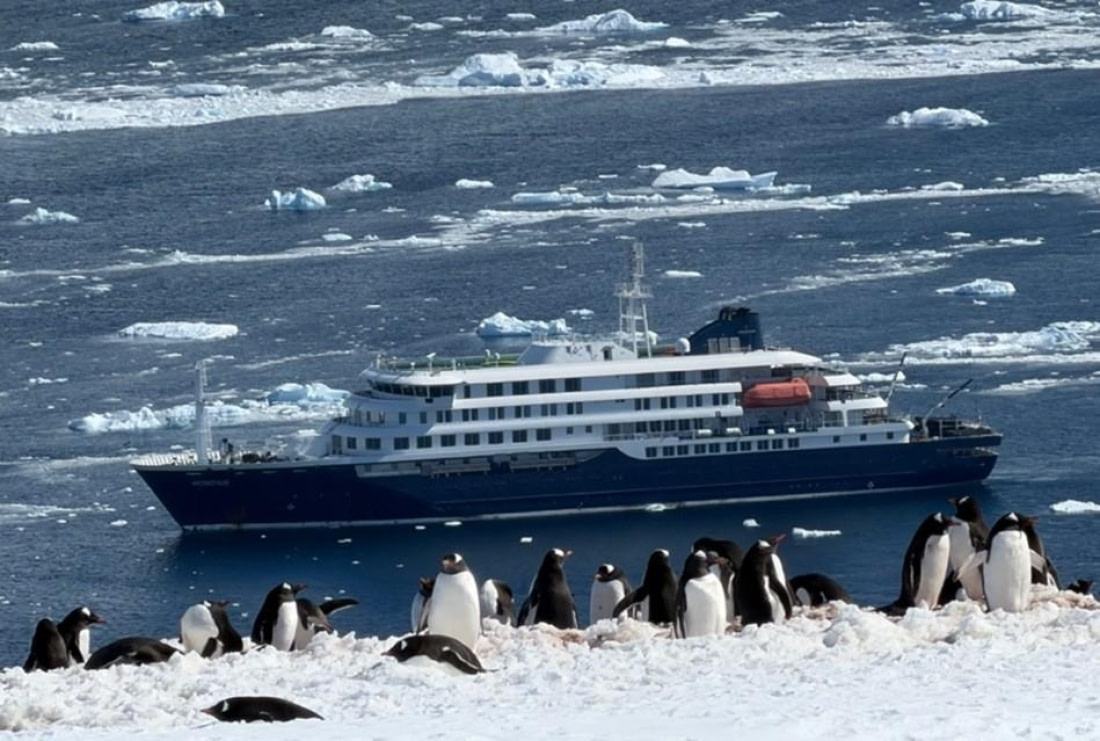
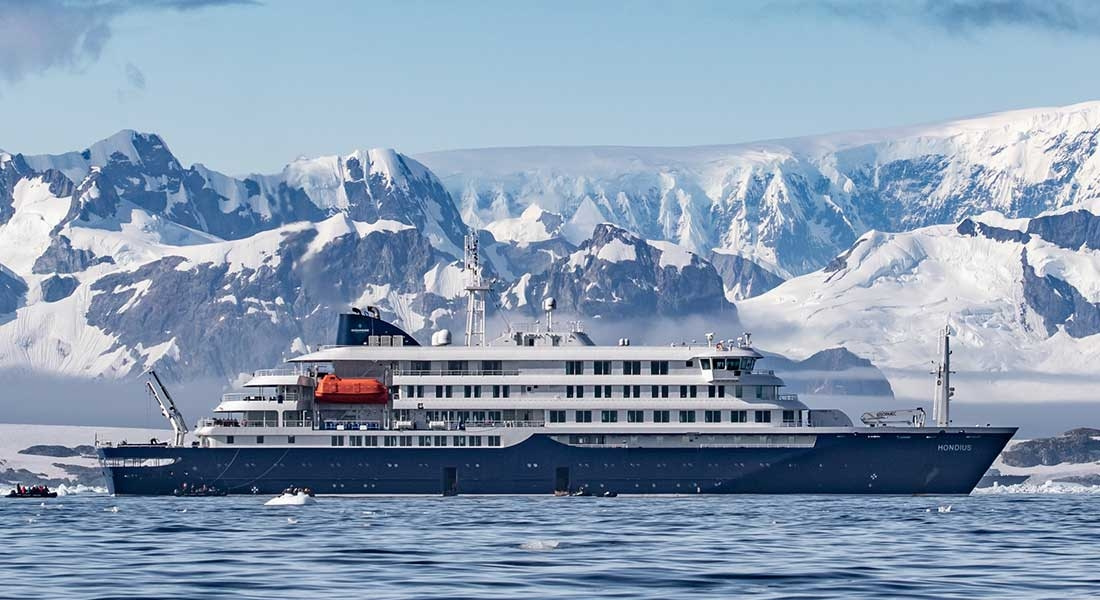
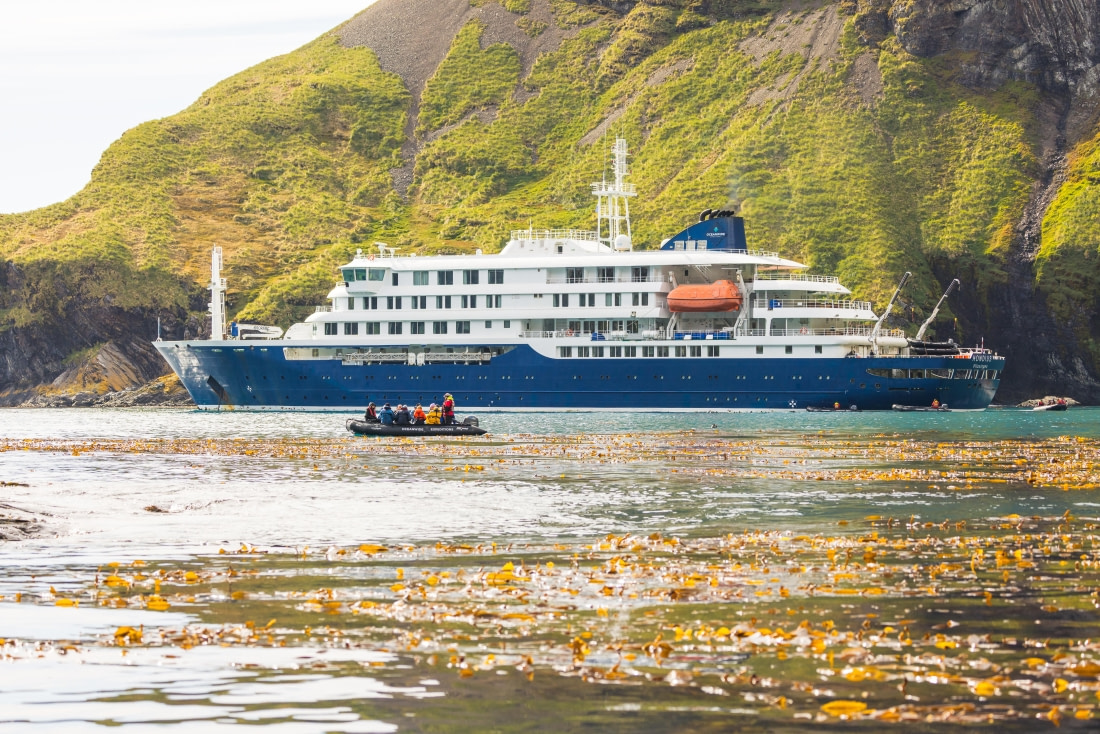
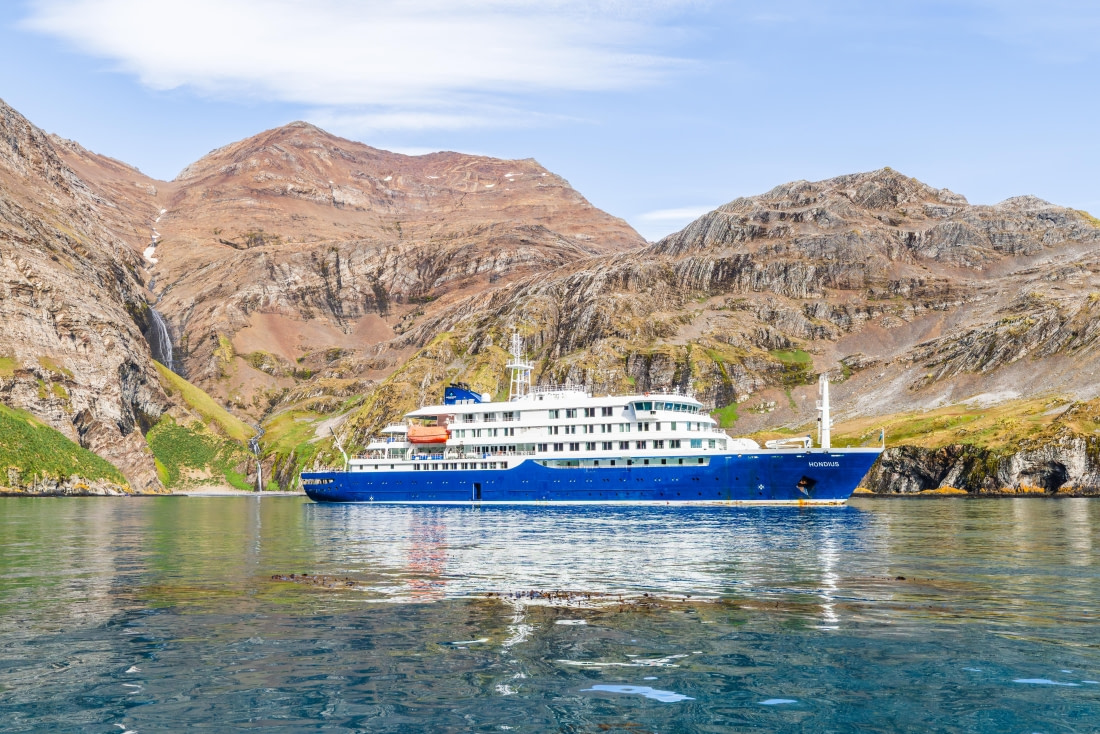
This afternoon marked the beginning of our grand adventure as we stepped aboard Hondius, our expedition vessel bound for the Antractic. Moored in the port of Ushuaia, at the end of the world the ship loomed large and ready—our floating home for the next ten days. For some, the journey began with a small challenge: conquering the steep gangway, duffel bags in tow and excitement in the air. But one by one, we all made it aboard, eager and wide-eyed.

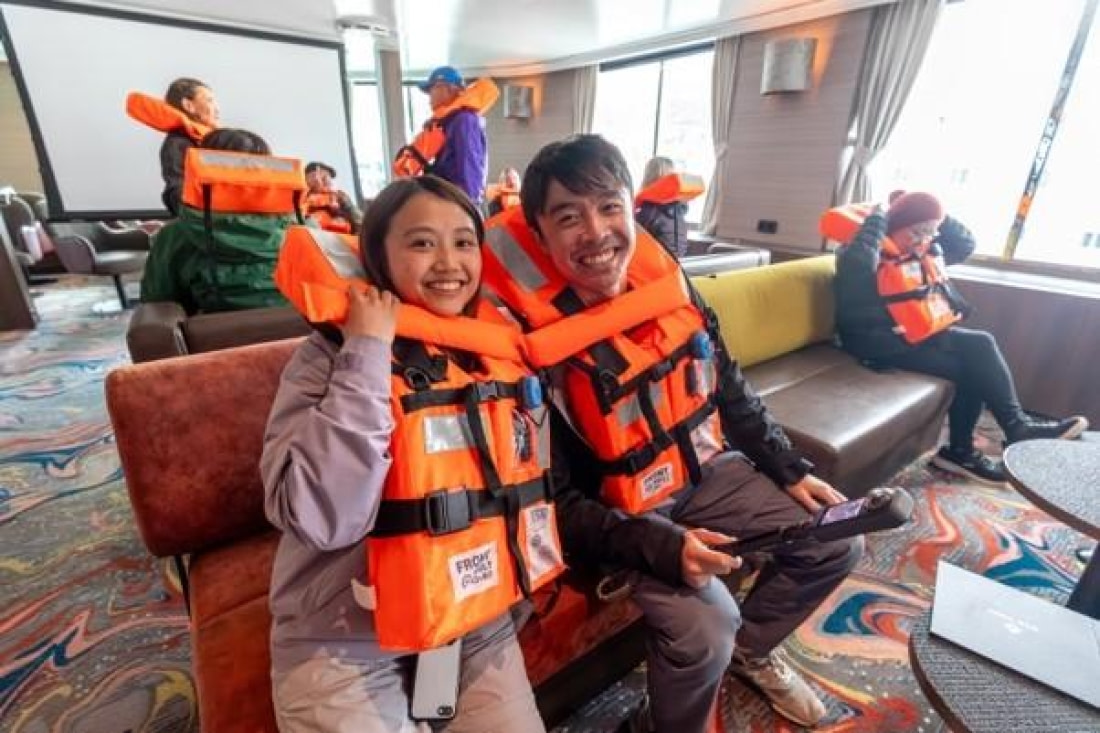
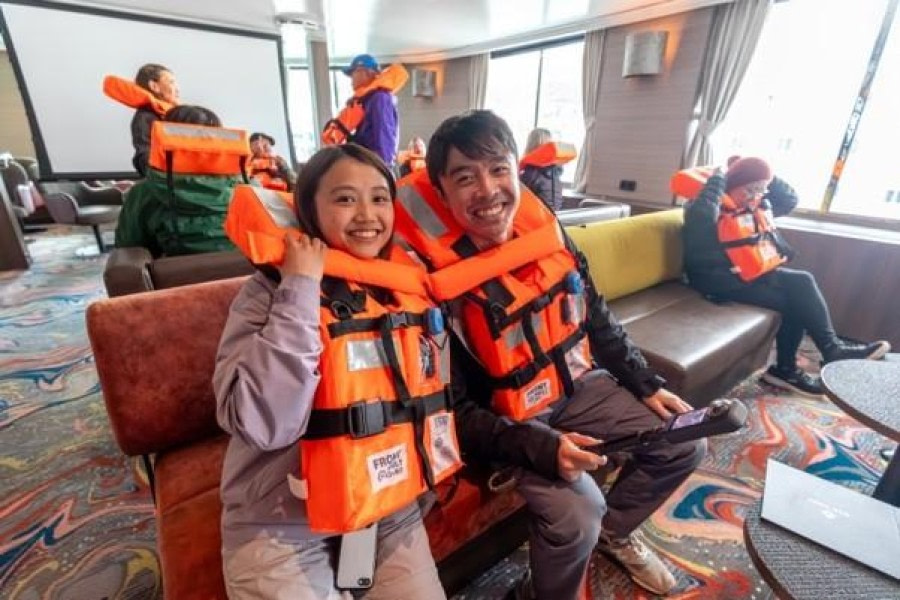
After settling into our cabins, we gathered in the ship’s heart - the observation lounge - for our first official meeting: the safety briefing. There’s something surreal about donning a bright orange life vest while imagining penguins, whales and glaciers, but the drill was a rite of passage, and by the end, we felt a little more like seasoned explorers.

With formalities complete, it was time for a toast. Glasses clinked and smiles widened during the Captain’s Welcome Cocktail, held once again in the lounge, now buzzing with conversation and anticipation. Due to the incredibly strong winds we set sail at 19:00 pm. Outside the windows, the coastline of Ushuaia slowly began to recede—we were finally underway, making our way through the Beagle Channel.

Dinner was a lively affair, filled with laughter and introductions. After dinner we all headed back to the lounge where we had our mandatory zodiac briefing. After which some of us stayed out on deck, scanning the waves for the first glimpse of wildlife.

Our expedition has begun, and with it, the promise of icy landscapes, untamed nature, and memories waiting to be made.
Day 2: Drake Passage - At sea sailing towards Antarctica

Drake Passage - At sea sailing towards Antarctica
Date: 18.11.2025
Position: 54°42.4’S / 64°23.1’W
Le vent: SE8
Météo: Partly cloudy
Température de l'air: +4

Today's programme is filled with preparations for our visit to Antarctica. As our second day at sea begins with our expedition leader, Chloe's first 'Good morning!' wake-up call. The weather conditions were not favourable for starting our crossing through the Drake Passage, so we had to wait a little while. Instead, we had the unique opportunity to sail towards Staten Island.

After breakfast At 09.15 AM, an announcement was made to go to deck 3, “the Boot Room”, to try on the warm, waterproof muck boots that we were going to use in all our activities outside Hondius.

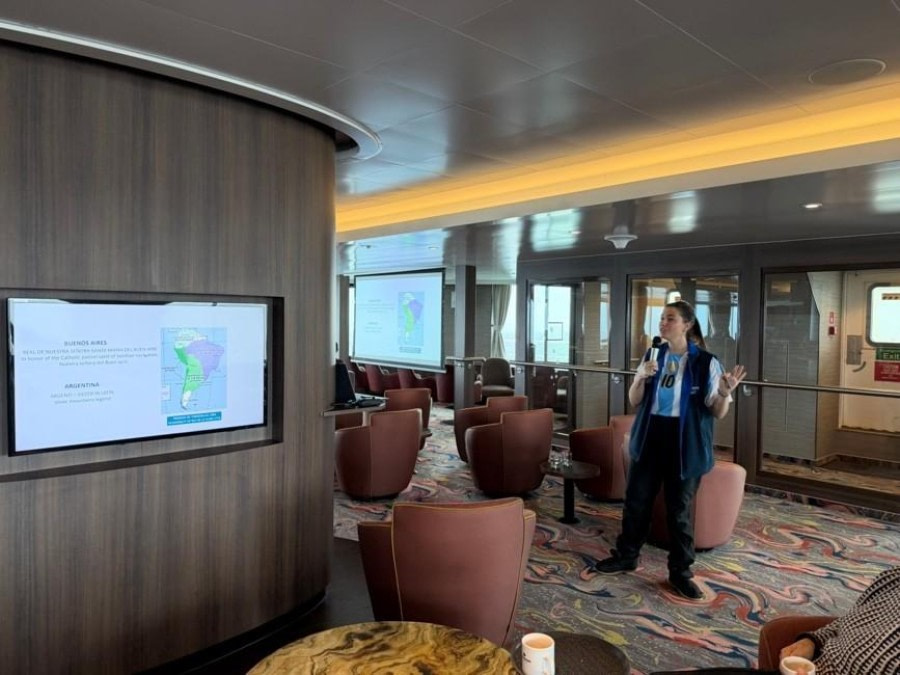
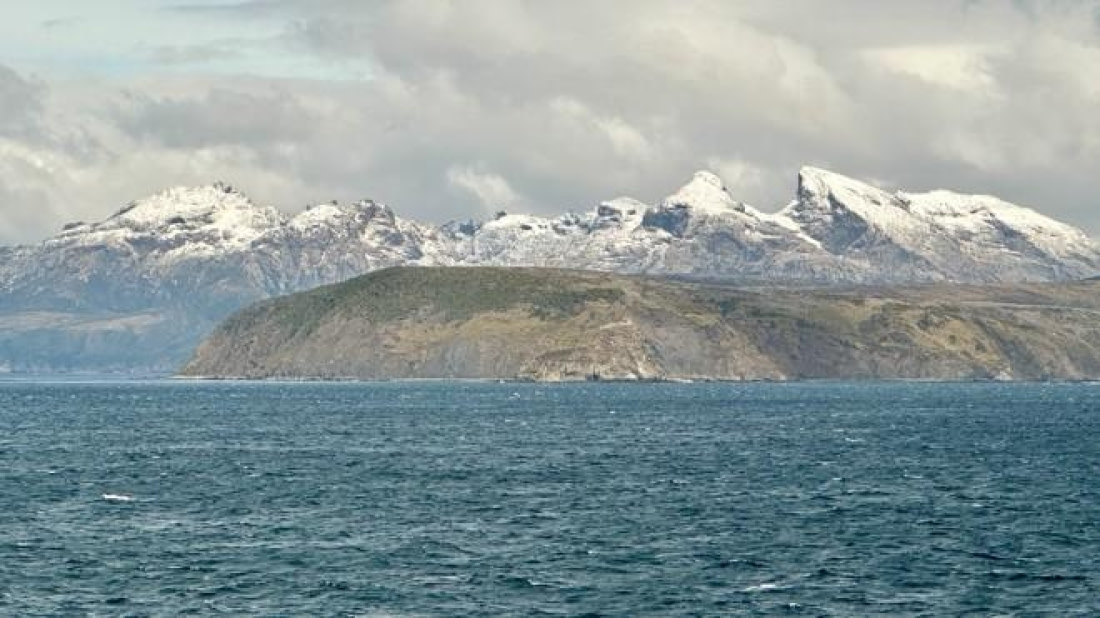
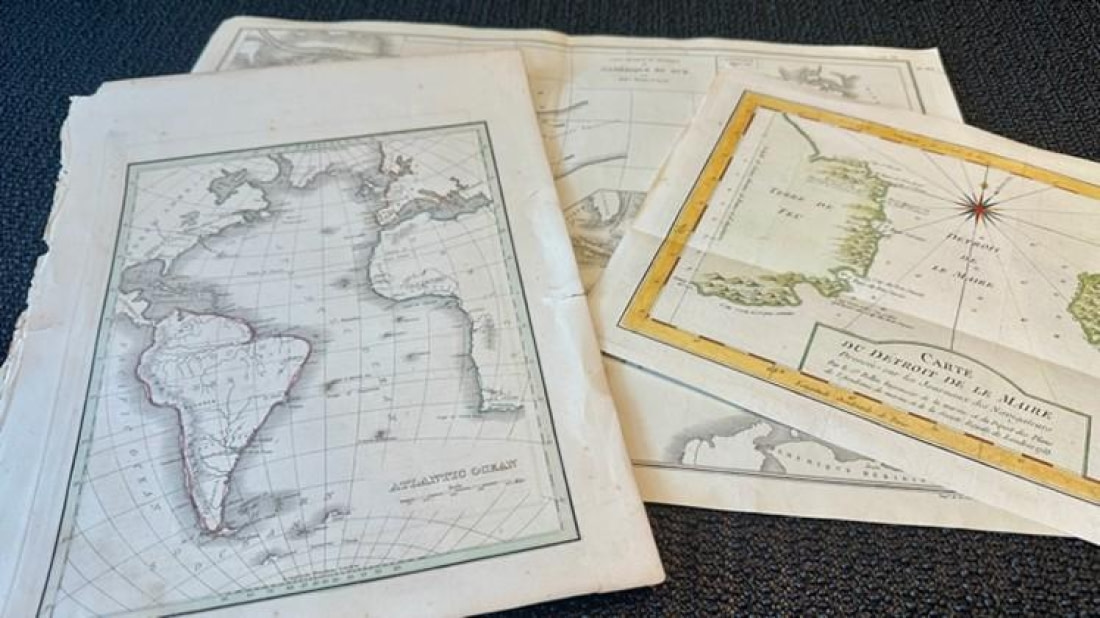
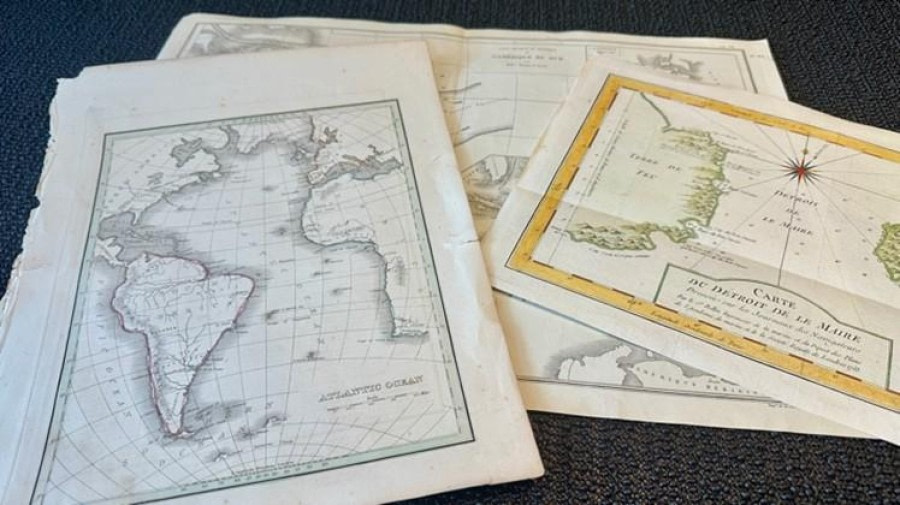
Afterwards, Marcelo invited us to the lounge for an amazing first lecture about the history of Staten Island and how it inspired Jules Verne and even showed us original maps. It was an experience that covered all our senses. Isla de los Estados, also known in English as Staten Island, is an Argentine island that lies 29 kilometres off the eastern extremity of Tierra del Fuego, from which it is separated by the Le Maire Strait. The island is part of the Argentine province of Tierra del Fuego, and of the department and city of Ushuaia. It has been declared an "Ecological, Historic, and Tourist Provincial Reserve". Prior to European arrival, the island was visited by the Yamana people, who inhabited the islands south of Isla Grande de Tierra del Fuego.

The first Europeans to encounter the island were the Spanish naval captain Francisco de Hoces and his crew in 1526. His ship, the San Lesmes, was part of the Spanish Loaísa expedition to the Pacific Ocean. The ship found the island after it had become separated from the rest of the fleet in a storm.

Almost a century after the Spaniards, the Dutch explorers Jacob le Maire and Willem Schouten passed the island on 25 December 1615, naming it Staten Landt.

We had the opportunity to see the replica of the old lighthouse. The landscape was breathtaking.

Next on our daily schedule was lunch.

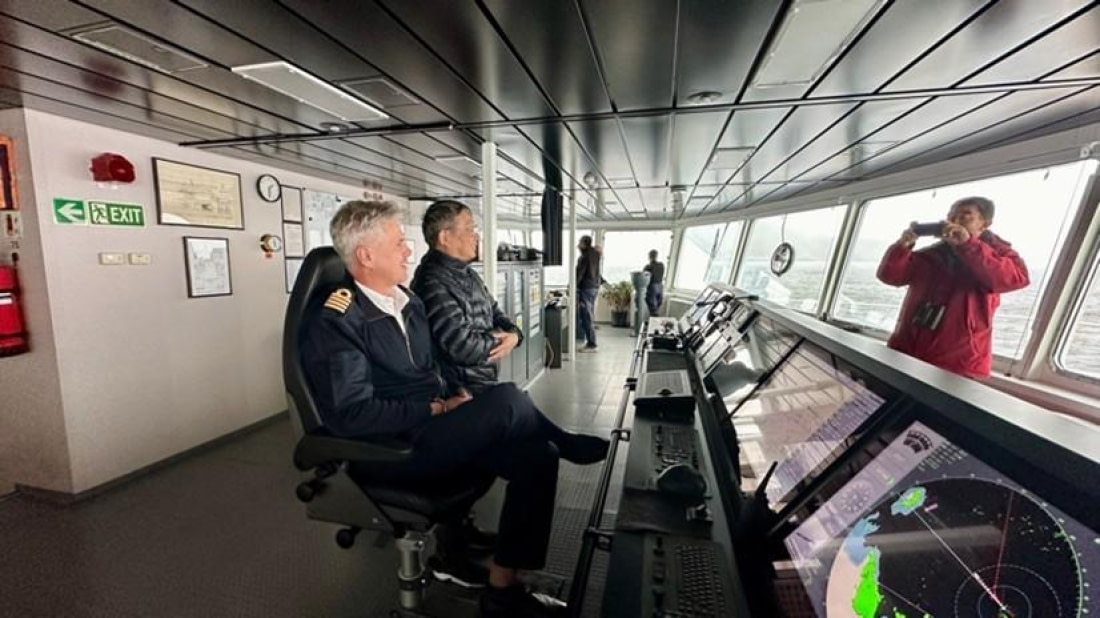
We spent time on the outside decks and on the bridge, where we had the opportunity to see some sea birds of the South Atlantic.

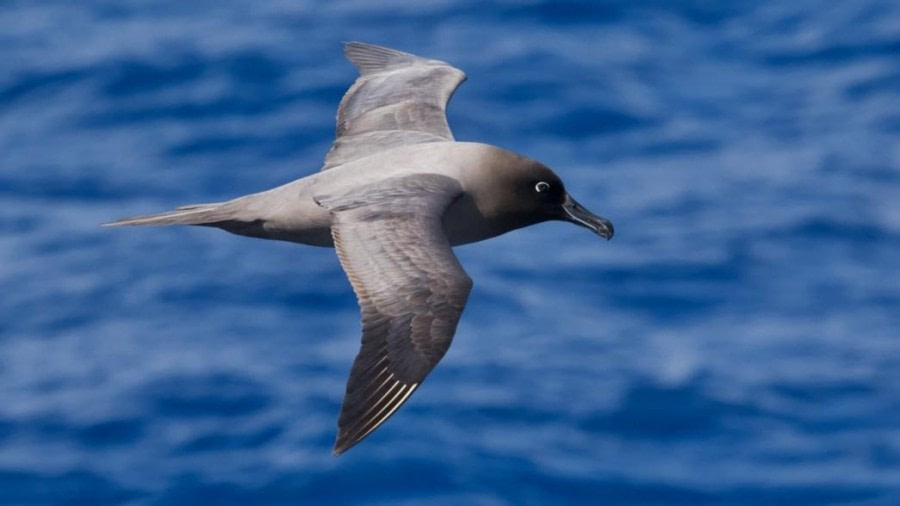
In the afternoon, Mark invited us to a lecture about albatrosses and petrels, during which he described many surprising facts about these magnificent birds.

Juan gave a presentation on photography, sharing all the tips and tricks for getting the best shots of our incredible trip.

Later in the afternoon, we all gathered again in the lounge for a daily recap. Chloé presented the plans for the following day. Emily talked about marine superstitions, and Lucia taught us about the name Antarctica. Finally, Andy gave us a crash course in 'How to Talk Like a Sailor!'.

After another delicious dinner, everyone was excited for the crossing of the Drake Passage the following day!

Day 3: Drake Passage – At sea sailing towards Antarctica

Drake Passage – At sea sailing towards Antarctica
Date: 19.11.2025
Position: 57°08.7’S / 001°17.6’W
Le vent: SW3
Météo: Partly cloudy
Température de l'air: +5

It had been an uncomfortable night on board Hondius with the ship rocking and rolling a bit but as we woke up and made our way to breakfast the sun was shining and the sea was beginning to calm. It was looking like a good day in the Drake Passage.

After breakfast we had our first presentation of the day from Chloé. This was the mandatory IAATO (International Association of Antarctic Tour Operators) briefing which tells us about the unique environment of Antarctica and what we must do to limit our impact as visitors to protect this frozen continent and its wildlife.

After this, we were then invited to the lounge once more to learn about some of the Citizen Science projects that we can contribute to during our voyage. Andrew and Emily told us about the whale surveys offered by ORCA and the data collection of humpback whales which is run by HappyWhale. We can identify humpback whales by the unique pattern on the underside of their tail, their fluke so by taking photos we can add to the database of whales that visit Antarctica in the summer.

After a fabulous lunch we had two more presentations from staff in order to prepare us for our arrival in Antarctica. Enrico explained about the geology of the continent, how it was formed from the supercontinent of Gondwana and the rocks that it is made from.

Later in the afternoon Koen told us about the history of explorers in Antarctica. The beginning of the 20th century was described as the Golden Age of Exploration when Amundsen, Scott and Shackleton were travelling to Antarctica in a race to reach the South Pole. We won’t be going that far south but we are certainly on our own Expedition!

Before dinner we gathered in the Lounge to hear about the plans for tomorrow and hear some other short stories from staff about Deception Island.

It had been a really good day in the Drake Passage and we were making really good speed towards Antarctica!

Day 4: At Sea Towards, Deception Island, Whallers Bay

At Sea Towards, Deception Island, Whallers Bay
Date: 20.11.2025
Position: 62°36.7’S / 62°27.4’W
Le vent: SW2
Météo: Clear
Température de l'air: +5

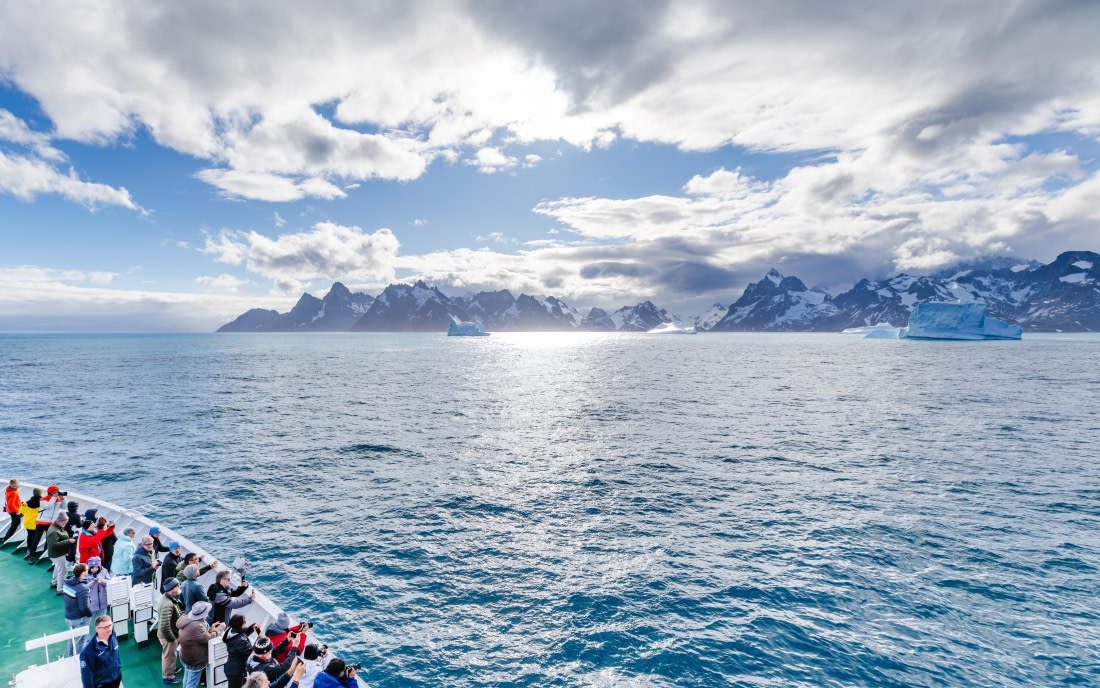
The day began with excitement as we woke up to our very first view of the Antarctic Islands coastline. Under brilliant sunshine and cloudless skies, the continent appeared sharp and vivid on the horizon. The conditions were exceptional: no wind, calm seas, and crystal-clear visibility. All around the vessel, penguins could be seen leaping out of the water, while occasional whale blows rose in the distance. Many of us gathered on the outer decks early, eager not to miss a moment of this spectacular arrival.

During the morning, Expedition Guide Ali delivered an insightful and well-received lecture on penguins, covering behavior, adaptations, and the species we might encounter in the days ahead. Afterwards, the expedition team guided everyone through the mandatory biosecurity procedures, ensuring that all boots, outer layers, backpacks, and equipment were fully cleaned and prepared for the first landing in Antarctica. Meanwhile, there were several workshops delivered on the outer decks as we all wanted to be outside as much as possible: there was a photo workshop, citizen science, surveying for marine mammals, and bird watching and ID.

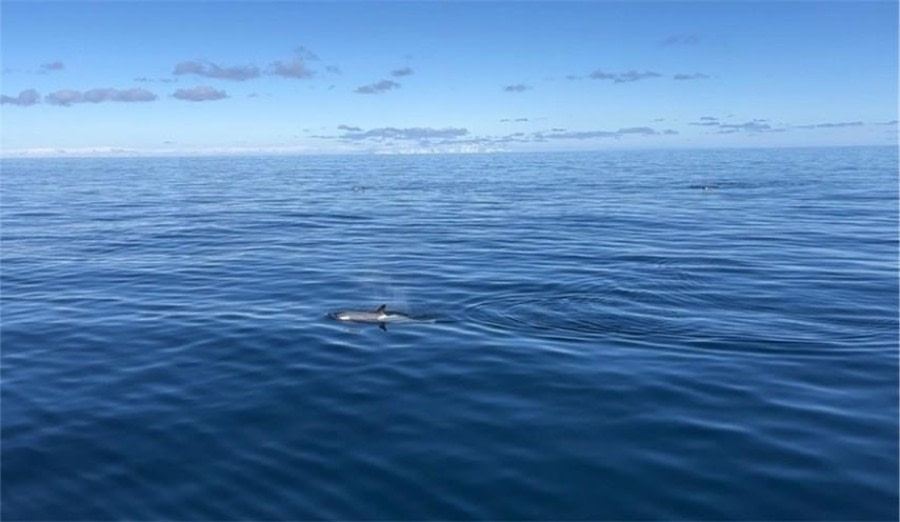
Lunch was served as the ship continued sailing toward Deception Island, the dramatic volcanic caldera known for its narrow entrance at Neptune’s Bellows. As the vessel approached the entrance and final preparations for landing were underway, a sudden call from the deck drew everyone outside—orcas had been spotted. Not just a few, but three pods, made up of many individuals, they were traveling and socializing around the ship.

For an extended period, the orca remained nearby, surfacing, circling, and giving us an extraordinary wildlife encounter. Cameras clicked rapidly, and the decks filled with quiet amazement as we watched the animals glide effortlessly through the still water. The planned landing was understandably delayed, though no one seemed to mind in the slightest.

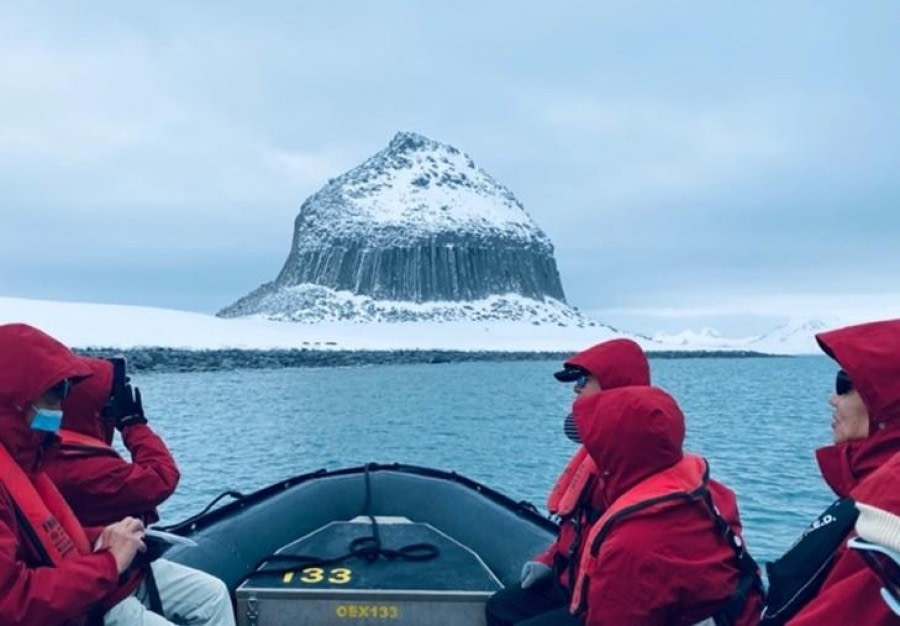
Once the orcas continued on their way, the ship proceeded into the caldera, and we were finally able to disembark at Whalers Bay, a historic site marked by old whaling structures, rusting boilers, and dramatic black-sand beaches. The excellent weather held, allowing for a leisurely exploration of the site. We also had the chance to go zodiac cruising outside Neptune’s Bellows, taking in the volcanic cliffs and the serene conditions that made the afternoon especially memorable.

We all returned to the ship after this successful first activity in Antarctica, energized and delighted by the day’s experiences. Following dinner, the expedition team hosted the daily recap, offering reflections on the day and sharing plans for the adventures to come.

As first days in Antarctica go, it could not have been more perfect.

Day 5: Danco & Neko Harbour

Danco & Neko Harbour
Date: 21.11.2025
Position: 64°43.4’S / 62°32.0’W
Le vent: E3
Météo: Partly cloudy
Température de l'air: +3

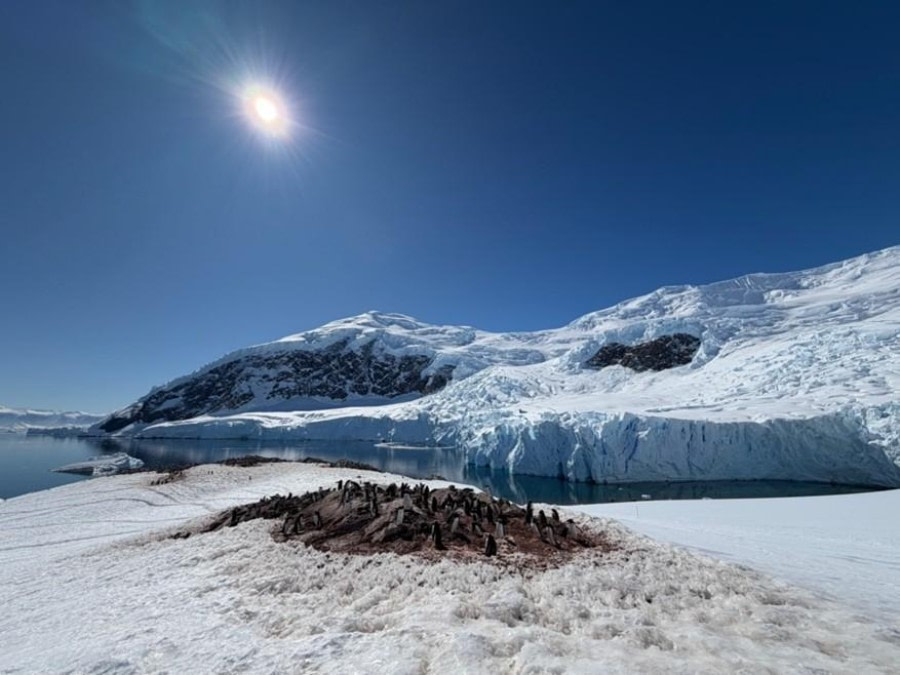
Our day began at 6:45am with a gentle wake up call as soft morning light drifted across the Errera Channel. Breakfast followed and it soon became clear that we had been gifted an exceptional day of weather. Danco Island welcomed us with calm seas, bright blue skies and gentoo penguins busy with their nesting rituals. The peaceful conditions made both the landing and the cruising feel almost effortless and many of us found ourselves quietly wondering what the harsher side of Antarctica must be like. The landscape sparkled in the sunshine and the morning passed in a relaxed and cheerful rhythm.

After lunch we travelled to Neko Harbour for what proved to be a defining moment of the voyage. This was our first continental landing on Antarctica, a milestone that carried a sense of pride and awe for everyone. Stepping onto the mainland in such calm and spectacular weather felt truly special. Gentoo penguins wandered along the shoreline and every so often a sharp crack from the glacier walls echoed across the bay reminding us that this peaceful scene sits within a powerful and constantly shifting environment. The afternoon zodiac cruise offered sweeping views of the towering ice and glassy water which reflected the entire harbour like a mirror.

Our early evening recap brought the day together beautifully. Chloé spoke about the colossal squid which fascinated the room while Matt shared his memorable Brad Pitt rule of polar photography which had everyone smiling and eager to put their new wisdom to use. After dinner, the ship settled into a relaxed evening until an excited announcement came over the speakers at around 10:00pm that orcas were beside the ship. We hurried to the decks where the fading light revealed orcas and whales gliding gracefully around us in what felt like a final gift from the Antarctic wildlife.

As we finally returned to our cabins we could not help but feel grateful for such a remarkable day. We cannot wait to see what tomorrow brings, though we have already been briefed that colder weather is on the way and to make sure we rug up for the adventures ahead.

Day 6: Palaver Point & Graham Passage

Palaver Point & Graham Passage
Date: 22.11.2025
Position: 64°08.5’S / 61°45.7’W
Le vent: NE1
Météo: Overcast
Température de l'air: -1

The day began shrouded in dense, low clouds, setting a dramatic, chilly scene with outside temperatures hovering at 0°C. Our spirits, however, were high, driven by the anticipation of encountering a new species: the agile Chinstrap Penguins. A warm, fortifying breakfast prepared us for the cold and our first landing.

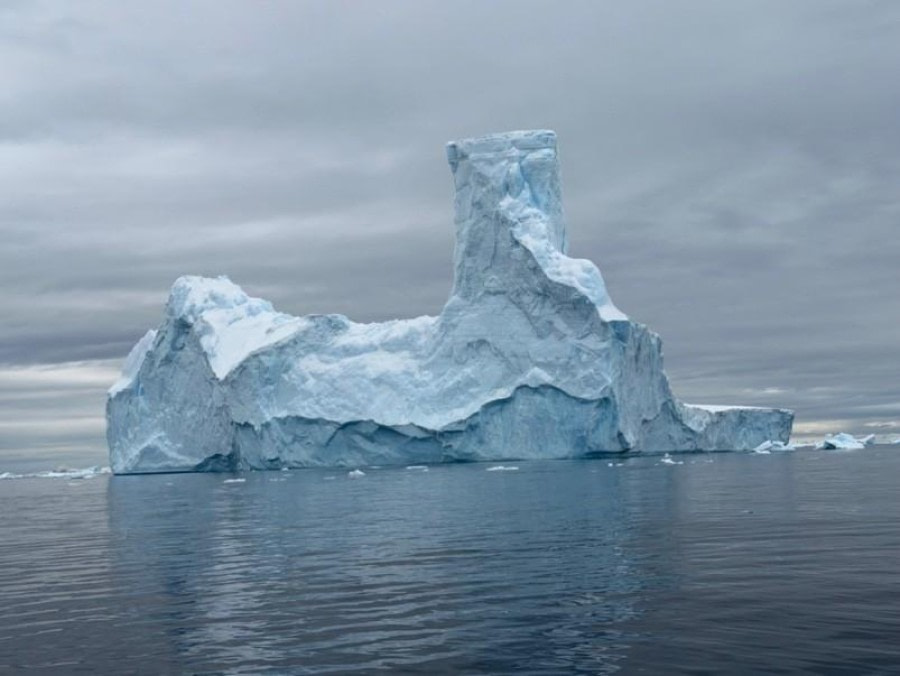
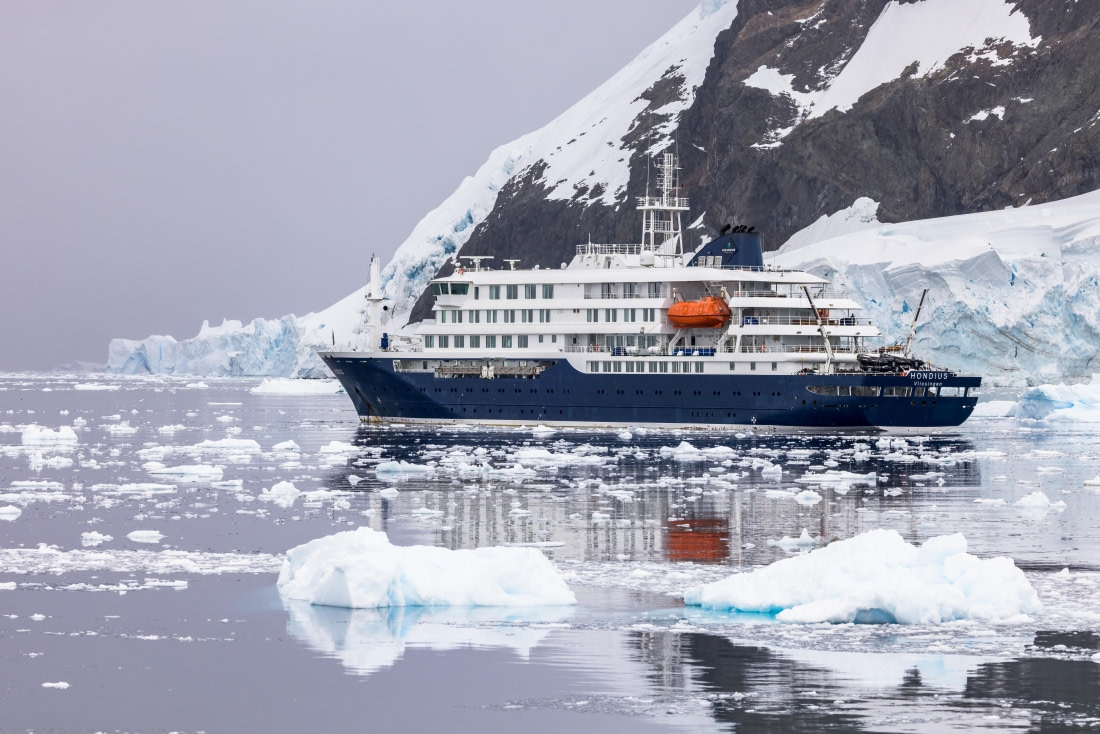
We disembarked at Palaver Point, a destination famed for its significant Chinstrap Penguin colony (Pygoscelis antarcticus). The journey through the bay offered breathtaking, almost cinematic views. The sea, while relatively calm, was filled with massive icebergs—some larger than our own vessel, the Hondius—their sculpted forms a stark reminder of the glacial environment.

The morning proved exceptional for marine wildlife. Our Zodiacs and kayaks were privileged to observe several Humpback Whales (Megaptera novaeangliae) feeding and resting close to the shore and even alongside our boats. As the morning activities ended, gentle snow began to fall, signaling our return to the warmth of the ship.

After a welcome and hearty lunch—featuring a fantastic spaghetti with marinara sauce followed by a well-deserved tiramisu—we were energized for the afternoon.

The second excursion was a Zodiac cruise through the spectacular Graham Passage. Despite the fog and persistent sub-zero conditions, the environment was captivating. We were once again fortunate with marine life, spotting both Humpback and Minke Whales (Balaenoptera acutorostrata). The passage itself was littered with uniquely-formed icebergs calved from the surrounding glacier, showcasing nature’s abstract artistry.

The excitement of the day continued into the evening with our special BBQ Night. It was a perfect blend of delicious food, great music, and dancing, providing the warmest possible closure to an otherwise cold day of Antarctic exploration. It was a day of stark, icy beauty and incredible wildlife sightings, ending on a high note of camaraderie and celebration. Now, we rest and recover, ready for the adventure that awaits tomorrow.

Day 7: Brown Base & Stony Point

Brown Base & Stony Point
Date: 23.11.2025
Position: 64°53.4’S / 24°54.0’W
Le vent: VAR
Météo: Partly cloudy
Température de l'air: -1

We awoke on the morning after the barbecue to 10cm of fresh snow on the decks of the Hondius. Cruising gently south under overcast skies, we entered Paradise Harbour, named by the whalers for the huge pods pf whales there, but still justifies long after they slaughtered them, with beautiful mountains surrounding the ship on all sides.

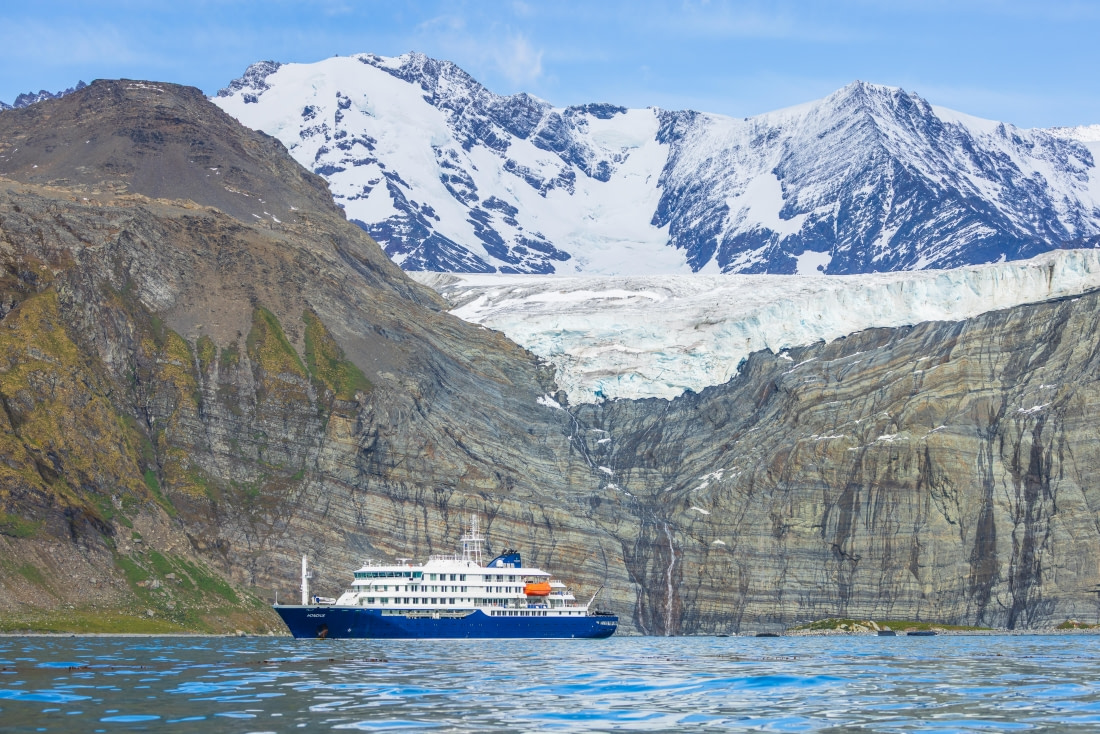
We arrived at Brown Station, one of the many Argentinian research stations on the continent. As the personnel had not yet arrived for the summer season, we were able to land at this remote outpost of humanity. Greeted by sheathbills strutting around the empty buildings, the guides set up a trail that zigzagged up to the viewpoint overlooking the harbour. This gave a spectacular panorama across to Lemaire Island and Bryde Island. We had to keep our distance from the huge snow overhang above the steep cliffs, which are home to the blue eyed cormorants that nest here. Meanwhile the kayakers paddled in a beautiful moon shaped lagoon while big icebergs nudged against the hull of Hondius as humpback whales surfaced in the bay.

In the afternoon, we cruised across the bay to the nearby Stony Point. The guides took real care not to break propellors as they approached the shallow rocky beach. They dug out stairs and fixed a rope so we could get onto the snow which by this time was very soft. We needed snowshoes to walk up to the viewpoint. For many of us it was our first time to experience this new way of travel. On the water, we spotted a couple of Weddell seals dozing on an ice floe, and the kayak team had a very special encounter with a leopard seal.

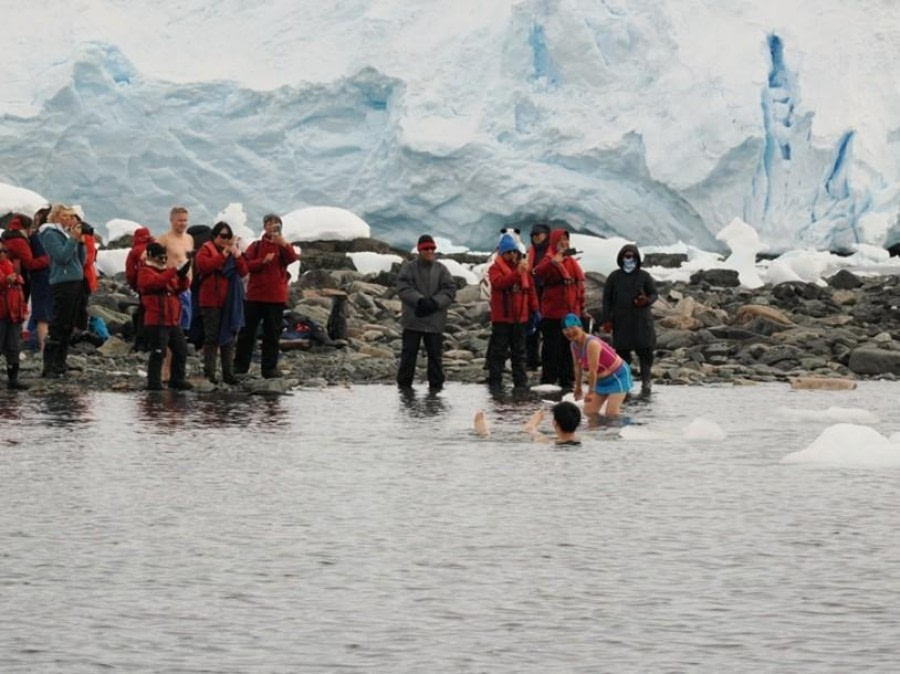
The highlight of the afternoon for many of us was the polar plunge. Stripping off and immersing oneself in water that’s at 1 degree Celsius was surprisingly popular! Towels were specially provided by the crew, followed by a rapid zodiac shuttle back to Hondius for a long hot shower.

Day 8: Yankee Harbour & Edinburgh Hill

Yankee Harbour & Edinburgh Hill
Date: 24.11.2025
Position: 62°53.2’S / 60°06.8’W
Le vent: SE2
Météo: Partly cloudy
Température de l'air: 0

The day began with Antarctic gifts: clear skies and calm seas. As the ship pushed steadily northward , the morning sun lit up the snowy mountains of Deception Island off the port side, their icy flanks glowing in the sunlight. On the starboard side, a small group of Humpback Whales surfacing, their blows backlight by the sun. It was the kind of wake-up call that needed no alarm—one that reminded everyone aboard exactly where they were: at the edge of the world.

The vessel continued north, tracing the rugged eastern coastline of Livingston Island before easing into the narrow MacFarlane Strait. Jagged peaks rose sharply from the water, and the strait’s shifting blues and silvers seemed almost unreal in the morning.

By mid-morning, the ship anchored off Yankee Harbour, a natural, crescent-shaped refuge long used by sailors, sealers, and—more recently—wildlife enthusiasts. Conditions were good, allowing for a split morning of land exploration and zodiac cruising.

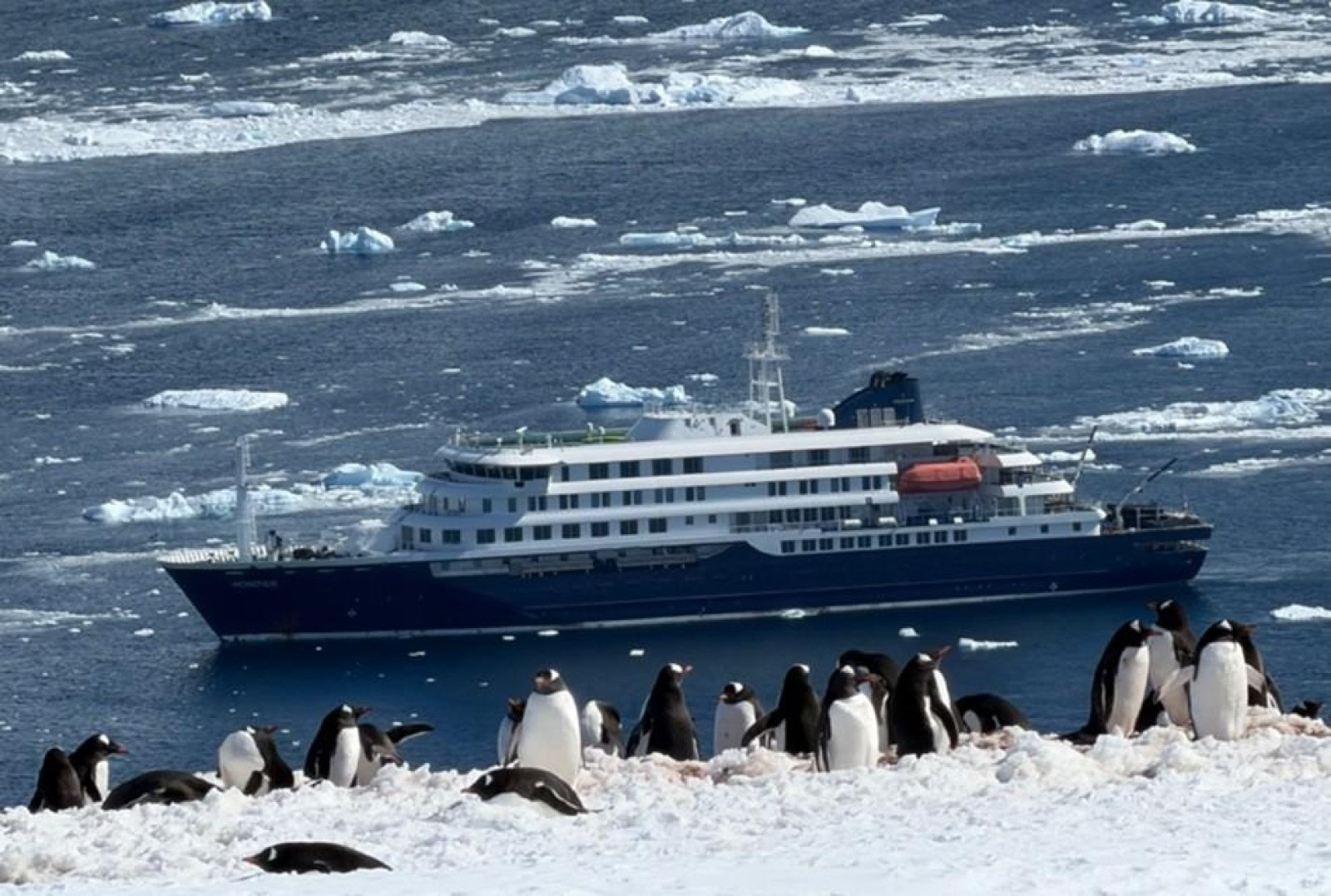
Onshore, life was in full swing. The large Gentoo penguin colony—nearly 5,000 strong—filled the air with their calls and bustling activity. Among them, visitors spotted a handful of Chinstrap penguins weaving their way through the crowd, their crisp markings making them easy to pick out. Not far away, a lone Adélie penguin stood at the edge of the colony, almost as if contemplating whether it had shown up to the wrong party. An elephant seal dozed lazily along the beach, barely acknowledging its audience except for the occasional, half-hearted flipper scratch.

Out on the water, the zodiac cruise brought yet another perspective. A sleek Minke whale surfaced repeatedly near the boats, its dark shape gliding silently beneath the waves as it fed. More elephant seals lounged on scattered patches of shoreline, perfectly unbothered by the passing zodiacs.

Day 9: At sea, towards Ushuaia

At sea, towards Ushuaia
Date: 25.11.2025
Position: 60°26.2’S / 62°36.1’W
Le vent: W4
Météo: Fog
Température de l'air: -1

This morning, we had the luxury of no wake-up call. Chloé left us to wake and rise at our own time and pace; quite a pleasant change after four days of early starts for activities off the ship.

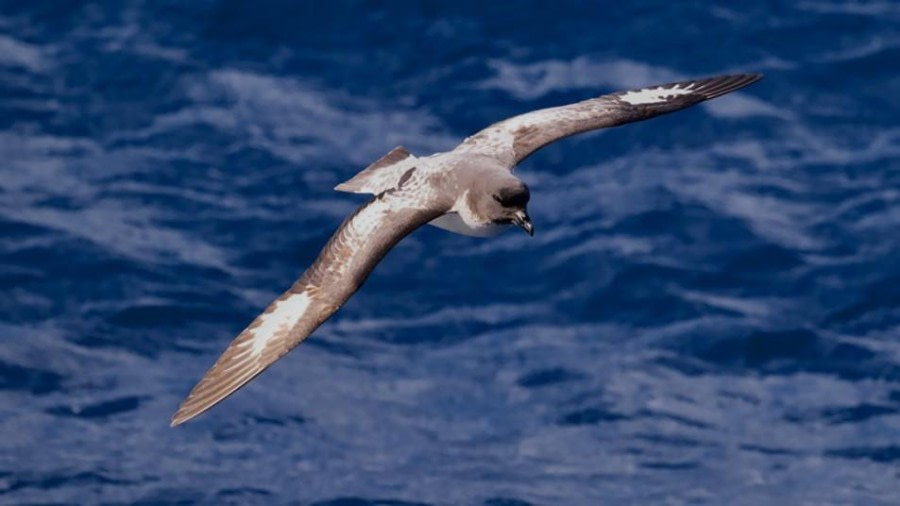
Looking out the window we found ourselves in fog, with visibility down about 20 metres. This persisted for the early part of the morning before clearing towards the horizon. This enabled us to see again some of the seabirds we had become familiar with on the route south…..Light -mantled Albatross, Cape Petrel and Southern Fulmar.

Inside, the lecture programme kicked off with Andrew presenting on Antarctic Orca. As well as giving us lots of general information about the natural history of Orca, he shared with us his interpretation of the amazing encounter we had earlier in the trip, near Deception Island. He left us in no doubt that we had witnessed something a bit special – pods coming together to form a grouping of 40-45 individuals. After that, Chloe took us to the other end of the size spectrum with her fascinating talk on Plankton, which was eye opening and very well received.

Over lunch, the ship was surrounded by clouds of Prions. Often difficult birds to identify to a species level, they were almost all Antarctic Prions with the occasional Blue Petrel. After a short break (maybe a nap for some!) we joined Koen for a presentation in the lecture theatre on all the other destinations and activities that Oceanwide Expeditions offer in the south and north polar regions (and several places in between!).

The final presentation was a world premiere by Andy about glaciers and people and the interaction between the two. He took us through glacial structures, the historical human view of glaciers including the danger of crevasses and how to mitigate the risks. He finished with a reflection of the effect of rising temperatures on glaciers – using them as a barometer of global warming. Following on from this great talk we had to return our muck boots to the expedition team. They had served us so well on our expedition – and this was a further sign that it was coming to a close as we surrendered them.

Dinner was a fully vegetarian offering – Oceanwide’s own attempt to promote sustainability; whatever the motivation, vegetarians and non-vegetarians alike really enjoyed their food. And that wasn’t the end of the day as Sasha took over the lecture theatre to tell tales, in his inimitable style, about ‘How to get to Antarctica’.

Day 10: At sea Drake, Passage

At sea Drake, Passage
Date: 26.11.2025
Position: 56°22.4’ S, 66°57.7’W
Le vent: NW8
Météo: Overcast
Température de l'air: +8

A late wake up call allowed us to ctach on up rest ready for facing the last day of this unforgettable trip.

Extra energy was required because the farewell is imminent.

We spent the voyage getting to experience incredible and pristine places, Antarctic flora and fauna we had never seen before, we shared our time with amazing people from many different latitudes who told us of their experiences, feelings and expectations.

Jan, the captain decided to add the cherry to the cake. As Hondius headed to the emblematic Cape Horn, a small island that divides the Pacific Ocean to the Atlantic, a very special corner of the world during the Clipper era, when the Panama Chanel didn’t exist.

Just three nautical miles from Cape Horn, even when it was a little foggy, we sighted that big rock. A big rock that has a lighthouse, and an albatross sculpture. The following poem was read to us by Marcelo:

I am Albatross
I am the albatross that waits for you
at the end of the world.

I am the forgotten soul of the dead sailors
who crossed Cape Horn from all the seas of the earth.

But they did not die in the furious waves.
Today they fly in my wings.
Toward eternity, in the last crack of the Antarctic winds.

By Sara Vial

We heard its history and continued to learn throughout the day as we attended the last lectures presented by Andy, Koen, Rose, Lucia and Marcelo.

But going back again to the farewell. Are the farewells a sad moment? Mmmmm……I read in Illusions, a book written by Richard Bach that the farewells are necessaries for reencounters again in the future. That means that farewells are not the end, they are the first step looking forward to the future, a moment or perhaps a day that is coming and that it will find us together again, maybe, forever.

Day 11: Arrival back into Ushuaia

Arrival back into Ushuaia
Date: 27.11.2025
Position: 54°48.6 S, 068°17.9
Le vent: SW1
Météo: Partly cloudy
Température de l'air: +6

Today is the day we disembark our dear Hondius, we heard the final ‘Good morning our dear explorers, from our Expedition Leader Chloe Maréchal. We were sad to say goodbye to all the crew and Expedition Staff onboard, but we are so happy for such an incredible voyage, with memories that will stay with us for a lifetime!

Détails

Code du voyage: HDS22-25
Dates: 17 nov. - 27 nov., 2025
La durée: 10 nuits
Navire: m/v Hondius
Embarquer: Ushuaia
Débarquement: Ushuaia

Téléchargements

Avez-vous participé à ce voyage ?

À bord m/v Hondius

Hondius est le premier navire de classe polaire 6 enregistré au monde et a été conçu dès le départ pour les croisières d'expédition.

En savoir plus sur la m/v Hondius »
Loading