

| Date: | 15.08.2026 |
| Position: | 65°50.9’N / 08°18.5’W |
| Le vent: | NW5 |
| Météo: | Partly Cloudy |
| Température de l'air: | +12 |
Galerie de photos
Journal de bord
Day 1: Akureyri, Embarkation day
Day 2: at sea towards Greenland
| Date: | 16.08.2026 |
| Position: | 68°09.9’N / 020°01.1’W |
| Le vent: | W5 |
| Météo: | Overcast |
| Température de l'air: | +2 |
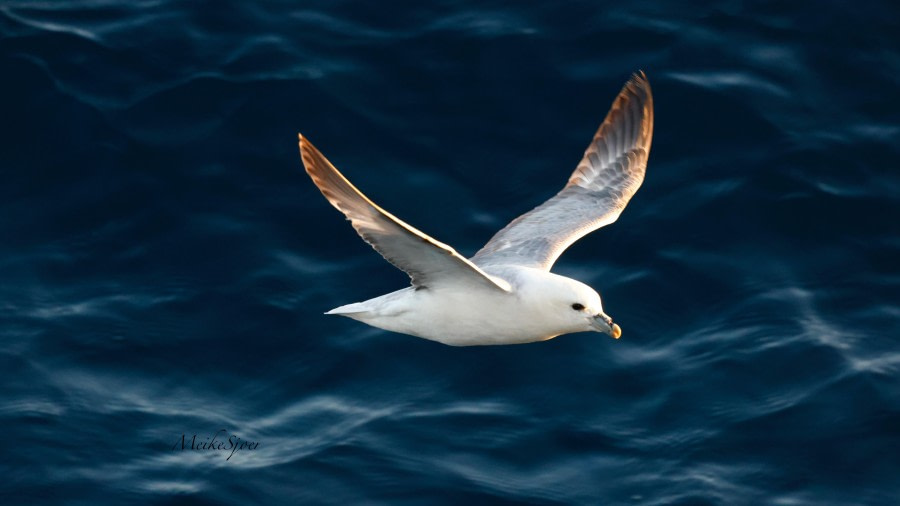
Today, Chris, our Expedition Leader, woke us up for the first time. We had left Akureyri behind yesterday, and now we were spending our first full day at sea, making our way across the Greenland Sea towards the remote shores of East Greenland.
We were very lucky with the conditions. The sea was remarkably calm, and Hondius was making good progress towards our destination. After our first breakfast on board, it was time for the mandatory briefings. We were introduced to AECO and its principles for responsible travel in the Arctic, followed by briefings on Zodiac operations and, perhaps most importantly, polar bear safety. Although encounters with polar bears are never guaranteed, Greenland is their territory, and knowing how to behave around these magnificent animals is an essential part of travelling in the Arctic.
Once all the formalities were completed, we had some time to ourselves. Many of us headed outside to enjoy the fresh air and take in the vastness of the ocean. Of course, there was also the ever-present hope of spotting wildlife. We scanned the horizon and carefully watched the surface of the sea for signs of whales. Every distant splash or unusual movement immediately caught our attention.
After lunch, we once again had some free time to relax, enjoy the ship or continue our search for wildlife. Our patience was eventually rewarded when we spotted a couple of whale blows in the distance. They were unfortunately too far away for us to get a good look, but it was still exciting to know that whales were travelling through these waters with us.
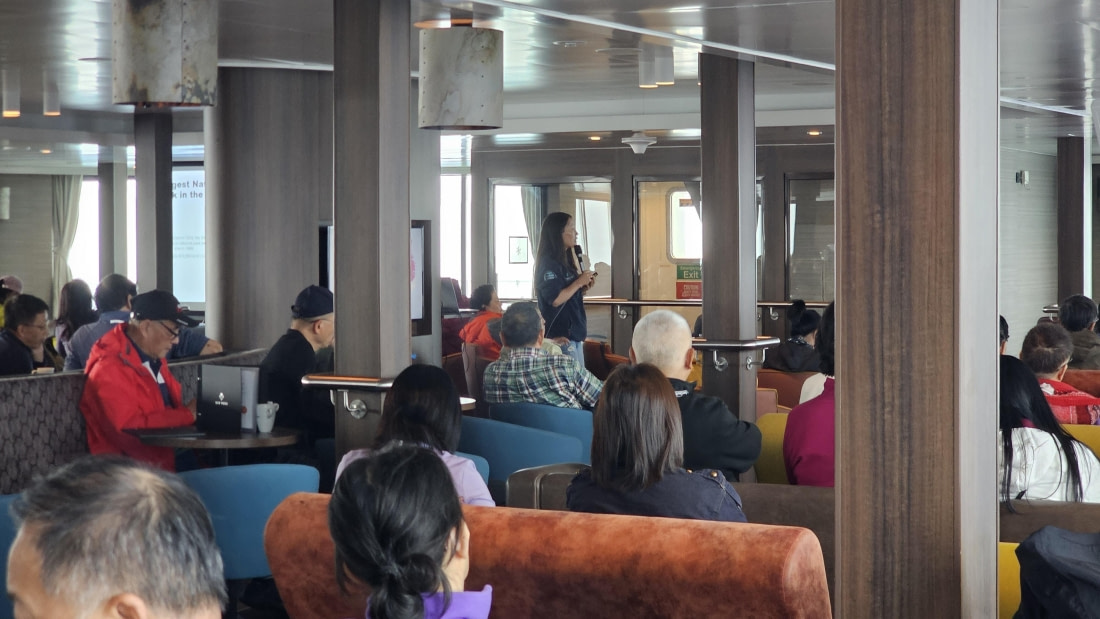
At 4:15 pm, we gathered for our first lecture, An Introduction to Greenland, given in English by Koen and in Mandarin by Rose. The presentation gave us a fascinating introduction to the country we were about to explore. It covered Greenland's geography, history and culture, as well as its geology, glaciology and wildlife. It was a great way to put everything we were seeing — and everything we were about to see — into perspective.
In the evening, we gathered for our first recap with the expedition team. Chris talked us through the exciting plans for the following day and gave us an overview of the expected weather and conditions. The other members of the team then added their own recaps, giving us even more information about what lay ahead.
Afterwards, it was time for our first plated dinner in the dining room.
But as we finished our meal, something truly special was happening outside. Hondius was already entering Scoresby Sund, and the evening light had transformed the landscape around us.
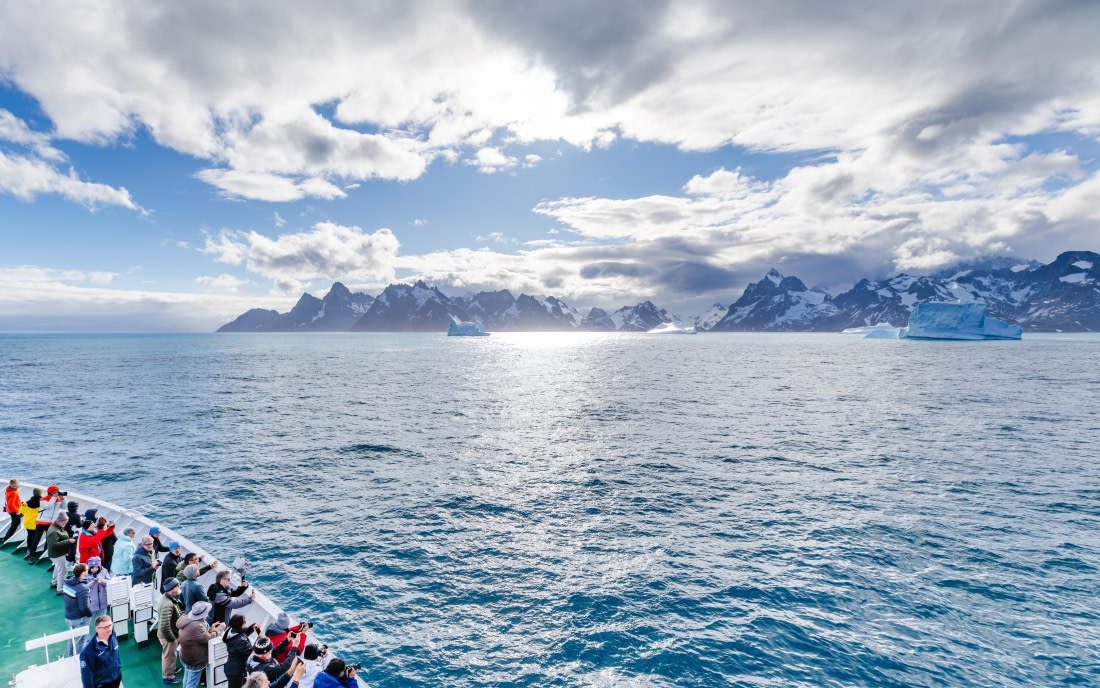
Our first icebergs appeared in the distance, floating quietly in the calm water and glowing in the soft evening light. As Hondius continued deeper into the fjord system, the landscape slowly unfolded on both sides of the ship. Towering mountains, steep cliffs and drifting pieces of ice surrounded us as we glided silently through the fjord.
Day 3: Sydkap
| Date: | 17.08.2026 |
| Position: | 71°16.0’N / 024°52.3’W |
| Le vent: | Light Air |
| Météo: | Sunny |
| Température de l'air: | +9 |
Our first morning waking up in Greenland felt like the beginning of a great adventure. We were anchored at the southern tip of Scoresby Land, deep within the Sydkap fjord system of East Greenland. Stepping outside, we were greeted by a landscape that seemed almost impossibly untouched: gentle, rolling hills cloaked in rich, vibrant tundra, stretching away beneath the vast Arctic sky.
And then came the moment we had been waiting for — our first landing on Greenlandic soil. The expedition team offered a choice of long, medium and shorter shore hikes, allowing everyone to explore at their own pace. The morning unfolded slowly and peacefully, with a wonderfully relaxed atmosphere. Around us, enormous icebergs drifted silently through the fjord, their sculptural forms glowing in shades of white and blue. It was hard to believe that these immense pieces of ancient glacier ice were simply floating past as part of the everyday scenery.
Along the shoreline, we discovered another fascinating connection to Greenland's past: the archaeological remains of ancient Thule culture Inuit winter houses. These semi-subterranean dwellings were ingeniously designed to withstand the harsh Arctic climate. Stones formed the foundations, while enormous whale bones — including vertebrae and jawbones — were used as structural supports. The roofs were insulated with thick layers of sod, helping to retain precious warmth during the long, dark winters.
Their position also revealed much about life in this remote environment. The houses faced towards the sea, giving their inhabitants easier access to the marine mammals and whales that were essential sources of food, materials and fuel. Standing beside these remains, it was remarkable to imagine families living here centuries ago, adapting to the Arctic with an impressive combination of knowledge, skill and resourcefulness.
We were also beginning to meet some of Greenland's wildlife. The ravens were impossible to miss, their loud calls echoing across the landscape. And for a few lucky members of the group, there was an even more exciting sighting: muskoxen, perfectly adapted to the harsh conditions of the Arctic and wonderfully at home among the tundra-covered hills.
Eventually, it was time to return to the ship for lunch. A delicious buffet was waiting for us — and, after a morning of fresh Arctic air and hiking, it was very welcome!
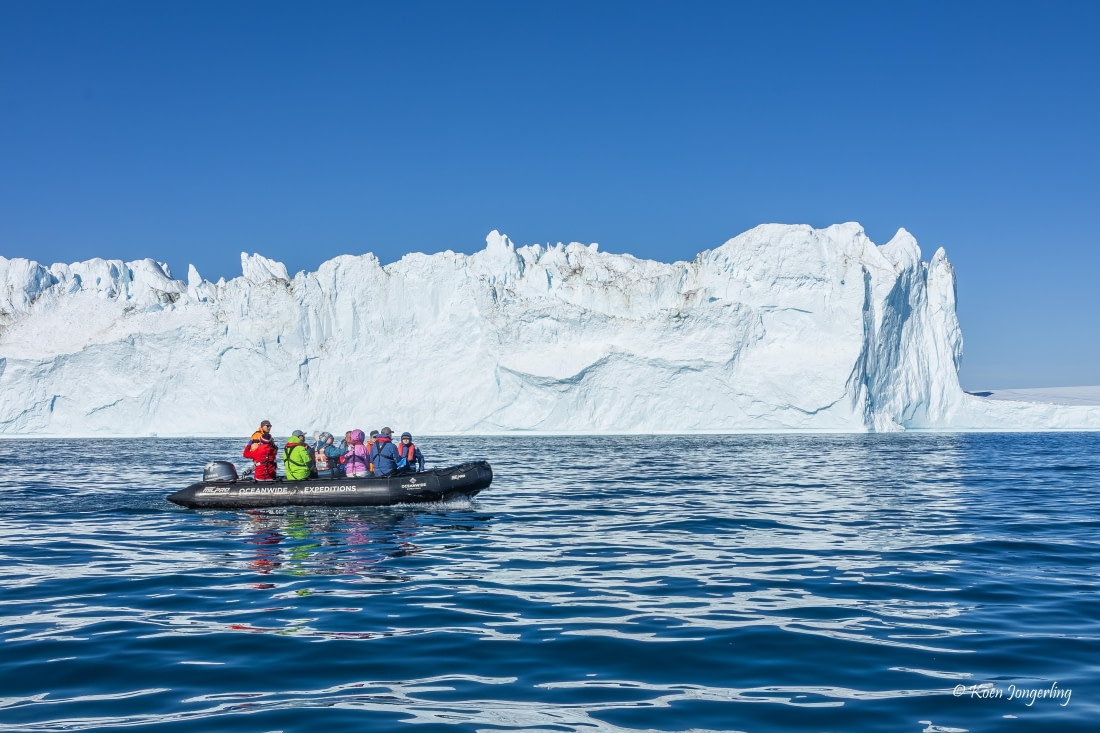
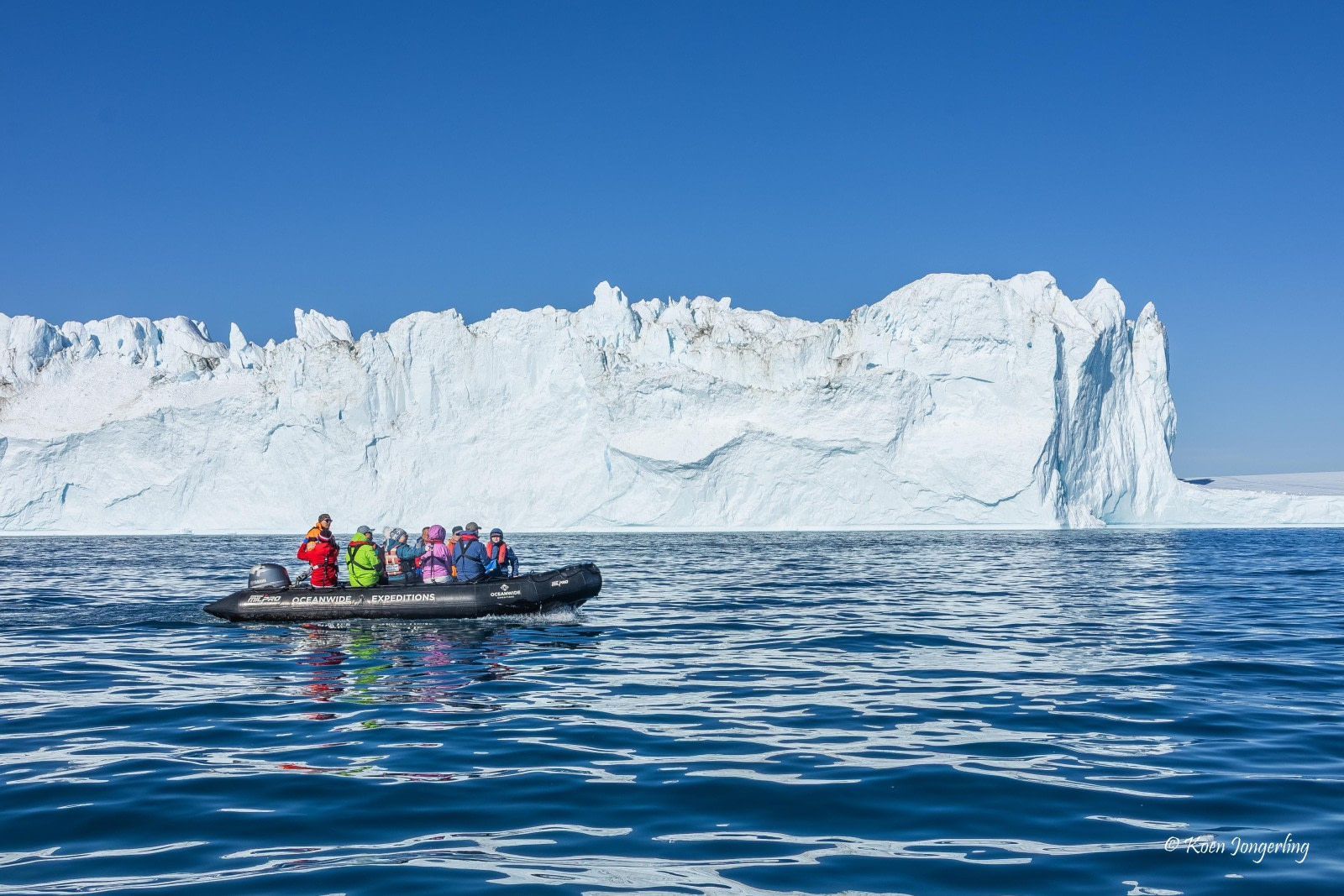
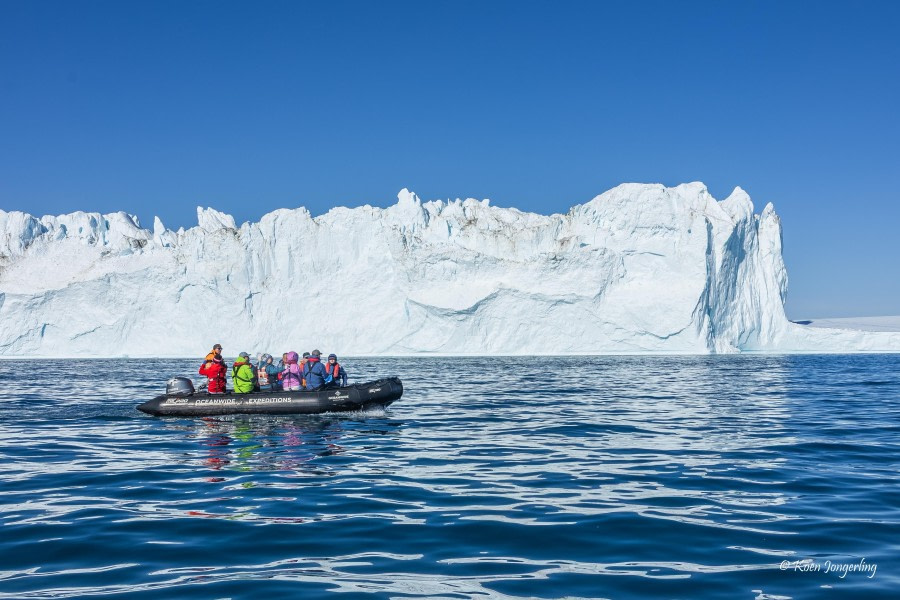
But there was little time to rest. In the afternoon, we climbed into the Zodiacs for our first proper exploration of the Sydkap fjord from the water. Our mission: to get closer to the enormous icebergs that had been captivating us all morning. For some of us, this was our first close encounter with glacial ice. Up close, the icebergs were even more spectacular. Every one was different: towering cliffs, jagged peaks, smooth rounded forms and strange, sculptural shapes created by centuries of freezing, fracturing and melting. The brilliant blue tones visible within some of the ice were a reminder of just how densely compressed and ancient this glacier ice can be.
A few Glaucous Gulls perched calmly on the ice, seemingly unimpressed by the spectacle surrounding them. Meanwhile, cameras clicked constantly from every Zodiac.
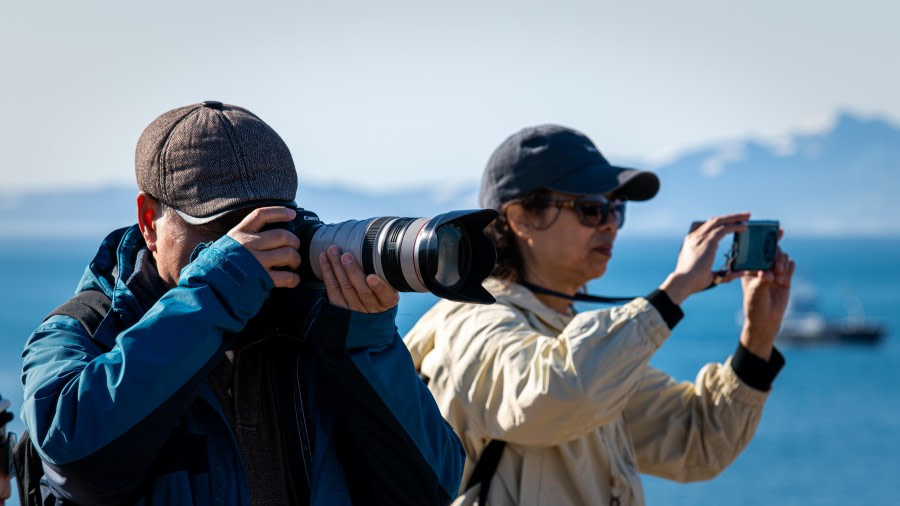
How many photographs can one possibly take of an iceberg?
Apparently, there is no limit.
Back onboard, we gathered in the lounge, still buzzing from the day's adventures. Chris revealed the exciting plans for tomorrow, while members of the expedition team shared fascinating recaps and stories from the day's discoveries.
As evening settled over East Greenland, we sat down to dinner with the day's images still fresh in our minds. Our first day had delivered everything we could have hoped for: our first footsteps on Greenland, ancient traces of Arctic life, encounters with wildlife and spectacular icebergs drifting through an extraordinary fjord landscape.
Day 4: Ittoqqortoormiit
| Date: | 18.08.2026 |
| Position: | 70°26.1’N / 022°11.2’W |
| Le vent: | E3 |
| Météo: | Sunny |
| Température de l'air: | +10 |
Day 5: Segelsällskapetsfjord
| Date: | 19.08.2026 |
| Position: | 72°17.3’N / 023°41.1’W |
| Le vent: | N4 |
| Météo: | Sunny |
| Température de l'air: | +12 |
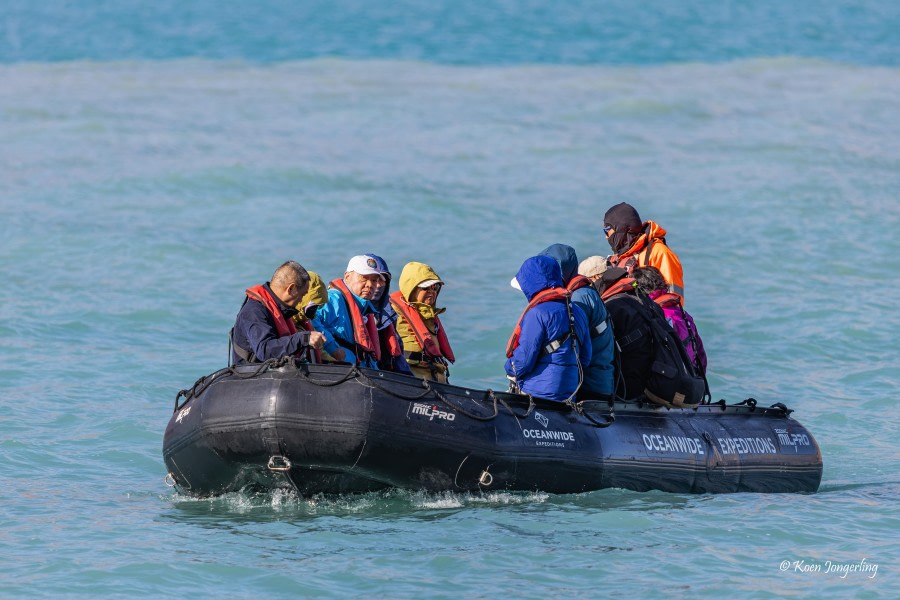
The wake-up call broke the stillness of the ship early this morning, setting into motion a day defined by the stark, raw splendour of North East Greenland. Following a hearty breakfast, we anchored near Kap Lagerberg, where the landing groups dispersed across the tundra according to their pace. The morning hike offered sweeping vistas of the desolate coast, where crisp polar air carried the quiet majesty of the arctic wilderness.
Upon returning to the shore, several brave souls among us stripped off their heavy expedition gear and plunged into the frigid waters, taking part in a exhilarating Polar Plunge that left skin tingling and spirits surging.
After returning to the vessel for a warm mid-day meal, we navigated into Segelsällskapets Fjord toward Skipperdal, entering what is indisputably the finest geological gallery in the entire region. The towering fjord walls rose around us like the grand cathedral walls of a forgotten world, their sheer, nearly two-thousand-meter faces painted in striking, multi-colored bands.
Walking ashore in the afternoon, we found ourselves traversing incredible rhythmic sedimentary rock formations that rose in bold, alternating stripes far above our boots. Intricate ribbons of pale quartzite, dark mudstone, rusty red sandstones, and pale gray limestones and dolomites stacked on top of one another with mathematical precision, tracing the ebb and flow of ancient tide systems.
These vast, ancient strata belong to the famous Eleonore Bay Supergroup, a monumental depositional sequence formed during the Neoproterozoic era between roughly 900 and 600 million years ago. Tracing our fingers along the cold, exposed rock face, it was humbling to contemplate the immensity of time preserved in these cliff sides. Standing upon these weathered layers offered a surreal glimpse into the deep history of our planet, back when quiet, shallow Neoproterozoic oceans laid down the very foundations of today's majestic arctic fjords.
As the sun began its low descent across the arctic sky, we regrouped in the ship's lounge for our daily recap before assembling on the aft deck for a special open-air dinner, wrapped warmly against the chill. Surrounded by towering rock walls, Peter Schmidt Mikkelsen’s words lingered in my mind, reminding us that the true urge to travel lies in that quiet, restless desire to discover what remains hidden just beyond the next distant hill.
Day 6: Blomsterbugten
| Date: | 20.08.2026 |
| Position: | 73°18.6’N / 025°31.0’W |
| Le vent: | SW1 |
| Météo: | Sunny |
| Température de l'air: | +10 |
The second day of our stay in Northeast Greenland National Park began with breathtaking scenery. Hondius, our ship, was slowly making its way through a narrow fjord framed by dramatic, almost vertical walls of cliffs and mountains. The overcast sky created soft tones, and in the absence of strong contrast, the history of millions of years of the Earth’s development, recorded by the planet itself in thousands upon thousands of layers of sedimentary rock, was particularly easy to read.
One mountain formation stood out in particular: Devil’s Castle. The layers of rock there were arranged in perfectly horizontal lines, creating a striking effect.
We were having a leisurely breakfast while our guides were busy preparing for the morning landing. We were going to explore a pristine corner of Greenland called Blomsterbugten. Once all the necessary precautions had been taken and the guides had made sure there were no polar bears nearby, we gradually began making our way from the ship to the shore.
The Long Hikers were the first to set off, as they had a long route ahead of them and needed to make sure they returned by the end of the landing, which was no easy task. Next, a large crowd of various kinds of Medium Hikers made their way ashore, followed by the Leisurely Hikers, whose aim was to stay relatively close to the landing site, enjoy the Greenlandic scenery to the fullest, and perhaps even try to spot some representative of the local wildlife.
The trail from the landing site led uphill, crossing several broad terraces, then continued straight ahead and ended beside a large lake. Its water was not clear, as one might normally expect, but brownish-red. It was a very unusual sight, explained by the fact that the stream feeding the lake flows through a valley composed of red sandstone and therefore carries huge quantities of reddish sediment into the lake, giving the water this peculiar colour.
On both sides of the trail leading to the lake were labyrinths of rocks, hills, and little ridges polished and smoothed by glaciers. They could be explored like a maze, which is exactly what all the Medium Hikers did with great enthusiasm.
Many were lucky enough to observe Arctic hares, which happily dashed back and forth across meadows covered with sedges and dwarf willow, or simply rested peacefully, squinting their eyes and pressing their ears against their heads.
In the distance, by the water on the shore of the lake, two musk oxen were grazing lazily — perhaps the most unusual inhabitants of the polar regions. Contemporaries of mammoths and woolly rhinoceroses, they are the only representatives of Pleistocene megafauna that managed to adapt to climatic changes and successfully survive to the present day. We did not dare approach these animals too closely and observed them through binoculars.
As usual, time flew by, and before we knew it, we had finished our walk and returned to the landing site, where we put on our life jackets and headed back to the ship. Lunch was already waiting for us in the restaurant.
The second half of the day was quiet. No landings were planned. Perhaps that was for the best, as we had become rather tired over the previous couple of days. So we simply rested, attended to our own affairs, and looked around through the windows and from the open decks, taking in and memorising the stark polar landscapes as Hondius continued through the fjord toward the open sea.
Day 7: Germania Havn
| Date: | 21.08.2026 |
| Position: | 74°31.7’N / 018°53.0’W |
| Le vent: | SE2 |
| Météo: | Sunny |
| Température de l'air: | +4 |
The early wake-up call at seven-thirty summoned us to another cold, crisp morning in the far reaches of Northeast Greenland. After gathering fuel for the day over a warm breakfast, we prepared to go ashore at Germania Haven, a historic cove on the southern coast of Sabine Island where Carl Koldewey's 1869 German North Polar Expedition once established their wintering base. As our landing groups made their way onto the rugged terrain, the weight of polar history felt palpable.
The highlight of our morning trek came when we stumbled upon fresh, remarkably clear polar bear footprints deeply imprinted in the soft mud along the shore. Tracing the massive contours of the tracks gave everyone an exhilarating reminder of the formidable wild predator sharing this solitary wilderness with us.
Following our midday lunch back onboard, our afternoon itinerary was adjusted to take full advantage of the surrounding waters. We boarded the Zodiacs for an immersive cruise gliding past Walrus Island, nestled right beside Sabine Island. Approaching the shoreline, we marveled at the dark, imposing basaltic rock formations that construct these islands. These volcanic strata date back roughly sixty million years to the Paleogene period, born from colossal eruptions when Greenland drifted directly over the deep mantle plume—the very same hotspot that today fuels the volcanic fires of Iceland. Gliding beneath the dramatic cliffs, we observed seabirds nesting along the narrow basaltic ledges, their calls echoing across the water. Leaving the cliffs behind, our drivers navigated through a breathtaking labyrinth of giant icebergs floating like sculpted ivory cathedrals in the stillness of the fjord.
We finally returned to the ship in the late afternoon for our daily recap and dinner, reflecting on the words of Fridtjof Nansen and the enduring human desire to simply venture forth and know the unknown.
Day 8: Ardencaple Fjord & Ejnar Mikkelsen Gletscher
| Date: | 22.08.2026 |
| Position: | 75°22.7’N / 021°03.8’W |
| Le vent: | NW4 |
| Météo: | Overcast |
| Température de l'air: | +5 |
Another day in the High Arctic began surrounded by the immense silence of Northeast Greenland. Mountains, ice and ocean stretched across the horizon, with barely a trace of human presence.
Our first landing was at Ardencaple Fjord, one of the remote corners of Northeast Greenland National Park. Stretching for roughly 50 kilometres through a spectacular wilderness of steep Arctic mountains, some rising more than 1,600 metres, the fjord was named in 1823 by British explorer Douglas Clavering after Ardencaple Castle in Scotland.
Nearly two centuries later, the landscape remains much as those early explorers would have encountered it: vast, isolated and almost completely untouched.
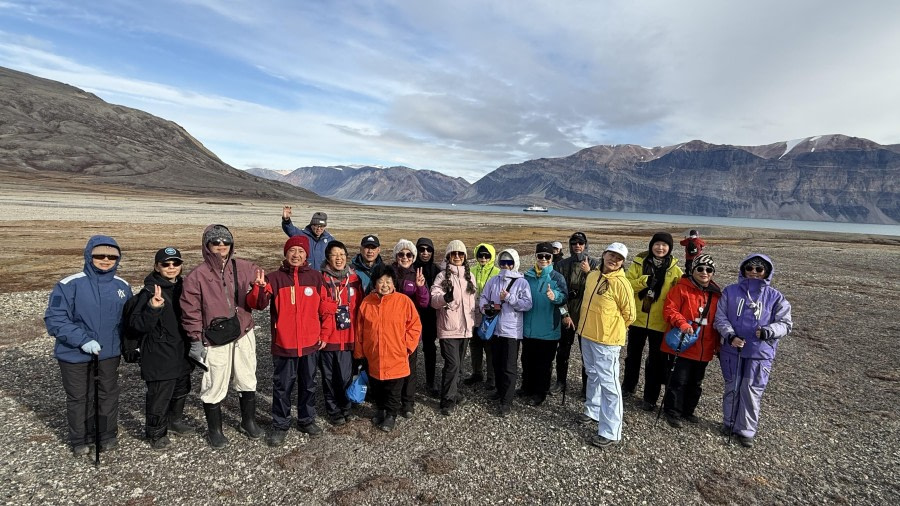
We travelled ashore by Zodiac and set out on hikes of different lengths. There were no roads, buildings or other signs of civilisation — only mountains, rock, water and wilderness. Walking through such a landscape offered a glimpse into the challenges faced by the early explorers, who navigated with limited maps and relied heavily on observation and experience. The silence was perhaps the most striking feature of the morning, occasionally broken by distant birds, the sea or the movement of ice.
After lunch, we continued towards Ejnar Mikkelsen Gletscher, named after the Danish Arctic explorer who devoted much of his life to Greenland. Approaching the glacier by Zodiac, its immense scale was breathtaking. From water level, the relationship between ice, mountains and sea became even more impressive.
The afternoon brought some wonderful surprises. From the Zodiacs, we spotted seals and were lucky enough to see musk oxen on the shore, a memorable wildlife encounter in such a remote setting. And then came an unexpected treat: a hot chocolate boat appeared, offering steaming cups of hot chocolate out on the water. Sipping hot chocolate while surrounded by glaciers and mountains was a wonderfully unexpected Arctic experience.
Back on board, we gathered for the evening expedition recap before dinner. As another day came to an end, the Arctic landscape seemed almost timeless — a place where the history of exploration and the wilderness of the present still meet.
Day 9: Store Koldeway, Bergfjord
| Date: | 23.08.2026 |
| Position: | 76°30.7’N / 018°33.2’W |
| Le vent: | SW2 |
| Météo: | Sunny |
| Température de l'air: | +4 |
Store Koldewey Island, located in northeastern Greenland, is the largest island of the Koldewey archipelago. Boasting profound polar exploration value, it was first documented by the 1869–1870 German North Polar Expedition and later surveyed by the Danish Danmark Expedition. For over a century, it has served as a crucial site for Arctic geological research and polar ecological observation, preserving precious traces of natural evolution and early human polar exploration.
This day marked the final stop of our Greenland expedition, and it turned out to be the most breathtaking and rewarding day of the entire voyage. We originally planned to land on Store Koldewey Island in the morning. However, our expedition team spotted a polar bear roaming freely on the island from the ship’s bridge at just past 6 a.m. To avoid disturbing the wild predator and ensure safety, we promptly canceled our landing plan.
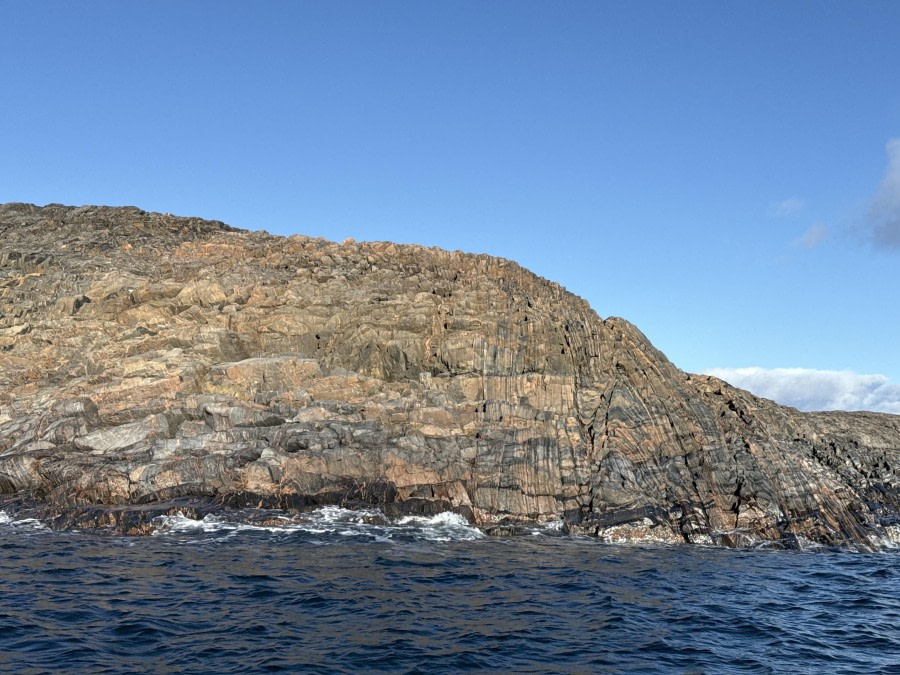
We stood on the bow quietly observing the solitary polar bear for nearly two hours, witnessing its natural behaviors in its primitive habitat. Around 10 a.m., our cruise ship sailed away from the bear’s territory. Afterwards, we embarked on a zodiac cruise along the coastal waters. We cruised past ancient coastal rocks formed billions of years ago, reading the long and magnificent geological history of the Earth from their weathered textures.
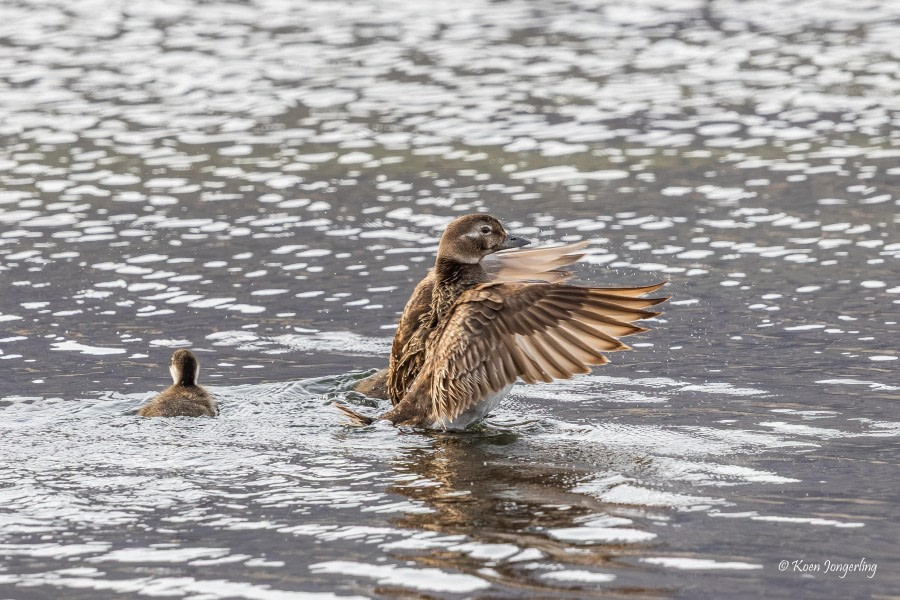
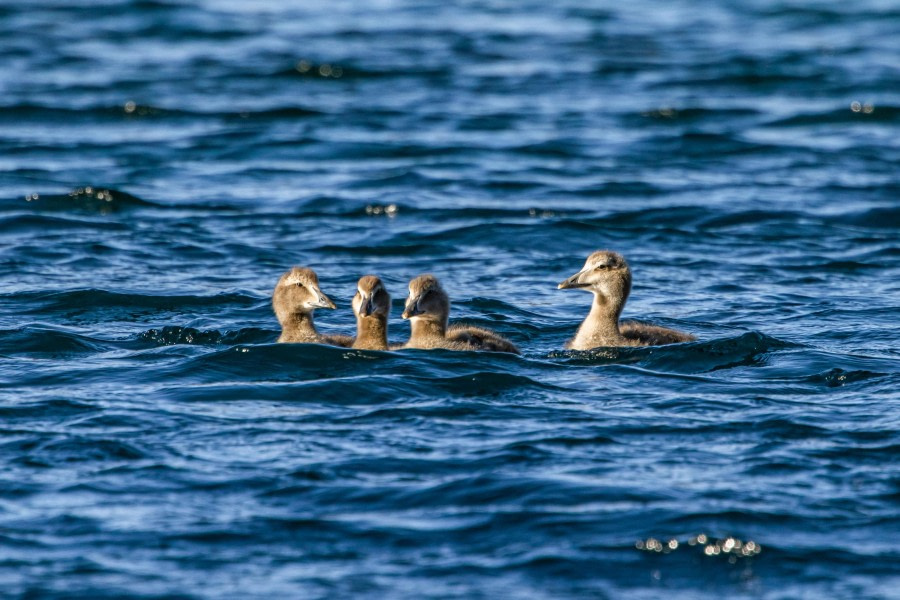
During the cruise, we discovered a historic hunter’s cabin on the northern shore. Its door was wide open, and we speculated that a curious polar bear had broken into the abandoned shelter. Flocks of common eiders also flew gracefully over the icy sea, adding vivid vitality to the desolate Arctic scenery.
As our zodiac tour was ending, we made an incredible discovery. On a small eastern islet, a mother polar bear was resting on the stones with her two adorable cubs. To protect the vulnerable bear family and keep their habitat undisturbed, we retreated slowly and silently back to the main ship. In total, we observed five polar bears throughout the day! It was an incredibly wonderful and unforgettable day, perfectly concluding our extraordinary Greenland Arctic expedition!
Day 10: At sea heading East
| Date: | 24.08.2026 |
| Position: | 75°39.5’N / 008°31.5W |
| Le vent: | NW2 |
| Météo: | Overcast |
| Température de l'air: | -1 |
Today we officially departed Greenland and began our journey across the Greenland Sea toward the northern pack ice zone, with Svalbard as our final destination.
The day began with wildlife watching from the outer decks and a series of onboard lectures. Although the sea remained calm, visibility was limited. The expedition team spotted several humpback whales on the horizon and immediately made announcements, inviting guests to join the team on the bridge and outer decks.
The morning continued with two lectures on the history of Greenland.
Following the lectures, guests were reminded that the ship's clocks needed to be adjusted as we crossed into a new time zone. Everyone updated their watches before heading to the restaurant for lunch.
The afternoon featured another set of lectures, this time focusing on Arctic whales.
The day continued with the daily briefing and recap led by Expedition Leader Chris in the Observation Lounge. Chris announced an evening screening of Light Chasers, a renowned documentary filmed by staff at the Arctic Yellow River Station.
After dinner, all guests gathered in the Observation Lounge for the documentary screening. The evening provided a wonderful opportunity for everyone to come together and enjoy the film as we continued our voyage northward.
Day 11: In the pack ice
| Date: | 25.09.2026 |
| Position: | 79°01.2’N / 003°44. |
| Le vent: | NNW5 |
| Météo: | Sunny |
| Température de l'air: | +1 |
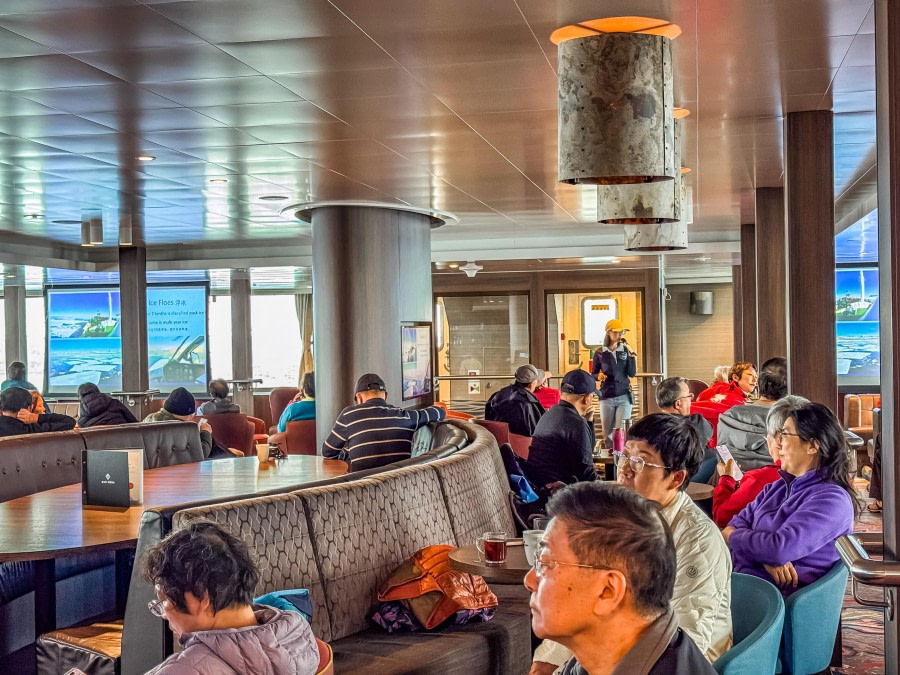
Today was sea ice day, and by around 10:00 in the morning, our ship reached the edge of the Arctic sea ice. From the outdoor decks, it was fascinating to watch the transformation of the seascape. At first, scattered floes drifted across the dark water; as we sailed farther north, the ice became increasingly dense, gradually surrounding the ship in a vast mosaic of white. The air temperature was a chilly 1°C, while the wind made it feel considerably colder.
The morning began with two engaging lectures from our Expedition Team. Li introduced the fascinating world of sea ice in Chinese, followed by Jakub’s presentation in English. We learned that sea ice is far more than a spectacular Arctic landscape. It forms a critical habitat for countless species and plays an important role in the Arctic ecosystem, while the formation and melting of sea ice also influence ocean circulation and the global climate system. As we travelled through this frozen environment, the lecture brought an added sense of meaning to the landscape unfolding outside.
In the afternoon, Tiphanie introduced us to another iconic group of Arctic wildlife: seals. We learned about the different species found in the region, their adaptations to life in the polar environment, and where they can be found. Their unmistakably curious faces and rounded bodies quickly made them a favourite among the guests.
Throughout the day, the Bridge became one of the busiest places on board. Guests gathered with binoculars and cameras, while members of the Expedition Team took turns scanning the horizon and the ice for the Arctic’s ultimate predator—the polar bear. Unfortunately, persistent fog limited visibility, but the search continued with great enthusiasm. Although no bears appeared, we were rewarded with sightings of seals resting on the ice, fulmars sweeping through the air, and guillemots resting on the water.
And then came a special milestone: 79°27' N, the northernmost point of our entire voyage. Surrounded by sea ice and Arctic wilderness, it was a truly memorable expedition day—one that will remain frozen in our memories long after the ice has disappeared from view.
Day 12: Gravneset & Smeerenburg, Svalbard
| Date: | 26.08.2026 |
| Position: | 79°35.4’N / 010°39.2’E |
| Le vent: | SE1 |
| Météo: | Sunny |
| Température de l'air: | +1 |
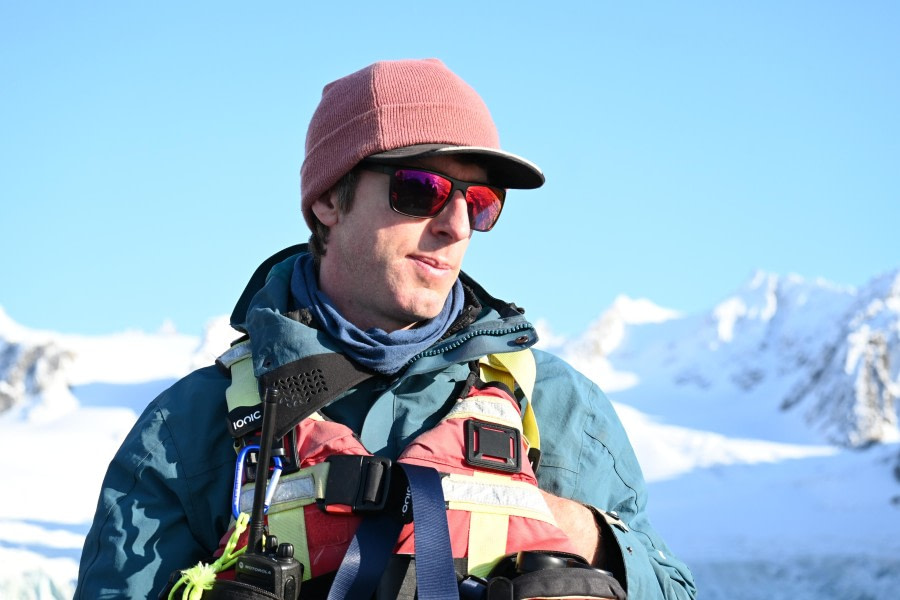
We were woken, as usual, by our Expedition Leader Chris inviting us to seize the day. Today, those words felt particularly appropriate, as we had finally arrived in legendary Svalbard, the spectacular Arctic archipelago located roughly halfway between mainland Norway and the North Pole. After another great breakfast, we began preparing for our first activity of the day: a split landing at Gravneset, a beautiful and historically fascinating site in Magdalenefjorden.
Gravneset is steeped in the history of Svalbard’s early whaling industry. The headland is home to one of the largest whaling-era burial grounds in the archipelago, with around 130 graves dating from the early 1600s onwards. The site also contains the remains of blubber ovens, where whale blubber was rendered into oil during the height of European whaling in Svalbard. It is a poignant reminder of how different this landscape must have looked several centuries ago, when whalers came north to hunt bowhead whales.
Our group was split in two, with half going ashore to explore the designated safe area with the guides and learn more about the history of Gravneset, while the other half headed out on a Zodiac cruise in search of wildlife. Our efforts were rewarded with sightings of harbour seals hauled out along the shoreline. After about an hour, we swapped positions, giving everyone the chance to experience both sides of the morning.
The fjord itself was absolutely beautiful. A fresh dusting of snow highlighted the rugged mountains surrounding us, creating a wonderfully crisp Arctic landscape. Once again, we were blessed with beautiful weather, although the temperature was considerably colder than we had become accustomed to, sitting just above 0°C. It certainly felt as though Svalbard was reminding us that we were now firmly in the High Arctic.
We then returned to Hondius, where we enjoyed a wonderful lunch as the ship repositioned towards our next destination. This would be our final Zodiac cruise of the expedition, and there was a definite feeling that we wanted to make the most of every remaining moment. Our first stop was Frambukta, where we cruised towards the glacier and explored the scattered pieces of ice floating in the water. The conditions were almost perfect, with barely a ripple on the surface. The fjord became a giant mirror, reflecting the surrounding mountains and ice, and many of us tried our best to capture the incredible scene with our cameras.
After about an hour, we crossed the fjord towards Smeerenburg, but this time we were hoping for a very special wildlife encounter. As we approached the shoreline, everyone became increasingly quiet, trying to minimise the noise and disturbance. In the distance, we could see what appeared to be a large brown mound on the beach. As we drew closer, the shape became clearer, and suddenly there was no mistaking what we were looking at: walrus!
It was an incredible finale to our Zodiac adventures. All the boats lined up offshore, taking great care to maintain a respectful distance from the animals as we slowly cruised past. The beach was covered with walrus, some prodding and nudging one another, others snuggling together in enormous piles. A few were swimming in the water, and some even approached the Zodiacs to investigate their unexpected visitors. Watching these magnificent Arctic animals at such close range, while allowing them the space and peace they needed, was an unforgettable experience.
Smeerenburg is itself a remarkable place. Once one of the most important Dutch whaling stations in Svalbard, it was at its peak in the 17th century home to hundreds of whalers and workers during the summer season. Today, the historic remains are accompanied by a very different sight: walrus using the same shoreline as a haul-out.
All too soon, however, it was time to leave. Our Zodiac drivers safely delivered us back to Hondius, where we had time for a well-earned coffee before gathering to hear the plans from Chris. Tomorrow would be the final day of our voyage, a thought that was becoming increasingly difficult to believe. After everything we had experienced, from spectacular landscapes and glaciers to seals, birds and now walrus, there was only one thing left to do: seize our final day and experience it to the maximum.
Day 13: Signehamna & Ny Alesund
| Date: | 27.08.2026 |
| Position: | 79°16.2’N / 011°34.7’E |
| Le vent: | SW3 |
| Météo: | Sunny |
| Température de l'air: | +3 |
Our final day of the voyage dawned beneath a glorious Arctic sun, bathing the mountains and fjords in golden light. It was the kind of morning that made us wish the journey could continue forever.
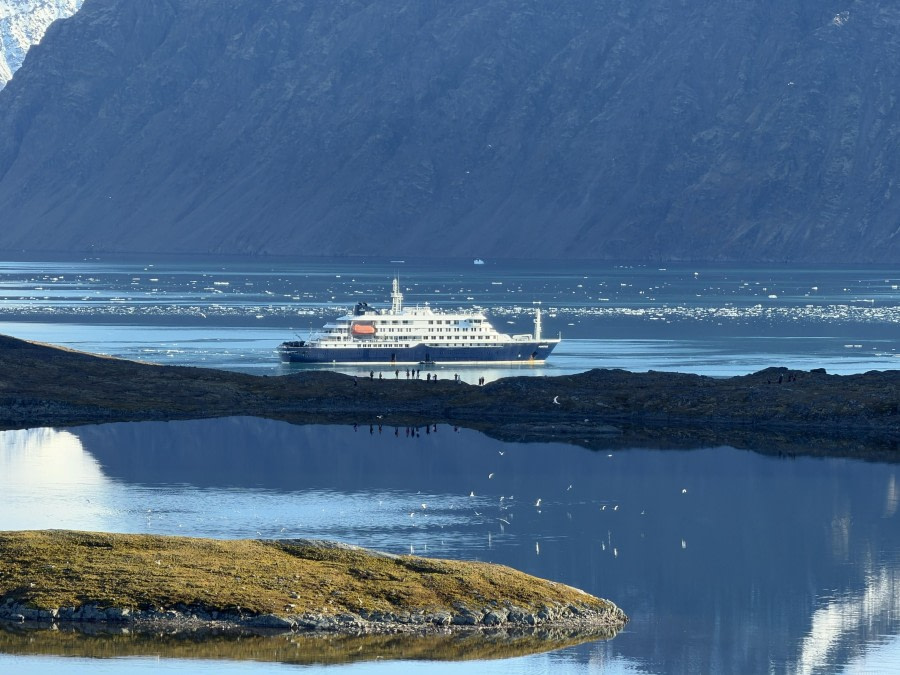
Our first landing was at Signehamna, a sheltered bay in northwest Spitsbergen, surrounded by tundra and dramatic mountains. The area is also steeped in history: during the Second World War, a secret German weather station operated here, collecting weather information for the German military before Norwegian forces discovered and destroyed it in 1943.
But today, the landscape felt peaceful. Our hikes took us across the tundra and around a beautiful lake, where the Arctic seemed to come alive. Reindeer grazed quietly nearby while countless birds filled the air with their calls and movements. Against the backdrop of mountains, open water and endless blue sky, everyone seemed to be smiling. It was a perfect final landing.
During lunch, the ship set course for Ny-Ålesund, one of the most remarkable places in Svalbard. Situated at 79° north, it is the world’s northernmost settlement and has evolved from a former coal-mining community into an international centre for Arctic research. Scientists from more than a dozen countries now work here, studying everything from climate and glaciers to the atmosphere and Arctic ecosystems. We went ashore and wandered through the colourful settlement, listening to stories of its fascinating past and its role in polar exploration. There was time to browse the little shop, pick up souvenirs and simply enjoy the extraordinary weather and atmosphere of this remote outpost.
Back on board, the Captain’s Farewell marked the emotional beginning of the end. Over our final dinner together, we shared stories, laughter and memories from an unforgettable journey.
As evening settled over the Arctic, the ship turned south towards Longyearbyen, our final destination. We slowly realised that the voyage was ending—but the memories of Greenland, the ice, wildlife, landscapes and friendships would travel home with us.
Day 14: Disembarkation Longyearbyen
| Date: | 28.08.2026 |
| Position: | 78°13.0’N / 014°31.9’E |
| Le vent: | N3 |
| Météo: | Rain |
| Température de l'air: | +3 |
After an unforgettable journey through the High Arctic, today marked the end of our adventure aboard M/V Hondius. It was a bittersweet morning as we enjoyed one last hearty breakfast together, sharing stories, favourite moments and plenty of laughs from the past days exploring Svalbard.
Before long, it was time to gather ourselves and prepare to leave the ship that had been our home throughout the voyage. As we stepped ashore in Longyearbyen, there was a real mix of emotions. While everyone was looking forward to the next stage of their travels, it was also hard to say goodbye to the wonderful crew, Expedition Team and new friends who had become our Oceanwide family.
From towering glaciers and dramatic ice-covered landscapes to incredible wildlife encounters and unforgettable Zodiac cruises, we've shared experiences that will stay with us for years to come. Together we've explored one of the most remote and spectacular places on Earth, creating memories that are sure to be retold long after we've returned home.
Although our expedition has come to an end, the memories, photographs and friendships made along the way will remain. We leave Hondius with full hearts, incredible stories to share and a deeper appreciation for the beauty and fragility of the Arctic. Safe travels, and we hope our paths cross again on another adventure.
Total distance covered during our trip: 2158,5NM (3997,5km)
Northernmost point: 79°27.9'N, 002°30′4’E
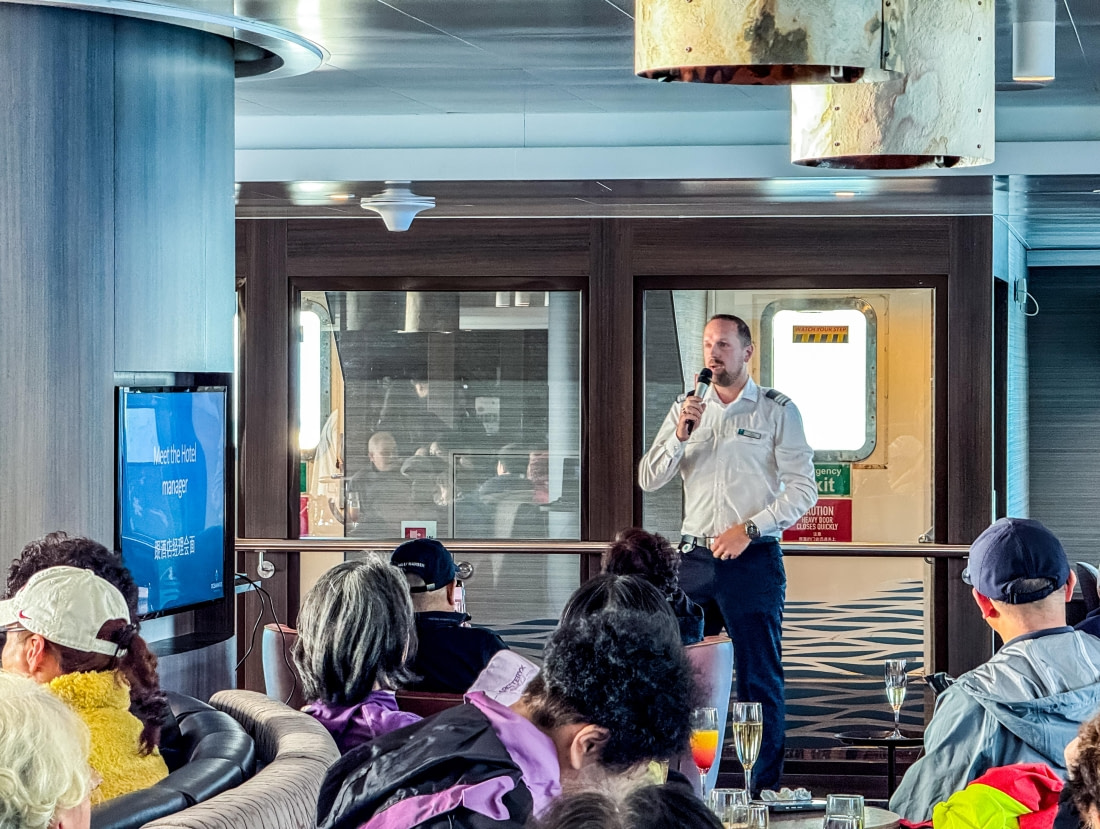
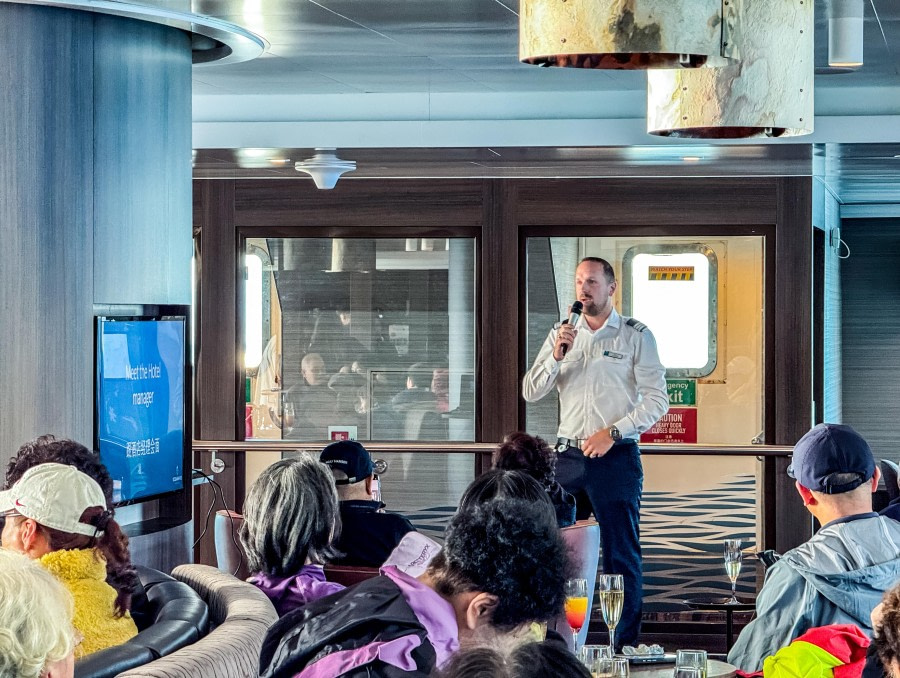
On behalf of Oceanwide Expeditions, Captain Dennis Rada, Expedition Leader Chris Long, Hotel Manager William Barnes and the entire crew and expedition team of the M/V Hondius, it was our great pleasure to travel with you.
À bord m/v Hondius
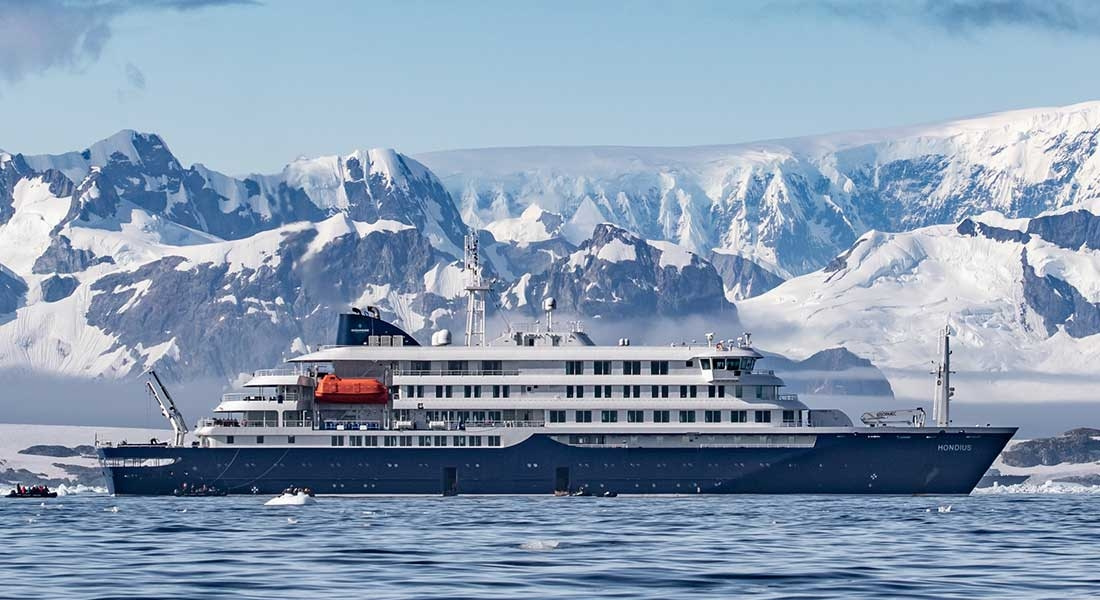
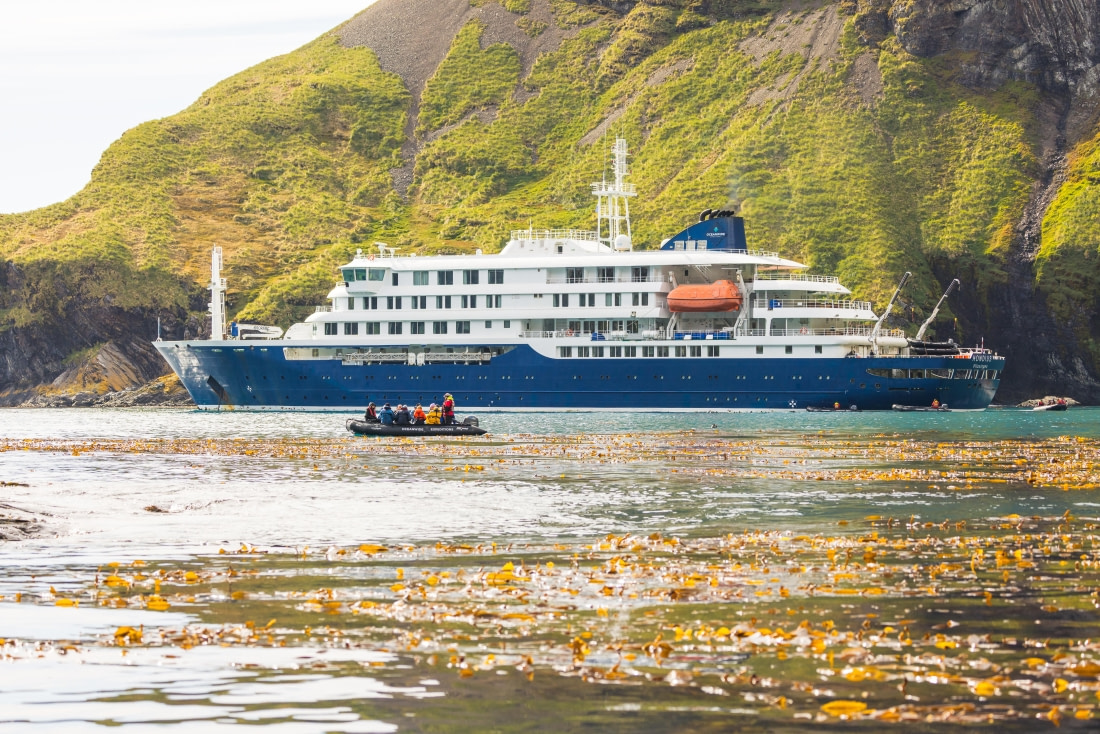
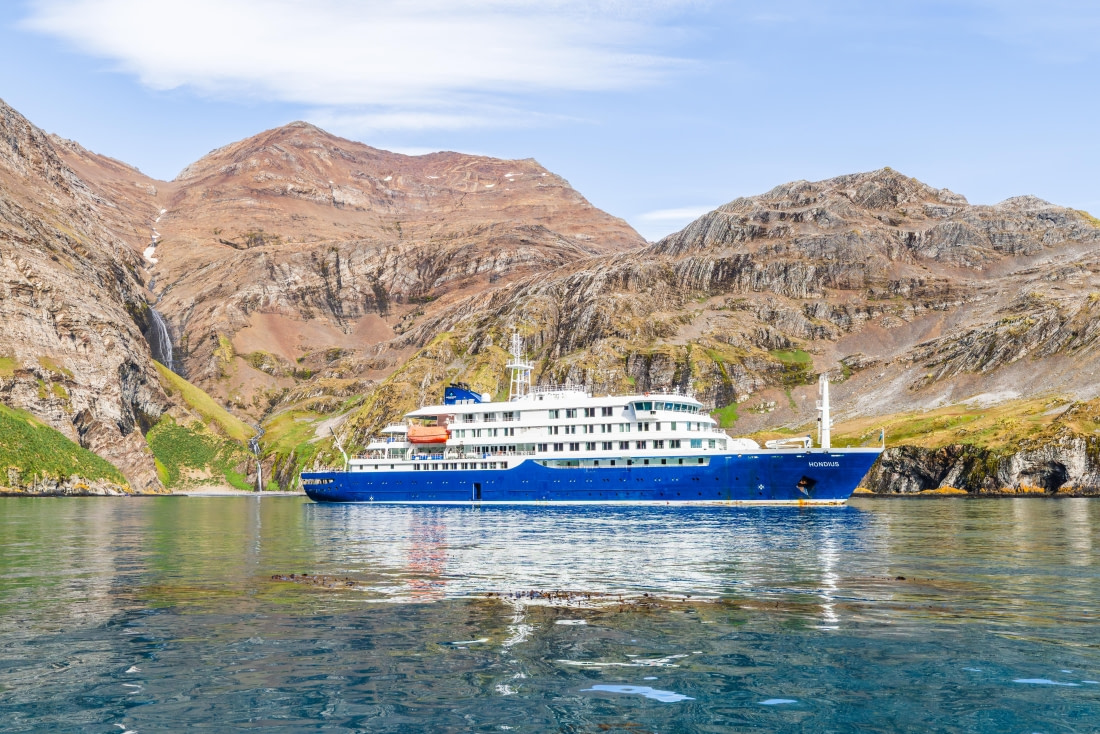
Hondius est le premier navire de classe polaire 6 enregistré au monde et a été conçu dès le départ pour les croisières d'expédition.
En savoir plus sur la m/v Hondius »