PLA25-26, trip log, Antarctica - Basecamp

by Oceanwide Expeditions

Fotogalerij

Logboek

Day 1: Ushuaia, Embarkation Day

Ushuaia, Embarkation Day
Datum: 28.12.2025
Positie: 54°52.7’S / 067°54.4’W
Wind: N-3
Weer: Overcast
Luchttemperatuur: +8

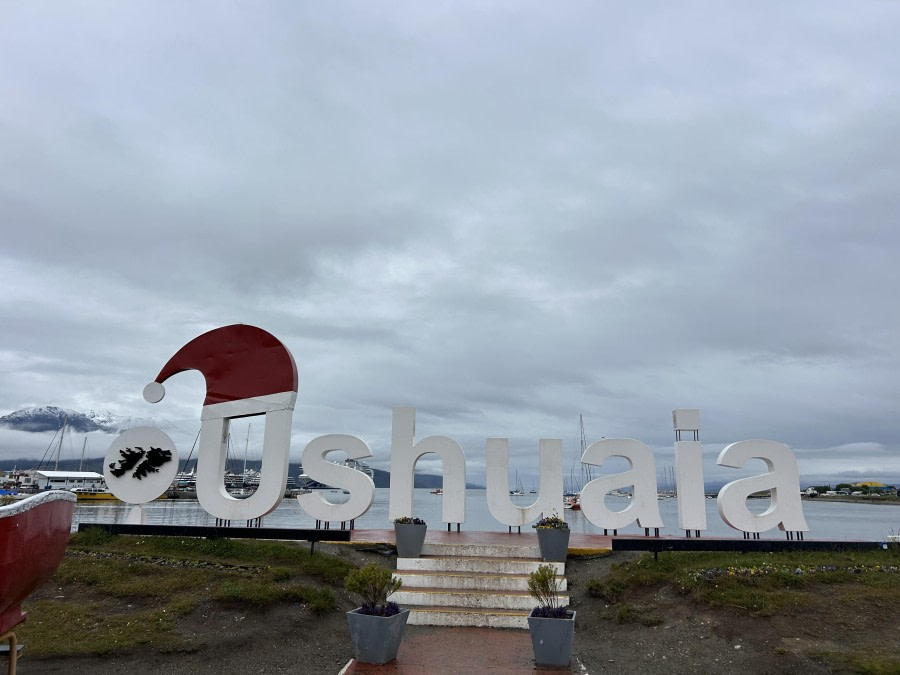
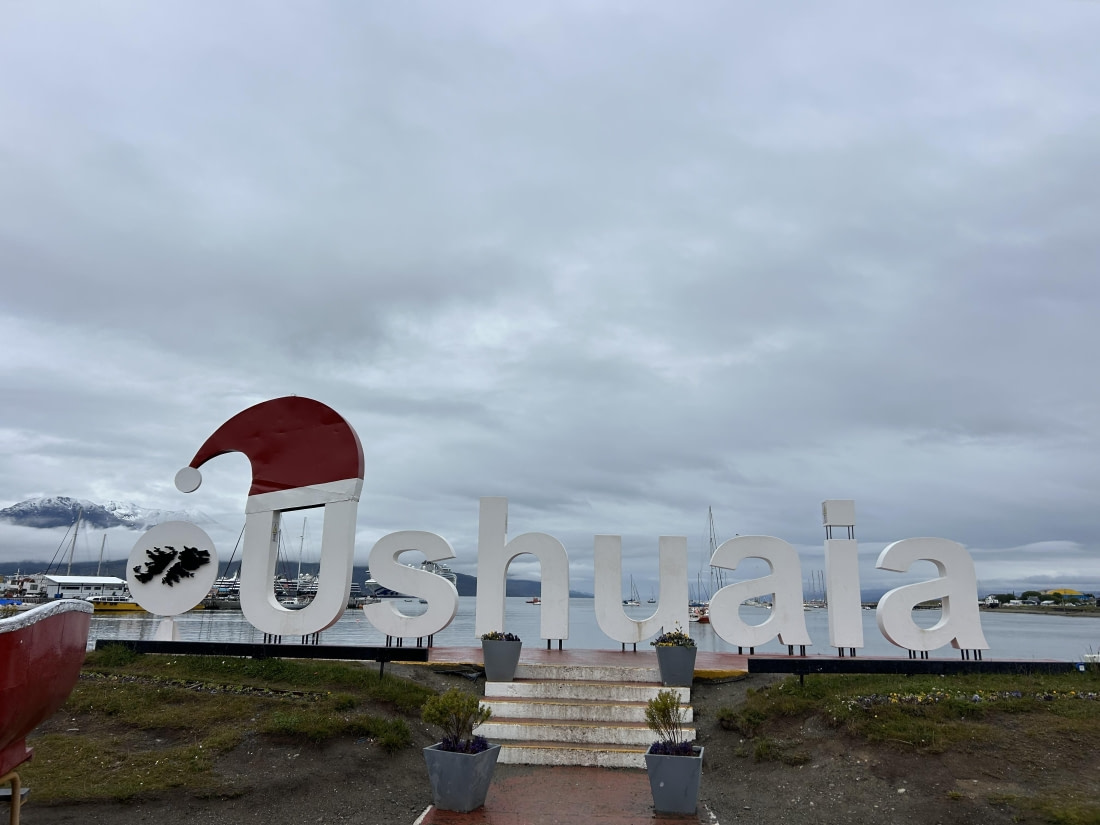
The day began with a light drizzle in Ushuaia, but it didn’t take long for the weather to improve. Soon, calm conditions settled in: perfect for the start of our long-awaited expedition to Antarctica.

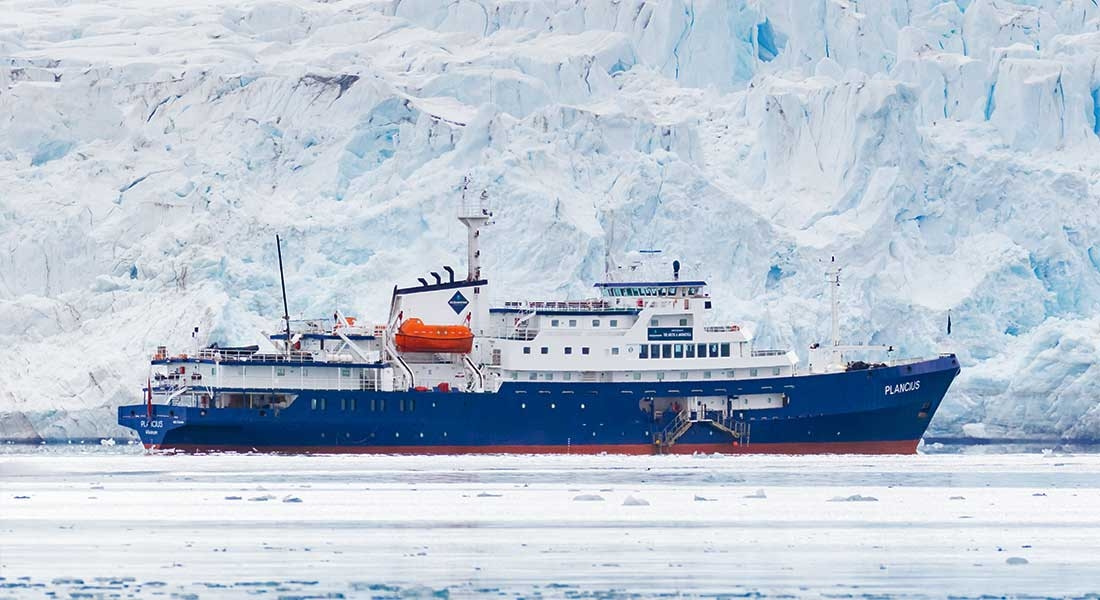
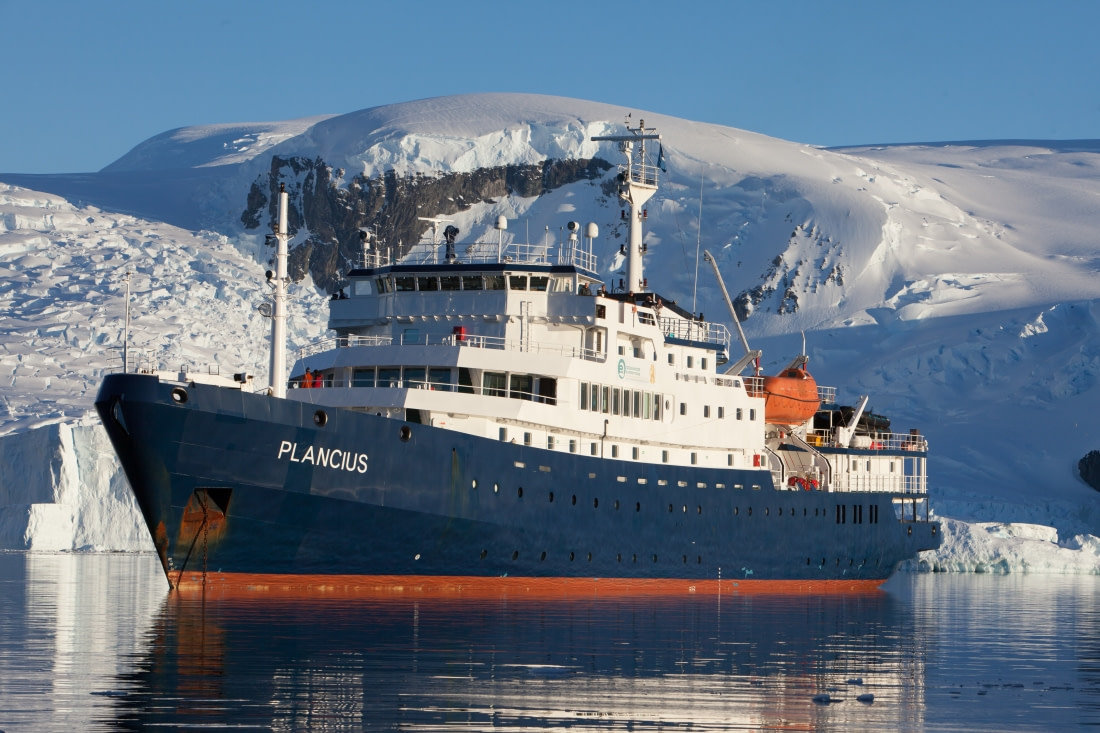
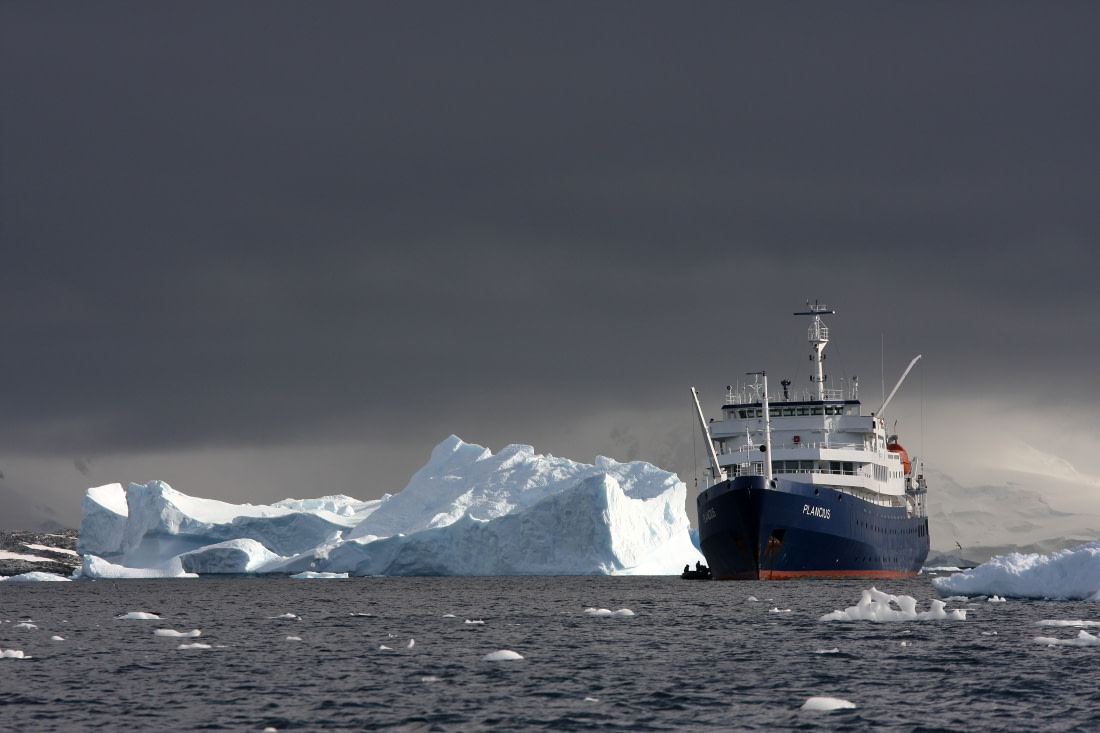
It was probably the busiest day of the season at Ushuaia’s pier. More than fifteen ships were docked or anchored around the bay, creating a lively and exciting atmosphere. Out in the middle of it all, our beloved MV Plancius sat gracefully at anchor, waiting for us.

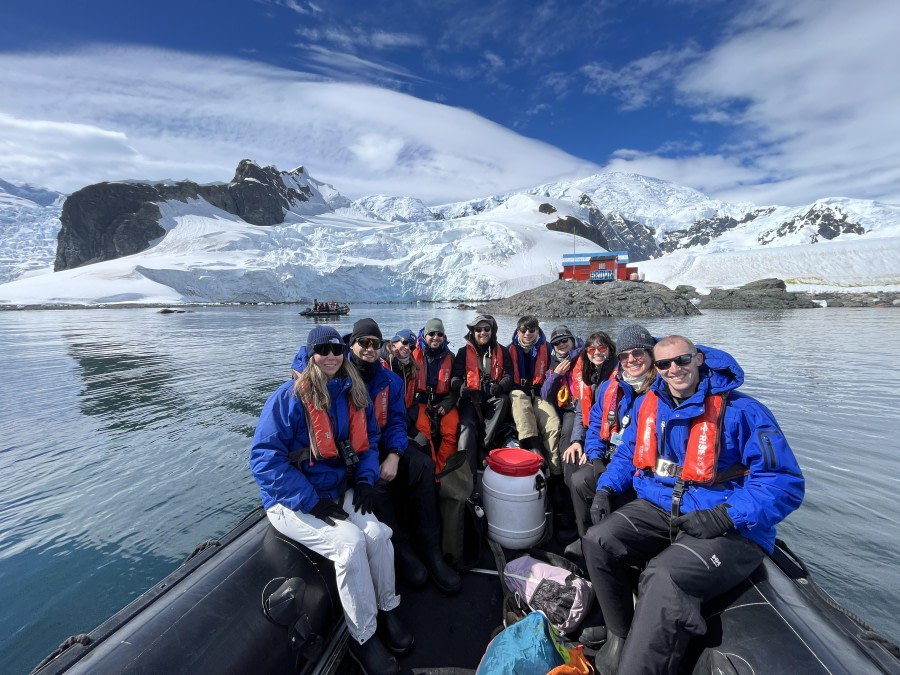
We were informed that boarding would be done by zodiac, which immediately added to the sense of adventure. The expedition had truly begun before we even stepped on the ship. Members of the expedition team greeted us at the jetty, where we put on our life jackets for the very first time and boarded the zodiac. The ride was fun and thrilling, and as we approached MV Plancius, excitement, nerves, and eagerness all mixed together.

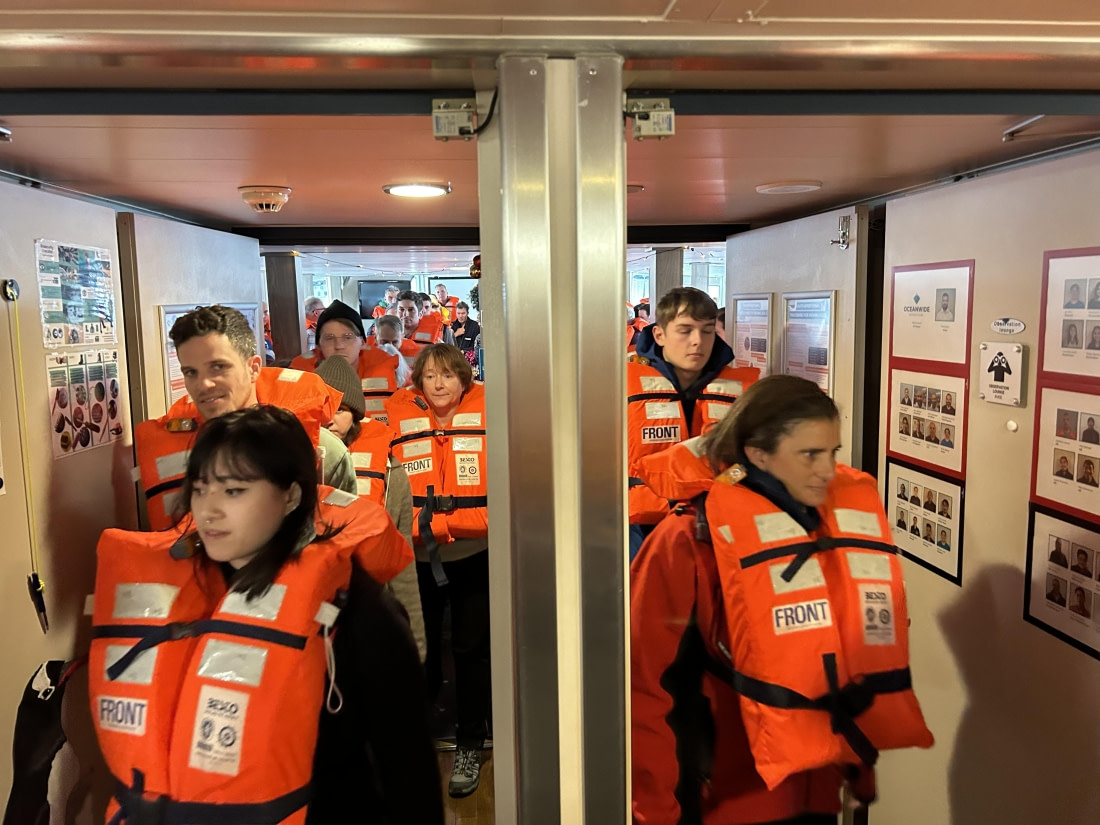
Once on board, we settled into our cabins and took some time to explore the ship. This was followed by the mandatory safety briefing and drill, preparing us for the journey ahead.

Shortly after, we began sailing out of Ushuaia through the Beagle Channel. The views were stunning, with beautiful landscapes all around and birds filling the sky.

Later, we gathered for the Captain’s welcome, where we met Captain Matei, along with the hotel manager, expedition leader, and the rest of the expedition team. Together, we raised a toast to a fantastic journey to Antarctica.

Dinner followed, and afterward, some of us headed straight to bed while others enjoyed a drink at the bar, still taking in the peaceful scenery of the Beagle Channel as we sailed onward. The Drake Passage isn’t expected to be too rough, but we’re mentally prepared for whatever movement comes our way.

It was a calm, exciting first day, exactly the start we hoped for. We’re ready for the adventure. Let’s go!

Day 2: At sea towards Antarctica

At sea towards Antarctica
Datum: 29.12.2025
Positie: 57°12.0’S / 065°42.3’W
Wind: NNE-6
Weer: Moderate
Luchttemperatuur: +6

Our first morning at sea was a rather moving one. The ship gently rolled from side to side, and some of us did not feel very well. Nevertheless, the day was packed with duties.

The first activity was a mandatory briefing about the rules in Antarctica: what we needed to know, how we should behave, how Zodiac operations worked, and why we must not bring any invasive species or diseases to the continent. “Keep it as it is” was the clear message from Rustyn, our expedition leader.

After the lecture, Brenya, a lovely expedition guide from Canada, gave us a great introduction to the continent we were about to visit, and our excitement grew.

After a great lunch and a nap for some, we were called for biosecurity.

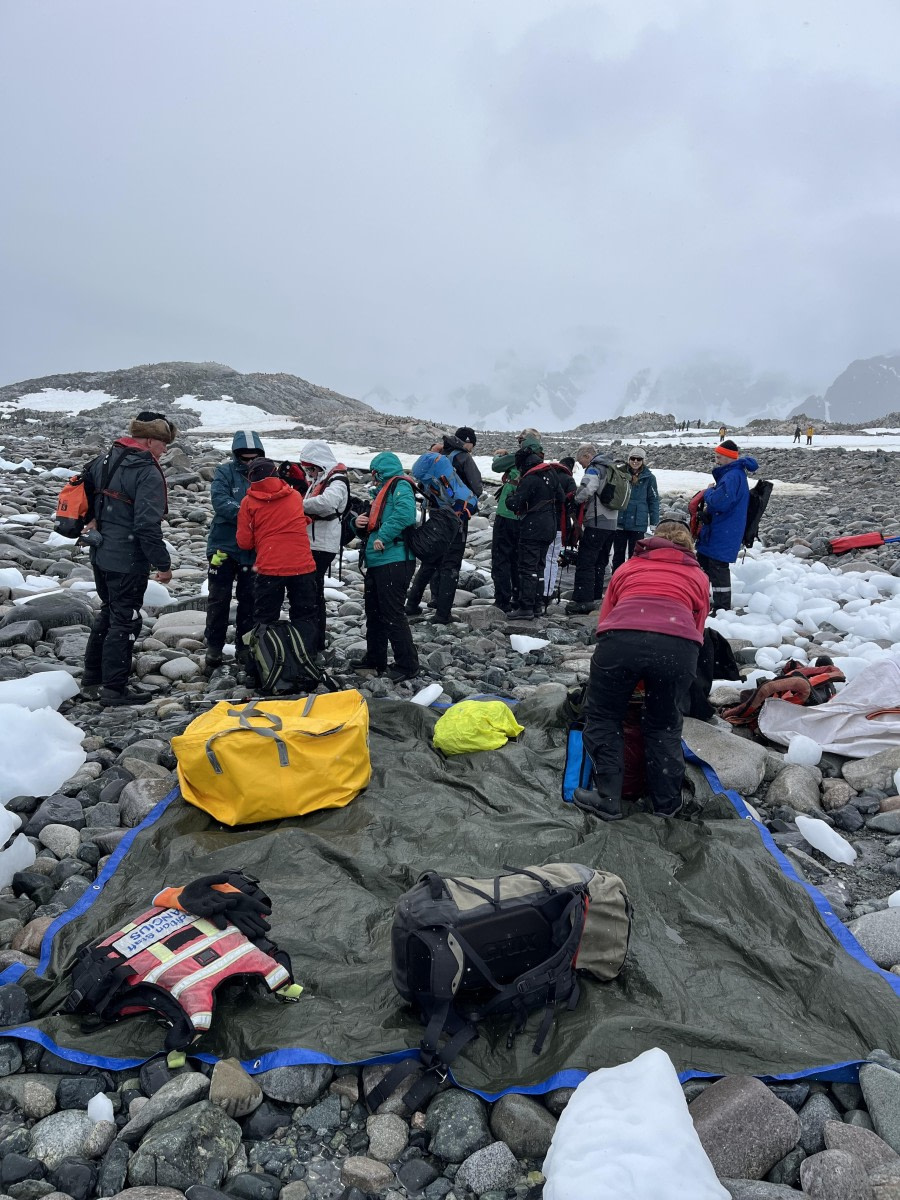
Our outdoor equipment was thoroughly inspected and cleaned to ensure we were not bringing any seeds into this isolated area. Who would have thought we would be vacuum cleaning during our holidays? Still, it was clear that we all wanted to do our part to keep this place beautiful.

The afternoon finished with Juan’s photography workshop, where he introduced us to capturing digital memories of the incredible days ahead.

Dinner was served after we met our expedition guides for the journey. Another sea day lay ahead, but we could hardly wait for what would happen in the coming week. We went to bed tired from seasickness medication, the rolling sea, or simply because, in the end, it was exciting to be a seafarer.

Day 3: Drake “Lake” Passage

Drake “Lake” Passage
Datum: 30.12.2025
Positie: 61°19.4’S / 064°14.4’W
Wind: N-3
Weer: Foggy
Luchttemperatuur: +3

Today our eyes slowly opened as if the fog were lifting from the ocean. We heard Rustyn’s soft voice gently waking us from our slumber. A delicious buffet breakfast kicked off the day with a bang! Those of us who had been feeling unwell from the motion began to feel alive again as the seasickness faded away.
We had one main goal for the day: activity sign-ups! But first came the briefings. Gnarly and Chris spoke to us about mountaineering in Antarctica, followed by Brenya and Lucia discussing camping, and finally Erin introducing kayaking. By the end, we were buzzing with excitement and couldn’t wait to get our teeth stuck into the adventures ahead.

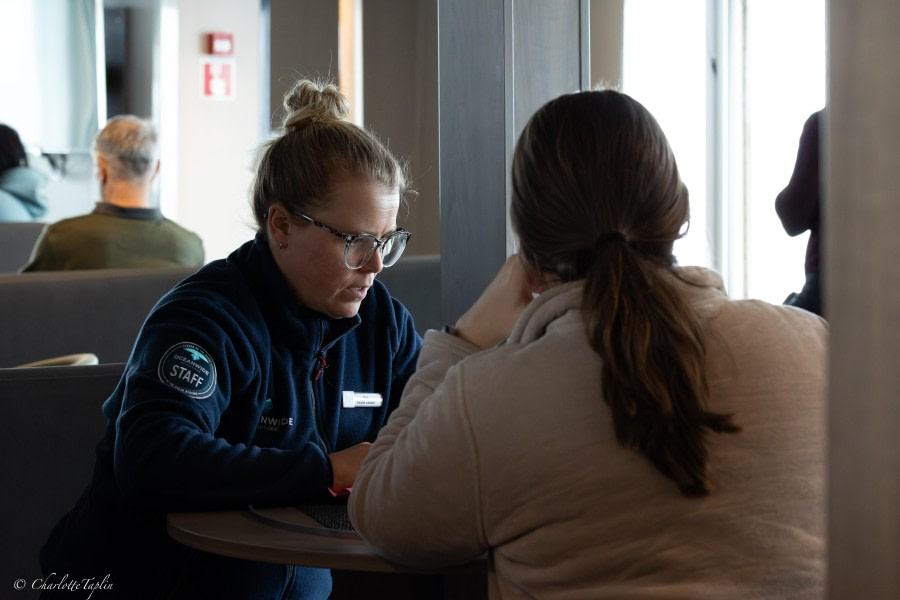
We had lunch at 12:30, followed by a short nap to make sure we were feeling spritely for the day ahead. At 14:30, activity sign-ups began. We started with mountaineering, where Chris and Gnarly asked us a series of questions about our abilities and our boots to decide which group we would be placed in. This was followed by kayaking and then camping.

Once the four groups—Seals, Whales, Penguins, and Krill—had all been finalized, we were finally able to relax. At 18:30, we gathered for a recap from the Expedition Team. Rustyn talked us through the plans for tomorrow, followed by Charlotte and Marco, who explained the formation of the Drake Passage and the importance of the Antarctic Circumpolar Current.

Dinner was a delicious spread of dahl, venison, or risotto, shared alongside plenty of laughter and great conversation in preparation for our arrival to the white continent.

Day 4: Cuverville and Orne Islands

Cuverville and Orne Islands
Datum: 31.12.2025
Positie: 64°40.3’S / 062°36.9’W
Wind: SSW-1
Weer: Mist
Luchttemperatuur: +2

Our first sight of the Antarctic Peninsula was the snow-capped peaks of Brabant and Anvers Islands, marking the entrance to the Gerlache Strait. In the distance, while crossing the strait, the silhouette of Cuverville Island appeared, guarding the northern entrance to the Errera Channel. The day was calm and overcast, and as MV Plancius maneuvered into the entrance of the channel, the galley team offered us a hearty breakfast to start our first day of operations.

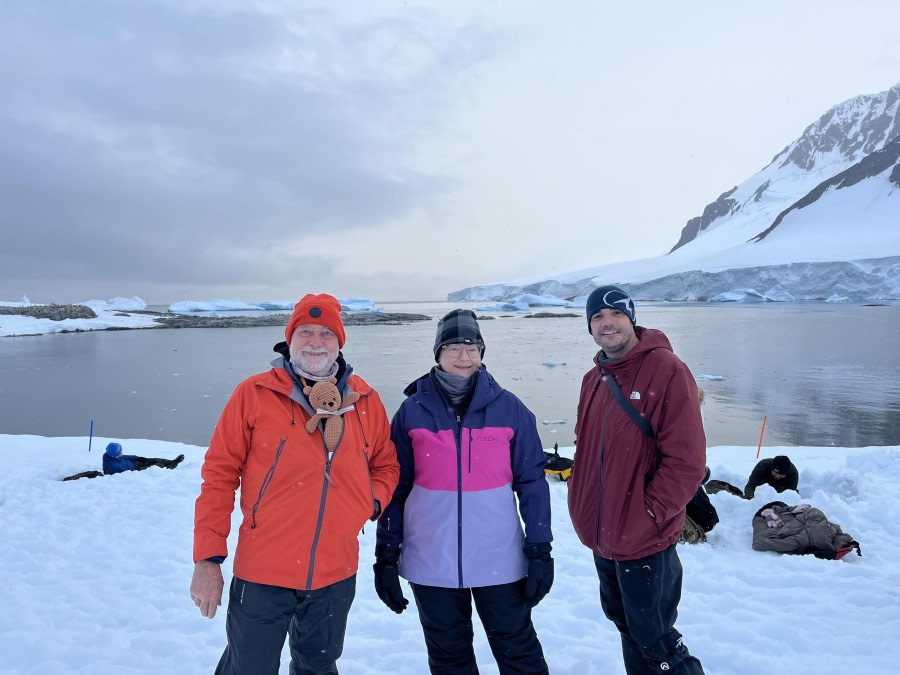
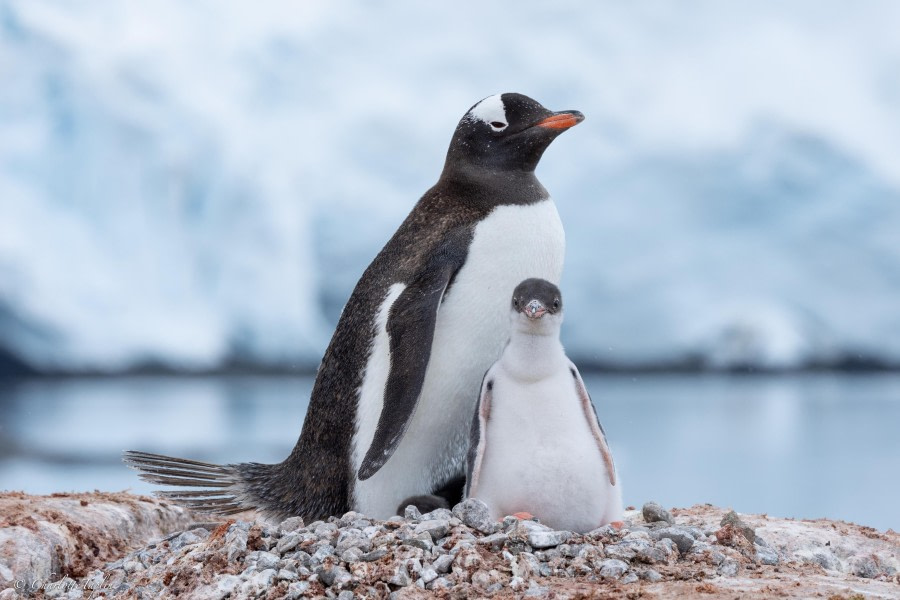
Our guides shuttled us to a cobbled beach where, finally, after two days at sea, we set foot on the Antarctic continent. Welcoming us was a large colony of Gentoo penguins, and the guides explained their behavior and reproductive cycle. Gentoo penguins are easily recognized by the white patch above their eyes and their bright orange beaks and feet. They build their nests from small stones, which they carefully collect and protect from neighboring penguins. During the breeding season, the female usually lays two eggs, and both parents take turns incubating them and caring for the chicks. Once the chicks hatch, they are fed regurgitated food and kept warm by their parents. As the chicks grow, they gather in small groups called crèches while the adults go out to sea to feed. By the end of the season, the chicks develop waterproof feathers and are ready to enter the ocean on their own.

After visiting the main rookeries located near the shoreline, some of us followed the footsteps of mountaineers and walked up to a vantage point where we could see the bay separating Cuverville from Ronge Island, gently covered in snow.

In the afternoon, we moved across the bay and set foot on one of the Orne Islands, with sweeping views of the Gerlache Strait and the high peaks of Anvers Island. Here, we observed a small rookery of Chinstrap penguins, our second species of the day. Similar in their breeding and feeding habits, Chinstraps were well known for their self-describing name, their variety of vocalizations, and, at this time of year, their lovely, fluffy light-grey chicks, which some of the parents showed to us from time to time.

Back on board for the recap, we learned about the plans for the next day, the beginning of 2026. While Plancius repositioned toward the selected overnight location, a small pod of Type-B2 orcas paid us a visit, swimming alongside and at the stern of the ship. It was an incredible day of encounters and excitement, ending the year and beginning our own expedition in Antarctica.

Mountaineering

Our first mountaineering experience was led by Dave McKinley, explored the western steep-sided of Cuverville, an island in the Errera channel, measuring roughly 2 by 2.5 kilometers, most of it covered by a permanent ice cap. The northern shoreline stretched for about 1.5 kilometers, formed by cobbles and boulders and backed by cliffs and snow-covered slopes. Once the initial excitement settled, crampons were fitted and the group spaced out for glacier travel. Firm snow allowed for good progress, although the overcast conditions limited visibility throughout the day.

During the afternoon fourteen of us, ranging in age from a 10-year-old to more senior participants, landed on a small rocky beach on the northern tip of Rongé Island, off the west coast of the Antarctic Peninsula. From there, a rocky and snow-covered path led upward to a viewing point. Careful rope management was required due to the wide range of weights in the group, with lighter guests positioned between heavier ones or additional knots added for safety. The initial ascent was a straightforward walk in snowshoes, passing an area of broken ground before a steeper final section with a few zigzags leading up to the col, rewarding the team with impressive views and a strong sense of achievement on their first Antarctic outing.

Kayaking

What a way to start activities. A full circumnavigation of Cuverville by kayak. Climbing into the kayak wasn’t easy, due to the small wind waves, but as we paddled down the west coast of the island under the steep cliffs, we soon found calm sheltered water. In the shallow waters of the east coast, we found two sleeping crab eater seals. Staying close to the shore line allowed us to see many Gentoo penguins launching and landing. We navigated around some small Icebergs before jumping back into the Zodiac to head back to Plancius.

In the afternoon we set off towards Orne Island, but the wind was determined to make our kayaking difficult. So in true expedition fashion we made a U turn and decided to go with the wind. Getting into the kayaks and heading down wind towards Cuverville Island. We navigated through the large icebergs and found shelter on the inside of the island, finding many swimming penguins and even a crab eater seal in the shallow waters. As the tide dropped there were many stranded icebergs on the rocky shore which we weaved in and out of.

Camping

On the final day of 2025, excitement spread quickly through the ship as our Expedition Leader confirmed the long-awaited news: tonight 57 of us would camp on the ice and welcome 2026 in Antarctica. Our destination was Dorian Bay, a small and beautiful bay surrounded by glaciers and sculpted snowfields, home to a historic British hut and an Argentine refuge: silent witnesses to decades of polar history.

We reached the beach around 21:30, where Lucia, Brenya, and Marco welcomed us ashore. Shovels in hand, we were shown the designated camping area and soon began digging our bed platforms for the night. Light snow fell steadily as we worked, laughter echoing across the quiet bay while we prepared our sleeping kits. Once camp was set, we took time to explore the surroundings, soaking in the stillness of the Antarctic evening.

As the hours passed, one by one people retreated into their sleeping bags. Some of us slept deeply through the night, while others barely slept at all, but everyone shared in the same extraordinary experience of welcoming a new year in one of the most remote places on Earth. At 05:00, we received a gentle wake-up call from the expedition guides. We packed our gear carefully, restoring the landing site exactly as we had found it, leaving no trace of our overnight stay. Shortly after, the Zodiacs arrived and transported us back to Plancius, where we were greeted in the lounge with warm smiles, pastries, juice, and coffee.
Day 5: Port Lockroy, Jougla Point and Lemaire Channel

Port Lockroy, Jougla Point and Lemaire Channel
Datum: 01.01.2026
Positie: 64°33.7’S / 065°39.7’W
Wind: W-2
Weer: Overcast
Luchttemperatuur: +1

HAPPY NEW YEAR!

Conditions were beautiful when we awoke this morning to celebrate the beginning of 2026! MV Plancius repositioned from the camping pickup at Damoy Point to our anchorage at Port Lockroy. The ship was surrounded by penguins and humpback whales swimming in glassy, calm water. The expedition team picked up a staff member from Port Lockroy, who came on board to give a presentation about the history of British Base A and the work carried out today under the UK Antarctic Heritage Trust.

British Base A was established during World War II as part of Operation Tabarin and later became a permanent research station. It played an important role in early Antarctic science and sovereignty efforts before closing in the 1960s. Today, the base is preserved as a historic site and museum, carefully maintained by the UK Antarctic Heritage Trust. It now serves as both a cultural landmark and the famous Penguin Post Office, where visitors can send postcards from one of the most remote post offices in the world, with all activities managed to minimize impact on the surrounding wildlife.

At Port Lockroy, we viewed the Gentoo penguin colony and visited the museum section of the base, followed by a stop at the Penguin Post Office for some shopping and postcard sending. At Jougla Point, we enjoyed close views of Gentoo penguin chicks and Antarctic shag nests with chicks. Toward the end of the landing, a single Adélie penguin briefly came ashore and ran among the Gentoos, creating a memorable and amusing moment.

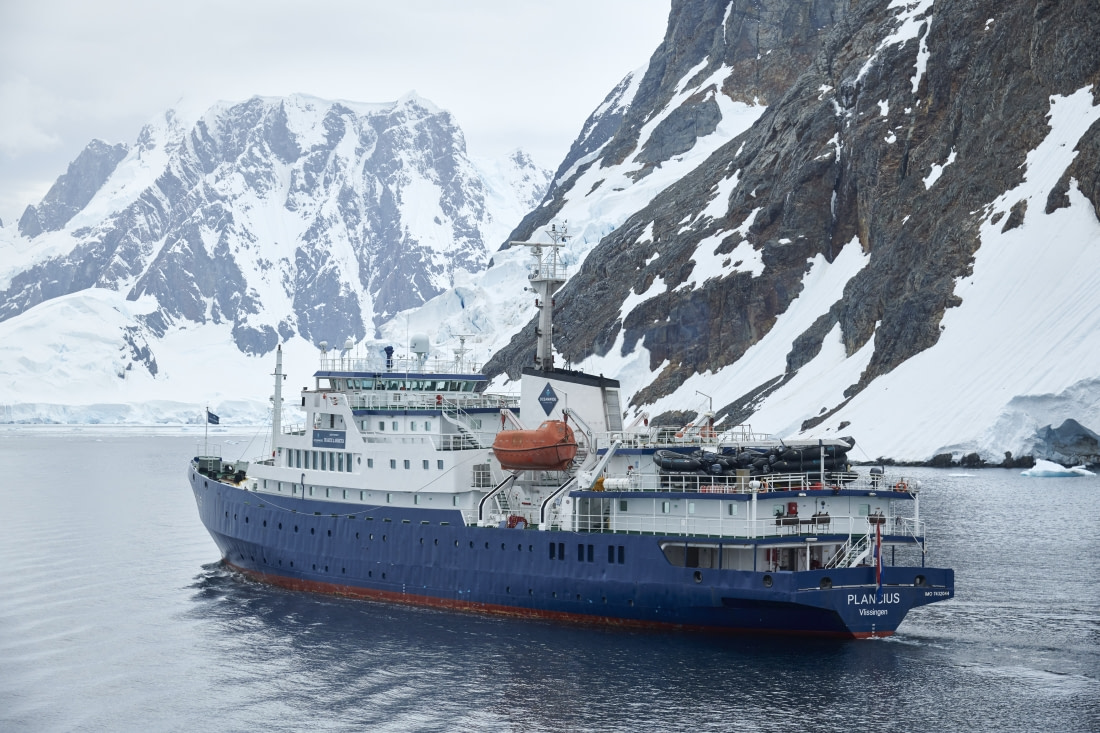
In the afternoon, we proceeded south toward the Lemaire Channel. On the way, we encountered a group of six to seven killer whales, which made a brief but close pass along the starboard side of the ship. As we approached the entrance to the Lemaire, it was clear that the channel was filled with ice, but the nimble Plancius carefully weaved her way through and successfully made the transit. At the southern end of the channel, we passed a large iceberg, and the captain asked everyone to move to the opposite side of the ship and clear the bow for safety, though we passed without issue.

Due to the slow transit through the Lemaire Channel, we unfortunately did not have time for the planned afternoon landing. Instead, we enjoyed a scenic ship cruise through the Penola Strait, reaching 65°13′ south—our most southerly point of the voyage—while Marco gave an informative lecture on the Antarctic cryosphere. We then returned north in the evening to launch an evening kayaking session and prepare for our second night of camping, this time at Hovgaard Island.

Mountaineering

Whilst the rest of the group were visiting Port Lockroy the mountaineers were dropped at Damoy Point a rocky isthmus off the west coast of Wiencke Island. We were well organized and experienced mountaineers, which allowed for a very prompt departure at 8:30 a.m. The team was divided into small groups of three and four for the initial snowshoeing section. This part of the route was straightforward, although the snowpack was very soft. During this stage, Gnarly briefly punched through into a crevasse but was able to extract himself safely and continue without issue.

Upon reaching a steeper snow slope, the group switched from snowshoes to crampons. Progress became slower due to the unconsolidated snow, and several crevasses had to be carefully bypassed before reaching the col. In previous seasons, guided parties had continued on to the main summit, but this route was more serious and not achievable within the available time frame. Despite this, the ascent provided a challenging and rewarding experience, with impressive views and a strong sense of achievement for the team.

Kayaking

It doesn’t get much better for kayaking. We had super calm waters and within 5 minutes of setting out a humpback whale came to visit us. Popping up for air right beside our kayaks. The penguins also seemed to be enjoying our company, darting around below are kayaks like little black and white torpedoes. We followed the coastline which was home to many Gento penguins and a colony of shags. So many nests, now with little chicks and the shags were really visible from the water. As we followed the coast back around towards Port Lockroy we found a large sleeping seal, and a huge raft of penguins who entertained us before we had to dash into shore to post our letters at the post office.

After the Lamaire Channel and it’s ice slowed our transit time, we headed out for an evening paddle at Hovgaard, whilst the campers were setting up for the night. It was beautifully calm in between the rocky islands between Hovgaard and Pleneau. We found several sleeping Weddel seals, and explored some really shallow and narrow rocky channels. The wind began to pick up, and this was a good time to head back to Plancius.

Camping

Our chosen location was Hovgaard Island, a small island surrounded by magnificent mountains and sculpted icebergs. We arrived on land around 9:00 pm, where Lucia and Brenya welcomed us ashore and briefed us on the camping area and safety procedures. As if the setting wasn’t magical enough, we were pleasantly surprised by two very curious Adélie penguins waiting for us at the landing site. The penguins seemed completely unbothered by our presence: curious, calm, and happy to observe our strange routines. With shovels in hand, we began preparing our sleeping areas. The snow was slushy and difficult to work with, but creativity quickly took over. Some campers built impressive snow walls and sturdy structures, while others focused on simpler wind protection before laying out their kits. Once everything was ready, we took some time to explore the surroundings.

Gradually, one by one, everyone retreated into their bivy bags. Silence settled over the camp as we surrendered to the not-dark-at-all Antarctic night. Later, snow began to fall, drifting softly over the camp for several hours. It was a very cold night. Some of us slept deeply, warm and content, while others barely slept at all. By early morning, a wake-up call wasn’t needed. We packed our kits carefully, leaving the landing site exactly as we had found it: no trace of our night on the ice. Soon after, the zodiacs arrived and transported us back to Plancius.

Day 6: Girard Bay and Pleneau Island

Girard Bay and Pleneau Island
Datum: 02.01.2026
Positie: 65°07.0’S / 064°03.0’W
Wind: SW-2
Weer: Overcast
Luchttemperatuur: +1

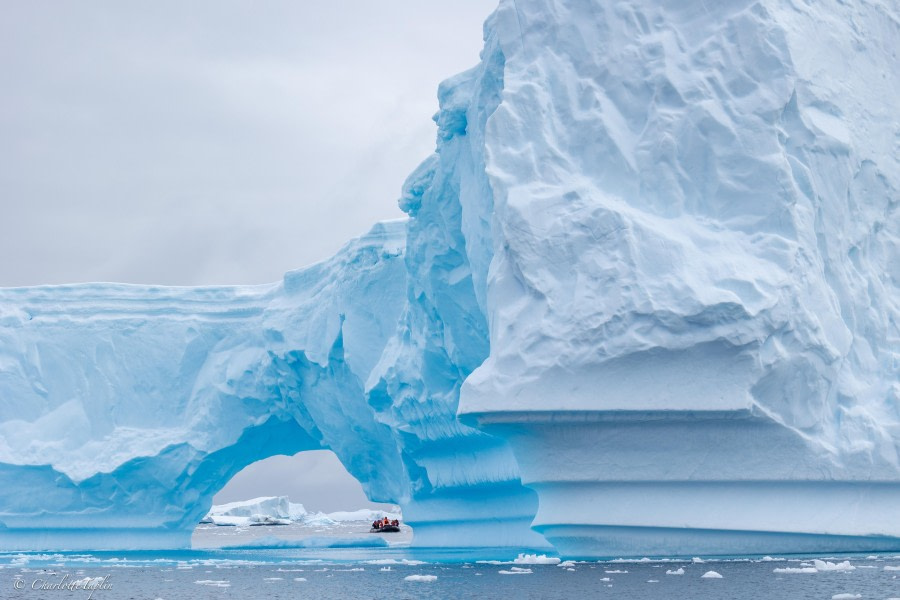
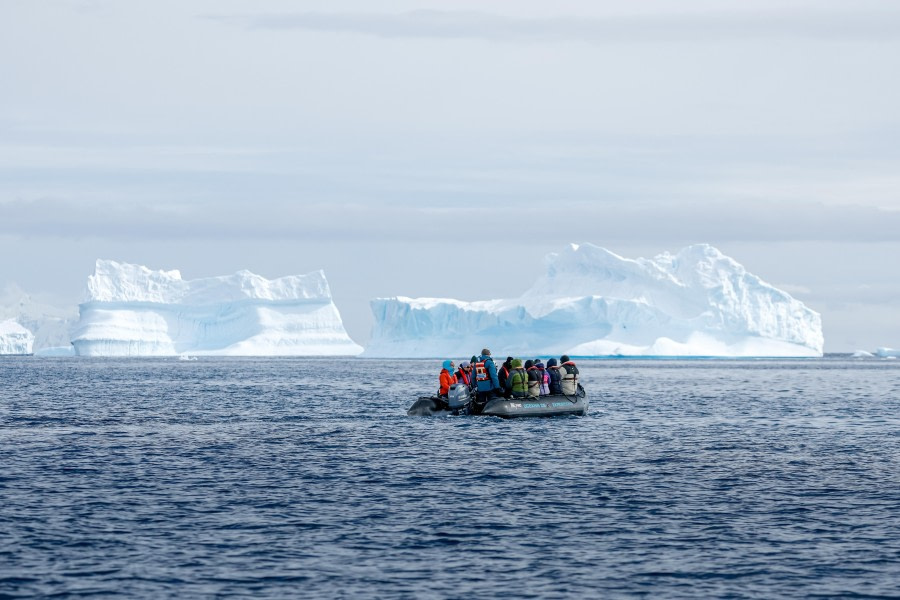
The second day of the year found us ready for another cruise in the icy waters south of the Lemaire Channel. After breakfast, we bundled up for a Zodiac cruise in Girard Bay. The scenery was purely Antarctic, with large icebergs lingering between the Lemaire Channel and the Penola Strait. We admired beautiful dry docks and towering pinnacle icebergs—some with funny Moai-like shapes, others showing delicate flutes and clear tidewater lines that told a long story of weathering and erosion. The wildlife was equally impressive: we spotted several feeding humpback whales, resting Weddell and crabeater seals on ice floes, and penguins porpoising through the brash ice that filled the bay. The scenery was truly spectacular.

This area also held an important place in Antarctic history, linked to the French expeditions led by Jean-Baptiste Charcot in the early 20th century. Charcot explored much of the western Antarctic Peninsula during his voyages aboard Français, carefully charting coastlines and conducting scientific research. During his expeditions, the crew overwintered at Port Charcot on Booth Island, not far from where we cruised and landed today. Living in extreme isolation and harsh conditions, they carried out meteorological, geological, and magnetic observations, laying the foundations for modern Antarctic science. Passing through these waters offered a powerful reminder of the endurance and determination of the early polar explorers who came here long before modern ships and equipment.

After another excellent lunch, we made a landing at Pléneau Island, home to a bustling Gentoo penguin colony. A route was set up for the guests, offering a full 360-degree view over Salpêtrière Bay and the impressive iceberg graveyard—an area where ocean currents push icebergs into shallow waters, causing them to become grounded. The fluffy Gentoo chicks were a highlight, and we spent plenty of time enjoying their playful antics.

In the evening we gathered for the recap. Rustyn outlined the plans for the following day, Charlotte introduced us to the three main seal species we were likely to encounter, and Steffi shared fascinating insights into the life of snow algae. Dinner followed shortly afterward, and with the day’s adventures—and the overnight camping—having taken their toll, it was an early night for most of us.

Mountaineering

The morning started with two zodiacs shuttling our group to the eastern shore of Hovgaard, a 2-km long island located on the western side of the Penola Strait. We got rope up by our mountain guides Gnarly and Chris and got the snowshoes on to start the ascent. The day started with a blue sky which, however turned gloomy grey while ascending on the northern side of the island. The views slowly opened up to the west where a lots of iceberg went adrift into the shallow islands of the western peninsula. Finally reaching the summit of Hovgaard the views opened towards the mainland with incredible sightings of Mount Cloos and Mount Scott and the zodiacs zipping around Girard Bay at the bottom. We began our afternoon excursion with a long but spectacular transfer, weaving our way through towering icebergs glowing in shades of blue and white. A low tide made the landing a little tricky, adding a sense of adventure from the outset. From the southern beach of the north-west arm, known as Salpêtrière Bay, the terrain rose gently northwards. The steady slope led us to a modest 50-metre hill, where the remnants of Jean-Baptiste Charcot’s early 20th-century expedition still stand—quiet reminders of the heroic age of Antarctic exploration. The afternoon was spent completing a steady circuit of the island before eventually reaching the cairned summit. Our return journey offered one final gift: another photogenic humpback display, set against the icy seascape.

Kayaking

We couldn’t have asked for better weather, more calm waters allowed us to navigate through the rocky islands beside Hovgaard, and through shallow water. We found 3 crab eater seals sunning themselves on the rocks, and a couple of Weddel seals. The GoPro’s and 360 cameras were catching all the action as we explored. We headed a little further out of the bay on the west side of the islands and got a glimpse of open ocean, and some really, really, huge icebergs.

We had a little more wind this afternoon so we stayed close to the coastline. As we paddled down the coast, we passed a large gentoo penguin colony. It was great fun watching them swim beneath our kayaks, the definitely found us intriguing. They were rafting all around us. As we continued around to the northern side of the islands there was a little more shelter thanks to the huge grounded Isbergs. The group who landed at Pleneau tipped us off on some feeding whales, visible from the top of the hill. We followed their directions and found 3 feeding humpbacks. This was an incredible experience and we sat and watched the whales for at least 30 minutes.

Day 7: Paradise Harbour and Aguirre

Paradise Harbour and Aguirre
Datum: 03.01.2026
Positie: 64°53.3’S / 062°52.0’W
Wind: S-2
Weer: Partially cloudy
Luchttemperatuur: +2

We awoke to our first sunny skies of the trip in Paradise Harbour, greeted by calm conditions and brilliant light reflecting off the ice. Humpback whales surrounded the ship throughout breakfast as we prepared for our morning operations in this vast bay tucked into the eastern side of De Gerlache strait. Located on the Danco Coast of Graham Land, it lies between Bryde Island and the mainland. Sheltered by steep, glacier-clad mountains and dotted with small islands and ice-filled coves, Paradise Harbour is renowned for its calm waters, dramatic scenery, and rich wildlife.

As we loaded the zodiacs for mountaineering, zodiac cruising, and kayaking, the whales gathered astonishingly close to the gangway. The final boats were unable to depart for nearly ten minutes as whales passed through the area, surfacing and diving around us. It was an unforgettable start to the day. Incredible conditions, with mirror-like reflections in every direction. We watched feeding humpback whales, observed a wide variety of seabirds, and, of course, encountered penguins along the shoreline. We also took a brief look at Base Brown, an Argentine summer research station, though the researchers had not yet arrived for the season. We concluded the morning with a mainland landing at Punta Vidt, where many guests participated in the polar plunge. Thanks to the unusually warm and sunny conditions—by Antarctic standards—almost everyone took the icy dip, making it a fun and memorable experience.

In the afternoon, we cruised through the Aguirre Channel to assess mountaineering conditions. Unfortunately, snow coverage on the Andvord Bay side of the coast was not suitable, so we repositioned back to Leith Cove instead. There, we once again boarded the zodiacs and enjoyed excellent conditions while searching for wildlife. We spotted humpback whales, leopard seals, Weddell seals, seabirds, and gentoo penguins. A few zodiacs also approached the shoreline to greet the staff at the Chilean research station, Presidente Gabriel González Videla.

As the zodiacs returned to the ship in the evening, we could smell charcoal grilling and hear music coming from the aft deck. The hotel and deck teams had prepared an outdoor barbecue for everyone to enjoy. Guests bundled up and gathered outside for grilled food and mulled wine, embracing the Antarctic elements. The day ended with a lively dance party on deck as whales continued to swim around the ship, illuminated by soft evening light—an unforgettable finale to a perfect day in Antarctica.

Mountaineering

The weather was perfect for mountaineering at Conessa Point this morning, a small rocky spur located at the entrance of Leith Cove. After a clear night, we found firm snow conditions, the hard surface required us to boot up the lower slopes until we could locate a suitable area to put on snowshoes. We were in great spirits and moved well as a group; able to follow an old ski track, which took a slightly different line than previous ascents and provided good travel through the terrain. During the ascent, one participant fell into a crevasse, but the team held the person securely and managed the situation efficiently. Thanks to good spacing and strong teamwork, the incident was resolved quickly and safely.

As we continued upward, increasing crevasse activity forced us to stop just short of the second rounded summit. Although we did not reach the top, the decision prioritized safety and reflected sound mountain judgment.

Overall, it was a solid mountaineering day with good conditions, strong group performance, and effective teamwork in challenging terrain.

Kayaking

Wow, what a whale-tastic paddle. We only left the ship for 2 minutes before we found a group of feeding humpbacks. The water was so calm it looked like a mirror, and for the first time we could see all the surrounding mountains and glaciers. It was incredible being in a small kayak and watching whales 3 times our size in all directions around us. We then paddled towards Base Brown, the Argentinian research station and home to more Gentoo penguins nesting around the huts. From here we dashed into shore to make a polar plunge.

The weather and tide had changed a lot for our afternoon session, and we had a cold wind but plenty of large icebergs to enjoy. We spotted Plancius practising with their lifeboat around the ship, and we paddled a distance of 6 km around the bay looking out for whales and seals. The cold finally reached our toes and hands, so we headed back to the ship for hot chocolate and cake.

Day 8: Neko Harbour and Danco Island

Neko Harbour and Danco Island
Datum: 04.01.2026
Positie: 64°50.5’S / 062°32.6’W
Wind: SE-1
Weer: Overcast
Luchttemperatuur: +3

Our early morning navigation into Andvord bay was again surprisingly interesting for the few of us who were standing at the bow and witnessing several groups of humpbacks bubble netting and feeding all around MV Plancius. As we pushed into the bay we ended up surrounded by ice in a way we had never seen before. The sea was packed with brash ice and scattered icebergs as we slowly approached the magical, well-known Neko Harbour. A soft fog wrapped everything around us, and the conditions were unbelievably calm: zero wind, gentle snowfall, and a deep sense of quiet that made the moment feel unreal.

Our morning landing began with a longer Zodiac shuttle, cutting carefully through the brash ice. The snow kept falling steadily as we moved forward, and the stillness of the bay made it feel truly magical. Once ashore, we found ourselves surrounded by penguin highways crisscrossing the landscape, with towering glaciers rising on the bays around us. The sound of ice calving echoed through the bay, a powerful reminder of how alive this place is. It was a wonderful, unforgettable morning.

After returning to the ship, we enjoyed a well-earned lunch before preparing for our afternoon landing at Danco Island, in the Errera Channel. Danco was just as full of life, with penguins everywhere, and offered something special: the option to hike up the hill. Some of us chose to go halfway, reaching the middle of the colony, while others pushed all the way to the top.

It was an unusually warm day for Antarctica, magical in the moment, though a little worrying too. Being able to remove layers as we climbed felt surreal. At the summit, we were initially surrounded by fog and clouds, with no view at all. Then, suddenly, the sky opened. The clouds lifted, and we were rewarded with one of the most incredible views of the Antarctic Peninsula Ice Sheet cascading down from 1500-1600m towards the shoreline of Graham Land; across the Errera channel the craggy peaks of The Needles, located on the Arctowski peninsula dominated the horizon, together with Cuverville and Ronge island. An experience none of us will ever forget.

After descending and returning on board, we gathered for the daily recap with the expedition team, followed by dinner. The day ended with stunning evening views as we sailed onward through De Gerlache strait, the light and ice creating a perfect close to an extraordinary day.

Mountaineering

The morning mountaineering party at Neko was divided into two groups and started from the regular path that leads to the higher colony and then followed the well-marked trail towards Skua point, but then heading directly uphill onto the glacier upwards the Rocky bands 200m higher and returning due to a large diagonal crevasse. The return journey tending rightwards towards Skua point, which gave superb views of the hanging ice cliffs.

Kayaking

Being close to the large active Glacier is not great for kayakers so we headed off in the opposite direction, to enjoy the deep waters of the bay. It was packed with lots of ice, some of which we had to travel through. In the clear deep waters, we found many humpback whales in every direction. We watched teams of humpbacks creating bubble nets and lunging to catch huge mouthfuls of krill. It was amazing to watch and we could hardly tear ourselves away. As we paddled back towards the ship our last whale encounter was super close, you could see the shadow of the whale beneath our kayaks.

Once we had all the kayakers aboard the safety boat, we headed out to the southern tip of Danco Isand. On route we came across a leopard seal hunting penguins, we stopped and watched him skinning the penguin by flinging it around. A grewsome but very cool thing to see. Once we arrived at the south tipoff Danco, we climbed into our kayaks and navigated the coastline, whilst the tide and currents helped push us in the right directions. As we reached the Northern end of the islands a huge raft of penguins, all washing their feathers and honking in excitement entertained us, before a humpback whale decided to come and say hello. We think he was as interested in us as we were of him.
Day 9: Recess Cove and Foyn Harbour

Recess Cove and Foyn Harbour
Datum: 05.01.2026
Positie: 64°30.0’S / 061°37.6’W
Wind: NW-1
Weer: Overcast
Luchttemperatuur: +3

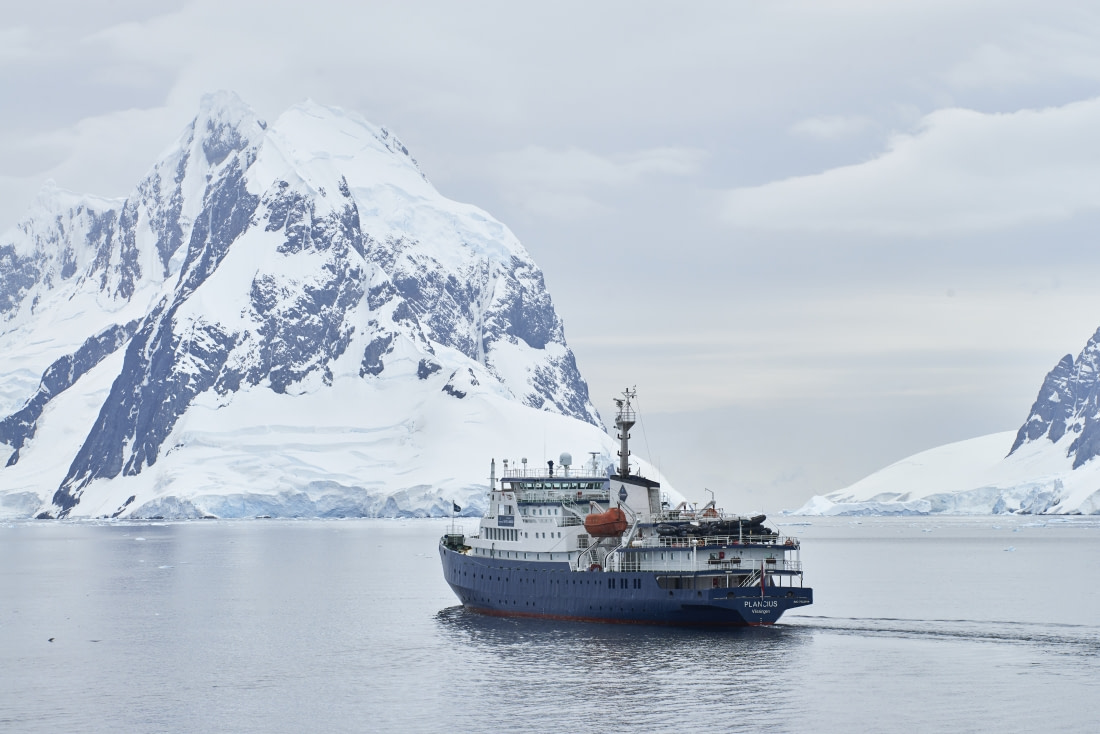
The day began onboard MV Plancius with breakfast as we sailed through calm waters, the ship weaving between scattered icebergs under clear blue skies. The weather was once again exceptional—bright sunshine and hardly any wind—making the Antarctic landscape look especially crisp and colourful. Soon after, we boarded the zodiacs for a cruise in Recess Cove. The area was filled with ice of all shapes and sizes, from small brash ice to towering bergs glowing in the sunlight.
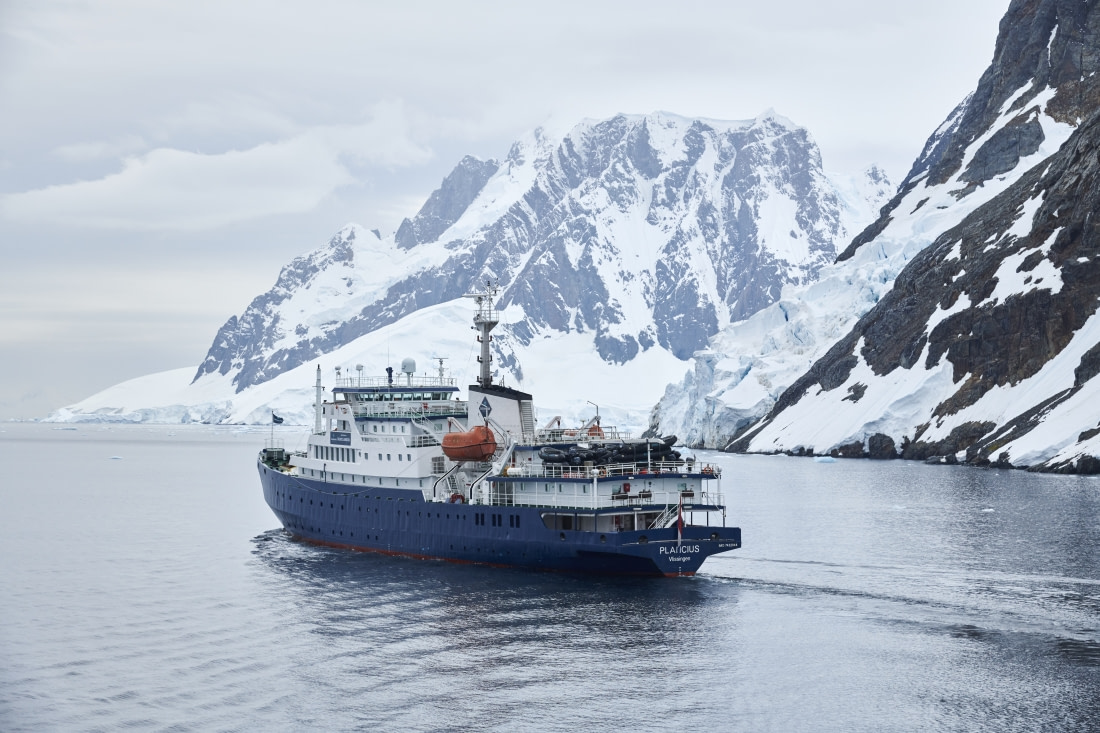
Wildlife encounters were constant throughout the cruise. Humpback whales surfaced nearby, sometimes close enough for us to hear their blows and watch them roll through the water. Weddell and crabeater seals were spotted resting on ice floes, seemingly undisturbed by our presence. Penguins were everywhere, porpoising through the water or standing along the shoreline, while cormorants flew overhead and gathered on rocky outcrops. The combination of wildlife, ice, and perfect weather made the morning feel almost unreal.

We returned to MV Plancius for lunch, sharing stories from the morning while continuing to enjoy the scenery from the ship. Chef Ralf and his galley team cooked amazing meals, as always, keeping our bellies happy.

In the afternoon, we visited Foyn Harbour. Although wildlife sightings were not as abundant as during the morning cruise or the previous days, the surrounding glaciers were truly impressive, filling the bay with deep blues and whites and creating a dramatic backdrop for the landing. The highlight was the shipwreck Governoren, a whaling factory ship that sank in 1915 after a fire onboard. The vessel was deliberately driven into the shallows to prevent it from sinking in deeper water and to save the crew and its valuable cargo of whale oil barrels. Fortunately, no one died, and the crew was later rescued by another ship.

Floating around the remains of the Governoren offered a powerful reminder of Antarctica’s whaling history. Rusting steel plates, twisted beams, and scattered machinery lay partially submerged along the shoreline, slowly being reclaimed by the cold Southern Ocean. Despite the passage of more than a century, the scale of the vessel was still evident, and standing beside the wreck gave a strong sense of the harsh conditions and challenges faced by those who once worked in these remote waters.

The day ended back onboard with our daily recap, where we reflected on another successful day and discussed plans for our final day of operations. It was a full and rewarding day, defined by stunning conditions, abundant wildlife, and unforgettable Antarctic landscapes.

Mountaineering

During our last mountaineering effort we landed on Enterprise Island in Foyn Harbour, a place rich in history and surrounded by towering glaciers. The sheltered bay was filled with ice and framed by steep, snow-covered slopes, creating a dramatic and peaceful atmosphere. As we approached the shoreline, we saw the remains of the whaling ship Governoren, a powerful reminder of the area’s past. The contrast between the rusting wreck and the pristine Antarctic landscape made this visit especially memorable. The original large group was split into two to ensure steady progress. We made our way toward the island’s summit along a gentle ascent, using only simple glacier travel that suited everyone’s ability well. As we climbed higher, we enjoyed excellent views in all directions. After taking time to appreciate the scenery, we returned the same way we had come, ending a rewarding and enjoyable excursion.

Kayaking

A huge bay, with calm waters was our playground for this session. We took the zodiac in towards the icy bay, spotting a couple of humpbacks before we climbed into the kayaks. The waters were mirror calm once again and reflected the beautiful mountains and blue sky. As we paddled into the bay, we found a sleeping Weddel seal on the ice, and a little further on a crabeater. The icebergs were like an art installation, all different shapes and sizes. The colour of the blue water around the bergs was electric, just as we were wrapping up to head back to Plancius we found a dry dock berg, with a ice whole so you could see through.

Day 10: Elephant Point, Livingston Island

Elephant Point, Livingston Island
Datum: 06.01.2026
Positie: 64°50.5’S / 062°32.6’W
Wind: SE-1
Weer: Overcast
Luchttemperatuur: +3

It was earlier in the morning compare to the other days, when MV Plancius swiftly moved into the southern side of Livingston island, the second largest landmass of the South Shetland archipelago. The South Shetland Islands stretch in an east–west arc about 120 km north of the Antarctic Peninsula, separated from it by the stormy Bransfield Strait. They have got their name by the first exploration made by William Smith in 1819 which found land at the same southern latitude of the Shetland islands of northern Scotland.

Zodiacs are launched while we had breakfast and the team scouted the shore for a potential landing on the volcanic sandy beach. After the usual called on the PA by the hotel manager Alex, we geared up and moved down the gangway for our last landing in Antarctica. The sea being a bit more swelly this morning.

Once on land the scenery was strikingly different than the previous day. Basaltic formation with sea stacks, spurs and columns dominating the landscape, whilst on the raised beaches hundreds of Southern elephant seals were resting. The southern elephant seal is the largest of all seals, easily recognized by the males’ distinctive inflatable trunk-like nose. Found across the subantarctic and Antarctic regions, these powerful marine mammals spend most of their lives at sea, diving to extraordinary depths in search of squid and fish. During the breeding and moulting seasons, they haul out on remote beaches, where their size, strength, and deep, resonant calls dominate the shoreline.

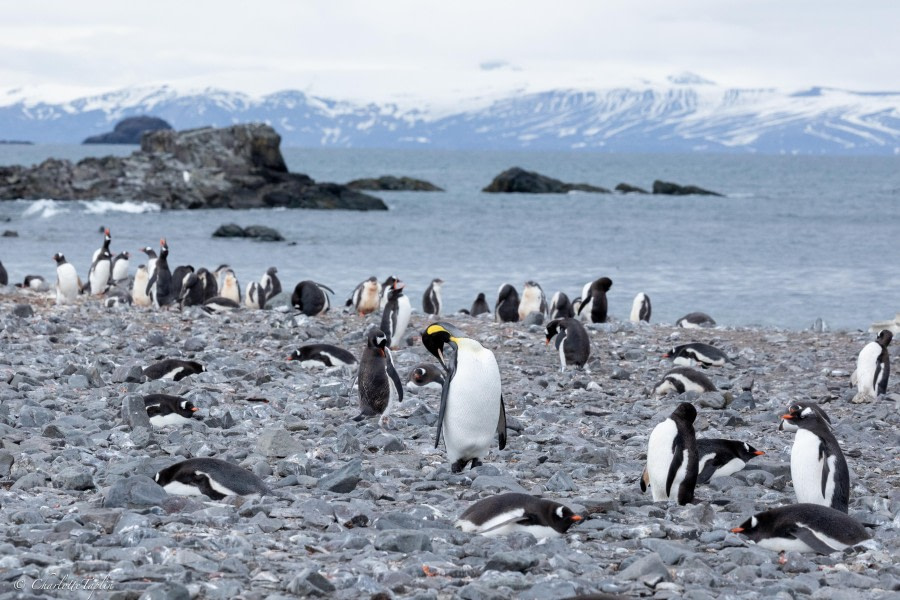
The shoreline dotted mostly with Gentoo penguins; however Chinstraps made their occasional appearance here and there and even a solitary King penguin was spotted near the landing site. The name, Elephant point, made justice to the place itself.

While walking on the beach we made acquaintance of Fyodor Konyukhov a renowned Russian explorer, adventurer, and artist known for pushing the limits of human endurance. He has completed extreme solo expeditions across the world’s oceans, polar regions, and highest mountains, including solo circumnavigations and crossings of the Arctic and Antarctic. Fyodor was in Livingston island with the scientific mission of collecting and studying the presence of microplastic in penguins’ diet.

As we wrapped up the operation and made our way back to the ship, the navigation towards Ushuaia started. During lunch time we were once again gifted with beautiful views of Snow island and the jagged peaks of Smith island, while navigating across the Boyd strait into the Drake passage. In the afternoon we joined Lucia in the main lounge for a talk on penguins and their amazing adaptation strategy to the cold environment we had witnessed during the last week.

After our daily recap and briefing, another delicious dinner was served and off to bed we went, ready for what was expected to be quite a rough Drakes Passage. The doctor was kept busy this afternoon handing out more seasickness medication!

Day 11: Drake Passage Northbound

Drake Passage Northbound
Datum: 07.01.2026
Positie: 59°34.1’S / 063°55.1’W
Wind: SW-6
Weer: Overcast
Luchttemperatuur: +4

The morning started slowly. Our home, Plancius, was rolling gently from side to side, and many of us chose a later start to the day. It remains unclear whether this was due to seasickness or simply because the internet connection was working again. Nevertheless, we all enjoyed the quiet morning and a leisurely breakfast.

After breakfast, Steffi invited us to the lounge for a very informative lecture about the seals we had encountered during our trips. We learned a great deal about the physiology and adaptations of these remarkable animals. A little later, Katlyn continued with an excellent presentation about a year in the life of a humpback whale. It was fascinating to learn where they spend their time when they are not feeding and building up blubber layers in the cold Southern Ocean.

Lunch, as always, was amazing and was followed by a few well-deserved power naps for some of us. Whales remained the theme of the afternoon. While our head chef Ralf continued to keep us well fed throughout the voyage, Charlotte explained more about the feeding techniques of whales—valuable knowledge indeed, even if we suspect the whales appreciate the extra kilos gained over the past week more than we do.

The afternoon concluded with a photo-editing workshop led by our photo guide, Juan. The daily recap provided a wonderful opportunity to gather in the lounge, chat about the day, and share stories and observations. After dinner, however, most of us opted for a quiet evening, reflecting on and digesting all the experiences we had during our time in the south.

Officially, we are no longer in Antarctica, having crossed the 60° latitude south. Yet, we left behind small pieces of our hearts and souls in this last pristine region of our planet.

Day 12: At Sea approaching Ushuaia

At Sea approaching Ushuaia
Datum: 08.01.2026
Positie: 55°37.6’S / 066°07.5’W
Wind: NW-2
Weer: Partially Cloudy
Luchttemperatuur: +6

The good progress we made overnight allowed us to find shelter on the lee side of the archipelago of the Wollaston islands, where Cape Horn is located. With the South American continent in sight and much less swell, breakfast was a big feast for everyone!

Half an hour later Marco invited us to the lounge for a thorough presentation on the thermohaline circulation and its impact on the climate for the future. Immediately after Erin shared with us her experience of rowing across the North Atlantic with other three friends and what the bonding created during the endeavour.

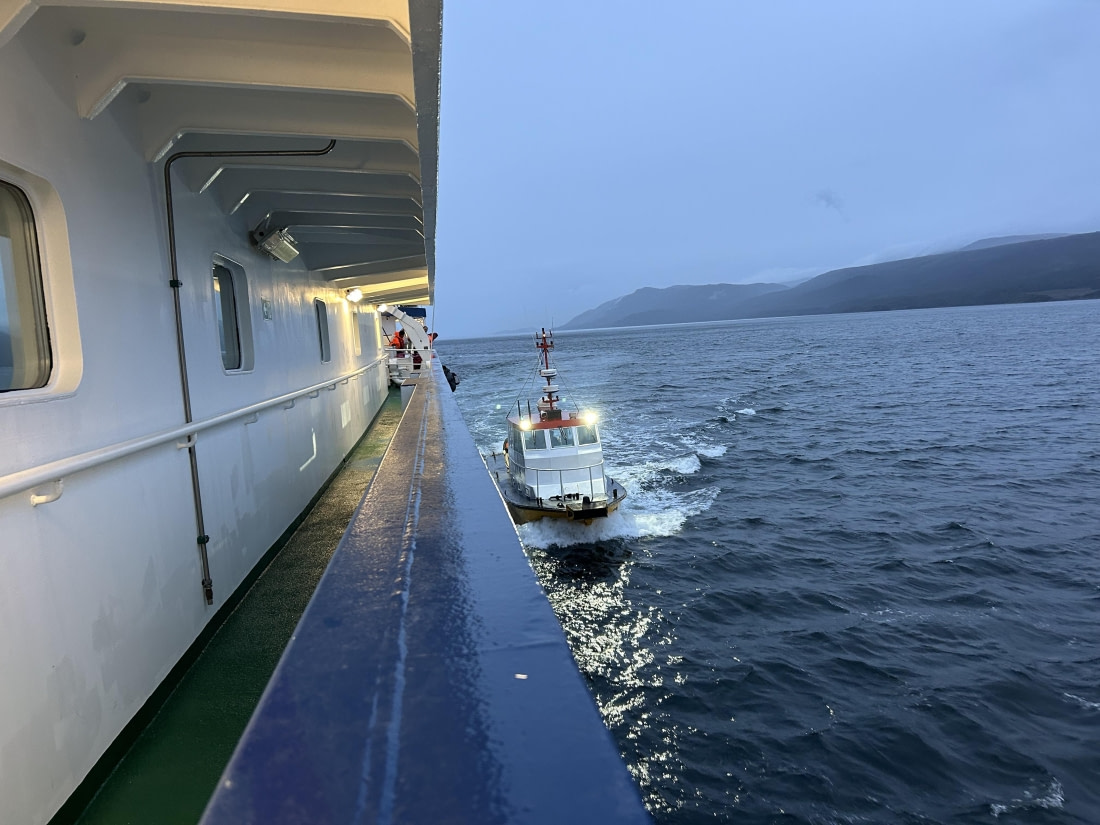
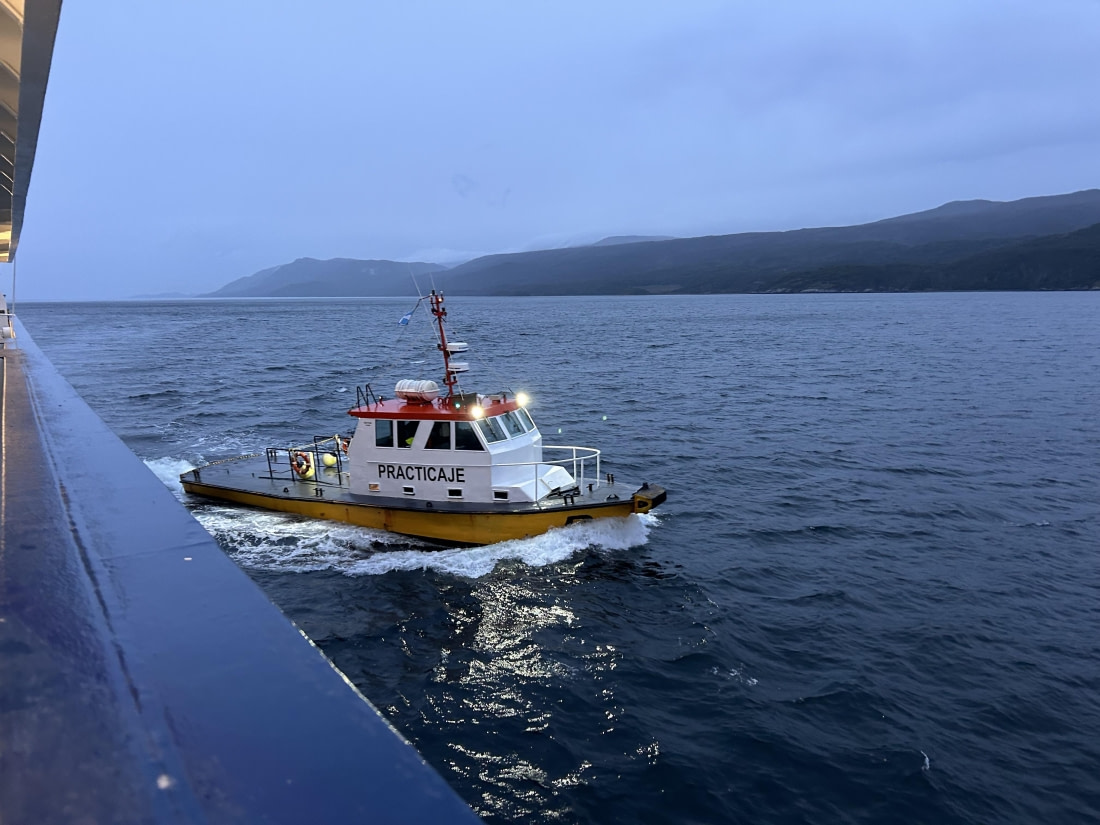
Lunch time called by Alex followed by boot scaping and re-collection and then yet another presentation by Rustyn on the Antarctic Treaty system, its creation and implications for the protection of the Antarctic continent and its waters. A few Peale’s dolphin made their appearance every now and then, while MV Plancius made her way towards the southeastern entrance of the Beagle channel where we picked up our pilot.

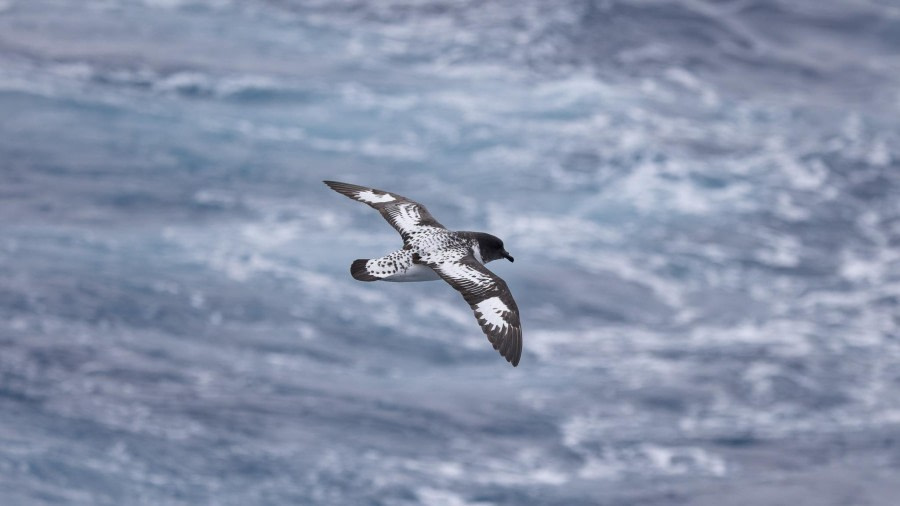
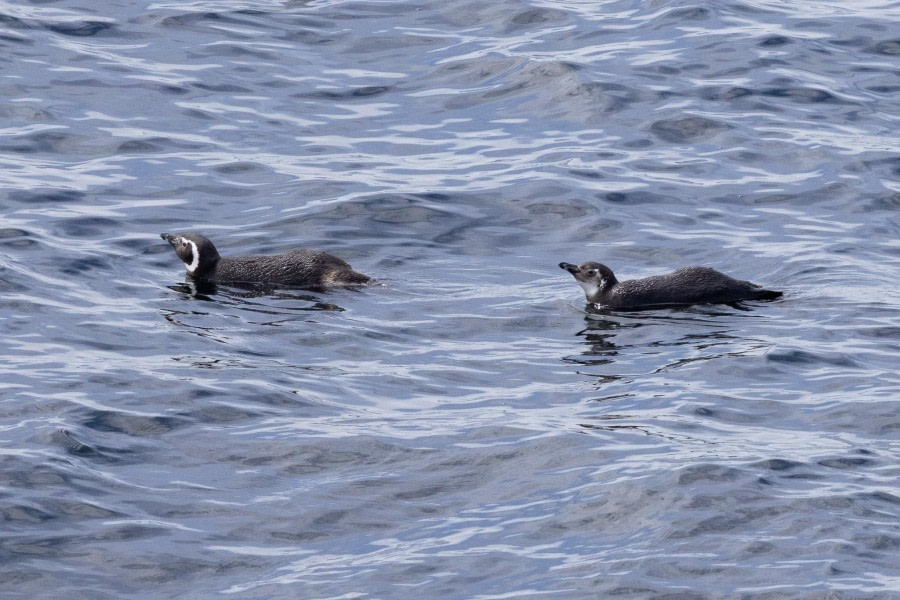
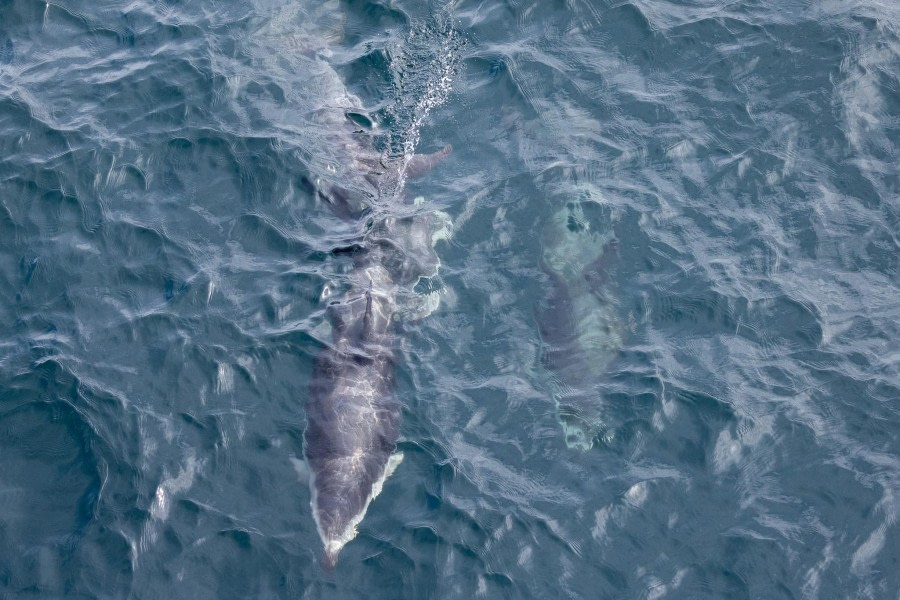
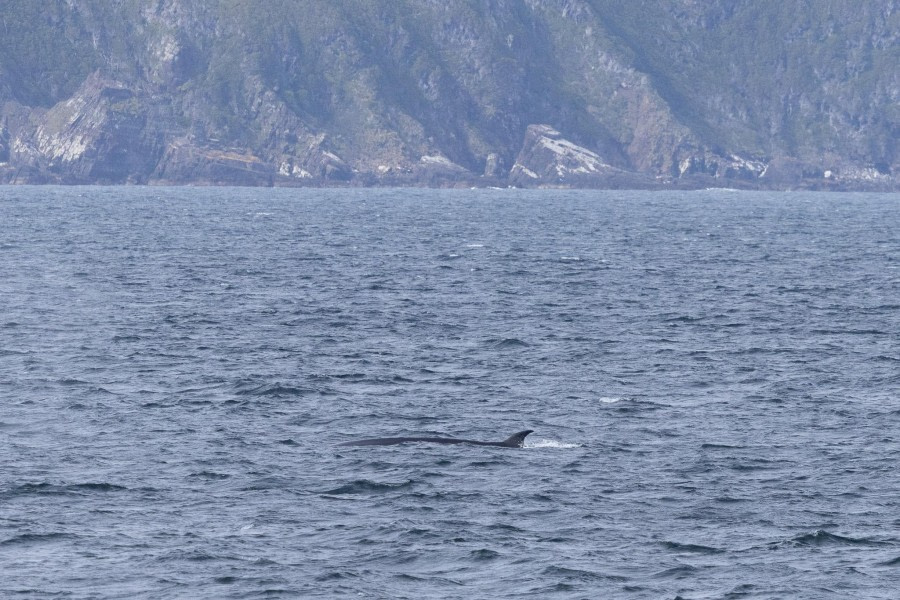
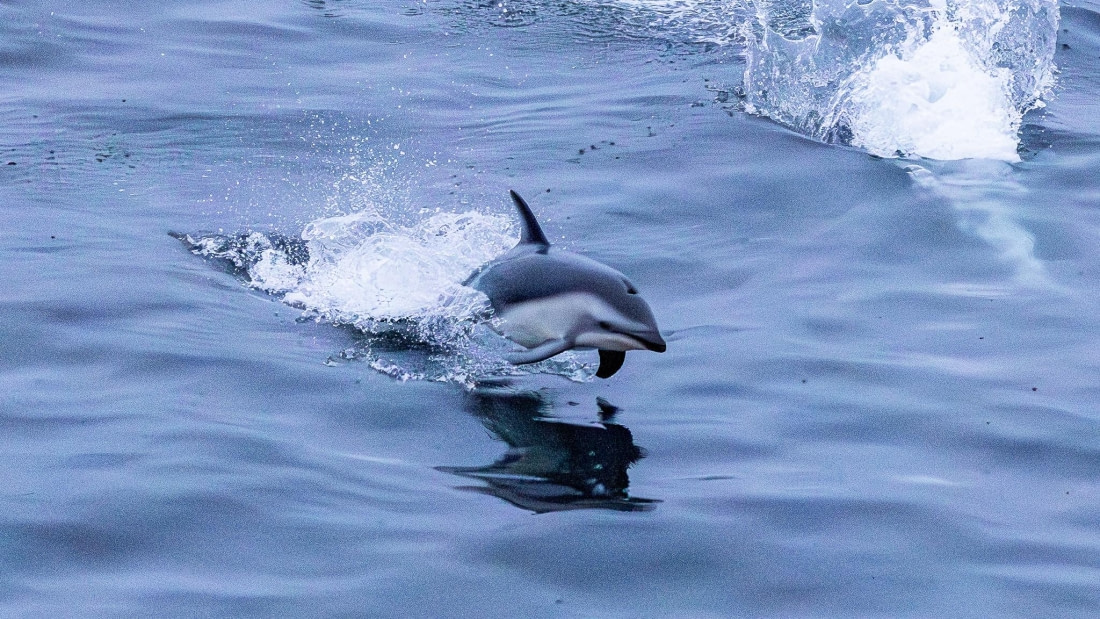
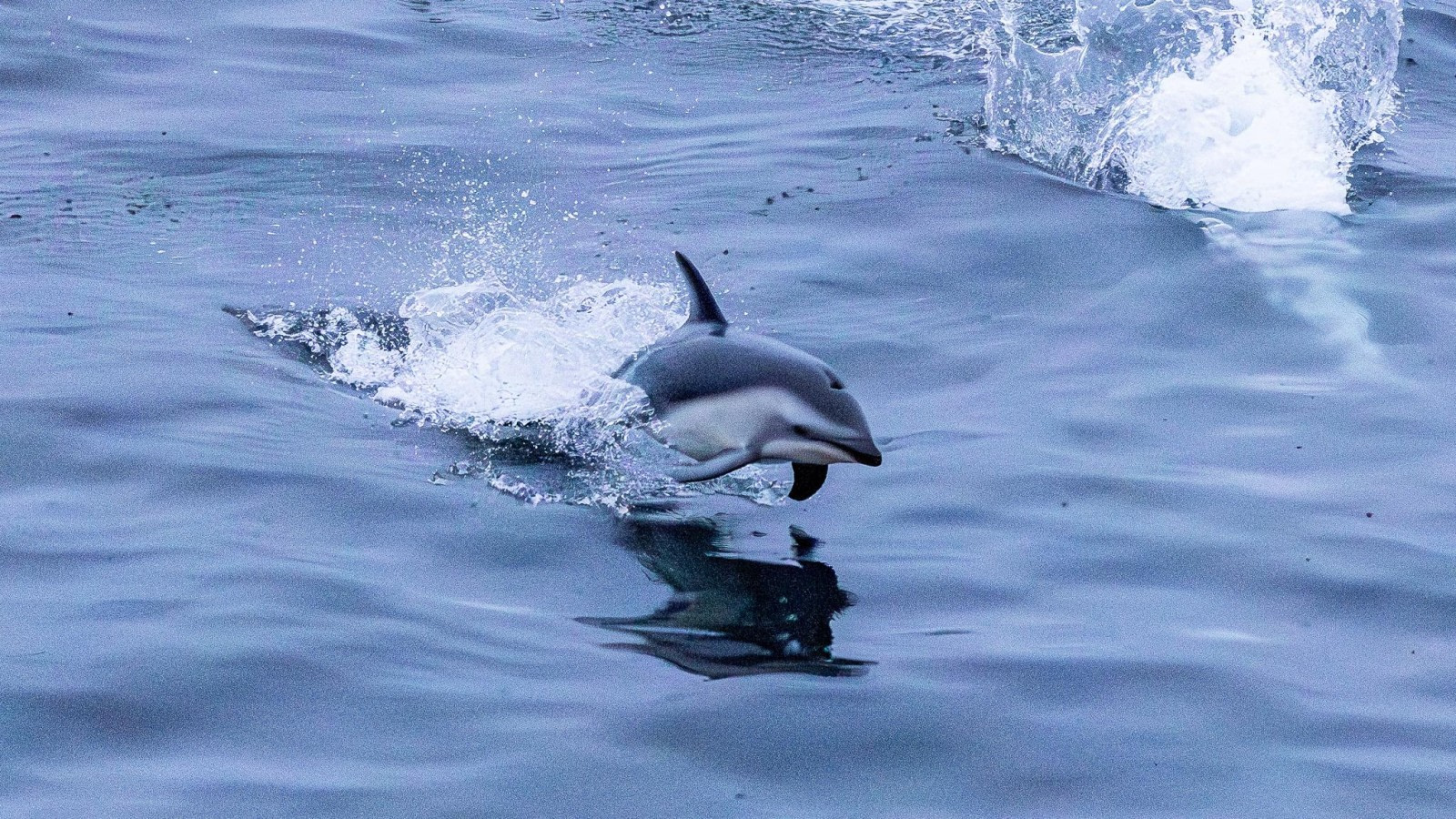
Wildlife was still grasping the attention with small pods of Peale’s and Dusky dolphins porpoising close to the ship, Black-Browned Albatrosses resting in the water, Magellanic penguins cleaning their feathers and Imperial shags flying nearby. A few Sei whales were also spotted numerous time.

Soon it was time to reunite in the lounge for Captain’s cocktail. Words of appreciation were spent to thank the crew and staff for their hard work in leaving us such a great memory of a trip of a lifetime. Glasses were raised and we watched in awe the wonderful slideshow offered to us by Juan as a great memory of the past week spent in the white continent.

With Plancius sailing steadily towards Ushuaia, dinner was called and it was once again an opportunity to bring back good memories about the trip. A few of us spent time in the bar till later in the evening, whereas others found time in their cabin to pack their luggage for the next day.

Day 13: Ushuaia, Disembarkation Day

Ushuaia, Disembarkation Day
Datum: 09.01.2026
Positie: 54°50.6’S / 068°07.7’W
Wind: VAR-1
Weer: Overcast
Luchttemperatuur: +8

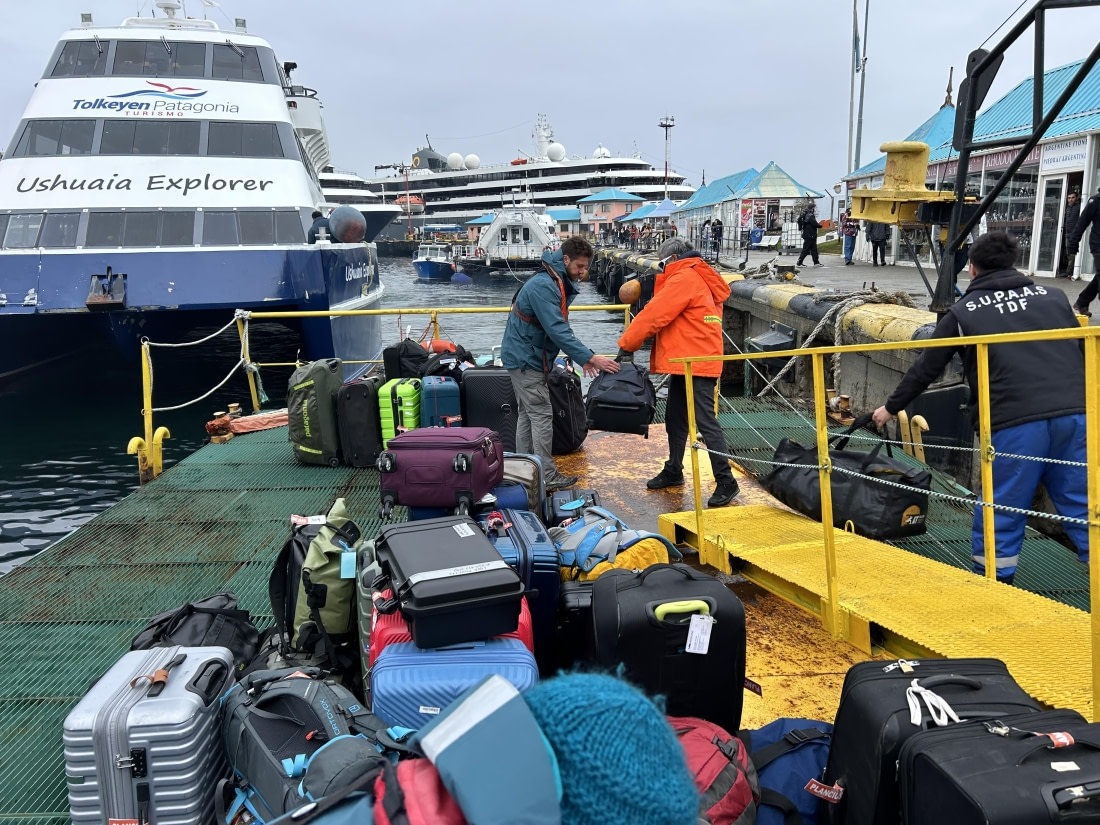
A calm overcasted morning in Ushuaia, woke us up and it was time to say our goodbyes and a last chance to exchange contact details. We had our final breakfast aboard MV Plancius then gathered our belongings and headed towards the gangway. We said goodbye to the whole team onboard and the new friends we had made. Some of us were off to explore some of the town’s treasures while others were flying straight home, looking back as we left to take a final look at Plancius, our Little Blue ship, remembering good times and perhaps planning for more in the future.

Total distance sailed on our voyage: 1656nm

Southernmost position: 65º18.5’S / 064º11.3’W

On behalf of Oceanwide Expeditions, the Captain, Crew and Expedition Staff would like to thank you for pleasant times. It has been a pleasure travelling with you.

Details

Reiscode: PLA25-26
Reisdatum: 28 dec., 2025 - 9 jan., 2026
Duur: 12 nachten
Schip: m/v Plancius
Inscheping: Ushuaia
Ontscheping: Ushuaia

Op deze reis geweest?

Aan boord van m/v Plancius

Ons oudste schip, de Plancius, is een klassieke keuze voor een aantal van onze populairste poolreizen.

Meer over de m/v Plancius »
Loading