• Home
  • Triplogs
  • PLA07-25, trip log, Around Spitsbergen, In the realm of polar bear & ice

PLA07-25, trip log, Around Spitsbergen, In the realm of polar bear & ice

by Oceanwide Expeditions

Fotogalerij

Logboek

Day 1: Longyearbyen, Embarkation

Longyearbyen, Embarkation
Datum: 10.07.2025
Positie: 78°14.8’N / 014°58.4’E
Wind: E1
Weer: Overcast
Luchttemperatuur: +12

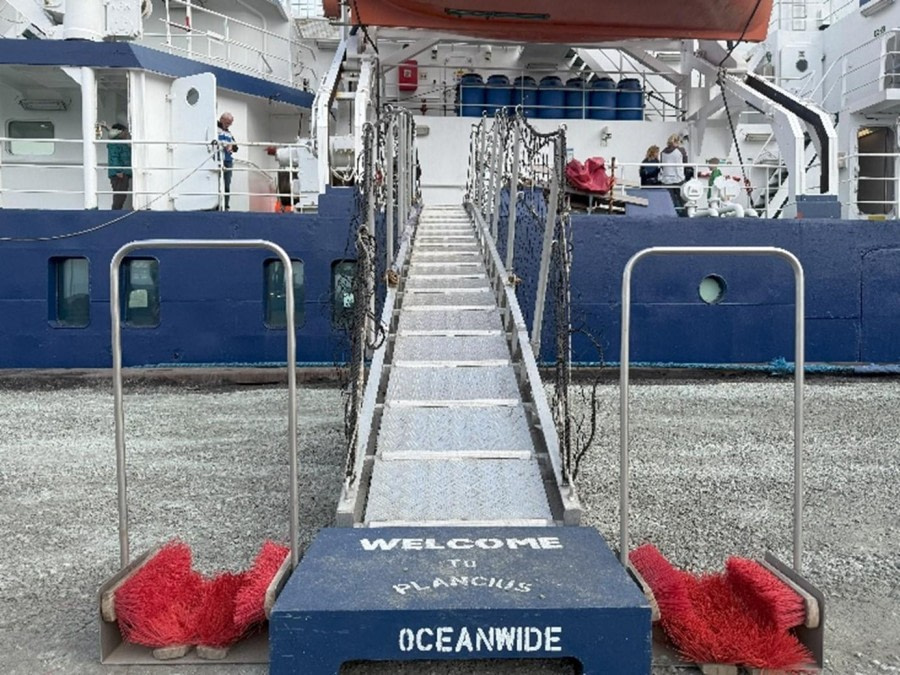
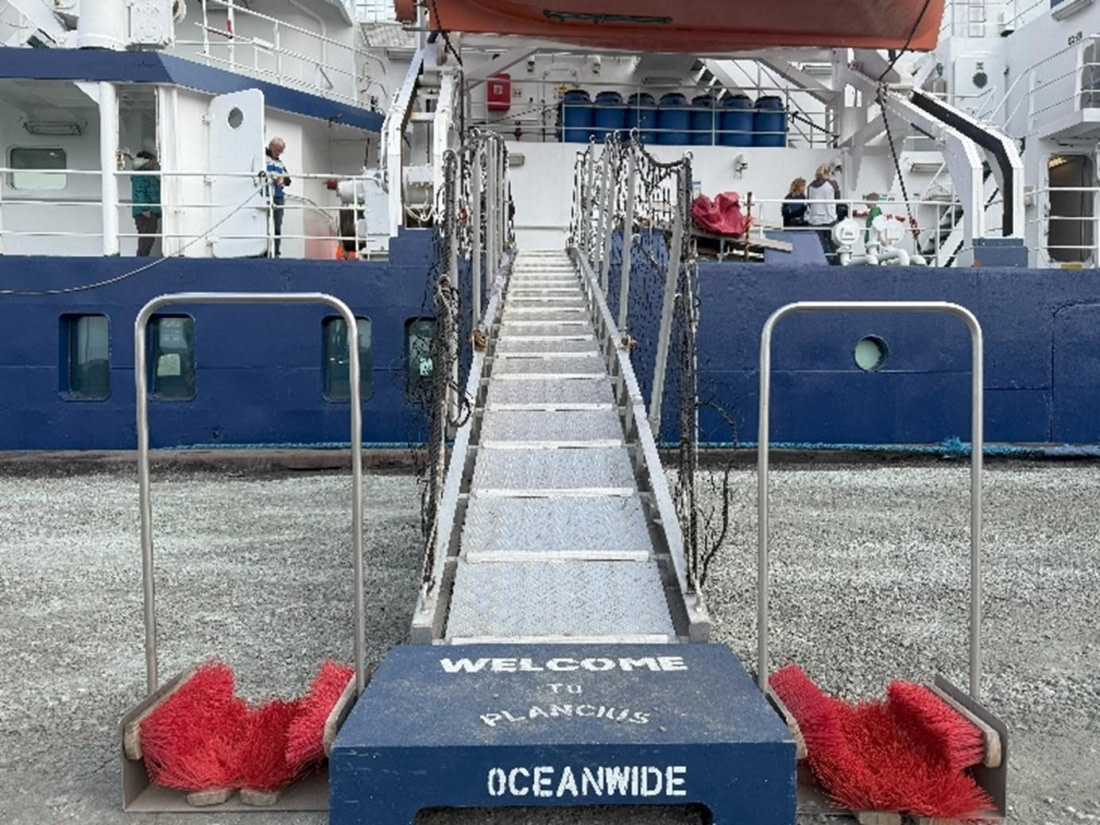
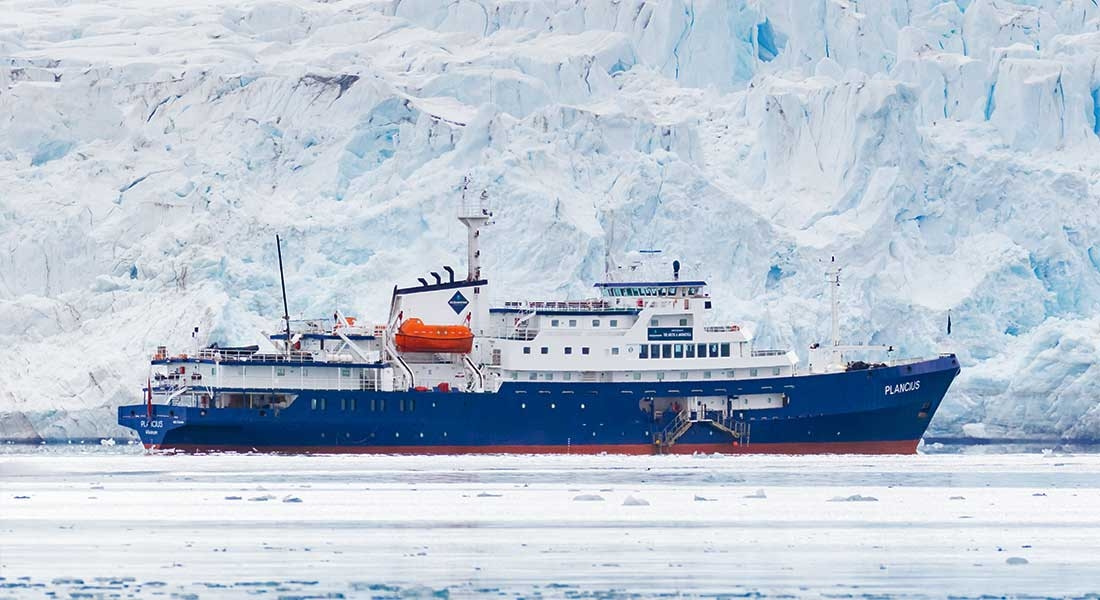
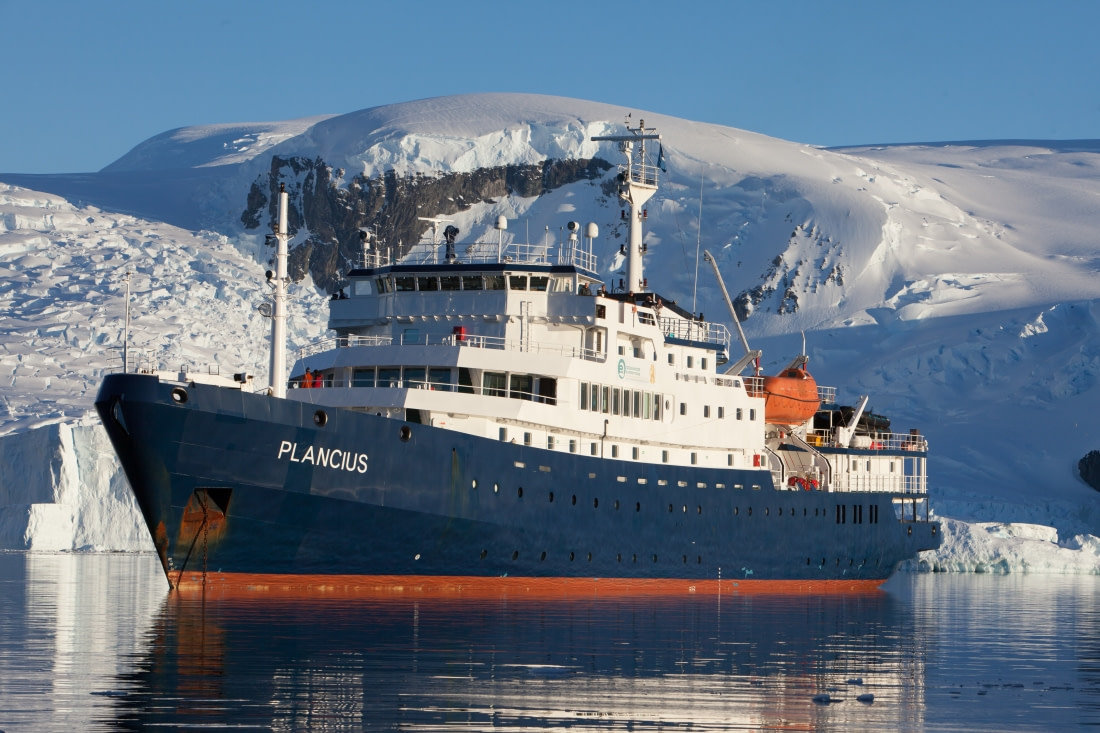
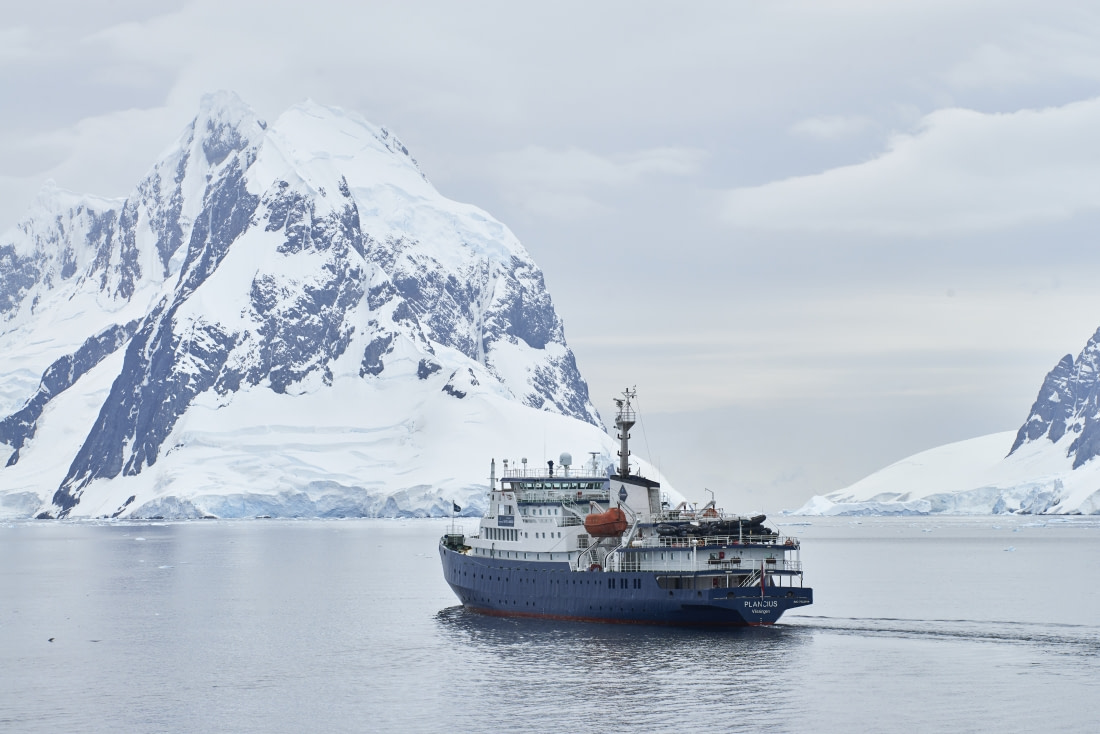
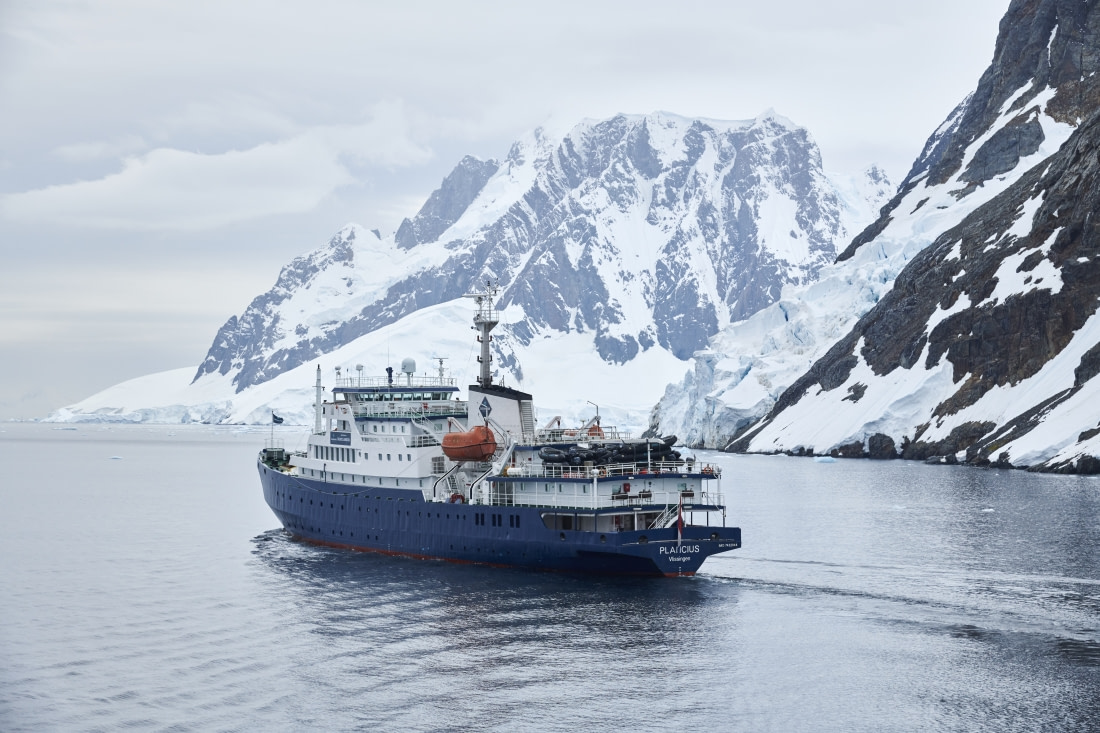
After travelling from far and wide, with some having spent a few nights in Longyearbyen, and others flying in in the morning, we started to gather outside the Plancius in the afternoon. From four o’clock we were allowed to embark onto what would be our home for the next nine days. We were welcomed on board by the hotel and expedition team and show our cabins. We could settle in with a hot drink in the lounge before taking part in the mandatory safety briefing and abandon ship drill. Chief Officer Martin took us outside to see the life boats, with all of us dressed in our bright orange life jackets. After this we set sail and enjoyed the views as we left Longyearbyen. We were then invited to the lounge to have welcome drinks with the Captain and to meet our Expedition Leader Phillipp and the expedition team. We had a buffet dinner in the evening where we met the restaurant team, and then continued to enjoy the scenery before heading to bed.

Day 2: Ny Ålesund & Lilliehöökbreen

Ny Ålesund & Lilliehöökbreen
Datum: 11.07.2025
Positie: 78°59.7’N / 011°26.7’E
Wind: ESE3
Weer: Overcast/rain
Luchttemperatuur: +7

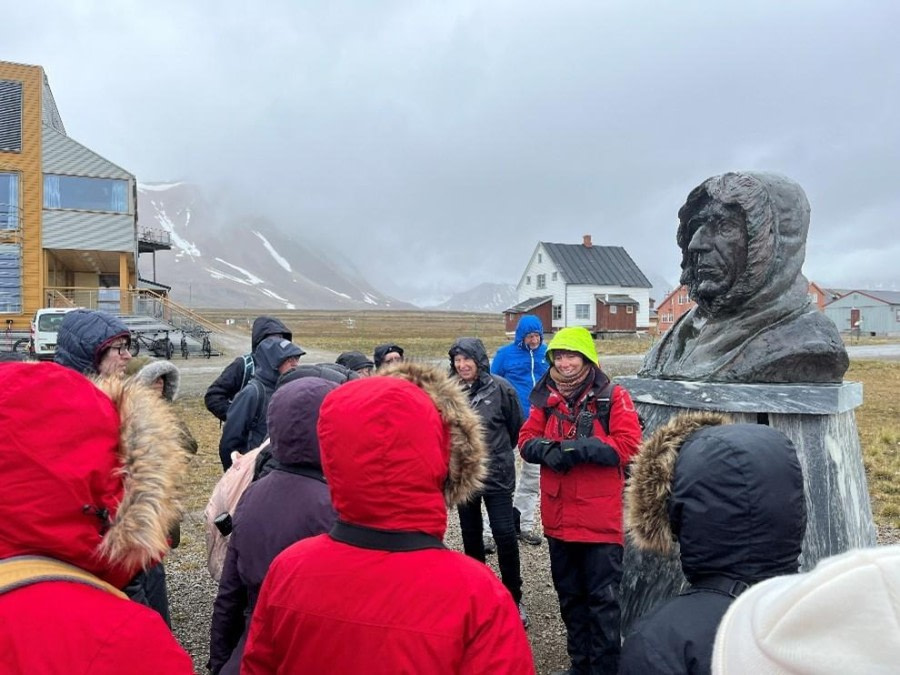
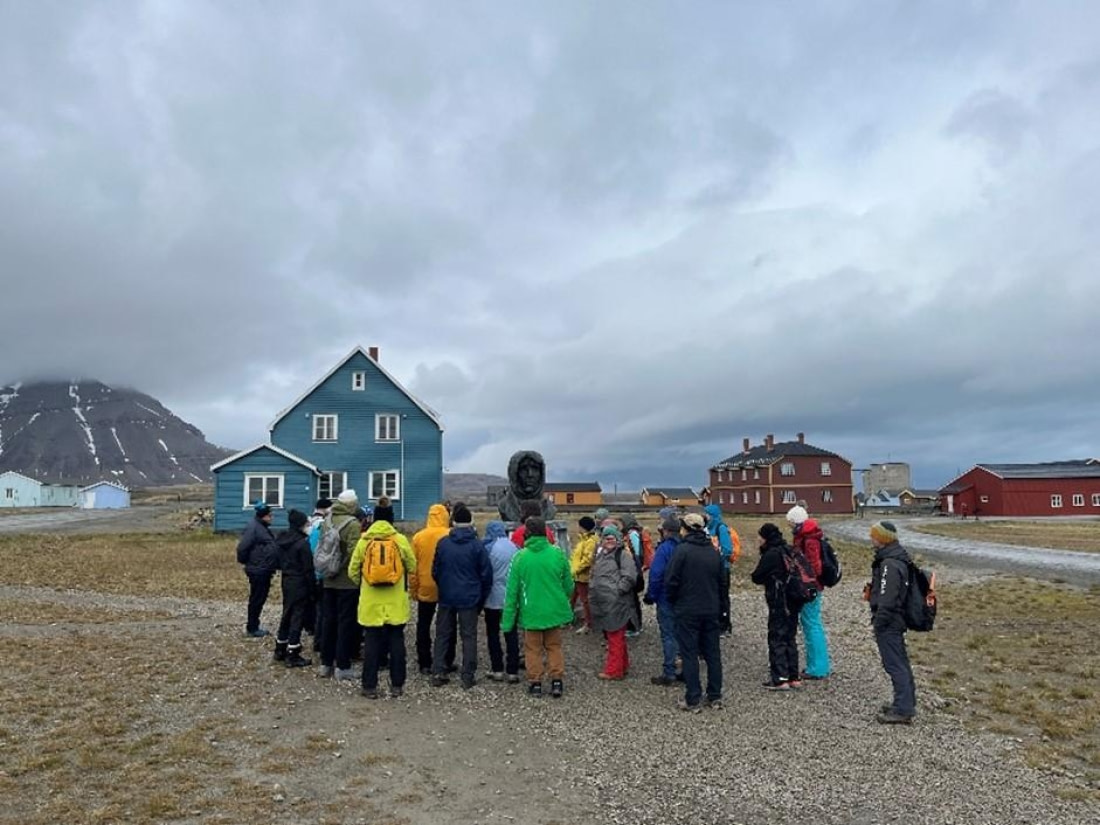
Day 2 began with our arrival and morning landing at Ny-Ålesund, the world's northernmost permanent settlement and a vital international Arctic research center. After a delightful breakfast buffet, we had an essential info-meeting about Ny-Ålesund in the lounge.

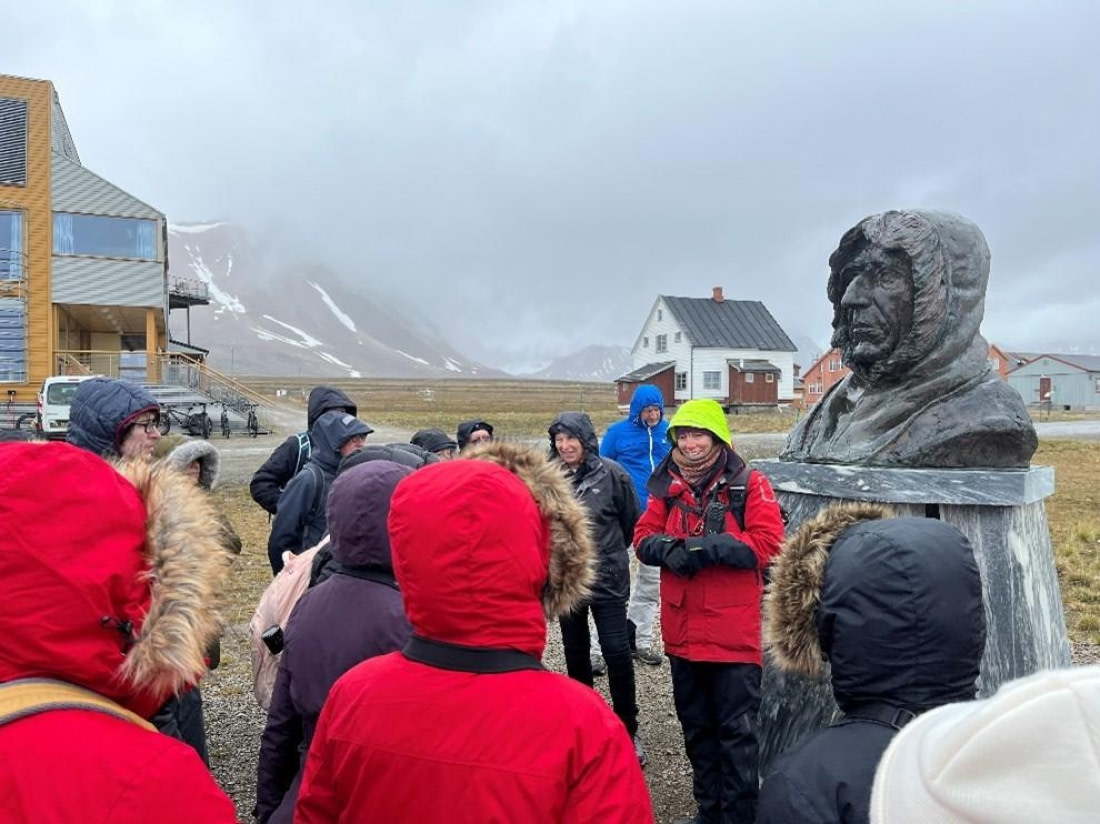
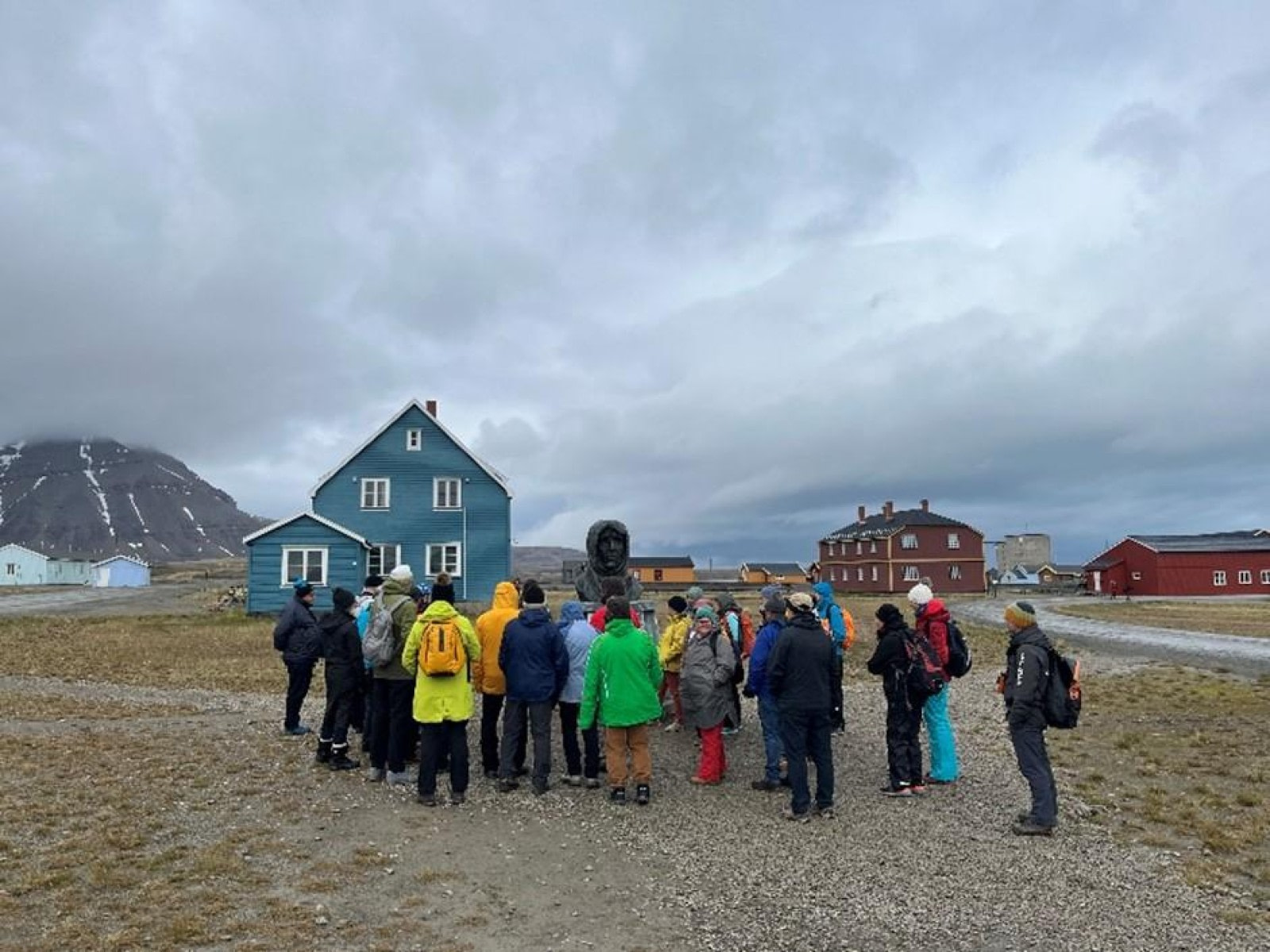
After an hour in Ny-Ålesund, we had the privilege of listening to the director of the scientific Dutch research station, Maartin Loonen, who shared insights into the groundbreaking research conducted by his group over the past 35 years there. Their long-term studies provide interesting data on Arctic ecosystems and climate change. Following this, Valeria and Esther brought history to life, explaining the incredible story of Roald Amundsen's expeditions from Ny-Ålesund, including his pioneering airship trip to the North Pole.

After returning to the ship for a delicious lunch buffet, a mandatory briefing on polar bear country behavior and safe Zodiac operations prepared us for the afternoon's adventure.

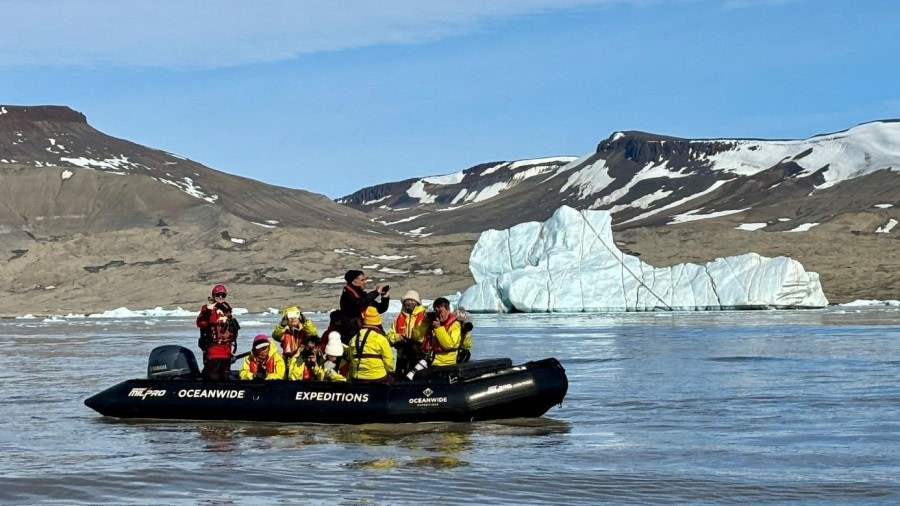
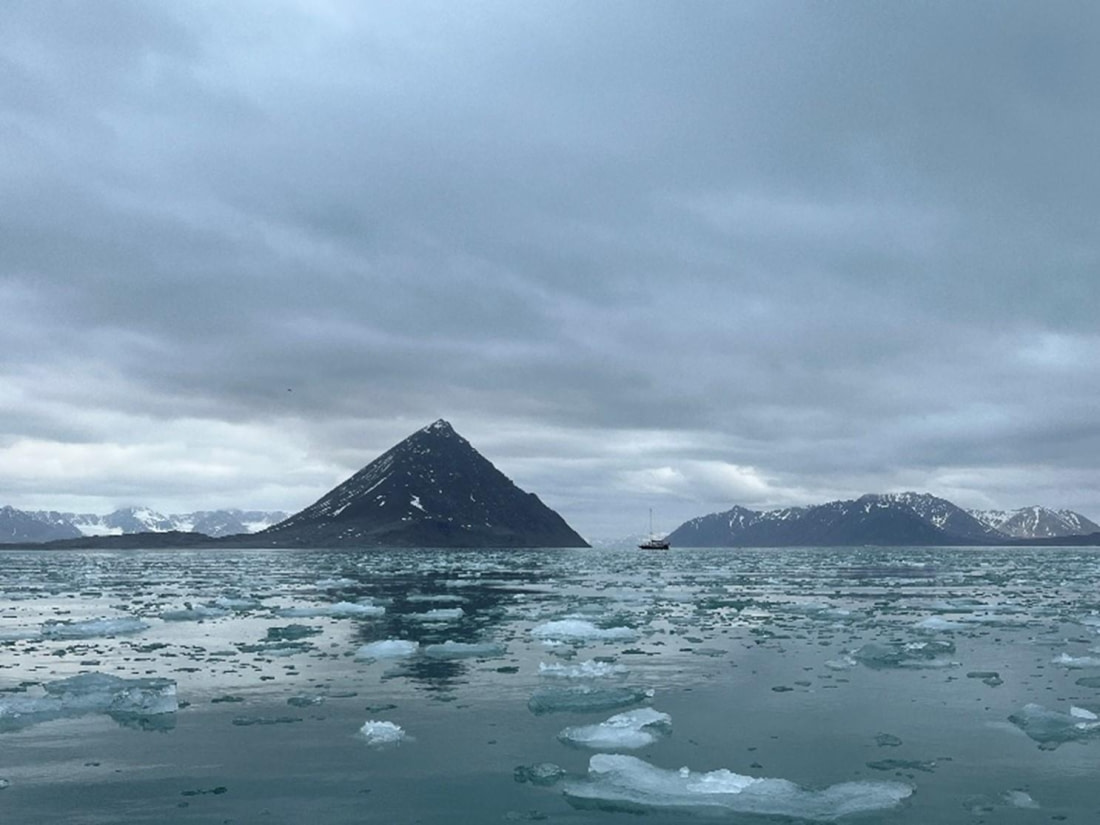
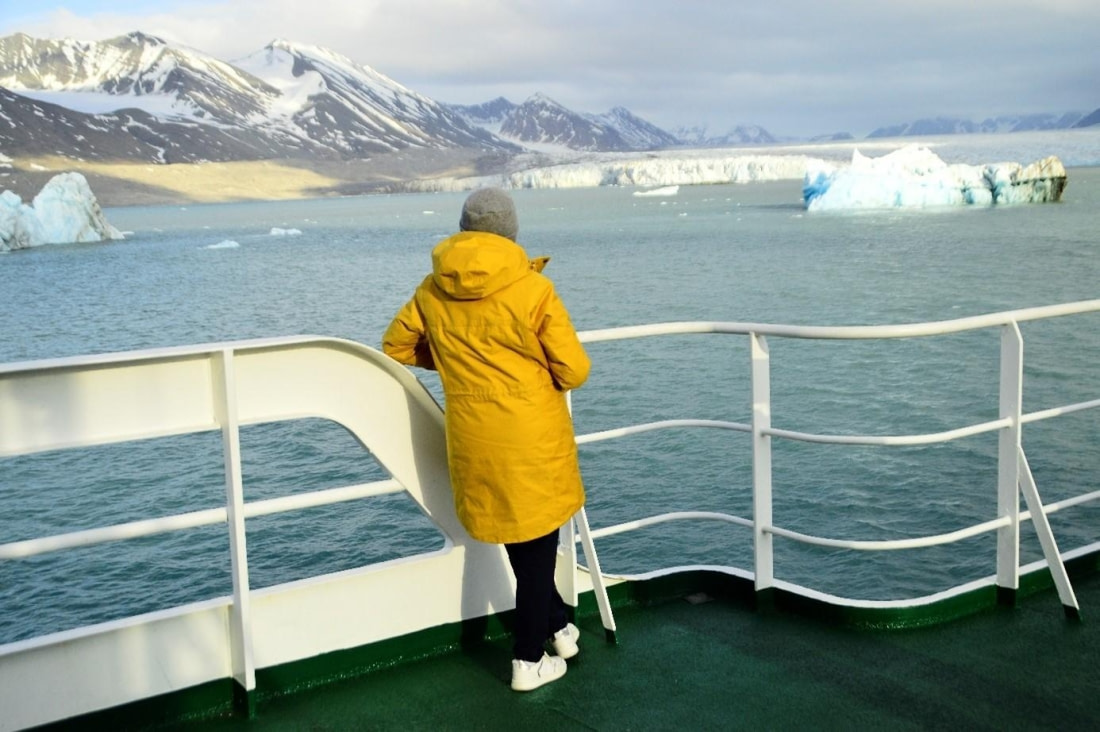
Our Arctic exploration continued as we sailed deeply into Krossfjord, where the magnificent Lilliehöökbreen glacier awaited us for an exciting Zodiac cruise. We experienced a truly active glacier, witnessing numerous dramatic calving events as massive chunks of ice broke away and crashed into the sea, creating thunderous roars and impressive waves. We had the unique opportunity to get close enough to touch and examine the glacier ice, marveling at the ancient air bubbles trapped within, a testament to the ice's formation over millennia. The icebergs around us displayed a fascinating palette of colors, from brilliant whites to deep blues and even occasional greens, reflecting their density and age.

Back on board, we had our daily recap. Daan shared his personal experiences living in Ny-Ålesund, explaining his research on the growth of local grasses and the significant influence that grazing animals, such as geese, have on their growth. Dinner was served, a perfect end to a day filled with scientific discoveries, historical insights, and breathtaking natural wonders.

Day 3: Jotunkjeldene & Texas Bar

Jotunkjeldene & Texas Bar
Datum: 12.07.2025
Positie: 79°27.4’N / 013°22.1’E
Wind: S2
Weer: Partly cloudy
Luchttemperatuur: +7

During the night Plancius had sailed North around the tip of Svalbard and then southwards into the Woodfjorden. Early in the morning several guests were already standing on the outer decks to take in the beauty of an amazing and unique landscape. Only the sense of hunger brought them eventually back inside for breakfast.

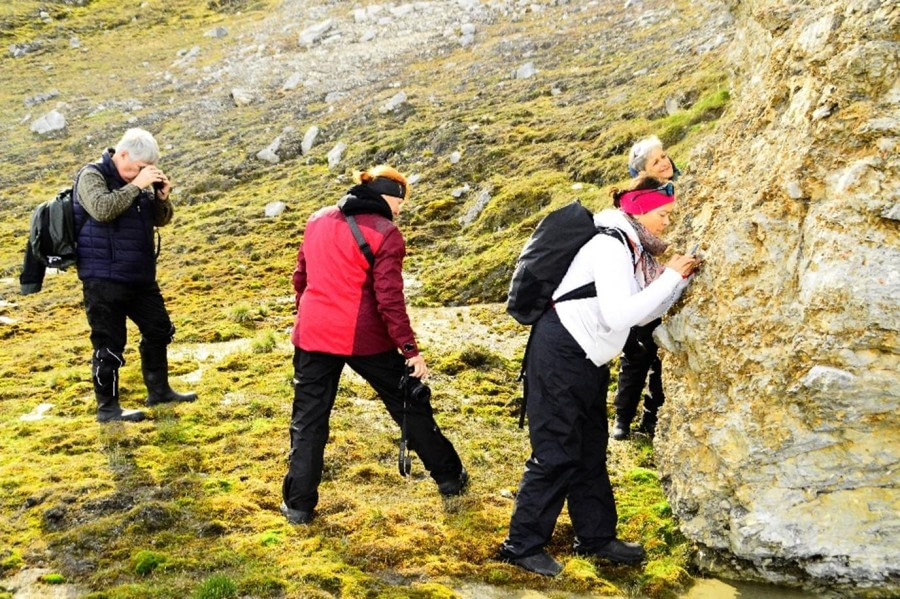
Fortunately, the strong wind dropped as we approached our first true wet landing site at a place called Jotunkjeldene in the Bockfjord. With the zodiacs we were brought to the beach. Divided into three groups we soon after started our hikes to explore the area at various speeds. Not surprisingly it didn’t take long for the mountain goats to reach a unique place not expected to be found in the High Arctic: The Hot Springs where warm water of 20° C trickled out of the ground. As they kept going to reach even higher grounds, the medium group arrived at the sinter terrace. The view was breath taking. The mineral-coloured ground to their feet contrasted beautifully with the red mountain on the opposite side of the fjord. This formation is called Devonian Old Red formed 400 million years ago.

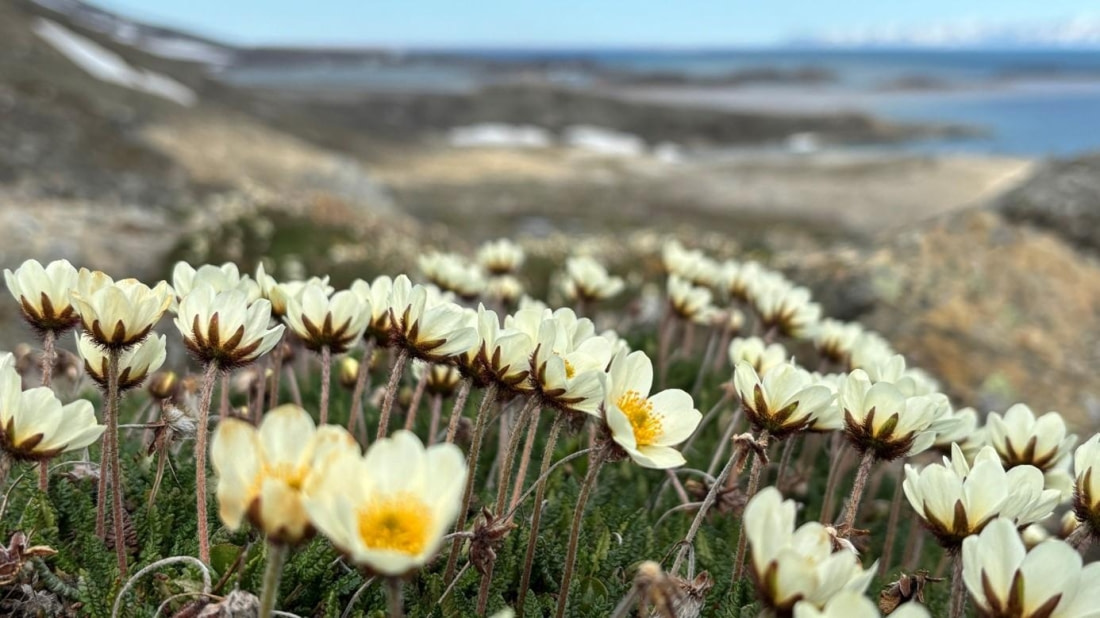
Meanwhile the leisurely group had also gained some height continuously and slowly, walking like polar bears do. Every so often somebody bent or kneeled to take a close look at the small beauties on the ground. An unexpected high number of flowering plants were to be discovered with cameras, the magic magnifying glasses (Lichen Candelaris), the butterfly binoculars or simply by naked eye. Uh’s, Ah’s and Oh’s filled the air. Higher up the group had the great pleasure to silently watch a Ptarmigan male and female most probably nesting in the area.

A couple of hours later we all gathered at the beach to be brought back to the ship where lunch was awaiting us. It didn’t take long for the guides and crew to heave all zodiacs back on deck, to lift anchor and to sail into the Liefdefjorden (Love Bay). Scouting from the bridge no bear was discovered in the area allowing us to go on land near the Texas Bar. Gathered around the bar there were surely some faces expressing some degree of disappointment as no drinks were served.

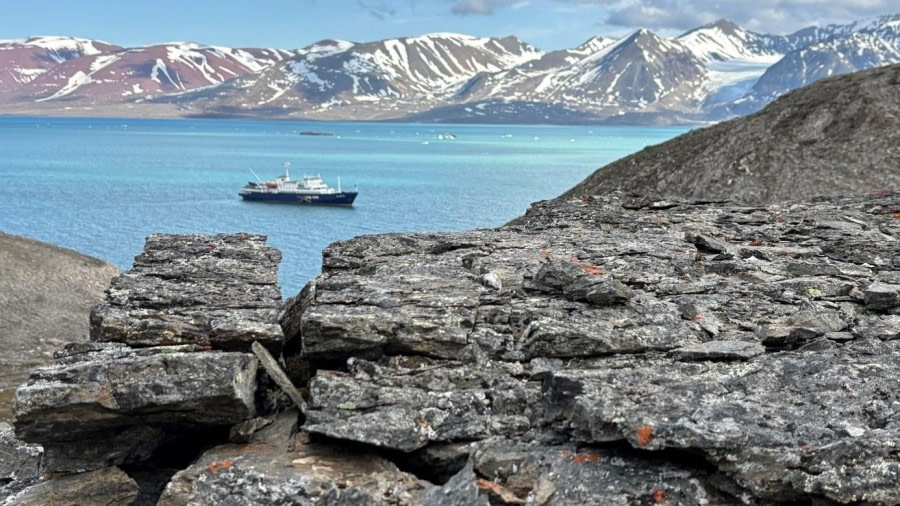
Soon we stood on a nearby high rocky point, which offered a breath-taking view onto a wide flat and rocky estuary. The wind was blowing strong giving us a feeling for living conditions in the High Arctic. To stay warm and cover some ground we kept walking. Which was a challenge however as too many flowers, mosses and lichens continued to catch our attention. Finally we reached a huge rounded rock at the far end from where we enjoyed a fantastic panoramic view over the water, various bays and the long glacier front of the Monacobreen.

As the cold crept through our layers it was time to walk back to the landing site where the others already boarded the zodiacs. Thanks to the skilled drivers we arrived safe and dry on board despite the wavy sea. As time was short we soon met in the lounge to learn about tomorrow’s plans. In a short presentation Enric introduced us to the geology of Svalbard taking us back in time when the Archipelago was positioned at the equator some 500 million years ago.

It was such a fulfilling and active day that we all fell easily asleep later that night. Despite the daylight shining through the curtains.

Day 4: Chermsideøya & Phippsoya

Chermsideøya & Phippsoya
Datum: 13.07.2025
Positie: 80°29.0’N / 020°05.4’E
Wind: NE1
Weer: Partial cloud
Luchttemperatuur: +10

This morning we woke up to silky calm seas and great visibility over the mountains as we sailed towards Chermsideøya, an island at the far North of Svalbard which would be our first destination of the day. The bright sunlight reflected in our sunglasses, and it felt very warm for the Arctic climate.

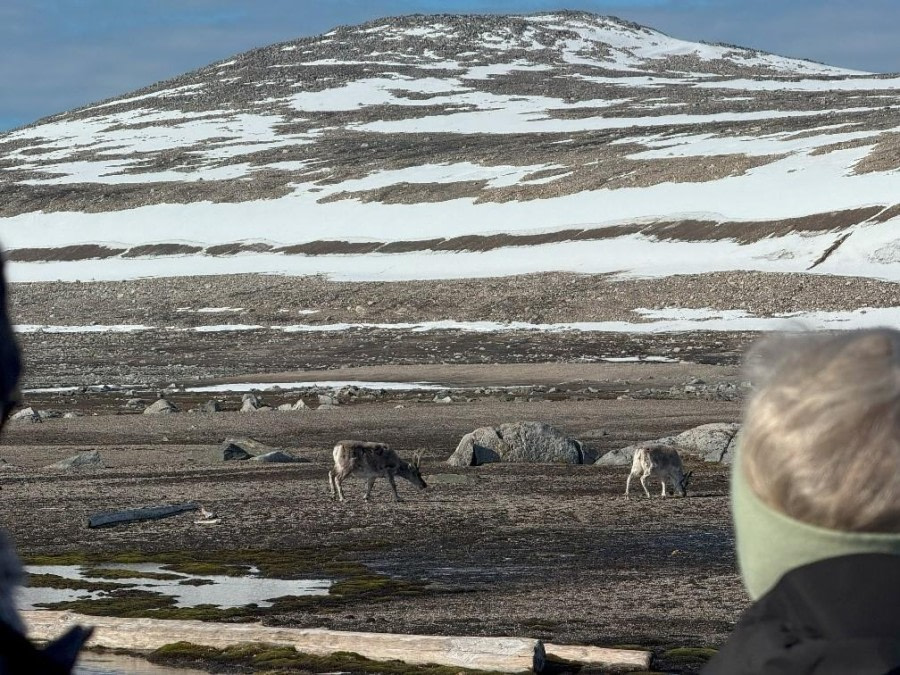
It was a beautiful ride in on the zodiacs, and we landed on a sandy sunlit beach with lots of large pieces of drift wood. At the beach two curious reindeer walked up to us to check us out. After the lovely encounter, we split into our three hiking groups. The long hikers, or mountain goats, went with Philipp, Esther and Jess up to a peak to enjoy the panoramic views of the island. The middle group had an survival experience hike with Daan, Valeria and Koen. Daan asked us what we would need to survive on the bare rocks of Chermsideøya. We got out of our comfort zone by walking on the tundra, snow, and in the meltwater river on bare feet! The leisurely hikers, or Arctic Strollers, as they are now known, learned a lot about the stones and geology from Enric. Ursula invited us to help her clean up the plastic from the beach. We were shocked by the amount of plastic in such a remote place, but we were happy to contribute to the cleaning.

We enjoyed a buffet lunch on board the ship as we sailed towards our afternoon destination of Phippsøya. Phippsøya is the largest of the seven islands, situated in the very north of Svalbard, and as a result of its location, there are often polar bears seen here. The aim of our visit to Phippsøya was to hopefully see some walrus hauled out on the beach. We scanned the still sunlit bay of Isvlakbukta. Where we saw our first walrus in the water. They were curious and came up pretty close to Plancius. Maybe that was why they were not at home, laying on the beach. Instead of doing a walk to see them we decided do to a landing on the island to stretch our legs and experience the landscape which is known as ‘The Polar Desert’.

The staff team scouted from the ship to see if the coast was clear. While the guides were landing on the beach to check out the land what was not visible from the bridge we dressed warm and slid in our life vests. As soon as we were finished, There was movement on the beach. Philipp made a radio call that he encountered a bear on land! That meant that the landing was cancelled. Luckily Philipp quickly changed the plans for the afternoon and we all got on the zodiacs, exited to encounter the king of the Arctic, the Polar bear, from a safe distance. We got a feeling for the very good camouflage of the bear as it was laying in the snow like a big white boulder. It got up to have a look on the strange site of 10 floating large seals in the water, but it soon got back to sleep on the tundra this time. What a beauty to see the bear in its natural environment displaying his natural behaviour. Next to the bear we also looked small because next to our zodiac were many beautiful jellyfish. During our zodiac cruise the weather changed from blue sky and sunlight until we were surrounded by fog in a couple of minutes time.

In the evening recap we heard about the plans for our day in the ice and we learnt about arctic plants from Esther and Plastic in our oceans from Ursula. We then had a treat from the hotel and galley team who arranged for us to have a barbeque on the back deck. It was a real novelty to have dinner outside in the arctic fog and we danced well into the night, with excitement about what the next day might bring.

Day 5: Pack Ice day, Looking for Polar Bears

Pack Ice day, Looking for Polar Bears
Datum: 14.07.2025
Positie: 81°55.9’N / 029°41.2’E
Wind: W3
Weer: Clear
Luchttemperatuur: +2

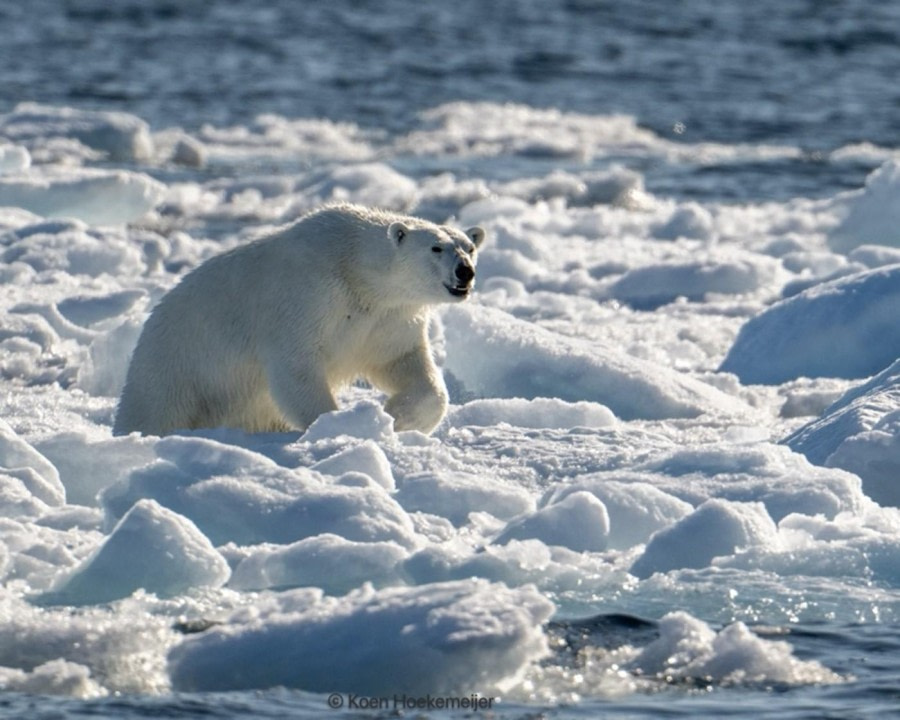
This morning Philipp allowed us to sleep in. Not much, but the extra 15 minutes were very welcome after our first intense days with so many impressions and beautiful hikes. The plan to sleep in was unfortunately not really working out as our first polar bear had been spotted already. We had only just arrived at the mesmerizing pack ice when our first bear was seen. It was at the edge of the ice and it was amazing to see such a beautiful animal in its natural habitat.

We forgot about breakfast and rushed out to see the bear with our own eyes. Our captain navigated the Plancius carefully through the ice to get us closer without disturbing the bear. Captain Evgeny has more than 30 years of experience navigating through the ice and it showed. Slowly and silently, we crawled closer until we had a fantastic view of our first pack ice bear. Things got even better and then onwards to fantastic, as the bear showed an interest in the Plancius and it started making its way up to us.

We were all in awe while we snapped away with our cameras and smartphones. The bear walked half around the ship and almost under our bow before it decided to move on. For the big lenses this was way too close, but none of us were “complaining” ;).

After a short while we started to head further into the ice while we made our way down to the restaurant for breakfast. The room was buzzing with excitement as this had been the perfect start to our day. According to the guides such a close encounter is very rare and doesn’t occur every trip. We clearly were very lucky!

While we were digesting our breakfast, Philipp made another announcement; a second bear had been spotted and on we went! Our captain demonstrated his skills once again and we had another magical encounter with the true king of the Arctic. At a certain point the bear entered the icy cold water so we decided to leave it.

It was time for a coffee, quickly scan through our photos and warm up a bit. But as they say; “There’s no rest for the wicked”, Philipp had spotted yet another bear! We were super lucky once again as also this bear came close to the ship and our cameras did overtime once more.

This day had been fantastic. The views on the ice, the bright sun and blue skies, it was a fantastic landscape and something many of us had never experienced before. Nothing but ice until the horizon and with a little bit of effort we could have walked all the way to the North Pole as we had reached 82’N which is only a rough 900km from the northernmost point in the world. We felt very remote and truly on top of the world. And with all these fantastic polar bears it was simply the perfect day.

Towards the end of the day, we were fulfilled with fantastic photos, unforgettable memories and impressions that would last forever.

As if the weather knew we would start to head south soon, the fog came in and soon we lost all visibility. Perfect, no more stress to find more bears and time for a beer while listening to recap. Philipp presented the plans for the next day while Koen gave us a crash course in Polar Bear knowledge. Time for dinner!

Day 6: Faksevågen, Alkefjellet and Torellneset

Faksevågen, Alkefjellet and Torellneset
Datum: 15.07.2025
Positie: 79°33.1’N / 017°41.5’E
Wind: SE3
Weer: Partly cloudy
Luchttemperatuur: +14

This morning, we sailed towards our morning landing site Faksevagen to do some hikes. However, we arrived to find a wonderful surprise. There were not one, but two bears resting on the hillside. One was a mother, and one was a small cub. We were invited to the outside decks to see these special bears interacting with each other. We stayed with them for a little while before setting off to another bay nearby to try to land there instead. Geerbukta offered us a bear free alternative, and we landed for a short while. The long hikers went with Jess and Koen up to a view point to see an almost panoramic view of a glacier. The leisurely group who stayed close to the landing site with Esther and Valeria had a real treat as they discovered a den of an Arctic fox and were surprised to find three pups peeping out. The medium group did a litter pick with Ursula and Enric along the beach as they were surprised to find so much marine rubbish washed up on the shore.

Back on board we had lunch as we sailed to our next stop Alkefjellet, the home of around sixty thousand pairs of breeding Brunnich’s guillemots. On arrival, we realised the weather had other ideas for us. The wind and waves were far too strong for us to operate in. We looked at the cliffs from afar and then continued our route to Torellneset. On our way we passed by an island Wahlbergoya where it is forbidden to land. We sailed by just close enough to see some huge male walruses laying on the beach.

To pass the unexpected free time in the afternoon, Daan gave us a talk about climate change in the Arctic.

After a restful afternoon we gathered to watch the recap. But it was cut short by yet another bear. This time spotted on the fast ice in a bay.

In the evening around 9pm we arrived to see a spectacular sight. We began sailing along the edge of Brasvelbreen, the largest ice cap in Svalbard. The glacier was enormous, and it was hard to get a sense of scale. The captain sailed close to the glacier front and the light was beautiful. It was a special way to end a day that didn’t go entirely to plan, and we went to bed feeling satisfied.

Day 7: Negribreen & Sundneset

Negribreen & Sundneset
Datum: 16.07.2025
Positie: 78°35.7’N / 019°13.3’E
Wind: W1
Weer: Partial cloud
Luchttemperatuur: +11

This morning, we sailed through Freemansundet into Storfjorden, the “Big Fjord” that separates Spitsbergen from Barentsøya and Edgeøya. In the northwestern corner of the fjord, the majestic glacier front of Negribreen awaited our visit. Negribreen is the largest glacier of Spitsbergen with its total size of 1,180 km² and the 20km long glacier front. It was mild and sunny when we boarded our zodiacs after breakfast. We started at the eastern end of the glacier and soon encountered the first towering ice bergs that had run aground in the bay creating fascinating formations shaped by the elements.

Then we heard the first call out for whales! A small pod of belugas was sighted. Many of us didn’t get to see them at first but approximately 15 minutes later they were spotted again. This time most boats were lucky enough to get a good view of these beautiful white whales with their dark grey calves. What a perfect scenery observing them amidst the floating ice bergs! After we spent a decent amount of time with these wonderful animals, we continued our zodiac cruise along the gigantic wall of ice, accompanied by several ivory gulls and kittiwakes.

Many great ice bergs ran aground in the waters in front of the glacier, wind and waves turned them into ice sculptures with many beautiful shapes and shades of different colours. From our guides we learned more about the composition of the ice and what determines the colour we perceive. The morning came to an end, and we headed back to the ship for lunch.

The anchor was hoisted, and our voyage took us south again towards Freemansundet and a place called Sundneset. Picturesque, gentle slopes covered in big patches of green, lakes promising bird observations, rugged rocks and ridges, and a historic hut characterize this landing site. We landed in the late afternoon and were first sent over to the hut to take a look inside, before we split up into the usual three groups. Philipp and Koen took the direct path up towards the ridge and highest viewpoint in the bay. Ursula, Esther, and Jess walked along the shores of the first lake, eventually also headed for the viewpoint. Enric, Vale and Daan stayed at the lower end of the slope and took a closer look at the world at our feet.

We were all enjoying to finally stretch our legs again when the guides received Philipp’s call: “All guides, all guides, there’s a polar bear on land, everybody back to the landing site”. This message very clearly meant one thing: evacuate. No more photos, no more stops, we all turned around immediately and headed back to the landing site to get off this island. The sea was challenging and there was a very strong current at the ship which made getting to the gangway difficult, but we all managed to get back on board safely. Thrilled, excited, slightly nervous, but happy that everything went well after all. And at least we got a little bit of walking and some nice things to look at before we had to leave Sundneset faster than anticipated.

During our daily recap, Philipp shared his plans for the next day – we’d be sailing around the southern cape of Spitsbergen and into Hornsund. Afterwards Ursula told us more about Beluga whales and Jess revealed some shocking truths about walrus. After dinner, Esther offered a little storytelling session about Norse mythology. What did we take away from this? The strong connection to nature that all old religions share, and the attitude that we sometimes just need to accept our faith, not worry too much, not overthink, and just accept that every now and then, the gods are playing tricks on us.
Day 8: Gåshamna and Treskelen

Gåshamna and Treskelen
Datum: 17.07.2025
Positie: 76°47.6’N / 015°16.6’E
Wind: E4
Weer: Partial cloud
Luchttemperatuur: +13

We woke just before we sailed into the most southernly fjord, Hornsund. It looked foggy so we hoped for the best. Luckily it turned out to be a small fog bank. When we cleared this, Hornsund welcomed us with blue sky and sunlight. Our destination was a place called Gåshamna, Goose Bay.

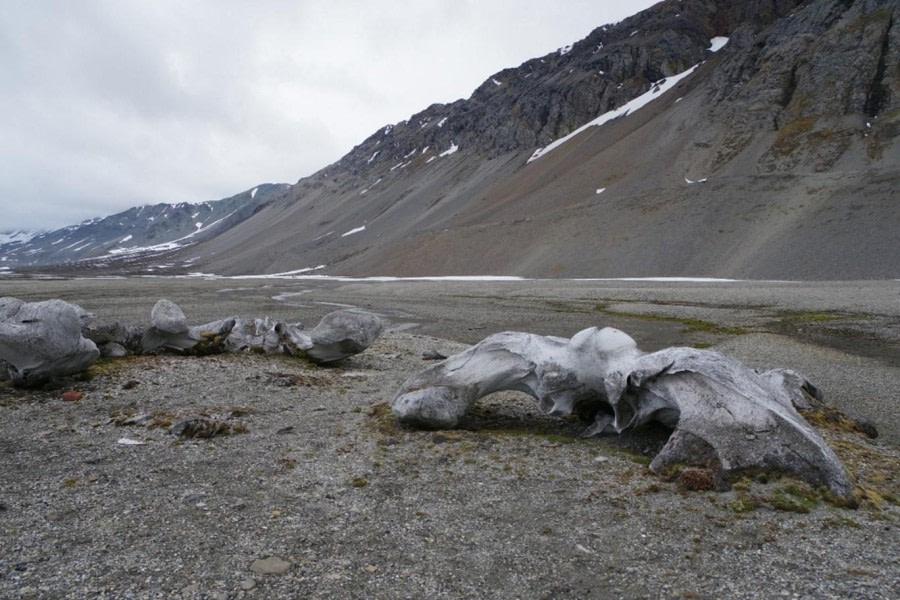
We landed close to the remains of the whales that got killed in the 17th and 18th century by Dutch and English whalers. The first reports when Spitsbergen was discovered was that you could walk over the backs of the whales from one side of the fjord to the other. In the beginning of the 17th century the whalers started their hunt. From small wooden boats they would hunt the whales. It was a fight between life and dead. For the whale, and the whalers. Once the whale was killed by various harpoons, it was dragged ashore. The whales were flensed and transported to the blubber ovens which we could still see on top of the green hills. The ovens were used to boil up the blubber which got transported to Europe. It was impressive to see the bones and skulls laying on the tundra. Around the bones was a lot of green moss and plants because the bones slowly release their nutrients to the surroundings.

Like normal, we divided into three groups. The long hikers went to a high ledge to enjoy the view during a relaxing Arctic silence.

The medium hikers went to a nice lookout and had stunning view of the purple sandpipers who gathered their food in the low tidal pools. The arctic strollers got a lot of important information from Ursula and Esther about how the whales are crucial in the circle of life. Due to the disappearance of the whales the ecosystem decreased. Very slowly we see a recovery in the numbers. Hopefully, they help to rebalance the ecosystem. Ursula and Koen took us up to the bird cliff to see glaucous gulls and kittiwakes. Back at the landing site a few brave explorers dove in for a polar plunge.

We enjoyed one of the delightful lunches once more. After lunch the Plancius sailed past Paieribreen in Burgerbukta. a beautiful glacier front with steep mountains in the back.

Later in the afternoon we got to our next landing site on a spit on the other side of the Hornsund fjord, called Treskelen. We landed on a pebbled beach in a swelly surf. As usual we divided the group into three. The long hikers went to the top of the spit and followed it towards the sea. The medium hikers solved a tracking case of a Guillemot that got killed by an Arctic fox. The leisure hikers went looking for cool rock formations, plants and lichen with Enric and Valeria.

In the recap Philipp told us that we are heading to Kings Karls Forland to spend our last expedition day exploring the large island just north of Isfjorden. Vale told the story of Andree and his crew who went off with his hot airballoon to reach the north pole. Unfortunately, they failed and stranded on Kvitøya where they were found 34 years later, dead. After that Ursula impressed us all by giving a talk that it is important to show children the beauty and vulnerability of the animals and the earth. She does that by making artwork of the animals not only from the Arctic but the whole world. We were in awe when a life size Humpback whale was carried in by the guides covering almost the whole lecture room.

We were tired, most of us had an early evening after another fantastic day in the Arctic.

Day 9: Poolepynten & Sankt Jonsfjord

Poolepynten & Sankt Jonsfjord
Datum: 18.07.2025
Positie: 78°27.8’N / 012°06.4’E
Wind: NW3
Weer: Overcast
Luchttemperatuur: +10

Today we rose with mixed feelings, excited by what today might bring, but sad to know this was our last full day of operations. We set off to go to Poolepynten to see a walrus haul out, but the wind was wild, and we were unable to complete our operations. So, we continued into a sheltered fjord.

Philipp and Koen made the decision to land in a different spot called Bulltinden and it turned out to be an excellent alternative. We landed and split into our usual walking groups. There were just a handful of long hikers that set off up the hill with Koen. They had excellent views of reindeer with their young. The medium group covered some ground with Philipp and explored the canyon. The leisurely group explored the beach and looked at all the kelp and marine invertebrates hiding in the intertidal zone, they even saw a walrus swimming.

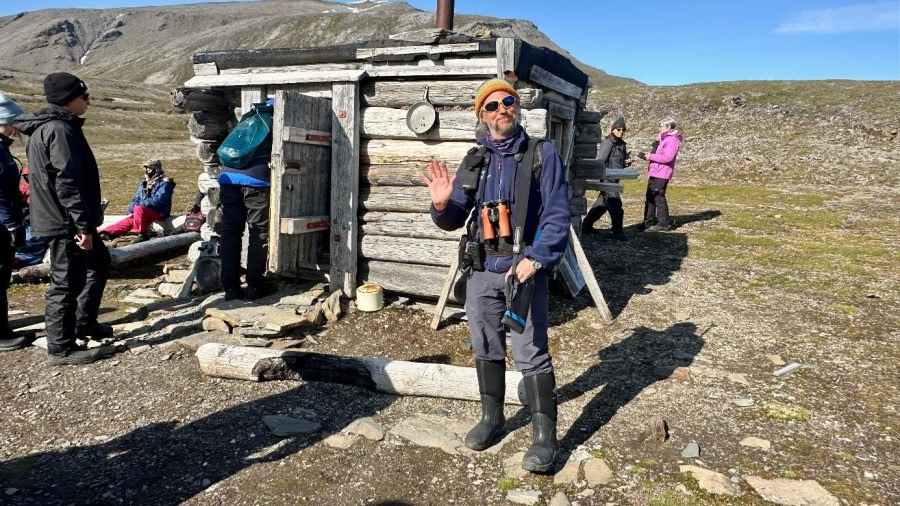
After lunch we managed to land at our ‘Plan A’ location for the afternoon in Sankt Jonsfjord. The weather was very warm. The long hikers with Philipp and Enric were sweating as they managed to get to a high viewpoint overlooking the glacier on the other side. The medium group had fun with Ursula, Koen, and Daan, as they made their way along a ridge to enjoy views and flowers. The leisurely group watched purple sandpipers and their chicks running along the beach and the tundra. They spent some time at the trappers’ hut with Esther who explained more about Norwegian huts and Arctic exploration.

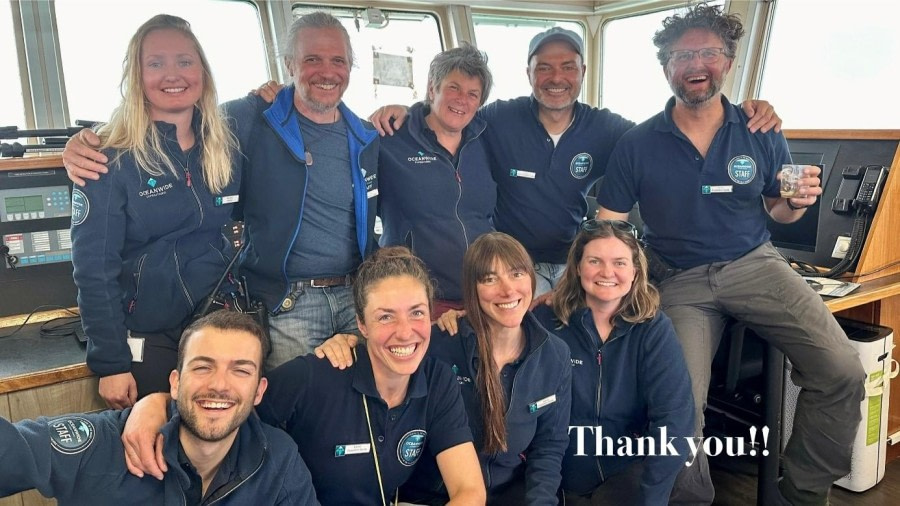
We returned to the ship and had just enough time to grab a shower before meeting in the lounge for a final gathering with everybody. We said farewell to the Captain, the hotel team, and Expedition team. We toasted to our voyage and then enjoyed watching a photo slideshow produced by Valeria.

We had a final dinner together and got to meet some of the staff working behind the scenes in the hotel department.

We chatted into the evening enjoying drinks in the bar and savouring our last few hours on board the Plancius.

Day 10: Longyearbyen, Disembarkation

Longyearbyen, Disembarkation
Datum: 19.07.2025
Positie: 78°13.9’N / 015°37.6’E
Wind: W2
Weer: Overcast
Luchttemperatuur: +6

We woke up to the sound of Phillipp’s voice for the final time. We left our luggage outside our rooms and had breakfast while the expedition staff took the bags down to the pier. We said goodbye to the dining room team and made our way to the gangway. Saying goodbye to the Plancius, our home for the last nine days, along with the new friends we made, was a sad and surreal moment for some. It is hard to explain all the sights we have seen over these last nine days. We’ve had the privilege of travelling to one of the most remote locations in the world, soaking up its beautiful scenery, and seeing some of its incredible inhabitants. Perhaps a quote from David Attenbourgh can help – ‘It seems to me that the natural world is the greatest source of excitement; the greatest source of visual beauty; the greatest source of intellectual interest. It is the greatest source of so much in life that makes life worth living’.

Details

Reiscode: PLA07-25
Reisdatum: 10 jul. - 19 jul., 2025
Duur: 9 nachten
Schip: m/v Plancius
Inscheping: Longyearbyen
Ontscheping: Longyearbyen

Op deze reis geweest?

Aan boord van m/v Plancius

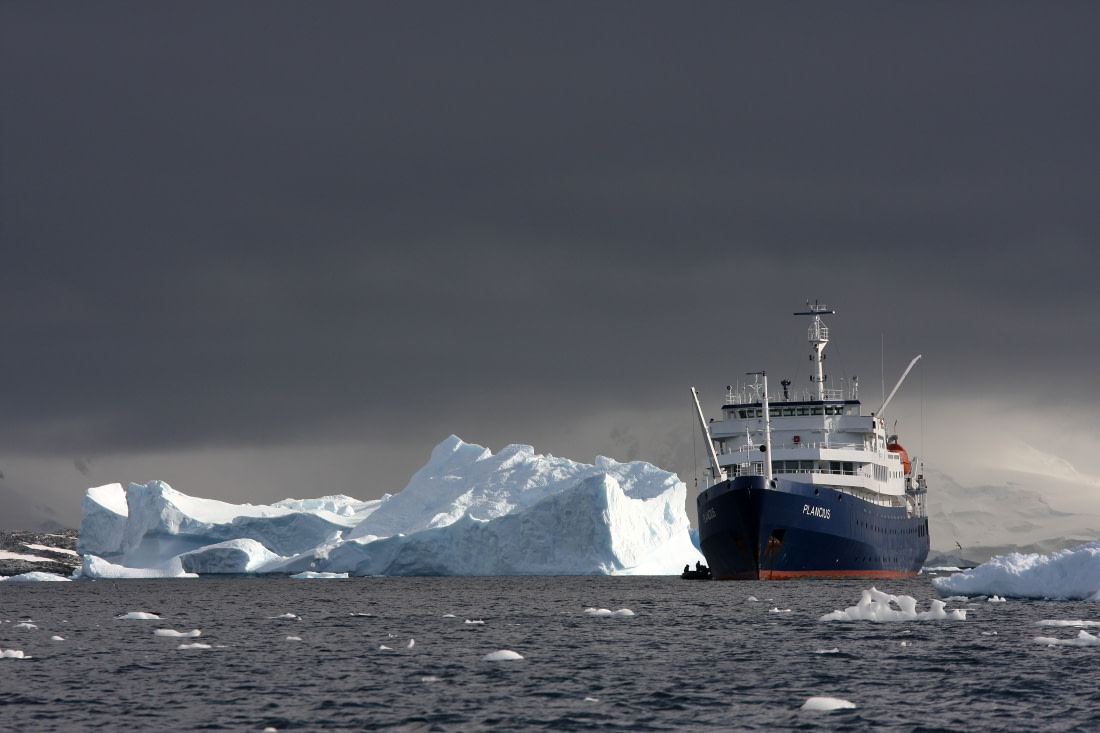
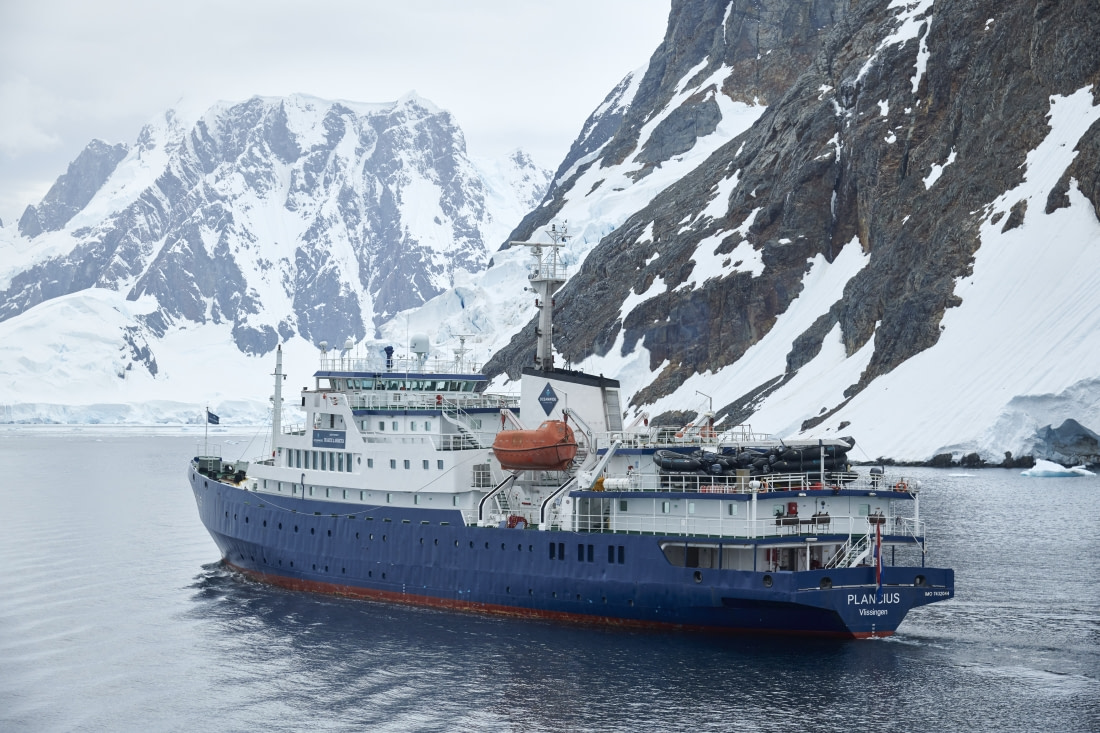
Ons oudste schip, de Plancius, is een klassieke keuze voor een aantal van onze populairste poolreizen.

Meer over de m/v Plancius »
Loading