Edgeøya, or Edge Island
The Norwegian island of Edgeøya is part of the Arctic archipelago of Svalbard, located specifically in its southeastern region. It is one of Svalbard’s largest islands, measuring 5,072 square km (1,960 square miles) and making up part of the Southeast Svalbard Nature Reserve.
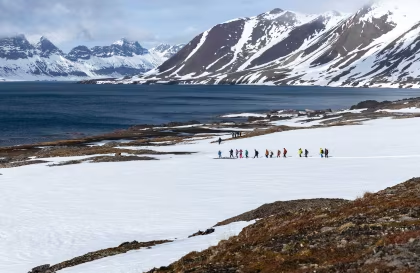
Established by Norway in 1973, this area is known for its sizable reindeer population as well as its polar bears. We attempt to visit Edgeøya during some of our Svalbard cruises, though overall the island is rarely visited nowadays. Its eastern side is almost entirely covered in ice.

The much-debated Edgeøya of old
English merchant and whaler Thomas Edge, after whom the island is named, claimed to have discovered Edgeøya in 1616. Even so, the record of Edgeøya’s discovery has been much contended, as a map drafted in 1614 by Dutch explorer and cartographer Joris Carolus shows what some think may be the eastern coast of the island. And even before that, a map engraved in 1612 by another Dutch cartographer, Petrus Plancius, shows shoreline to the east of Svalbard that other scholars assert may be the first rendering of Edgeøya’s southern edge.
These maps, however, are claimed by still other historians to be mere copies of earlier maps that were somewhat inaccurate. Edge’s 1616 map was probably the first to truly describe Edgeøya, then, and letters between whalers in 1617 corroborate that the island was at least discovered by that year.
Other Edgeøya info and occurrences
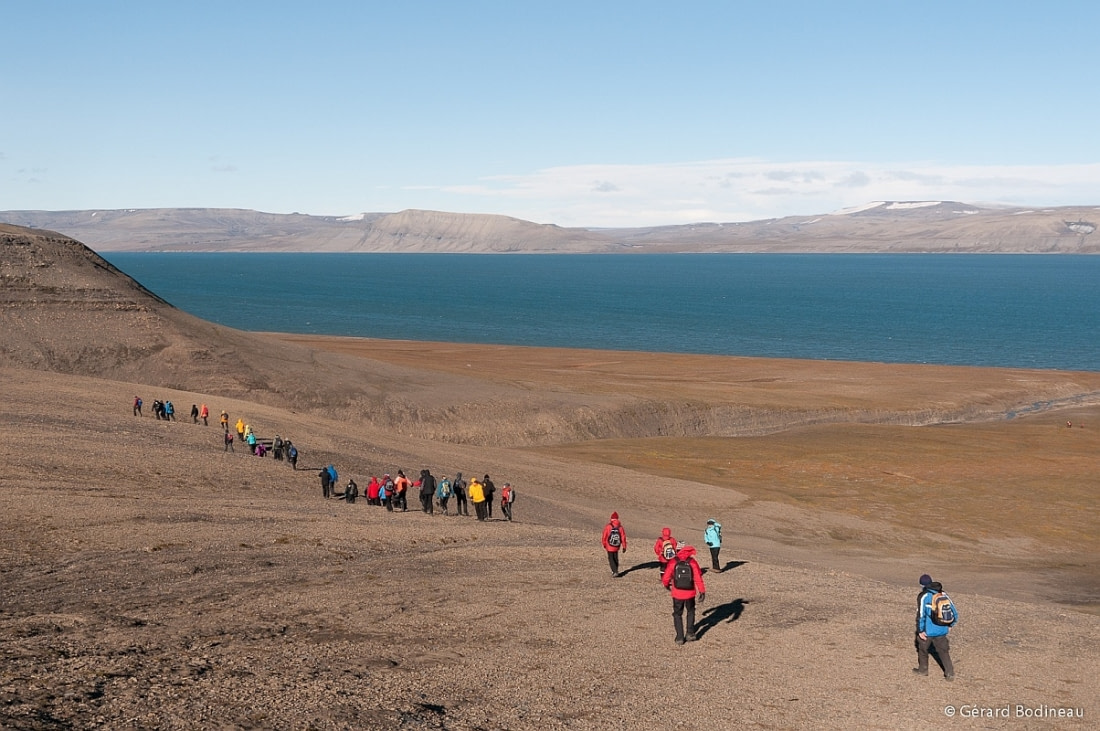
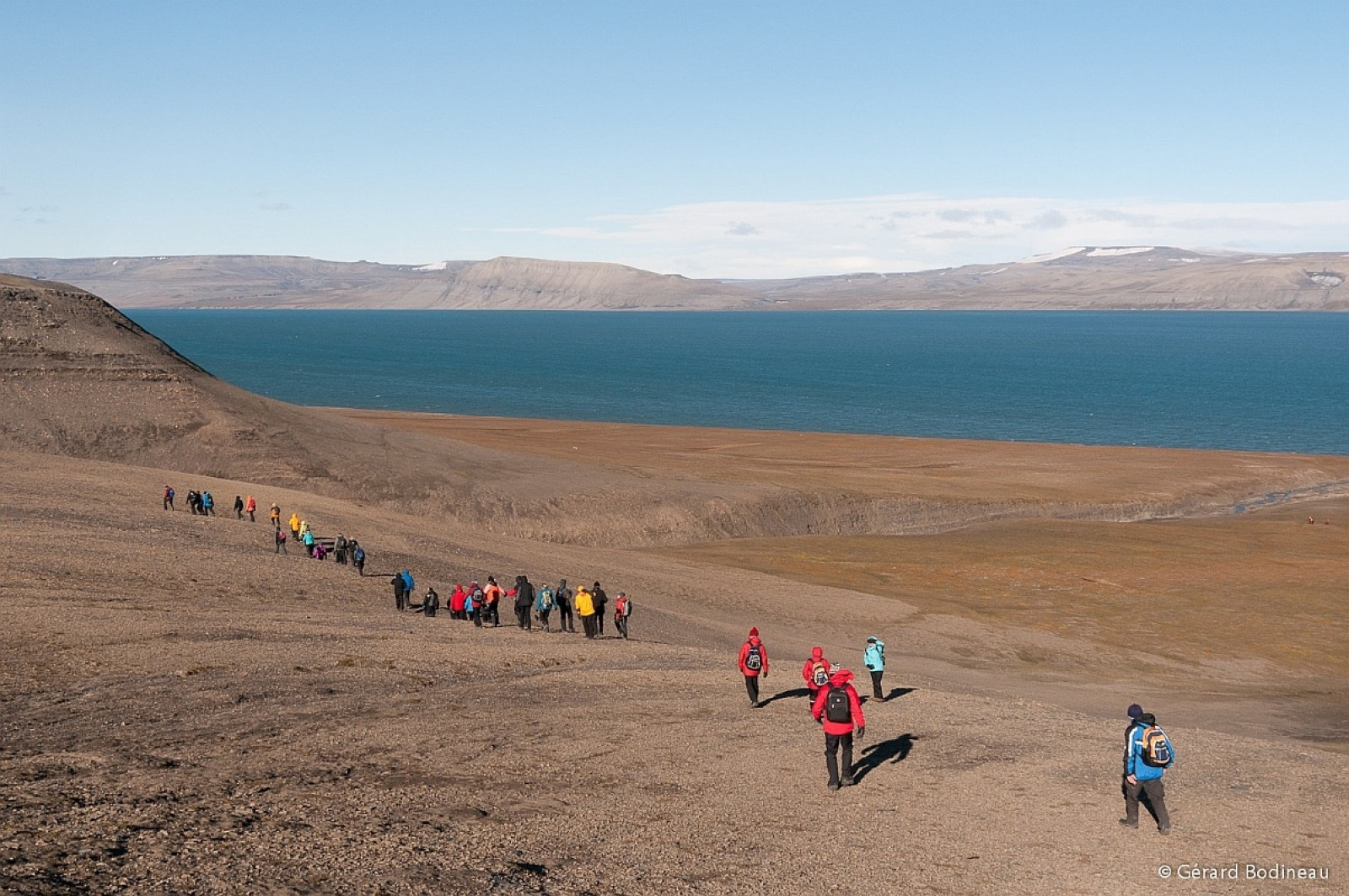
Edgeøya is much like central Spitsbergen in terms of geology, with Mesozoic (and specifically Triassic) shale rock with subordinate sandstones present. It also features the occasional diabase intrusion and impact from glacial erosion in the southwest, where there are polar ice caps. Indeed, on the eastern side of the island there is a large glacier, Edgeøyjøkulen.
As on many of Svalbard’s islands, hunting and whaling remains can be found offshore, such as in the Thousand Islands group. If you make a landing on Edgeøya during your Svalbard voyage, you stand the chance to see some of the prime characteristics that define the Arctic archipelago, from its striking geology down to its unique wildlife.