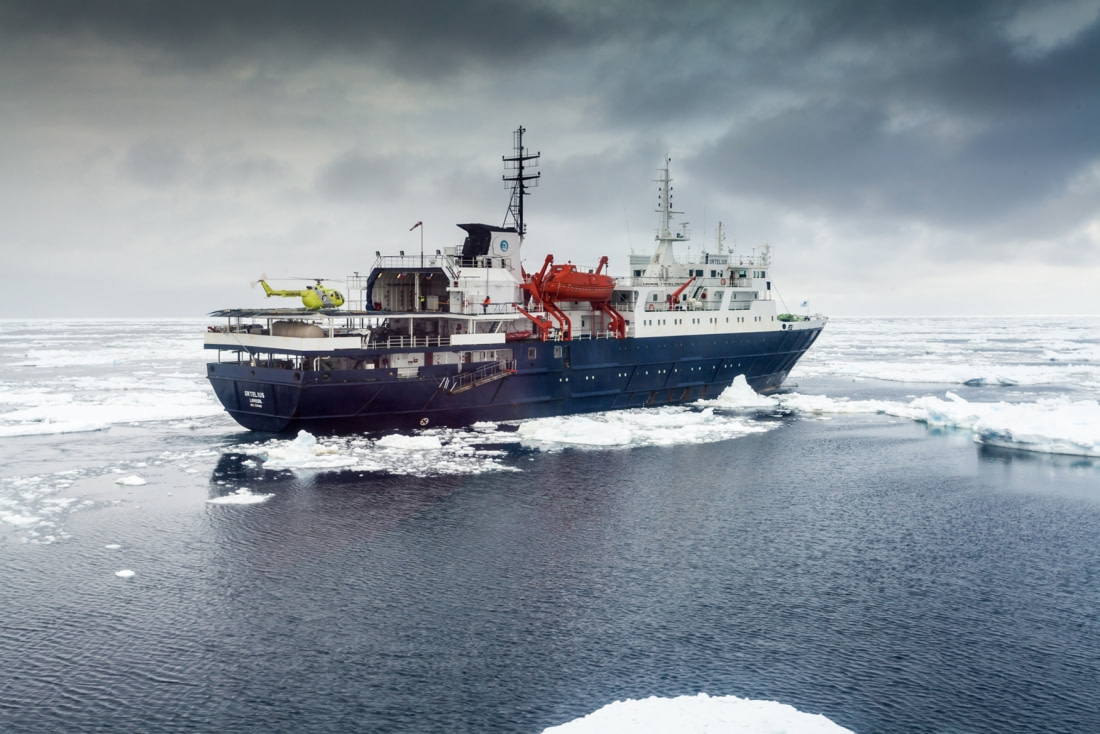
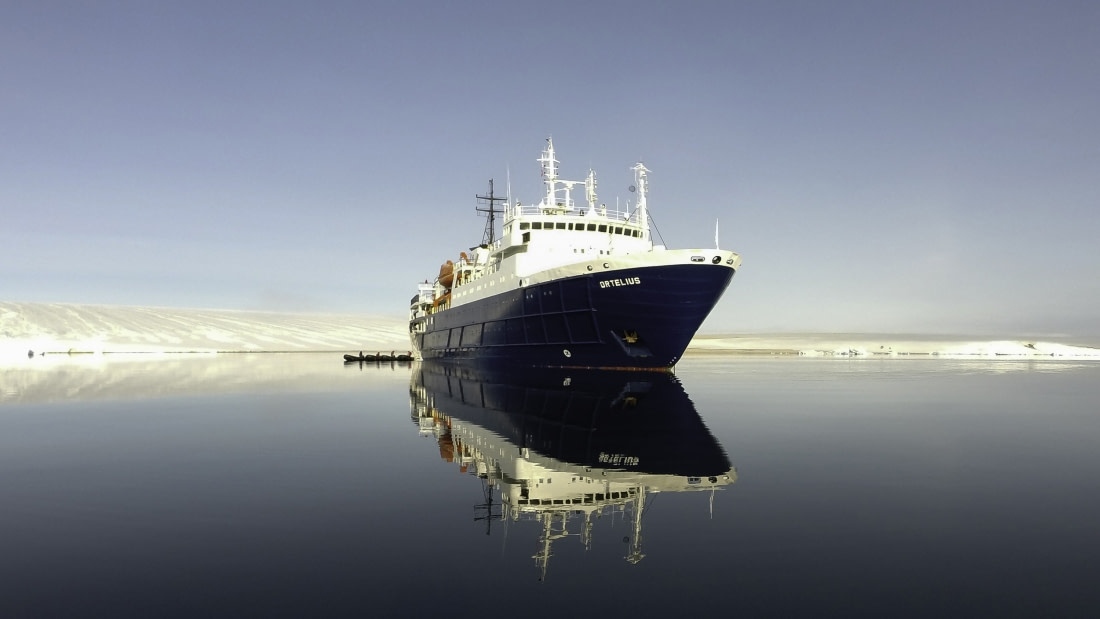
OTL30b26, trip log, Deep South Basecamp experience

by Oceanwide Expeditions

Fotogalerij

Logboek

Day 1: Embarkation Day, Ushuaia and The Beagle Channel

Embarkation Day, Ushuaia and The Beagle Channel
Datum: 04.03.2026
Positie: 54°50.9’S; 068°06.4‘W
Wind: W- 6/7
Weer: Calm
Luchttemperatuur: +5

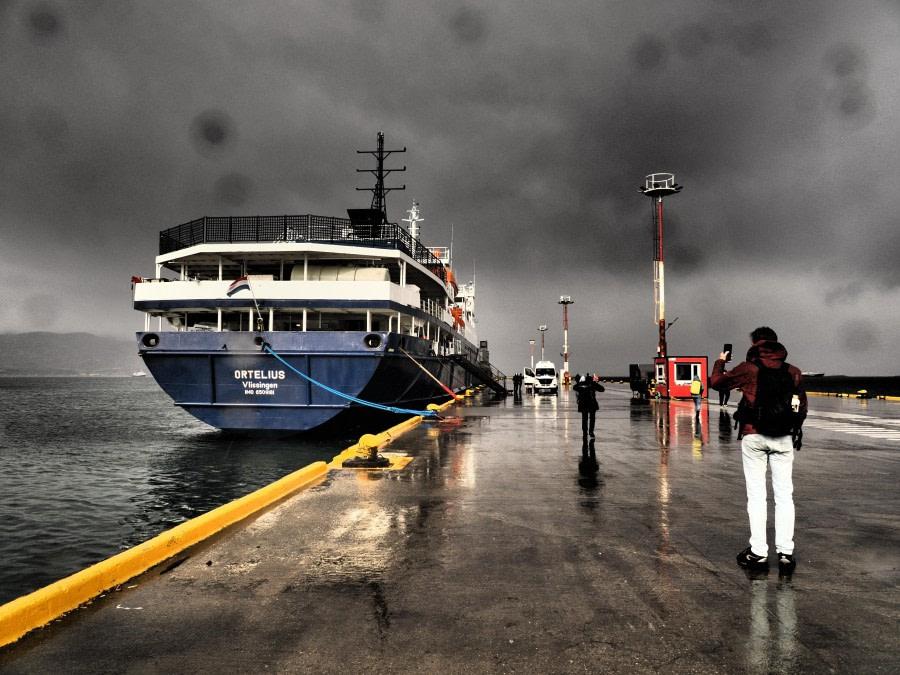
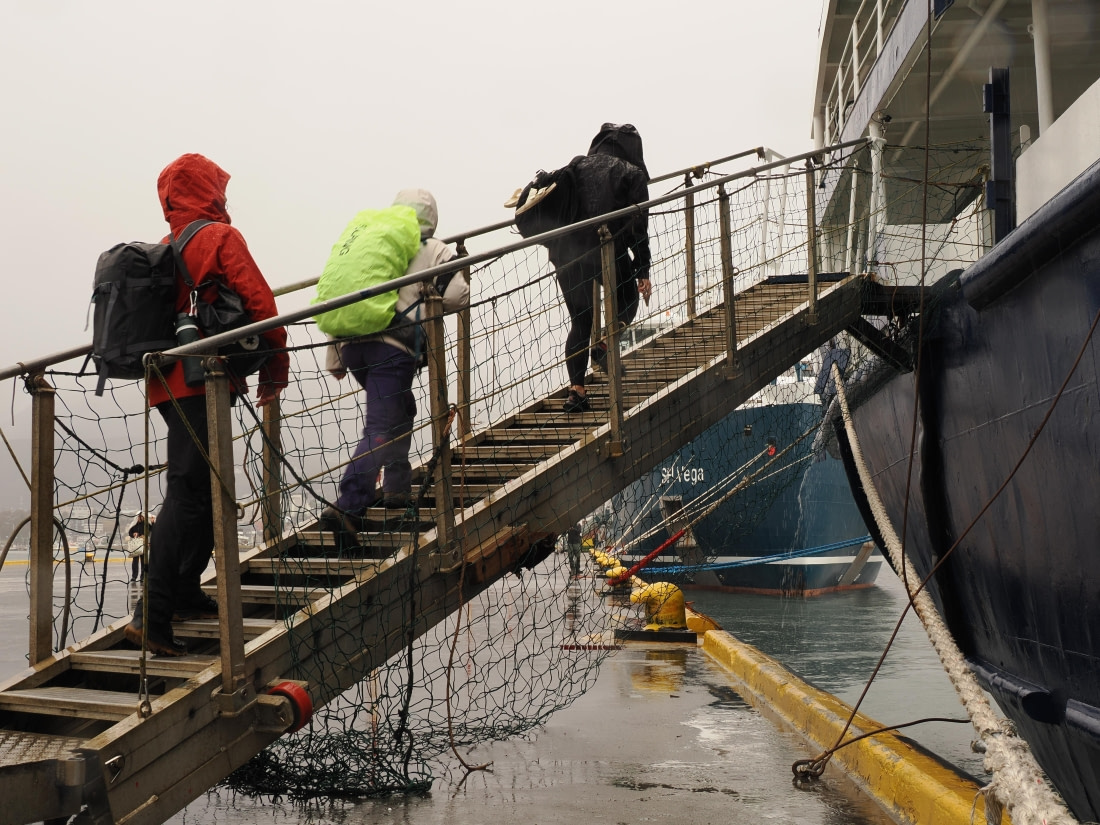
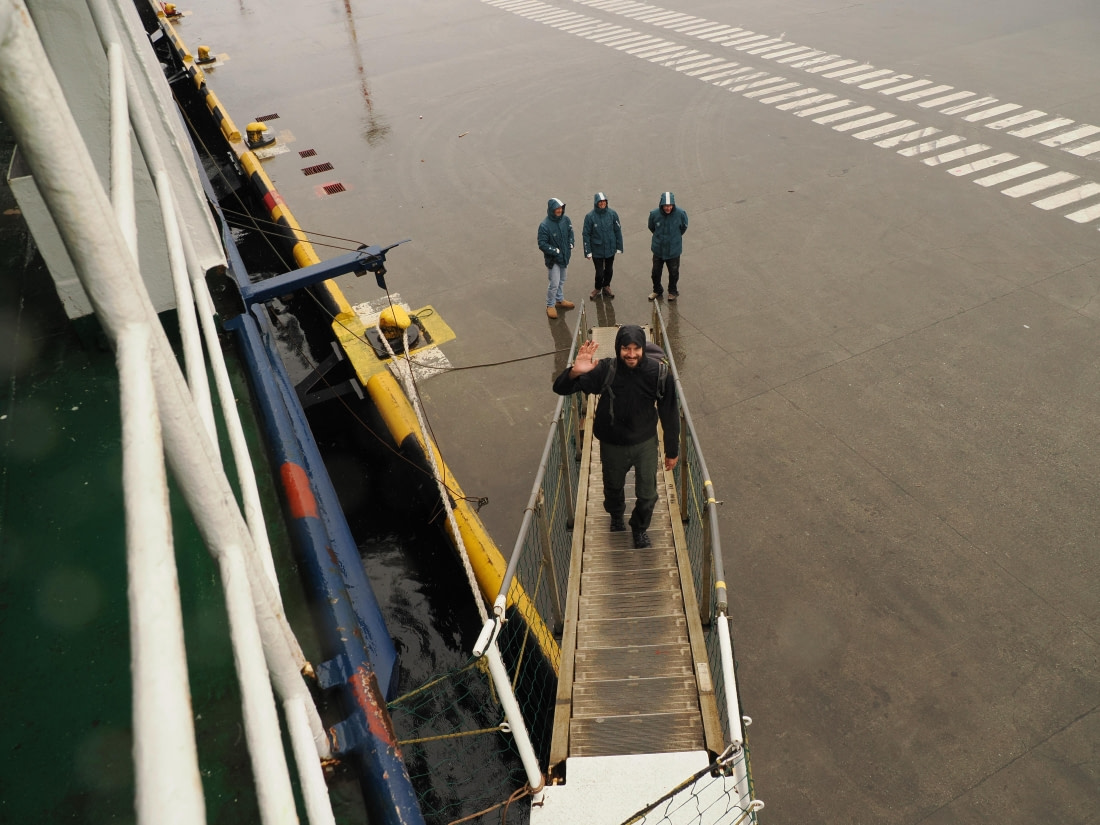
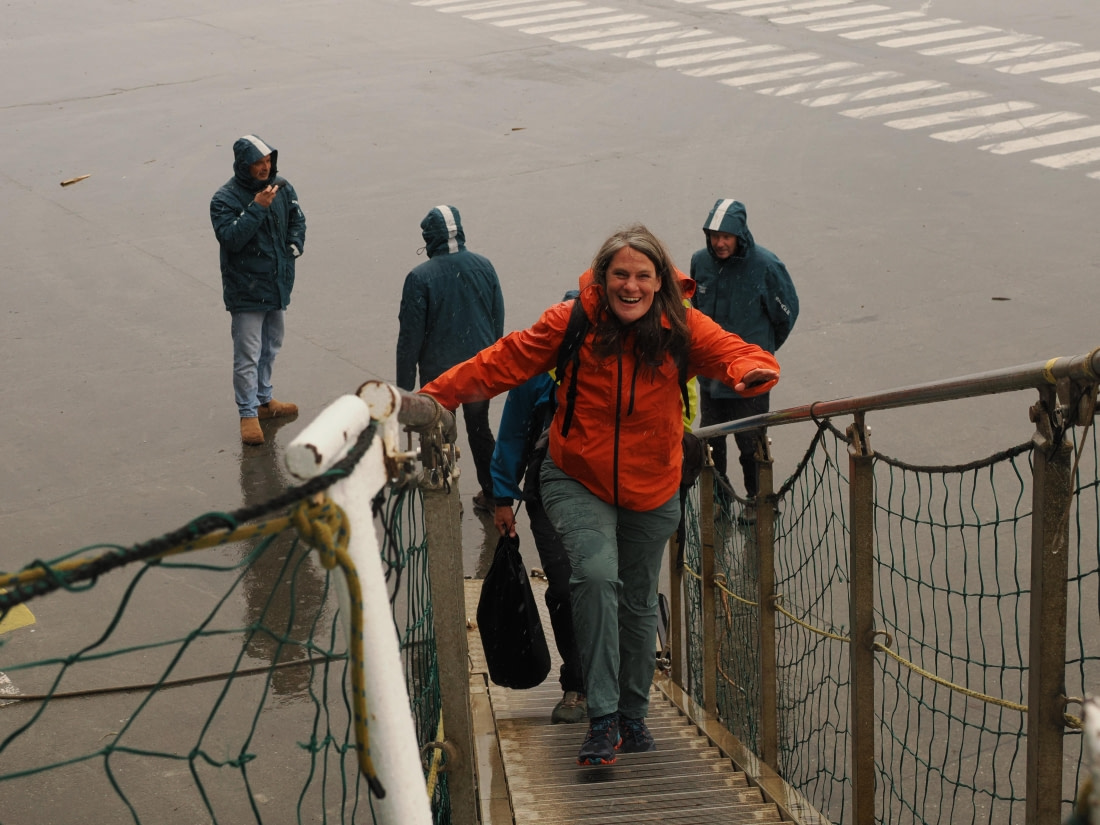
The day of embarkation began under wet and windy conditions in Ushuaia, as the overcast sky showered us with a drizzle of rain, but it didn’t dampen our spirits! We couldn’t be happier to walk on board the cosy dry ship of Ortelius, our new home for the next 14 days where adventure awaited us.

This was not just a cruise, but the beginning of a unique and adventurous experience and for most of us, a once-in-a-lifetime trip.

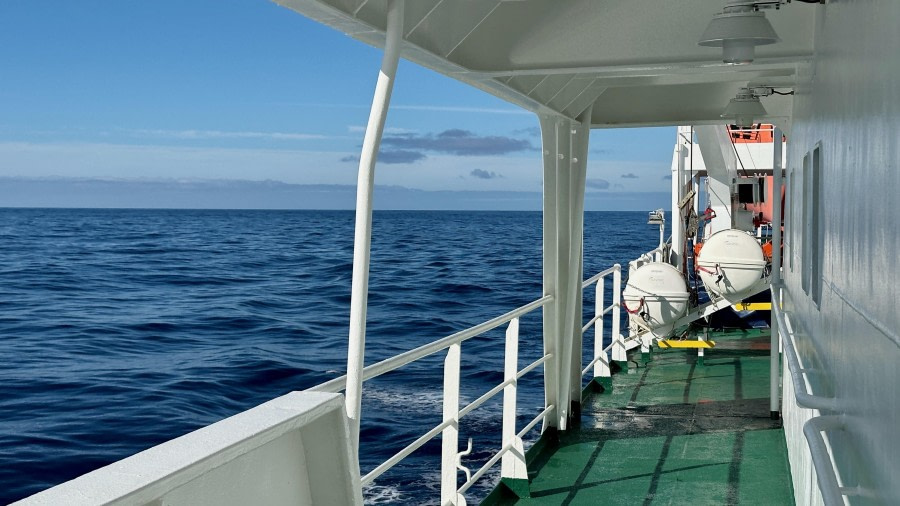
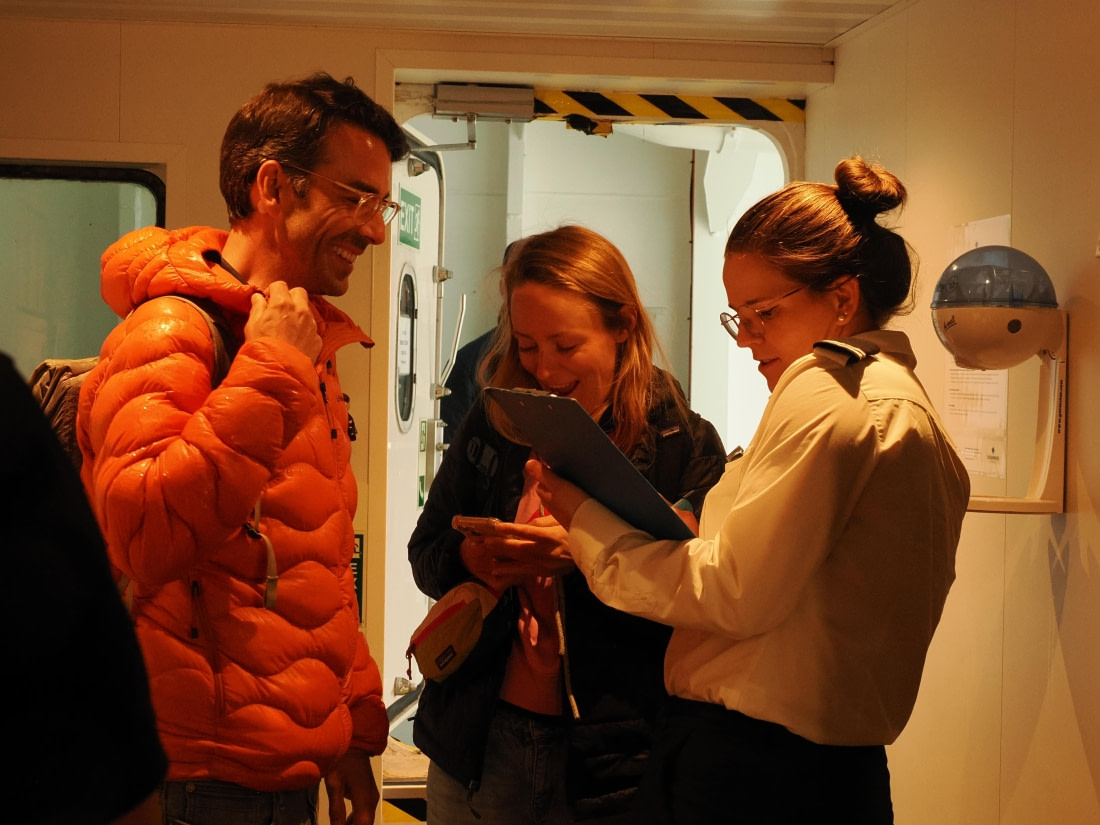
Once we were all aboard and got our bearings, the ship’s mandatory safety procedures began which included a short video outlining the ship’s rules and regulations, followed by a safety briefing and drill. This familiarised everyone on board with the emergency procedure and prepared us in case of abandoning ship. During the drill, we were delighted by our first sighting of whales!

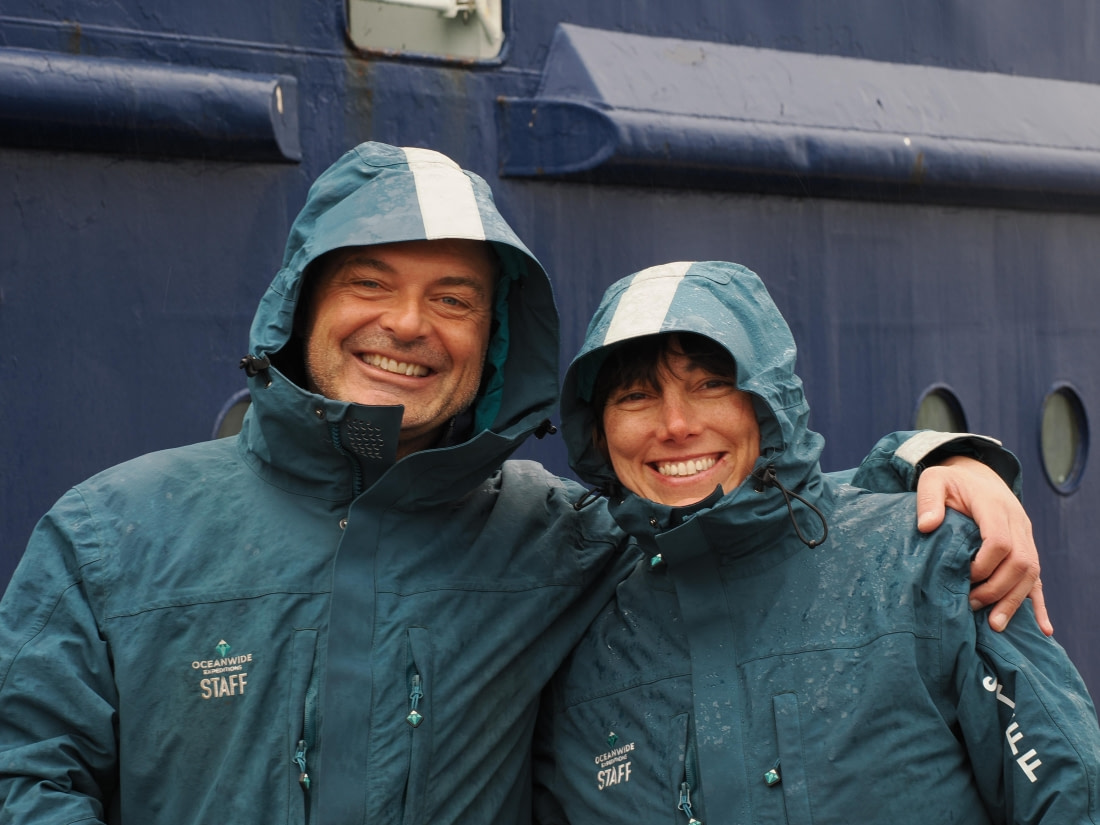
Numerous humpback whales breached out of the windy waves in the Beagle Channel, putting on quite the display! Not only did we see whales, but an array of birdlife including black-browed albatross, rock cormorants, giant petrels and kelp gulls flying through the wind. This got us so excited for the many more species we would hope to see soon. After the drill, Captain Per then formally welcomed us and introduced our voyage ahead. We were then introduced to the Expedition Team, the people who would be guiding us through this region for the next two weeks. Their backgrounds ranged from working at research stations, marine biology, history, oceanography, geology, to photography. We wouldn’t wait to learn more about Antarctica from all of them.

The evening continued with a scrumptious dinner in the restaurant, where we had the opportunity to meet one another and share travel stories and the reasons why we decided to venture to this southern land. What an exciting time ahead for us!

Day 2: The Drake Passage Southbound

The Drake Passage Southbound
Datum: 05.03.2026
Positie: 56° 51.9’ S; 068°08.0‘ W
Wind: SW-7
Weer: Overcast
Luchttemperatuur: +5,5

We began the day with our very first wake-up call from our expedition leader Chris. After a night of proper Drake rocking and rolling, it felt a little like waking up inside a giant washing machine, thankfully one with excellent ocean views.

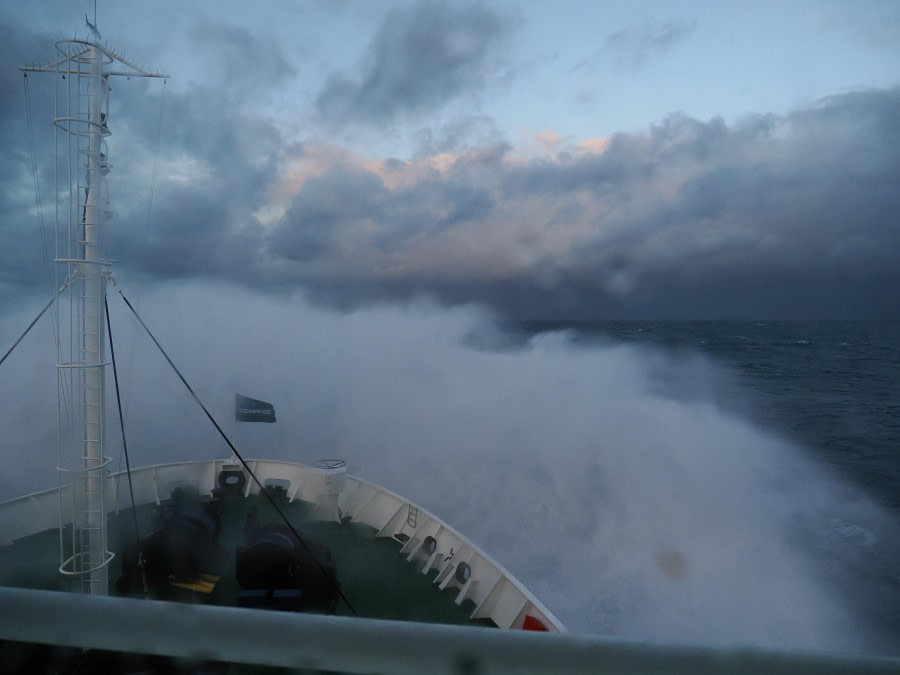
Throughout the morning the Drake decided to show us a bit more of its personality. Waves smashed dramatically against the bridge windows, reminding us that we were truly in one of the most famous stretches of ocean on the planet. Some of us embraced the motion like seasoned sailors… while others decided the wisest strategy was to spend some quality time relaxing in bed and negotiating with their stomachs. The Drake always wins the first round.

Despite the lively seas, the day was full of preparations for the adventures ahead. Adam gathered the future paddlers for the kayaking briefing, explaining how we would soon be gliding quietly among ice and wildlife, hopefully with slightly less rolling than today.

Next up, Andy and Dave introduced the plans for hiking in Antarctica. They talked us through the safety procedures, the different hiking options, and the kind of terrain we might encounter once we reached the White Continent. Boots, layers, and enthusiasm were all strongly recommended.

At lunchtime, the bridge team did their absolute best to position the ship in a way that allowed us to enjoy our meal with minimal acrobatics. Plates stayed mostly on the tables, glasses behaved themselves, and we counted that as a major victory over the Drake.

In the afternoon, Marco and Chloe hosted the camping briefing. They explained how we would spend a night out on the Antarctic snow, sleeping under the southern sky (and possibly next to a curious penguin or two). It sounded both exciting and just the right amount of adventure.

Later, Valeria gave a captivating presentation on photography in Antarctica. She shared tips on how to capture wildlife, landscapes, and those unforgettable polar moments. Cameras across the room seemed to perk up in anticipation. During recap, Chris told us more about our trusty ship and outlined the plans for tomorrow as we continue southward. Andy followed with an explanation of wind and sea states, helping us understand exactly what the Drake had been throwing at us today. Chloe then gave us a wonderful visual demonstration of seabird sizes—using a rope stretched across the bar to show their real wingspans. Let’s just say some of those birds are a lot bigger than we imagined.

After a delicious dinner, we returned to the gentle (and occasionally not-so-gentle) rhythm of the Drake Passage. The sea had calmed a little, but the ship was still giving us a friendly reminder that we were very much at sea.

All in all, it was a day of rocking, rolling, learning, and preparing. Antarctica was getting closer, and the excitement on board was definitely building.

Day 3: Southbound towards the Antarctic Circle

Southbound towards the Antarctic Circle
Datum: 06.03.2026
Positie: 61°34.2’ S; 067° 28.23‘ W
Wind: SW-5
Weer: Cloudy
Luchttemperatuur: +3,9

This morning, we were happy to wake up to much better sea conditions than the previous day. The heavy pitching and rolling that had forced so many of us to stay in bed had given way to a much gentler motion, and Ortelius was back up to full speed as she pushed ever southwards. During the wake-up call by Expedition Leader Chris at 07:45, it was revealed that overnight we had crossed latitude 60º South - the geographical boundary of Antarctica.

After breakfast, expedition guide Allan invited us to join him in the bar for his lecture about ‘Sledge Dogs - the Unsung Heroes of Antarctic Exploration.’ This was a tribute to the humble, hard-working huskies that helped unlock the secrets of Antarctica. Without their dedication and sacrifice, our knowledge of Antarctica would not be where it is today. The last dogs left Antarctica in 1994, leaving behind the spirits of thousands of huskies that were born, lived, explored and died on that frozen continent. Allan also introduced us to three historic huts that we hoped to have the opportunity to visit on this voyage.

Following a break, we were invited back to the bar to join Expedition Leader Chris for two mandatory briefings. First up was Zodiac operations, which included important guidance on how to prepare ourselves for going ashore and the safe use of the black inflatable boats that would provide the link between the ship and Antarctica. Then we were introduced to the visitor guidelines, as laid down by the International Association of Antarctic Tour Operators. These are all about the protection of Antarctica and making sure we do our bit to preserve its unique pristine status.

Next on the agenda was the collection of our Muck boots, the essential waterproof footwear needed for every excursion from the ship. This was done in the lecture room on Deck 3 where boots of all sizes found their new best friend for the next week or so. Immediately after, we were encouraged to find kayak leader Adam in the bar where sign up lists for the various basecamp activities began. Then it was lunch time….. another fantastic buffet spread served by head chef Heinz and his team in the galley.

The afternoon began with a call to the bar deck by deck for a mandatory biosecurity inspection by the expedition team. This was to ensure that all our outdoor equipment was clean and free from any contaminants that should not be transported to Antarctica. It was a slow process, but vitally important, as each and every one of us agreed that we should all do our bit to help protect this magical wilderness. The enthusiasm with which all guests approached the biosecurity was something very refreshing for the expedition team.

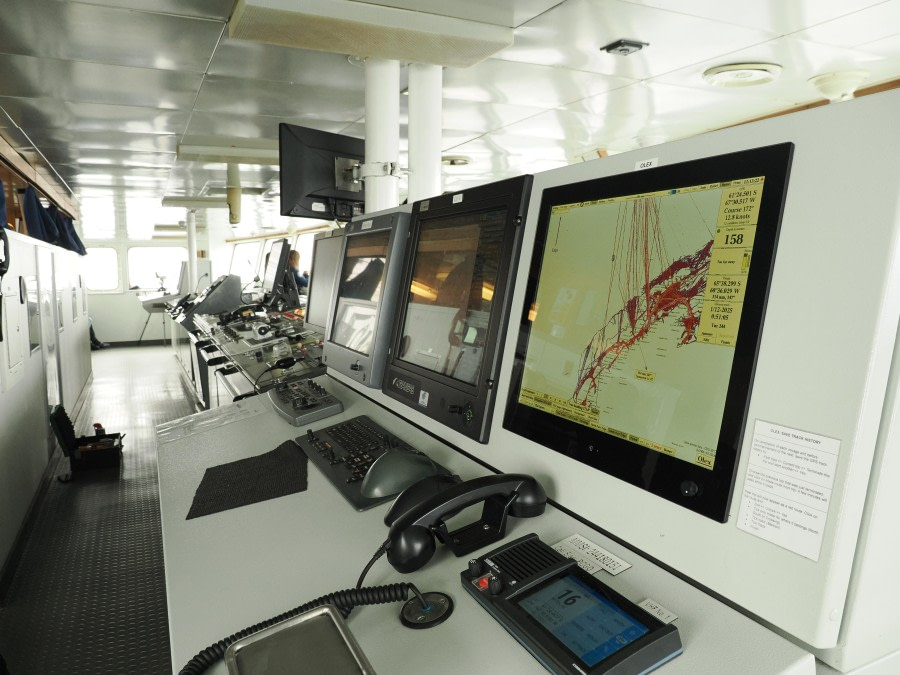
There followed a quiet period in the schedule. As the sea state settled down even more, many people enjoyed the outer decks and a welcome dose of fresh air. Occasional seabirds like black-browed albatrosses and giant petrels glided by with elegance and easy, as if to wish us well on our journey towards higher latitudes and the land of ice and snow. Hanging out on the bridge, we got to chat with members of the expedition team and the officers on watch. What a privilege it was to have the open bridge policy, something that Captain Per is very enthusiastic about.

As the afternoon wore on, conditions outside became more and more sublime. The sky had cleared, bathing Ortelius in glorious sunshine. And the sea had become a true ‘Drake Lake’. Such a welcome feeling after the ‘Drake Shake’ of the day before! At 16:30 expedition guide Marco invited us to the bar for his lecture - ‘An Introduction to Antarctica’. Covering all aspects of what makes this unique place so special, Marco painted an extremely vivid portrait of the least known continent on our planet. He explained how it is the highest, the driest, the coldest, the oldest and the remotest place on Earth. A true land of superlatives!

The evening briefing by Chris delivered very exciting news, with the prospect of three great things in the plans for tomorrow. Firstly, we should catch our first sight of Antarctica. Secondly, we were aiming to cross the Antarctic Circle in the late morning. And finally, the plan was to make our first landing in the afternoon. When Chris asked for a show of hands to see who had crossed the Antarctic Circle before, only one guest (Rene who had done the previous two voyages) raised his hand. Tomorrow was set to be a very big day for everyone, and there was an exciting buzz in the bar. Dinner followed, and then many enjoyed some time on the outer decks as the sun went down.

Day 4: Crossing the Antarctic Circle and Detaille Island

Crossing the Antarctic Circle and Detaille Island
Datum: 07.03.2026
Positie: 66º 39.1’ S; 067º 15.6’ W
Wind: NW-2
Weer: Fog
Luchttemperatuur: +2

The day began, as many good days do, with breakfast. While some guests spent time on the bridge enjoying the view and scanning the horizon, Chloe offered an engaging lecture on penguins for those eager to learn more about Antarctica’s most charismatic residents. Outside, the wildlife was already active: fulmars gliding alongside the ship, grey-headed albatrosses and cape petrels sweeping over the waves, and several humpback whales surfacing in the distance.

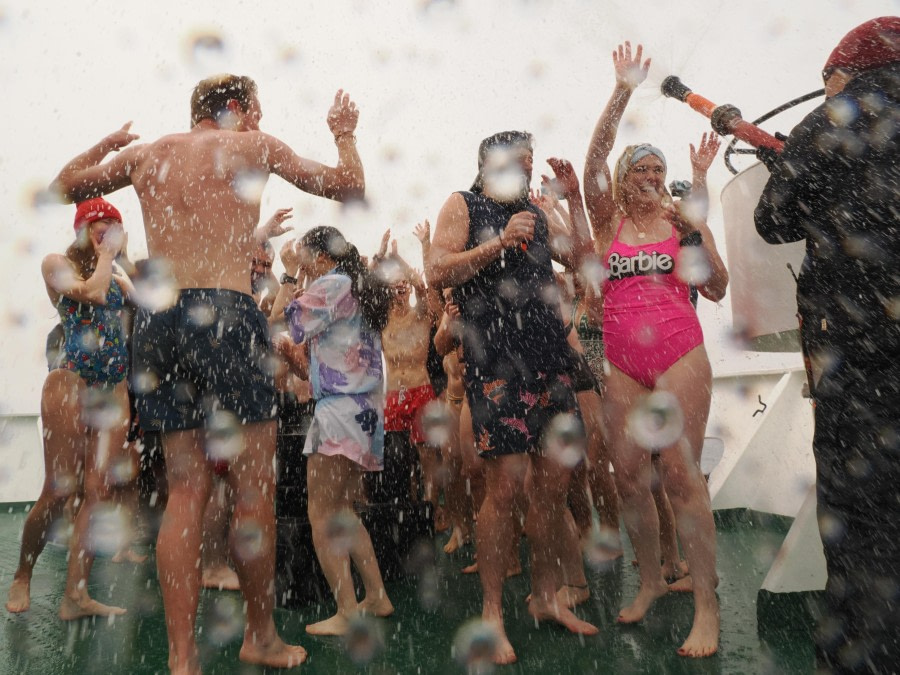
At 11:00 a.m., Ortelius reached an important milestone, crossing the legendary Antarctic Circle at 66°33’ South. To celebrate the occasion, guests were invited—some more enthusiastically than others—to put on their swimsuits and gather on deck. In a memorable ceremony, they were welcomed across the line with a refreshing spray from the ship’s fire hose. Fortunately, a warming reward quickly followed: hot chocolate enhanced with a splash of rum and topped with whipped cream, which was greatly appreciated in the Antarctic air. After a hearty and well-deserved lunch, the afternoon brought a landing on Detaille Island. This small island hosts a historic scientific hut that served British expeditions between 1956 and 1959, offering a fascinating glimpse into the early days of Antarctic research.

The group was divided into two. While one half explored the island and visited the historic hut, the other enjoyed a Zodiac cruise along the coast. From the boats they observed Adélie penguins, Antarctic fur seals, and several Weddell seals resting peacefully on the ice. A soft fog drifted through the area, creating beautiful light and lending the landscape a particularly atmospheric character.

Later in the day, everyone returned to the ship for the daily recap and dinner, during which the plans for the following day were presented. For many, the evening ended there. However, a motivated group had one more adventure ahead.

After re-equipping themselves with camping gear, they boarded the Zodiacs once again and headed back toward Detaille Island. The short journey from the ship took place in thick fog, adding a sense of mystery to the excursion.

On shore, Chloe, Li, and Marco were waiting to welcome them and explain how to spend a comfortable and enjoyable night in this remarkable environment. The group learned that they would be collected at 5:30 a.m. the next morning.

Excitement was palpable. Spending a night camping on a remote Antarctic island is not an everyday experience, and the group eagerly prepared their sleeping spots in the snow, ready to enjoy a truly memorable night in the quiet and magic of Antarctica.

CAMPING

Location: Detaille Island

Total number of persons: 56 (+ 3 guides: Marco, Chloe & Li)

Overnight temperature: -2.2 °C

Terrain: ~5 cm of snow

We got dropped off by the expedition team in the zodiacs at around 8: 30 pm, and the swell had increased a little since our landing in the afternoon which made the ride quite adventurous as our drivers had to safely navigate around moving icebergs and narrow channels. Our camping spot was a little up the hill so it was a bit of a trek with our sleeping kits. We could choose between one of two sites within the safety perimeter, with most going for the bottom site with the prime real estate- a waterfront view. Despite the snow being fairly shallow, we could use shovels to level out the area we wanted to sleep on, being careful to not be too strenuous and get too sweaty as this would only make us more cold in the end. We had an idyllic toilet view, gazing out into the iceberg dotted bay and some lanterns nearby in case we couldn’t see what we were doing! The time of the year in Antarctica means we actually get some dark skies, which a lot of us were not expecting. Sadly, the fog layer was quite thick so not many stars were spotted, but the sounds of the nearby crashing waves gave us the most melodic lullaby to all asleep to. Some of us didn’t even sleep a wink as we were too mesmerised by the sounds! We got woken up by the guides at 5:00 am, and carefully walked back down towards the landing site minding our steps as the freshly fallen snow from overnight had caused the rocks to become quite slippery. Our zodiac chariots awaited us in no time, taking us back through the ice-laden channels and to the warmth and comforts of Ortelius. Some of us went back to sleep, others were still buzzing form the wonderful night we had and chatted amongst each other sharing stories over a morning coffee in the bar.

Day 5: Navigation around the Gunnel & Blaiklock Island

Navigation around the Gunnel & Blaiklock Island
Datum: 08.03.2026
Positie: 67º 04.5’ S; 067º 41.7’ W
Wind: NE-2
Weer: Clear sky
Luchttemperatuur: +1,1

An early rise for the brave campers who spent the night on Detaille Island. Despite the thick fog, the group still enjoyed the crashing sound of the waves and the relentless battering of the long swell on the reefs and rocks surrounding the island.

Once everyone was on board, MV Ortelius lifted anchor and was on her way across Hanusse Bay under a beautiful and serene sunrise, which most of us witnessed on the outer decks after Chris’ wake-up call. The beautiful blue sky was streaked with high, elongated cirrus clouds, while numerous icebergs dotted the bay. In the distance, the imposing snow-capped peaks of Adelaide Island rose above the Marr Piedmont Glacier.

Our intended plan was to navigate across the narrow passage between Hansen Island and the Arrowsmith Peninsula, known as the Gunnel. However, despite the skilled manoeuvring of the bridge team, guided by the experienced Captain Per, we eventually found the channel blocked by a few medium-sized icebergs. Plan B therefore needed to be implemented, and we retraced our course to try our luck on the western side of the island through the Tickle Channel.

As usual on an expedition voyage, the alternative plan turned out to be even better. Not only were we delighted by even better weather and impressive views around the ship, but we were also lucky enough to have a great encounter with a curious pod of Type B1 orcas.

This species is a distinctive ecotype of killer whale that lives in the icy waters around Antarctica. They are recognizable by their large size, striking black-and-white coloration with a gray “cape” across their backs, and a unique adaptation to life among sea ice. These orcas are famous for their cooperative hunting technique called wave-washing, in which groups swim together to create waves that wash seals off floating ice floes and into the water where they can be captured. Their diet mainly includes seals, and their social groups are highly coordinated, demonstrating complex communication and teamwork. Type B1 orcas are also known for their habit of sliding onto ice to grab prey before wriggling back into the ocean, showcasing their remarkable intelligence and adaptability in one of the harshest marine environments on Earth.

After an hour of observation, we left the pod behind and resumed our voyage southbound. The Tickle Channel proved to be navigable, and our course was set toward the Gunnel before eventually entering the much larger Labeouf Fjord, slowly creeping into Marguerite Bay and the area explored and surveyed in 1909–1910 by the second French expedition led by Jean‑Baptiste Charcot.

Lunch was quickly served as we wanted to maximize our time on the outside decks, enjoying the ship’s cruise and the magnificent landscape. Our luck was once again proven when, while passing Day Island on the port side and Adelaide Island on the starboard side, another pod of eight killer whales was sighted. This time the cetaceans were less curious and continued along their original course, leaving us with only a glimpse of their beautiful dorsal fins.

Chris and the expedition team quickly set up Plan C for the day, and the ship detoured toward Blaiklock Island. Eventually setting foot on land in the early afternoon, we enjoyed a well-deserved stroll across the ‘tundra-like’ landscape of this barren island tucked into the corner of Bigourdan Fjord. A six-kilometre round-trip hike led us past the old Blaiklock refuge, originally set up in the late 1950s by the team stationed on Horseshoe Island, along a cobbly beach guarded by brown skuas and up to a great viewpoint where the vistas spanned the glaciated peaks and valleys of the Arrowsmith Peninsula and the imposing Pourquoi-Pas Island.

Certainly a great day blessed with good weather, interesting navigation, and the privilege of two orca sightings; truly all the best that Antarctica could deliver.

Day 6: Horseshoe Island & Calmette Bay

Horseshoe Island & Calmette Bay
Datum: 09.03.2026
Positie: 67° 48.1’ S; 067° 16.5‘ W
Wind: E-1
Weer: Clear
Luchttemperatuur: +0,8

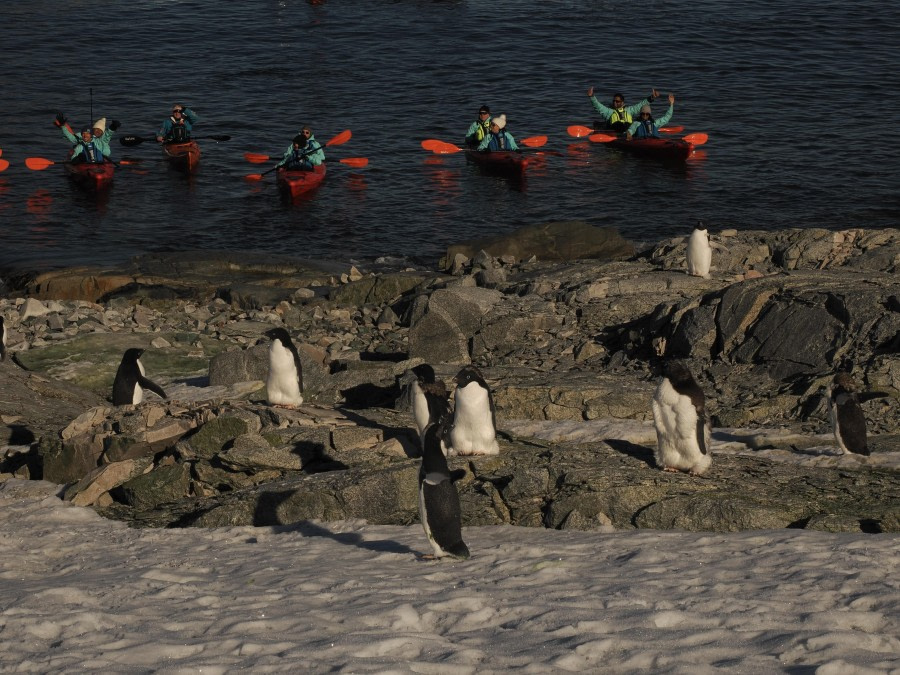
We awoke to a moody morning just off Horseshoe Island. A light dusting of snow had blanketed the rocky slopes and boulders of Mount Searle and low cloud drifted around. After breakfast we ferried on zodiacs through a narrow entry into a protected bay to land just next to a hut that housed Base Y, a British research station. As well as moulting Adelie penguins sheltering in the strips of snow among the rocks, we also saw a crabeater seal chilling on the shore.

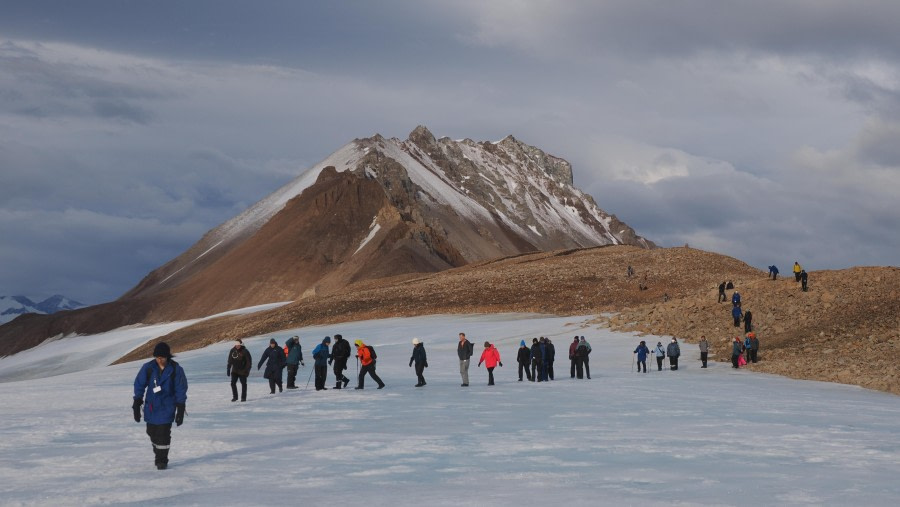
We split into groups for our first long hike of the expedition and set off to immerse ourselves in the landscape. As we climbed to the ridge above the bay, we could gaze across the sound to Pourquoi Pas Island and could start to appreciate the immensity of the environment. Our guides talked about the startling geology, so evident here where the rocks are laid bare, not covered by the soil of more temperate climates. Volcanic intrusions of black diorite thrust through the rougher pink granite and here and there we saw ventifacts, sculpted by the wind over hundreds of years. On the southern slopes, snowfields and the occasional slippery ice runnel made for challenging hiking on occasions, but that didn’t seem to bother the Adelie Penguins who were making the trek hundreds of meters from the sea to their nesting grounds.

At one point, some of us stopped for a minute of silence to meditate and listen to the sound of the wind and very little else, a rare treat and a chance to escape from the hustle and bustle of the modern world. We descended rocky slopes and snowfields back to the bay and the waiting zodiacs before a transfer back to Ortelius and a welcome lunch.

In the afternoon we arrived at Cape Calmette. Dominated by huge scree slopes, the southern foreshore stretched eastwards towards a tongue of glacier at the end of the fjord. Opposite, huge snow-covered glaciers tumbled to the ocean, riven by crevasse fields and terminating in huge walls of ice towers. We landed on a steep pebbly beach, and trekked along the foreshore. Along the way, we saw crabeater and Weddell seals basking on the shore and on ice floes. Overhead swooped brown skuas. Sadly, there appeared to be quite a few dead seals and birds in this area, perhaps a result of avian flu. Our kayak team had a wonderful time in this fjord, and on their zodiac journey back they were followed by a curious leopard seal.

At the furthest end of our hike, we paused again for some meditation, this time augmented by the gentle crash of waves on the shore and the grinding of icebergs. The waves gave us quite an exciting time getting back into the zodiacs at the end of our hike, with a significant swell breaking on the beach.

Back on board Ortelius, our evening meal was taken al fresco with a barbecue on the heli deck in bright sunshine that morphed into an amazing sunset on the snowy mountains around us. While some of us danced on the deck in the setting sun, the second wave of campers disembarked for a night under the stars. What a way to finish an incredible day in the deep south.


HIKING

AM: Horseshoe Island

Long hikers distance hiked: 7. 5 km

Medium hikers distance hiked: 5 km

Max elevation: 115m

Time taken: 3 hours 30 minutes

Terrain: Gravel, boulders up to 30 cm across, some grippy crystalline snow, occasional hidden icy runnels


PM: Cape Calmette

Long + medium hikers distance hiked: 5.8 km

Max elevation: 28 m

Time taken: 2 hours 30 minutes

Terrain: Gravel, boulders up to 30 cm across


CAMPING

Location: small bay inside Cape Calmette

Total number of persons: 44 (+ 3 guides: Marco, Chloe & Valeria)

Overnight temperature: 0 °C

Terrain: small loose rocks


We got dropped off by the expedition team in the zodiacs at around 8:45 pm, and on our way over we were so incredibly lucky to spot a lone emperor penguin! We couldn’t believe our eyes! Despite the lack of snow at our camping site, the rocky terrain proved to be a much quicker environment to set up our sleeping kits. No digging snow and getting sweaty here! We simply chose the most ‘flat ‘area we could find within the safety perimeter, and set up our kits, with some of us getting tucked in well under 20 minutes of arriving! Valeria showed us how to use the ‘toilet’, and what a view this toilet had looking out into the iceberg dotted bay! And the guides reminded us that of them would always be awake during the night in case anyone needed anything. As the fog started to lift around 11:30 pm. We were welcomed with a beautiful display of stars above, with the twinkling Southern Cross visible and even a few shooting stars and satellites observed. It was truly spectacular! We could also hear the cracking of ice in the bay and calving of the glacier nearby which made for a breathtaking soundtrack to fall asleep to. As the waning gibbous moon rose over the mountain, we were reminded how lucky we were to be having this incredible experience in nature under the moonlit polar sky. Some of slept soundly, others found the sleeping adjustment little challenging, but all in all, what a wonderful night we had. We got woken up by the guides at 5:45 am, and our zodiac chariots awaited us in no time, taking us back to the warmth and comforts of Ortelius for some pastries for breakfast and time to catch up on a little more sleep before our morning activities.
Day 7: Stonington Island and navigation southbound

Stonington Island and navigation southbound
Datum: 10.03.2026
Positie: 68° 16.9’ S; 067° 01.1‘ W
Wind: SW-2
Weer: Clear sky
Luchttemperatuur: +1,5

The brave campers returned early this morning after a beautiful starry night outside, sleeping near a land-terminating glacier on the eastern coast of Calmette Bay. As soon as everyone was back on board, the anchor was lifted, and we made our way west and south toward our new destination for the morning.

Chris and the expedition team had planned a full morning of free roaming around the small island of Stonington, where historical artifacts, Adélie penguins, and incredible views of the outlet glaciers flowing down from the Antarctic Peninsula Ice Sheet (APIS) awaited us.

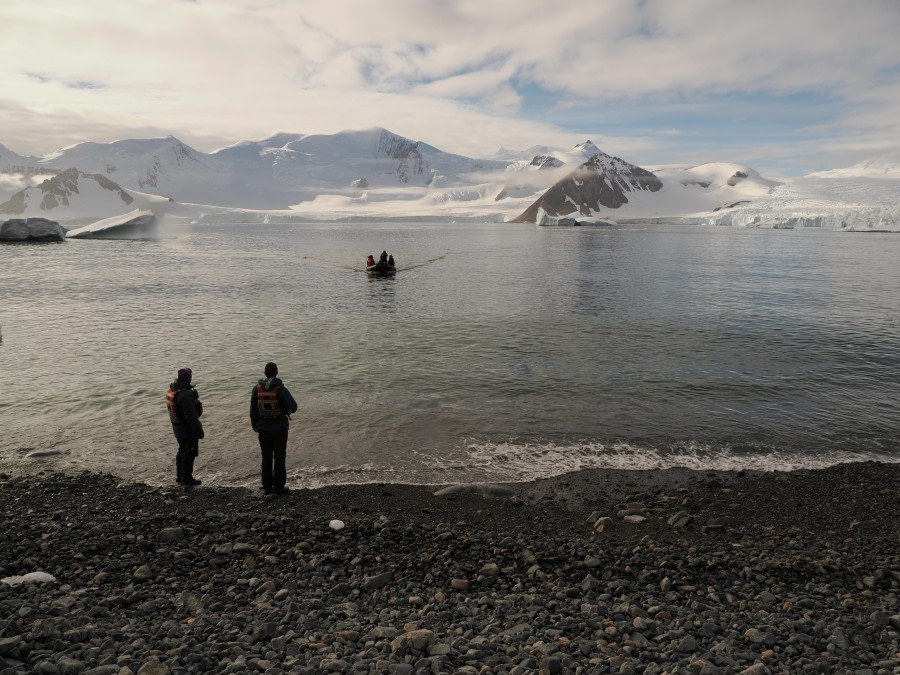
After charging our batteries during breakfast, we hopped into the zodiacs and were shuttled ashore, blessed by another calm and sunny day. A mild swell made our landing a little interesting, although the conditions were ideal for photography and for a relaxing stroll around the island.

Stonington Island is a small, rocky island located off the west coast of the Antarctic Peninsula, known for its well-preserved historic research huts that played an important role in early Antarctic exploration and scientific study. During the 1940s, both the United States and the United Kingdom established bases there: East Base for the U.S. Antarctic Service Expedition and Base E for the British Antarctic Survey. The wooden huts built during this time served as living quarters, laboratories, and storage spaces for explorers who endured extreme cold, isolation, and long polar winters while conducting research and mapping the region.

Today, these huts remain largely intact and are protected as historic sites, offering a rare glimpse into the harsh but pioneering life of early Antarctic scientists and explorers. Being able to witness this time capsule firsthand was an absolute privilege, especially under a bright and sunny sky. Some of us spent time watching the molting penguins near the shoreline, while others climbed to a few higher viewpoints, soaking in the views of the Northeastern Glacier — the river of ice that was once used to access the ice sheet and carry out the surveying work of earlier explorers.

The drive back through thick brash ice was also great fun, and after stripping off our layers, we headed to the restaurant for another replenishing meal. Before long, we were underway again on a bearing of 270°, crossing the expansive Marguerite Bay under easy sea conditions. Views stretched from the western coast of the Antarctic Peninsula to the glaciated peaks of Adelaide Island, and all the way to the snow-capped mountains of Alexander Island. Around 4 p.m., we were invited to meet Marco in the bar for an engaging talk about the Antarctic cryosphere, during which glacier formation and dynamics, together with sea ice, were thoroughly explained in preparation for the next day of exploration that awaited us.

Surprisingly, right at the end of the lecture, a group of whales was sighted from the bridge in the distance. A closer look allowed us to witness another unforgettable moment of this trip. At least a hundred blows became visible, and as we made our way toward the group of humpback whales, all kinds of displays were observed from the bow and outer decks — pec (pectoral fin) slapping, tail lobbing, spy hopping, and the most wonderful of all, bubble net feeding! This is a cooperative surface feeding technique where the whales dive below, then swim in upward spirals while releasing bubbles from their blowholes. These bubbles create a ‘net’ that confuses krill and traps them to the surface, forcing them into a dense ball, after which the whales lunge up through the center to feed. In awe, we watched for more than an hour the show that Mother Nature had set up for us.

Dinner and recap had to be postponed, and at the end of another wonderful day, we gathered in the bar to hear the plans for the next day.

Day 8: Exploring around George VI Sound

Exploring around George VI Sound
Datum: 11.03.2026
Positie: 69° 21.4’ S; 069° 38.4‘ W
Wind: SW-3
Weer: Overcast
Luchttemperatuur: +0,9

We arrived at George VI Sound this morning. The weather was cloudy and a bit cold, with many icebergs surrounding the ship. We went on a Zodiac cruise to explore this icy, unknown area in hopes of spotting wildlife. It was drizzling when we started the activity. The announcement also reminded everyone to dress warmly.

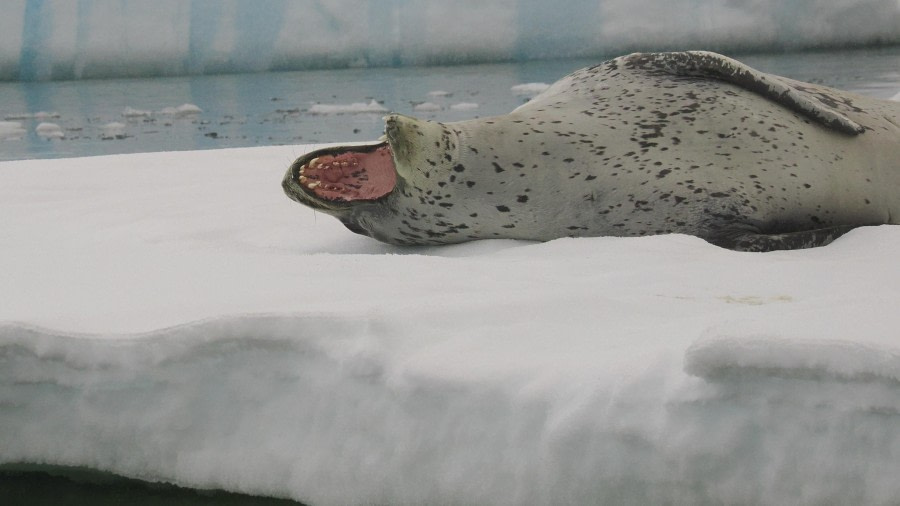
Fortunately, we saw many crabeater seals—over ten of them—as well as Weddell seals and even a leopard seal! Among these three species, the Weddell seals were the most alert. As soon as our Zodiac approached, they began looking around, keeping a close eye on the movements of our boat. To avoid disturbing them, we wisely kept our distance. Next were the crabeater seals, which were more laid-back. After a brief moment of curiosity toward us, they went back to sleep, seemingly at ease and unconcerned that we might disturb them. Next up was the most anticipated of all pinnipeds - the leopard seal, the skilled hunters of Antarctica. They remained completely unbothered, utterly indifferent to our sudden visit, exuding the confidence of a true apex predator.

Seeing so many seals made everyone excited and happy, but our expedition leader Chris had an even more surprising treat in store. He found a large enough piece of sea ice near the ship that could hold more than ten people at once. After we finished watching the seals, we took turns stepping onto the ice. To our amazement, a mini outdoor bar had even been set up on the ice. There, we held up Antarctic flags and champagne glasses, taking photos to commemorate this once-in-a-lifetime experience. It was such an unexpected delight! Everyone was overjoyed.

Back on the ship, we sailed through the afternoon toward our next destination. But no one was idle. Our expedition guide, Chloe, gave a fascinating lecture on pinnipeds, covering all the seal species we had seen on the journey. Her talk gave us a deeper understanding of these creatures' adorable and resilient nature, as well as the diversity of seal species worldwide. Some seals have evolved unique life processes to adapt to the extreme Antarctic weather, which is truly admirable.

She also shared the amusing and heartwarming story of Neil the Seal, a famous southern elephant seal from Australia, which perfectly illustrated the harmonious relationship between humans and animals. This Antarctic expedition has also allowed everyone to understand the importance of animal protection and inspired us to actively join in the efforts to care for nature and the environment.

Day 9: Ridge Island & Dogleg Fjord

Ridge Island & Dogleg Fjord
Datum: 12.03.2026
Positie: 67° 38.9’ S; 067° 03.0‘ W
Wind: SW-5
Weer: Part. Cloudy
Luchttemperatuur: +5

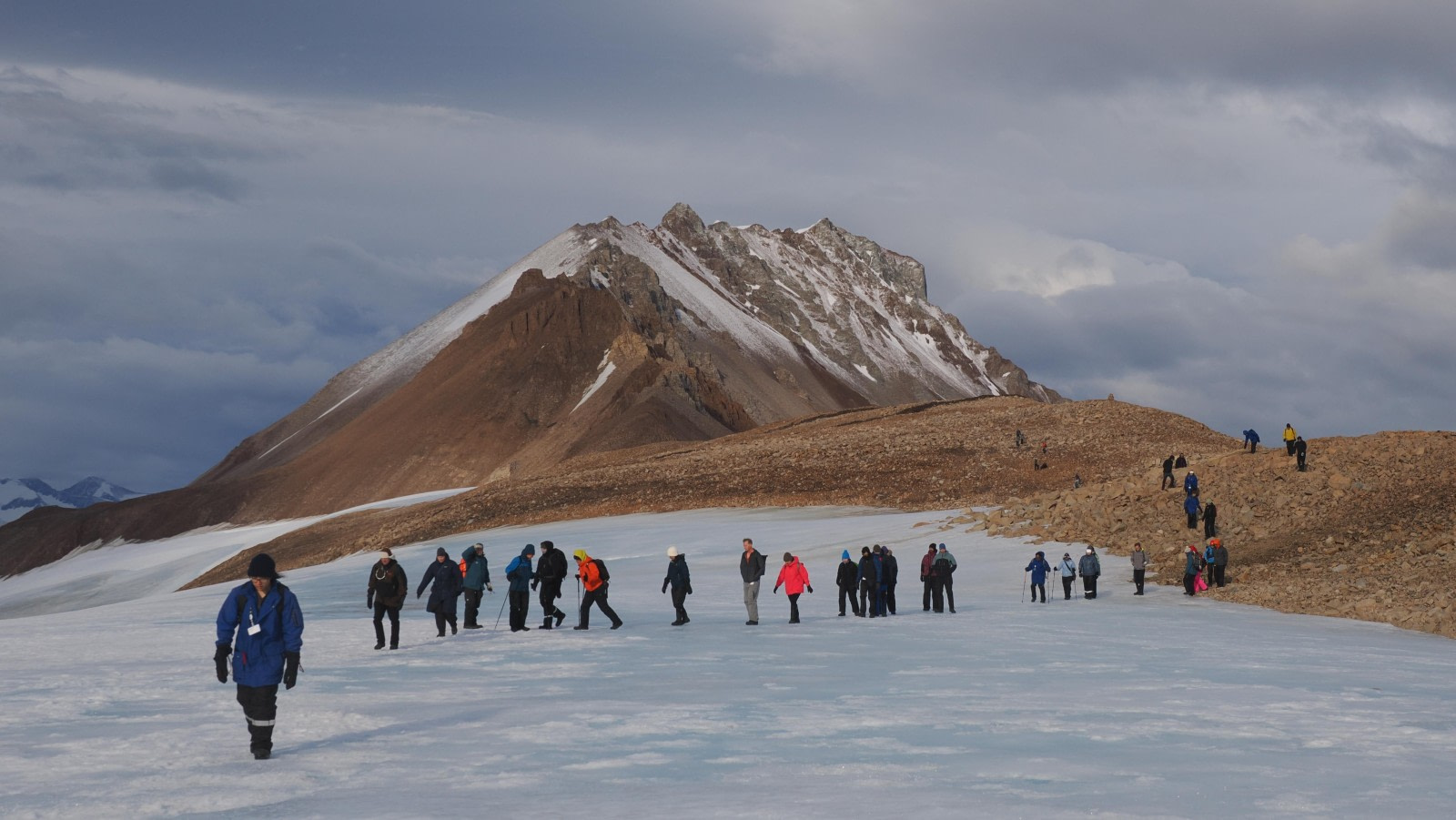
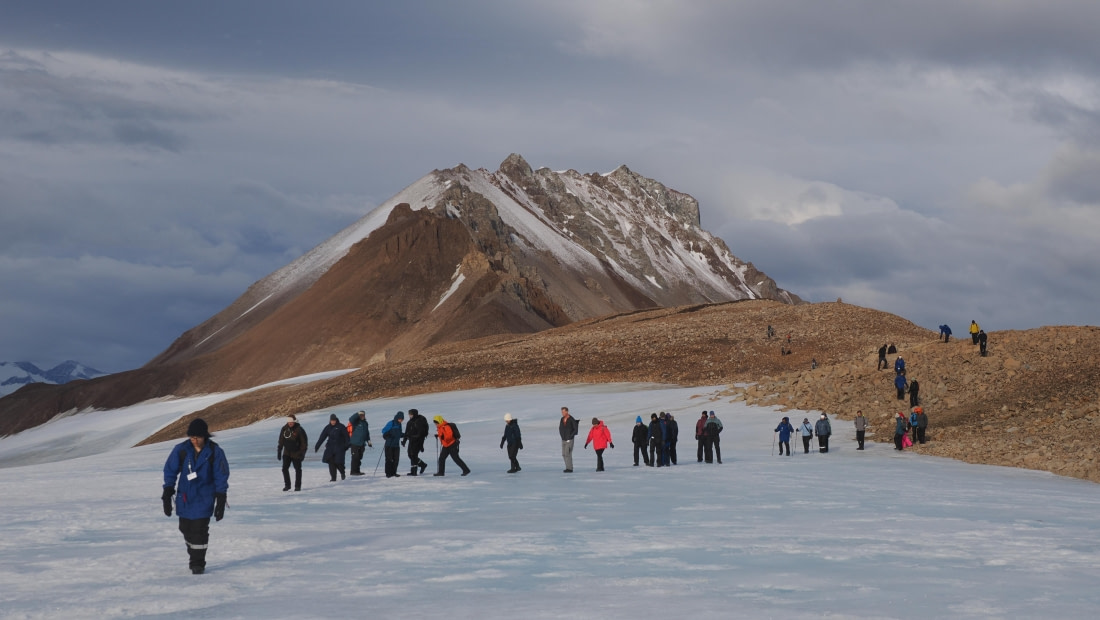
A new venue for many of the team, Ridge Island looked amazing with its jagged peaks and patches of remaining snowfields. We quickly split into groups of long and medium hikers. The long hikers took a slightly extended walk up to a fantastic viewpoint.

The guides led the team on new unmarked terrain and even across the flat summit ice. The Long Hikers made it up to a cairn for summit photos and the medium hikers made it to the other peak. As the medium hikers started to descend their peak the long hikers moved across the summit snowfield before also summiting on the peak. Before descent, we took a minute of silence to hear the quietness and vastness of this peak.

The descent was long but offered fantastic views of Ortelius in the bay and as people gathered at the landing site those brave enough took to the icy waters for their polar plunge. We had it all with people dipping a toe to full immersion and even some swimming.

The transfers with cold, wet people quickly happened back to Ortelius and people wanted to grab their warm showers before lunch onboard.

The afternoon involved a short transfer around to Dog Leg, again a relatively new venue for many of the team, but vow, with barely a breath of wind and fantastic brash ice in the bay the afternoon packed a punch.

The hikers again set off in two groups whilst other passengers chose the slower, more relaxing landing site to admire the odd Adelie or take pictures of the multiple glaciers.

The two Adams took a team of kayakers out amongst the ice and explored along the coastline. Observing some crabeater seals resting on ice flows and being able to get a little closer to the glaciers was a very special landing.

Back onboard the team and guests relaxed with dinner and perhaps a few drinks to celebrate what was a real day of exploration and excitement for so many.


HIKING


AM: Ridge Island

Long hikers distance hiked: 8 km

Medium hikers distance hiked: 5 km

Max elevation: 235 m

Time taken: 4 hours

Terrain: soft snow, short section glacial ice, gravel and boulders up to 30cm across, horizontal ice covered in either a film of water or 1-5 cm of crystalline snow. Scrambling for approx. 10 m just below the summit, plus another 25 m section on descent to the beach.


PM: Dogleg Fjord

Long hikers distance hiked: 4.1 km

Medium hikers distance hiked: 2.8 km

Max elevation: 250 m

Time taken: 2 hours 30 minutes

Terrain: Gravel and boulders up to 20 cm across, one 10 m scrambling section. Descent on soft snow

Day 10: Navigation northbound & Biscoe Islands

Navigation northbound & Biscoe Islands
Datum: 13.03.2026
Positie: 66° 01.0’ S; 066° 19.8‘ W
Wind: NE-6
Weer: Overcast
Luchttemperatuur: +3,1

Many of us slept through Chris’ wakeup call this morning, as our tired legs from yesterday’s hikes wanted to stay horizontal. For those that dared to venture out before 9:30 am, were pleased to join Koen in the bar for his lecture about his life experiences as a whale watching guide, particularly with humpback whales in Tonga and Iceland. We got to hear some fascinating accounts of these gentle giants, Koen’s enthusiasm and passion were infectious.

The morning was spent at sea as we sailed northward towards our next destination, either being that of Fish Islands, or the nearby Biscoe Islands, depending on which weather conditions allowed us to drop the zodiacs. In the meantime, we continued to gaze out the windows of Ortelius and admire the foggy, moody seascape as the odd Wilson’s storm petrel flew by.

At 11:00 am, Adam (Turner), representing both Oceanwide Expeditions and the UK Antarctic Heritage Trust, gave us an insightful history lecture about Operation Tabarin. Here we learnt many fascinating stories about the British historic huts we have been seeing throughout the voyage, and the conservation efforts that goes into preserving these time capsules of polar history. It is just remarkable how these men survived (and worked!) down here in these frigid and challenging conditions.

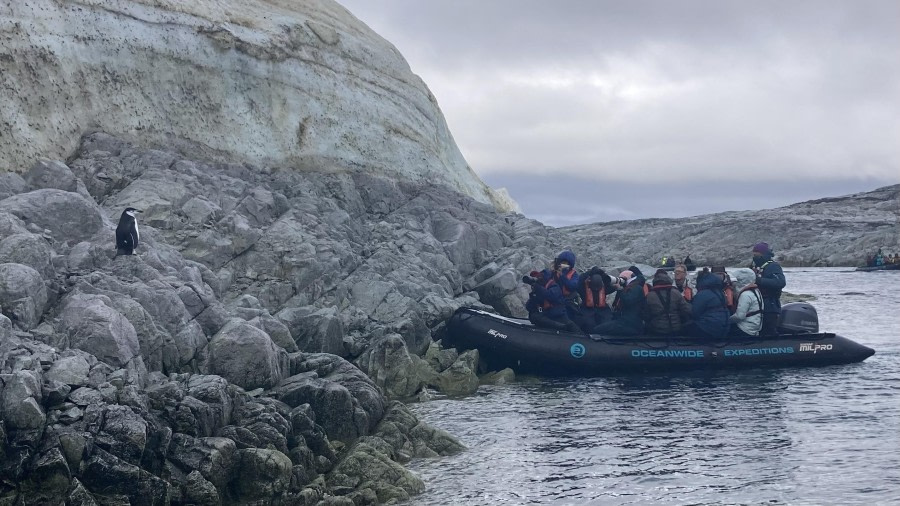
After lunch, we arrived at Biscoe Islands, named after English mariner and explorer John Biscoe, the commander of an English expedition which explored the islands in March 1832. We got the all clear to drop the zodiacs, and off we ventured for a zodiac cruise around these granite rocky isles. We spotted numerous animals on our cruise, including southern gain petrels and their adorable fluffy chicks, Antarctic cormorants and their almost fledged chicks, numerous Weddell seals hauled out on the rocks having an afternoon snooze, and even some chinstrap penguins! A couple of zodiacs were even lucky to spot some Antarctic krill in the shallows! Despite their reputation of being ‘small microscopic zooplankton’, we quickly learned that in fact these species can grow up to 6 cm in length! We also spotted numerous skuas soaring above, no doubt keeping their eyes peeled for a vulnerable petrel or cormorant chick to prey on. And there was a multitude of kelp gulls, juveniles included, on lookout for the Antarctic limpet, a tasty treat they like to pull off the rocks and digest the soft-bodied mollusk inside.

The Biscoe Islands were also a major haul out location for the charismatic Antarctic fur seal. We spotted almost a hundred of these animals, all in fact male, as their female counterparts are still nursing their pups in the northern subantarctic islands and don’t tend to venture this fat south to the Antarctic Peninsula. Some of the fur seals we saw were so playful and curious, swimming along the zodiac, often exhibiting ‘spiral swimming’ where they emerge out of the water, rolling, and spinning their heads which is essential for agility, prey capture, and play. This behaviour is used to build swimming skills, interact with others, and likely assist with sensory processing or clearing water from their whiskers.

We also saw lots of the snow on the islands, dotted with a greenish and red hue – this was snow algae which is a regular occurrence in the austral summer and autumn. The ‘green snow’ which is caused by chlorophyte algae, thrive on melting snow, are often fuelled by nutrients from penguin guano and other wildlife. As the season progresses or as the algae face higher UV exposure, green algae produce red pigments (carotenoids/astaxanthin) to act as a sunscreen and hence become a reddish/pink hue aptly named ‘watermelon snow’. After being sheltered by these islands for the last few hours, it was time to head back towards Ortelius in the waves and the wind, some of us getting a bit splashed, but well worth it for these amazing wildlife encounters. Back on board we warmed up with some tea and hot chocolate and prepared to head towards the Gerlache Strait where we would be spending our last day of activities. Another day in paradise awaits!
Day 11: Paradise Bay & Northbound towards the Drake Passage

Paradise Bay & Northbound towards the Drake Passage
Datum: 14.03.2026
Positie: 64° 54.3’ S; 062° 59.6‘ W
Wind: N-34
Weer: Overcast
Luchttemperatuur: +3,3

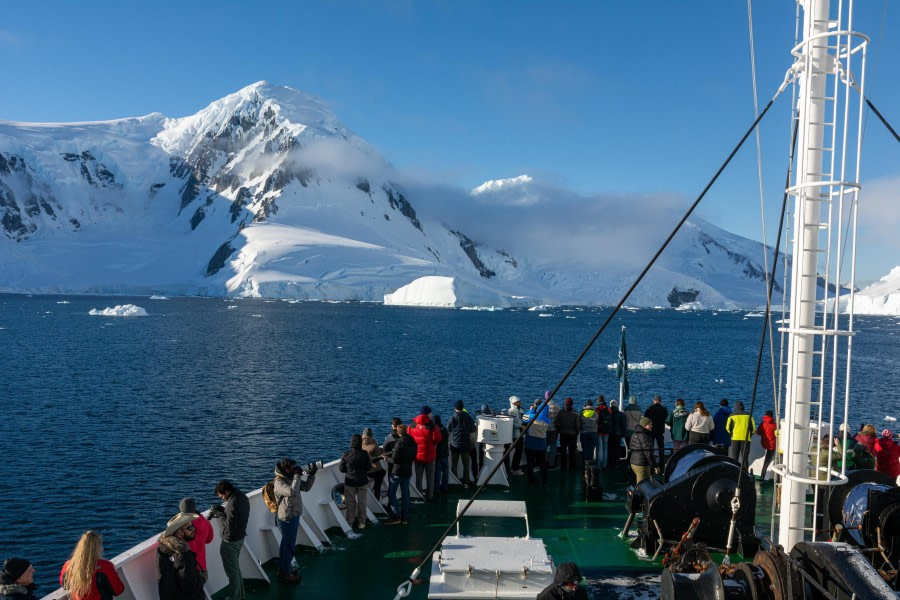
This morning we woke up aboard the Ortelius. After breakfast, many of us went up to the bridge as the ship slowly navigated toward Paradise Bay. The weather was calm and the scenery absolutely stunning, with snow-covered mountains and glaciers reflecting in the still water. It already felt like a very special morning.

Soon we received the exciting news that we would be able to go out for one last long zodiac cruise. Everyone was eager to get ready. Once we had boarded the zodiacs, we set off to explore the bay for what turned out to be a truly magnificent final outing.

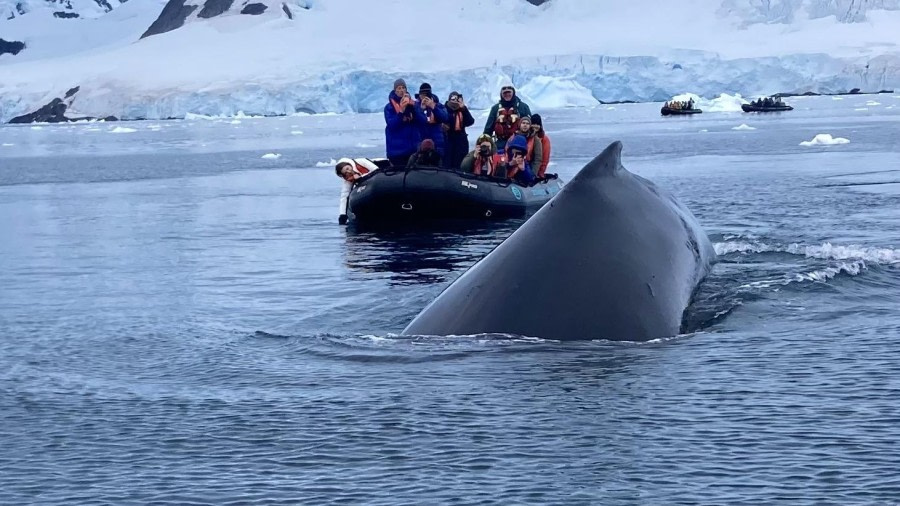
Almost immediately we began spotting whales. Blows appeared around us. They seemed incredibly calm and relaxed, almost as if they were resting or sleeping at the surface. The sea was so quiet that we could observe them peacefully without disturbing them.
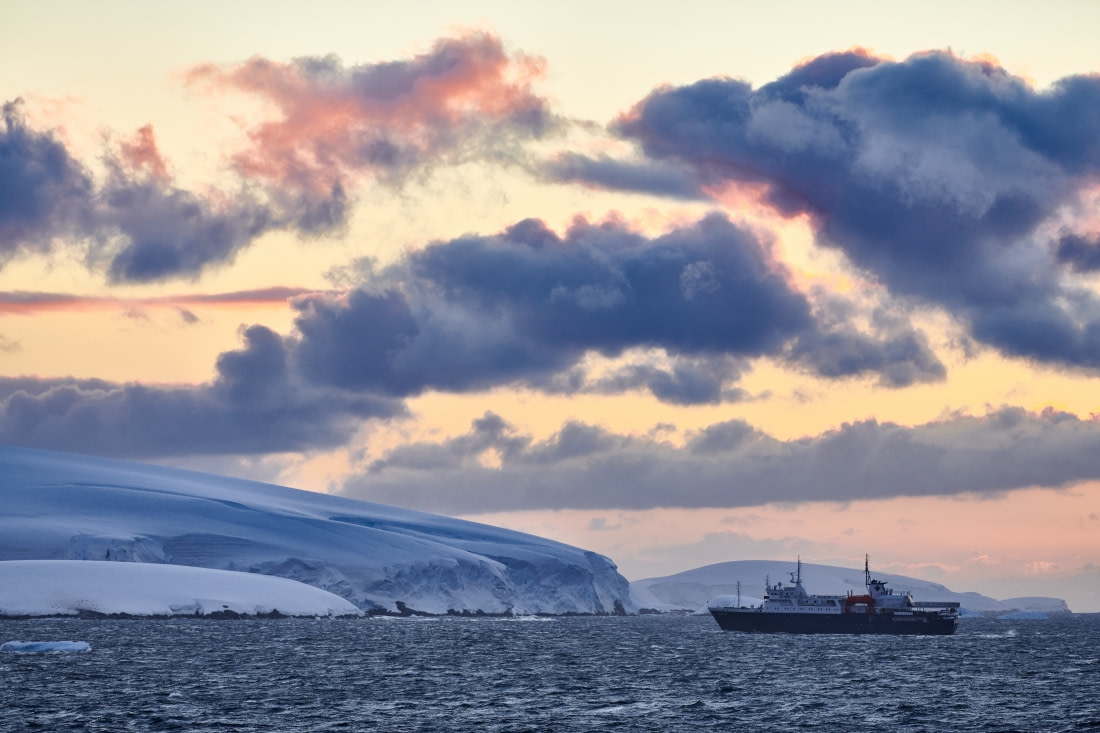
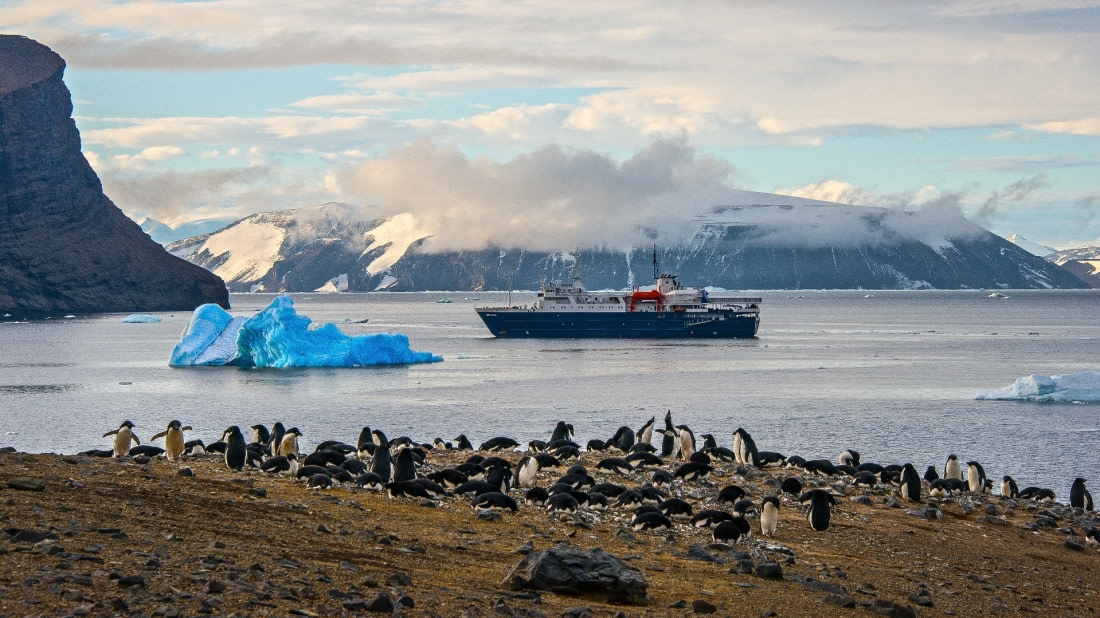
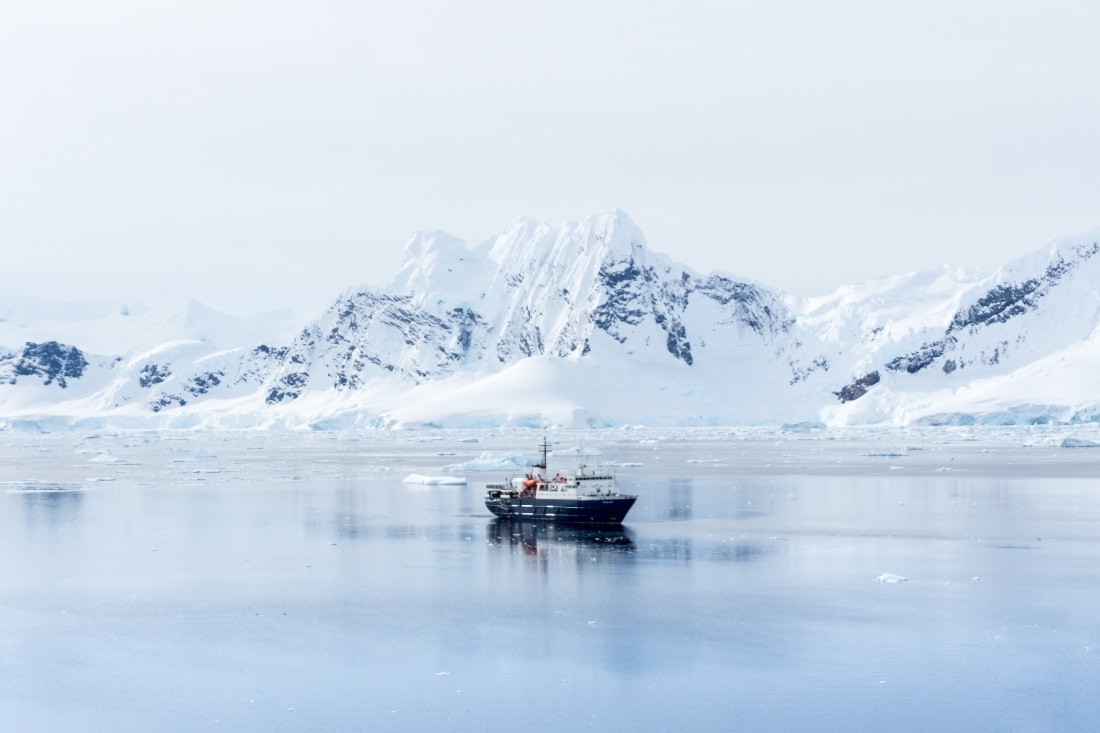
Each time a whale surfaced, we waited patiently, hoping to see it dive. Of course, everyone was hoping to see the fluke. As the whales slowly arched their backs, cameras were ready and all eyes were fixed on the water, waiting for the beautiful moment when the fluke would rise above the surface.

While we were waiting and scanning the water for the next whale, a delightful surprise arrived. Our hotel manager Ingrid, together with her assistant Marlene, came to join us in a Zodiac and served us hot chocolate. It was a wonderful treat and everyone greatly appreciated it—hot chocolate served in the middle of the Antarctic sea made the moment even more memorable. We continued cruising through the bay and encountered several seals resting on the ice. Among them were leopard seals and crabeater seals, both iconic inhabitants of these Antarctic waters.

There was also wonderful bird life around us. Small storm petrels flew incredibly close to the zodiac, dancing just above the water. It was fascinating to watch them picking tiny fish from the surface with such speed and precision.

One of the highlights of the excursion was approaching a colony of gentoo penguins. Even before we reached the shore, we could already smell the colony from a distance! It was fantastic to observe this third species of penguin so closely. Watching them moving along the beach and diving into the water was a wonderful experience.

At the end of our cruise, we also saw Brown Station, the Argentine research base, before eventually heading back toward the ship.

The atmosphere in the bay was calm and magical. Surrounded by ice, mountains, whales, and seabirds, it felt like the perfect last zodiac excursion of our expedition. It was a morning none of us will forget.

After four hours out in the Antarctic air, a good meal on board was more than welcome. Later in the afternoon we returned our rubber boots, marking the end of our landings and zodiac excursions for this expedition.

The ship then set course for Ushuaia. It was pleasant to spend time looking through our photos and sharing memories of the incredible moments we had experienced together during this journey.

In the afternoon we attended an interesting lecture by Valeria about how to edit photographs, which many of us found very useful. We also learnt from Chloe about a citizen science program we can take part in, called ‘Happy Whale’ (www.happywhale.com) where we can upload our photos of humpback whale flukes and even side profiles of leopard seals to an online database where they use artificial intelligence software to match individuals.

It had been another truly beautiful final day aboard the Ortelius before crossing the Drake Passage. Some of us were a little nervous for tomorrow’s forecast though!

Day 12: At Sea in the Drake Passage

At Sea in the Drake Passage
Datum: 15.03.2026
Positie: 61° 26.4’ S; 065° 53.6‘ W
Wind: NE-5
Weer: Overcast
Luchttemperatuur: +5

Crossing the Drake Passage today, the weather was just as forecasted yesterday—quite windy with significant swell, causing the ship to rock noticeably. Following the doctor's advice, many people had taken motion sickness medication in advance, so most felt okay, handling it much better than on the way here. In the morning, Assistant Expedition Leader Koen gave an introduction to other itineraries offered by Oceanwide.

After such a perfect voyage, many are likely inspired to continue unlocking more unknown journeys with Oceanwide. At 11:15 a.m., expedition staff member Helene presented a lecture on bird tracking. This talk gave everyone a deeper understanding of these winged creatures that soar freely in the sky and their life journeys. Although humans don’t have wings and cannot fly, our exploration of the sky has never ceased.

After lunch, the ship grew quieter. The afternoon rocking felt like being in a cradle, helping everyone rest and nap more peacefully. At 4 p.m., the sound of expedition guide Allan’s voice came over the loudspeaker, inviting everyone to his lecture about Admiral Byrd’s Antarctic snow cruiser. His talks are always so engaging. Through his vivid and humorous storytelling, everyone learned about the ingenious ideas and remarkable efforts humans have made to unlock the mysteries of Antarctica and explore this icy world. While some attempts may have seemed a bit comical, the path of exploration is always rugged and full of challenges. People learn from their mistakes and find better solutions. Nothing is achieved effortlessly; only by persevering despite failures can we reach our destination.

In the evening, everyone gathered to watch a movie, fulfilling a request from the question box. After eight consecutive days of Antarctic exploration, it was a wonderful opportunity to relax. Watching a film together and enjoying a drink created a uniquely enjoyable atmosphere.

Day 13: Drake Passage and the Beagle Channel

Drake Passage and the Beagle Channel
Datum: 16.03.2026
Positie: 56° 48.9’ S; 067° 09.7‘ W
Wind: NE-4
Weer: Clear
Luchttemperatuur: +8,9

This morning brought us much better sea conditions than those of the previous day. Yesterday’s ‘Drake Shake’ had given way to a much more civilized scene outside. Ortelius was once again heading towards South America at full speed. The sun shone through scattered clouds, and it was a balmy 7 degrees Celsius. The occasional albatross graced us with its presence, as if to check us out before disappearing into the distance. As we headed off to breakfast, the infamous landmark of Cape Horn lay over the horizon, some 105 nautical miles ahead of the ship.

After breakfast, Expedition Leader Chris invited us to join him in the bar for his lecture titled ‘Calling Antarctica Home.’ This was a portrait of the time he spent at New Zealand’s Scott Base, located at the southern tip of Ross Island in the Ross Sea. Chris spent two summers there as a field trainer and safety guide, ensuring that base personnel were trained to the required standard and that field parties working in remote locations had all the necessary safety cover. It was a riveting talk by Chris, as he shared a fantastic collection of his own pictures and videos with us.

Following a coffee break, we were invited back to the bar for a question-and-answer session with Captain Per. This was a much anticipated and well-attended event, which provided a great opportunity to learn more about Ortelius, life as an expedition ship Captain, and the personal background of our charming and good-humored Captain. Having taken us all the way to Antarctica, through many uncharted areas, and safely back to civilization, we really enjoyed the relaxed way in which Captain Per interacted with his audience. In his trademark laid-back style, he humored all manner of questions, both professional and personal. It was a lot of fun to spend this time with our Captain.

After a short break, the final buffet lunch of the voyage was served. Coming out of lunch, we learned that land was now in sight. The southern tip of South America was getting ever closer, and Cape Horn loomed large on the horizon. There was a quiet period in the afternoon program as we closed the gap to the Cape, so many guests busied themselves with packing and settling shipboard accounts. These are always bittersweet moments, as they are a reminder that the end of our Antarctic journey is near, and we would soon have to say farewell to new friends that had all played a part in this truly remarkable adventure.

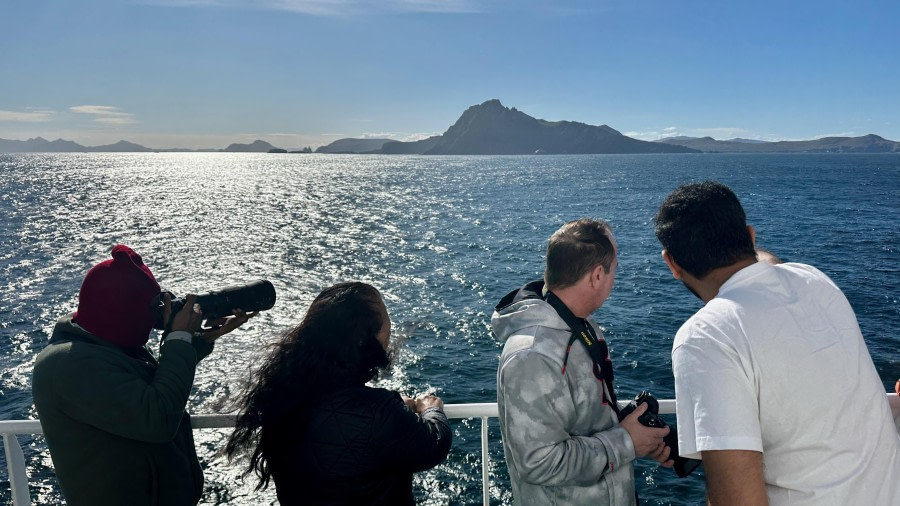
As the afternoon progressed, the weather conditions remained in a state of near perfect. We were now in a true ‘Drake Lake’. Such a wonderful feeling after the rough weather of the previous day! By 15:30, we were just 5 nautical miles from Cape Horn. Chris made an announcement inviting everyone to be out on deck or up on the bridge, to enjoy the experience of passing one of the most famous nautical landmarks in the World. The Chilean Navy occupies Cape Horn and have a regulation approach distance of 3 nautical miles. When we reached that point, Ortelius made a slow turn to starboard, keeping the Cape on the port side. Most guests were out on deck, enjoying the fine weather just as much as the sight of Cape Horn.

Visible through binoculars was the famous albatross memorial that sits on a rocky headland overlooking the often-turbulent waters. This is a monument dedicated to all the sailors that lost their lives at sea and is accompanied by a wonderful poem written by Chilean poet, essayist and journalist Sara Vial…..

I am the albatross that waits for you at the end of the world.

I am the forgotten souls of dead mariners who passed Cape Horn,

from all the seas of the world.

But they did not die in the furious waves.

Today they fly on my wings towards eternity in the last trough of the Antarctic winds.

At 16:15 expedition guide Valeria invited us to the bar for a workshop teaching us how to prepare the perfect Argentinian Maté. As a native of Argentina, Valeria is the perfect teacher for this much cherished tradition in her homeland. Her enthusiasm for the subject was there for all to admire and enjoy. Those who didn’t attend continued with packing between enjoying time out on deck in the glorious sunshine.

At 18:00 we all gathered in the bar one last time to join Captain Per and Expedition Leader Chris for a farewell toast to the voyage. Captain Per took the opportunity to express his deep gratitude to every member of his crew who had worked so hard to make this a memorable voyage, and Chris called the expedition team forward so he could thank them as well. Then we all settled down to enjoy the excellent trip slideshow which had been put together by expedition guide Valeria. This wonderful memento of the voyage would be sent out by the Oceanwide office, as long as those who wanted it had registered through the QR code posted around the ship.

And then it was time for our final dinner of the voyage. Towards the end Hotel Manager Ingrid introduced her entire team who paraded through the restaurant to rapturous applause. Meanwhile, Ortelius continued into the Beagle Channel and a rendezvous with the Pilot Station where a Pilot was waiting to guide us the final miles in to Ushuaia. It was a beautiful evening to be in the Beagle Channel.

Day 14: Disembarkation, Ushuaia

Disembarkation, Ushuaia
Datum: 17.03.2026
Positie: 55° 42.4’ S; 064° 35.8‘ W
Wind: SW-1
Weer: Overcast
Luchttemperatuur: +7

The final wake-up call was delivered by Chris, oh how we would miss these wake-up calls! Chris instructed us to place our large checked in luggage in the corridors by 07:30 for transport to the pier. Off we went for one last breakfast, a sad morning to say goodbye to all the incredible dining room staff who had looked after us so well these last few weeks! Oh how we would miss the delicious fresh-baked bread and pastries! After checking our cabins one more time for left behind items, we were ready to disembark.

Next up were the goodbyes to the hotel team, expedition team and most of all, each other. Strangers at the beginning, some leaving as lifelong friends. To share an experience like this together can create some very special bonds.

Some of us travelled directly to the airport, while others continued their journey into Ushuaia- one of the gateways into Patagonia where many planned to hike and explore for the next coming days. This expedition into the deep southern parts of the Antarctic Peninsula offered us truly an incredible and adventurous experiences that we will cherish forever. Who knew that one could not only zodiac cruise in Antarctica, but scale up high rocky mountains, kayak through ice-berg dotted bays and camp under the stary night sky?! An adventure we will never forget and so many stories to take home. Until next time!

On behalf of Oceanwide Expeditions, Captain Per Andersson, Expedition Leader Chris Long, Hotel Manager Ingrid van de Loo and all the crew and staff of M/V Ortelius, it was a great pleasure and a privilege travelling with you!

Total distance sailed on our voyage: 2324.2 nautical miles

Most southern point sailed: 69° 21.4’ S; 069° 38.4’ W

Details

Reiscode: OTL30b26
Reisdatum: 4 mrt. - 17 mrt., 2026
Duur: 13 nachten
Schip: m/v Ortelius
Inscheping: Ushuaia
Ontscheping: Ushuaia

Op deze reis geweest?

Aan boord van m/v Ortelius

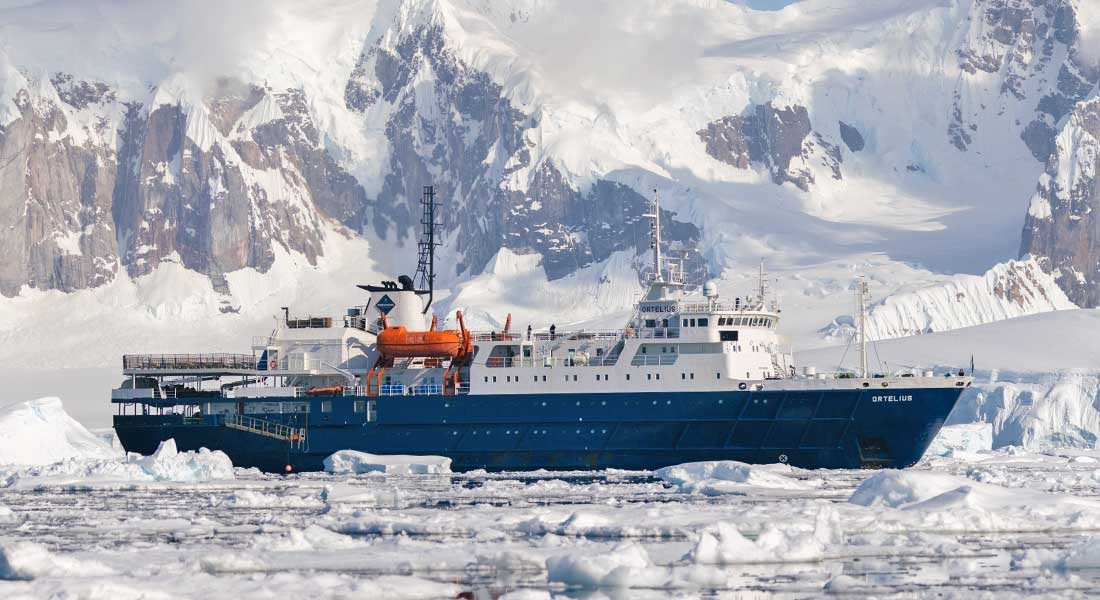
De ijsversterkte Ortelius is grondig uitgerust voor expeditie cruises en, op sommige reizen, helikoptervluchten.

Meer over de m/v Ortelius »
Loading