• Home
  • Triplogs
  • OTL22-25, trip log, Weddell Sea - In search of the Emperor Penguin, incl. helicopters

OTL22-25, trip log, Weddell Sea - In search of the Emperor Penguin, incl. helicopters

by Oceanwide Expeditions

Fotogalerij

Logboek

Da 1: Embarkation Day, Ushuaia

Embarkation Day, Ushuaia
Datum: 11.11.2025
Positie: 54°48.5’S, 068°17.9‘W
Wind: Var 1
Weer: Overcast
Luchttemperatuur: +8

Finally, the day had come! We were all assembled in Ushuaia ready for embarking on the voyage of a lifetime. The weather was the variable Patagonian repertoire, with sunshine rapidly changing into cold rainy flurries. But of course, we all came prepared!

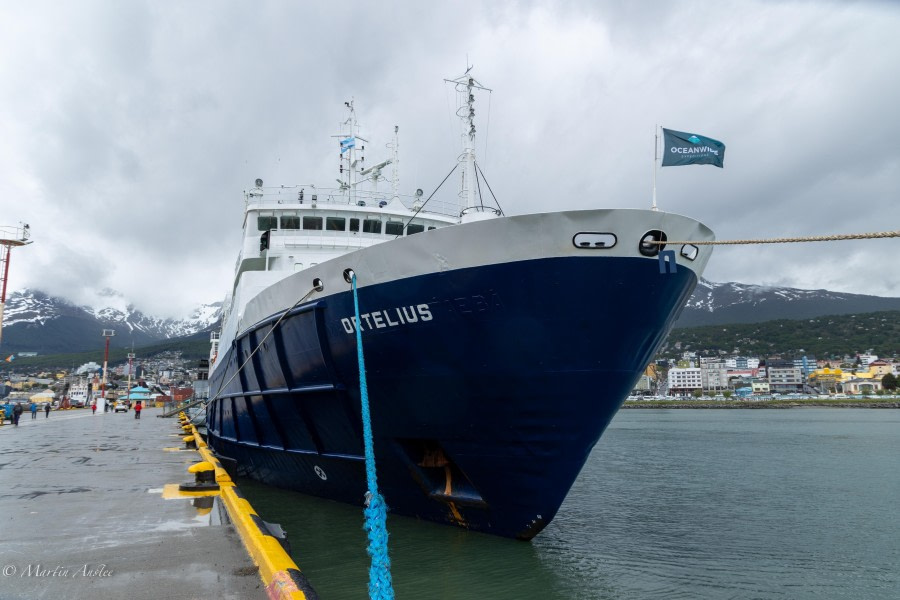
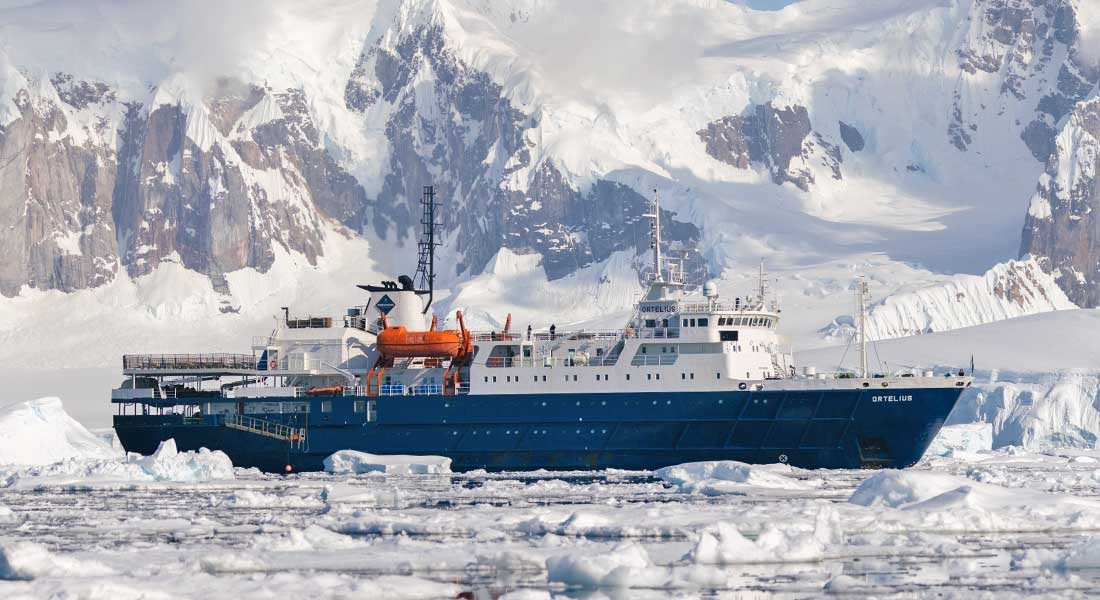
At 14:00, it was time to board our home for the coming 12 days - Ortelius. The crew welcomed us on board and showed us our cabins before we were whisked away to the lounge to begin our mandatory safety briefings.

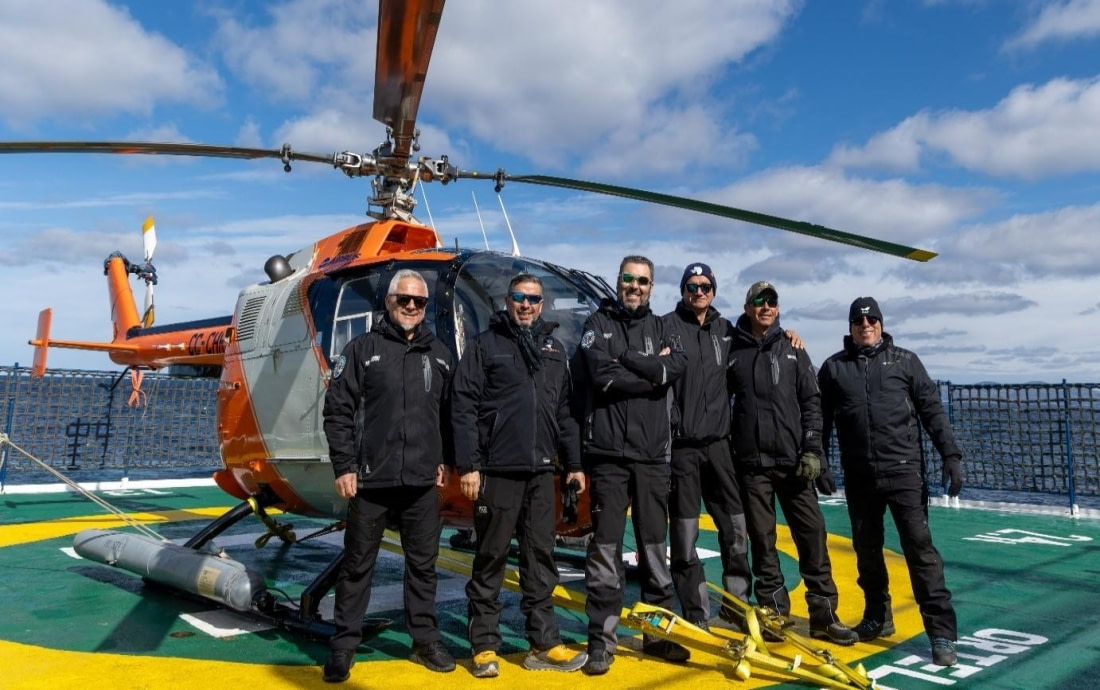
After the safety aspects were covered, especially precautions for life on board, it was time for the Captain’s Cocktails and welcome meetings. For this we received a hearty welcome from the Captain himself, Per, along with our Hotel Manager Volodymyr and Expedition Leader Pippa. We met the entire guiding team and the helicopter pilots and engineers. It was a lot to take in, but it was certainly exciting to be setting off at last!

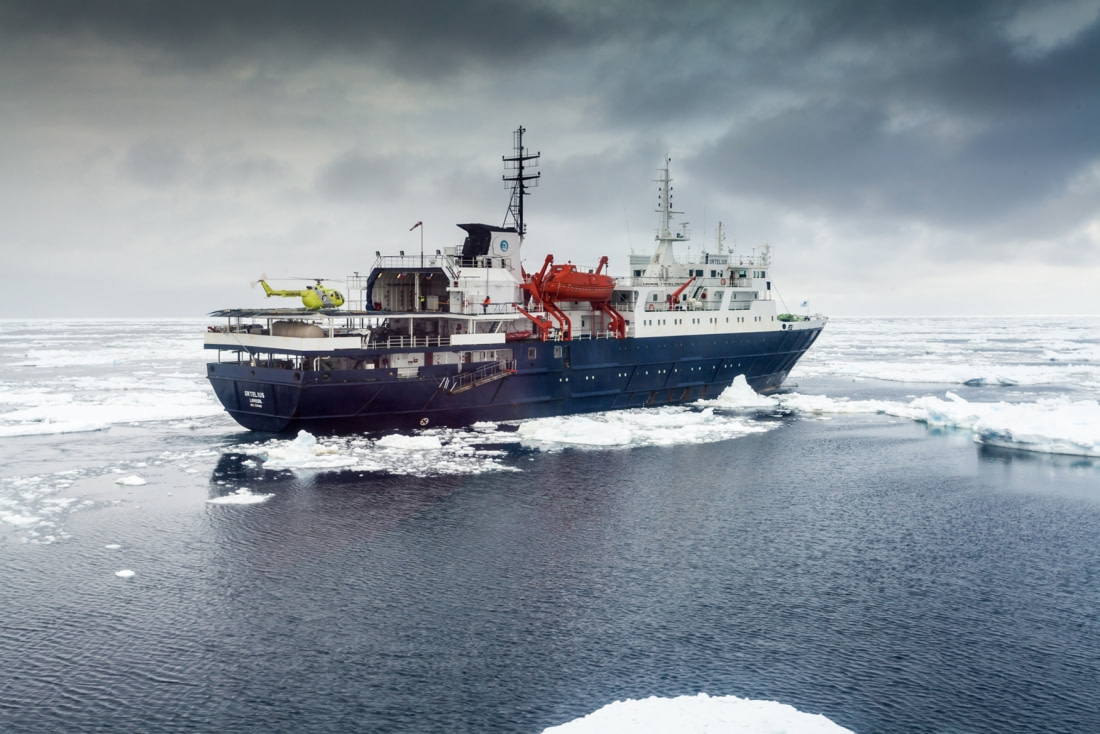
At 16:00, we were all out on deck with cameras at the ready watching the helicopters come in. One by one they landed on Ortelius’ Heli deck on the aft of the ship. Their blades were removed from their rotor, and they were wheeled into the Heli hanger to be stored for the drake crossing. The final helicopter was secured to the Heli deck and were we off, on our way down the Beagle Channel.

After a delicious buffet dinner, it was time to enjoy the last of the Beagle Channel before we head out onto the beginning of the Drake Passage. We were finally underway, excited and raring with anticipation!

Day 2: Sea Day

Sea Day
Datum: 12.11.2025
Positie: 57°32.7’S, 065°20.2‘W
Wind: Var 2-3
Weer: Overcast
Luchttemperatuur: +3

This morning we were excited to wake up to our first full day of the journey. The drake passage was surprisingly smooth, but despite the relative calmness many people were still suffering from seasickness.

Through the morning fog there were some exciting Southern Ocean bird species spotted from the bridge such as the grey-headed albatross, the black-browed albatross, the cape petrel, and the giant petrel, many of which were new species for the birdwatchers among us.

After a great breakfast, Expedition guide Gary started the lecture program with his talk about penguins, giving us an introduction to the species we would hopefully come across and the behaviour and biology which helps them to survive in Antarctica.

Not long after, Beth the geologist gave us a great talk about ice and how the Antarctic continent was formed and how it’s affected by ice today.

We had a tasty lunch before heading to collect our muck boots which would keep our feet warm and dry in the harsh snowy landscapes to come.

In the afternoon Expedition Leader Pippa and Assistant Expedition Leader George invited us to the lounge to receive a briefing about Zodiac operations and helicopter operations, so that we understood how to safely get in and out of each of these exciting modes of transport.

The weather certainly brightened up throughout the afternoon and we enjoyed watching the seascape from the bridge and outside decks.

The day at sea whizzed by and soon it was time to gather for the first of our daily recaps. Pippa informed us about the plans for tomorrow, we would be visiting the remarkable Deception Island and informed us about our helicopter practice run and biosecurity measures that would be taking place. Gary then entertained us by explaining how the different species of penguin pair up and their respective divorce rates, crushing the common misconception that they mate for life.

We headed off for a tasty plated dinner and a chance to further chat with and get to know each other in the restaurant. In the evening, we watched the sun go down over the ocean and started to prepare for tomorrows activities, charging our cameras and packing our pack backs, ready to explore.

Day 3: Sea morning and Whalers Bay, Deception Island

Sea morning and Whalers Bay, Deception Island
Datum: 13.11.2025
Positie: 62°17.0’S, 062°10.8‘W
Wind: NE 3
Weer: Cloudy
Luchttemperatuur: -0.8

This morning, we were at sea, sailing towards the South Shetland Islands, on our way to the unique caldera Deception Island.

It would take us a long time to transit there, so during the morning we got two very important tasks done. The first was to do a helicopter ‘dry run’, an exact practice run of how the helicopter operations would work on the day when we would step into the helicopters for the first time. We were called in our flight groups to the lounge where the expedition team explained to us what to expect on the day. We were then escorted to the helideck where we could practice getting in and out of the helicopter with our outdoor gear on and our equipment. This practice run gave us an opportunity to take some photographs and to understand exactly what to expect on the big day and ask any questions we might have.

We were also invited to the lecture room to do our biosecurity checks. Here we were looking for any dirt or vegetation that might be stuck in our pockets, Velcro jackets, boots, or back packs, that could potentially be harmful or introduce invasive species to the Antarctic environment.

After these tasks were finished, expedition guide Martin gave us a talk about the birds of the Southern Ocean. It was great to hear information about the spectacular seabirds that we were seeing in real time, many of which spend the majority of their lives soaring above the rough waves of the Southern Ocean, and only landing to breed once a year.

After a buffet lunch it was time to step foot on Deception Island at Whalers Bay. We watched in awe as we sailed through Neptune’s Bellows, the narrow entrance into the island. We were given the chance to walk around and explore the old Norwegian whaling station and see the remains of old research buildings from British scientists that were forced to leave the island after its most recent eruption. There was an unusual amount of krill washed up on the beach which gave us a chance to see these remarkable little animals up close, a keystone species that the entire Antarctic food chain is dependent on. There were many birds taking advantage of the accessible krill including Antarctic terns, Arctic terns, kelp gulls, cape petrels, and Gentoo penguins. We could also take a walk up to Neptune’s Window, a view point between the peaks where, on a clear day, it’s possible to see all the way to the Antarctic Peninsula and we could see cape petrels nesting on the cliff edges.

After exploring the island, some brave souls decided to take a dip in the ocean and do the famous Polar Plunge! Their screams could be heard from up on the hill but most emerged from the water with big smiles.

Once we had returned to the ship and warmed up with showers and hot drinks it was time for the daily recap from the expedition team in the lounge. Pippa told us about the plans to head ever closer into the Weddell Sea, and Beth gave an engaging recap about Deception Island. George finished off by explaining how the coastal waters of Antarctica are not separated into zones based on who owns them, and so technically those who took the plunge today did so in the high seas, a rare experience indeed!  

Day 4: Exploration of the Antarctic Sound

Exploration of the Antarctic Sound
Datum: 14.11.2025
Positie: 63°31.8’S, 056°45.9‘W
Wind: SE 3
Weer: Partly Cloud
Luchttemperatuur: -10

Today we were woken up at 07:15 by our Expedition Leader Pippa while we were sailing through the Antarctic Sound. A lot of us were already awake and out on the decks to experience the raw nature we were surrounded by. Some of us set alarms for 03:30 to see the sunrise. The clouds combined with the light turned the start of this day into a magical moment. We did not stay out as long as the previous days as we needed to come in to warm up. Today the temperature had dropped massively to minus 10 degrees Celsius, as the wind blew over the ice.

We were surrounded by beautiful sea ice and amongst that, bobbing around, were towering icebergs. The view was just spectacular. Sailing through the sea ice is such a great experience. Seeing big ice floes being pushed underneath others and being split in smaller pieces. And floes of a softer composition were scrapping the top layer off the underlying ones in these beautiful different patterns. We also saw some crabeater seals on the ice, quite close to the ship.

Sitting on the water were several southern giant petrels. With a wingspan of roughly two meters these clumsy birds were taking off in their own funny way. Around the ship we saw pintados (cape petrels), the elusive Antarctic petrel and the white fairies of the south: the beautiful snow petrels. They would fly in groups of two or three, elegantly skimming over the water.

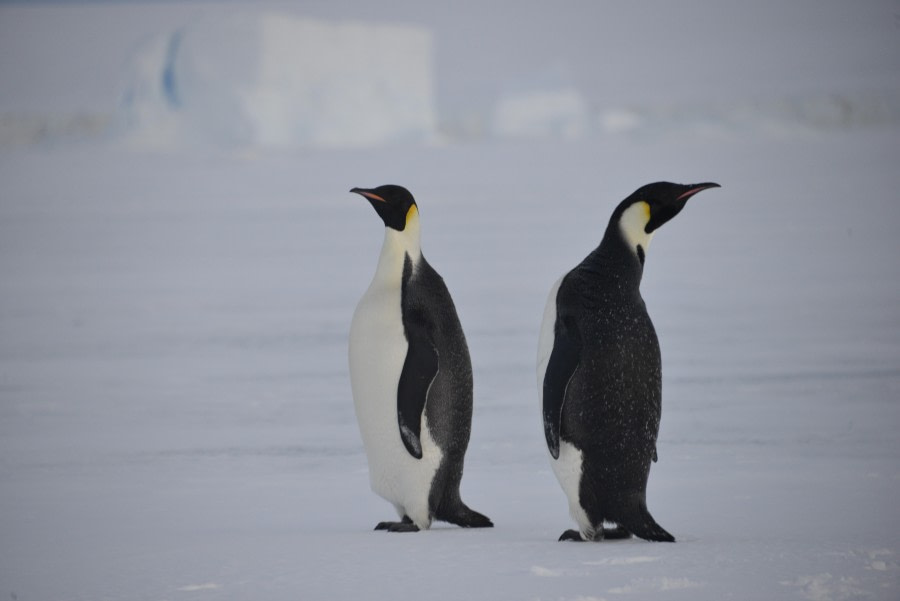
At 10:30, we were invited to the lounge on deck 6 to join our Assistant Expedition Leader George to listen to his interesting lecture on Polar Geopolitics: the emergence of the Antarctic Treaty System. During this he explained the fascinating story of how this unique political system was formed. Shortly after, another delicious lunch was prepared by the gally team. The bridge team was still trying to navigate us through the sea ice, but because of the currents, wind and therefore colder temperatures the ice was getting thicker. Then over the PA system came the message that our second officer had spotted four emperor penguins on the ice edge in front of us. The captain then slowly navigated the ship close up so we could all enjoy these magnificent birds.

Around 15:00 our Expedition Leader Pippa went on a reconnaissance flight with the second officer to see if there was a lead through the ice that we could follow to get us through the thick ice to Snow Hill Island. After returning she explained to us, with the aid of several pictures taken on the flight, that for this afternoon there was no visible option for heading south at the time. The ice was too dense.

We were sailing in an area of great historical importance and Allan captured us this afternoon at 16:30 in the lounge with his story about the Swedish Antarctic Expedition. An incredible, but to most of us unknown, survival story from in total 28 men on a ship named the Antarctic. The Antarctic Sound that we sailed through this morning was named after this ship.

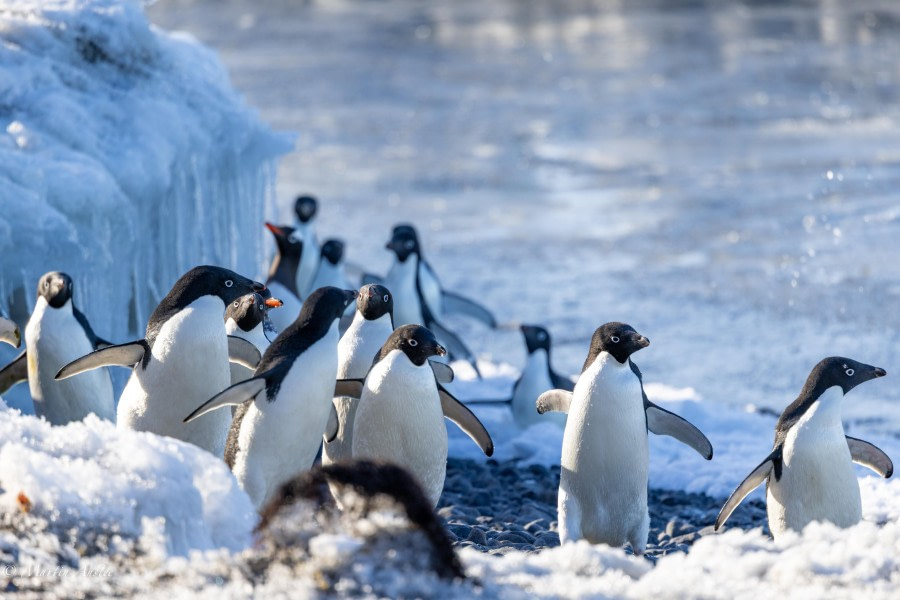
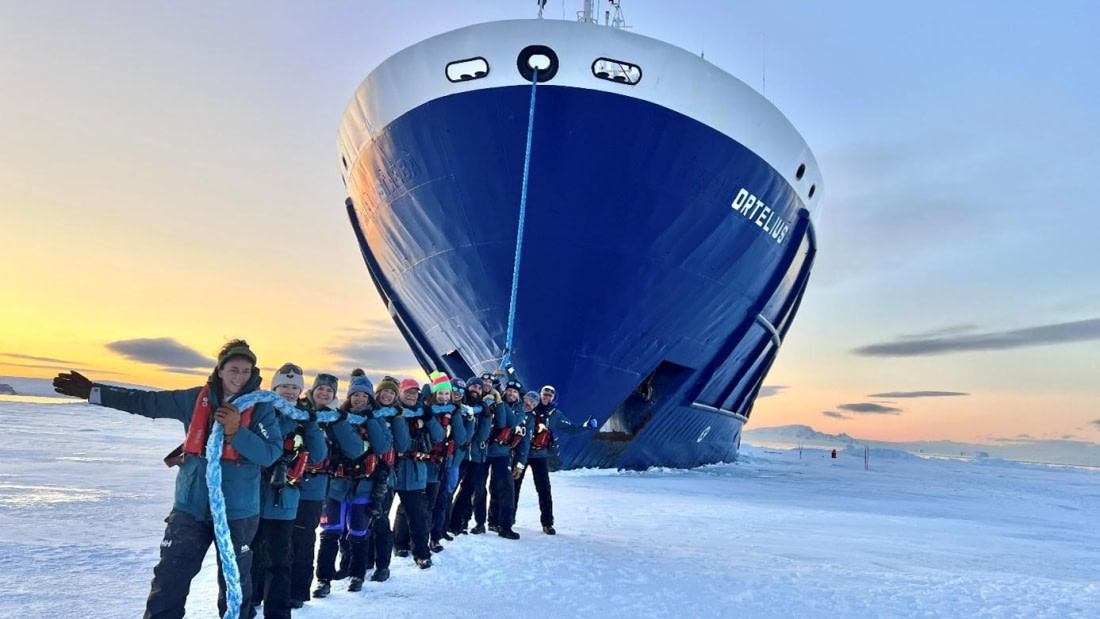
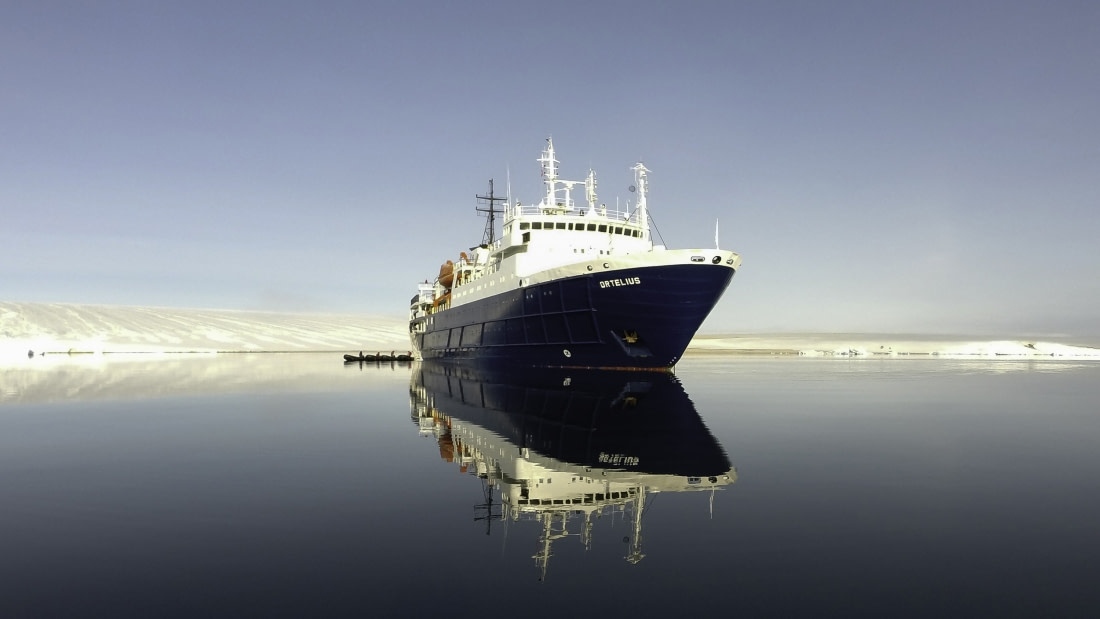
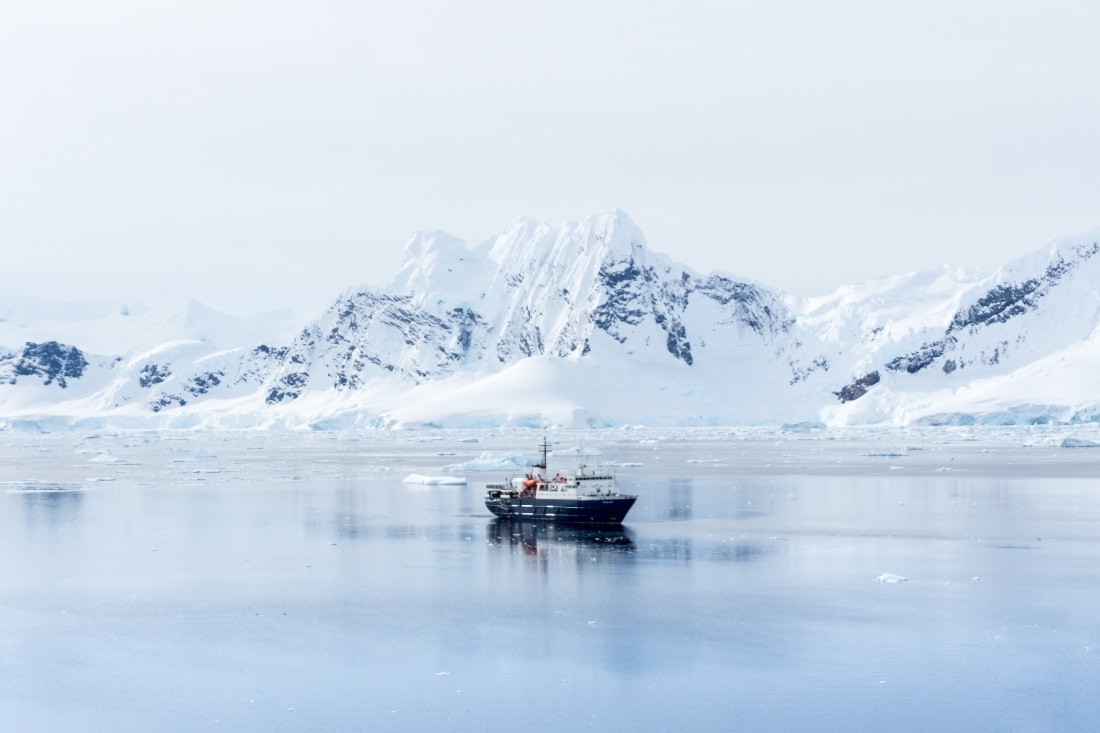
At 18:15 we were invited up to the lounge again by the expedition team to hear about the plans for tomorrow. Still positive that the ice conditions would change, the complete team with the captain up at the bridge the whole day, kept trying to get us to Snow Hill Island. For the evening Captain Per moored MV Ortelius in the sea ice. We were surrounded by different groups of Adelie penguins which were fun to watch. After an amazing day in the ice, we would end up stepping on the sea ice ourselves.

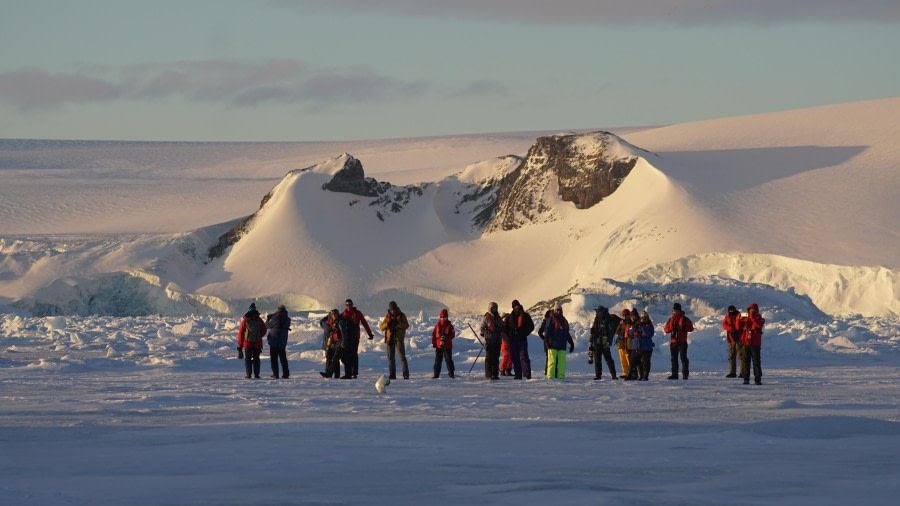
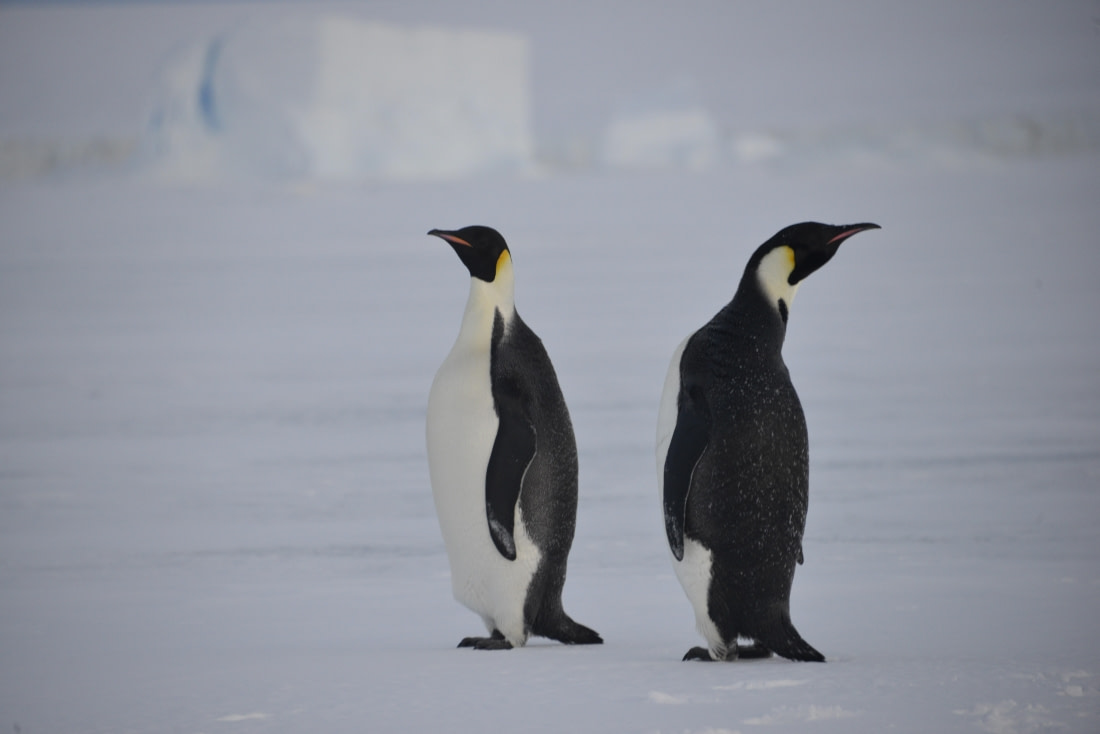
We went for dinner at 19:00 in the dining room and got dressed to step on the ice. The expedition team had checked the ice condition and set up a perimeter where we could roam and take pictures. We got an incredible visitor joining us at that exact moment, an emperor penguin! It was chilled and sat on the ice while we all came out and could take pictures and enjoy it. A large group of Adélie penguins also joined the show later. They glowed with the light reflecting on the wet feathers. The sun was setting and the icebergs and snow-capped mountains of surrounding Joinville Island and the Argentinian summer station ‘Petrel’ on Dundee Island, were lit up in pink and orange. Just magical again. It was an incredible way to end this beautiful day in the sea ice.  

Day 5: Scenic Flights and Brown Bluff

Scenic Flights and Brown Bluff
Datum: 15.11.2025
Positie: 63°33.3’S, 056°23.3‘W
Wind: S 2
Weer: Partly Cloudy
Luchttemperatuur: -7.8

What a day! We woke up to a beautiful, mostly sunny day with little wind—perfect for a bit of helicopter flying. Just as everyone was getting up, we spotted a few emperor penguins swimming near the ship. That turned out to be a good omen for the day.

While everyone had their breakfast, just a bit earlier than usual, the pilots, engineers, expedition staff and crew heli-team readied the deck and helicopters for a run of flight-seeing around the north end of the Weddell Sea. For best viewing, we only put three in each helicopter, so everyone had a window seat as our pilots put their machines through their paces. Everyone had about 20 minutes of flying to see the packed in ice of the northern Weddell Sea. It was obvious to most that no change was apparent, so the ice still blocked our way, but the feeling of zooming high above the ice was exhilarating. Then the Star Wars-like run through the large tabular bergs flying back toward the ship, and finally a bit of a bird’s eye view of our Ortelius before landing back home.

As the Ortelius moved position during lunch, we passed through several layers of newly frozen patches of ice. We could see vast but thin sheets of clear hard ice called nilas or finger ice. The clear and thin sheets are still flexible, but when pushed together they break in a way that various fingers of ice form where the two sheets stack segments on top of each other.

By just crossing the narrow area of the entrance to the Weddell Sea, it didn’t take very long to reach our afternoon landing site - Brown Bluff.

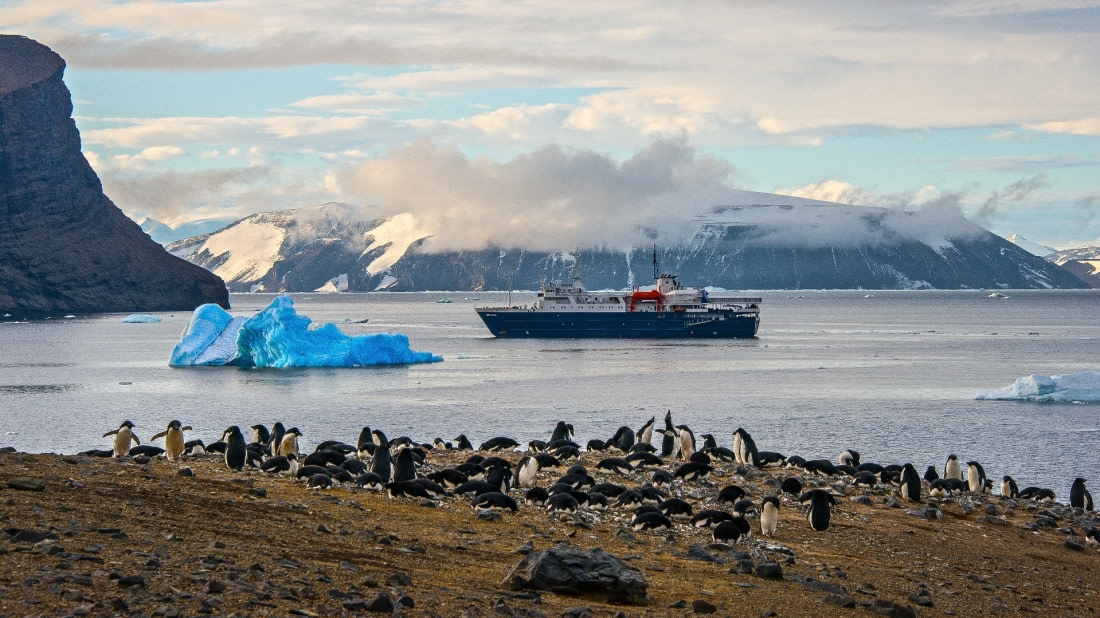
We all went ashore at Brown Bluff to wander around the big penguin colonies there. The landscape itself is a feature enough with the impressively high reddish-brown rocky cliffs rising out of the Adélie penguin colony. The cacophony of 50,000 or more Adélie’s, along with several thousand gentoo penguins nesting on the slopes, met us at the beach. It was such a busy site with the penguins still trying to finish laying eggs for their nests. Most of the Adélie’s had two eggs and the female had already gone to sea for the first foraging trip. But there were still plenty along the borders of the colony that were still striving to find a mate, build a stone nest and get a mate to put some eggs in it. As a result, we saw lots of matings as well as many comings and goings along the beach. Back on board for recap and a late dinner.

Day 6: Cape Green Heli-Landing and Sea Ice Walk

Cape Green Heli-Landing and Sea Ice Walk
Datum: 16.11.2025
Positie: 52°27.8’S, 052°08.8‘W
Wind: SW 6
Weer: Overcast
Luchttemperatuur: +2

The day began under a soft early-morning glow as our vessel lay quietly within a gently shifting mosaic of sea ice. Even before breakfast, the promise of the day felt special: a helicopter operation onto Cape Green, one of those rare and remarkable opportunities to place footfall on a remote and pristine corner of the Antarctic continent. For many on board, this was their first time landing by helicopter in Antarctica, and the anticipation could be felt throughout the ship long before the rotors began to turn.

Morning preparations were smooth, and the conditions could hardly have been more ideal. Clear skies stretched overhead, the visibility nearly perfect, and the winds modest enough to allow for safe and comfortable flying. As each group boarded the helicopter, the excitement was tangible. It was an eager blend of curiosity, exhilaration, and quiet reverence for the environment we were entering.

The flight itself was unforgettable. Lifting off from the vessel, we quickly rose above a frozen world of astonishing texture and colour. The ocean, nearly completely enclosed by sea ice, looked like a vast white quilt, stitched by fracture lines and pressure ridges. From above, patterns in the ice became visible. Swirls, cracks, and broad frozen plates separated by narrow leads of dark water. Here and there, immense tabular icebergs lay embedded within the sea ice, their sheer cliffs rising stark and geometric against the gentle undulations of the frozen ocean.

As we approached Cape Green, the landscape transformed again. The mountains emerged from the continent like jagged sculptures, their slopes draped in snow that glowed faintly gold in the morning light. The helicopter made a careful approach to our landing site atop a ridge, and soon the skids touched down with a gentle thump. The moment the doors opened, an astonishing sense of space and silence poured in. The Antarctic air, crisp and cold, wrapped around us like a reminder that we had arrived in a place that belongs to itself alone. Once the helicopter had left, our attention was drawn to the complete silence.

From the ridge at Cape Green, the view was almost overwhelming in its scale. The panorama stretched uninterrupted across sea ice, iceberg fields, and distant frozen coastlines, the entire world appearing both immense and intricately detailed. Guests dispersed across the site, each finding their own perspective on this rare vantage point. Some stood quietly, simply absorbing the silence. Others took slow, deliberate walks along the ridge, pausing often to admire the varied textures of the ice below or to take photographs that could never fully capture what it felt like to stand there.

Eventually, the groups returned in sequence to the vessel, each landing bringing back guests glowing with exhilaration, cheeks flushed from the cold and the awe of the landscape. The rest of the day carried a lightness with it, as if today’s experience had set a new tone of quiet wonder on board.

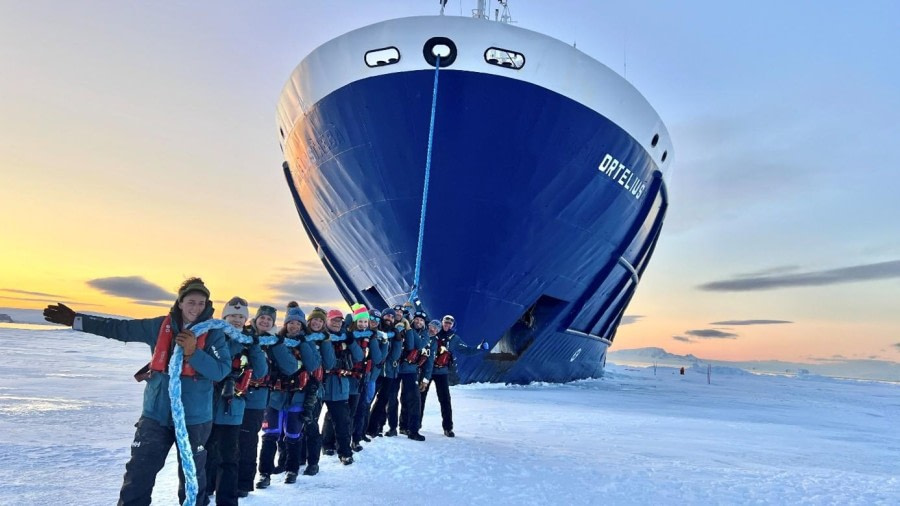
After dinner, the day offered yet another unforgettable encounter. Our captain positioned the ship securely into the sea ice, creating a stable platform for an evening excursion directly from the gangway.

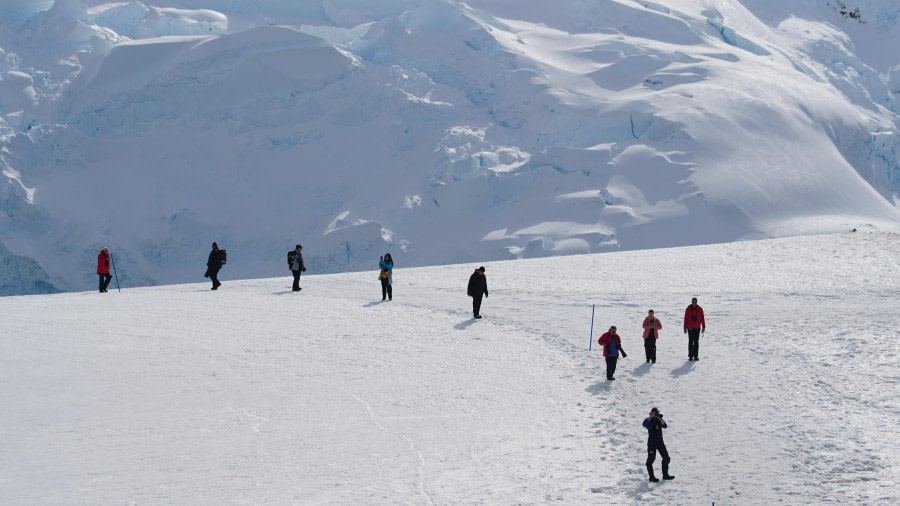
Once conditions were assessed and confirmed safe, we ventured out onto the ice, forming a gentle line of figures moving across the frozen surface toward a large tabular iceberg that lay anchored in the ice nearby. Walking across Antarctic sea ice is always a special experience—crisp underfoot, faintly echoing with each step, and carrying a unique sense of privilege. As we approached the iceberg, its massive vertical face revealed itself in finer detail: wind-carved grooves, subtle blue veins, and edges softened by seasons of drift and freeze.

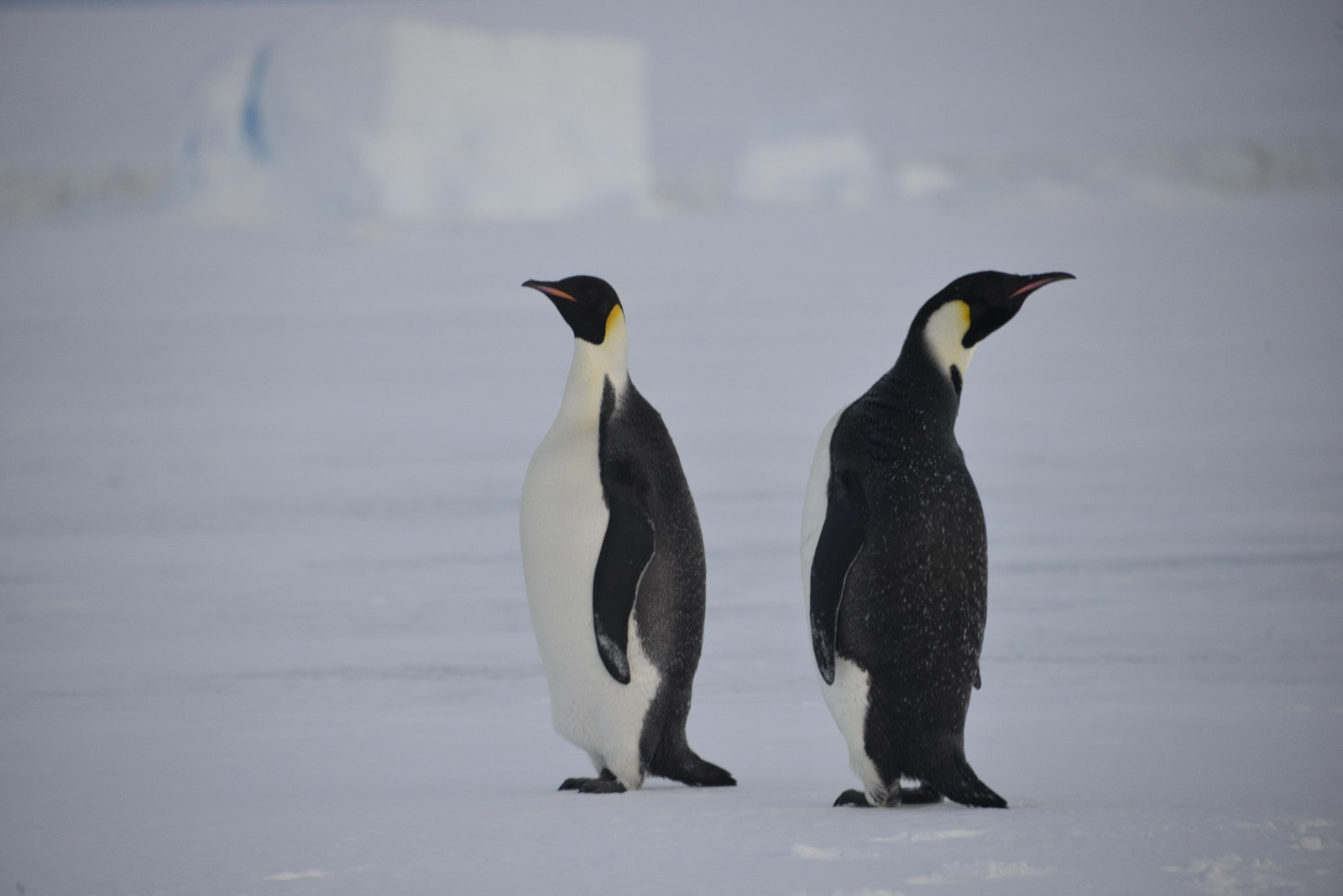
Just as we were preparing to conclude the operation, a quiet murmur spread through the group. From a distance across the flat sea ice, two small dark shapes appeared, moving steadily toward us. Through binoculars, their identities became unmistakable—two emperor penguins, walking with their characteristic dignified stride, making their way directly toward our position. It was one of those moments that unfold slowly enough for everyone to witness but quickly enough to feel almost unreal. The penguins approached with curiosity, pausing now and then as if to better assess this unusual assembly of humans standing on their frozen terrain.

They came close enough for us to observe their elegant markings, the subtle gradations of yellow and orange on their necks, the way their feet shifted rhythmically across the ice. They seemed calm, inquisitive, and completely unbothered by our presence. Our group stood quietly, giving them space yet savouring the extraordinary privilege of the encounter.

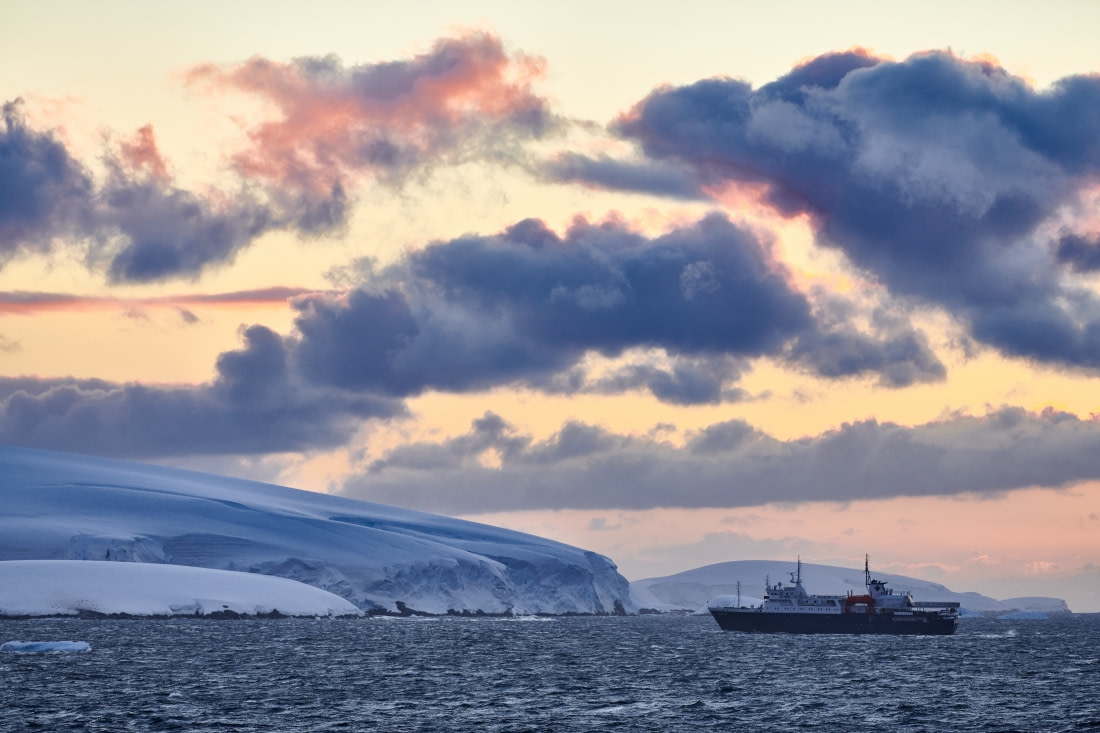
As if the day needed any further perfection, the sky began to transform as the sun dipped toward the horizon. Slowly, the colours deepened into warm hues that belied the icy landscape—pinks, lavenders, and soft amber tones radiated across the horizon, reflecting gently off the ice and the distant bergs. The tabular iceberg before us glowed softly under this pastel sky, its edges catching the last rays of sunlight. The entire scene felt almost dreamlike, a serene and fragile beauty that held everyone in quiet admiration.

We remained out on the ice until the colours reached their peak, a full pink dome stretching over the Antarctic expanse. Eventually, as the light softened into evening twilight, we returned slowly toward the ship, each step marked by the lingering glow of one of the most memorable days of the voyage.

Back on board, the conversations lingered long after we had all returned to the warmth of the lounges and cabins. Guests shared their photos, impressions, and quiet moments of reflection. Helicopter landings, emperor penguins, sea ice walks, and a sunset sky painted in pink—this day had given us a collection of experiences that would remain vivid long after the expedition ended.

And so, the day closed, the ship wrapped in silence under the lasting glow of the southern sky, ending a truly spectacular day in Antarctica.
Day 7: Mikkelsen and Cierva Cove

Mikkelsen and Cierva Cove
Datum: 17.11.2025
Positie: 63°26.0’S, 060°10.4‘W
Wind: NW 3
Weer: Partly Cloudy
Luchttemperatuur: -0.4

We woke this morning to another sunny beautiful morning in Antarctica although this morning we had moved around from the Antarctic Sound, through the Bransfield Strait towards the upper reaches of the Gerlache Strait on the western Antarctic peninsula.

There was a subtle difference in the landscape with more snow and ice shining in the sunshine.

After another fabulous breakfast from the galley team, it was time to go out and explore the outer decks and search for wildlife.

At 10:00 Jess started her lecture on marine mammals, a fascinating insight into these amazing creatures. Jess had not been talking long when word came from the bridge of a sighting of three humpback whales, probably a mother, calf and maybe an aunty. Jess stopped her lecture and we watched these three wonderful creatures swimming around the ship, showing us their flukes (tails) as they dived repeatedly into the depths before resurfacing.

When everyone had seen the whales, we carried on our way towards our afternoon destination and Jess was able to finish her lecture!

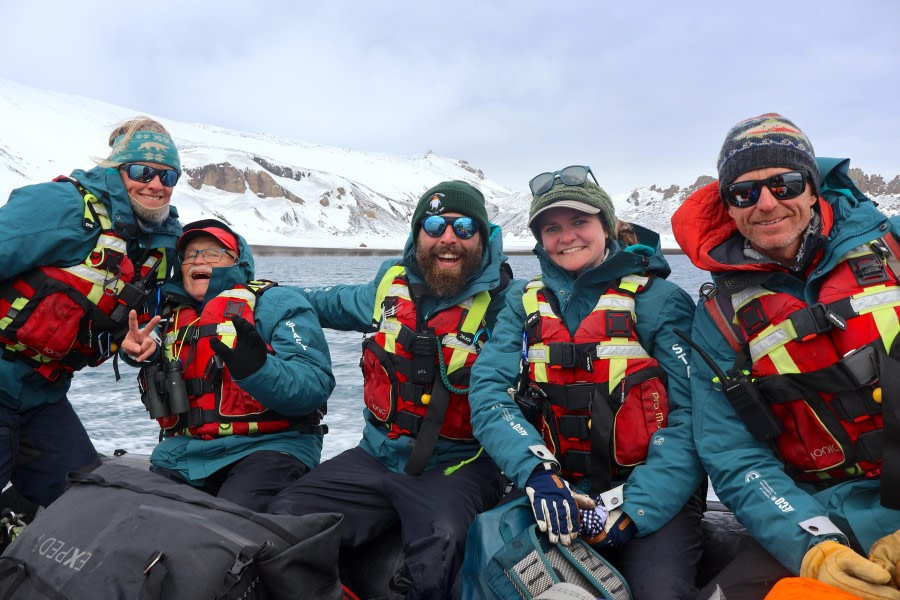
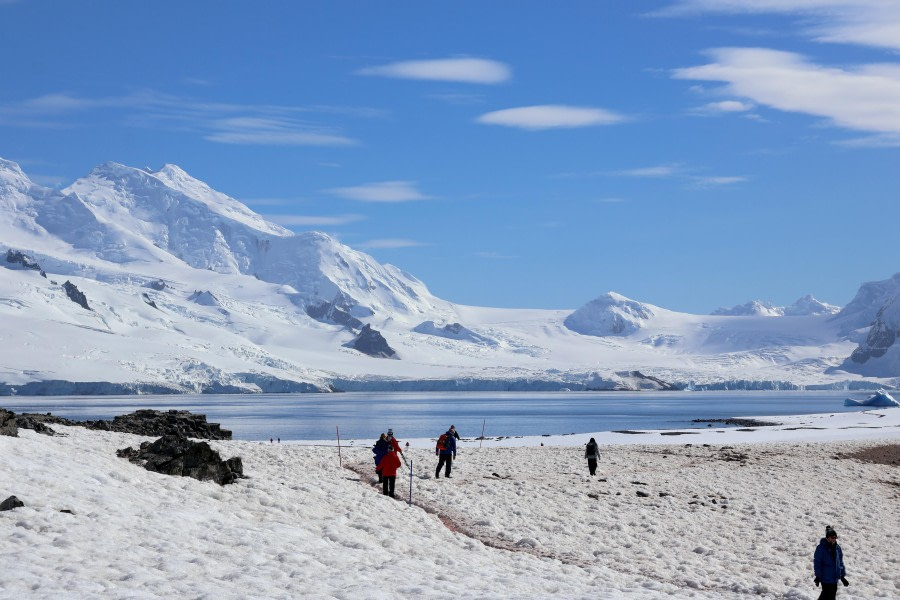
After a very tasty lunch we were taken out on the Zodiacs to D’Hainaut Island in Mikkelsen Harbour, the weather was glorious, the sun was shining and it was very warm. The island is covered in snow at this time of year, and we enjoyed a circular walk around the island looking at the various satellite groups of gentoo penguins. We also found three Weddell and two elephant seals.

After a full afternoon of exploring D’Hainaut Island we returned to the ship for the daily recap.

After another delicious dinner it was time to get dressed up again, this evening was to be our first Zodiac cruise. The location was Cierva Cove on the west Antarctic peninsula. Cierva Cove is home to the Argentine research base, Primavera, as well as chinstrap and gentoo penguins, glaciers and hundreds of icebergs. As we cruised around the beautiful ice, we found many penguins and even our first leopard seal. The light was astonishing as the sun went down below the horizon, as it did so the temperature dropped rapidly, and it was time to return to the ship for a warm drink. What a way to end a fabulous day!

Day 8: Yankee Harbour and Half Moon Island

Yankee Harbour and Half Moon Island
Datum: 18.11.2025
Positie: 62°32.6’S, 059°48.2‘W
Wind: SE 4
Weer: Partly Cloudy
Luchttemperatuur: -0.7

Overnight Ortelius made excellent progress northwards across the Bransfield Strait, heading for the wild and windy South Shetland Islands. When Pippa’s morning wake-up call echoed around the ship, Ortelius was already in McFarlane Strait between Livingston and Greenwich islands. The scene of ice-capped mountains and heavily glaciated terrain was a sight to behold, and as if it couldn’t get any better, several fin whales welcomed us to the area. As breakfast was being served, Ortelius came to anchor just outside Yankee Harbour on the south-west coast of Greenwich Island. Our destination for the morning, a colony of between 4,000 and 5,000 breeding pairs of gentoo penguins, was clearly visible through binoculars.

We took the Zodiacs ashore and were greeted, as always, by Pippa and the ever-enthusiastic expedition team. It was cold. A southerly wind swept across the exposed landing site, and overcast skies prevented the warmth of the sun from reaching us. But none of that mattered. We were treated to a scene of endless entertainment as thousands of Gentoo penguins went about their business. For the most part, they seemed blissfully oblivious to our presence. It was the start of their breeding season, so most of the birds that were on a nest were incubating one or two precious eggs. Kelp gulls and brown skuas patrolled overhead, looking for an opportunity to swoop in and steal an egg. Many penguins that were not on nesting duty were busy coming and going from the sea as they departed for, or returned from, feeding trips.

There were signs of past and present human activity. The oldest were the remains of a sealer’s trypot, which was partially visible sticking out of the gravel along from the landing site. Near the penguin colony there was a modern navigational marker built by the Chilean Navy. And at the far end of the rocky spit there was an older, simpler navigation beacon, probably erected many years ago by the Argentine Navy. Those that walked all the way to the end of the spit were rewarded with fantastic views of sleeping Weddell seals, a wonderful creature that has one of the cutest faces in the entire animal kingdom.

As the morning progressed, the sky slowly cleared, and the cold wind subsided. By the time we were taking the Zodiacs back to the ship, it was a different day altogether. The biting cold wind was replaced by calm conditions, sunshine and much warmer temperatures. The surrounding scenery looked magnificent, bathed in glorious sunshine with a blue sky overhead. It was time to say goodbye to Yankee Harbour, which had been a safe haven for British and American sealers as early as 1820. For a few hours, over 200 years later, it had also been a safe haven for us. By 12:15, everyone was back onboard, and Ortelius headed off towards our next destination. Very soon, the announcement inviting us to lunch filled the ship.

We crossed McFarlane Strait, heading south-west for Half Moon Island, just 5 nautical miles or so from Yankee Harbour. Ortelius found her anchorage at Half Moon at around 13:30, just in front of the brightly painted buildings of Argentina’s Camara Station, which is currently unoccupied. The expedition team headed ashore to scout the landing site, and at 14:30 we disembarked for a final Zodiac landing near a colony of chinstrap penguins. The remains of an old wooden dory lay above the beach near our landing site, partially buried by snow. We hiked up the slope to various viewpoints which gave great views of the chinstraps and surrounding scenery. Nearby Livingston Island provided a spectacular backdrop of tumbling glaciers and ice-capped mountains. In the opposite direction, distant Greenwich Island looked equally stunning.

A portion of the trail gave a fantastic view over the small bay where Ortelius lay quietly at anchor. At the penguin colony onlookers watched kelp gulls hanging around and flying low over the chinstraps, which objected noisily to their presence. Scattered everywhere were thousands of limpet shells, one of the favorite foods of kelp gulls. Snowy sheathbills also hung around the penguins, making their living from whatever edible detritus they could find. Some of us walked down to the shore in the general direction of the station where some Weddell seals slept soundly in the snow. The view across to Livingston Island was out of this world, and the weather was nothing less than extraordinary. The South Shetland Islands can often be a savage and inhospitable region, but today we were privileged to enjoy the rarely seen softer side of these incredible islands.

It was hard to leave, but we had an appointment with Ushuaia, and the Drake Passage beckoned. Once we were all back on board, Captain Per got Ortelius under way and skilfully guided her out through the navigationally challenging waters of McFarlane Strait. The gentle swells of the Drake Passage soon met us, and the ship took on a gentle motion as we set course for the southern tip of the South American continent.

Day 9: Drake Passage

Drake Passage
Datum: 19.11.2025
Positie: 60°00.3’S, 062°58.4‘W
Wind: SW 3/4
Weer: Cloudy
Luchttemperatuur: -1.1

A nice sleep in was a wonderful way to start the day with a 07:45 wake up call from Pippa this morning. After breakfast we were enthralled by a lecture on the inner workings of the ship by Chief Engineer Guntis and Second Officer/Helicopter Landing Officer Ward.

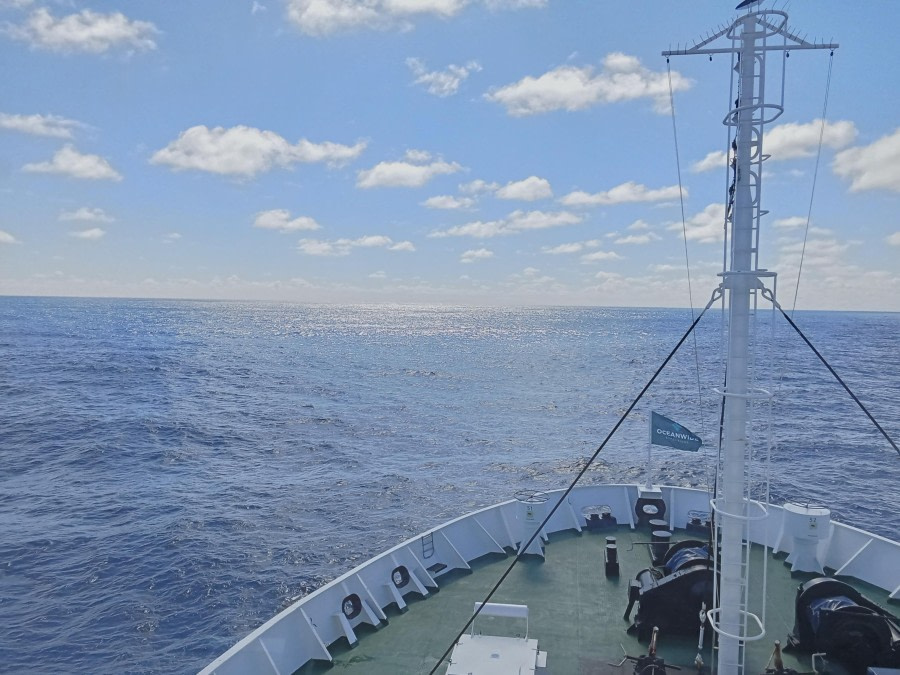
There were only a few people up and about the bridge mid morning as we maintained a brisk pace across the Drake Passage toward Cape Horn. The seas were also calm, and we sailed in the company of a black-browed albatross, a southern fulmar, and several pintado petrels gliding gracefully beside us.

Around 11:30am, Gary gave a very interesting talk about his winter-over at Mawson Station where he studied the emperor penguins at the nearby Auster Colony. We learned all about the quirks of spending 11 months with only 16 other people!

With the seas still mercifully gentle, we thoroughly enjoyed lunch before settling in for Allan’s fantastic presentation on an often overlooked chapter of Antarctic history: the dogs. Their presence proved vital to early exploration—not only in their practical contribution to travel across the ice, but also in the morale they brought to long polar journeys and dark winter months.

After lunch, we returned our Muck Boots - a small but symbolic gesture marking the end of our outdoor adventures on this voyage and prompting reflection on the extraordinary places we had been privileged to explore in them.

Pippa then gave a recap of our attempts towards Snow Hill Island before George gave us a rundown on what it means to be from Antarctica and a funny recount of the Chilean/Argentinean race to have a childbirth on the white continent.

Then after another exquisite dinner, many of us settled into a watching Happy Feet with a great introduction by Gary. With still gentle seas, it was a pleasant evening onboard as some watched a few Wilson’s storm and white-chinned petrels fly past the bridge to end the day.

Day 10: Cape Horn and the Beagle Channel

Cape Horn and the Beagle Channel
Datum: 20.11.2025
Positie: 56°10.5’S, 067°06.5‘W
Wind: SW 3
Weer: Cloudy
Luchttemperatuur: +5.1

We were woken by Pippa at 07:45 who told us that South America was already in sight! We had made remarkable speed across the Drake Passage in these beautifully calm seas. The skies had been clear for much of the crossing too, making it a joy to be on deck taking in the vastness of the ocean and the birds who wander these rarely reached stretches of our planet.

After a swift breakfast for many, it was time to layer up and make our way to the outer decks where we watched as Captain Per took us in as close as was allowed to Cape Horn. An opportunity which rarely arises due to the timings and weather. This infamous tip of the Americas has been part of the history of exploration and trade throughout the 17th, 18th, 19th and even early 20th centuries as ships tried to round this cape in the notoriously rough and challenging waters of the Drake Passage. Today we can see this rocky shore, owned by the Chileans, in calm conditions, fooling us to believe this place is peaceful and calm.

Gathered on the bridge and the outer decks we photograph the impressive crags jutting out of the water with occasional bursts of swell crashing up onto the sides. It was a spectacular first sighting of our return to South America. The island where we find Cape Horn is names Isla Hornos, and on its eastern side lies a rocky promontory where these is a sculpture showing a silhouette of an albatross which is to honour the sailors who died while attempting to round the horn. Beside this, lies some buildings that are occupied by a Chilean family.

Just as we were increasing our distance from Isla Hornos, there was a call that there were Peal’s dolphins riding the bow wave. It was an impressive sight as we peered over the side, watching the fun these dolphins were having in Ortelius’ bow wave. We lined the bow with our heads cold in the wind as we watched them through the clear water, repeatedly jumping into the air as they played.

As we made our way round to the Beagle Channel it was lovely to be out on deck, we could smell the earthy vegetation and see the busy bird life. Black browed albatross, shags and pintado petrels were seen from the outer decks.

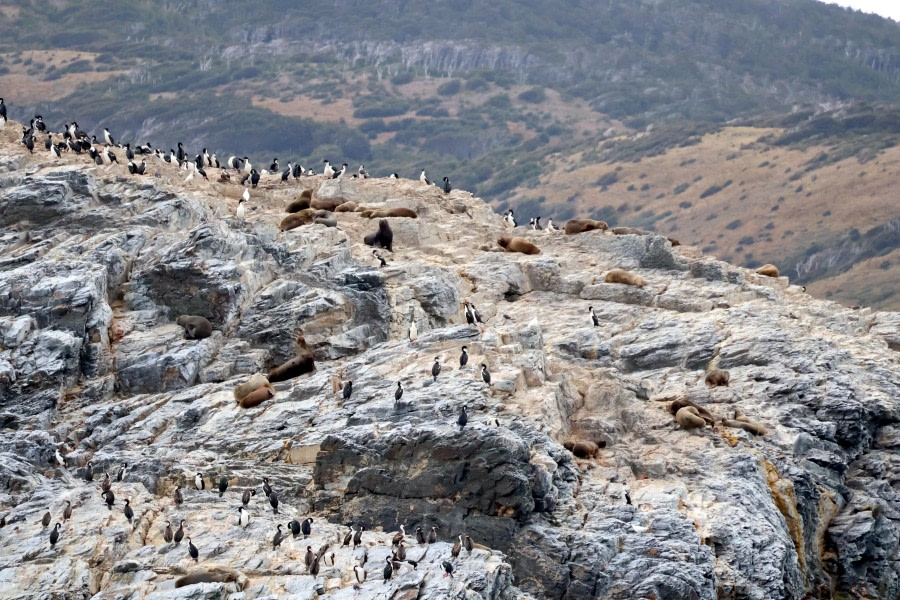
As we had made good time, we made out way over to the north side of the Beagle Channel and stopped by Blanco Islet, a small rocky outcrop where we could see southern sea lions and shags resting in the warm sun.

Day 11: Disembarkation Ushuaia

Disembarkation Ushuaia
Datum: 21.11.2025
Positie: 54°48.6’S, 068°17.9‘W
Wind: Var 1/2
Weer: Raining
Luchttemperatuur: +6.6

It was a hard moment to part from Ortelius which we have called home for the last 11 days. Although we can look forward to heading to home to our loved ones and sharing stories, we will all look back fondly on this trip.

Over the last couple of days, we have reflected on the power of nature and that still to this day we cannot overcome the forces of nature in this remote and wild region, Antarctica. In some ways, this is the beauty we see in this place, and we have certainly made the most of this icy region from dawn till dusk, enjoying every part it offered.
We had a final breakfast onboard and said goodbye to the hotel and dining room team. We headed for the gangway for a last farewell. Some of us were staying in Ushuaia to continue our adventures, while others were heading home. One thing was for sure, we would not forget our time together on board Ortelius.  


Total distance sailed on our voyage: 1621 nautical miles / 3002.1 km

Most southern point sailed: 64°09.3’ S, 060°58.2’ W

Freshwater Consumption: 299 m3

Freshwater Production: 250 m3

Fuel Oil: 171.4 m3

Zodiac Petrol: 154 litres

Helicopter Fuel: 5491 litres

Fuel Oil Consumption: 84.5m3


On behalf of Oceanwide Expeditions, Captain Per Andersson, Expedition Leader Pippa Low, Hotel Manager Volodymyr Cherednychenko and all the crew and staff of M/V Ortelius, it was a great pleasure and a privilege travelling with you!

Details

Reiscode: OTL22-25
Reisdatum: 11 nov. - 21 nov., 2025
Duur: 10 nachten
Schip: m/v Ortelius
Inscheping: Ushuaia
Ontscheping: Ushuaia

Op deze reis geweest?

Aan boord van m/v Ortelius

De ijsversterkte Ortelius is grondig uitgerust voor expeditie cruises en, op sommige reizen, helikoptervluchten.

Meer over de m/v Ortelius »
Loading