OTL21-26, trip log, Antarctica - Basecamp - free camping, kayaking, snowshoe/hiking, mountaineering, photo workshop

by Oceanwide Expeditions

Fotogalerij

Logboek

Day 1: Embarkation Day, Ushuaia

Embarkation Day, Ushuaia
Datum: 03.11.2026
Positie: 55°00.8’S; 066°46.6‘W
Wind: N-3
Weer: Overcast
Luchttemperatuur: +8

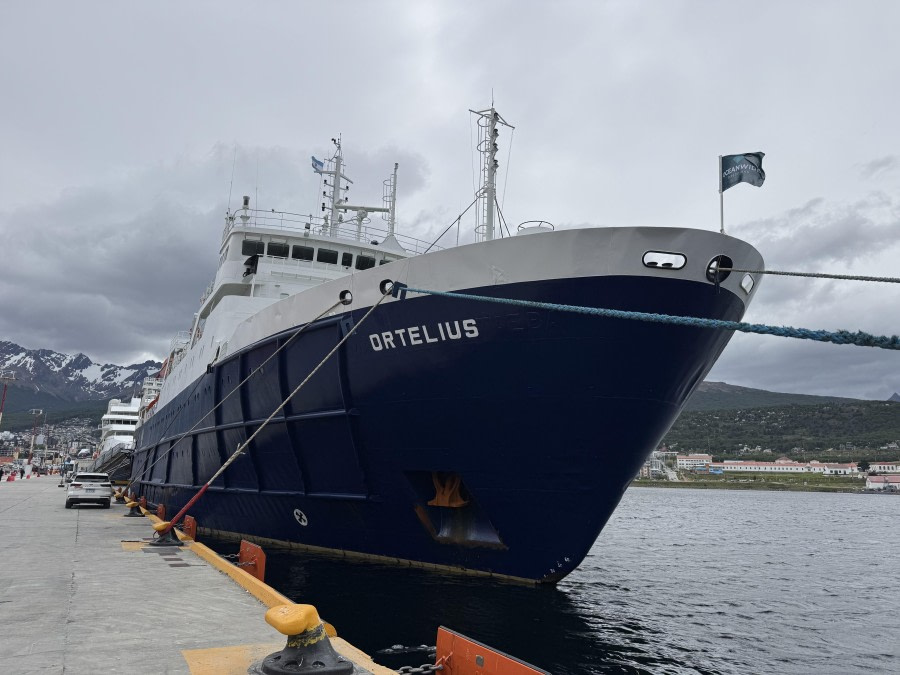
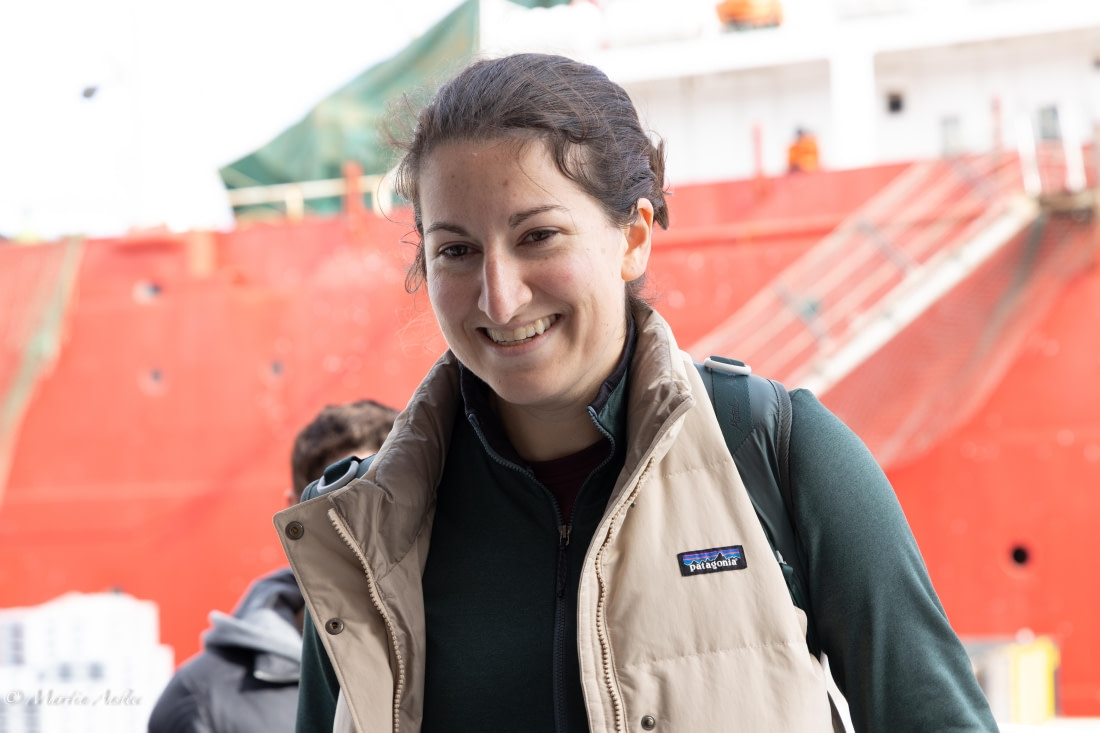
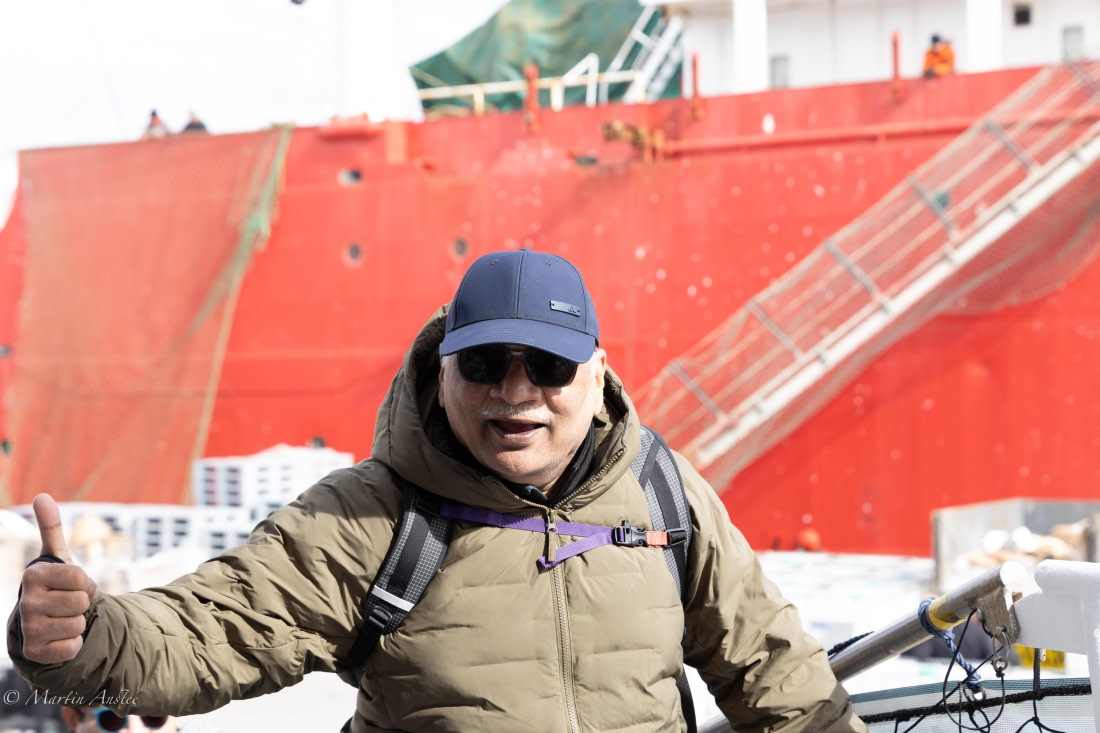
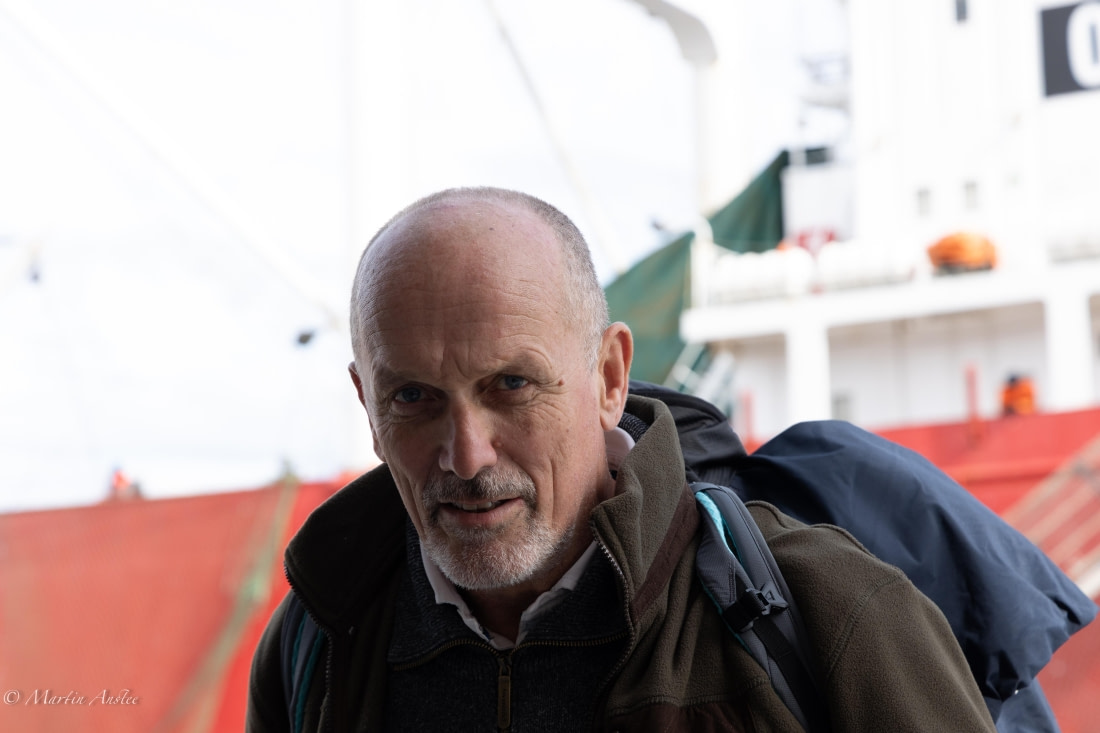
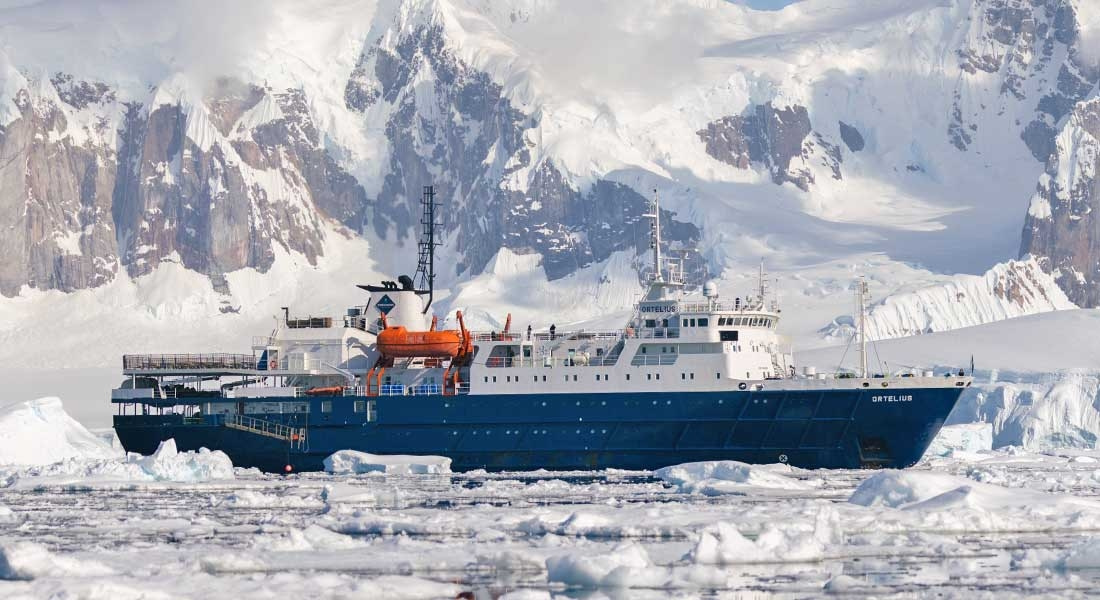
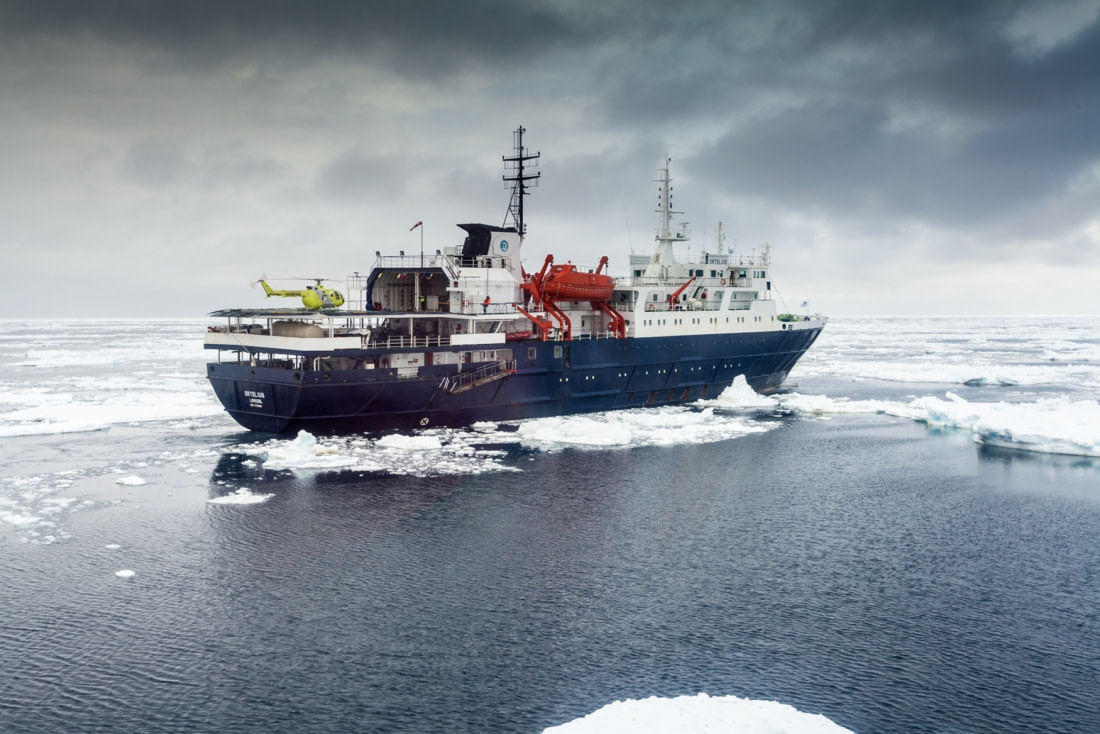
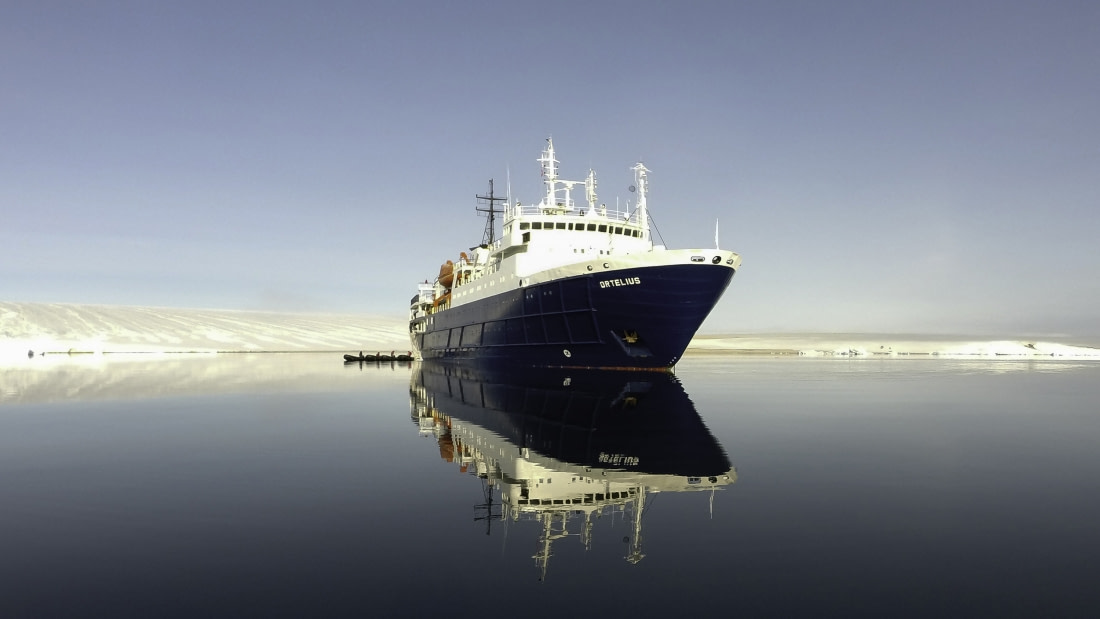
It was a buzzing afternoon, following a busy morning of preparations, as excitement built among our fellow expeditioners. We made our way to the pier in Ushuaia, where the sturdy silhouette of the MV Ortelius awaited us, accompanied by a couple of other expedition vessels nearby. This was no ordinary cruise; it was our gateway to a week of adventure and once-in-a-lifetime experiences. Conversations were filled with anticipation as we exchanged thoughts about the extraordinary activities ahead: camping on the snow, kayaking among icebergs, and even mountaineering on the Antarctic continent.

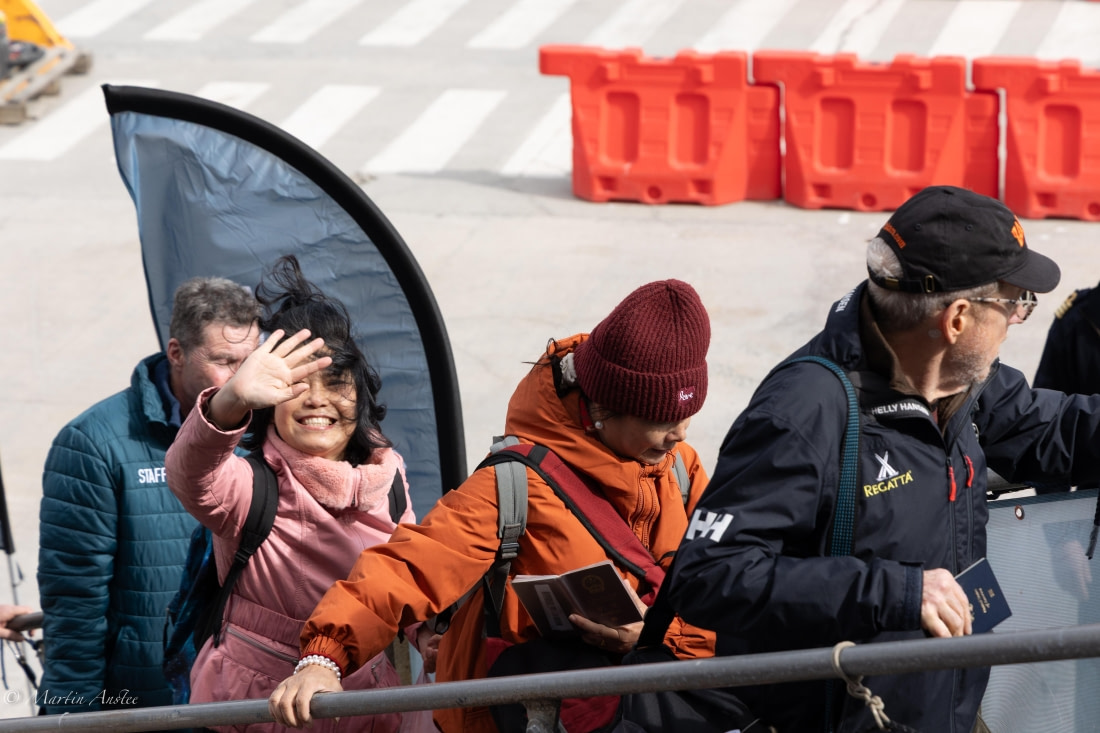
Boarding went smoothly, and before long we had settled into our cabins and the official shipboard routine began. The essential safety briefing and abandon-ship drill followed — sobering but necessary reminders of the importance of safety in the remote and challenging environment we were about to explore.

This was soon followed by a welcome from Captain Remmert, who greeted us in the lounge and officially marked the beginning of our voyage.

Next, Expedition Leader Pippa introduced us to the journey ahead, together with Hotel Manager Ingrid and the rest of the expedition team. Their collective expertise was impressive, spanning marine biology, ornithology, geoscience and outdoor adventure activities. We were clearly in capable hands.

A lovely dinner provided the perfect opportunity to get to know our tablemates, each of us sharing stories about how we had come to find ourselves on this remarkable journey. After dinner, we spent the remaining hours wrapped up warmly on the outer deck, taking in the sublime evening light as the landscape slowly unfolded around us. And then the wildlife made its appearance. Magellanic penguins scattered around small islets, while sea lions lounged lazily on rocks. As we approached the eastern end of the Beagle Channel, the protective walls of land gradually fell away. The movement of the ship subtly changed, and the rolling swell of the mighty Southern Ocean began to make itself known.

The anticipation was palpable. Ahead lay the Drake Passage, the ice, the silence and the extraordinary adventure of camping, kayaking and hiking on the Seventh Continent. Our Antarctic adventure had truly begun!

Day 2: At sea in the Drake Passage

At sea in the Drake Passage
Datum: 04.11.2026
Positie: 57° 31.1’ S, 064°12,9‘ S
Wind: NW-5
Weer: Overcast
Luchttemperatuur: +5

We were very excited to begin our first full day onboard Ortelius. Today we would be spending a whole day at sea as we made our way to the Antarctic Peninsula. Pippa gave us our first wake-up call on the PA system, but many of us were already awake and excited to get outside. There was some movement on the ship, the waves were supposed to reach 4 to 6 meters today and there were already some seasick people.

After breakfast Marco invited us to join him in the lounge for an engaging introduction to the White Continent. Through his lecture, we discover the extraordinary landscapes, and unique wonders of the Antarctic Peninsula as we prepare to explore one of the most remarkable places on Earth.

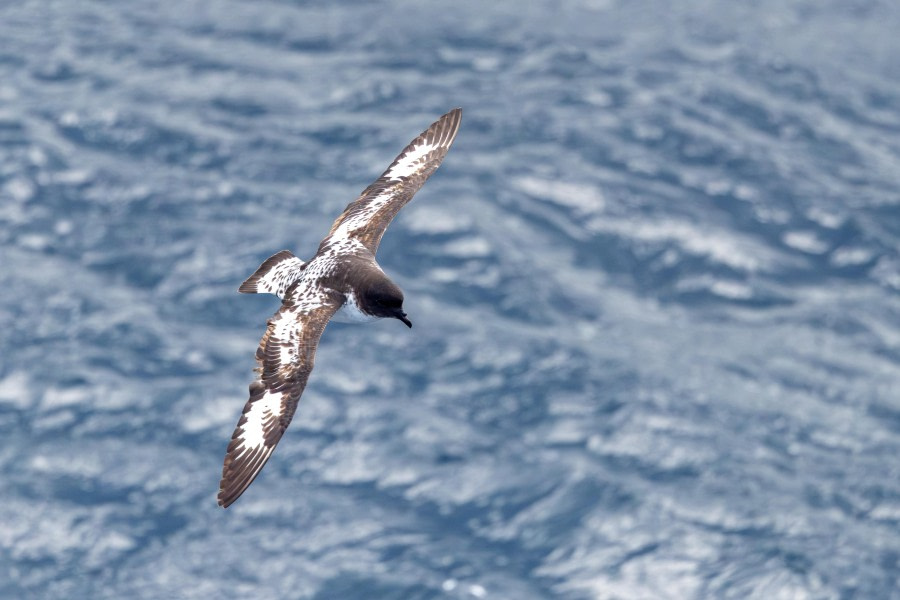
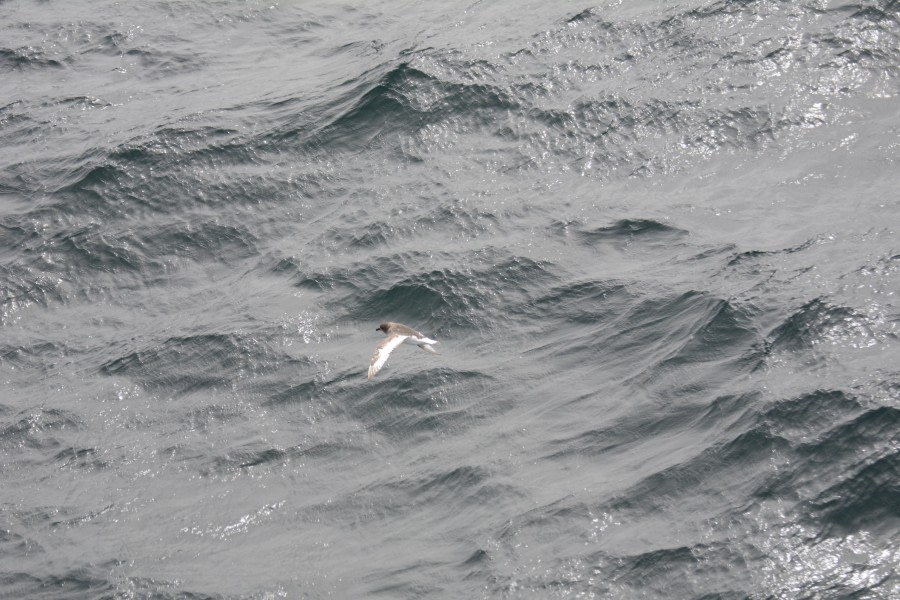
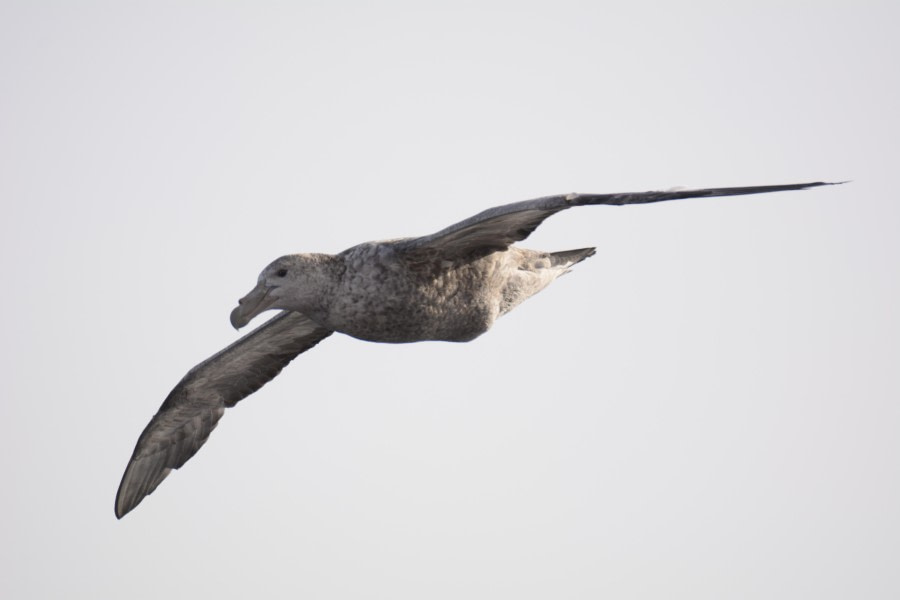
Lots of beautiful bird species were spotted throughout the day, including the black-browed albatross, cape petrel, giant petrel, prions, shearwaters, and storm petrels.

Later in the morning Martin did a presentation on Birds of the South, it was a fascinating journey into the world of the Southern Ocean’s birdlife, we discovered the remarkable lives of penguins and the many other seabirds that inhabit this incredible region.

We enjoyed a tasty buffet lunch before we gathered in the lecture room to collect our muck boots that would keep our feet warm and dry during the trip.

In the afternoon, around 3pm, we had to complete our biosecurity, we had to check & clean all our outer layers before we set foot in Antarctica. Brushes, paper clips and vacuum cleaners were all around the place, as we passed one by one.

Before dinner we gathered in the lounge for the first of our briefing and daily recaps. Pippa told us about the plans for tomorrow, Bill told us how important is to look, see, understand and DO and Gonzalo gave us funny recap “Antarctica for dummies”, he gave us the tips to identify the main species we will see in Antarctica.

We were served a lovely plated dinner in the restaurant and slowly started heading to bed with our heads full of new information and ideas and with lots of excitement!

Day 3: Sailing towards Antarctica

Sailing towards Antarctica
Datum: 05.11.2026
Positie: 62°00.6’ S; 062° 11.3’ W
Wind: SW-8
Weer: Overcast
Luchttemperatuur: +1

We woke up this morning still sailing through the Drake Passage, with the rolling motion of the ocean reminding us that we were not quite finished with our crossing. After our morning wake-up call and breakfast, we continued navigating through somewhat challenging sea conditions, with the ship’s movement accompanying us throughout the day.

The morning was dedicated to preparing for the adventures ahead. We started with a briefing for guests interested in the Basecamp mountaineering activity, followed by a kayaking briefing, during which participants received important information about their upcoming experiences.

After lunch, our preparations continued with the camping briefing. Later in the afternoon, we gathered once again in the lounge to organize the different activity groups and make sure everyone was ready for the exciting days ahead.

Despite the rolling seas, the afternoon brought some special moments, including a few whale sightings that gave us a wonderful first taste of the wildlife awaiting us in Antarctica. We then gathered for our daily recap before enjoying dinner together.

As the day came to an end, we finally reached the Antarctic Peninsula, where we were welcomed by more sheltered waters and improving sea conditions. After a long journey across the Drake Passage, the excitement on board is growing as we look forward to tomorrow, when our first full day of Antarctic exploration will finally begin.

With the Drake Passage behind us and the Antarctic wilderness ahead, we are ready for the adventure to truly begin!

Day 4: Cierva Cove and Mikkelsen Harbour

Cierva Cove and Mikkelsen Harbour
Datum: 06.11.2026
Positie: 64°07.5’ S; 060° 58.3’ W
Wind: SW-4
Weer: Overcast
Luchttemperatuur: +1

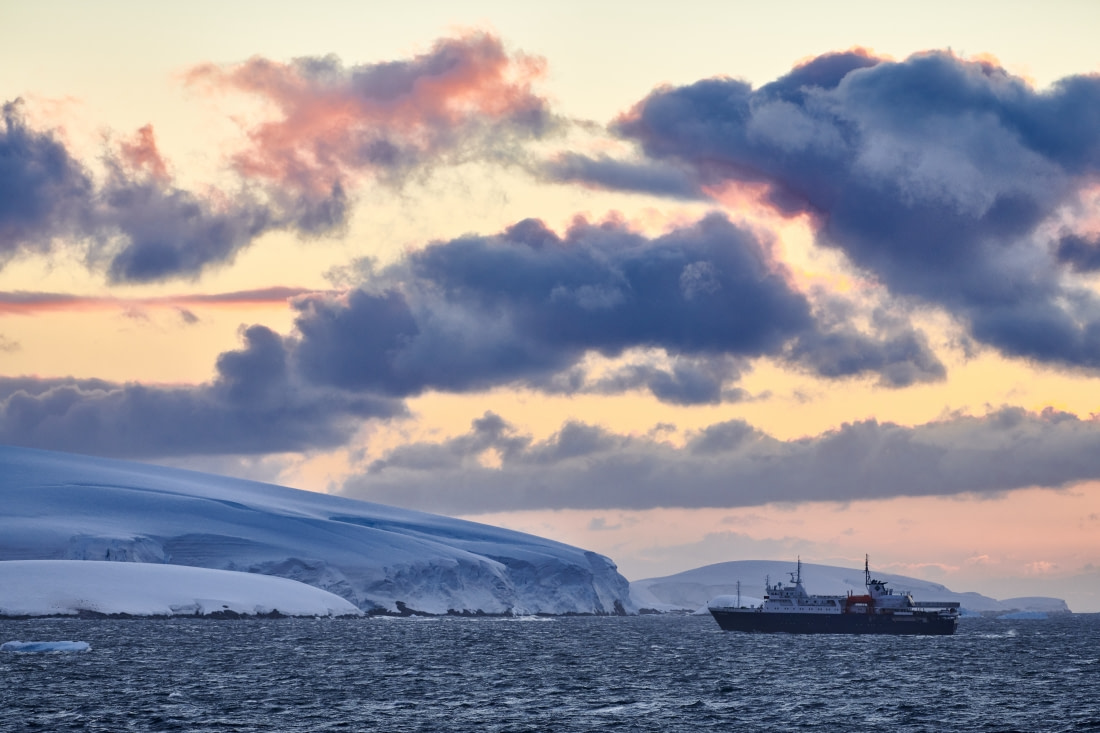
Our first day of activities in Antarctica had finally arrived! Some of us got up super early, and here we are. Moody Antarctic scenery greeted us this morning: low-hanging clouds drifting above glaciated, snow-covered mountains, with ice scattered across the sea. What a sight! Weeks, months, even years of anticipation had led to this very moment.

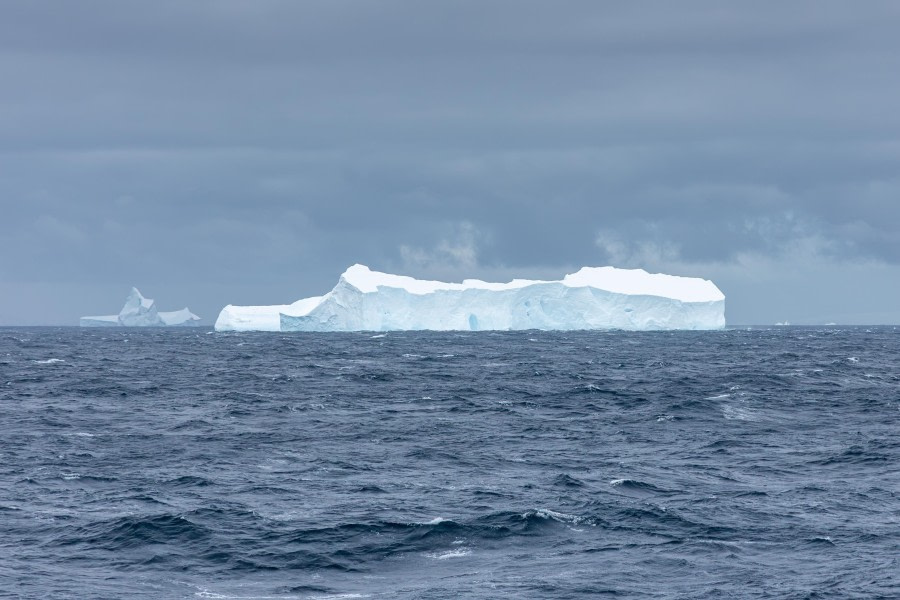
We began our first day in Antarctica with a Zodiac cruise in Cierva Cove. This large, open bay, overlooked by Breguet Glacier, is filled with beautiful icebergs and brash ice calving from the glacier. The bay is known for its remarkable biodiversity, among the highest on the Peninsula. Many of the islands and parts of the continental coastline are protected and closed to visitors for landings.

We made the most of the opportunity to explore the area by Zodiac and spotted our first chinstrap penguins on Penguin Island (Isla Pingüino). As we cruised past magnificent icebergs, we also got to see the huge gentoo penguin colony at Primavera Station.

Primavera is an Argentine research station, originally established in 1954 to support infrastructure in the area. It was expanded in 1977 and initially operated as a year-round scientific station before becoming a summer-only station in 1982. Today, it hosts scientists working on a variety of projects to help us better understand this incredibly beautiful and fascinating place.

Although it was a little chilly, many of us stayed out for more than two hours, enjoying every single minute of it!

During a fantastic lunch, the Ortelius team sailed us towards our afternoon destination. Back in the bar, we gathered to share our first Antarctic experiences, laugh together, and look through our photos.

Mikkelsen Harbour, or more precisely, the small D'Hainaut Island in the middle of the harbour, was our destination for the afternoon. The Expedition Team went ashore first to prepare our landing, and a little later, it was our turn.

There was so much to discover! We spotted a Weddell seal mother with her little pup, resting and enjoying a peaceful afternoon on the beach. Countless gentoo penguins were getting ready for the breeding season, reconnecting with their partners, while an elephant seal pup was resting in the snow close to the shore. And, of course, there were penguins everywhere!

Humans have also left their mark on this remote island. We found a small Argentine shelter on one side, while the other side revealed traces of a much earlier chapter in Antarctic history: the whaling era. Remains of an old water boat were emerging from beneath the snow, and numerous whale bones scattered along the beach reminded us of a time when whalers considered whales an endless resource for oil.

We explored the island, discovering something new around every corner, while snowflakes gently drifted down around us. What an afternoon! We had already experienced and seen so much on our very first day, and we could hardly imagine what the coming days would bring.

During the evening recap, Pippa gave us an overview of the plans as well as weather updates for the following day and shared some interesting insights into penguin partnerships. We had always been told that seabirds are monogamous, but penguins seem to be a little more like humans than we thought. They tend to stay with their partner for as long as things work out… and, when you think about it, that actually makes sense!

After a wonderful dinner and a few more chats in the bar, we finally headed to bed, tired but happy, and already looking forward to discovering what the next day would bring.

What a start to our Antarctic adventure!

Day 5: Cuverville and Paradise Harbour

Cuverville and Paradise Harbour
Datum: 07.11.2026
Positie: 64°38.4’ S; 062° 44.5’ W
Wind: NW-6
Weer: Overcast
Luchttemperatuur: +3

Our second day of operations in Antarctica started under a nice clear sky with the ship navigating into the Errera channel from the northern side and the views of Cuverville island and the Arctowsky peninsula on the portside. The Errera Channel was discovered and first charted by the Belgian Antarctic Expedition (1897–1899), led by Adrien de Gerlache. He named it after Léo Errera, a Belgian botanist and professor at the University of Brussels who was a member of the Belgica Commission, which supported the expedition.

Pippa and the expedition team were ready to launch the zodiacs to assess the condition on the western coast of Danco island. However, as they approached the shoreline, the amount of ice jammed along the coast made it impossible to land. Drawing on her mental map, our expedition leader quickly decided on a new destination, one nearby that was just as beautiful, if not more so.

There is something curious about Antarctica: a "Plan B" could just as easily have been "Plan A." The place is so stunning, so grand, and so vast that the specific name of the island or bay you visit hardly matters, you always feel as though you are in the most beautiful spot of all.

That is how we ended up landing on the southern side of Cuverville Island, where we had a wonderful encounter with Gentoo penguins—and, for those of us who ventured up the slope, some indescribable views. Gentoos reproduce during the Antarctic spring and summer, usually between October and February. They form pairs for the breeding season and build nests using small pebbles. The female typically lays two eggs, which are incubated by both parents for around 34–36 days. Once hatched, the chicks are fed by their parents, who take turns searching for food. After approximately 70–80 days, the chicks develop their waterproof feathers and become independent, ready to enter the sea. Such beautiful animals—admirable in many ways, yet at the same time so tender and small. It was hard to leave, but it was time to say goodbye and head back to the ship.

In the early afternoon MV Ortelius repositioned by navigating part of De Gerlache strait and through the Bryde channel taking the entrance into Paradise Harbour. In inlet where the Argentine Almirante Brown Base is located. As soon as we arrived, we discovered why it’s called Paradise Bay, what a place! It is truly imposing, enormous, and indescribable.

The staff disembarked ahead of us to clear a path and secure the area. Moments later, we began our landing; in groups of 10, we reached the shore, one zodiac at a time. But the wind began to pick up, and the ice moved rapidly, threatening to severely restrict the accessibility to the landing spot. Pippa and the expedition staff decided therefore to close the landing, leaving the coast before the ice could block it off entirely; and while spending more time on land is always welcome, the experience of navigating through ice that was closing in around us was truly unique.

This afternoon, something Pippa had told us on day one became very clear, we were trying to make our way through a difficult place. Ultimately, however, the weather is the real boss, it always has the final say, and it always will.


MOUNTAINEERING

Cuverville (250 m) – Technical Mountaineering

The technical mountaineering activity on Cuverville took place in the morning, after we had to relocate from Danco Island climbing due to excessive ice near the shore. We had been given our equipment the night before, with harnesses and crampons fitted to our technical boots.

The transition went smoothly, and with a nice, small team, we set off in a bit of sunshine and plenty of fresh powder snow. We boot-tracked up to a spot where we roped up due to the possibility of crevasses on the glacier. After the guides explained how to handle the rope and ice axe, we set off and boot-packed our way up a rather steep section of the slope leading to the flat summit. Although we were carrying our crampons, they were not needed, as the snow provided plenty of grip. The weather deteriorated, and the wind picked up, but we still made it to the summit, with everyone happy to have reached the top. Unfortunately, we couldn't see a thing!

The descent was uneventful, and everyone in the group demonstrated good technique. Once we reached the shoreline, we unroped and took the Zodiacs back to our ship.

A great morning!


Brown Station (106 m) – Basic Mountaineering

On the ship, we got equipped with our climbing harnesses. After landing at Brown Station, the mountaineers set off in their muck boots, following a rather steep, zigzagging trail prepared by Marco. It started snowing like crazy, which added to the atmosphere! Ahead of us lay a glacier and a snow-covered plateau that we needed to traverse. Edward took the rope out of his pack, and we split into two groups.

Just as Dave and Edward were about to rope up, we received an urgent message from Pippa, our Expedition Leader, telling us to return to shore immediately because drifting ice was starting to block the landing site. In terms of elevation, we had almost reached our high point, but now we were facing the steep descent! Luckily, Marco had also prepared a bum slide, and we had a lot of fun sliding down the slope.

Day 6: Port Lockroy

Port Lockroy
Datum: 08.11.2026
Positie: 67° 49,7’ S; 063° 31,4’ W
Wind: NE-5
Weer: Snow
Luchttemperatuur: -1

So before and after breakfast a flurry of passengers quicky writing out postcards. The messages all said much the same thing…’Having a fantastic time, this voyage is living up to Oceanwide Expeditions advertising easily and exceeding our expectations. It is fantastic!’.

Today we were scheduled for a landing and a Zodiac cruise at the grand sounding Antarctic Treaty historic site No 61- British Base A- Port Lockroy.

Known throughout the world, as the most southerly museum and post office.

In reality however, it is a huddle of a few modest black painted sheds, radio mast and flag pole perched on a very small gentoo penguin covered island.

The location is a natural harbour discovered by French explorer Jean baptise Charcot during his 1903 -1905 expedition and is located on the south west of Wienke Island. After breakfast an excited climbing group left Ortelius to land on the shore to rope-up and walk to the summit of Jabet Peak which towered dramatically above and behind the base.

At the same time, a large quantity of brown carboard boxes were removed from the depths of the ship’s hold and loaded into our Zodiacs for the short trip to shore. We were the first visitors of the year and this was the refreshment of stock for the base shop which had been transported down from Europe.

Goudier island was the place chosen by the British government for a secret operation led during the II World War. Operation Tabarin was launched in 1943 with the aim of establishing a British presence in Antarctica and protecting British territorial interests from potential German, Argentine and Chilean claims. The expedition involved naval personnel and scientists who established a series of research stations around the Antarctic Peninsula, helping to develop Britain's scientific understanding of the region. It also marked the beginning of Britain's long-term scientific and administrative presence in Antarctica.

Regular shuttle with boats started each taking small groups of our passengers across to the island. Each group had time to observe and photograph the penguins, post their postcards, explore the museum, buy a few souvenirs, then departed again in Zodiacs for a cruise to Jougla point and around the area. The highlight was a crabeater seal who approached close to the landing area.

We returned for lunch on the ship but unfortunately weather conditions changed dramatically with snow and strong wind which forced the abandonment of the afternoon outdoor programme.

Plan B - Next activity was a very interesting afternoon lecture on the aesthetic wonders of the deep delivered by our diving experts Clara and Gonzalo. This was followed later in the day by our daily recap of events and plans for the next day.


MOUNTAINEERING

Jabet Col (349 m) – Technical Mountaineering (Small Group)

After being privately shuttled to Damoy Point, the mountaineers changed from muck boots into technical climbing boots. With our harnesses on and ice axes in hand, we set off on snowshoes, travelling between penguin colonies towards Damoy Hut.

We found shelter from the wind behind the hut, which made it easier to put on the ropes and discuss our climbing plan. Everyone was really fit, and we continued on snowshoes all the way up to Jabet Col. There was no need for crampons, as conditions were excellent. Our two experienced guides assessed the avalanche situation, just as they would when (heli)skiing, and determined that it was safe to proceed.

The best conditions in years! From the col, we enjoyed fantastic views down towards Port Lockroy and our ship in the fjord, surrounded by magnificent high mountains. After descending, we took the shuttle to Port Lockroy, where we were the last visitors of the day.

Day 7: Petermann Island and Salpêtrière Bay

Petermann Island and Salpêtrière Bay
Datum: 09.11.2026
Positie: 65°06.8’ S; 064° 02.9’ W
Wind: W-2
Weer: Part. Cloudy
Luchttemperatuur: +1

In spite of the movement during the night, we woke up full of energy and with a positive attitude for another day full of activities and memorable encounters. As MV Ortelius slowly crept into the Penola Strait from the French Passage, the iconic peaks of the area started to become visible: Cape Tuxen to the south of the strait and the thousand-metre summit of Scott Peak to the north.

Visibility was excellent in the early morning, with patches of blue sky appearing from the west, a promising sign for the development of the day. Fortunately, the forecasted wind gusts were absent, so after breakfast, the mountaineers quickly geared up and were shuttled to the eastern shore of Petermann Island, followed by the rest of us and the kayakers.

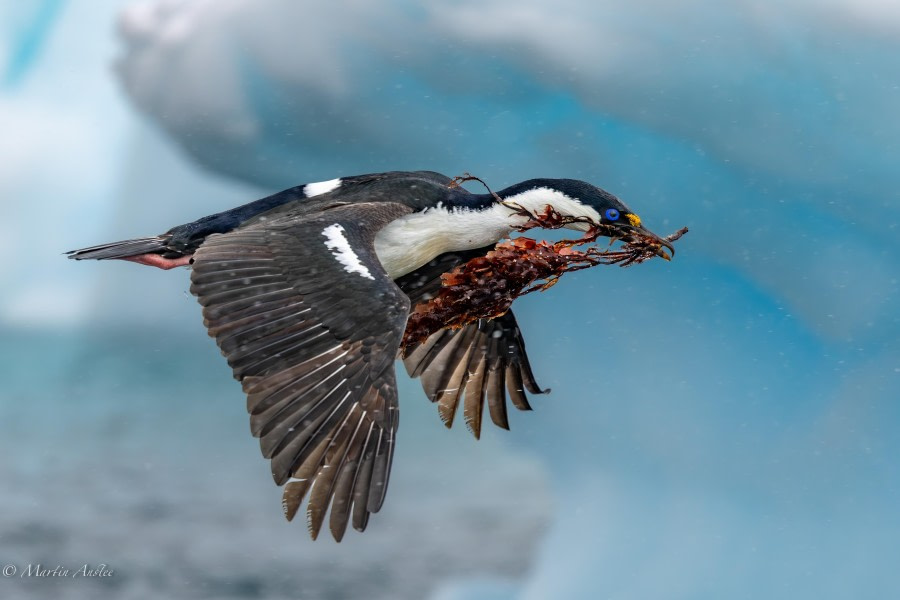
Petermann Island holds considerable historical importance because it was visited by several Antarctic exploration expeditions. It was named after the German geographer August Petermann during the German expedition of 1873–1874. Most notably, in 1909, French explorer Jean-Baptiste Charcot and his crew aboard the Pourquoi-Pas? spent the winter near the island during the Second French Antarctic Expedition. The island is also home to diverse Antarctic wildlife, particularly Gentoo and Adélie penguins, as well as blue-eyed shags.

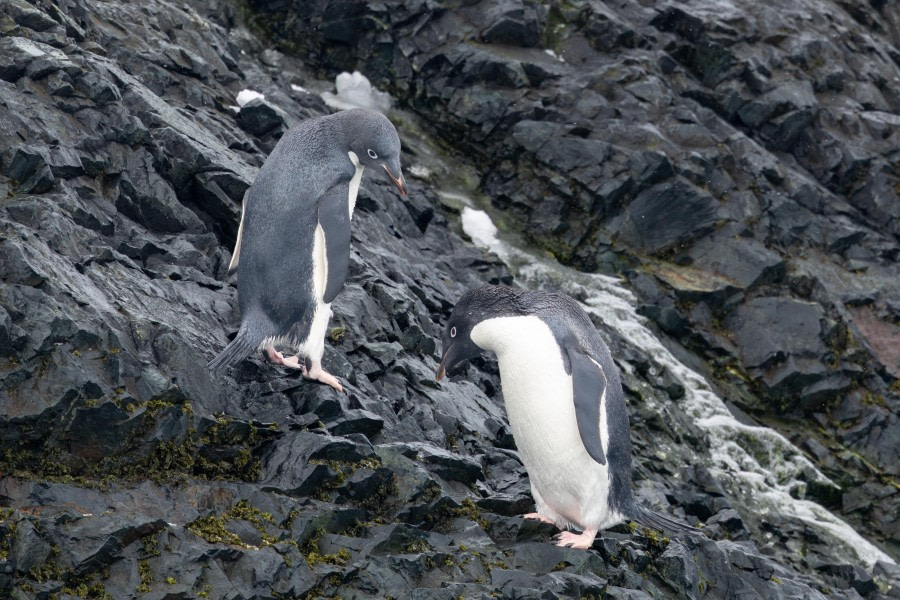
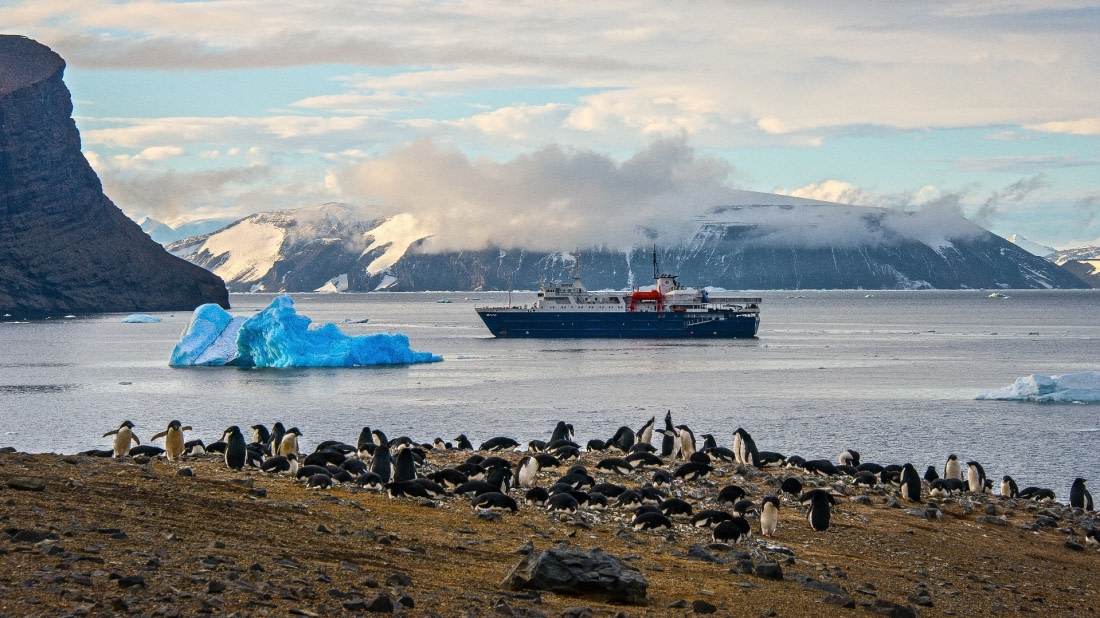
The expedition staff had laid out an exquisite circular path on the southeastern side of the island, winding among rocky outcrops and colonies of Gentoo penguins, with great views of the Penola Strait and the peaks of the Antarctic Peninsula. However, the highlight of the morning was the rather eccentric Adélie penguins. Adélie penguins are one of the smallest species of brush-tailed penguins and are considered true Antarctic penguins. They are among the most numerous and widely distributed penguin species around the Antarctic continent, although their distribution has a gap around the Gerlache Strait and its surroundings, which explains why we had not encountered them until now.

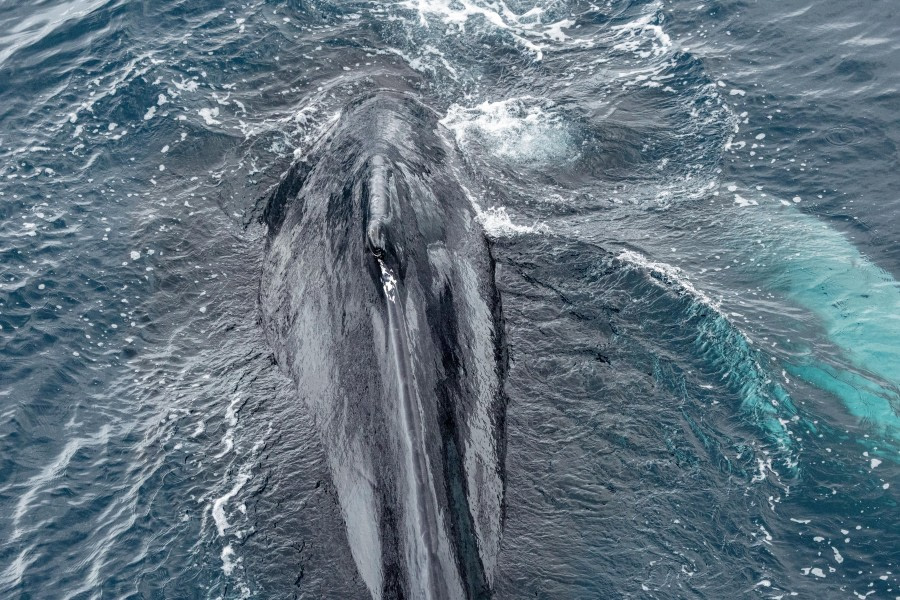
While photographing the Adélies and enjoying snowshoeing around the island, the weather started to improve and the wind began to calm down. Once back on board for lunch, we enjoyed watching a few Humpback whales swimming near the ship, while MV Ortelius repositioned northwards towards the southern entrance of the Lemaire Channel, which looked promising for the evening's navigation.

The afternoon exploration started on the eastern side of Hovgaard Island. Shortly after boarding the Zodiacs for an extensive cruise in the area, we were blessed with an encounter with a small pod of killer whales that the bridge team had spotted. Our guides managed to locate and follow them southwards along the Penola Strait. The pod was in transit and moving at a good pace; however, from the Zodiacs, we were able to observe several females with small calves swimming ahead of an impressive adult male, characterised by a very tall, curved dorsal fin.

These were Type B small orcas, also known as De Gerlache orcas, an ecotype found in the waters surrounding the Antarctic Peninsula. They are recognised by their medium-sized bodies, distinctive eye patches and grey saddle patches. Their diet is believed to consist mainly of fish, although their feeding habits are not yet fully understood. These orcas are well adapted to the cold Antarctic environment and are often observed near ice-covered waters.

The cruise continued into Salpêtrière Bay, a famous iceberg graveyard, where several Antarctic seals were observed and photographed, including Weddell, Crabeater and Antarctic Fur Seals. Eventually, the cruise concluded with a wonderful encounter with two Humpback whales, which greeted us with some beautiful fluke displays.

Back on board for the recap, the Antarctic weather once again demonstrated its unpredictable nature. For a few minutes, an intense snowstorm blanketed the outer decks, followed by beautiful, soft sunlight that accompanied us through the Lemaire Channel and the Antarctic barbecue, bringing a memorable day of exploration of the White Continent to a perfect end.


MOUNTAINEERING

Petermann Island (146 m) – Basic Mountaineering

Two groups were shuttled from the ship to a slabby rocky landing on the northern side of Petermann Island, our most southerly landing of the expedition. The snowshoes were ferried ashore and onto the snow, with great help from our passengers. Teamwork at its best!

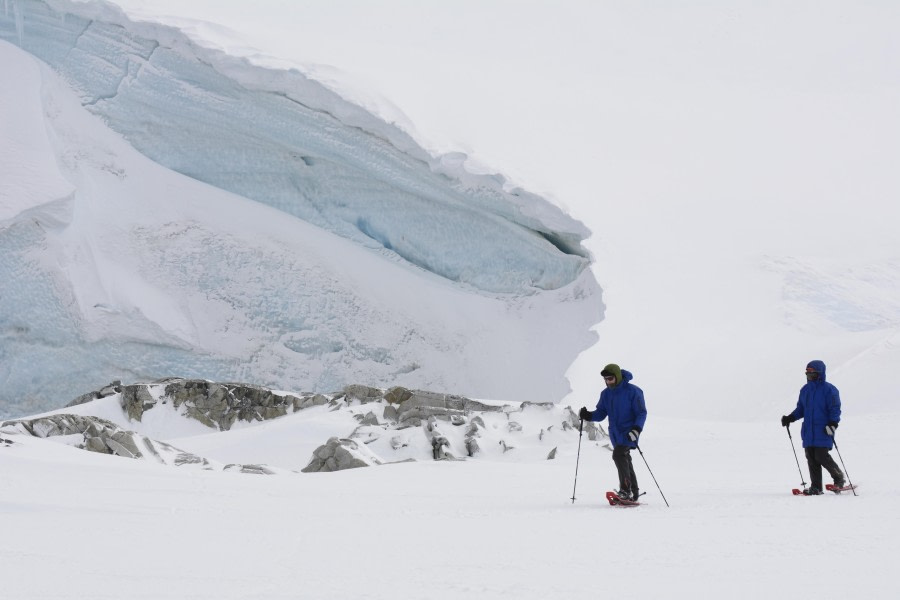
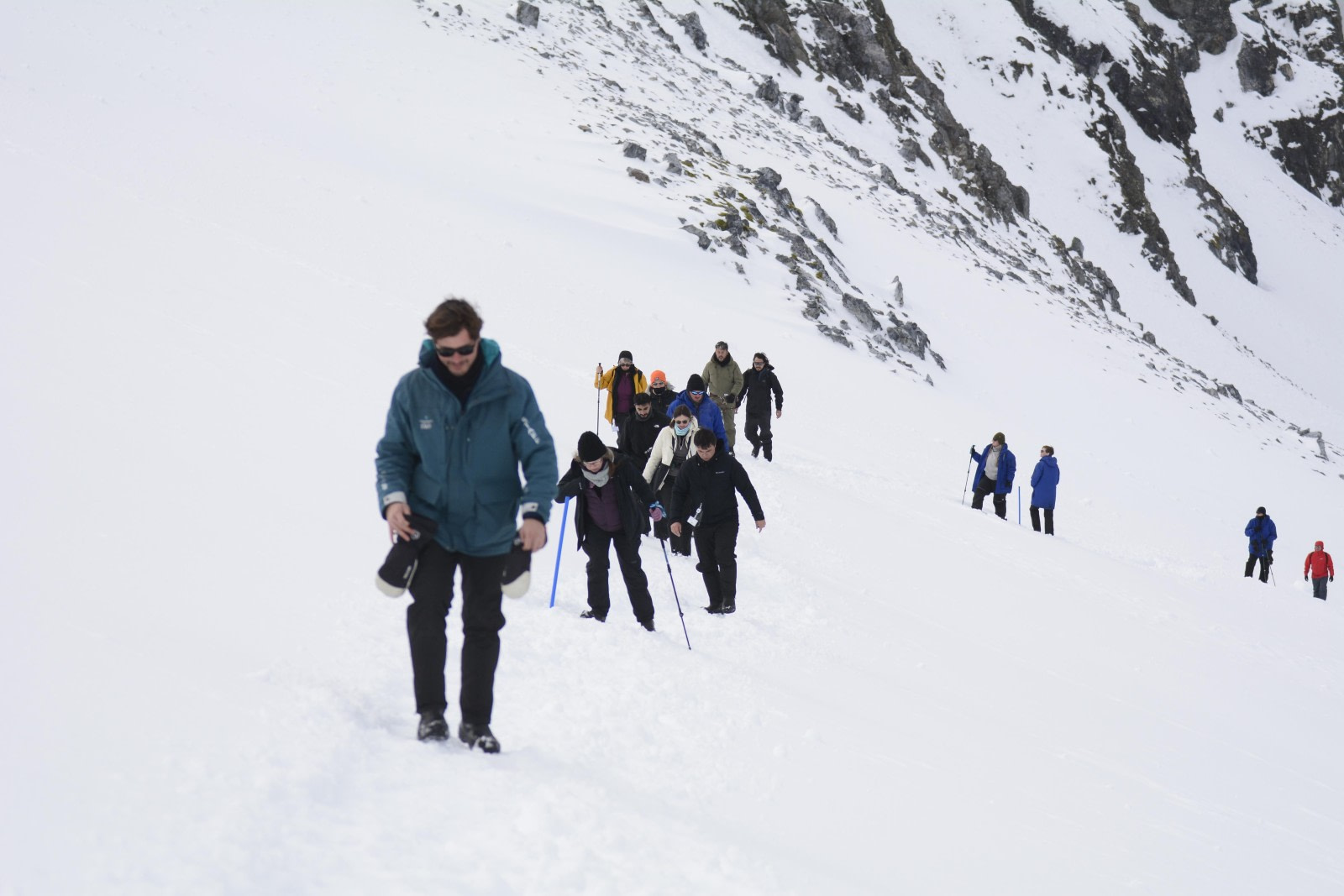
The weather wasn't too bad, with good visibility and plenty of snow. It's still winter! We roped up in two teams, led by Dave and Edward, and started making our way up the mountain. We zigzagged up the slope, sometimes weaving between rocky outcrops, using snowshoes throughout and keeping the rope tight on the steeper upper section. Near the summit, we found shelter from the wind, where the guides explained our surroundings and what to expect next. We then braved the wind and continued to the summit, where group photos were taken.

A short loop around an old metal antenna on a glacier snowfield offered fantastic views of the surrounding waters and high mountains. We could see a long way, and everyone enjoyed the spectacular views of the icebergs floating in the water. The descent went smoothly. We kept a slow pace, as every step had to be 100% secure. A great group!


Hovgaard Col (206 m) – Basic to Moderate Mountaineering

This afternoon, the weather gets even better! We set off in two groups, roped up because of the glaciated terrain, and equipped with snowshoes. The slopes are nice and gentle, but we have quite a distance to cover. We are rewarded along the way with incredible views of the high mountains surrounding us and endless stretches of water dotted with icebergs as far as the eye can see.

When we reach the pass, we can spot the tiny-looking Zodiac cruisers passing by below us. They don't see us, as they are focused on the wildlife beneath the water. Both groups take part in a two-minute silence. Just the sounds of the ocean, the birds and the crackling ice. A magical moment.

And then, a surprise for everyone! There is a marriage proposal in my rope team. So sweet! Photos, congratulations and best wishes for the future!

The return journey offers equally spectacular views, and everyone has time to soak it all in. We can see the entrance to the Lemaire Channel right in front of us, and it's finally going to happen: we'll be sailing through it!

What a day!

Day 8: Andvord Bay and Polar Plunge

Andvord Bay and Polar Plunge
Datum: 10.11.2026
Positie: 64°47.5’ S; 062° 42.2’ W
Wind: SE-5
Weer: Overcast
Luchttemperatuur: +1

The day began with our morning wake-up call, welcoming us to another exciting day of exploration in the spectacular Antarctic Peninsula. Breakfast was served in the dining room as everyone prepared for a new day surrounded by the breathtaking beauty of Antarctica.

Our morning destination was Andvord Bay, located along the Danco Coast on the western side of the Antarctic Peninsula. This beautiful bay is surrounded by impressive mountain ranges, glaciers, and dramatic Antarctic landscapes. Its waters open towards the Gerlache Strait, offering spectacular scenery in every direction.

At approximately 08:45, we gathered at the gangway, dressed and ready for their Zodiac cruise. The expedition team took us out to explore the magnificent surroundings, offering an opportunity to experience the beauty of the Antarctic coastline from a closer perspective. Zooming past blue icebergs and the whiteness of the landscape, we moved towards the western entrance of the Errera channel where a few small rookeries of Gentoo penguins started to get busy. After a nice morning we returned to the ship, where lunch was served in the dining room at 12:00.

In the afternoon, we continued our exploration towards Neko Harbour, a beautiful inlet within Andvord Bay, situated along the western coast of Graham Land. This spectacular location is particularly famous for its impressive glaciers and magnificent ice formations. The harbour was discovered by Belgian explorer Adrien de Gerlache and later named after the Scottish whaling vessel Neko, which operated in the area between 1911 and 1924.

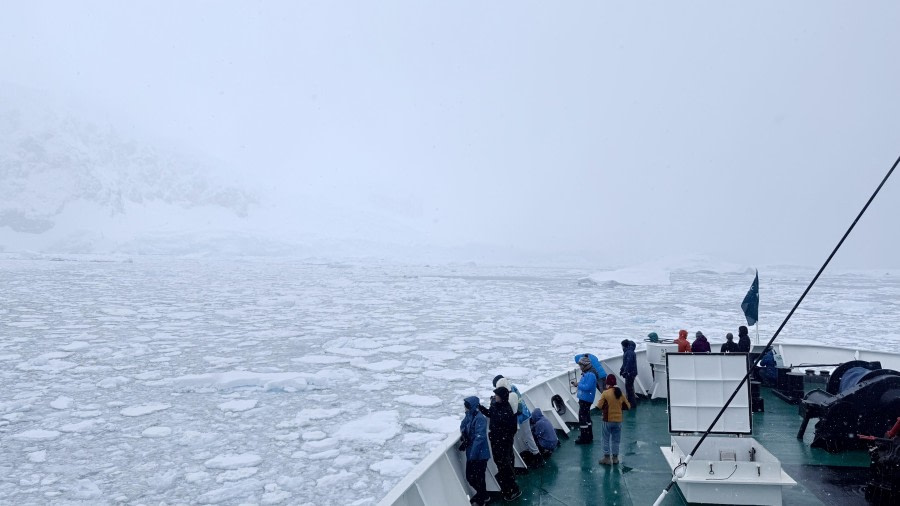
Due to the intense presence of brash ice and ice floes, the usual landing site at Neko harbour was not approachable, therefore we enjoyed a scenic ship cruise through the icy waters of Andvord bay. The surrounding waters were filled with impressive pieces of glacial ice, creating a truly remarkable Antarctic atmosphere. One of the special moments of the afternoon was serving hot chocolate on the bow. With music playing, warm drinks in hand, and spectacular glacier scenery all around we were able to enjoy a wonderful combination of comfort, atmosphere, and breathtaking natural scenery.

The excitement continued at 15:00 with one of the most anticipated activities of the day: the Polar Plunge! More than 60 enthusiastic guests took the challenge, jumping into the icy Antarctic waters from the ship's gangway. The atmosphere was full of excitement, laughter, and cheering, making it an unforgettable experience for everyone involved. It was certainly a fantastic way to add a little adventure and adrenaline to our journey!

Right before dinner we gathered as usual in the lounge for our daily expedition recap. The expedition team shared the highlights of the day, reviewed our activities, and provided further insights into the remarkable places we had explored.

Dinner was served in the dining room at 19:00, giving everyone an opportunity to relax, enjoy a delicious meal, and share stories and impressions from another wonderful day in Antarctica.

Day 9: Danco Island and Orne Harbour

Danco Island and Orne Harbour
Datum: 11.11.2026
Positie: 64°43.2’ S; 062° 36.8’ W
Wind: SE-1
Weer: Overcast
Luchttemperatuur: +2

The day started a little earlier than usual, with our morning wake-up call at 06:45. Second attempt to set foot on land at Danco island and with the weather and ice conditions we had in the early hours of the day, this time it looked promising.

Breakfast was served in the dining room at 07:00, whilst the expedition team set outside and approached the coastline of the little pancake shape island. Our morning destination was Danco Island, a small but beautiful island located in the Errera Channel, along the Antarctic Peninsula. Known for its Gentoo penguin colonies, impressive glacial surroundings, and fascinating expedition history, Danco Island promised another wonderful opportunity to experience Antarctic wildlife and landscapes.

At around 8 o’clock the first groups were ready to disembark for the landing at Danco Island. The expedition team provided the shuttle and guided us on the western and southern slope of the island. A nice and steady climb awarded us with inspiring views of the Errera channel, the Arctowsky peninsula and Ronge island across the inlet. Ashore we had the opportunity to observe the Gentoos in their natural habitat, walking up and down the hill along the extensive network of highways that crisscross the entire island.

During the afternoon, our exploration continued towards Orne Harbour, a picturesque cove located along the Danco Coast on the western side of Graham Land. Approximately one mile wide, this beautiful natural harbour is surrounded by impressive mountainous landscapes and Antarctic scenery.

At approximately 14:00, Mountaineering Group 1 gathered at the gangway, fully equipped and ready for their afternoon adventure. The team coordinated the departure and preparations for the mountaineering activity, allowing participants to experience the spectacular Antarctic landscape from a different perspective.

Shortly afterwards, at around 14:15, guests prepared for the afternoon landing at Orne Harbour. Mountaineering Group 2 was also invited to join the regular landing, from where they would continue with their mountaineering experience. This arrangement allowed us to enjoy the landing and the surrounding scenery before beginning their mountain activity.

Orne Harbour offered another opportunity to appreciate the dramatic beauty of Antarctica, with its rugged mountains, glaciers, and breathtaking coastal scenery. The combination of landing and mountaineering activities made for an exciting afternoon, providing different ways to connect with this extraordinary environment; not to mention experiencing the rumbles and noises left behind by massive and impressive calving or avalanches across the bay.

At 18:15, everyone was invited to join the expedition team in the lounge for our daily recap, in which Pippa presented the plan for next day at sea, Marco shared insight about penguins’ hydrodynamics and internal pressure most recent studies and Claudio shared a short video from Port Lockroy as an alternative mean to bring home some unforgettable memories.

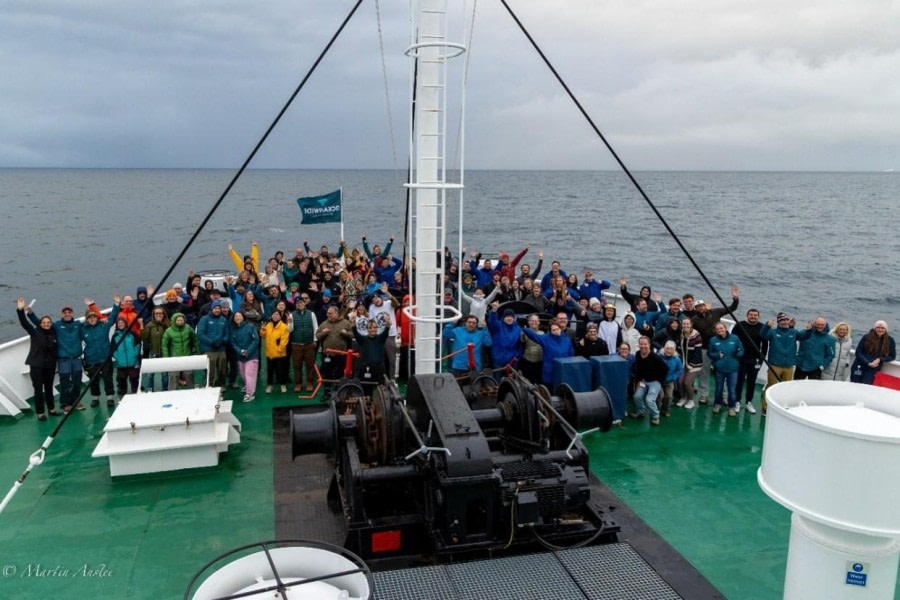
Dinner was served in the dining room at 19:00, bringing everyone together once again to enjoy the evening and exchange stories from another day in white continent, before gathering altogether in the bow for a great group photo!


MOUNTAINEERING

Danco Island (173 m) – Basic Mountaineering

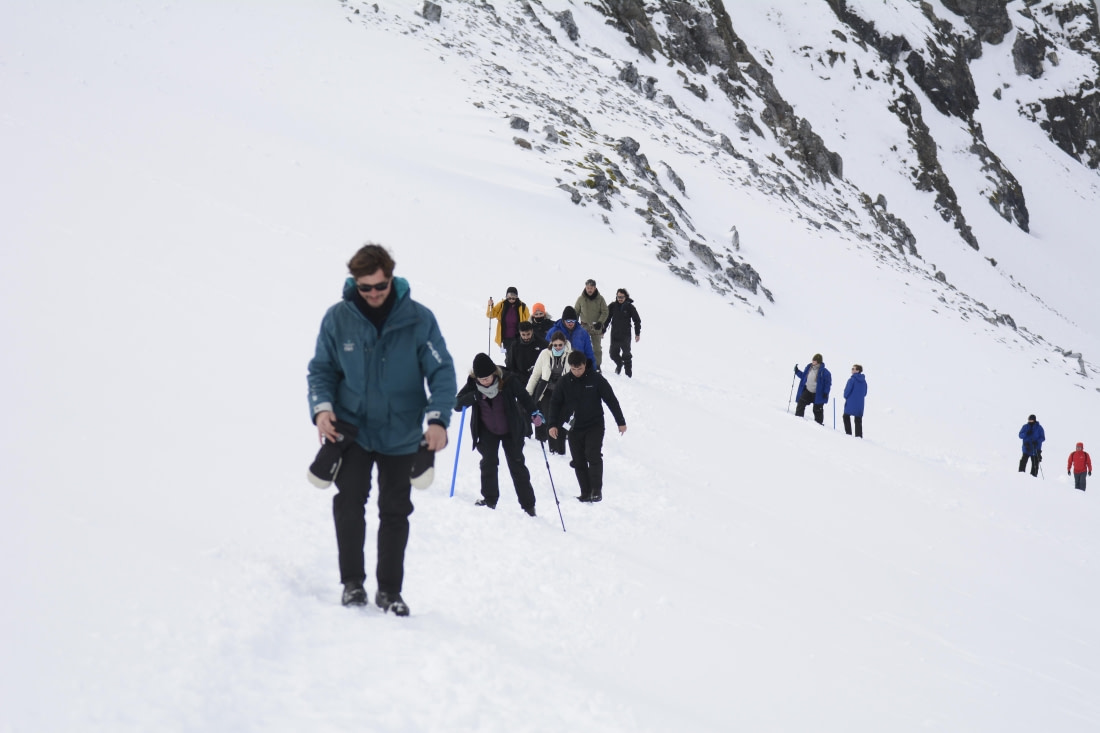
We finally make it here after an earlier attempt! Conditions are excellent at the start, with the sun shining. We set off on a big loop on snowshoes, with plenty of powder beneath our feet.

Once again, we enjoy fantastic views in all directions, and we are so happy that everyone finally gets the chance to take part in a mountaineering activity after so many changes due to the weather.

For quite a while, we are completely alone, and it is the first windless day of the expedition. We can't hear a thing apart from the crackling ice, the sound of the water and a couple of birds. Every now and then, we witness ice calving.

We take our time and make our way back to the shoreline just in time for a quick visit to the penguins before returning to the ship, just as it starts snowing again.


Orne Harbour (152 m) – Basic Mountaineering

After a steep hike through the snow to the pass, the guides are waiting for us, and we get roped up. Equipped with snowshoes, we venture around the corner to discover a colony of chinstrap penguins.

There is still plenty of snow, and we are treated to wild views of the ocean and Mount Spigot, a high, jagged peak towering above us.

The penguins are very cute, busy nesting and bringing stones back to their nests. We then continue with a loop through what seems like a world of nothing but white snow. A great way to finish our visit to Antarctica! As soon as we set foot back on board, we sail off into the Drake Shake. Bye-bye, Antarctica!


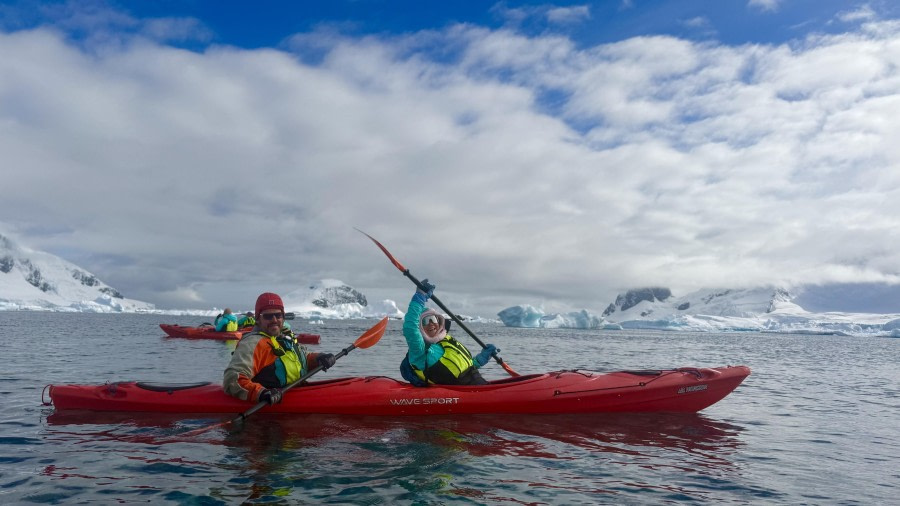
KAYAK TRIPLOG

Some journeys are not simply about reaching places. They are about discovering where we stand in relation to the world around us.

During our kayaking expedition along the Antarctic Peninsula, we explored Andvord Bay, Petermann Island, Port Lockroy, Danco Island, Paradise Bay, Salpêtrière Bay and Mikkelsen Harbour. We encountered fur seals, Weddell seals, snow petrels, skuas, Antarctic terns and Antarctic sheathbills. We paddled alongside Gentoo penguins colonies and spotted a few Adelie penguins. We navigated through brash ice, bergy bits, growlers and small icebergs, passing Argentine emergency shelters and visiting the Argentine Primavera research station.

Antarctica gave us everything: calm waters, rough waters, rough seas, powerful winds, snowfall and hail. Some days, the weather forced us to stay ashore. On others, we pushed through challenging conditions, often finishing completely soaked.

But the real achievement was never simply reaching another destination.

It was discovering what we could do when conditions were far from ideal. Finding the strength to move forward, relying on our bodies, our muscles, our determination and, above all, one another.

There is something deeply humbling about crossing these waters using the human body as our only engine.

No comfort, no shortcuts. Just physical effort, awareness and a commitment to something greater than ourselves.

Perhaps this is what Antarctica ultimately teaches us.

We are not separate from nature. We are part of it. A little ocean, a little earth, a little wind, a little mountain. We belong to the same living system, sharing the same fragile and extraordinary planet.

In a world where increasingly distance ourselves from the natural elements, Antarctica brings us back to something fundamental: the understanding that we are not here to dominate nature, but to belong to it.

And perhaps nowhere else is this truth so clearly understood as in Antarctica.

It doesn’t speak. It doesn’t need to.

It simply reminds us who we are.

We are not here to dominate nature, but to belong to it.
 

Day 10: Outrunning the storm Northbound

Outrunning the storm Northbound
Datum: 12.11.2026
Positie: 61°12.8’ S; 062° 20.7’ W
Wind: NW-6
Weer: Overcast
Luchttemperatuur: +1

The first day of our long crossing northbound through the Drake Passage began after we left the Antarctic Peninsula in the late hours of the night. Having crossed the Bransfield Strait and navigated through Boyd Passage, we finally entered the legendary Drake Passage, ready to begin our journey back towards the northern latitudes.
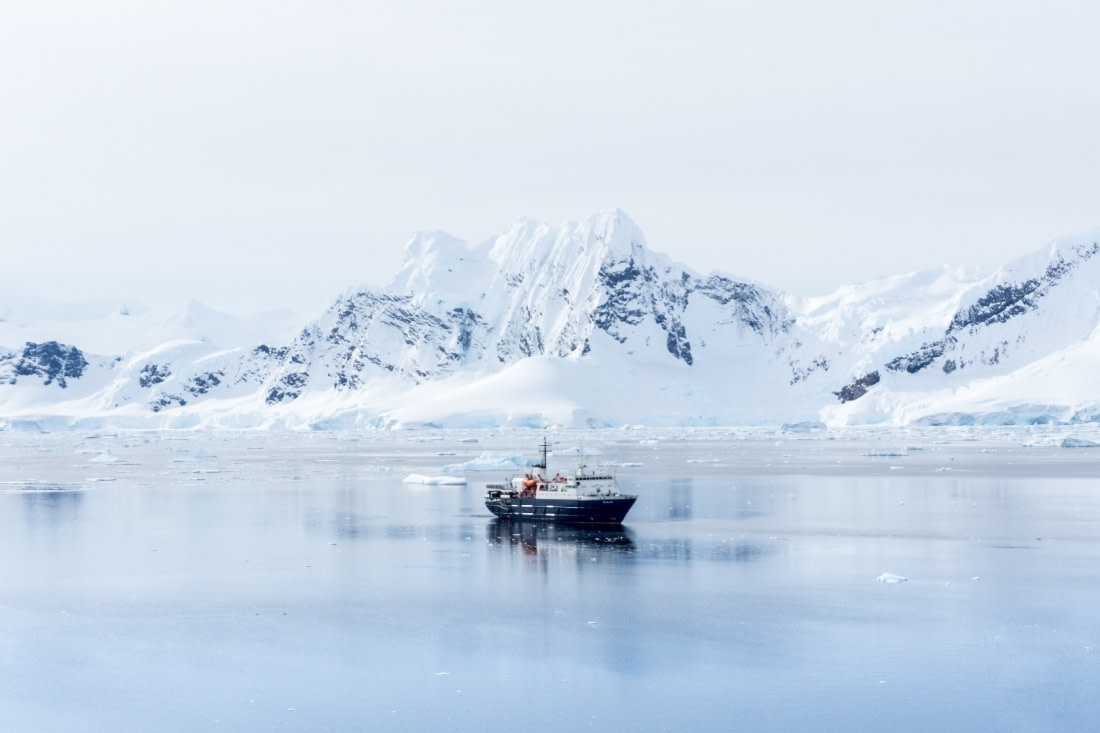
Early in the morning, the lounge was completely empty, as most of us preferred to remain comfortably tucked up in our beds, enjoying a slow and peaceful start to the day. Outside, the Drake was gently reminding us of its presence, with 3–4 metre waves rocking the vessel and lulling us into a rather unusual, but very welcome, relaxed morning.

Meanwhile, Martin and Clara had collected all the photographs submitted by the guests for the three competition categories: landscape, wildlife and comedy. Throughout the day, we had the opportunity to browse through the pictures and cast our votes, adding a little friendly competition and entertainment to our day at sea.

Later in the morning, Pippa introduced us to the fascinating world of Antarctic marine mammals. With great enthusiasm and passion for the ocean and its inhabitants, she shared her knowledge about the incredible creatures that call the Southern Ocean home, taking us on a journey through the lives of seals and cetaceans and helping us better understand the remarkable wildlife we had encountered during our expedition.

After lunch, it was time to say goodbye to our trusty Muck Boots, which had accompanied us throughout our Antarctic adventure and provided invaluable support during wet landings and snowshoe walks across the white continent. Having served us so well in the challenging conditions of Antarctica, they were finally collected by the expedition team, marking another small but significant step towards the end of our journey.

The afternoon continued with an interesting presentation about MV Ortelius and some of her best-kept secrets. Thanks to Bill's extensive knowledge, we were given an insight into the vessel's history, design and many hidden corners that most of us might otherwise never have discovered. This was followed by an engaging and practical workshop on photography and short-video making, presented through a collaboration between Claudio and Martin, who shared useful tips and creative ideas to help us capture and tell the stories of our travels.

Time seemed to fly by, and before we knew it, we were gathering once again for our usual 6 pm recap, where the expedition team brought together the highlights of the day and updated us on what lay ahead. Dinner followed, but the evening was not over just yet.

We gathered upstairs once more for an unmissable documentary about the discovery of the Endurance, the legendary ship that carried Ernest Shackleton and his 27 men on their extraordinary expedition to Antarctica. The story of their remarkable struggle for survival, courage and resilience provided a fitting end to another day of our journey through the Southern Ocean, reminding us that even as we sailed north towards home, the spirit of Antarctic exploration was still very much alive aboard MV Ortelius.

Day 11: At sea towards Ushuaia

At sea towards Ushuaia
Datum: 13.11.2026
Positie: 56°36.0’ S; 062° 18.6’ W
Wind: NW-7
Weer: Overcast
Luchttemperatuur: +6

Friday the 13th! Our second day in the Drake Passage started, and it was not too bad! The ship was moving, but we were in a little patch of relatively light winds, which made the morning surprisingly comfortable.

After another generous breakfast, Steffi invited us to a presentation about how animals adapt to living in colder regions. Penguins, for example, don't need socks, even though their feet are constantly exposed to the cold. Their bodies are designed in such a way that they have a heat exchange system in their feet. Warm blood flowing down towards their feet transfers its heat to the cold blood flowing back up. This clever mechanism, along with many other fascinating adaptations, helped us understand the animals of the Antarctic much better.

After the first lecture, Clara taught us more about the tiny organisms floating in the water: phytoplankton. She explained the incredibly important role they play on our planet, as roughly every second oxygen molecule we breathe comes from microscopic marine plants. Quite amazing when you think about it!

After lunch, we only had a little time for a nap before Ed, our mountain guide, shared some of his climbing stories with us, including his expedition to Mount Vinson. What an incredible achievement! The afternoon passed by, and the wind speed gradually increased. We were still heading directly north, trying to avoid the approaching storms. Both the wind and the waves continued to pick up throughout the afternoon. Well, it seems the weather forecast was pretty accurate after all!

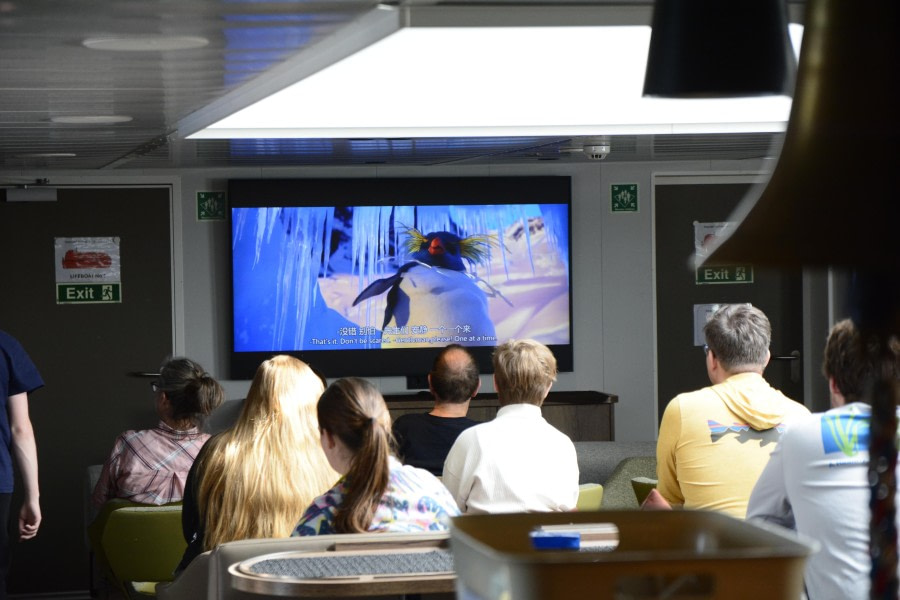
For some light entertainment, we all watched Happy Feet in the afternoon. The day came to an end with some fascinating stories from Bill during our daily recap. He told us about expeditions that had gone terribly wrong: a Chinese expedition that didn't manage a single landing and a Russian charter with wealthy passengers who simply refused to follow any instructions.

Although we all know that comparisons are not really fair, we couldn't help but realise just how incredible our own trip had been. Even if we were finishing a day earlier than planned, we had achieved so much. Nature is, and always will be, unpredictable.

During dinner, the atmosphere in the restaurant was as cheerful as ever. Shortly afterwards, the Captain turned the ship westwards to approach the Beagle Channel, and the conditions started to deteriorate. The waves grew higher, and the pitching of our beloved Ortelius became increasingly noticeable.

Leaving early doesn't necessarily mean arriving early! We still had some distance to cover before reaching the shelter of land. Until then, it looked like we would have to endure a little more of the Drake Passage's wild side.

Day 12: Into the Beagle channel

Into the Beagle channel
Datum: 14.11.2026
Positie: 55°01.0’ S; 065° 34.3’ W
Wind: W-5
Weer: Part. Cloudy
Luchttemperatuur: +8

After another rough night, with belongings tossed around the cabins, we eventually woke up to calm seas and the pleasant company of White-chinned Petrels, Northern Giant Petrels and Black-browed Albatrosses. Some of us were up early on the bridge, enjoying some fresh air after two rough days crossing the Drake Passage.

The MV Ortelius was sailing through Le Maire Channel, the stretch of water that separates Staten Island from the southeastern tip of Tierra del Fuego, heading southwest towards the eastern entrance of the Beagle Channel.

The morning began with a relaxed breakfast, followed by a series of presentations. Marco introduced us to the physics of the oceans and how they are interconnected. We learned about thermohaline circulation and the importance of the AMOC. Soon afterwards, Alexis continued with a presentation on the history and culture of the Yaghan people, the Indigenous group who navigated the challenging waters of the Beagle Channel and Cape Horn long before the arrival of European colonisers, whose presence had a devastating impact on their communities and way of life.

After a short break for lunch, during which we also settled our bills at reception with Vova and Ingrid, it was time to continue with an introduction to future voyages. Pippa led the session, joined by Martin, Rose and Alexis, who shared their insights, tips and passion for their respective voyages in the Arctic and Antarctic. In the middle of the afternoon, Gonzalo and Clara held their auction to raise funds for their conservation project, Una Ventana al Mar.

Quicker than we expected, it was time to get dressed for the Captain’s Cocktail. Accompanied by Captain Remmert, Expedition Leader Pippa and Hotel Manager Ingrid, we raised our glasses to celebrate a successful and safe voyage to the White Continent. The memories of our journey were brought back to life thanks to the wonderful slideshow prepared by Martin, which we all watched in awe.

Dinner was then served, and the entire crew was warmly applauded and thanked for their hard work and dedication throughout the voyage. Afterwards, we all gathered in the bar for one last drink, while watching the Argentine pilot boat come alongside to escort the MV Ortelius into the port of Ushuaia.

Day 13: Disembarkation Ushuaia

Disembarkation Ushuaia
Datum: 15.11.2026
Positie: 54°48.6’ S; 068°17.8‘ W
Wind: SE-2
Weer: Cloudy
Luchttemperatuur: +8

Our final wake-up call came from Pippa, marking the end of an unforgettable Antarctic expedition. At 07:00, we were asked to leave our large luggage in the corridor so the expedition team could collect it and transfer it to the pier. After breakfast, we took a moment to say goodbye to the dining room team, who had looked after us so warmly throughout the journey. With our belongings gathered, we made our way to the gangway, where we exchanged our final farewells with the crew, staff, and new friends we had made along the way.

Some of us boarded the bus to the airport to begin their journey home, while others took the opportunity to explore Ushuaia or continue their adventures through Patagonia. As we departed, we carried with us unforgettable memories of Antarctica's breathtaking landscapes, the ever-changing weather, and the raw power of the Southern Ocean. This extraordinary journey had given us a true appreciation of the wild, remote, and rugged nature of the seventh continent. The experiences, friendships, and highlights of this expedition will undoubtedly remain in our hearts and minds for many years to come.

On behalf of Oceanwide Expeditions, Captain Remmert Koster, Expedition Leader Pippa Low, Hotel Manager Ingrid van de Loo and all the crew and staff of M/V Ortelius, it was a great pleasure and a privilege travelling with you!

Total Distance sailed on our Voyage: 1879 Nautical miles

Southernmost Point Sailed: 65° 11,2’ S, 064° 07,8’ W


Details

Reiscode: OTL21-26
Reisdatum: 3 nov - 15 nov, 2026
Duur: 12 nachten
Schip: m/v Ortelius
Inscheping: Ushuaia
Ontscheping: Ushuaia

Op deze reis geweest?

Aan boord van m/v Ortelius

De ijsversterkte Ortelius is grondig uitgerust voor expeditie cruises en, op sommige reizen, helikoptervluchten.

Meer over de m/v Ortelius »
Loading