OTL09-26, trip log, Around Spitsbergen, In the realm of Polar Bear & Ice

by Oceanwide Expeditions

Fotogalerij

Logboek

Day 1: Longyearbyen, Embarkation Day

Longyearbyen, Embarkation Day
Datum: 21.07.2026
Positie: 78°18.4’ N / 015°16.1’ E
Wind: NW-3
Weer: Cloudy
Luchttemperatuur: +5,6

Our expedition began in Longyearbyen, the world's northernmost permanent settlement and the gateway to the High Arctic. While some of us had spent several days exploring the town, others of us arrived just in time for embarkation. Before boarding, many took the opportunity to wander through the colourful streets, surrounded by dramatic mountains and the calm waters of Isfjorden. Despite its remote location and Arctic climate, Longyearbyen offered a warm and welcoming first impression.

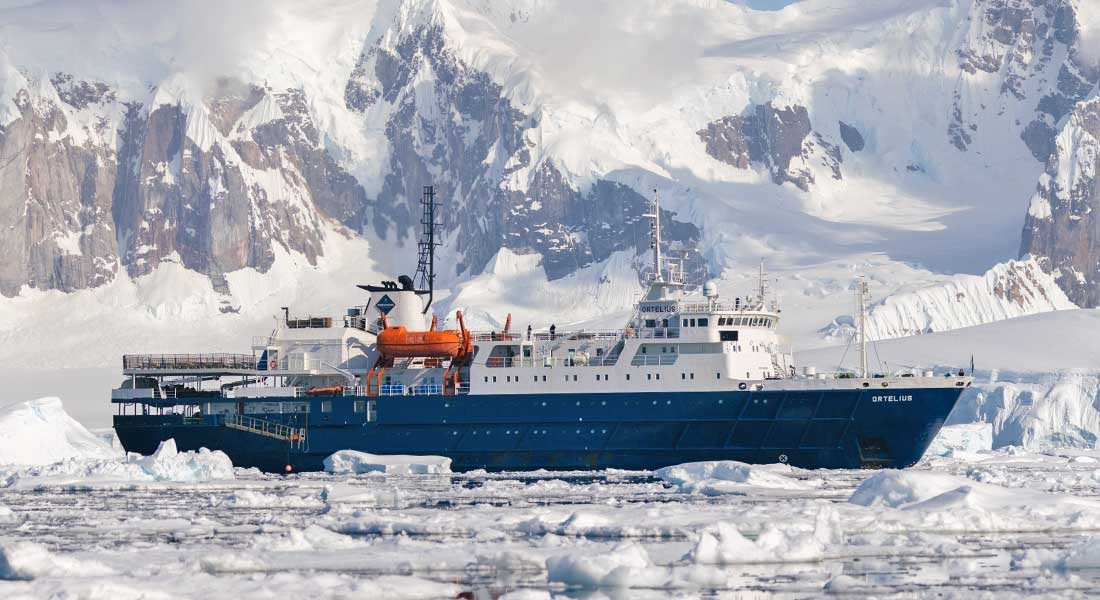
In the afternoon, we boarded MV Ortelius, where the expedition team and hotel staff welcomed us onboard. After settling into our cabins, we had time to become familiar with our new home as luggage was delivered and the ship prepared for departure.

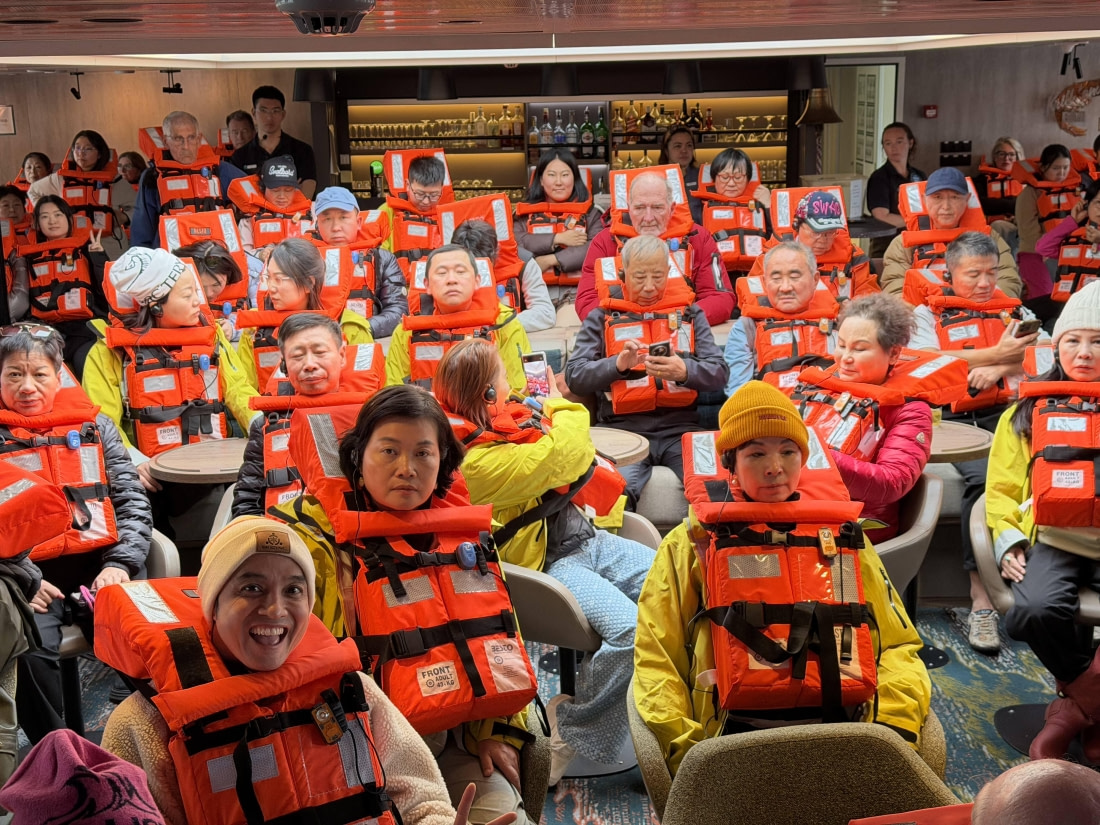
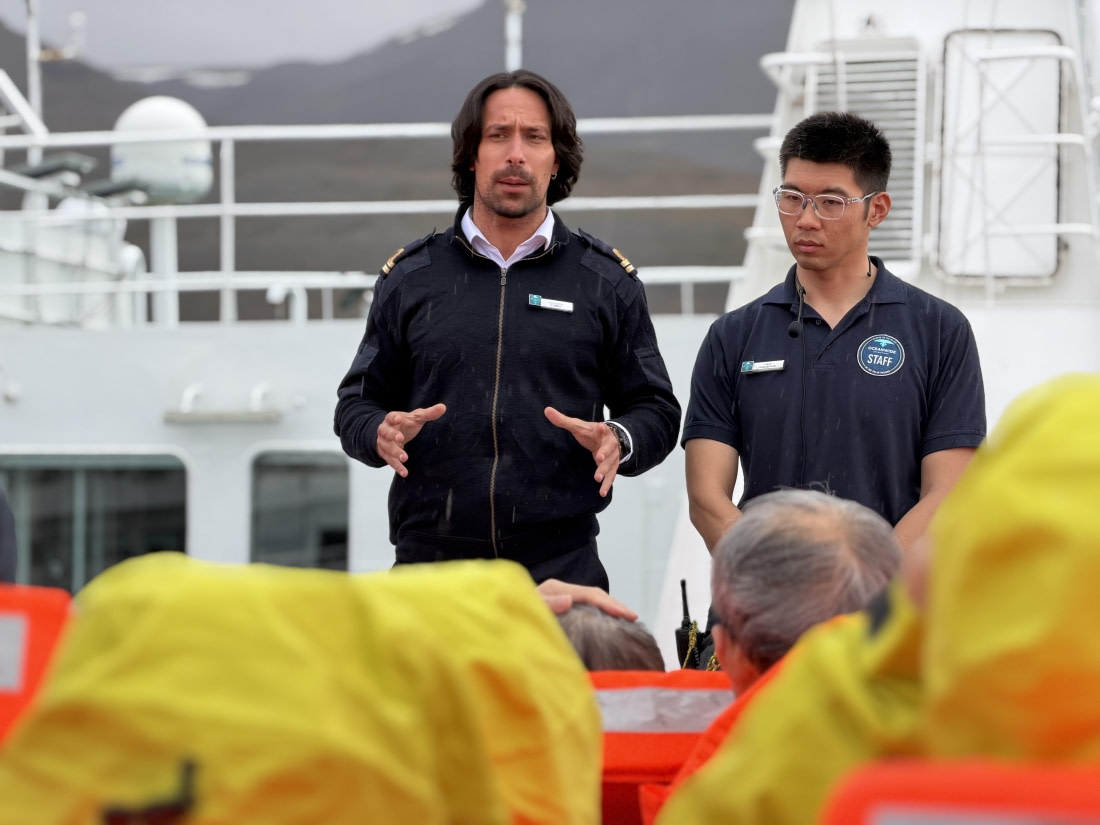
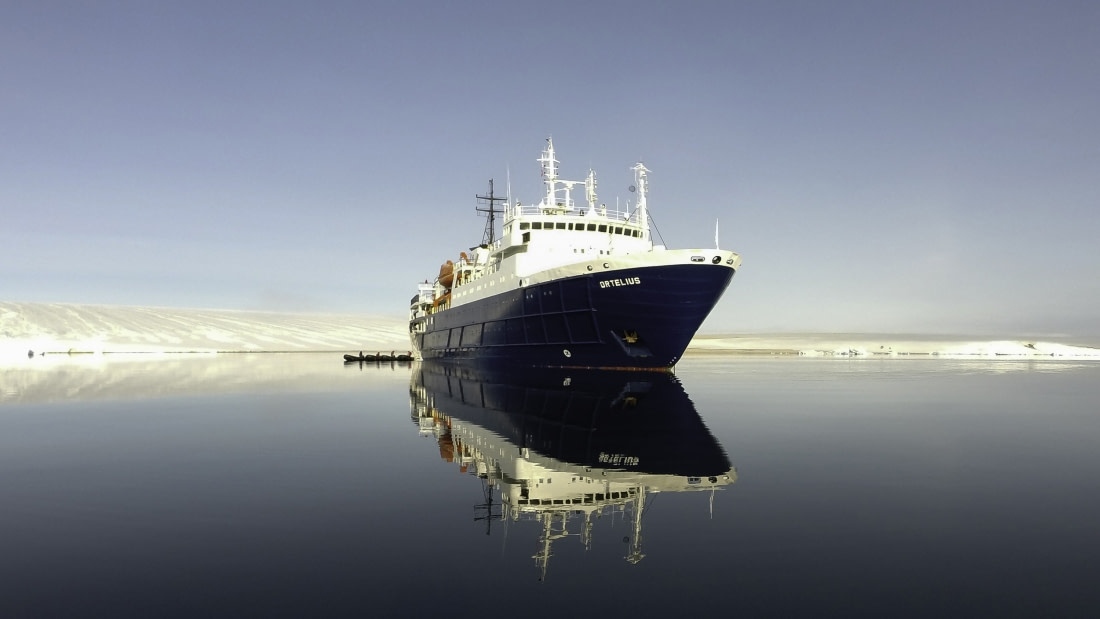
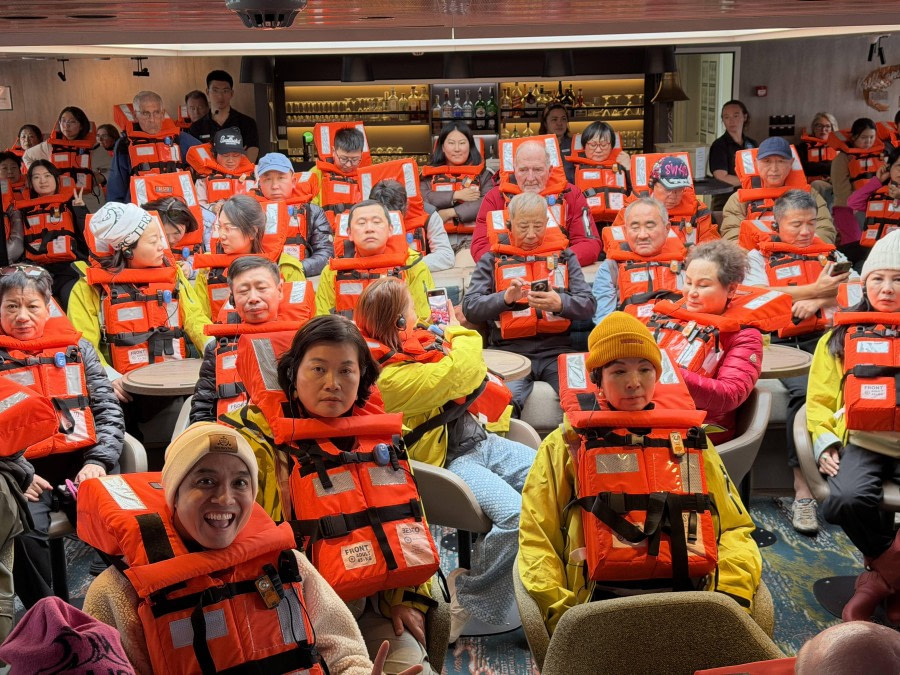
Once everyone had embarked, we gathered in the lounge for the mandatory safety briefing. Following the introduction, we completed the SOLAS muster drill, donning our life jackets and practicing the ship's emergency procedures under the guidance of the crew. With all formalities complete, Ortelius cast off and began her voyage south through Adventfjorden and into Isfjorden.

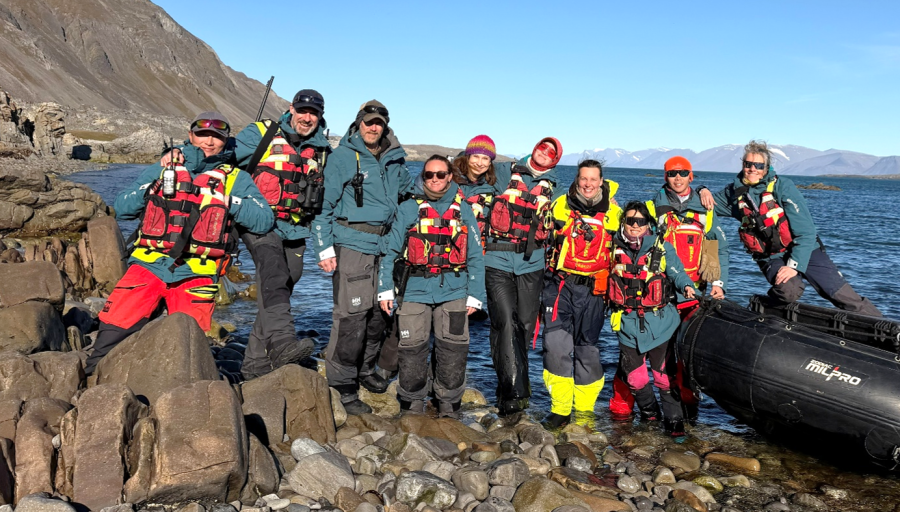
Our expedition leader, Adam, officially welcomed everyone onboard and to start our expedition, introducing the expedition team and expedition philosophy that would guide the coming days. Rather than following a fixed itinerary, our plans would remain flexible, adapting to weather conditions, sea ice, wildlife opportunities and other factors that make every Arctic expedition unique. Our Captain, Per, followed up with a toast to a great voyage before our first dinner onboard was announced on the speakers by our hotel manager, Volva.

Our first dinner onboard provided an opportunity to get to know each other and share the excitement of the adventure ahead. The evening concluded with the distribution of our expedition Muck Boots, essential equipment for the many landings to come.

With preparations complete, and anticipation growing, we retired for the night as Ortelius continued her journey into the Arctic, ready for the first full day of exploration ahead.
Day 2: Fjortende Julibukta and Ny-Ålesund

Fjortende Julibukta and Ny-Ålesund
Datum: 22.07.2026
Positie: 79°05.2’N / 011°36.2’E
Wind: NNW-2
Weer: Overcast
Luchttemperatuur: +3,6

In the morning, we listened to our mandatory briefings from Expedition Leader, Adam, regarding zodiac and polar bear safety, as well as how to behave responsibly as visitors to the Arctic regions.

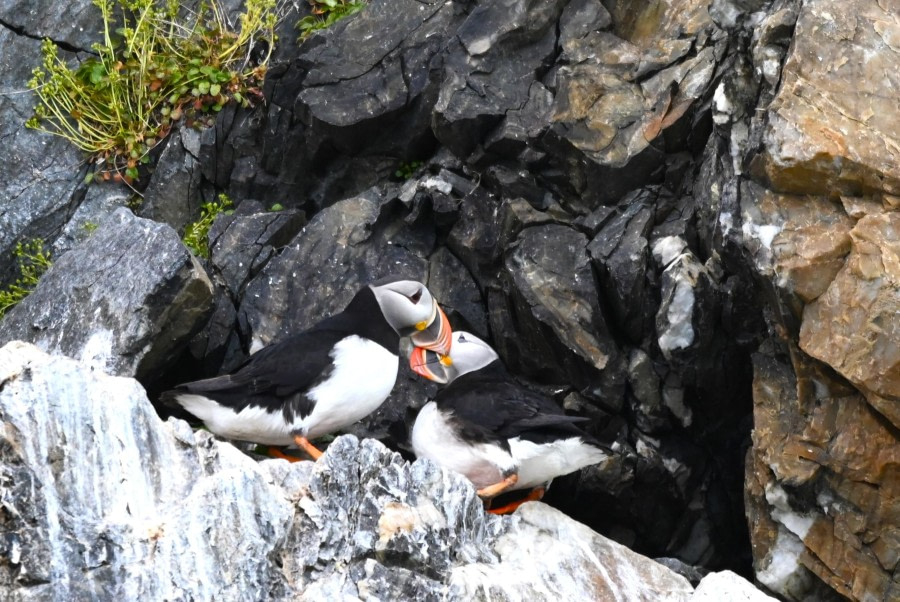
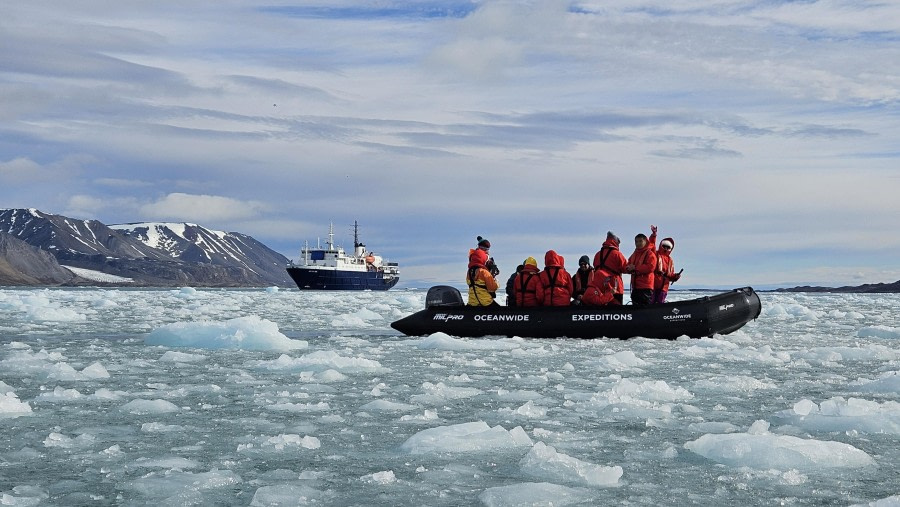
By 10am, we were disembarking for the first time on our journey. First stop was Fjortende Julibukta for a zodiac cruise. We had two hours to explore and enjoy the many birds here near the glacier, including everyone’s favourite colourful bird, the puffin, which there were many of along the coastline and cliffs. Other birds we saw were glaucous gulls with chicks, guillemots, northern fulmars, and black legged kittiwakes.

Closer to the glacier, the weather began to turn. The sky darkened and cold rain began. The bay was chalked full with brash ice, completely socking in the glacier which meant we could not get as close as we typically would but it was a very beautiful sight still. We enjoyed the peaceful crackling sounds of the ice and the birds that surrounded them.

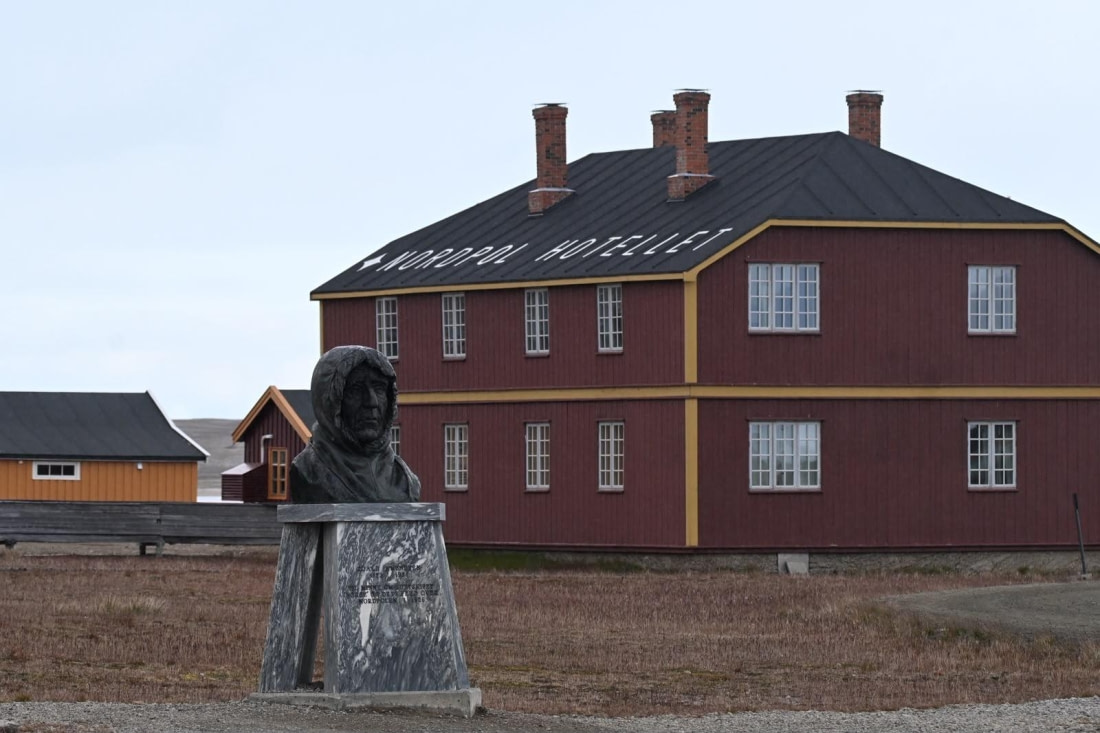
In the early afternoon we shuttled into the local dock at Ny-Ålesund, a day many had looked forward to when planning their visit to Svalbard. We had about 4 hours to visit the settlement where we visited the museum, gift shop, post office, and the bust of Amundsen. From the bust, we were offered two different tours out to the mast as they are outside of the walking area and a rifle was required. One tour was offered in Mandarin by Kana and the other in English by Gabi. Arctic foxes were also seen and a few seals in the harbour. As we began the shuttle back to the ship, we received a radio call from the Captain. Humpback whales had been seen near Ortelius. A few of us were lucky enough to witness a humpback whale breach about 300 meters away. What a fantastic surprise for all.

Day 3: Monacobreen and Texas Bar

Monacobreen and Texas Bar
Datum: 23.07.2026
Positie: 79°31.2’N / 012°24.1’E
Wind: SSW-2
Weer: Partly Cloudy
Luchttemperatuur: +5,6

We awoke to Adam’s morning call with the ship lying peacefully in front of the magnificent Monacobreen. After breakfast, we boarded the zodiacs for a memorable cruise through the icy waters of Liefdefjorden. The calm conditions allowed us to approach the glaciers while navigating through brash ice and scattered icebergs.

During the cruise, Seligerbreen calved several times, each collapse echoing across the fjord with a thunderous roar. Cameras were quickly raised as everyone tried to capture the spectacular scenes. Midway towards Monacobreen, a group of beluga whales appeared in the distance. Although they stayed well offshore, their bright white bodies were clearly visible against the dark Arctic waters. As the cruise came to an end, Monacobreen treated us to an impressive calving event, sending huge blocks of ice crashing into the water and reminding us that these glaciers are constantly changing.

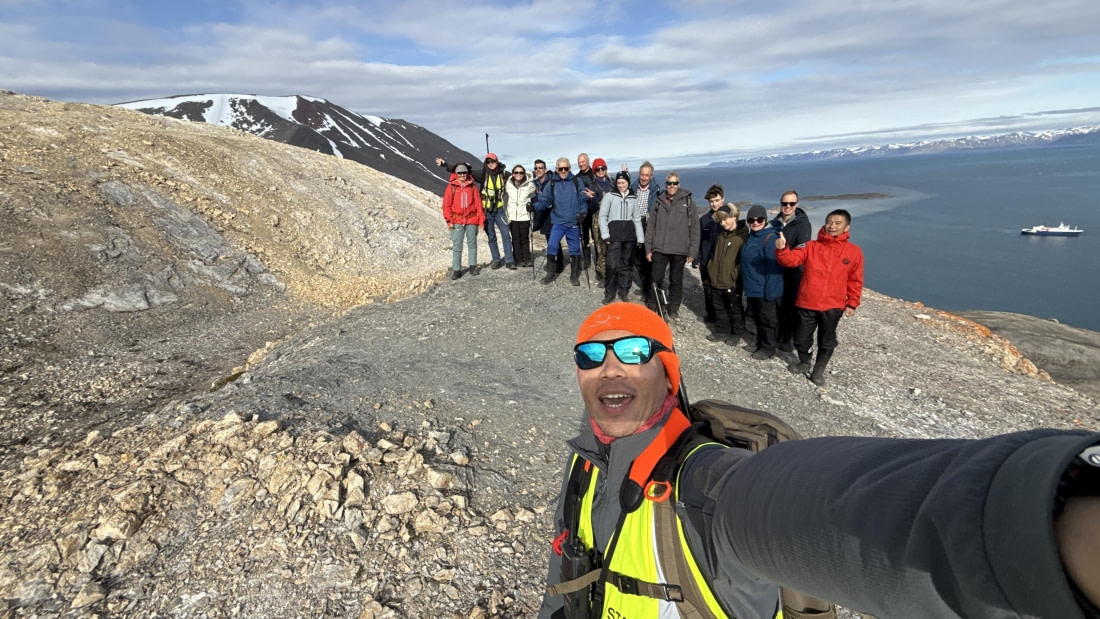
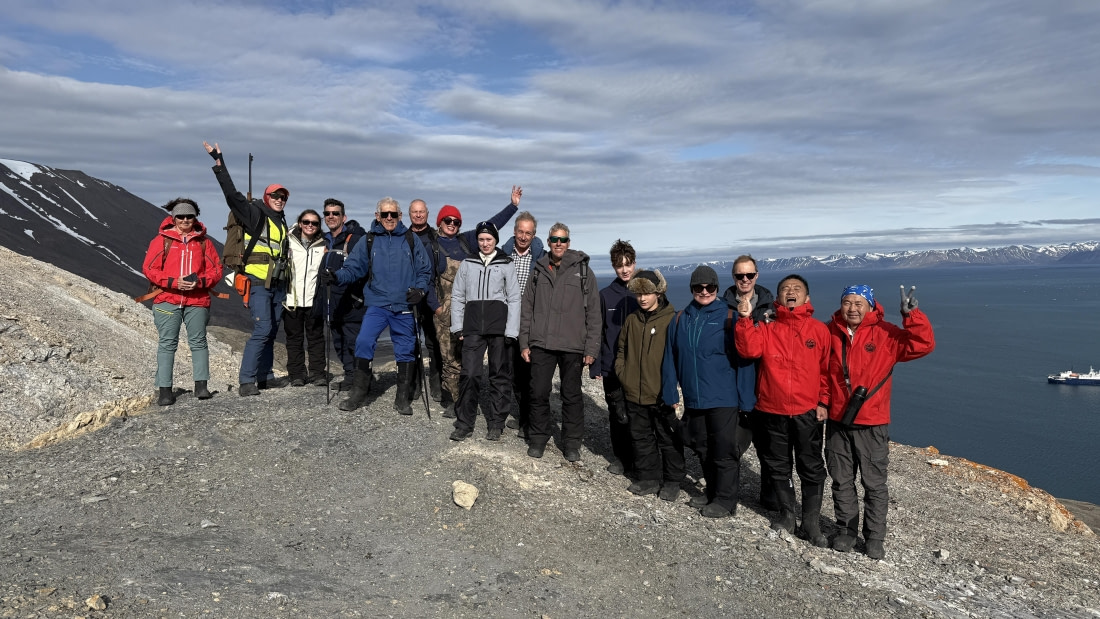
While we enjoyed lunch back on board, the ship sailed towards our afternoon landing site at Texas Bar. Once ashore, we could choose between long, medium, and leisure hikes. Our visit began at the historic trapper’s cabin, built in 1927 by the Norwegian trappers Hilmar Nøis and Martin Pettersen Nøis. Despite its inviting name, Texas Bar was never actually a bar, but an important shelter for trappers spending the long Arctic winters in Svalbard. We also learned about Hilmar Nøis, who famously spent 38 winters living and working in the high Arctic.

After the hikes came one of the expedition’s most exciting traditions, the polar plunge. One by one, brave participants dashed into the icy Arctic water before returning to shore, where warm towels and plenty of cheers awaited them. The smiles afterwards suggested the brief swim was well worth the effort.

With everyone safely back on board, we continued north towards the pack ice. During the evening, we passed Moffen Island, where we were rewarded with wonderful views of walrus hauled out along the shore, surrounded by countless seabirds. It was a perfect ending to another unforgettable day of glaciers, wildlife, history, and true Arctic adventure.

Day 4: A day in the Sea Ice

A day in the Sea Ice
Datum: 24.07.2026
Positie: 81°07.1’N / 019°20.6’E
Wind: NNE-1
Weer: Partly Cloudy
Luchttemperatuur: +2,1

Today began with an unforgettable early morning wake-up announcement as two blue whales were spotted directly ahead of the ship. Guests gathered quickly on deck and were rewarded with exceptional views as the whales surfaced repeatedly for nearly twenty minutes. Watching the largest animals on Earth in the calm Arctic waters was a truly remarkable experience and a highlight of the voyage.

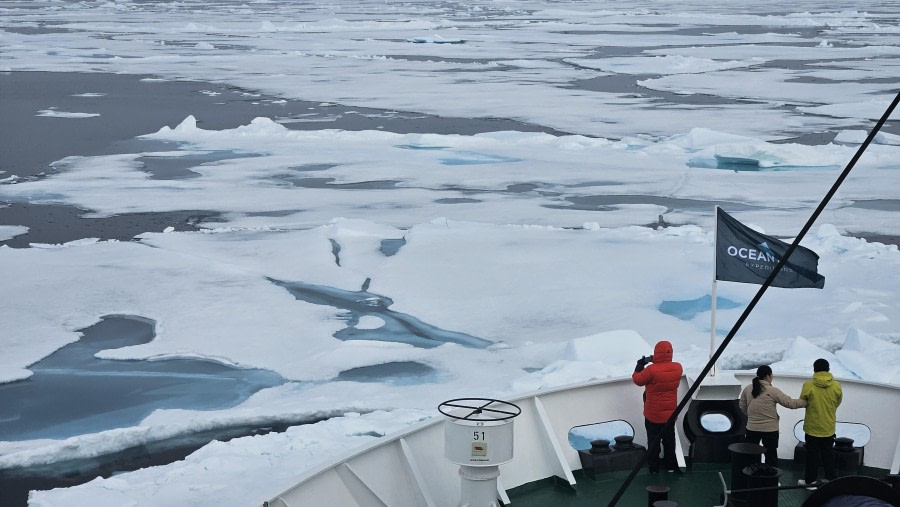
After breakfast, we continued deeper into the magnificent pack ice under excellent viewing conditions. Throughout the day, we encountered approximately 150 harp seals resting on the drifting floes, with many providing wonderful opportunities for observation and photography. Their relaxed behavior delighted everyone on board. We spent the remainder of the day carefully searching the ice for polar bears, scanning every pressure ridge and distant floe. Although no bears were found, the search itself was rewarding as we explored an ever-changing landscape of brilliant white ice and deep blue leads. The pack ice was exceptionally beautiful, with sculpted ridges, shimmering melt pools, and endless patterns created by wind and sea. The peaceful atmosphere and pristine scenery reminded us that every day in the High Arctic offers something unique. As the evening light settled over the ice, many guests remained on deck, appreciating the vastness and silence of this extraordinary environment. It was a memorable day defined by spectacular wildlife encounters and the timeless beauty of Svalbard’s drifting pack ice.

Day 5: Kinnvika and Alkefjellet

Kinnvika and Alkefjellet
Datum: 25.07.2026
Positie: 80°02.7’N / 018°13.2’E
Wind: NNW-4
Weer: Partly Cloudy
Luchttemperatuur: +4,6

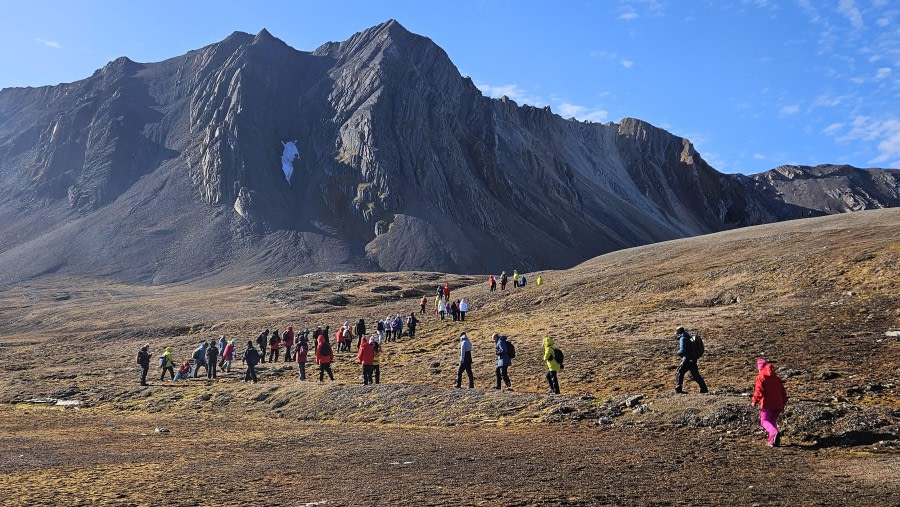
After a 07:15 wake-up call, we headed up to the restaurant for breakfast and prepared ourselves for a landing in Kinnvika in Murchisonfjorden, on the island of Nordaustlandet. This island is almost 80% covered by an ice cap, but Kinnvika has already been free of ice for thousands of years, and therefore a surreal polar desert. Again, a totally different landscape than all the days before. That is one of the beauties of Spitsbergen, its diversity.

We boarded the Zodiacs and arrived ashore in the sheltered bay, and then to be matched with the right expedition guide to go for a long, medium or short hike. We all first went through the old station of Kinnvika. It was a research station, built by Sweden and Finland, during the International Geophysical Year between 1957 and 1959. Today it still remembers that period with an old amphibious vehicle and ten buildings spread over a flat area in front of the raised beaches in the back. Of course, they also built a sauna, as the Swedes and Finnish do! It is the northernmost sauna in Svalbard. In 2007 to 2008 this place was used by scientists from ten countries, to research the ice cap of Vestfonna. We had a look inside some buildings and took photos before we left the beach area and walked over the scree slopes to higher ground. The long hikers went to the top and had a beautiful overview over the area with different islands.

When we were on the ship in the morning, we did not expect to see this many flowers here, in this polar desert. But paying attention to every step we took we managed to photograph amongst others, Scurvy Grass, Tufted Saxifrage, Alpine Saxifrage, Drooping Saxifrage and the national flower of Svalbard, the Svalbard Poppy.

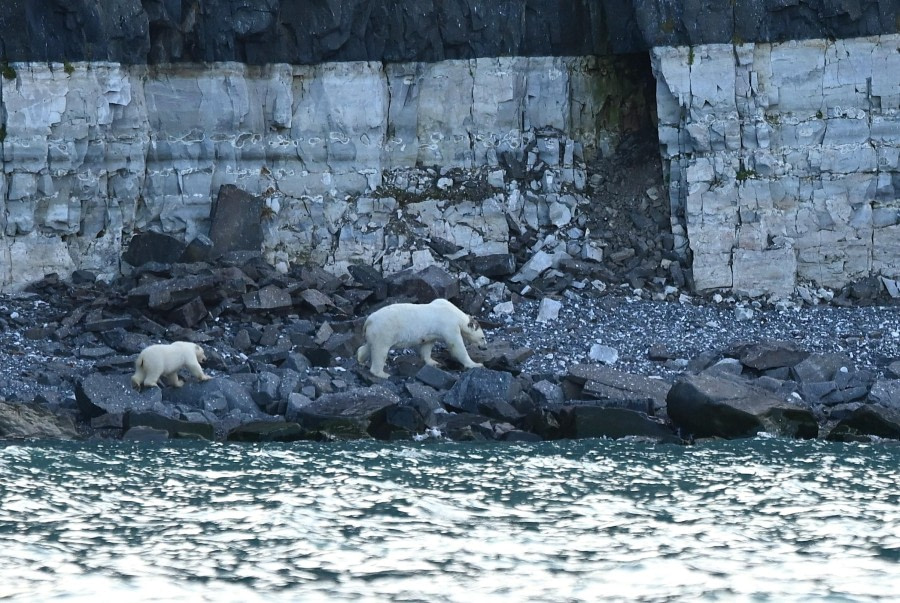
We went back to our MV Ortelius to have another delicious lunch prepared by the head chef Ivan and his galley team. We sailed across the Hinlopenstretet, the water separating Spitsbergen from Nordaustlandet. Our destination for this afternoon was Alkefjellet. This place is just magical with 100-meter-high cliffs, towering above the water, full of Brünnich’s Guillemots. Around 60.000 pairs nest on these cliffs from May. Besides Brünnich’s Guillemots we also spotted a few Black Guillemots and Glaucous Gulls with their brownish young. These cliffs would have already been a spectacle in itself, but then we were about to be treated with an even more exceptionally good afternoon. Getting into the Zodiacs we were told that one of the expedition guides had spotted a mother polar bear with her cub on the beach, underneath the bird cliffs. Really exciting!

All Zodiacs came together, so we could all watch the bears. As they were lying on the grey gravel beach, they looked like rocks. But when we got closer, they indeed turned out to be the mayonnaise-colored furry bears. They decided to move up the slope a little and stopped occasionally, when the cub would drink with her mum. So cute to watch that. After some good time spent with them, the expedition guides took us even closer to the cliffs and slowly drifted along to see and hear the birds. They don’t really make a nest, as they lay their blue-green-pear-shaped eggs on a small ledge, where they can hardly sit themselves. Like sardines in a can, they sit closely together. Their twittering was a wonderful sound and hundreds of birds kept flying in and out every second to the cliffs or landed on the water. At the end, the cliffs got a little lower and we could see the hanging glaciers coming off the big ice sheet above, creating beautiful waterfalls.

After this wonderful afternoon we headed back to the ship and met the expedition team up in the bar for the plans for the next day and listened to some interesting stories from the guides. After dinner some of us went out or on the bridge to enjoy the scenery of some smaller islands we were sailing past. At one point, we thought we had spotted another polar bear, but that turned out to be a rock.

Day 6: Discobukta and Kapp Lee

Discobukta and Kapp Lee
Datum: 26.07.2026
Positie: 77°56.3’N / 021°18.5’E
Wind: SSE-2
Weer: Clear Sky / Fog
Luchttemperatuur: +5

We had set course for Sundneset, where several hiking options were planned, when Adam’s soothing voice came over the speakers: ”Good morning, good morning, good morning…”. It was a slightly earlier wake-up call than expected, but with a very good reason: two polar bears had been spotted. Still half asleep, we quickly pulled on our warm layers and gathered on deck. Before us lay a mother and her cub, sleeping peacefully in the quiet Arctic landscape. It was a gentle and unforgettable way to begin the day.

As the bears were resting quite close to our intended landing site, we left them undisturbed and turned towards Discobukta instead. This spectacular place is rarely visited because of its shallow waters and tricky approach, but the tides and winds were playing in our favour. We managed to reach the shore and began our first landing of the day, and we could not have imagined a better Plan B.

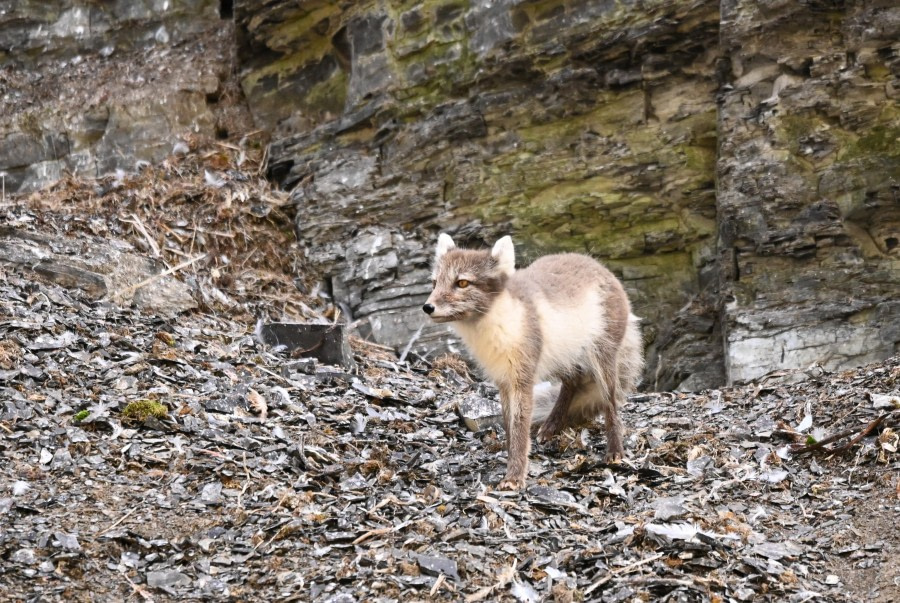
We walked into a dramatic canyon, surrounded by the calls of hundreds of black-legged kittiwakes nesting high on the cliffs. The air was alive with movement and noise. Before long, Arctic foxes began appearing one by one, approaching from several directions in search of an easy meal beneath the bird colony. Some watched us curiously from the slopes, while others moved quickly among the rocks, constantly alert for falling eggs or chicks. After exploring the canyon, many of us found comfortable places among the rocks, lounging in the sunshine and taking in the views. With the sound of the birds echoing around us and foxes still moving through the landscape, it was difficult to leave when the time came to return to the ship for lunch.

In the afternoon, we anchored near a fog-covered Kapp Lee. Visibility had almost disappeared, and an extraordinary white fog bow stretched across the horizon. We climbed into the zodiacs and headed into the mist, where playful and charismatic walruses soon appeared in the water

They approached the boats from several directions, lifting their enormous heads above the surface and inspecting us with obvious curiosity. As the fog gradually began to lift, the coastline emerged and revealed a large walrus haul-out. Dozens of animals rested together on the shore.

Then we noticed something remarkable behind them: a massive adult male polar bear, fast asleep. We kept a generous distance and quietly admired the sleeping “king of the Arctic,” while walruses continued to surround our zodiacs. The contrast was extraordinary, the lively, inquisitive walruses in the water and the enormous bear sleeping peacefully on land.

Only the final few boats remained on the water when another surprise appeared. A small group of belugas moved quickly along the shoreline, their pale bodies briefly visible through the calm water. It was a short encounter, but an incredible final addition to a day already overflowing with wildlife. From a sleeping mother and cub at sunrise to Arctic foxes, hundreds of kittiwakes, curious walruses, a huge male polar bear and finally belugas, our unexpected Plan B became a truly unforgettable Arctic day.

Day 7: Boltodden and Strongbreen

Boltodden and Strongbreen
Datum: 27.07.2026
Positie: 77°29.3’N / 018°10.1’E
Wind: NNE-4
Weer: Overcast
Luchttemperatuur: + 6,3

Today, Ortelius returned to the southeastern coast of Spitsbergen and dropped anchor near Boltodden. The steep mountains came back into our view again. After breakfast, we got ready and set off for a new day's hiking. Boltodden is famous for the discovery of Iguanodon footprints along its coastline. Boltodden is located in the Kvalvågen area on the east coast of Spitsbergen Island in Svalbard, Norway, a high-latitude region in the Arctic (with a paleolatitude of about 63°–66°N in the Early Cretaceous). Svalbard was then on the northwestern edge of the Eurasian Plate. In 1976, archaeologists discovered two footprints in Boltodden and misidentified them as those of medium-sized theropod dinosaurs, based on the sharp "claw marks". In 2012 and 2014, another archaeological team returned to the area and newly identified at least 34 previously unrecognized footprints, bringing the total number of clearly recorded footprints at this site to 36. Through comprehensive morphological analysis (wider than long, blunt - ended toes, wide and round metatarsal pads), preservation features (the presence of fore-footprints), and sedimentological evidence, the author completely refuted the theropod hypothesis and established that all the footprints belong to ornithopod dinosaurs. Therefore, this new discovery suggests that quadrupedal ornithopods may have been more widely distributed and more adaptable in the northern part of Laurasia than the fossil record shows.

Between 1909 and 1910, two hunters spent a rather perilous winter here. Due to the shabby construction of the hut and insufficient preparation of firewood, one of them had his toes severely frostbitten and finally had to have them amputated by his companion. The two were finally rescued after an 18-day boat journey to Isfjorden.

Here, we still carried out hiking activities of different intensities as usual. The long hiking group set off northward to the highlands after observing the Iguanodon footprints. Along the way, they saw the tundra landscape unique to the southern part of the archipelago and various polar plants. They also found traces of tools and buildings presumably left by early Pomor hunters. The medium hikers walked along the coastline, enjoying the sea views on both the east and west sides. They closely observed the rocks in various shapes that had been weathered and the lichens growing tenaciously on them. Near the landing point, skuas, purple sandpipers, and snow buntings flew back and forth from time to time, busy in their breeding season.

In the afternoon, after a short voyage, Ortelius arrived at the front edge of Strongbreen on the northwest side. The glacier here continuously calves, producing a large volume of high-density deep blue icebergs. At the confluence of several glaciers, abundant moraine sediments generated by the friction between glacial ice and mountain rock have been frozen and accumulated. When the glacier is illuminated by sunlight, it occasionally unfurls a magnificent scene reminiscent of a traditional Chinese ink wash painting.

During the Zodiac cruise, we unexpectedly spotted the rare ivory gull. This marked another close encounter with the glacier following our excursion at Monacobreen, offering us a precious chance to take in the unique landscapes of Svalbard in detail amid our daily wildlife-watching expeditions.

Day 8: Bamsebu and Vårsolbukta

Bamsebu and Vårsolbukta
Datum: 28.07.2026
Positie: 77°33.5’N / 015°04.9’E
Wind: E-3
Weer: Clear Sky
Luchttemperatuur: + 8,3

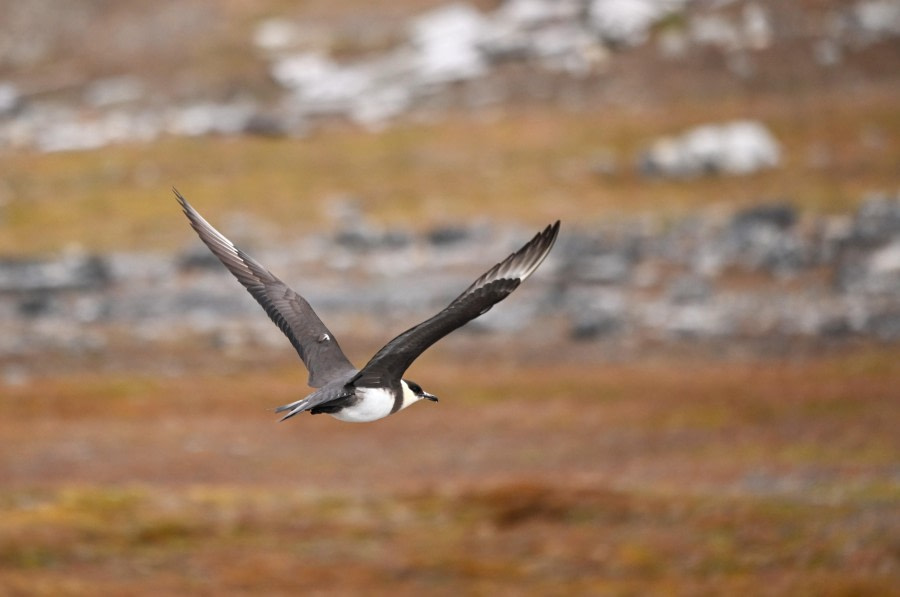
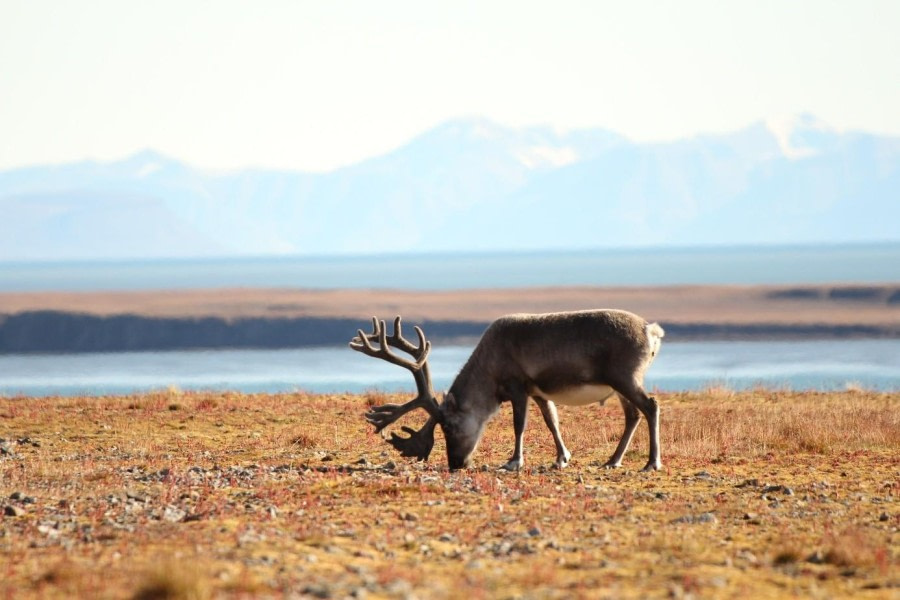
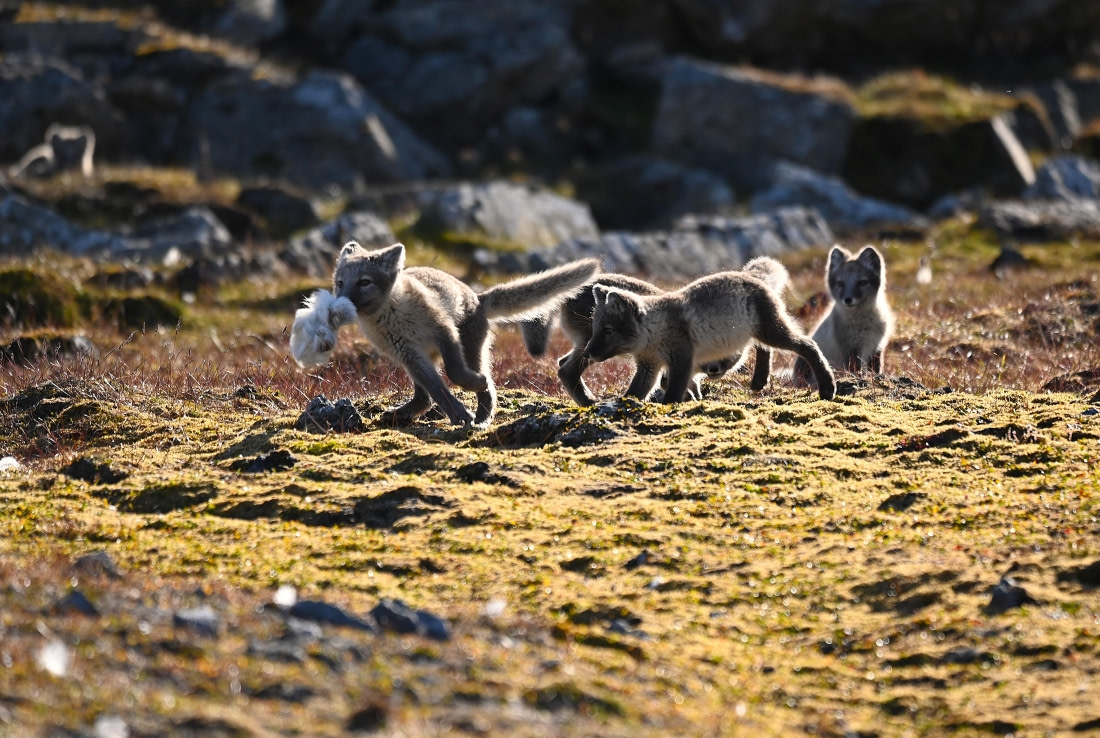
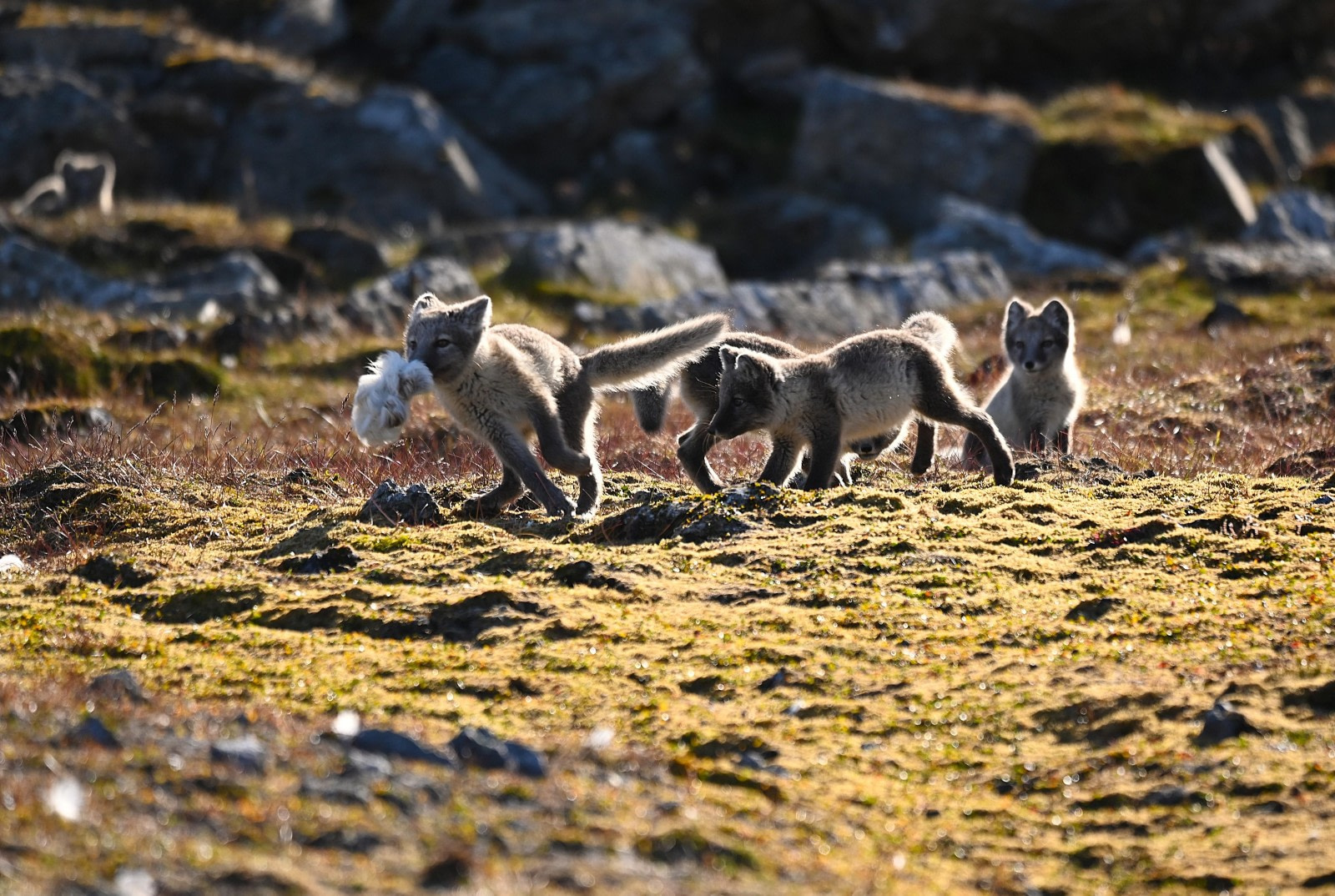
We woke up to a beautiful sunny day and got ready for our morning landing in Bamsebu. As we came ashore, we were met by a small cabin, the Bamsebu cabin, and further along the beach piles of beluga whale bones and remains of wooden whaling boats. We divided into hiking groups and headed off to explore the landscape. Well into the plains of Arctic tundra, we spotted small herds of reindeer, also some cute calves following in the footsteps of their mother. We were now finding ourselves on the west side of Svalbard again, and here the tundra is well vegetated and plenty of food is available for the reindeer to grass. On these plains of lush vegetation, we also observed barnacle geese, a pair of long-tailed skuas and ringed plovers. As we were heading back towards the landing site, some of us spotted some polar foxes in between some rocky hills. Suddenly we were lucky to witness five polar fox pups playing around on the mossy ground and between the rocks. What an incredible and rare experience! Others of us enjoyed a shorter walk enjoying the many flowers blooming in between the moss and grass.

In the afternoon, we entered the bay Vårsolbukta with the mountain Ingeborgfjellet raising tall behind the landing site. This bay is named “Spring sun bay” translated from Norwegian, and it was quite fitting with the beautiful sunny weather we were fortunate to experience this day. This time the guides created a perimeter where we could roam freely between them. Another rich tundra and smaller herds of reindeer enjoying grassing along the slopes of the mountain. Further up the mountain, up in the cliff sides, a colony of little auks were nesting, creating some spectacle of sound. Every now and then, a flock of them made a sweep over the sky, flashing their white bellies, what a coordination to fly together in such speed and elegance. A scope was brought onshore so that everyone could enjoy observing the colony from the ground. In another side of the perimeter, some foxes were observed. Together all this life in the tundra reminds us of the incredible adaptation these different species have evolved to thrive in the summer and endure the winter, but also of how the west side of Svalbard also provides a gentler climate to thrive in than further to the east. As we were slowly making our way back to the landing site and getting ready for our zodiac drive back to the ship, we also spotted some beluga whales out in the fjord and some seals resting on the rocks now exposed as the tide was moving out.

Back onboard the ship, the galley team had prepared an Arctic BBQ on the outside decks. Tables and benches were lined up and a buffet of food and drinks were ready for us to enjoy. The weather was still on our side, with pleasant temperature and the sun still shining, and the beautiful view of the mountain Ingeborgfjellet and our landing spot. It could not have been better conditions for an Arctic BBQ. After the food, the tables and benches were all moved away and the floor was ready for some dance moves to be shown off.

Day 9: Selmaneset and Ymerbukta

Selmaneset and Ymerbukta
Datum: 29.07.2026
Positie: 78°14.5’N / 013°57.9’E
Wind: S-1
Weer: Clear Sky
Luchttemperatuur: + 12,7

We woke up to yet another sunny beautiful morning on the west coast of Spitsbergen. The day started with a slightly earlier wake up call, again. Another polar bear had been spotted at Alkhornet, our planned afternoon landing site. We got a view of the polar bear before it moved behind some rocks, and then we continued on to our morning landing location, Selmaneset. Another day of exploration of the vegetated tundra with sunny clear skies above. In our walking groups we all could enjoy more reindeer and flowers as we moved across the land. Our destination today was to make it to some rocky areas where we were promised some fossil sites from about 49 million years ago. And it was worth the hike there. We walked between two rocky walls on either side, where the one side was covered in small and larger fossils from corals and brachiopod shells. The other side had a different type of colour and consistency, and it was fascinating to think about the fact that we were walking between two different geological times, one where huge amounts of life had died and were now preserved for us to observe.

In the afternoon, Adam had found another location to do a landing as the polar bear on Alkhornet made that location not possible anymore. Our new landing spot was Ymerbukta and a visit to the glacier Esmarkbreen. Once an impressive, crevassed glacier, now it had retreated onto land and was slowly melting from above making the surface smooth. This time we were also able to road freely within a perimeter made of the guides. We enjoyed hiking up a hill for a view of the bay. The terrain of the glacier moraine was rocky and silty, and some areas were hard to cross as small streams made the sediment unsteady. Closer to the glacier front, we could observe how the glacier ice was melting in front of our eyes in the strong sun. Small streams were making their way along the glacier ice and through the moraine terrain into the fjord water. Some Arctic terns were flying about, and sometimes attacking when people went too close to their nests.

Back onboard the ship, we had our daily recap in the lounge, but this time as the last evening, Captain Per was once again raising his glass for a cheers, this time a cheers for a successful expedition together. What an incredible journey we have had exploring the Arctic together. In the dining room, a plated dinner was waiting for us to enjoy as we sailed further in Isfjorden the last stretch to Longyearbyen.

Day 10: Longyearbyen, Kullkaia. Disembarkation Day

Longyearbyen, Kullkaia. Disembarkation Day
Datum: 30.07.2026
Positie: 78°14.6’ N / 015°33.2’ E
Wind: SE-4
Weer: Clear Sky
Luchttemperatuur: +10

Well docked by the key side, Kullkaia, in Longyearbyen, we woke up one last time to Adam’s calm voice. We put our luggage outside our cabins and headed for one last breakfast buffet onboard. Outside, the sun was still shining and the waters of Adventfjorden were calm. The expedition team organized our luggage on the pier, and we made sure we were on the right bus for the airport or for town. It was time to say goodbye to the expedition team and crew onboard, and to our fellow travelers and new friends. What an amazing journey this has been exploring the Arctic wilderness. With unforgettable memories we were ready to travel home.


Total distance sailed on our voyage: 1083 nautical miles

Most northern point sailed: 81°40.7’ N, 021°09.1’ E


Your Oceanwide Expeditions Team

Details

Reiscode: OTL09-26
Reisdatum: 21 jul. - 30 jul., 2026
Duur: 9 nachten
Schip: m/v Ortelius
Inscheping: Longyearbyen
Ontscheping: Longyearbyen

Op deze reis geweest?

Aan boord van m/v Ortelius

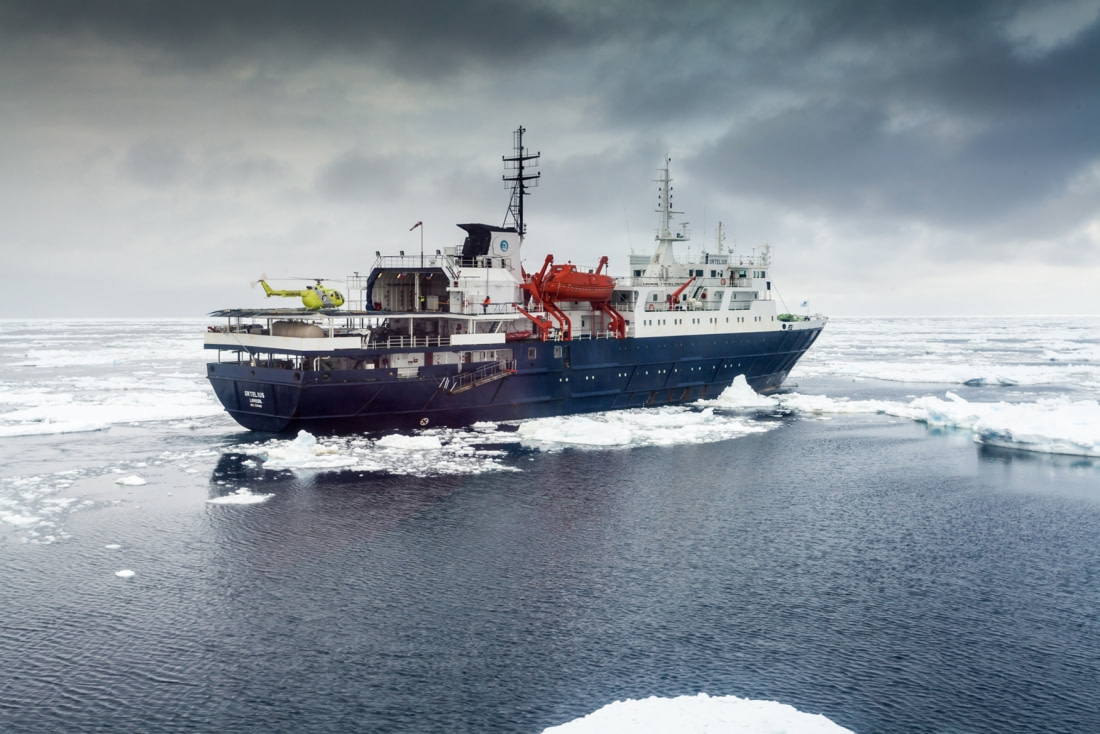
De ijsversterkte Ortelius is grondig uitgerust voor expeditie cruises en, op sommige reizen, helikoptervluchten.

Meer over de m/v Ortelius »
Loading