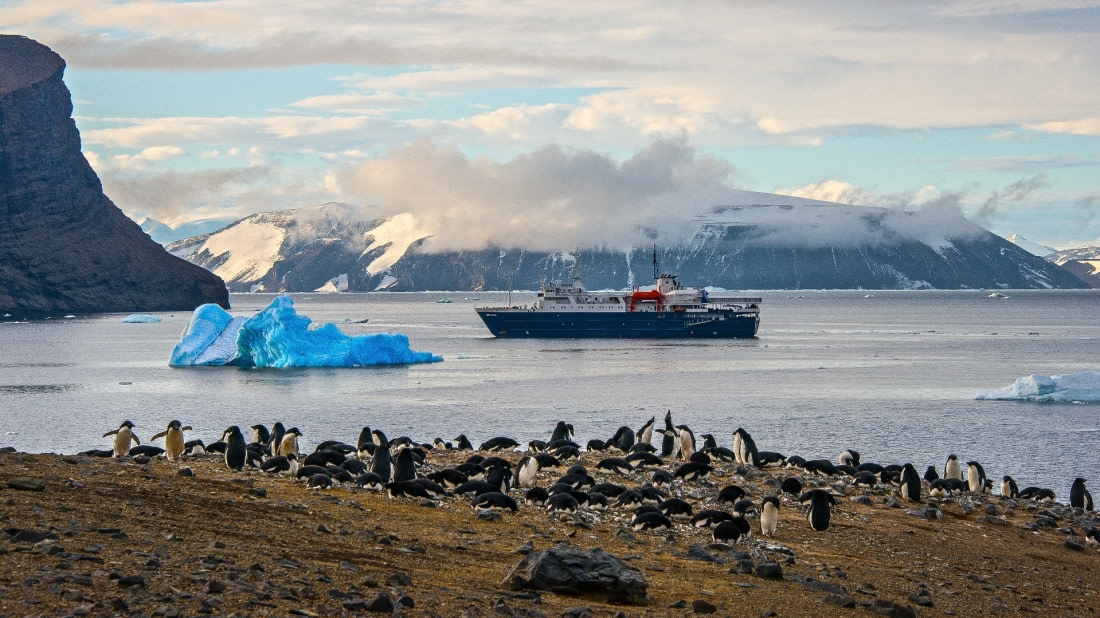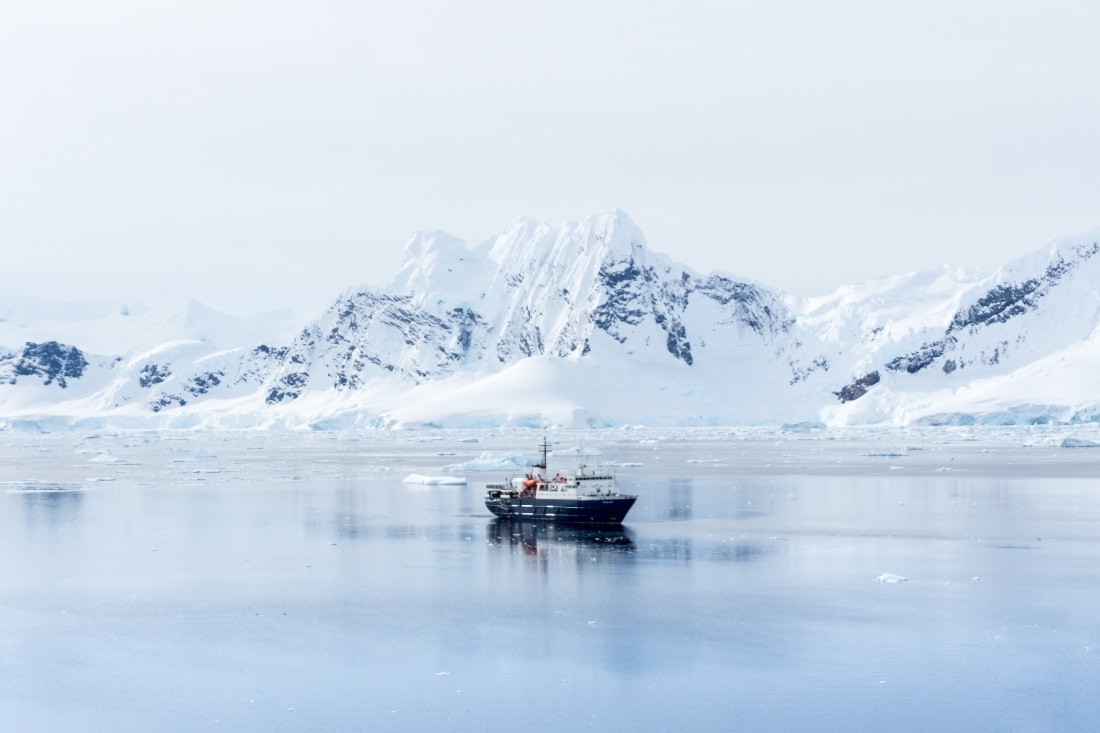
OTL01c26, trip log, Arctic Ocean - Aberdeen, Fair Isle, Jan Mayen, Ice edge, Spitsbergen, Birding

by Oceanwide Expeditions

Fotogalerij

Logboek

Day 1: Vlissingen, Embarkation Day

Vlissingen, Embarkation Day
Datum: 25.05.2026
Positie: 51°36.6’ N / 003°22.7’ E
Wind: SE 4
Weer: Clear
Luchttemperatuur: +16

The North is a kingdom of eternal ice, cold, and polar bears, and today our journey to this distant and mysterious land finally begins. Perhaps that is why the local weather decided to give us one last farewell gift — either kindly warming us up before the Arctic cold ahead, or trying to incinerate us out of sheer jealousy. The heat was unbearable. The only relief came from the air conditioning on the bus, so at least during the ride from the railway station to the Reimerswaal shipyard we were temporarily spared the risk of heatstroke.

The drive to the shipyard was short but memorable, because for the last couple of kilometers the bus passed endless colossal man-made metal structures, cranes, ships under construction, and enormous industrial buildings whose purpose we could only guess at.

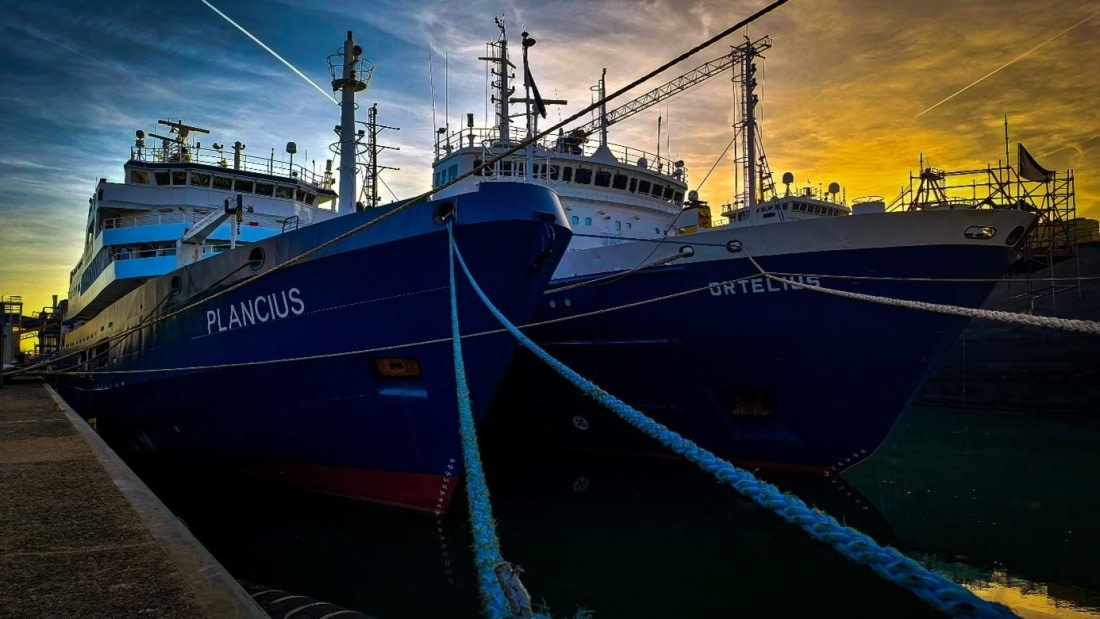
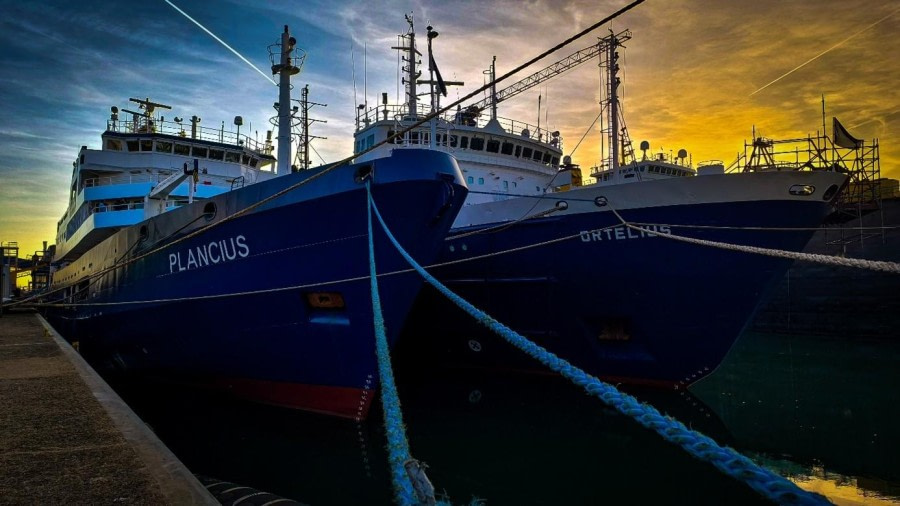
And then, the checkpoint was behind us. The bus passed through the raised barrier, rolled onto the pier, and soon stopped beside a ship whose bow bore the name… “PLANCIUS.” Wait a second — where was our Ortelius? As it turned out, Ortelius was moored alongside Plancius in a second row, so we first had to board Plancius via the gangway and then cross another gangway to reach Ortelius. This is a fairly common practice: it saves space at the dock and also simplifies the use of various repair equipment on both vessels.

We stepped off the bus and, baking under the blazing sun, joined the queue for passport control. By boarding the ship we were technically leaving the Netherlands, so the presence of border officers was hardly surprising. After all, we never find such things unusual at airports. Meanwhile, members of the expedition team were taking care of our luggage, hauling suitcases and using a crane to transfer them aboard Ortelius.

At reception we received the keys to our cabins and went to settle in, making sure our luggage had also made it aboard rather than being left behind on the pier. Once satisfied that everything was in order, many of us grabbed our binoculars and cameras and began exploring the ship that would be our home for the next couple of weeks.

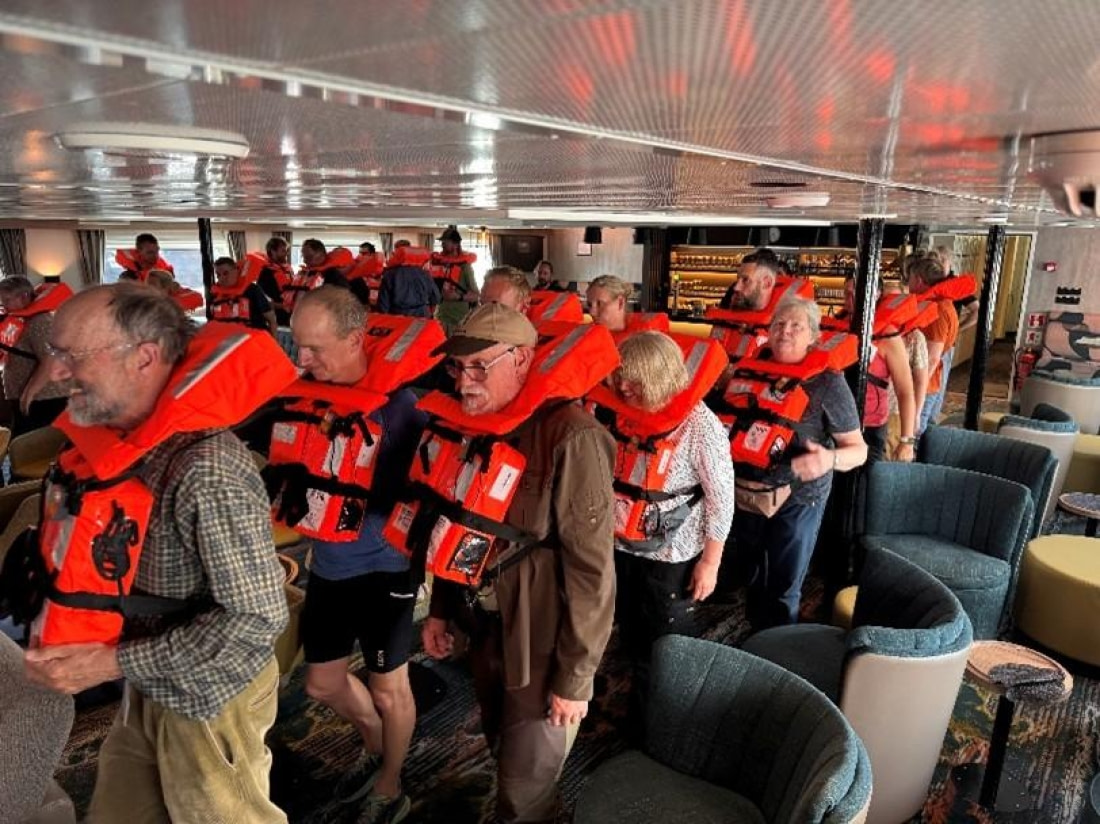
Some time later, around 5:00 p.m., a pleasant female voice came over the loudspeakers. It belonged, as we later learned, to our expedition leader Ali (Alison) Liddle. Ali informed us that everyone needed to gather in the observation lounge for a safety drill. Adventure is adventure, but safety comes first. We hurried to the observation lounge, where we were shown a short animated film, after which we were asked to return to our cabins and come back wearing our life jackets. So that is exactly what we did. A roll call followed, the alarm sounded, and we were escorted to our lifeboat stations. After thanking us for our participation, the crew dismissed us. We hurried back to stow our life jackets in the closet and replace them with cameras hanging around our necks, because now the most exciting part was about to begin!

Somewhere deep in the belly of Ortelius, the powerful engine roared to life. The sailors cast off the mooring lines, the winches began to turn, and Ortelius slowly started moving. We gathered on the open decks, holding our breath as we watched the pier gradually recede into the distance, along with Plancius still tied alongside it. Sailors, officers, and crew members stood on her decks too, smiling sadly and waving goodbye to us. Don’t worry, friends — in a couple of weeks you’ll also be racing northward through the waves. We’ll see each other there. Goodbye for now!

At first, Ortelius was assisted by a tugboat that carefully guided the stern of our ship, but once we entered a wider channel, the tug left us. Ortelius did not immediately head out into the open sea. Instead, she slowly turned a full 360 degrees. Many of us exchanged puzzled glances, but our guides explained that a very important procedure was taking place — the calibration of the navigation equipment — and for this the ship needed to complete a full counterclockwise turn. Well, for us it was simply another opportunity to admire the surroundings and marvel once again at the enormous and strange machines that surrounded us both on land and at sea. At last the calibration was complete, and our ship set course for the open ocean.

We returned for a while to the observation lounge to listen to a speech by our hotel manager Vova, who explained the peculiarities of life aboard the ship. Soon afterward it was finally time for dinner. Many of us had secretly been looking forward to that moment for quite some time, because all the excitement of the day had given us quite an appetite.

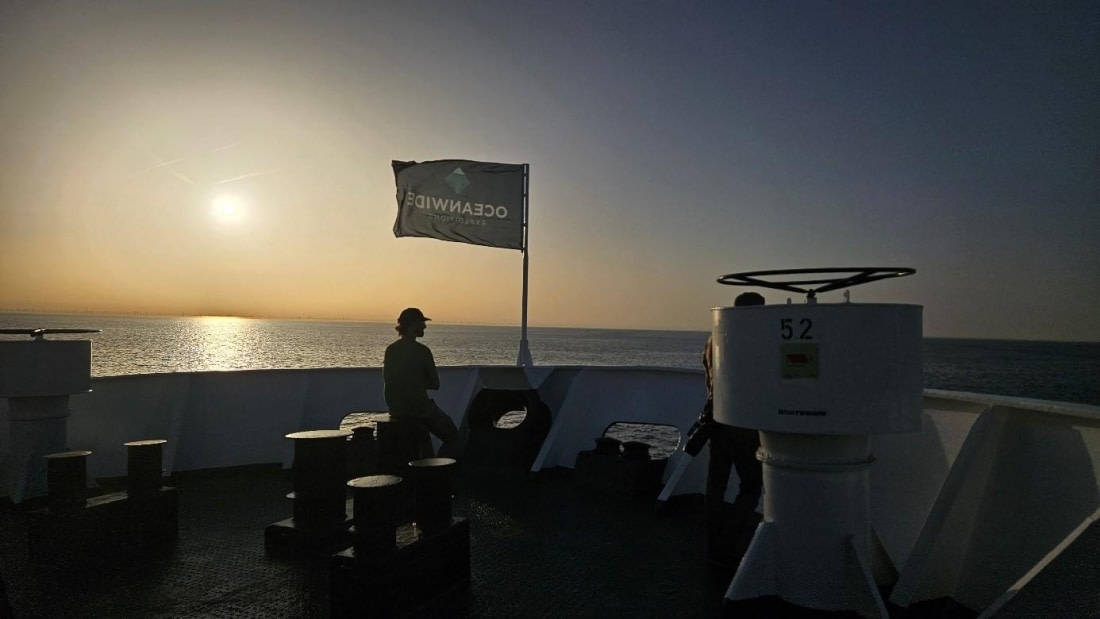
At first Ortelius sailed along the coastline, and a long chain of beaches stretched away along the starboard side. Gradually the shore drifted farther and farther away. The sun, already sinking toward the horizon, finally disappeared, and we found ourselves enveloped in the pleasant twilight of a summer evening. The lights of lighthouses and offshore platforms flickered to life, the sounds of the day faded away, and the first stars began to appear overhead.

The day had come to an end, but our adventure was only just beginning.
Day 2: At Sea Towards Aberdeen

At Sea Towards Aberdeen
Datum: 26.05.2026
Positie: 54°22.7’N / 001°06.5’E
Wind: NE 5
Weer: Clear
Luchttemperatuur: +15

After we left Vlissingen behind us, we woke up this morning to a completely flat North Sea, hardly any wind and abundant sunshine. During the night we hardly felt the ship moving so we all got a proper night sleep. Some of us had headed out very early to enjoy the morning sun and the first sea birds of the voyage.

Today we would spend entirely at sea heading north to Aberdeen where we were planned to arrive the next morning. The temperature had dropped a bit compared to yesterday and that made for perfect weather to enjoy the outside decks. Either to enjoy the sun and fresh sea breeze or to scout for wildlife.

In the morning a lecture was scheduled and it was Bill who invited us to listen to his presentation about Scotland. Being a proud Scotsman, Bill showed up wearing traditional attire including his kilt. His lecture was very informative and although many of us had only met Bill the day before, we already knew that Bill had a good sense of humor and was not afraid to challenge us. That made the lecture both entertaining and informative.

After lunch many of us went outside again to enjoy the formidable weather and abundance of wildlife. Occasionally, common or Bottlenose dolphins were spotted while Gannets, Black Guillemots, and Northern Fulmars, among others, were flying around and past the ship.

Guide Mark is a true birder and he welcomed us in the lounge for his lecture about birds of the North Sea. Mark was really passionate and you could tell he knows all about them.

His lecture inspired many of us to have a quick coffee or tea before heading to the outside decks again for some more birding. The weather was still exceptional and we enjoyed every minute of it.

At 18:15 invited us to the bar for our first daily recap. During recap Ali shares with us some latest updates of the journey and the program for the day ahead. Then it’s time for 1 or 2 guides to do short presentations about something we have seen during the day, but it can also be about the history of a place we have visited for example.

Then it was time for a delicious dinner. The galley team had outdone itself and we all enjoyed the tasty dishes that were served to us.

After dinner we decided to digest our food outside while sitting on one of the benches out on deck or by looking through our well-used binoculars a bit more.

Good night!

Day 3: Aberdeen, Sands of Forvie, Bullers of Buchan, Footdee

Aberdeen, Sands of Forvie, Bullers of Buchan, Footdee
Datum: 27.05.2026
Positie: 57°21.2’N / 001°43.4’E
Wind: SE 4
Weer: Clear
Luchttemperatuur: +11

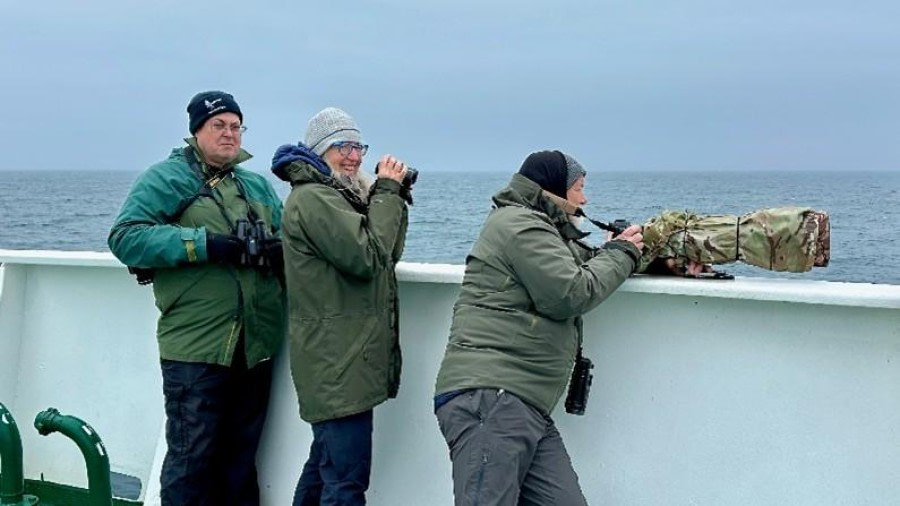
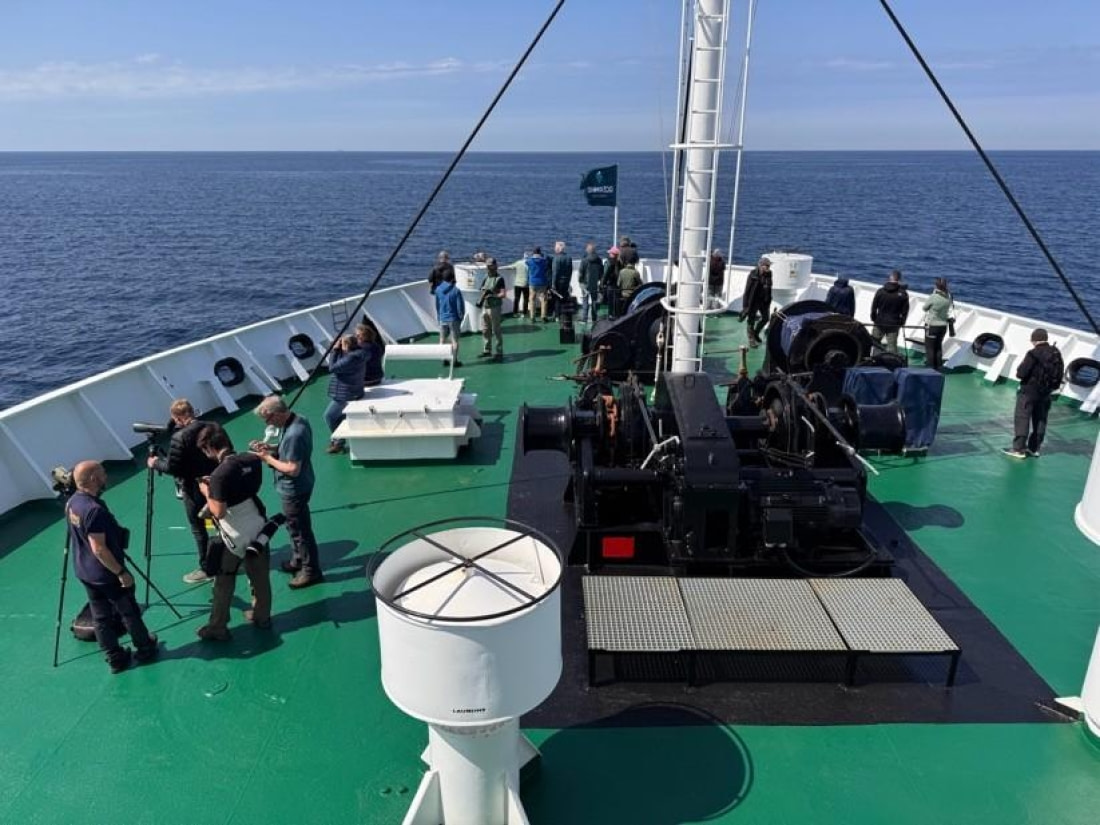
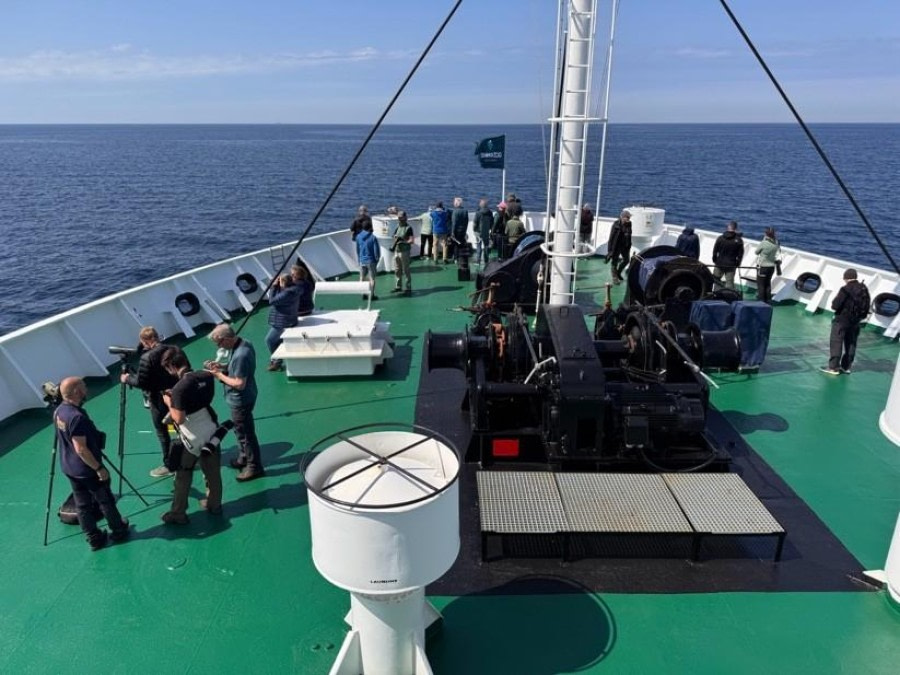
Excited by the thought of landing in Scotland some of us woke up at 6am to experience the first sight of the coast, expecting to be first on deck. It was not to be, as the fore-deck was already crowded with eager ‘birders’ already awake and scanning the horizon in every direction. The sea was an exceptionally calm, a grey lead coloured mass, slowly undulating, dotted with rafts of chattering terns, fulmars, kittiwakes etc. A shout of ‘Dolphins’ from our ever vigilant Expedition Leader ‘Ali’ as she spotted a small pod following the coast inshore, had all the cameras and binoculars swivelling in that direction. Ortelius motored steadily forward until at 1 mile from the harbour, the pilot boarded and conned the vessel into the inner reaches to berth at 7.30 at ‘Blakies Quay’. A Harbour Board piper appeared at 8 to provide stirring bagpipe music until the two coaches arrived at 8.30. Next we were cleared by immigration officials and we drove off on a tour of the city towards Newburgh and the Sands of Forvie Nature Reserve. Our Scottish guide Bill provided an informative on-board commentary during the journey. En route, we detoured down to the Trump golf course at Menie to give everyone a taste of what a very exclusive golf course looks like.

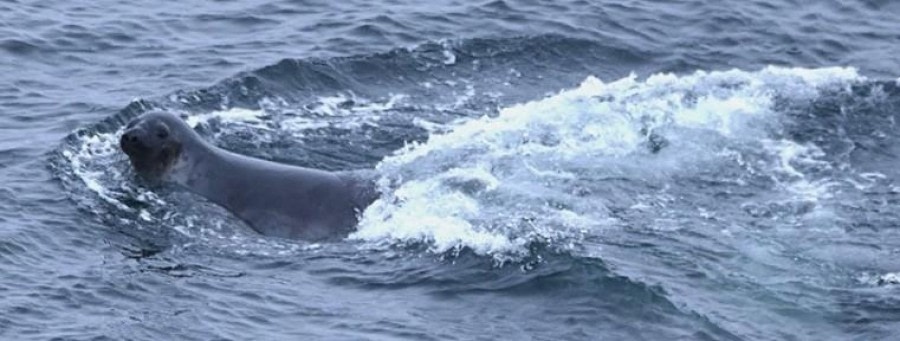
Once we arrived, there was a briefing and safety meeting then everyone dispersed to walk along the Ythan river or into the maram grass-covered extensive dunes. The area is noted for the seal population and it did not disappoint as numbers of common and grey seals were seen swimming close to the shore and hauled out on a sandy beach on the far bank. Huge numbers of different species of birds were everywhere, eider ducks, assorted terns, fulmars, kittiwakes etc.

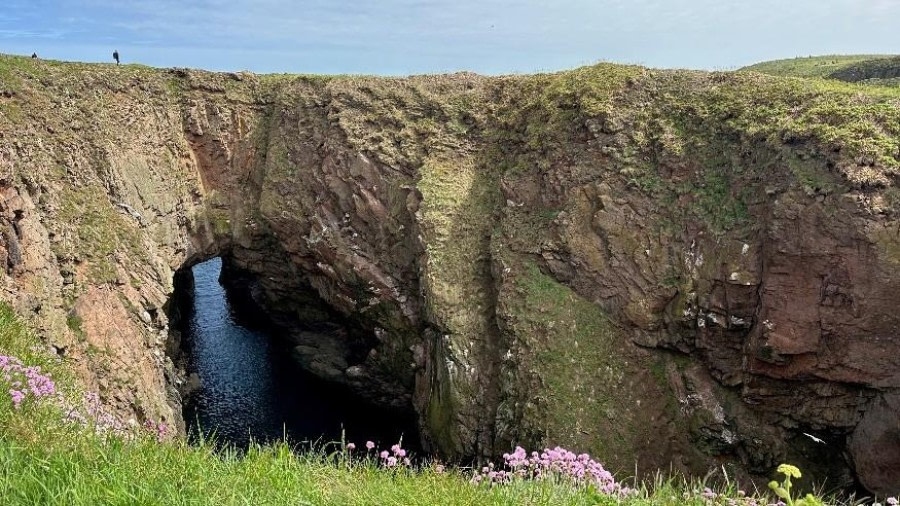
At 12.00 we returned to the coaches and drove the relatively short distance north to a complete change of scenery, the massive sandstone cliffs of the ‘Bullers of Buchan’. Bill again briefed the group, placing a heavy emphasis on safety. We were told to stick to the paths and to keep well clear of the grass at the overhanging edge of the cliffs along the heavily indented coastline. It was an excellent afternoon as the sun shone and large numbers of birds were nesting on rocky ledges everywhere. The highlight for many was seeing puffins in the water, on rocky ledges, and in the air.

We left the ‘Bullers’ at 2.30 and returned at 3.00 to wander around the delightful, quirky granite-built houses of the old fishing village of ‘Fittie’ [ Foot-Dee ] at the mouth of Aberdeen harbour.

By 4.15 we were back at Ortelius with everyone agreeing that it had been a superb day. The ship was now full of new faces as new passengers had arrived at 4.00. By 6.00 our deck crew cast off the moorings and Ortelius headed out turning to port to voyage north past Trump’s famous golf course at Menie and the controversial windfarm development off the long stretch of sandy coastline running north from Aberdeen. Destination Foula!

A superb day as a memorable introduction to the Oceanwide Expeditions experience.

Day 4: Foula: Seabirds, Sea Cliffs, and the Journey North

Foula: Seabirds, Sea Cliffs, and the Journey North
Datum: 28.05.2026
Positie: 60°09.8’N / 002°04.8’E
Wind: SSE 6
Weer: Cloudy
Luchttemperatuur: +11.5

The day began under bright skies, with sunshine illuminating the North Atlantic as Ortelius continued its voyage toward the remote island of Foula. Although a steady wind brushed across the sea, producing white caps, conditions provided excellent opportunities for wildlife observation from the outer decks.

As the ship cruised northward, seabirds quickly became the stars of the morning. Northern Fulmars glided effortlessly alongside the vessel, making use of the strong air currents generated by the wind and waves. Northern Gannets regularly swept past the ship as well, their large wings and striking white plumage easy to distinguish against the dark sea. Atlantic Puffins, Common Guillemots also appeared in impressive numbers along with Razorbills, darting low over the water or gathering in loose flocks as the vessel approached Foula.

During the morning, the expedition team conducted the mandatory Zodiac safety briefing for guests. Those guests who joined the voyage in Aberdeen were also issued their Muck Boots, the essential footwear for wet landings in remote locations. The briefing helped prepare guests for the practical realities of expedition cruising in the North Atlantic, where changing sea conditions can often alter plans at short notice.

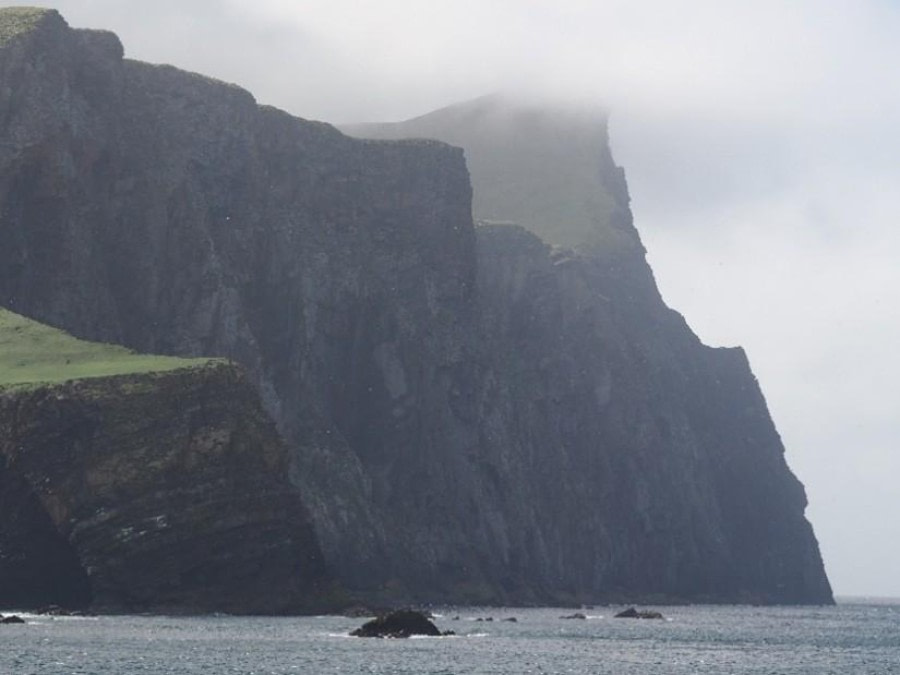
By late morning, the ship arrived off Foula, one of the most isolated inhabited islands in the United Kingdom and part of the Shetland archipelago. Foula is renowned for its dramatic landscapes and towering sea cliffs, which support internationally important seabird colonies.

However, conditions on the island’s southeastern side — the most exposed part of Foula — proved too challenging for safe operations. Swell and strong winds from the southeast prevented both landings and Zodiac cruising activities. Expedition travel depends heavily on weather and sea state, and safety remained the priority for both guests and crew.

Instead of landing, the captain repositioned the ship along Foula’s northern and western coastlines for an extended scenic cruise beneath the island’s spectacular cliffs. These towering formations are the second-highest sea cliffs in the United Kingdom after those of St Kilda, rising dramatically from the Atlantic Ocean and creating ideal nesting habitat for thousands of seabirds.

Large flocks of fulmars rested quietly on the sea offshore while Great Skuas patrolled the surrounding waters in search of food. Known for their aggressive behaviour and powerful flight, Great Skuas are formidable predators and scavengers within the North Atlantic ecosystem.

Along the cliff tops, hundreds of puffin burrows lined the grassy slopes. Puffins could be seen constantly arriving and departing, while dense clouds of seabirds circled overhead in an almost continuous motion. Guillemots and razorbills clustered tightly on narrow cliff ledges, taking advantage of every available nesting space.

Gannets frequently passed close to the ship carrying beaks full of nesting material, evidence of the busy breeding season underway across the region. Their streamlined flight and precise movements demonstrated the remarkable adaptations seabirds possess for life in harsh ocean environments.

For several hours, guests observed the immense bird colonies and towering geology of Foula from the comfort of the ship. An additional bonus sighting was a pair of Grey Seals hauled out on the rocks below the cliffs. Although the inability to land was disappointing for some, the sea-cliff cruise offered an unforgettable perspective on one of Britain’s most important seabird habitats and highlighted the unpredictable nature of true expedition travel.

Eventually, the time came to leave Foula behind. The ship turned northward once again, setting course across the open ocean toward the remote volcanic island of Jan Mayen, where the next stage of the expedition awaited. 

Day 5: At Sea Towards Jan Mayen

At Sea Towards Jan Mayen
Datum: 29.05.2026
Positie: 63°53.4’N / 002°08.5’E
Wind: ENE 4
Weer: Overcast
Luchttemperatuur: +8

Usual excellent breakfast. Koon delivered a totally stimulating photography lecture using superb images that had us all envious of his sensitivity. It was extremely inspiring and for sure we were all going to make efforts to raise our technical skill and creativity as we voyaged north. This was followed after coffee by our forever smiling guide Saskia with a un-intentional two part lecture relating to clouds, their formation, appearance and names. This was most useful as we all obviously had experience of seeing the varied shapes but most of us knew very few of the official names. The lecture was a brilliantly presented eye-opener!

It was in two parts, though, as early on someone shouted orca on the loudspeaker system, and the lecture was abandoned as everyone rushed off for cameras and binoculars to crowd the bow and portside rails to record these magnificent creatures. Our captain altered the course of Ortelius to maximise the viewing experience. We were really lucky to observe them hunting at a distance, then they obligingly swam very close alongside. A small calf provided the highlight photographs for many. It was a delightful first orca encounter.

The cloud lecture was completed after lunch.

There are times in life when an educationalist holds you spell-bound with a fascinating topic and a thoroughly professional delivery. Next up in the afternoon was our ‘University Professor’ guide, Jacob, talking about water. A deluge of interesting facts flooded the room so clearly explained that it had the audience spell-bound.

Recap session started at 5.45 PM Ali briefed us on the weather, our intentions, and current and future weather conditions. Then Saskia outlined the early problems of navigation. Delivered an account of the navigation error that resulted in the loss of 5 ships on the rocks of the Scilly Isles. She explained early techniques of using stars to fix position, then told about the government-sponsored competition to solve the technical problems of fixing location at sea. This story would have inspired passengers to read about the development of Harrison’s Chronometer. Bill then followed with a ‘Paintings of the Sea’ …the meaning of the sea in painting art lecture…he presented a Bruegel artwork ’ The Flight of Icarus’ and explained the meaning in detail.

As the evening progressed, Ortelius began to pitch and roll slightly in the increasing swell. This had the effect of some going to bed early and a few requesting assistance from our doctor.  

Day 6: At Sea Towards Jan Mayen

At Sea Towards Jan Mayen
Datum: 30.05.2026
Positie: 67°38.5’N / 005°35.6’E
Wind: E 4
Weer: Cloudy
Luchttemperatuur: +5

After a very challenging day at sea with rough conditions, everyone was happy to be back outside enjoying themselves and looking for wildlife around the ship.

After breakfast, a lecture was scheduled, and Bill invited us to attend his presentation about Jan Mayen. He shared a wealth of information and knowledge about this fascinating destination, which we are due to reach tomorrow morning.

A little later, we spotted orcas on the horizon, and the ship changed course to give us a better view. We had an incredible encounter with several individuals before continuing our journey northward.

Throughout the day, we also observed several species of seabirds, and a couple of small birds landed on the outer decks for a brief rest.

Lunch was served in the dining room, and as always, it was an excellent meal.

After lunch, many of us headed back outside to enjoy the wonderful weather and the abundance of wildlife. In the afternoon, we encountered another large group of orcas. Mark gave a lecture about birds, and Koen presented one about whales. Meanwhile, Claudio conducted the first session of his workshop in the lounge with the first group of registered participants.

At 18:15, we were invited to the bar for our daily recap. During the recap, Ali shared the latest updates on our voyage and outlined the program for the following day. The guides then gave short presentations about some of the wildlife and experiences we had enjoyed throughout the day.

It was then time for another delicious dinner. The galley team had once again outdone itself, and everyone thoroughly enjoyed the excellent dishes that were served.

After dinner, many of us went back outside to digest our meal, either relaxing on the benches out on deck or continuing our wildlife observations with our well-used binoculars.

Good night!

Day 7: Jan Mayen

Jan Mayen
Datum: 31.05.2026
Positie: 71°03.3’N / 008°29.9’E
Wind: E 4
Weer: Cloudly
Luchttemperatuur: +2.9

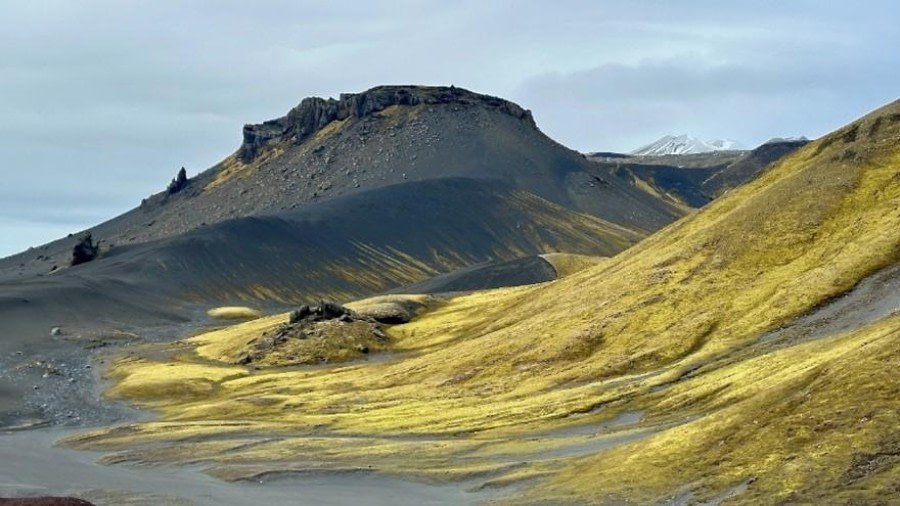
For the early risers this morning, the reward was a stunning view of Jan Mayen as Ortelius closed in on one of the remotest islands on Earth. The weather conditions looked extremely favorable! There was very little wind, only a slight swell, and a broken layer of medium cloud above which the sun was doing its best to break through. The mighty Beerenburg (Bear Mountain in Dutch) lay partly hidden before us, for the moment with its head and shoulders obscured by cloud. We were looking at the lower reaches of the most northerly above sea volcano in the World, and hoped that Mother Nature would give us a glimpse of its lofty summit at some point during the day.

Captain Ernesto brought Ortelius to a halt and dropped anchor in Kvalrossbukta (Walrus Bay) on the west side of the island. Towering dark cliffs of volcanic rocks provided a dramatic backdrop to the quiet bay, where an abundance of birds rested on the water. These were mostly Northern Fulmars. A Black Guillemot flew between the ship and shore as if to welcome us to this special place. Beyond the beach a couple of buildings could be seen, one of which was a recreational hut named Puppebu. The main station was out of sight on the other side of the island, about 10km away. Here Norway maintains a small presence of joint military and meteorological personnel.

Just before 08:00 some Zodiacs were lowered and the expedition team headed for shore. As they sped across the quiet bay, we enjoyed our breakfast and eagerly awaited a report on conditions at the exposed beach. Very soon, excellent news was received on the ship. Conditions could not have been more perfect. With great excitement we climbed into our outdoor gear and made our way to the gangway. The Zodiacs whisked us the short distance to the landing site where Expedition Leader Ali welcomed us with a big smile of relief. At best, Jan Mayen gives a 50/50 chance of landing. But today, 100% success was ours!

Following a short briefing from Ali, we disembarked the Zodiacs and headed off to explore. There to greet us was Lieutenant Colonel Henning-Ove Sørslett, a Combat Engineer in the Norwegian Army. This extremely warm and friendly gentleman was the Station Commander on Jan Mayen. He was soon joined by two ladies from the station who opened up the back of their 4x4 and offered a small selection of Jan Mayen souvenirs. The station commander stayed around the landing site all morning, chatting with guests and answering questions. The flat area immediately adjacent to the landing site was open for free roaming, and soon guests were heading off in all directions. There were safety limits, as there was lots of evidence of falling boulders from the surrounding steep slopes. A maze of driftwood logs made walking in this area more interesting, and a point of interest was a memorial to seven Dutch whalers who died of scurvy during the winter of 1633-34.

A 4x4 track led up the slope behind the beach and away from Walrus Bay, which the station commander kindly allowed us to explore on foot. His only request was that we stay on the track. Half a kilometre up the track we came to a fantastic viewpoint that gave a commanding view over the bay where Ortelius was anchored. It all looked so peaceful, and we were blissfully unaware of how nasty the weather is at Jan Mayen much of the time. There was abundant bird life all around us, and for the birders this was something of a birding jewel. The guides led a couple of groups to the foot of a dramatic rocky outcrop where a colony of Little Auks filled the air with their fabulous vocalisations. Meanwhile, occasional groups of Barnacle Geese flew overhead, and sightings of Snow Buntings added to the birding highlights.

A small group was keen to stretch their legs and have a good hike, so one of the guides gave us the option of taking a longer walk with him along the track in the direction of the station. There was no particular destination in mind, just the chosen time of 11:00 am as the point at which to turn around and head back to the landing. To say the landscape had a lunar-like feel to it is something of an understatement. The dominant colour was grey, broken only by patches of greenery, the colour of life. The long hikers turned around approximately 4.5 km from the landing site, by which time the island’s airfield was well within sight and less than a kilometre away from them. The station was still at least 5 km away and hidden from view. As the long hikers returned, they picked up a large number of walkers who had set off along the track to meet them.

The Zodiacs started shuttling guests back to the ship at 11:00, and just after 12:00 all hikers had returned to Walrus Bay. A few last-minute souvenirs were purchased, and then it was time to bid farewell to the station personnel who had provided such a warm and friendly welcome. Colonel Sørslett seemed genuinely sorry to see us go! As the last Zodiacs returned to the ship, the main engines were already fired up and the anchor was slowly being raised. Lunch was announced and there was an obvious buzz in the dining room as everyone exchanged stories and reflected on a remarkable visit to Jan Mayen. There was more to come! Soon, Ali’s voice could be heard over the public address system, encouraging us to head for the outer decks once we had finished lunch. She informed us that Captain Ernesto was taking Ortelius along the coast past Beerenburg, and it looked like the cloud around the volcano was showing signs of breaking up.

That was all the encouragement needed. We quickly finished our lunch and dressed warmly before heading outside. The view was already spectacular as we sailed parallel with the dramatic coastline. Up ahead the lower slopes of Beerenburg glistened as the cloud-diffused sunlight reflected off the snow and ice. Slowly but surely, just as Ali predicted, the clouds parted to reveal the upper part of the mountain. It was a breath-taking sight which many of us will never forget. Glaciers tumbled down to the sea leaving the sides of the mountain heavily crevassed and extremely dangerous for anyone who chose to explore this sleeping giant.

It didn’t look like a place that humans should ever dare to go! However, we had heard from the station commander that six of his guys were attempting to climb the volcano today. They had left the station at 4:00 am on an expedition that was expected to see them return around 20 hours later. We scoured the mountain for any sign of the group, and eventually they were spotted below the summit. This was quite an achievement for whoever first picked them out because they were just tiny specks on the side of the enormous mountain. They appeared to be heading down, and we all hoped that they had successfully reached the summit. What a view they must have had.

As we continued along the coast, the cloud completely cleared, gifting us the most incredible views of spectacular Beerenburg with every bit of its 2,277m (7,470 ft) in full view. Multiple guides were heard saying that they had never seen the mountain so clearly, and some of them can count their visits to Jan Mayen in double figures. As we neared the north end of the island, Captain Ernesto turned Ortelius on to a northerly heading, leaving Jan Mayen in our wake. Many of us lingered on the helideck, watching the island get smaller and smaller behind us. What an incredible day it had been! Jan Mayen had been extraordinarily kind to us, and we had got far more from our visit than we had dared to hope for. Ahead of us lay the East Greenland pack ice. What would we find there?

As Jan Mayen slowly faded away, Ortelius pushed on northwards. Several Bottle-nosed Whales put in a brief appearance ahead of the ship but were rather elusive. For many, it was a joy to simply be out on deck, soaking up the sunshine while our eyes drifted back and forth across the vast expanse of ocean. At 18:15 we gathered in the bar for Ali’s daily briefing and a special edition recap. Special for two reasons! Firstly, there was a fantastic talk about the geology of Jan Mayen by guest speaker Andy, who left us all impressed with his knowledge, and extremely appreciative of the way in which he helped us understand such a complicated subject. Secondly, we were treated to a stunning six-minute video about Jan Mayen that included some breathtaking drone footage of the island. This included a sequence shot at the summit of Beerenburg. We were immensely grateful to Expedition Guide Bill for sharing this with us. No sooner was recap over, and the call to dinner was announced. And so ended a truly remarkable day!

Day 8: At Sea Towards the Pack Ice

At Sea Towards the Pack Ice
Datum: 01.06.2026
Positie: 75°03.5’ N / 007°18.6’ E
Wind: SW 7
Weer: Overcast
Luchttemperatuur: +0.3

We found ourselves this first day of June between the incredible island of Jan Mayen, which we left yesterday, and the coast of Greenland. We were on our way north to reach the pack ice. We have had such an amazing trip so far already, but getting into the ice will be a true highlight. Our expedition guide Jacub pointed that out during his great lecture about sea ice this morning. He explained to us how sea ice forms, at which different stages and shapes we might see it later today and how important it is to keep our planet cool. The summer sea ice will, unfortunately, not last forever and over time disappear completely. We therefore felt very privileged to be able to look forward to and experience it during this voyage.

At 11:15 we all gathered in the lounge on Deck 6 again to join our expedition guide Koen for his lecture on polar bears. A very interesting story where he mixed general information on these bears with statistics, funny anecdotes, and experiences. We were ready to go on deck and try to find them in the pack ice.

Before we knew it, the restaurant on Deck 4 was open again for another delicious and varied lunch prepared by the galley team.

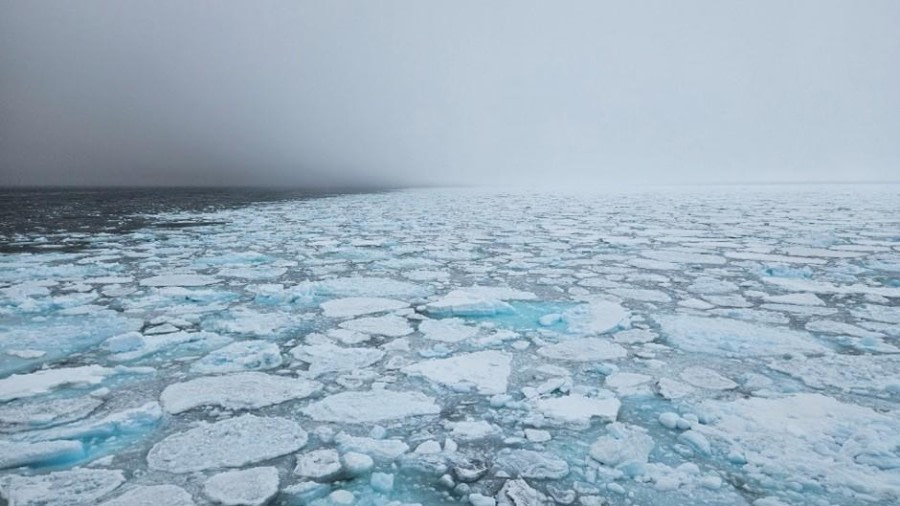
Around 14:00 our expedition leader Ali announced over the speaker that the sea ice was in sight and invited us to join the team on the bridge or on the outer decks to enjoy the views. Exactly as Saskia told us earlier this week in her presentation about clouds, we saw the white glow of the ice reflecting off the low-hanging clouds above. Ice blink is what that is called. Really cool to see it for real now and compare it to the dark sky that was beside the ice and did not have this reflecting effect.

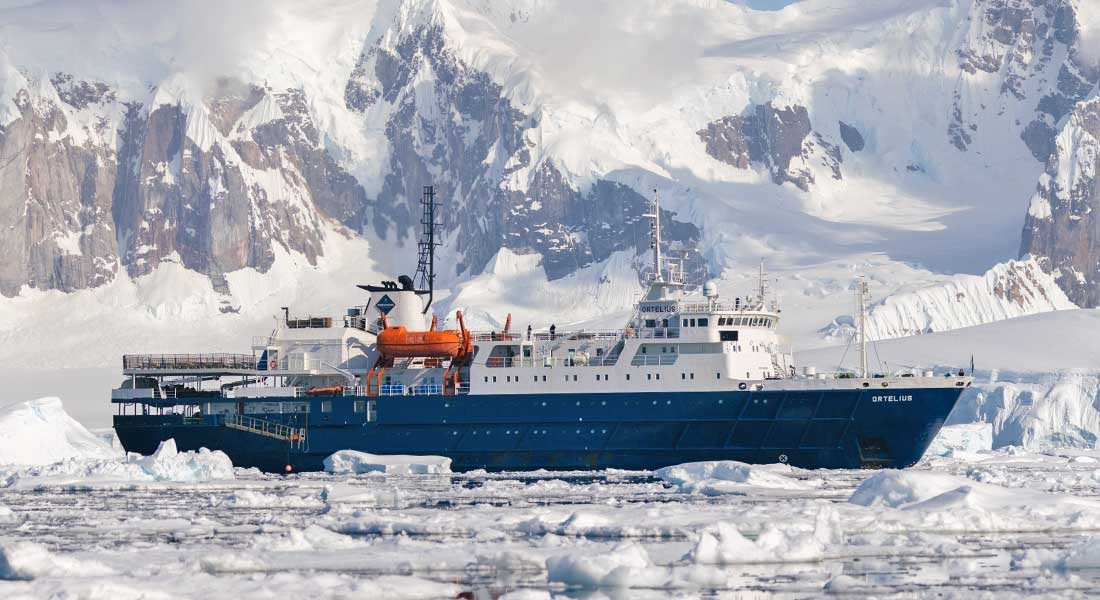
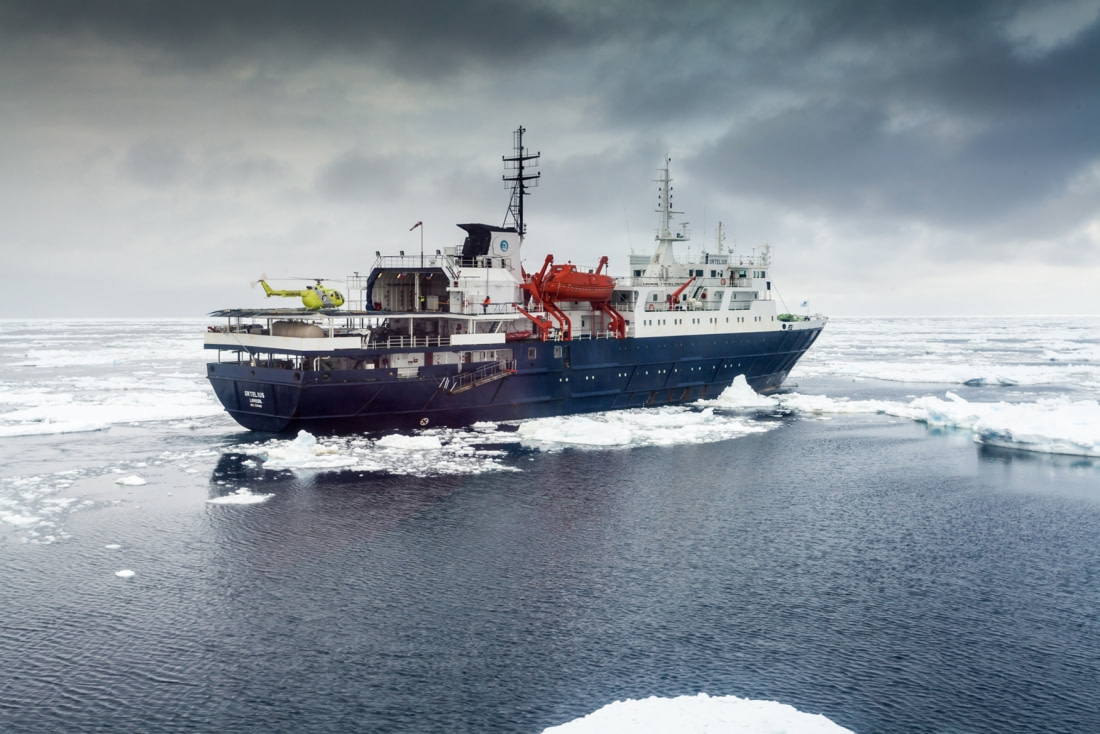
When we were sailing North our dear home MV/Ortelius was rolling on the swell at sea. The minute we entered the sea ice, it changed. There was still a gentle swell over the first hundred meters, and then the ice absorbed the movement, and it became calm. The sound was just fantastic; it was beautiful to see how we were pushing the ice to the side. Seeing our ship nestling herself in amongst the loose patches of pancake ice at the edge of the pack. Although Jacub calls it rather pizza ice as the raised edges of the plates of ice round up like a pizza crust, formed because they bumped into each other while the ice was still not thick and solid. MV/Ortelius was slowly gliding through the ice at a speed of 2 knots per hour. When the ice slabs were not too thick, we would push them to the side easily and we could see how one piece of ice would be shoved under the other or push it out of the way. When we hit a bigger and thicker piece, we could feel the ship shiver when it hit the ice, and from the bow you could see how it would crack open and make space for us to sail through. A spectacle we could and would watch all day. Visiting the ship, we saw the darker coloured Northern Fullmars, Brunnich’s Guillemots, Black Guillemots, Little Alks, Glaucous Gulls, Kittiwakes and some of us spotted the first, beautifully white Ivory Gull. Little groups of Harp seals popped their heads up in the open spaces of water many times. A beautiful sight.

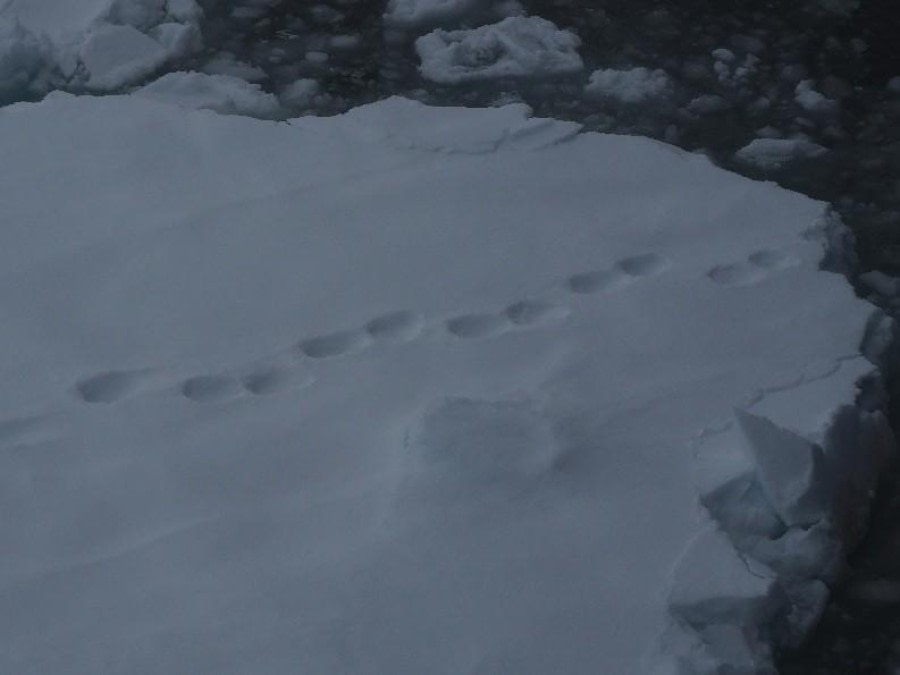
We were all eager to try and find polar bears. From all over the ship the binoculars stared onto the white, wide landscape around us. Hoping to find that fluffy, mayonnaise coloured bear. To get warm, some of us gathered in the bar to have a coffee and cake, but went outside again, not to miss anything of this unreal beauty that we saw. Some die-hard and keen birders did not leave the bow at all. We stayed out till dinner, which was a very special one and none of us wanted to miss out on. We could smell the preparations already. The hotel team had put out tables and benches outside, on the helicopter deck, for us to enjoy a real Arctic barbecue and free drinks. Surrounded by ice we were enjoying our dinner. What an amazing ending to this first day on the ice. We sailed out from the ice at 22:00 to make some distance overnight, and to enter the ice again in the morning. On this first day we weren’t lucky in finding a bear. But we kept faith for tomorrow. Sleep well!

Day 9: Pack Ice

Pack Ice
Datum: 02.06.2026
Positie: 76°22.7’ N / 005°12.2’ E
Wind: SSW 5
Weer: Overcast/Fog
Luchttemperatuur: +1.0

Our second day in the sea ice began with a sense of anticipation. Overnight, the expedition ship had continued northward outside the ice and around 07:00 we would enter it again. Many of us woke early, eager for another chance to spot the Arctic's most iconic resident—the polar bear. The weather was calm, with a light breeze and the visibility was not too bad, creating good conditions for wildlife watching.

After breakfast, passengers gathered on the outer decks and in the observation lounge, scanning the endless white horizon with binoculars. The expedition team reminded us to keep watch in all directions, as polar bears could appear unexpectedly on distant ice floes. Excitement remained high as the ship carefully navigated through the pack ice, occasionally slowing to investigate promising areas.

Throughout the morning, our naturalists searched diligently, studying every shape and shadow on the ice. Several times, hopeful whispers spread across the decks as someone thought they had spotted a bear in the distance. Each time, however, the mysterious object turned out to be an unusual ice formation or a patch of snow illuminated by the Arctic sun.

Although the polar bears remained elusive, the day still offered memorable wildlife encounters. Not long before lunch, a small group of harp seals was spotted resting on a flat section of sea ice. Their pale coats blended remarkably well with the surrounding landscape, making them difficult to see at first. As the ship approached at a respectful distance, a few of the seals lifted their heads to observe us before settling back down on the ice. Watching these perfectly adapted Arctic mammals in their natural habitat was a special experience.

Birdlife provided constant entertainment throughout the day. Numerous kittiwakes followed the ship, effortlessly gliding on the cold Arctic winds. Their graceful flight and distinctive calls accompanied us as we moved through the ice-covered waters. We also observed several northern fulmars, which appeared completely at home in the challenging conditions. They soared low over the sea and circled around the vessel with impressive agility.

One of the highlights of the day was the sighting of several ivory gulls. Their pure white plumage made them appear almost ghost-like against the backdrop of snow and ice. These beautiful birds are among the most sought-after species in the High Arctic, and many passengers were delighted to add them to their observation lists.

The expedition guides provided fascinating information about their ecology and the challenges they face in a rapidly changing environment.

As the afternoon progressed, we continued our search for polar bears. The bridge and expedition staff remained vigilant, carefully examining every stretch of ice. Despite our collective efforts and optimism, no bears appeared. While there was some disappointment among the passengers, there was also an understanding that wildlife sightings can never be guaranteed.

As evening approached, the Arctic light cast a soft glow across the frozen seascape. Although we had not found the polar bears we hoped to see, the day had still been filled with remarkable scenery, fascinating wildlife, and the unique atmosphere of the sea ice. We ended the day grateful for the experience and hopeful that tomorrow might finally bring a glimpse of the Arctic's great predator.

Day 10: At Sea Towards Spitsbergen, Poolepynten

At Sea Towards Spitsbergen, Poolepynten
Datum: 03.06.2026
Positie: 77°54.7’ N / 008°49.7’ E
Wind: SSW 3
Weer: Overcast
Luchttemperatuur: +5

We reached Svalbard, the final destination of our expedition, under a hazy sky with low clouds, though thankfully the weather remained dry throughout.

The day was packed with intellectual inspiration as we prepared for our final shoreside encounter. We began the morning by diving into Arctic history, joining Allan in the lounge for a fascinating account of the Fridtjof Nansen Arctic Drift Expedition.

Following that, Claudio led a thought-provoking session on climate change, focusing on the dramatic shifts we have witnessed throughout our journey in the polar regions.

During lunchtime, we finally began to see the shores of Svalbard through the mist.

In the afternoon, we were treated to a unique perspective on human history in the high north when Sasha, the former keeper of the abandoned Soviet coal mining town of Pyramiden, shared his personal stories about life in that haunting ghost town.

We were also honored to host guest speaker Peter Prokosch for his presentation, "Visions for the Arctic." Peter Prokosch is a renowned ecologist and conservationist who has dedicated his career to Arctic protection, having served in leadership roles for organizations like the WWF and GRID-Arendal to promote sustainable development and wildlife conservation in polar regions.

After an earlier dinner, we reached the highlight of our final day: a visit to Poolepynten on the island of Prins Karlsforland.

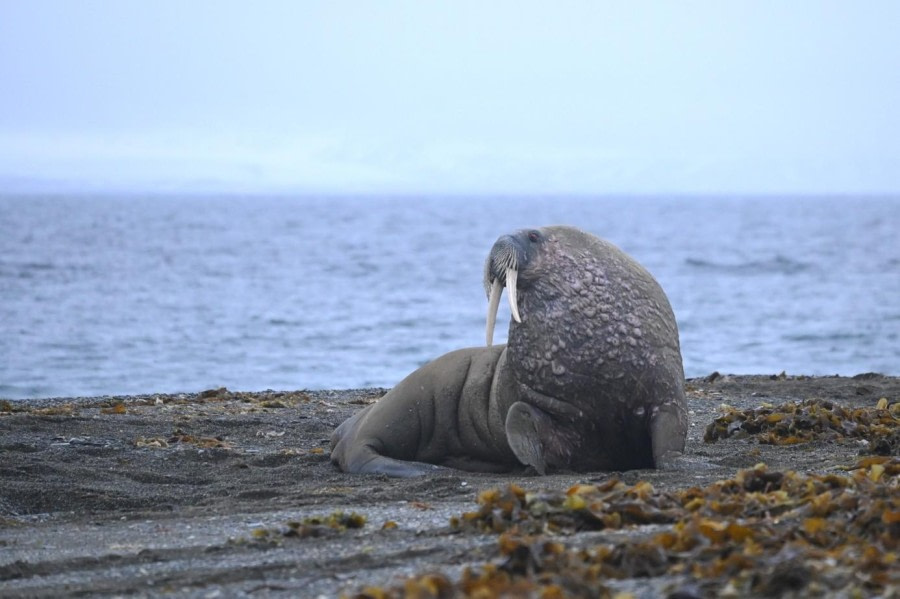
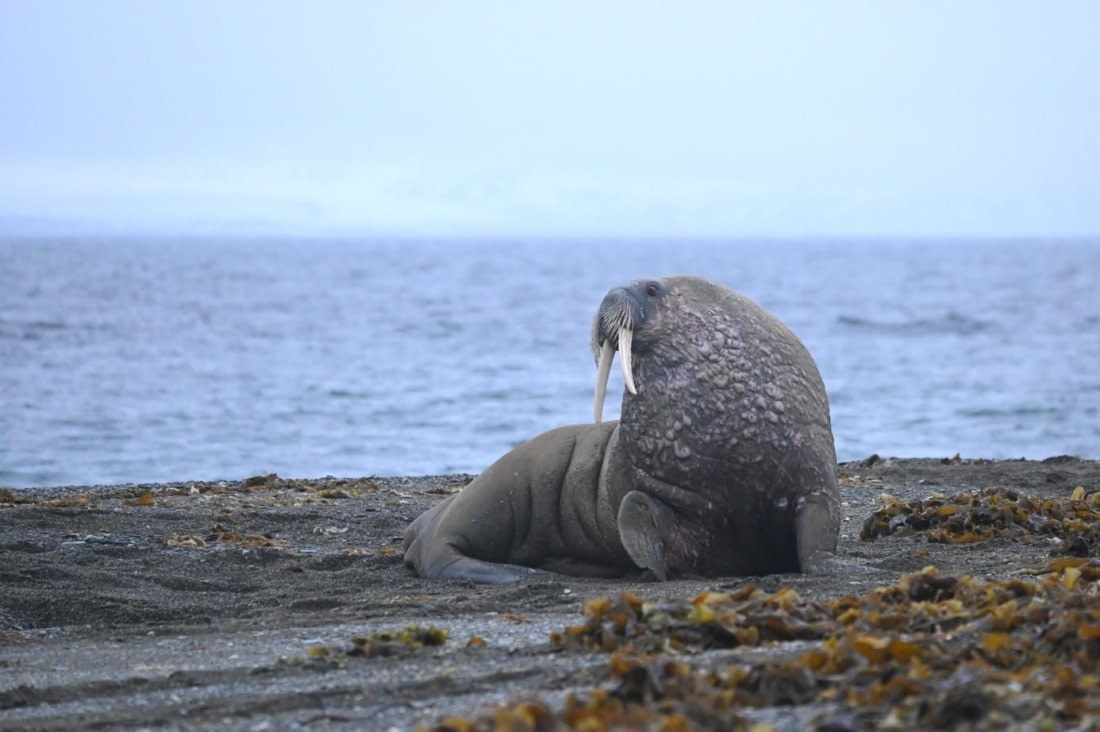
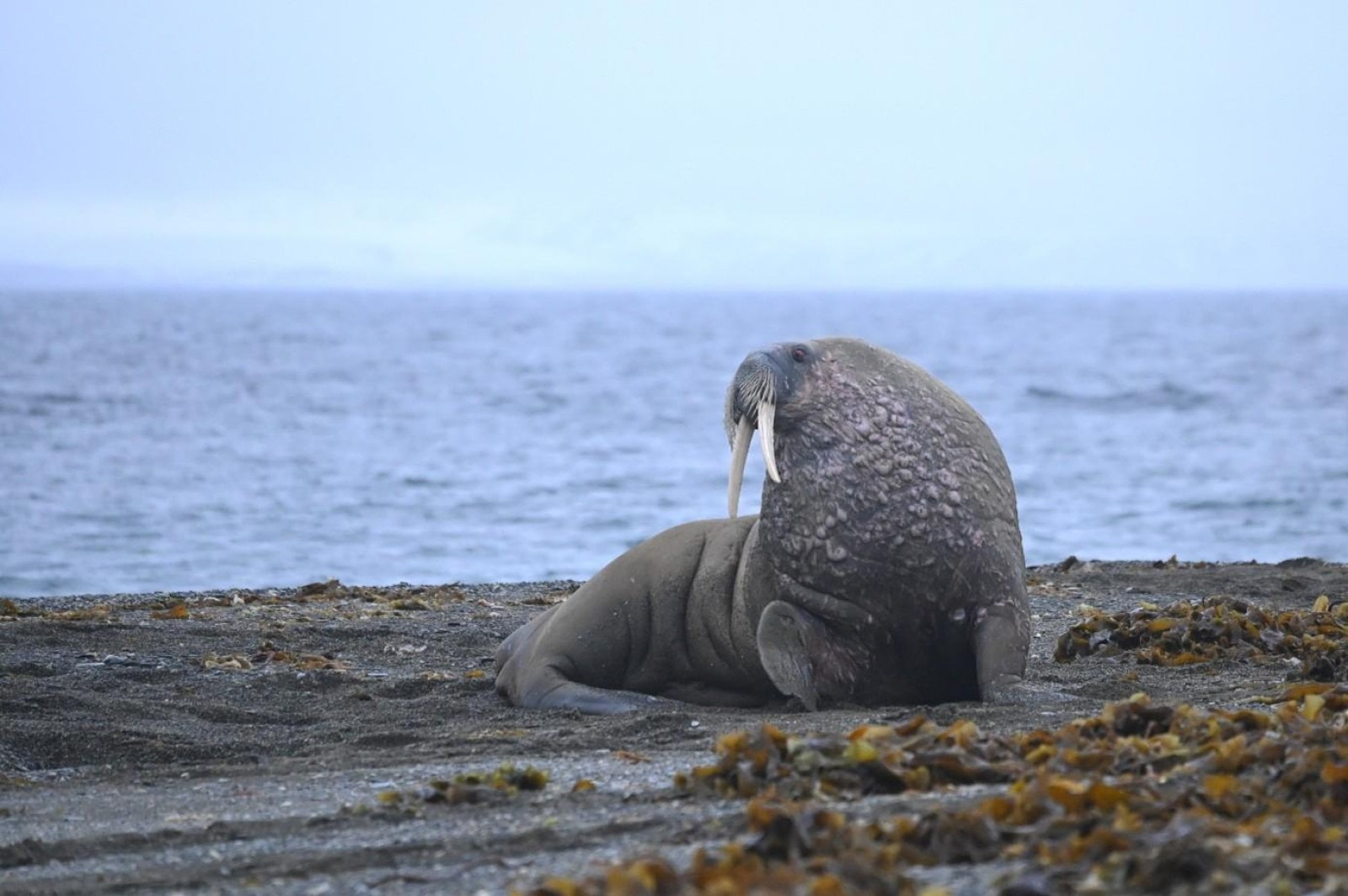
We split into small groups to head ashore, ensuring everyone had ample time to explore the beach and lagoon area. The walruses did not disappoint! Seeing these massive kings of the beach hauled out in their natural habitat was the perfect, serene ending to our expedition. Watching them rest on the shoreline and play in the water was a powerful reminder of the fragile and magnificent wilderness we have been privileged to witness over the past several days.

Day 11: Alkhornet, Ymerbukta

Alkhornet, Ymerbukta
Datum: 04.06.2026
Positie: 78°12.9’ N / 013°51.6’ E
Wind: Var 1
Weer: Overcast
Luchttemperatuur: +4.8

Gray skies, a light but chilly breeze, and the distant cries of seabirds—this was how our first full day on Spitsbergen began. Unfortunately, it was also destined to become the final day of our long adventure. Because of this, a faint sadness lingered in the air as we realized that our voyage was drawing to a close. “Everything that has a beginning has an end, Neo,” said the Oracle in The Matrix, and there was no arguing with that. Still, it was far too early to be sad, because a day full of adventures lay ahead of us. Forward!

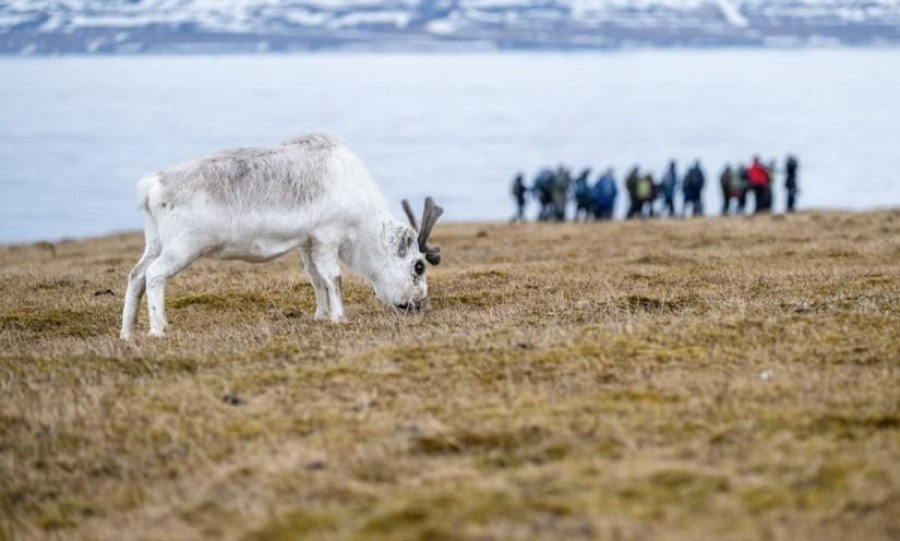
Our morning landing was planned on a shore covered with lush, dense tundra vegetation, above which rose the pointed peak of Alkhornet—a towering vertical cliff favored by black-legged kittiwakes and Brünnich’s guillemots. For many thousands of years, these birds had diligently fertilized the broad shoreline beneath the cliff, creating a truly exemplary patch of tundra. Spitsbergen reindeer, delighted by such an abundance of juicy grass, had in turn contributed their own share of fertilizer, so local plants had done—and continue to do—remarkably well.

After breakfast, we hurried back to our cabins to prepare for the landing, putting on our warm clothes and waterproof jackets and trousers. Cameras in backpacks, binoculars around our necks, life jackets over our outer layers. Let’s go!

At the appointed time, we gathered by the gangway and, in groups of ten, crossed to shore aboard Zodiacs. The guides were already waiting for us there, each with a rifle slung over their shoulder.

Once ashore, we split into three groups: those who wanted a proper workout for their legs (the long hikers), those who wanted both a hike and opportunities for photography (the medium hikers), and those who preferred a leisurely exploration of the tundra, examining plants and watching the reindeer grazing here and there across the landscape (the leisurely hikers). Each group set off under the guidance of its leaders.

The reindeer, of which there were quite a few, were completely absorbed in eating grass and paid us no attention whatsoever. Only when we came too close did they acknowledge our presence, lifting their heads and gazing at us with a mixture of weariness and curiosity, as if trying to figure out who we were and what we wanted.

Overhead, kittiwakes darted back and forth. Many carried beakfuls of grass or moss—the building materials needed to repair nests damaged by the long, harsh winter. Then again, perhaps some of them were newlyweds constructing nests from scratch. Brünnich’s guillemots, flapping their small wings furiously, flew far too fast to be properly observed. Yet the most delightful part of this avian spectacle was the constant, gentle chirping of snow buntings, the only songbirds found at these high latitudes. Hearing them was one thing; seeing them was quite another. That proved difficult. Every now and then, however, one of us would finally spot a tiny black-and-white bird no larger than a sparrow and cry out, “There it is! There it is!” while pointing excitedly in its direction. More often than not, though, the bird had already flitted away before the rest of us could get a look.

We climbed a hill to the very foot of the bird cliffs, where, in addition to breathtaking views of the surrounding landscape, another surprise awaited us. Moving across the slope in short bursts, pausing frequently, was a predator. A brown coat, a fluffy gray tail, and a curious limping gait. It was the scourge of all the local birds—the Arctic fox. It was making its way uphill. Closer to the nesting sites, there is always something to eat: an egg, a chick, or occasionally an inattentive adult bird. Holding our breath, we followed the fox through the lenses of our binoculars and clicked away with our cameras.

When we descended from the hill, we discovered that two of the three hours allotted for our walk had somehow slipped away unnoticed. It was time to head back toward the landing site. Crossing the tundra plain, we repeatedly stopped to admire the first flowers of the summer: purple saxifrage and tufted saxifrage.

Back at the landing site, most of us put on our life jackets and gradually began boarding the Zodiacs. Others, however, were doing precisely the opposite—taking off jackets and unbuttoning their shirts. The reason was that a polar plunge had been scheduled for the end of the landing, offering those willing the unique opportunity to immerse themselves in the icy waters of Isfjord. Unsurprisingly, the number of volunteers was not large, but there were still around fifteen brave souls. The guides had thoughtfully brought towels and tarpaulins ashore so there would be somewhere to leave clothes. It was cold enough just watching them! Yet according to the swimmers themselves, it was absolutely fantastic.

Back aboard Ortelius, we headed to lunch. Afterward, we had some free time to rest and prepare for the afternoon activity. Meanwhile, the ship repositioned itself to the neighboring bay of Ymerbukta.

Having assessed the situation, the expedition team decided that a Zodiac cruise would be a better option than a shore landing, as it would allow us to view the glacier more easily and observe birds at the same time.

At the appointed hour, we boarded the Zodiacs and set off toward the glacier. We could not reach the glacial front itself because a kilometer-wide expanse of fast ice separated us from it, but even so, the view was magnificent. Along the way, we spotted a harbor seal resting on a rock protruding from the water. We managed to approach closely enough to take a few photographs. Here and there, both on the water and on the ice, we also saw large numbers of eiders—both common eiders and the more striking king eiders with their colorful bills. Unfortunately, whenever we approached, the ducks hurried into the air and flew farther away.

Around 5:00 p.m., we returned to the ship. A gathering had been scheduled in the observation lounge for 6:45 p.m. Ali and the captain each delivered a ceremonial speech accompanied by the clinking of champagne glasses, and Koen presented a slideshow that he had been working on throughout all twelve days of our voyage, ever since Vlissingen.

Dinner followed shortly afterward—our final dinner aboard Ortelius—and then it was time to return our Muck Boots.

Remarkably, the surprises were not yet over. It turned out that the ship had become surrounded by a fairly large pod of beluga whales. These extraordinary creatures were simply passing through the fjord on their way elsewhere. We poured out onto the open decks and watched them in amazement. In my opinion, there could hardly have been a more fitting or more majestic finale to our expedition.

Tomorrow—we go home.

Day 12: Longyearbyen, Disembarkation

Longyearbyen, Disembarkation
Datum: 05.06.2026
Positie: 78°22.3’ N / 015°64.7’ E
Wind: SE 2
Weer: Clear
Luchttemperatuur: +5

The sun shone in the sky throughout the entire night. Of course, we all studied geography and astronomy at school, and we all know perfectly well what the phenomenon of the polar day is, but still—damn, it is simply astonishing! To see with your own eyes how, at four o’clock in the morning, the snowy mountain peaks sparkle and blaze with an almost unbearable brightness under the sunlight falling on them is simply beyond words. To step out onto the deck at four in the morning and reach for your sunglasses—that is just surreal! And yet, this was reality—a beautiful Arctic reality.

A completely different kind of reality arrived with the first sounds of the wake-up call. The moment of farewell had come. We placed our heavy suitcases in the corridor and went for breakfast. While we were enjoying our final meal aboard Ortelius, the expedition team moved all our luggage onto the pier.

At the appointed hour, shortly after breakfast, buses arrived and opened their doors for boarding. All members of the expedition team stood by the gangway to see us off. It was sad, but at the same time we felt a sense of closure—a feeling of a journey completed to the very end. And if at some point we ever feel like stepping back on board and setting off again into wind, waves, and adventure, then we can always do so.

So, the adventure continues!

Total distance sailed on our voyage: 1729.4 nautical miles

Most northern point sailed: 78°27.010 N, 011°52.600 E

On behalf of Oceanwide Expeditions, Captain Ernesto Barria, Expedition Leader Ali Liddle, Hotel Manager Volodymir Cherdnychenko and all the crew and staff of M/V Ortelius, it has been a pleasure and a privilege travelling with you.

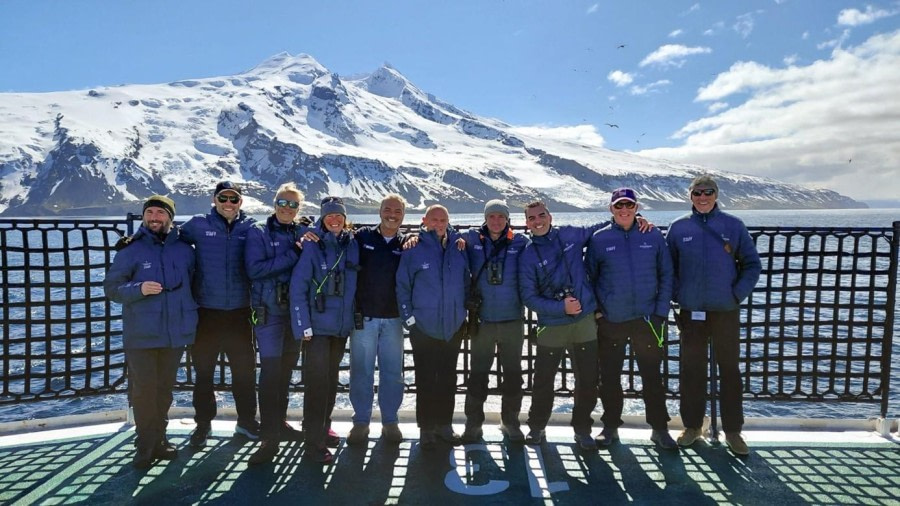
Photo: right to left - Sasha, Jakub, Saskja, Ali, Koen, BILL, Mark, Claudio, Allan, Elmar

Details

Reiscode: OTL01C26
Reisdatum: 25 mei - 5 jun., 2026
Duur: 11 nachten
Schip: m/v Ortelius
Inscheping: Vlissingen
Ontscheping: Longyearbyen

Op deze reis geweest?

Aan boord van m/v Ortelius

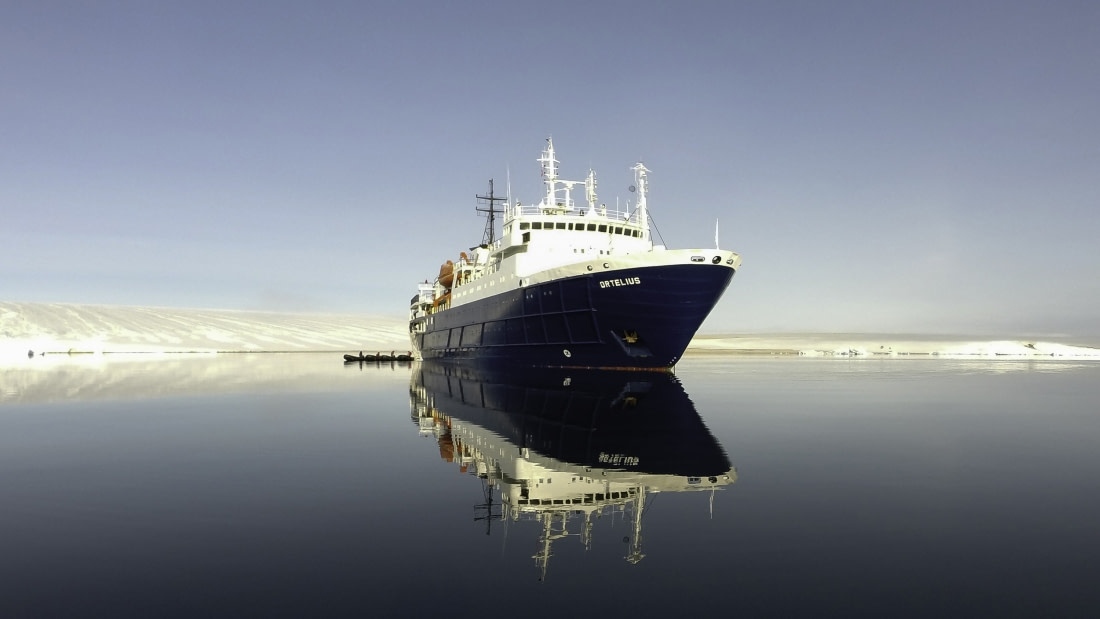
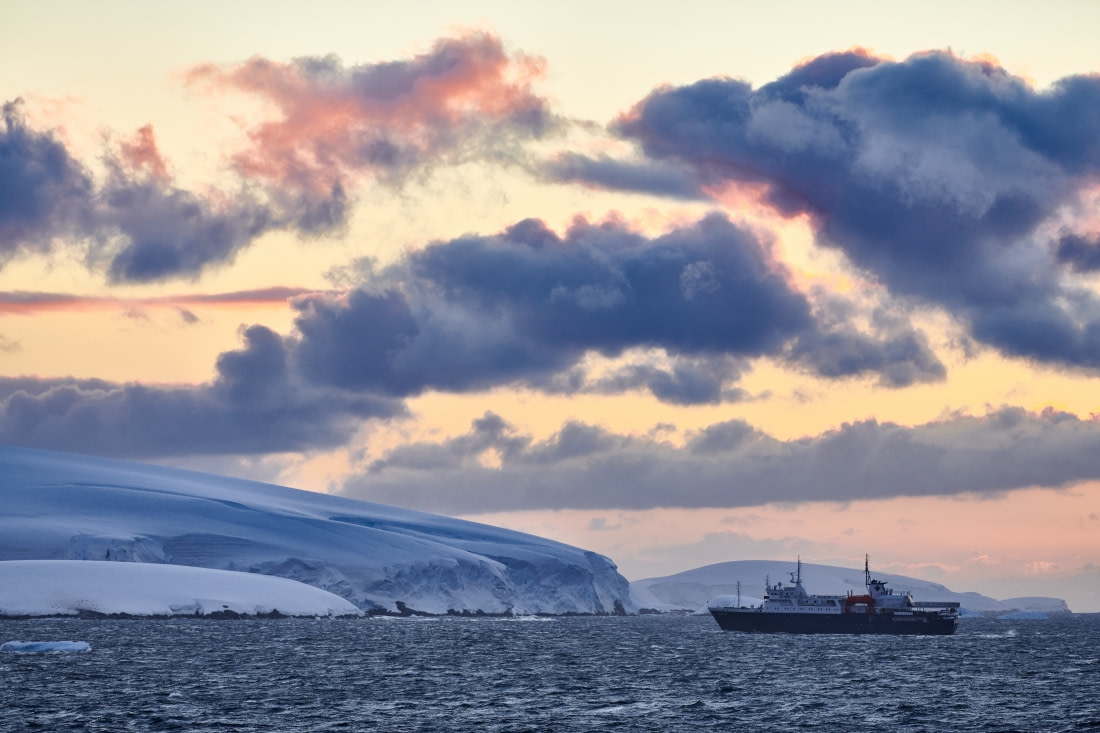
De ijsversterkte Ortelius is grondig uitgerust voor expeditie cruises en, op sommige reizen, helikoptervluchten.

Meer over de m/v Ortelius »
Loading