| Datum: |
30.12.2025 |
| Positie: |
54°26.1’ S, 036°10.5’W |
| Wind: |
S6/7 |
| Weer: |
Clouds |
| Luchttemperatuur: |
+3 |
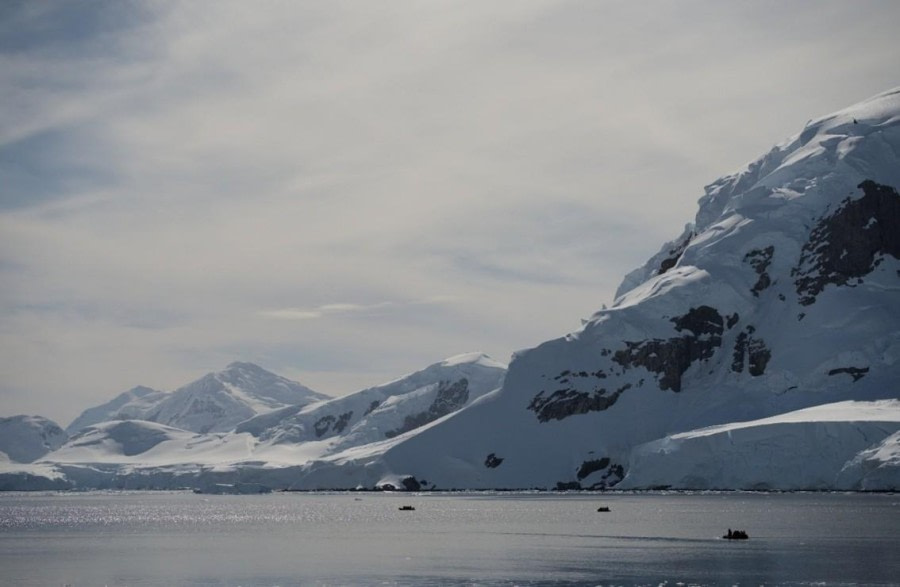
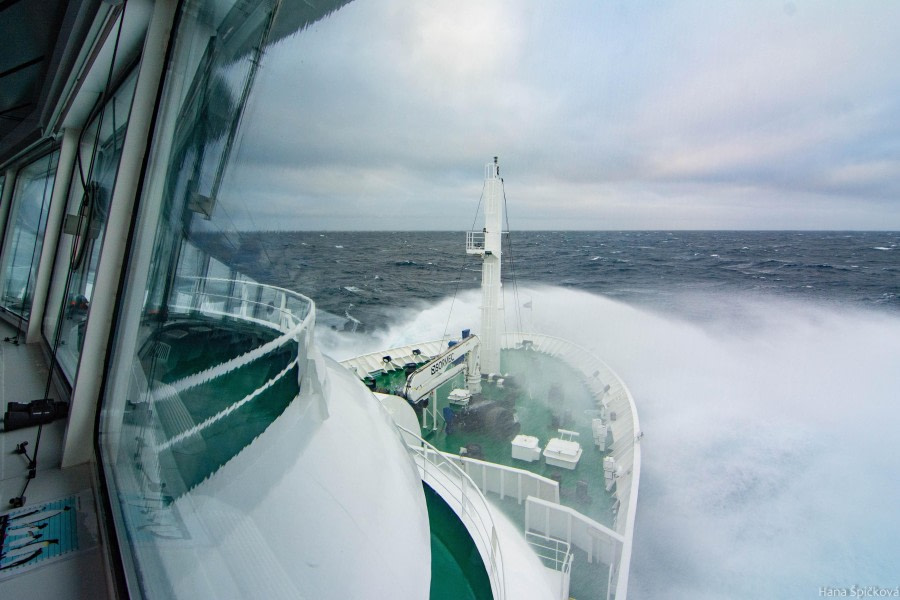
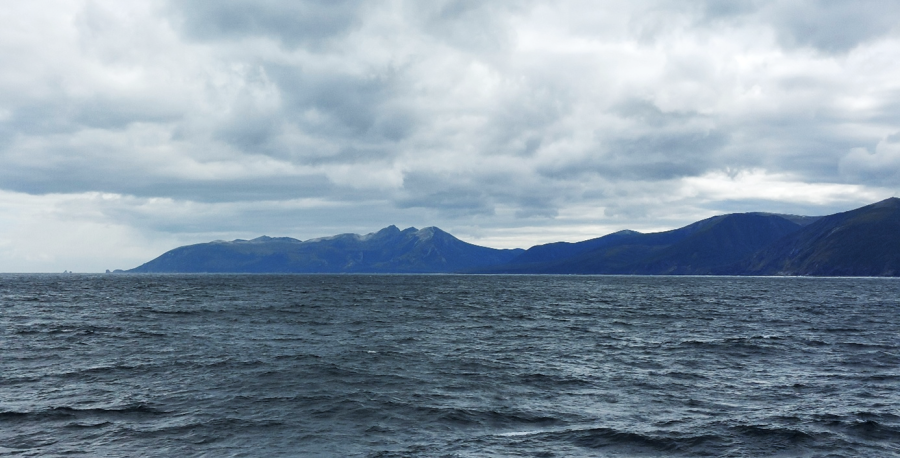
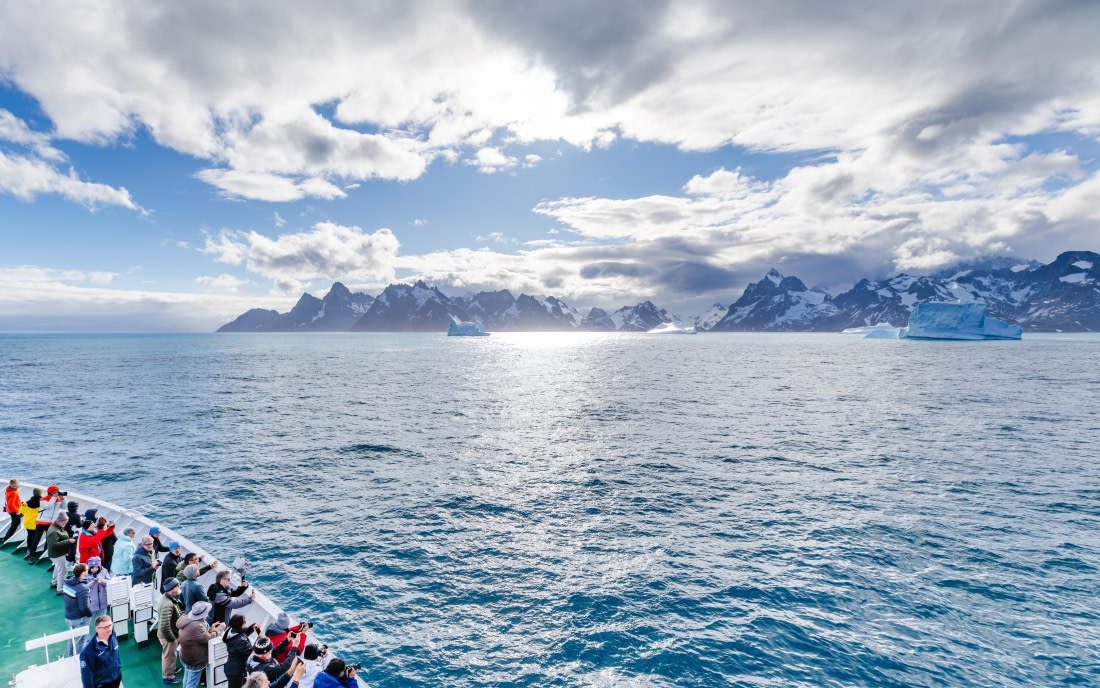
The morning of our fifth day at sea was gloomy. Low, layered clouds, gusty wind — damp and cold — and the huge, lazy waves of the Southern Ocean: this scene had already become familiar to us, almost dear. Yet this time there was something different about it. The waves were less aggressive, the wind had eased, and the character of the clouds had noticeably changed. All signs pointed to our proximity to land. And then, when the darkness of night had fully given way to the murky light of morning, silhouettes of a chain of jagged mountains slowly began to emerge from behind the veil of mist. This was the legendary South Georgia — mysterious, bristling with snow-covered peaks, a harsh and unwelcoming land. It was here that we were to spend the next four days. And yet, alongside its severity and hostility, there was something in this lost kingdom that felt alluring, beckoning, even hopeful: in places along the coast, the mountain slopes were covered with grass. The glaciers creeping through the valleys were not as monolithic as their Antarctic relatives, the colour of the sea shifted from deep blue to a lighter, greenish hue, and the wind carried from shore the scent of soil and peat.
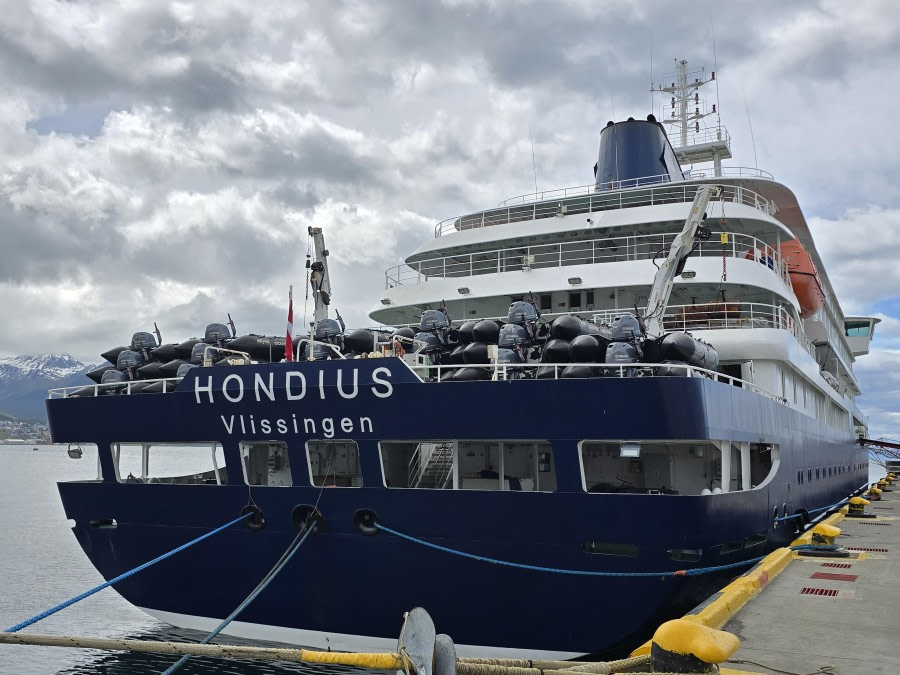
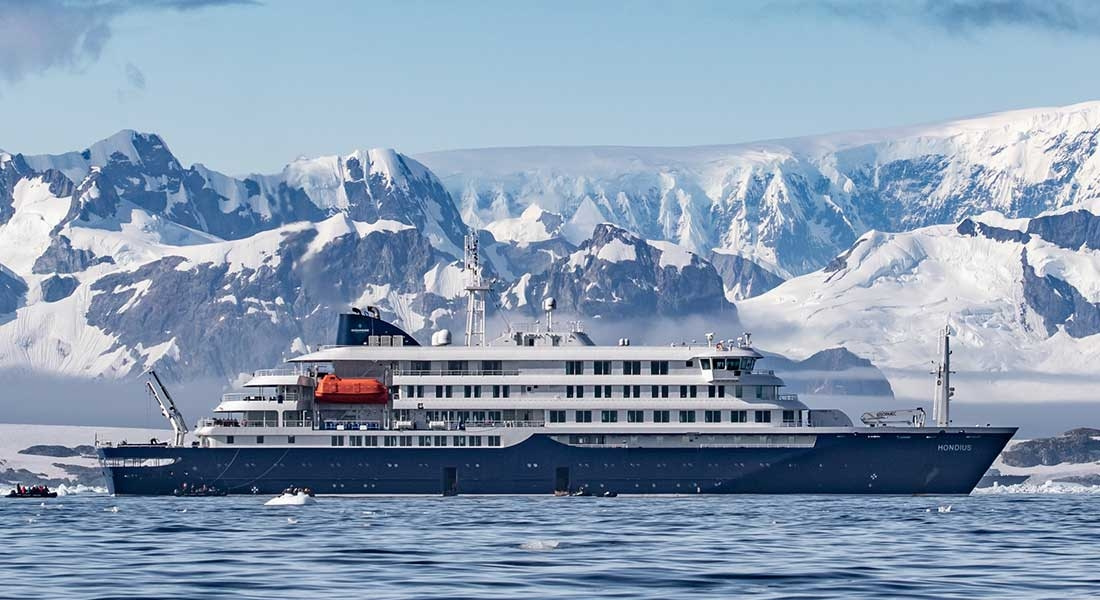
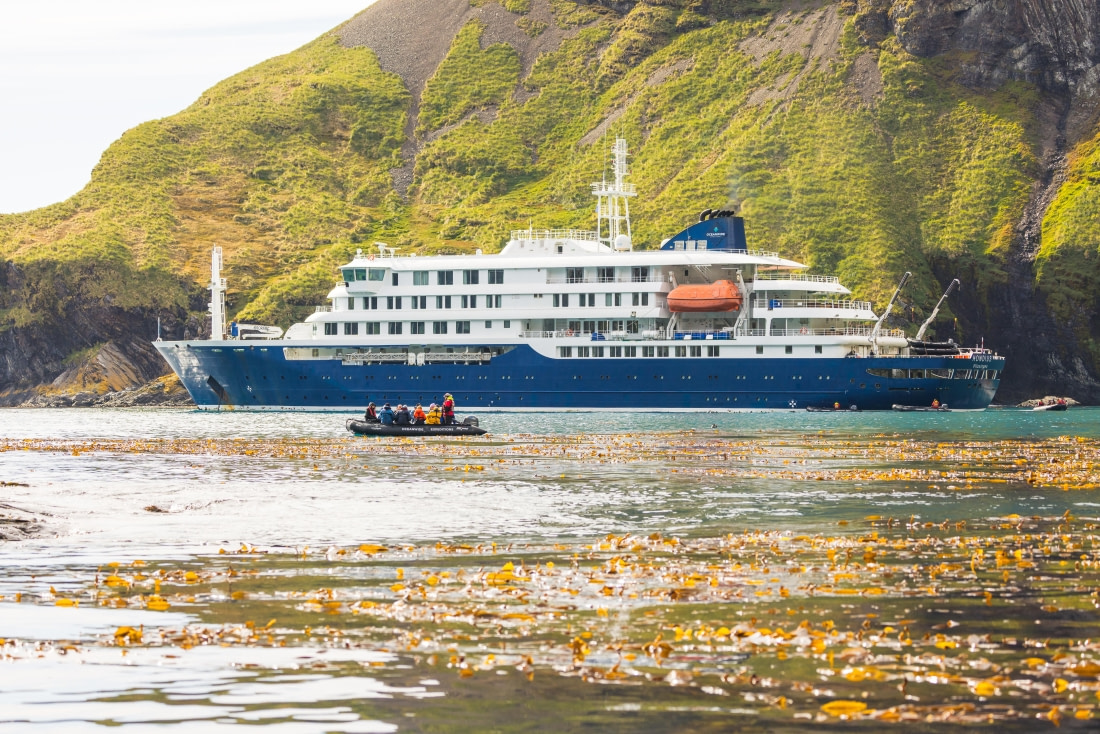
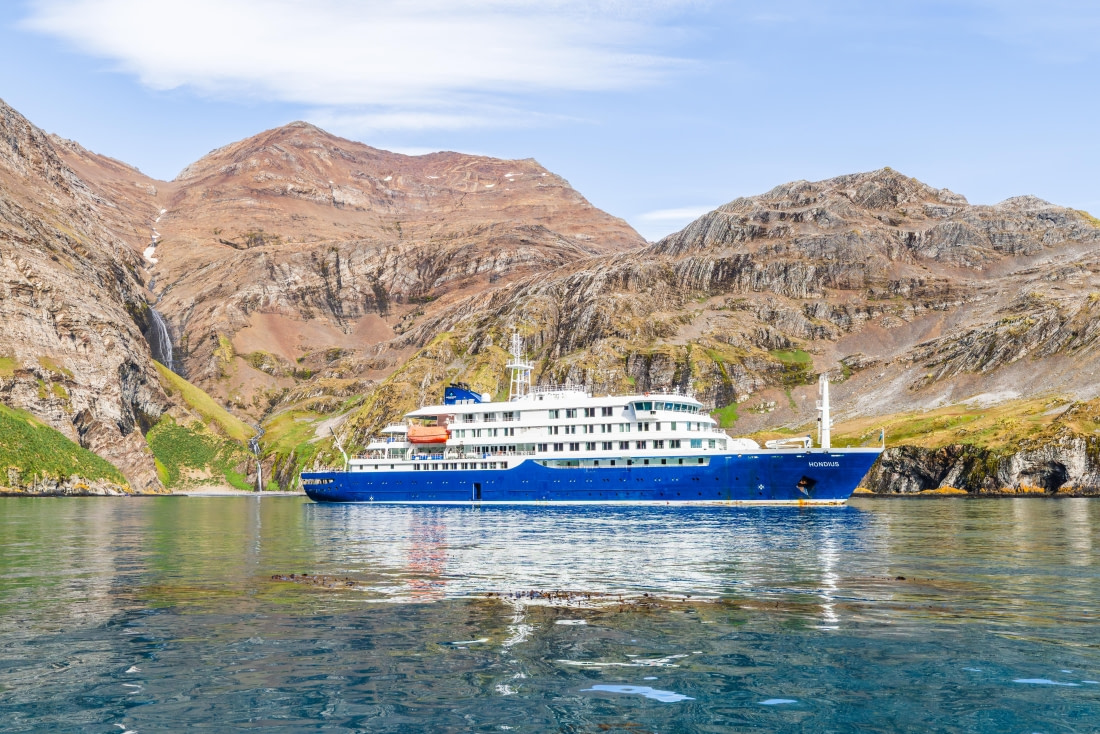
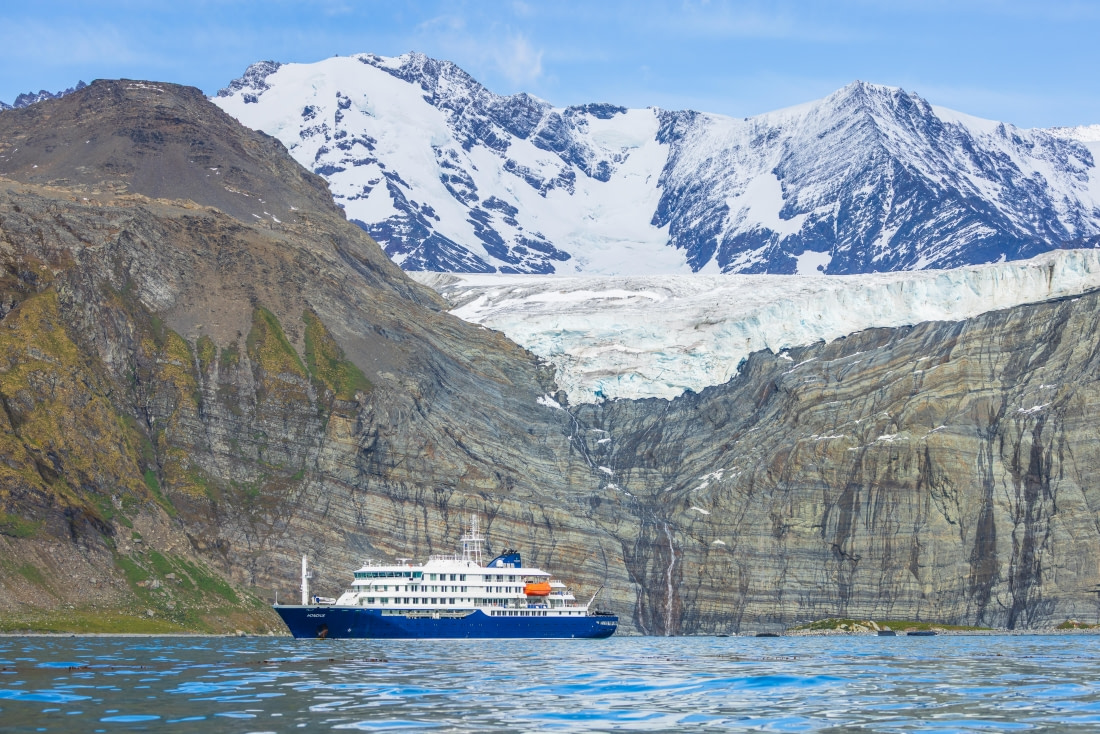
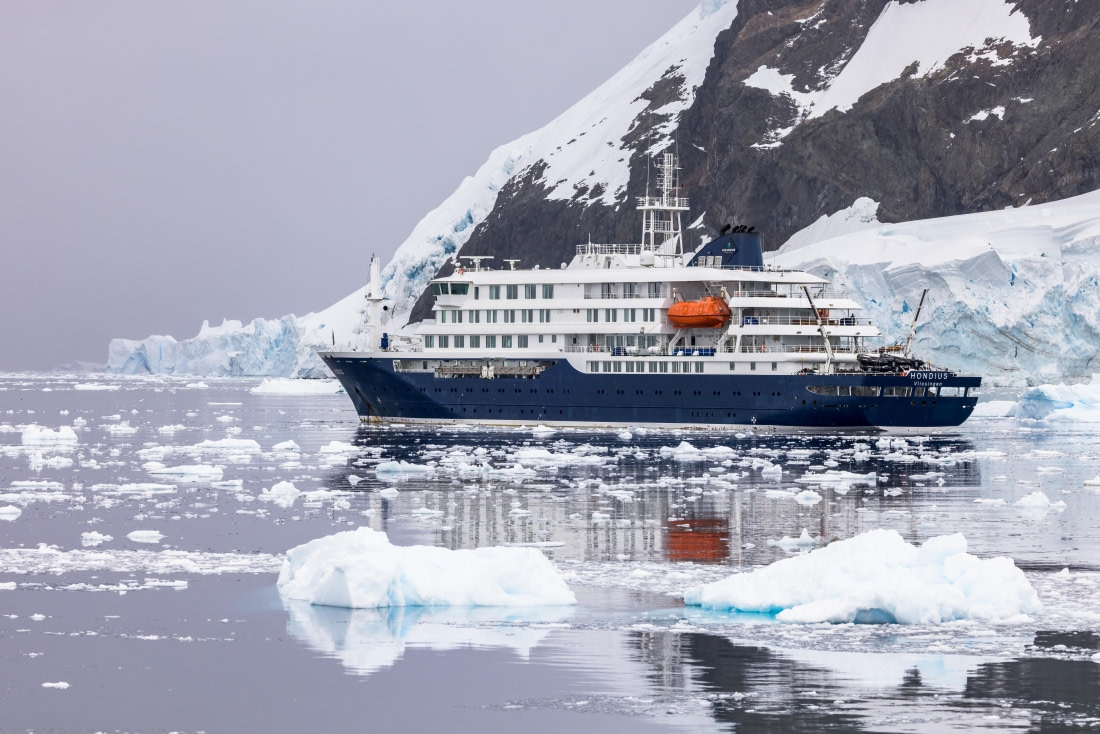
If one looks at a map, South Georgia’s outline bears a striking resemblance to a Chinese dragon — long, elongated, with a deeply indented coastline. Having rounded the island from the south, Hondius now set a north westerly course, advancing along the northern shore and steadily closing the distance to land.
At a quarter to eight, the now painfully familiar voice of Chris, our expedition leader, sounded over the PA system: “Good morning, Hondius, good morning…” In his unhurried, calm manner, Chris informed us that we had successfully reached the shores of South Georgia and that Hondius would soon be dropping anchor in a bay bearing the name of Saint Andrew. He then gave us a brief weather update and promised that the day would be unforgettable.
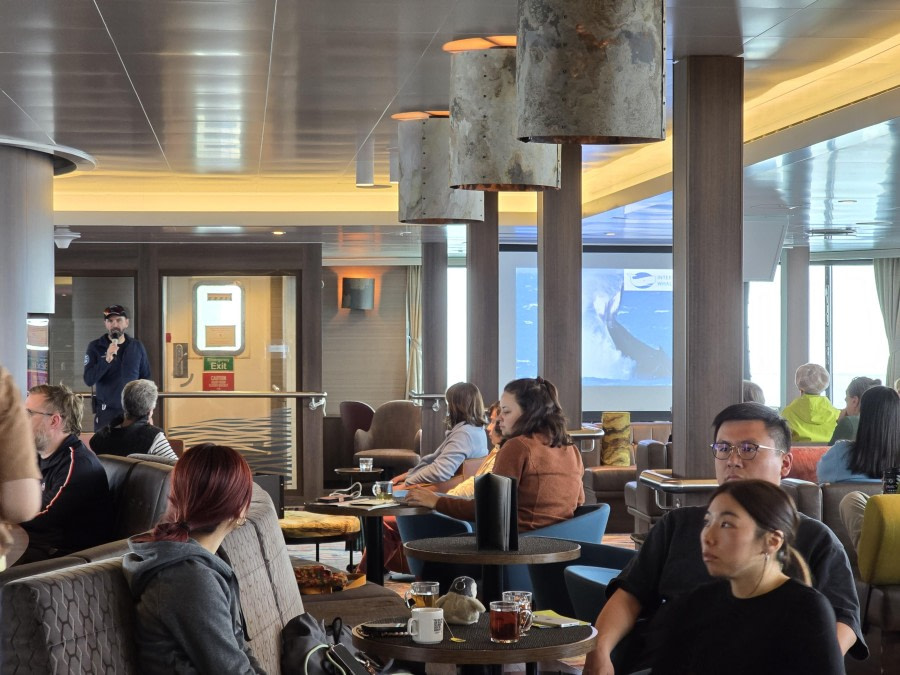
By that time, many of us had already been up for quite a while and, cameras at the ready, were peering into the distance from the open decks. Some, squinting slightly and leaning back in their chairs, were enjoying their morning coffee in the Observatory Lounge, while most were still luxuriating in their beds, rocked by the lazy ocean swell like children in cradles. One way or another, it was time to get up and prepare for great deeds and unforgettable impressions.
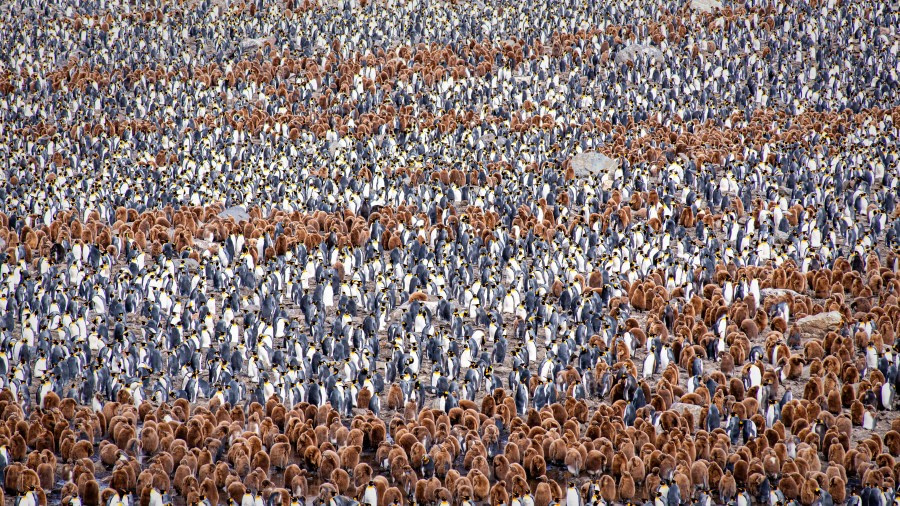
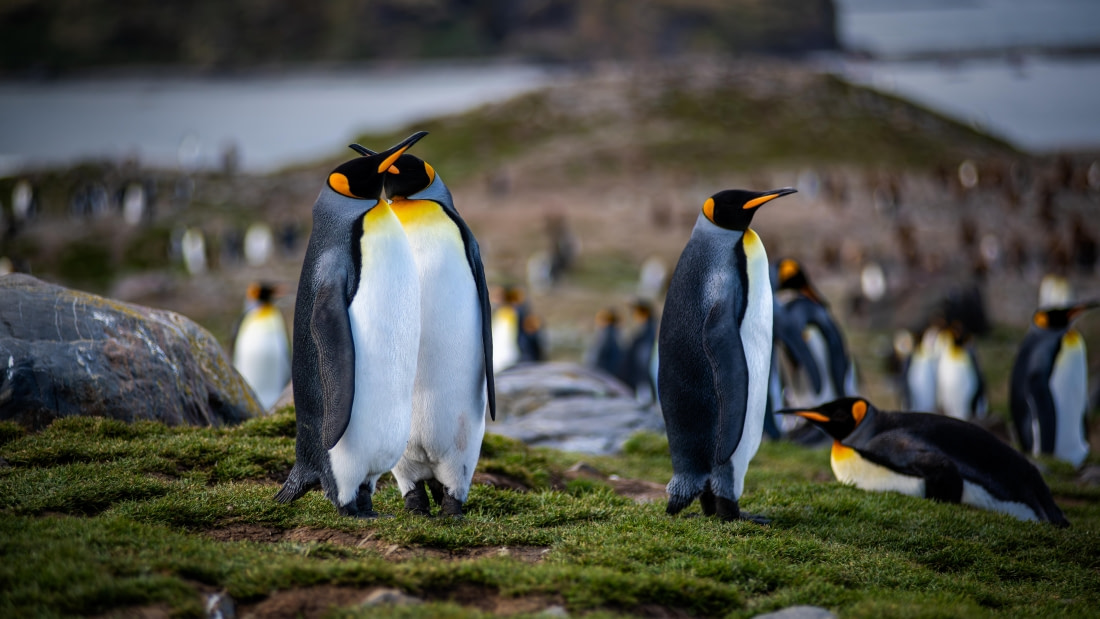
If South Georgia itself is rightly considered a diamond in the crown of Antarctic and sub Antarctic islands, then St. Andrew’s Bay is a diamond — or rather, a black pearl — in the necklace of the island’s many bays and coves. One hundred and fifty thousand pairs of king penguins! One hundred and fifty thousand — just think of it! Add to this southern elephant seals, Antarctic fur seals, giant petrels, Antarctic skuas, and so much more, not to mention the truly breathtaking beauty of the local landscapes. Each of us was eager to see all of this with our own eyes.
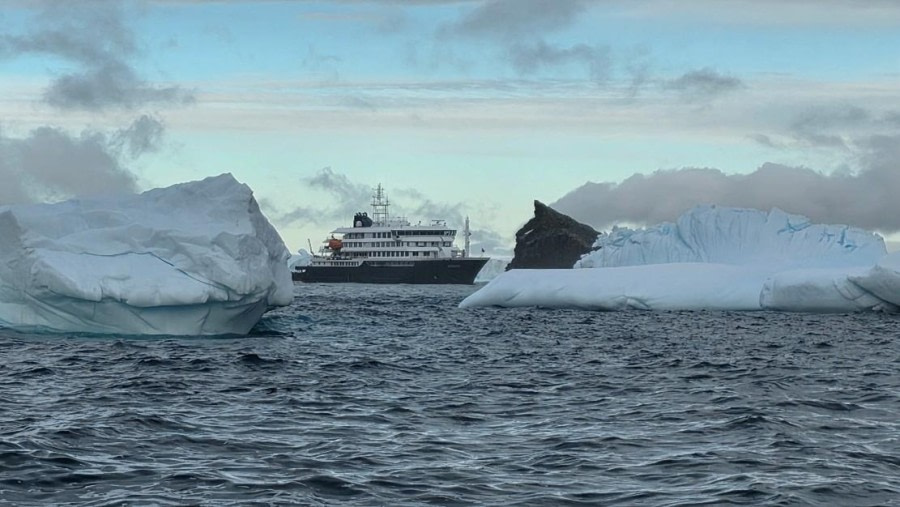
At eight o’clock, the restaurant on Deck 5 opened its doors and we rushed in for breakfast. Meanwhile, Hondius finally came to a stop. The anchor chain screeched and thundered as the massive anchor dropped to the bottom of the bay.
A vast valley framed on three sides by mountains whose snow capped peaks stood out against the overcast sky; three glaciers descending the slopes; and a tussock covered plain split in two by a long, narrow moraine — this was St. Andrew’s Bay. But this description is meaningless without mentioning its main inhabitants — the king penguins. Thousands upon thousands of these remarkable birds were everywhere, as far as the eye could see. It seemed as though half the valley was covered by a vast carpet with a strange pattern — all of it penguins! What delighted us even more was the fact that we would not be spending three or four hours in this extraordinary place, but the entire day.
At 08:30, the Zodiacs were launched. Two of them immediately sped toward shore, carrying several guides and the equipment needed for landings. The remaining Zodiacs, also operated by guides, stayed by the ship to await us.
On South Georgia, the same rules apply as in Antarctica: no more than one hundred people may be ashore at any given time. Accordingly, the plan was simple — half of us would go ashore until lunchtime, while the other half would explore the coastline of St. Andrew’s Bay from the water on a Zodiac cruise.
We were just beginning to gather near the Zodiac Boarding Area when William, our hotel manager, announced the start of the operation over the PA system. Well then — the time had come.
In groups of ten, we boarded the Zodiacs one by one and headed for shore. Tall but calm waves rolled gently in the same direction as we did. At the same time, the wind continued to blow offshore, and at times its gusts were quite strong, covering the sea’s surface with short, sharp, biting waves running against the ocean swell. The whole scene felt strangely surreal, as if we were about to discover a portal to a parallel world. Meanwhile, our guides bravely handled the boats, doing their best to spare us from the salty spray that kept exploding into the air like fireworks.
The most serious part of the ordeal awaited us at the landing site. One could not simply pull up to the shore: the Zodiac driver had to surf the wave, riding its crest and allowing it to throw the Zodiac onto the beach. Our guides, to their credit, handled this task brilliantly. Once the Zodiac was beached in the surf zone, we had to disembark without the slightest delay and move a couple of dozen metres inland. There, members of the expedition team explained where to go, what to look at, and how to behave around the aggressively inclined fur seals. Meanwhile, the Zodiac driver, lifted from the sand by the next incoming wave, had to return with it to the realm of water. This continued until all of us were safely ashore.
We looked around. A sandy beach giving way to a valley covered in low grass; mountains; enormous glaciers partially strewn with rock debris; a terminal moraine already overgrown with grass — and early morning light. The air, like our spirits, felt fresh and joyful.
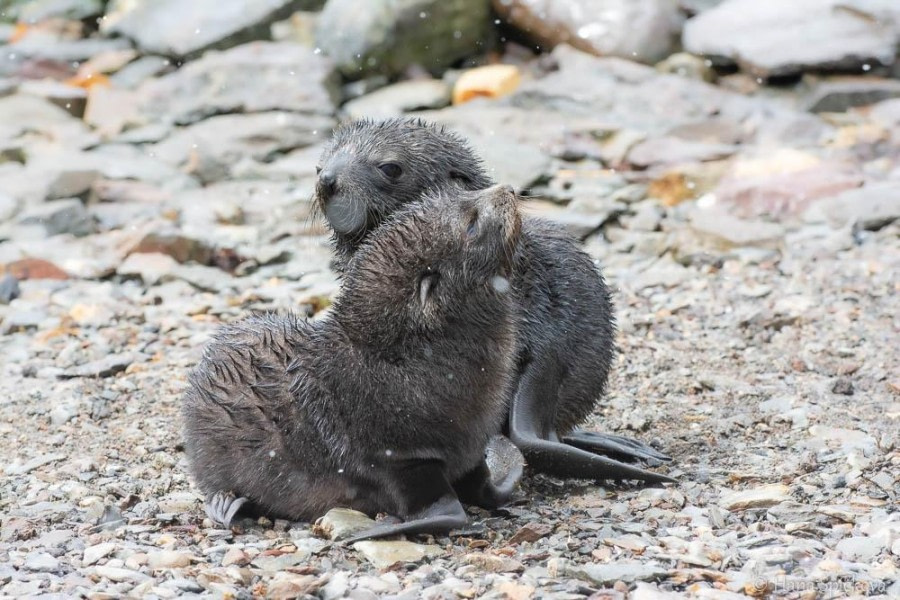
The beach and the valley were teeming with wildlife: giant petrels dozing with their heads tucked under their wings, elephant seal pups abandoned by their parents, fur seals casting menacing glances around with their muzzles raised high, and, of course, hordes of king penguins, whose main colony lay beyond the glacial moraine. Cameras at the ready, we slowly moved forward.
The route ahead was not short and even included an obstacle — a small but spirited river crossing the entire valley, originating from a glacial lake. The path, or rather the trajectory of our movement, was marked with red poles, thanks to our guides.
Moving from pole to pole and occasionally arguing with fur seals clearly displeased by our presence, we soon reached the river, which turned out to be favoured by hundreds upon hundreds of moulting penguins. They stood motionless along its banks, dropping their old feathers into the water one by one, while new, bright and clean ones grew in their place. Moulting is a difficult process: during this time, penguins lose their waterproofing and therefore cannot swim. As a result, they go without food for weeks, standing forlornly on the riverbank, waiting for the moult to end. Trying not to disturb them, we carefully waded across the river, with our guides actively helping us. The water was shallow, but the current was remarkably strong.
After walking a few hundred more metres, we began climbing the moraine. On one of the slopes, right beside the path, we came across a skua nest. The chick, nimbly moving its little legs, was exploring its surroundings, while its parents kept a vigilant watch to make sure nothing happened to it. Whenever one of us stopped to take photos, one of the adults would spread its wings menacingly, puff out its chest, and open its beak in a show of aggression. That was enough to make it clear that we should move on.
A few more dozen metres, another steep section, a couple more steps — and we found ourselves on top of the moraine. There, Mark, our ornithologist, was waiting for us along with a couple of guides. A crooked grin spread across Mark’s face: he clearly knew something and was anticipating our reaction — but to what? The answer followed almost immediately, as soon as we walked a few dozen metres farther. The moraine dropped steeply into the western part of the valley, which opened up before us in its entirety, laid out like a map. And there — there! Thousands, tens of thousands, HUNDREDS OF THOUSANDS of king penguins. Before us stood the largest colony of these incredible birds in the world. We stopped dead in our tracks, unable to believe our own eyes. It took some time before we began to recover and notice the details.
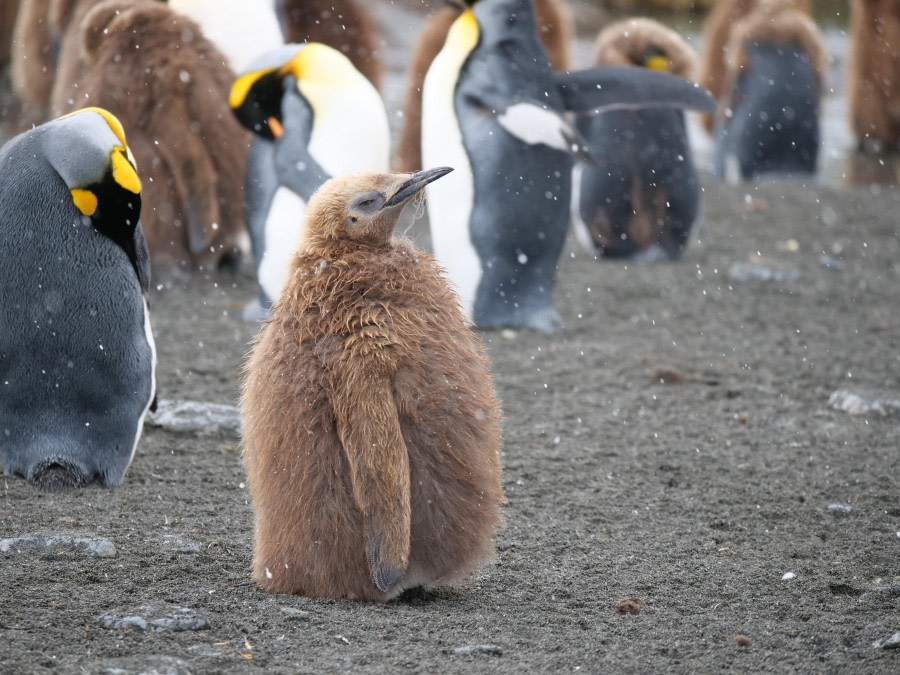
At first glance, complete chaos reigned in the colony, amplified by a cacophony of penguin calls so loud that we had to raise our voices to talk — although most of us, stunned by the sight, preferred silence. Still, the “nurseries” were clearly visible — areas where chicks in their ridiculous brown feathered “pyjamas” clustered together. As for the adults, some were moving toward the sea, while others, waddling slowly from side to side and carrying a rich haul of krill and fish in their bellies, were heading inland. Most, however, simply stood in place, going nowhere at all.
Unfortunately, we were pressed for time and could not afford to remain atop the moraine for several hours, so before long we had to begin our return journey. Once again skirting angry fur seals, once again wading across the river, and weaving between elephant seal pups.
Every seasoned traveller setting off for some remote backwater knows that reaching the destination is only half the journey, and that just as much effort will be required to get back out again. So it was with us: standing on the shore and donning our life jackets, we understood perfectly well that there was no way back to the ship except by climbing into a Zodiac once more and trusting the skill of its driver in battling the waves.
At Chris’s command, the driver surfed the wave and was “thrown” onto the beach. Our task was to get into the Zodiac as quickly as possible. This already challenging feat was made even harder by the waves that kept slamming into the stern, drenching us from head to toe with icy, salty seawater mixed with sand — and generously laced with penguin feathers. Brrr.
Reaching the shell door, we disembarked from the violently rocking Zodiacs one by one and, with the help of the guides and deck crew, climbed back aboard Hondius.
After reaching our cabins and hanging our clothes up to dry, we went to lunch. We had worked up an excellent appetite, to say the least. This was followed by a very short post lunch rest, after which it was time to get dressed again and board the Zodiacs once more.
The Zodiac cruise served as a perfect postscript to our morning excursion. Gently bobbing on the waves, we explored the coastline of St. Andrew’s Bay, continuing to marvel at the sheer number of penguins. At the same time, those whose schedule placed the Zodiac cruise first were finally able to go ashore to follow the same route we had taken in the morning. To be honest, there was a touch of good natured envy — after all, they still had the river crossing ahead of them and the moment of standing atop the moraine, frozen in awe at the spectacle unfolding before their eyes.
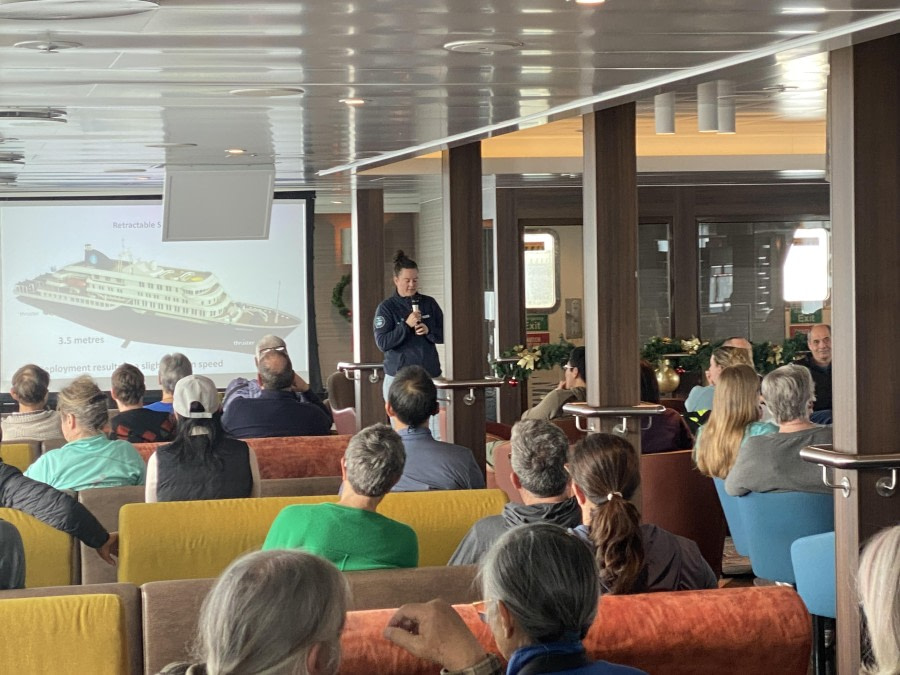
Evening came suddenly. Soon the last of us had returned aboard Hondius, the Zodiacs were hoisted back onto the deck, and the shell doors were securely closed. A short recap followed, during which Chris told us about the plans for the next day, and then came the long awaited dinner.
Meanwhile, the weather began to turn capricious. Like spies slipping through mountain passes from the island’s southern coast, low clouds crept into the valley. Light snow began to fall. It grew chilly. How good it was that we were already back on board.
Goodbye, St. Andrew’s Bay! Farewell, penguins!