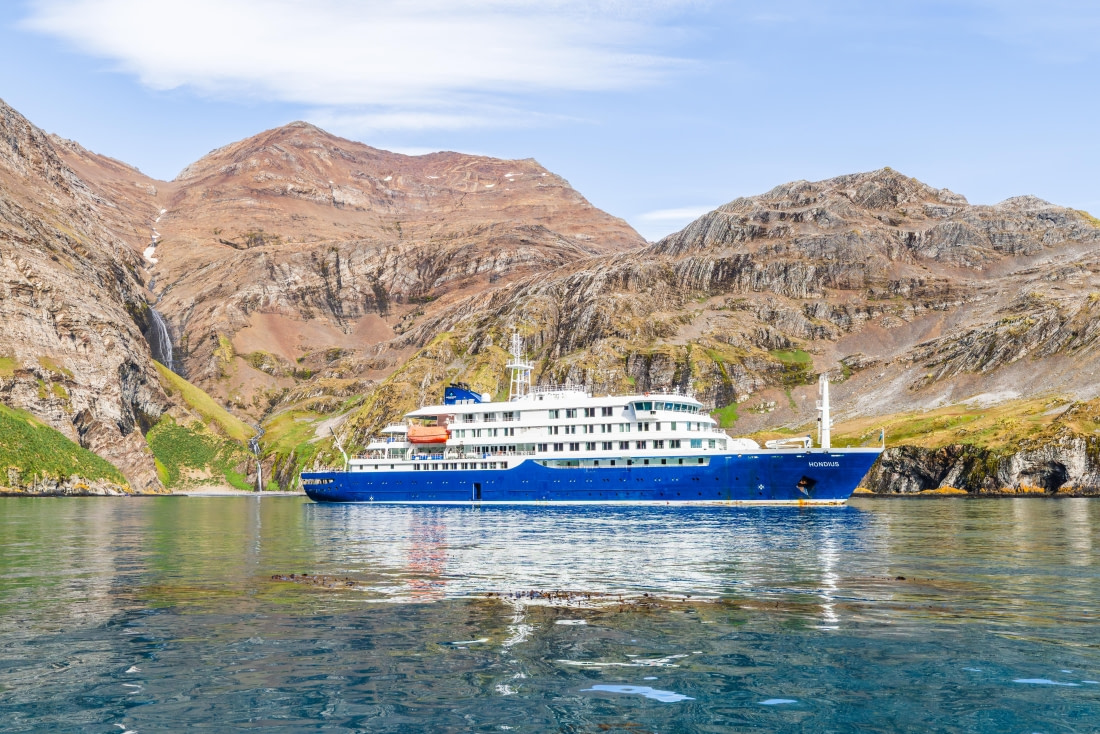
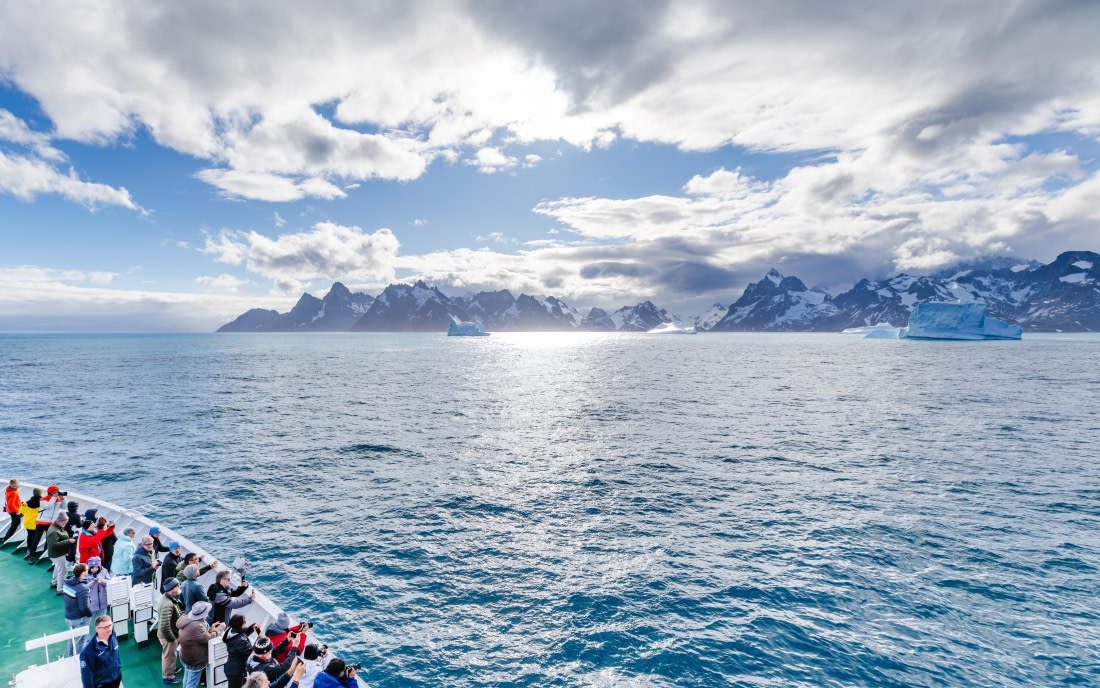
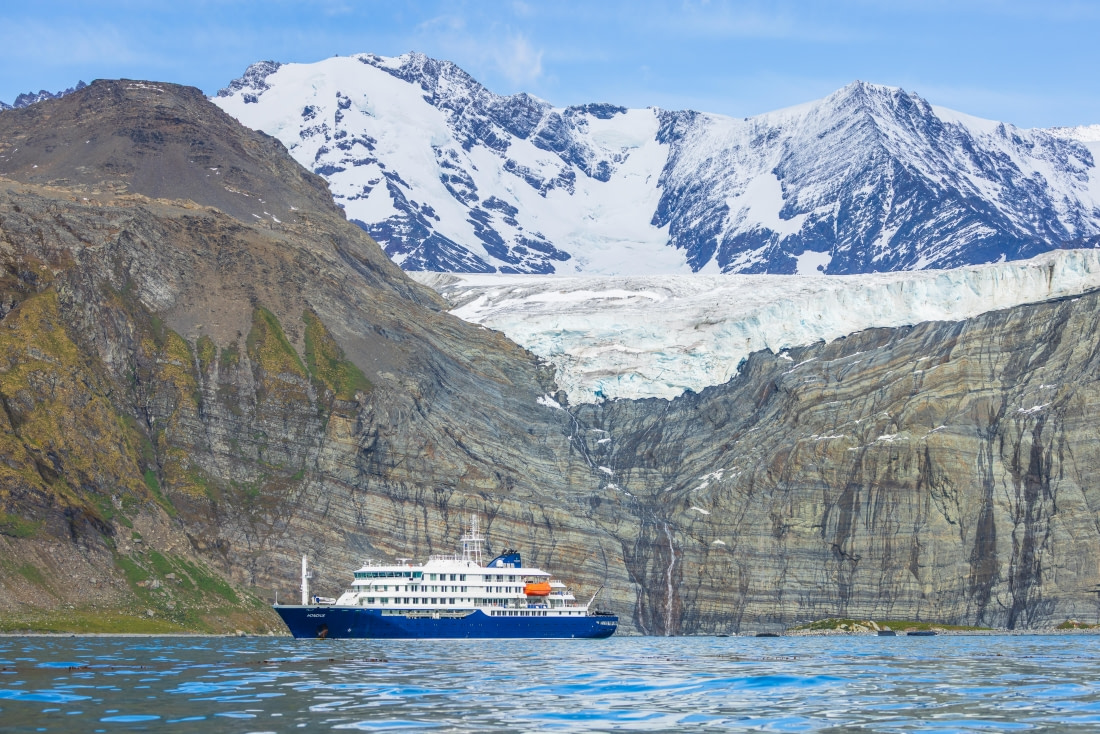
HDS31-26, trip log, Antarctica - Beyond the Polar Circle - whale watching

by Oceanwide Expeditions

Fotogalerij

Logboek

Day 1: Embarkation Day - Setting sail for Antarctica

Embarkation Day - Setting sail for Antarctica
Datum: 20.03.2026
Positie: 54°48.5 S, 068°17.9 W
Wind: W2
Weer: Overcast
Luchttemperatuur: +9

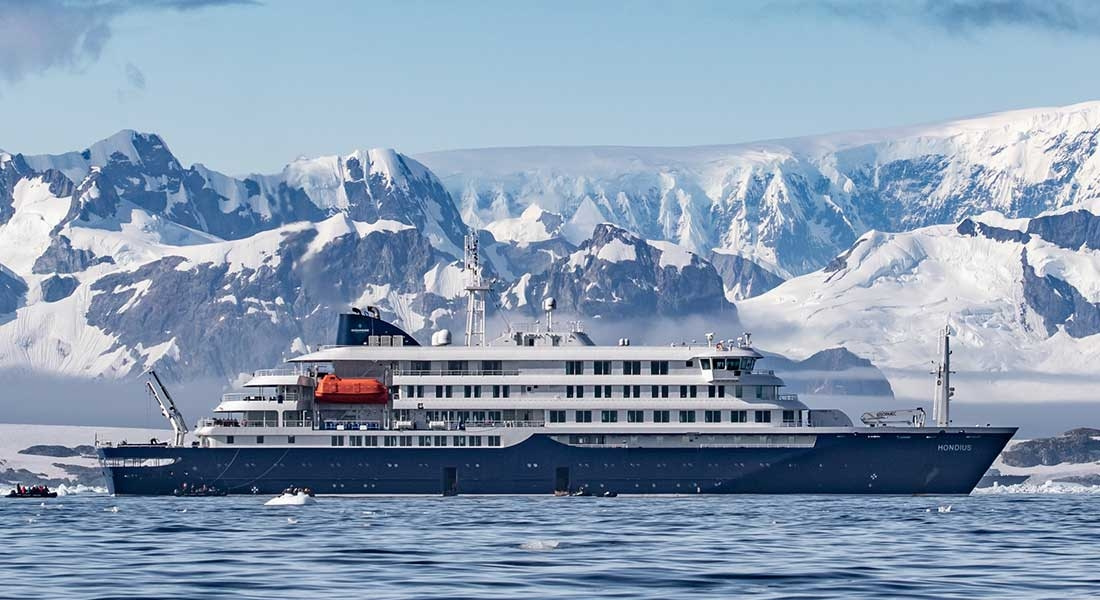
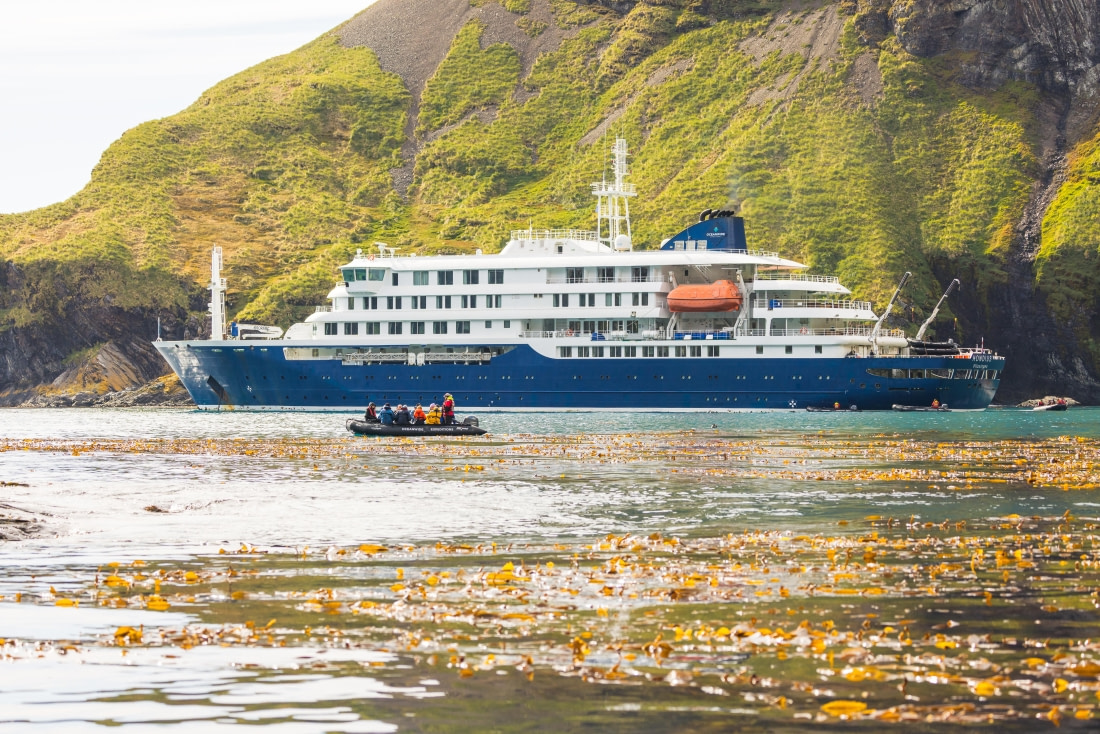
Our journey began in Ushuaia under warm and windy skies, the kind that felt like a quiet blessing before heading towards the icy continent. With the mountains framing the harbor and the town buzzing softly behind us, we stepped aboard Hondius full of anticipation. Once on board, we made ourselves at home in our cabins, checking that all our luggage had arrived and beginning to settle into what would soon feel like our floating world. The Observation Lounge on Deck 5 quickly became a welcoming hub, with the gentle clink of cups and the comfort of tea and coffee easing us into the rhythm of ship life. In the late afternoon, we gathered in the Observation Lounge for the mandatory safety briefing with the Expedition Leader and Chief Officer. Practical and reassuring, it reminded us that adventure at sea always comes with responsibility. Soon after, the emergency alarm echoed through the ship, and we returned to our cabins to collect our life jackets, completing our first drill together as a crew and community.

As early evening approached, we were invited back to the Observation Lounge for the Captain’s Cocktails. With drinks in hand, we listened to a warm welcome from the Hotel Manager and Expedition Leader, who introduced life on board and outlined the exciting days ahead. Meeting the Expedition Team made the journey suddenly feel very real. It was a gentle, perfect beginning to our Southern Ocean adventure.

Day 2: Drake Passage - At Sea sailing towards Antarctica

Drake Passage - At Sea sailing towards Antarctica
Datum: 21.03.2026
Positie: 57°12.7’S / 065°55.1’W
Wind: SW4
Weer: Overcast
Luchttemperatuur: +8

Our first full day on board was spent crossing the legendary Drake Passage as we sailed south toward Antarctica. The ship gently rolled with the movement of the Southern Ocean, reminding everyone that the adventure had truly begun. After waking up to the sound of the sea, guests made their way to the dining room to enjoy a warm breakfast and settle into the rhythm of life on board.

Later in the morning, everyone gathered in the lounge for an important introduction to our Antarctic journey. The expedition team explained how Zodiac landings would work and shared the environmental guidelines that help protect this remote and fragile region. These briefings gave passengers a clear understanding of how we would explore Antarctica safely and responsibly.

For those taking part in the diving program, the dive team hosted a detailed briefing, explaining procedures, equipment, and safety measures for polar diving. Excitement grew as divers began to imagine their first experiences beneath the icy waters.

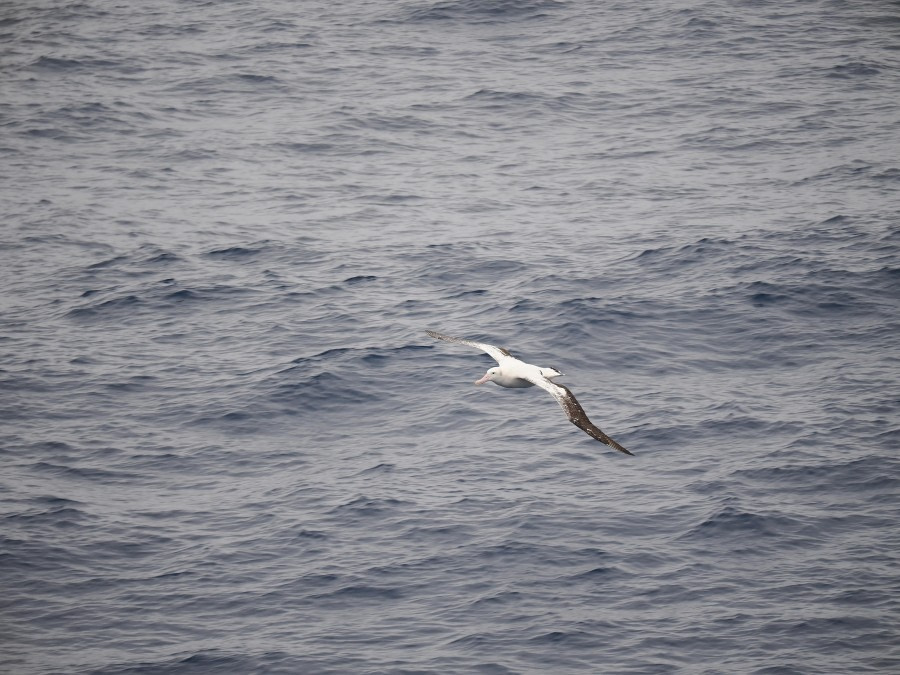
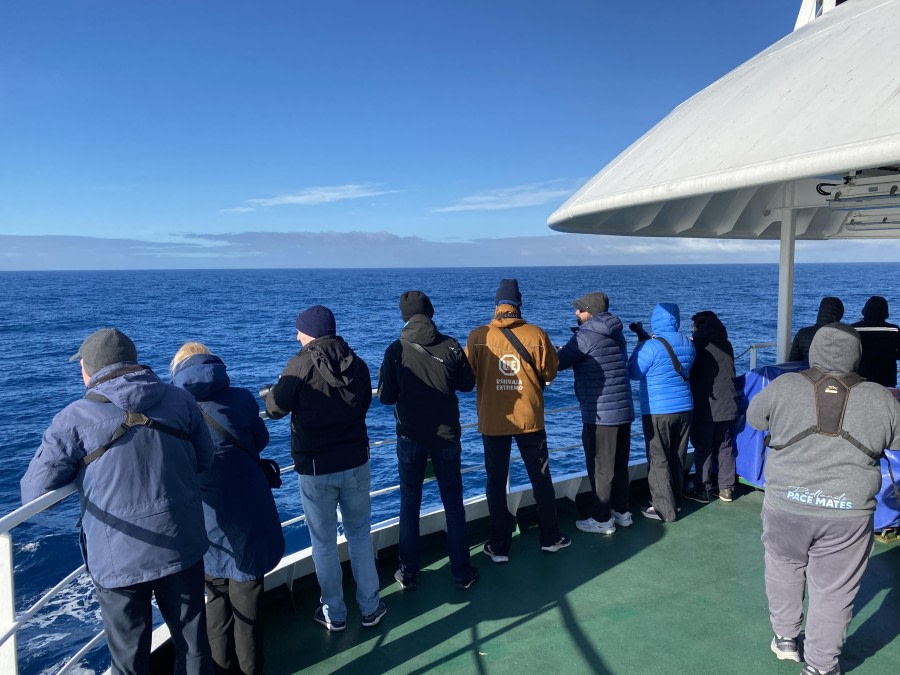
As the ship continued south, guests were invited to learn more about the wildlife of the Southern Ocean. A presentation on the birds of the Drake Passage introduced the incredible seabirds that often follow ships through these waters. Soon after, many passengers headed outside to watch for soaring albatrosses and other ocean travelers gliding effortlessly above the waves.

The afternoon continued with a fascinating introduction to the whales and dolphins of the Southern Ocean. Guests learned how to identify different species and what behaviors to look for while scanning the sea from the decks. This was followed by a photography talk, offering practical tips on capturing the unique light, landscapes, and wildlife of the polar regions.

As the day came to an end, everyone gathered once more in the lounge for the first daily recap. The expedition team reflected on the day, shared observations from the crossing, and talked about what lay ahead. With the first full day behind us and only one more day to cross the Drake Passage, anticipation continued to build. Antarctica was no longer just a destination on the map; it was now very close!

Day 3: Drake Passage - At Sea sailing towards Antarctica

Drake Passage - At Sea sailing towards Antarctica
Datum: 22.03.2026
Positie: 61°25.5’S / 064°09.9’W
Wind: NW4
Weer: Overcast
Luchttemperatuur: +3

The day began with that quiet, anticipatory energy that only exists at sea. The ship cut steadily southward, with waves up to 3 meters and some guests staying in the cabin not feeling great. Our morning started in the lounge with Lucía’ s lecture, whose passion for penguins was as vivid as the creatures themselves. She guided us through the lives of Antarctic Peninsula. Not long after, Jakub the glaciologist took the stage, shifting our attention from life to landscape. By the end, the frozen world ahead no longer seemed static; it was dynamic, breathing in geological time.

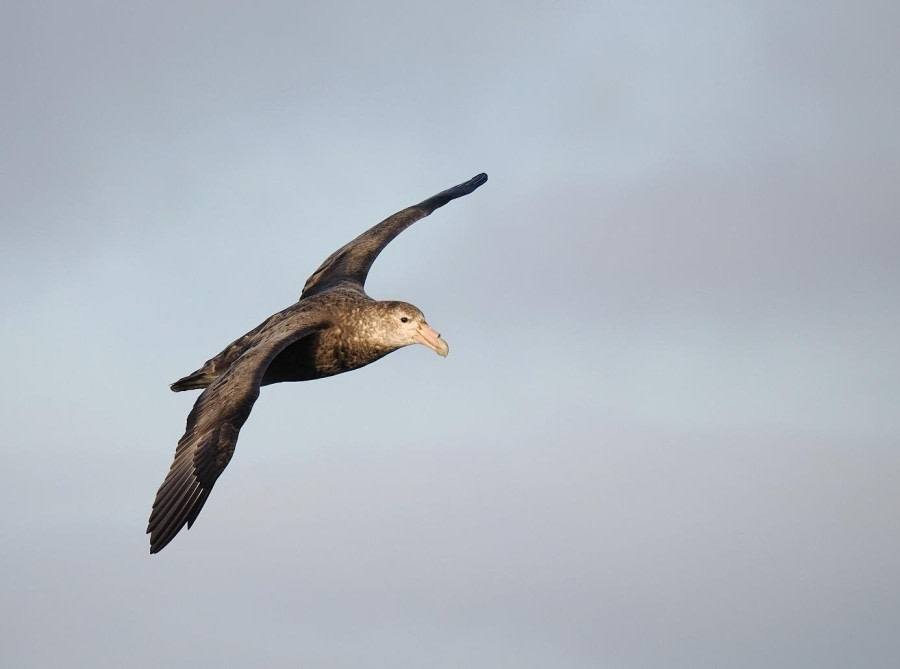
Albatrosses circled effortlessly around the ship, riding invisible currents with a mastery that felt almost unreal. Among them, the sooty albatross stood out. They followed us for a while, silent companions in this vastness.

In the afternoon, we prepared for what lay ahead with a biosecurity check. Boots scrubbed, gear inspected, every precaution taken to protect the fragile ecosystems we were about to enter. It was a reminder that exploration carries responsibility.

At the same time, our experienced birding team was on the outer decks, teaching us about these amazing creatures and giving us advice on taking the best photos of them.

A quiet murmur spread across the ship as the first sight of land emerged on the horizon: Smith Island, part of the South Shetlands. Stark, rugged, and impossibly remote, it rose from the ocean like a promise fulfilled. Under remarkably clear skies, it was more like a painting than a place.

In the late afternoon Tyler, a guest lecturer, hosted a lecture on astronomy. And then, as if on cue, the ocean interrupted. Southern Bottlenose whales appeared, slicing through the water alongside the ship, their movements quick and playful. The lecture was pause for a moment to watch them.

The day closed with a daily recap from the expedition team. Plans were outlined, conditions discussed, excitement barely contained. Tomorrow would be our first true day of activities—our first steps into the Antarctic environment itself.

Day 4: Wilhemina Bay & Neko Harbour

Wilhemina Bay & Neko Harbour
Datum: 23.03.2026
Positie: 64°37.4’S / 062°11.0’W
Wind: S3
Weer: Overcast
Luchttemperatuur: -1

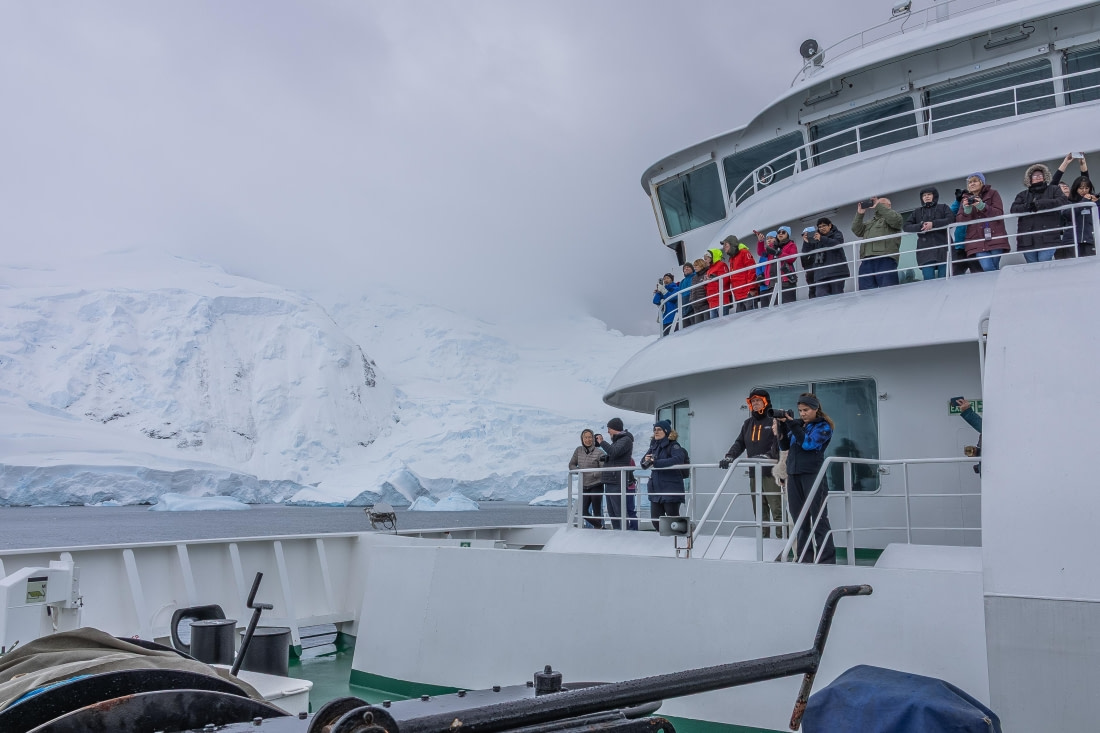
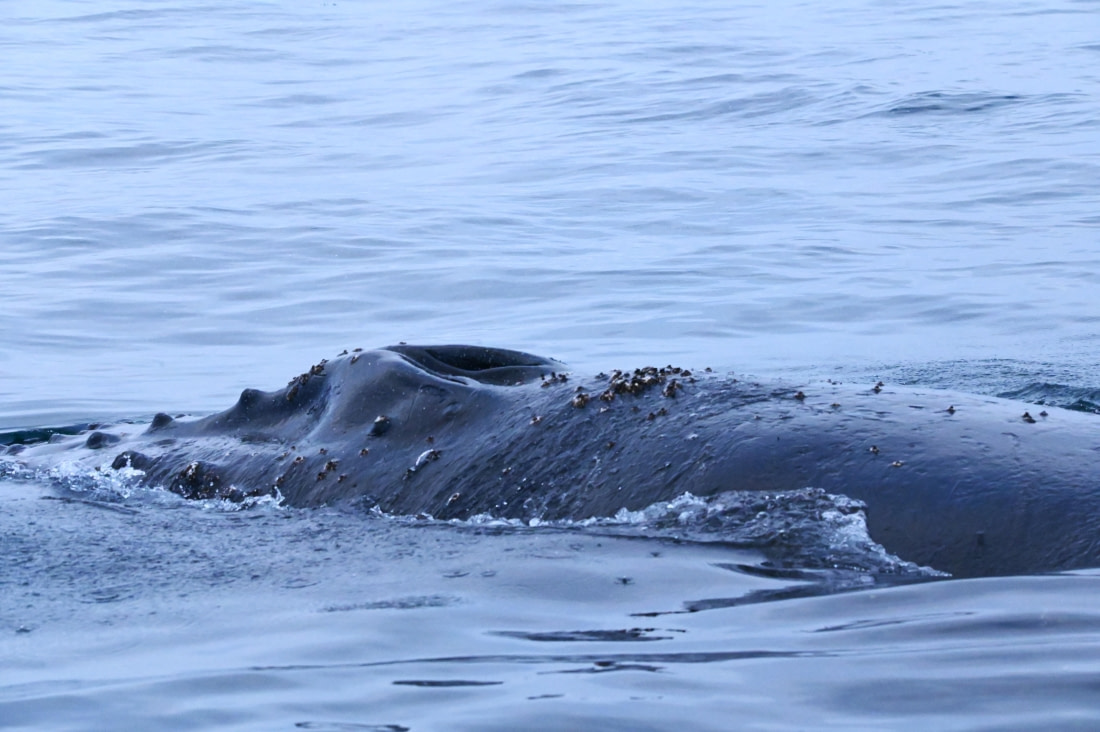
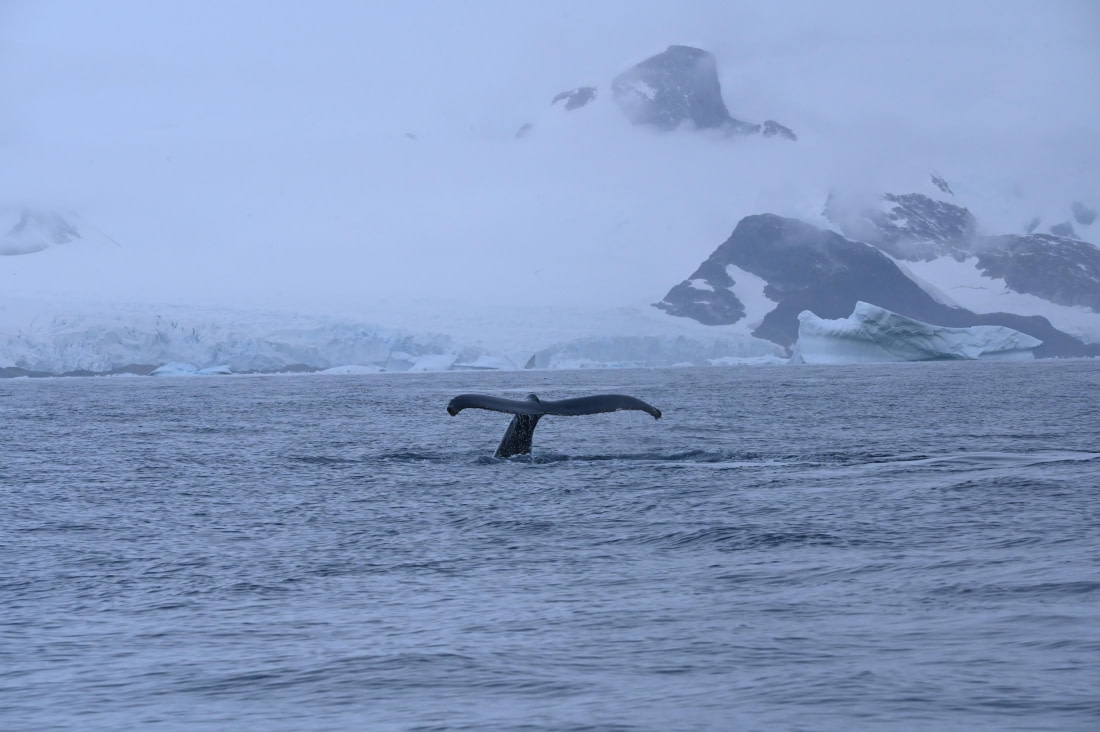
We woke up to a proper Antarctic welcome—low visibility, light snowfall, and a quiet, foggy atmosphere hanging over Wilhelmina Bay. After breakfast on board the Hondius, we headed out into conditions that felt muted but calm, with very little wind. Humpback whales were already present throughout the bay, moving at a slow, steady pace. Most of the encounters were relaxed and distant, but a few individuals showed curiosity, approaching some of the zodiacs and briefly surfacing nearby as if checking us out before continuing. Their behavior remained unhurried, matching the soft, subdued feel of the morning.

Across the group, there were also reports of fin whales passing by the bay. A few lucky boats managed to get a glimpse of them as they moved through at a distance—faster and more directional than the humpbacks. We also spotted several Antarctic fur seals resting on ice floes, adding to the sense that the bay was full of life despite the low visibility.

Just before lunch, a pod of Killer Whales was spotted from the ship. We gathered on deck and were rewarded with clear views as they passed by—sleek, fast, and purposeful. It was a brief but memorable sighting, especially seeing them from the ship rather than from the water, giving a broader perspective of their movement through the Gerlache Strait.

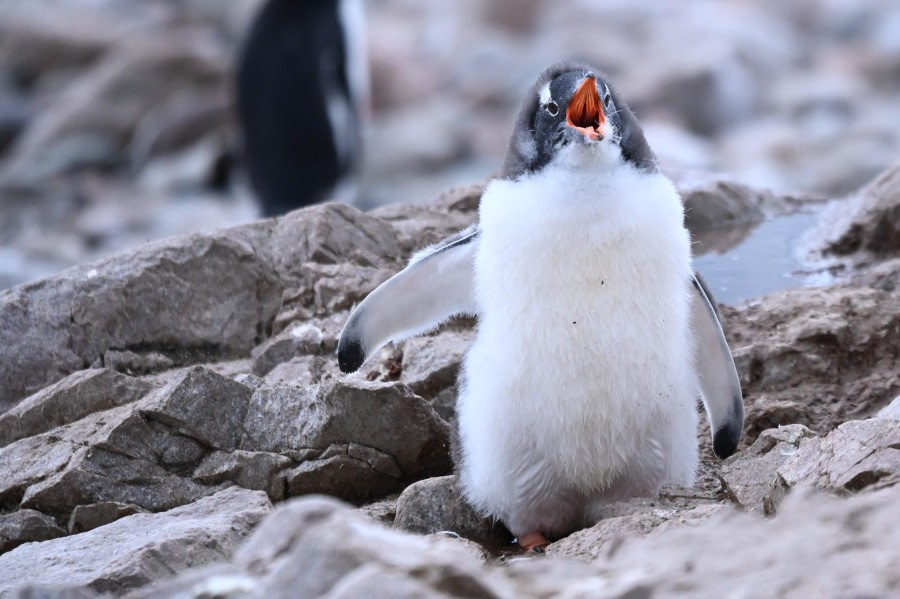
In the afternoon, we made our continental landing at Neko Harbor—our first time setting foot on the Antarctic continent. Conditions remained wintry, with light snow continuing as we landed. The site was active with gentoo penguins moving between the water and their nests, while a few seals rested along the shoreline. The setting felt raw and immediate, with glaciers looming in the background and occasional sounds of ice shifting in the distance.

Following the landing, we went for a short zodiac cruise through brash ice. It was a compact but eventful outing, navigating through dense patches of ice while continuing to observe wildlife. Humpback whales were again present in the area, along with a crabeater seal resting on the ice. Gentoo penguins were active both in the water and on shore, and Wilson’s storm petrels could be seen skimming low over the surface, along with other seabirds moving through the bay. The afternoon came to an adventurous end with 50 knots of wind sending us off back to Hondius for dinner.

Overall, it was a strong first day in Antarctica—varied wildlife, changing conditions, and a good balance between ship-based observations, zodiac activity, and our first landing on the continent.

DIVE LOG

Dive No1_Wilhelmina Bay: 26 Snorkelers / Water temperature: 0°C

The first day in Antarctica arrived, and the guests woke up to the stunning sights of Wilhelmina Bay. Unfortunately, the bay was not suitable for diving due to its depth. However, everyone headed out on the Zodiacs in their drysuits to try snorkeling in the area. With whales nearby, there was hope of snorkeling alongside them. The whales, however, were not very curious, so the group continued with a Zodiac cruise. Later, they had the chance to climb a small iceberg and jump into the water—an incredible experience not many can claim!

Dive No2_Neko Harbour: 17 divers / 9 Snorkelers / Water temperature: 0°C

In the afternoon, it was finally time for the first dive. This initial dive is a mandatory checkout dive for all divers, allowing them to get used to the environment and specialized equipment. It took place at Neko Harbour, where a shallow area provided ideal conditions. After the briefing, the group prepared to enter the water and perform a weight check. For some divers, everything went smoothly and they continued the dive. Others experienced issues, such as free-flowing regulators or difficulty adapting to the cold and chose to return to the surface. Those who remained underwater enjoyed their first glimpse of Antarctic diving, with excellent visibility beneath accumulated brash ice.

The snorkelers were also scouting the area for some good places. Visibility was very good, allowing them to explore the surroundings with ease. They spotted two crabeater seals resting on the ice and later spent some time climbing onto the ice. They also checked the shoreline for penguins, although the conditions were not ideal for observing them from the water.

Day 5: Traveling South, crossing the Antarctic circle

Traveling South, crossing the Antarctic circle
Datum: 24.03.2026
Positie: NE7
Wind: 65°43.7’S / 066°45.1’W
Weer: Overcast
Luchttemperatuur: +2

The transit of the ship to below the Antarctic Circle was marked by a dramatic blend of raw ocean power, wildlife encounters, and a milestone moment that brought the entire expedition together. The journey south began with a restless night on the open ocean, as waves peaked at around five meters. The ship rolled heavily in the swell, making sleep elusive for many on board. Drawers rattled, footsteps were unsteady, and even the most seasoned travelers were reminded of the Southern Ocean’s reputation. Yet by morning, the sea began to ease, and a sense of calm gradually returned as the vessel pushed further into polar waters.

With improving conditions came one of the great pleasures of ocean travel in this region: seabird watching. Passengers gathered on deck to take in a remarkable array of species gliding effortlessly over the waves. Light-mantled Albatrosses, with their elegant grey plumage, swept past alongside the more robust Grey-headed Albatrosses. Smaller but equally captivating were the Blue Petrels, darting low over the water, while Cape Petrels flashed their striking black-and-white patterns. Southern Fulmars rounded out the spectacle, their stiff-winged flight a constant presence around the ship. These birds, perfectly adapted to life in the Southern Ocean, provided a sense of companionship as the Hondius continued its journey south.

The morning also offered opportunities for learning, with well-attended lectures that deepened passengers’ appreciation of the region. Saskia delivered a compelling talk on the historic Belgica expedition, recounting the hardships and discoveries of one of the earliest Antarctic ventures. Her presentation set the tone for the day, connecting the modern voyage with the legacy of exploration in these remote waters. This was followed by Pippa’s informative overview of seal species likely to be encountered during the trip, equipping everyone with the knowledge to identify and better understand these iconic Antarctic inhabitants.

The defining moment of the day came shortly after lunch. Word spread quickly that the ship was approaching the Antarctic Circle, and passengers flocked to the bridge and outer decks in anticipation. A palpable sense of excitement built as the coordinates ticked closer to 66°33′ south. When the moment finally arrived and the Hondius crossed the line, a spontaneous cheer erupted. For many, it was a once-in-a-lifetime achievement - a symbolic entry into one of the most remote and pristine regions on Earth.

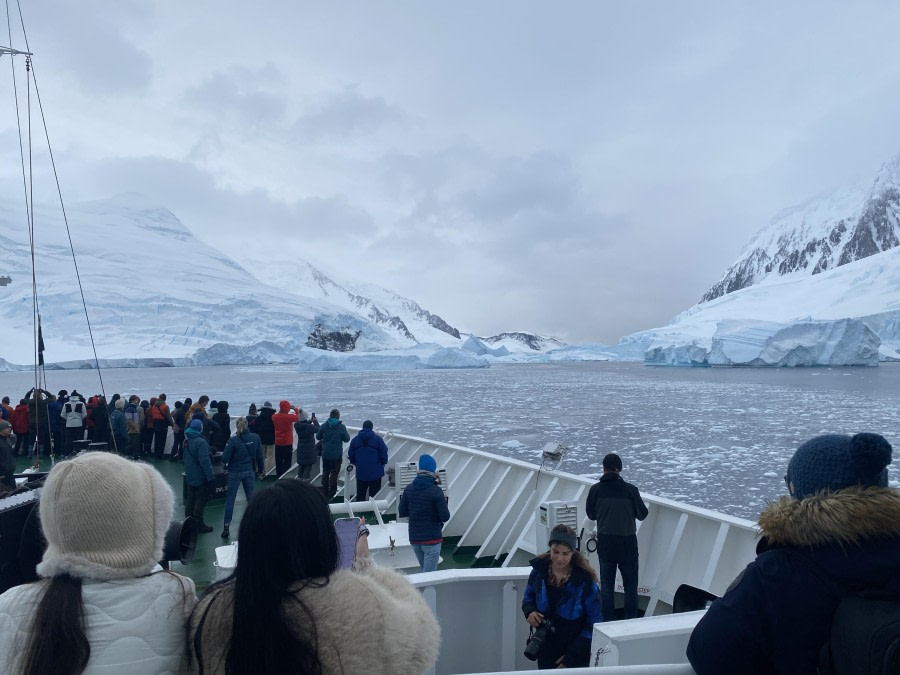
The afternoon brought a shift in focus as the expedition team searched for a break in the weather that might allow a Zodiac cruise. Despite careful monitoring, the hoped-for window never materialized. While there was some disappointment, it was quickly overshadowed by what followed: a spectacular ship cruise through the rarely traveled Gunnel. Navigating through the narrow passage of The Gullet toward Marguerite Bay, the Hondius offered breathtaking views of towering ice cliffs, snow-covered peaks, and calm, reflective waters.

Though passengers remained on board, the experience proved more than sufficient compensation. The sense of entering a seldom-visited wilderness, combined with the promise of favorable weather and landings below the Antarctic Circle the following day, left everyone with a feeling of anticipation and awe.

Day 6: Stonington Island

Stonington Island
Datum: 25.03.2026
Positie: 68°10.5’S / 067°05.4’W
Wind: S3
Weer: Overcast
Luchttemperatuur: -3

The day’s expedition unfolded as a vivid reminder of Antarctica’s unpredictability, where shifting conditions continually reshape both plans and perspectives.

As Hondius approached Stonington Island in the early hours, it encountered formidable katabatic winds sweeping down from the continent’s interior at speeds of up to 70 knots. These powerful gusts, driven by dense, cold air cascading off the ice sheet, tested both navigation and patience. Despite the intensity of the approach, the surrounding scenery remained breathtaking—an expanse of dramatic, rugged landscape punctuated by towering icebergs scattered across the water like frozen sculptures.

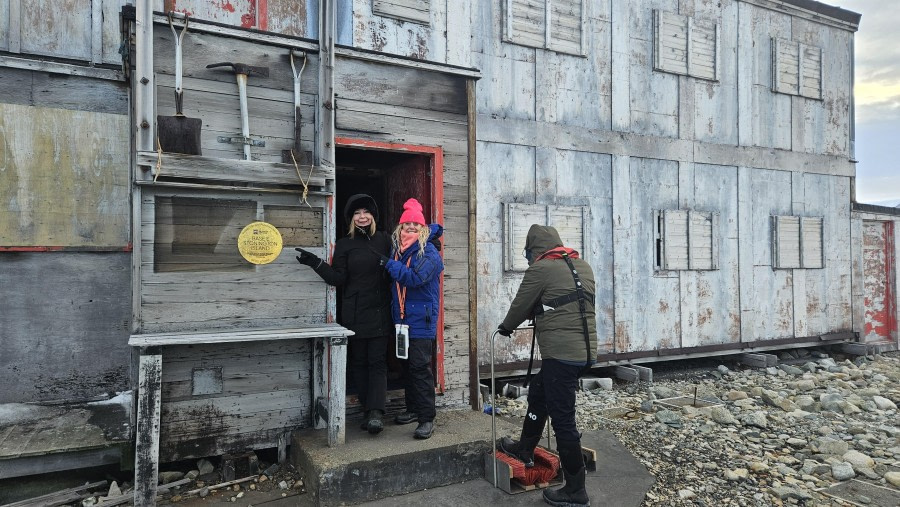
Remarkably, conditions transformed just offshore. The fierce winds subsided to a far more manageable 10 knots, allowing operations to proceed. The morning was thoughtfully divided between intellectual engagement and exploration. This morning’s activities were split between an engaging lecture on board from Gabi, whose insights provided valuable context on the region’s history and environment and a landing at Stonington Island. The groups then rotated ashore in mid-morning. The landing allowed exploration of the abandoned US East Base and UK E Base, remnants of early Antarctic research efforts that now stand as silent witnesses to human endurance in one of the planet’s harshest climates. Wildlife spectacle was provided by a resting Weddell Seal and a handful of Adelie Penguins, their low numbers, an indication of the time of year and end of the breeding season.

In the afternoon, however, Antarctica once again asserted its authority. Rising winds forced the cancellation of the planned zodiac cruise at Red Rocks, a reminder that flexibility is essential in expedition travel. Rather than disappointment, the change opened the door to further learning, as Rose delivered an engaging lecture on Antarctic geology, illuminating the forces that have shaped the continent over millions of years.

The day concluded on a celebratory note as the vessel marked its southward crossing of the Antarctic Circle yesterday. Guests gathered on the bow, bundled against the cold and wind, to enjoy hot chocolate enriched with rum and cream. Music and laughter filled the air as passengers and staff danced together, embracing the spirit of adventure and camaraderie that defines such journeys.

From fierce winds to calm waters, cloudy to sunny, from history to geology, and from challenge to celebration, the day encapsulated the essence of expedition cruising in Antarctica—dynamic, educational, and unforgettable.

An evening photography workshop hosted by Martin encouraged discussion on layering and scale in photographic composition.

DIVE LOG

Dive No3_Stonington Island: 17 divers / 9 Snorkelers / Water temperature: 0°C

The day before, the Antarctic Circle had been crossed, and the team was heading toward what would likely be the southernmost dive/snorkel of their lives. The morning was quite windy, making conditions challenging. Nevertheless, the divers prepared to explore smaller icebergs in the bay. Visibility was limited, and some divers felt the cold quickly, but the experience was still enjoyable. Meanwhile, the snorkelers cruised the area in search of a good spot and were rewarded with a curious Weddell Seal that swam among them for several minutes.

Day 7: Salpêtrière Bay & Peterman Island

Salpêtrière Bay & Peterman Island
Datum: 26.03.2026
Positie: 65°08.2’S / 064°05.9’W
Wind: S3
Weer: Overcast
Luchttemperatuur: -2

We woke into a morning that felt suspended between dream and silence. The light was soft, diffused through a veil of mist that wrapped everything in a quiet kind of mystery. Breakfast had been warm and grounding, a gentle start before stepping out into the vastness waiting for us.

By the time we boarded the Zodiacs and set out into Salpêtrière Bay, the world had narrowed to shades of white, blue, and silver. The mist drifted low over the water, parting just enough for glimpses of sharp, spiky mountains rising like frozen sentinels. Sunlight filtered through the clouds in pale beams, catching on glaciers and turning them luminous. It felt otherworldly, as though we had slipped into a place untouched by time.

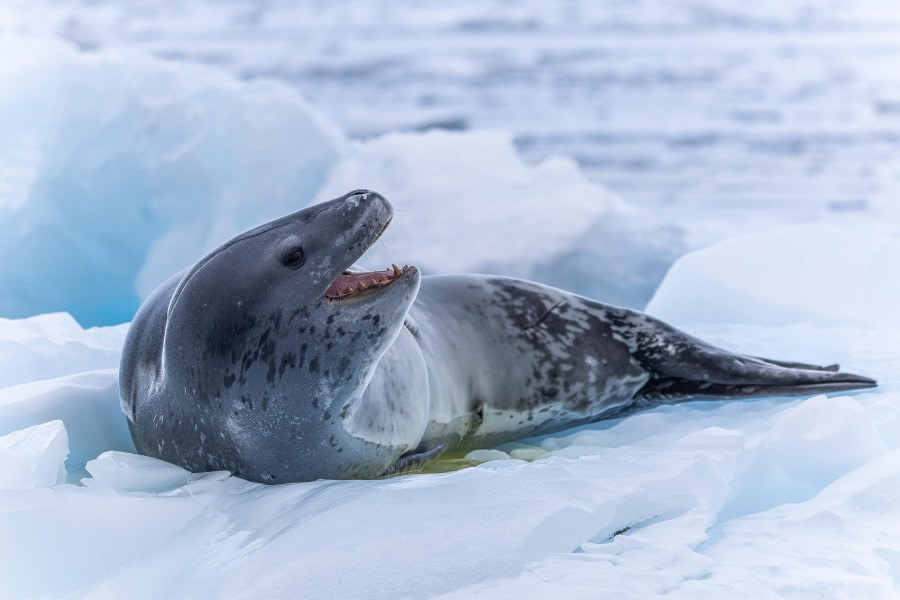
We drifted through what we began calling an “iceberg garden,” surrounded by sculpted forms of ice—arches, shards, smooth curves—each one impossibly beautiful and unique. The sea was alive despite the stillness. Leopard seals slipped through the water nearby, sleek and watchful, while humpback whales surfaced in the distance, their breath hanging in the cold air. It had been one of those moments where no one spoke much; we just absorbed it, knowing how rare it was.

Back onboard, lunch felt almost surreal after the morning—like returning briefly to the ordinary while the extraordinary waited just outside.

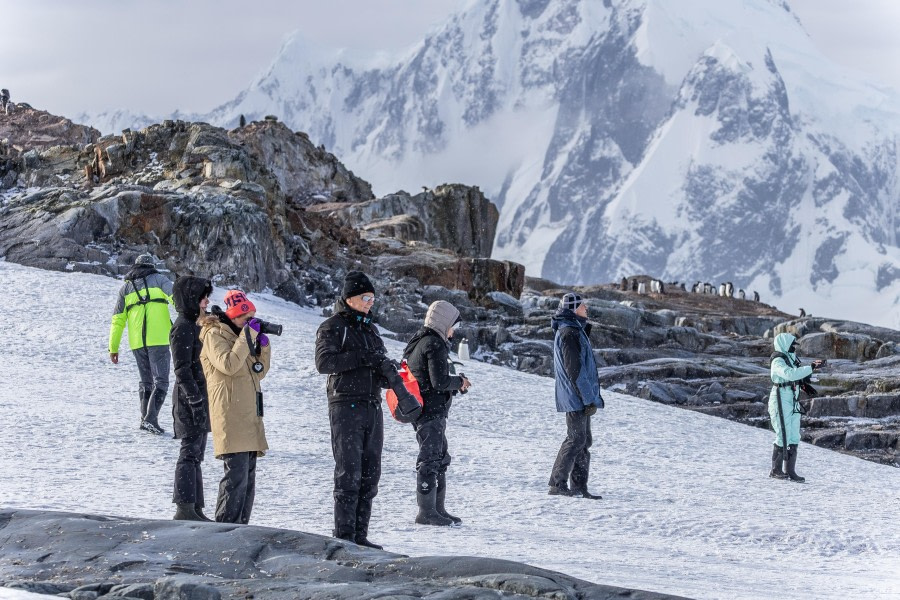
In the afternoon, we split into groups. Some of us went ashore at Peterman Island, stepping carefully onto land dotted with gentoo and Adelie penguins. They bustled around us, completely unconcerned, going about their lives in a chorus of soft calls and flapping wings. It had been grounding in a different way—earthy, alive, full of small, persistent energy.

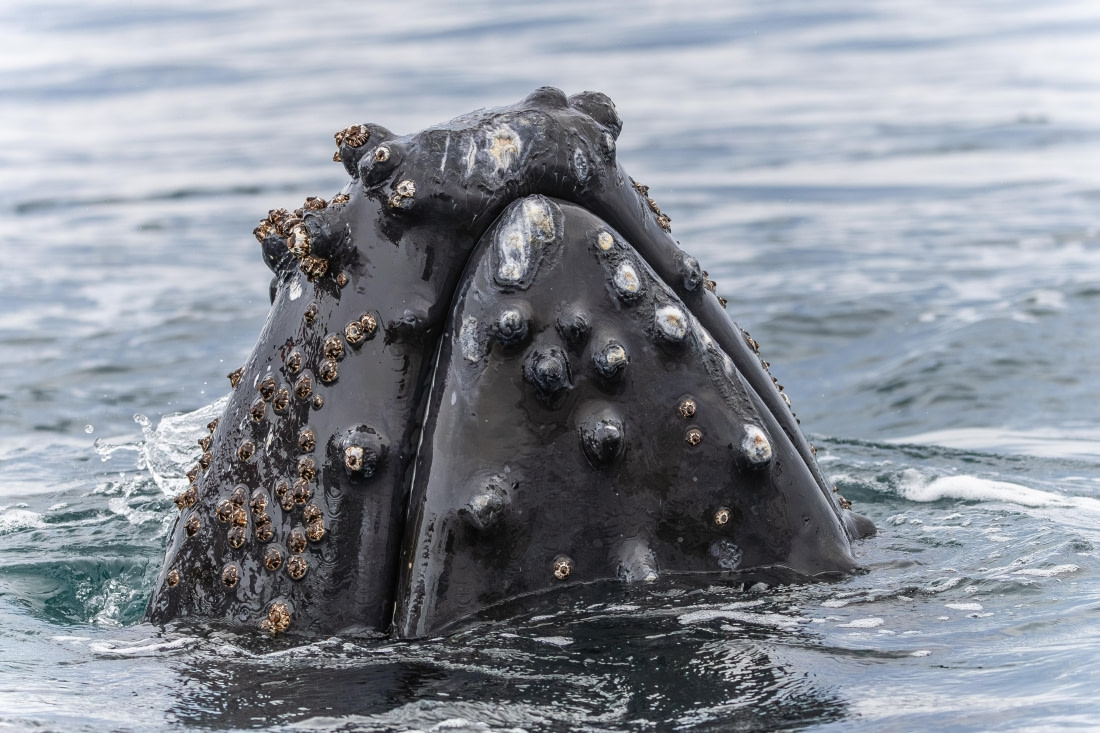
The rest of us stayed out on the water, and that was where the day seemed to crescendo. Humpback whales surrounded us—dozens of them, far more than we could count at first. They weren’t distant figures anymore; they came close, curious and playful. We watched them roll, their massive bodies turning gracefully beneath the surface. Some spy-hopped, lifting their heads to look at us directly, as if just as intrigued. Others slapped fins or flukes, showing off in a way that felt almost intentional. It was a spectacle—wild, generous, and deeply moving. We had felt small, but in the best possible way.

By the time we returned onboard, the light had softened again, and everything carried that quiet afterglow of a day fully lived. During the recap, we retraced it all—morning mist, ice sculptures, seals, penguins, whales—and somehow it already felt like a memory we would carry for years. Plans for tomorrow were shared, but part of us were still out there, drifting among the ice and the whales.

Dinner followed, warm and full of conversation, but underneath it all was a shared understanding: we had witnessed something rare, something vast and humbling. And as the ship moved gently through the Antarctic night, we felt both exhausted and deeply, quietly grateful.

DIVE LOG

Dive No4_ Salpêtrière Bay: 26 Snorkelers / Water temperature: 0°C

The mission at Salpêtrière Bay was to search for wildlife and, if possible, snorkel alongside it. After a short cruise, the team encountered two curious crabeater seals swimming among the ice. Once the snorkelers entered the water, the seals showed great interest, approaching and observing them for quite some time. This remarkable close-up wildlife encounter was a highlight for many.

Dive No 5_Petermann Island: 17 Divers / 14 Snorkelers / Water temperature: 0°C

In the afternoon, the divers set out to explore another iceberg near Petermann Island. A suitable one—large enough for the entire group—was quickly found. With good visibility, the group descended to explore this unique feature of Antarctica. The snorkelers were active in the same area, with the first group encountering large numbers of penguins around them in the water. The second group spent more time around the ice, climbing on it and observing penguins along the shoreline from the water. Later, one of the divers had the opportunity to snorkel with a leopard seal, which stayed close by.
Day 8: Foyn Harbour & Cierva Cove

Foyn Harbour & Cierva Cove
Datum: 27.03.2026
Positie: 64°33.9’S / 061°59.5’W
Wind: E3
Weer: Overcast
Luchttemperatuur: -3

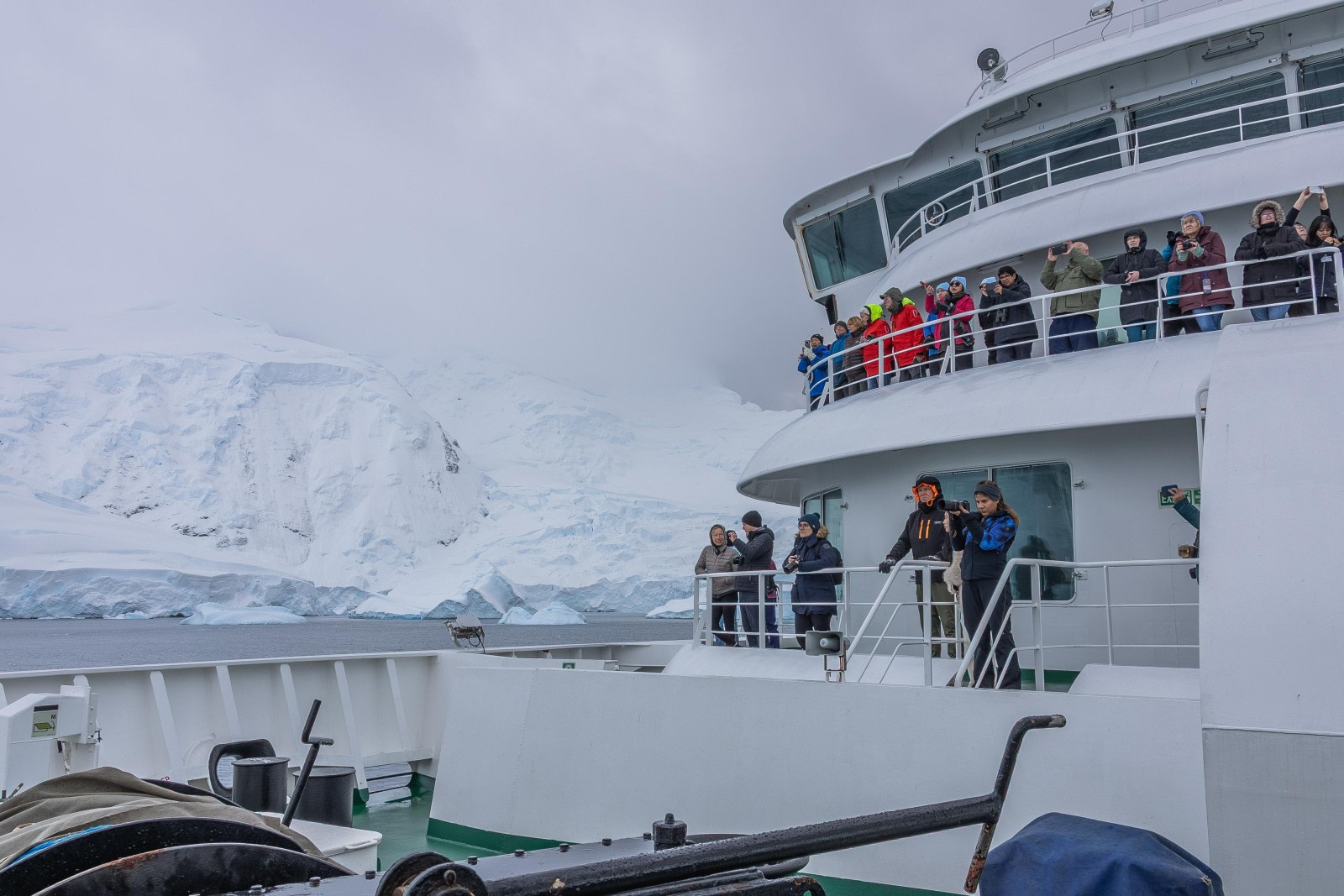
This morning, we were woken early by Pippa to start our last day of activities on the Antarctic Peninsula. Low grey clouds kept the landscape darker for longer as light snow began to fall. As soon as the first boats headed out toward Foyn Harbour, we were welcomed by whales throughout the bay. Many of us didn’t make it quickly to the Guvernøren shipwreck because of the incredible whale-watching opportunities along the way. Eventually, everyone had the chance to visit the shipwreck, which was deliberately run aground in Foyn Harbour after a fire broke out onboard in 1915. Alongside the humpback whales and the Guvernøren, there were plenty of fur seals covering the shorelines and small islands. During the cruise, the snowfall became heavier, and it truly felt like winter was just around the corner. Many of us also spotted Antarctic shags and gentoo penguins. After a good two and a half hours outside, everyone was getting cold, and it was time to return to the ship. Once back onboard and warmed up again, we enjoyed a hearty lunch in the restaurant and had a proper rest, as we had a longer transit ahead of us to our afternoon destination, Cierva Cove.

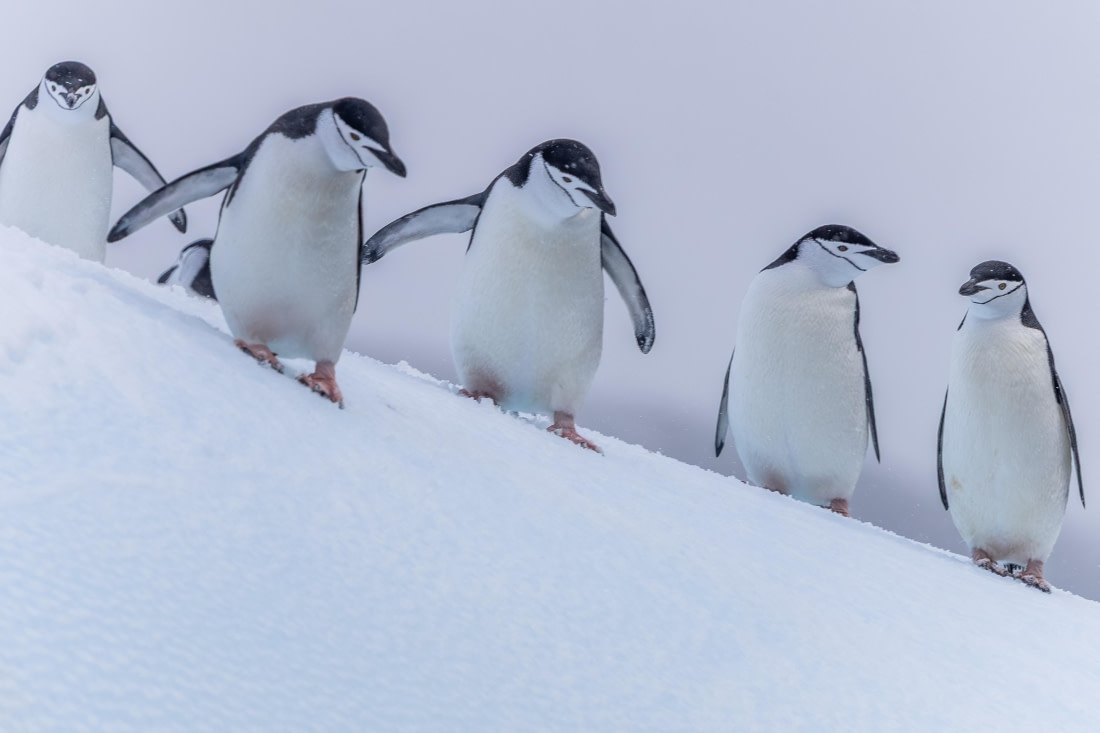
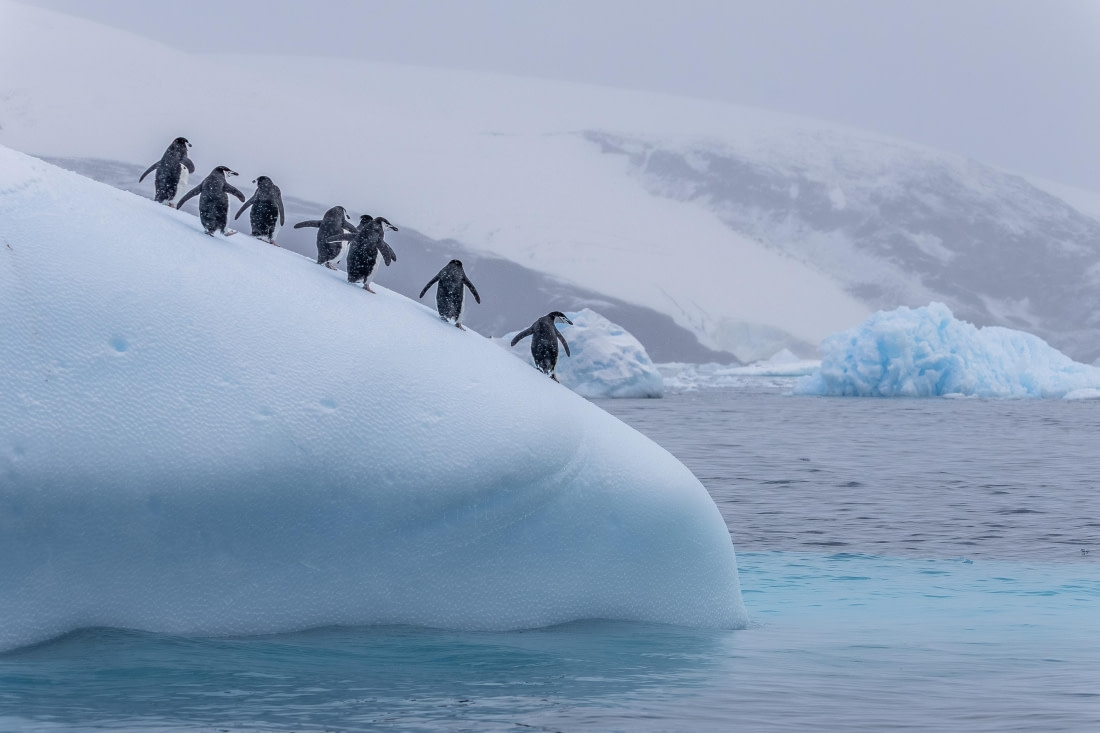
Upon arrival, a wide bay lay before us, with the Argentinian Primavera Base visible in the distance on a rocky, ice-free outcrop. The bay was filled with ice of all shapes and sizes, and whale blows could be seen further out. We quickly boarded the boats to explore the area. Some of us headed straight to an island where chinstrap penguins were gathered, while others made their way toward Primavera Base. A few were lucky enough to encounter whales or seals along the way. Even though many of us eventually grew cold, we made the most of the afternoon, cruising for around three hours. It was an incredible final activity on the Antarctic Peninsula, with several leopard seals resting on the ice or swimming nearby. Rafts of penguins drifted past, while humpback and fin whales surfaced around our Zodiacs. It felt like a truly wholesome day, and we were all very happy with how it turned out. Now, one final day of activities in the South Shetland Islands lies ahead before we return to Ushuaia.
DIVE LOG

Dive No 6_ Foyn Harbour: 15 Divers / 9 Snorkelers / Water temperature: 0°C

In 1915, a whaling vessel caught fire during a crew celebration after a lamp was knocked over. Filled with whale oil, the ship burned rapidly, and the captain ordered it to be abandoned, intentionally running it aground in Foyn Harbour. Today, the Governoren is considered one of the southernmost diveable shipwrecks. Divers explored the wreck while snorkelers observed it from above. The biodiversity was remarkable: large sea stars of various species, sea cucumbers, anemones, brachiopods, and extensive sponge fields have transformed the wreck into a thriving artificial reef. This was undoubtedly one of the highlights of the trip.

Dive No 7_Cierva Cove: 24 Snorkelers / Water temperature: 0°C

Another afternoon in a beautiful bay offered the group the chance to explore further. The area is known for leopard seals, and many participants were eager to encounter them in the water. Everyone headed out in their snorkel gear. Some seals were initially spotted resting on icebergs, but after continued searching, the group encountered a curious individual that approached closely. They also had encounters with whales and a fur seal in the water.

Day 9: Elephant Point & Whalers Bay

Elephant Point & Whalers Bay
Datum: 28.03.2026
Positie: 62°41.0’S / 060°48.9’W
Wind: N3
Weer: Partly cloudy
Luchttemperatuur: +5

We were woken up early by our expedition leader Pippa, at 06:15. Shortly after we could go for breakfast in the restaurant, because we were already going out at 07:15 today. We arrived at Livingstone Island, one of the larger of the South Shetland Islands. It was the first land discovered south of 60° south latitude in 1819, a historic event after a centuries-long search of the mythical Terra Australis Incognita and it ignited the beginning of the exploration of more land further south. Livingstone Island is mostly covered in glaciers and there are a few small ice-free spits where we can land. This morning, we were about to land at Elephant Point with a beautiful view over the massive Verila Glacier. It is a beautiful morning with the sunrising over the ocean. We landed during the Golden Hour, which made for beautiful pictures on this ‘little South Georgia’ as it is referred to by many guides. What an impressive place! We were welcomed by giant snorting and puffing Southern Elephant Seals. They are hauled out on the beach, all packed together, some half on top of each other. But that all doesn’t seem to matter at all. Some do get annoyed with each other and pick up a little fight, but soon after laying down again to sleep some more. Penguins waddled over the beach with the sunlight behind them. Some young fur seals were playing in the back of the landing site and when you spotted well, you could find three fluffy chicks of Southern Giant Petrels tucked away on a rocky outcrop. What an amazing start to this last day in Antarctica.

After a few beautiful hours we went back to Hondius and had an early lunch at 11:30 while we approached Deception Island. Around 12:30 we entered the flooded caldera of this ancient volcano, sailing through the narrow Bellows. Again, good navigation was required with Ravn Rock just two-and-a-half meters below the surface in the middle of the entrance. Fresh snow had fallen on the back volcanic soil, combined with beautiful patches of red ironized rocks. The sun illuminated history filled Whalers Bay. The rusting remains of the big blubber tanks and pressure cookers, reminded of the whaling era in the beginning of the 1900’s, when a Norwegian whaling station was established here. They processed thousands of whales each season, producing oil that was shipped around the world. They stopped whaling in 1931.In 1944 the station was used by the British as part of Operation Tabarin and later transformed to a British Antarctic base (Base B). The station was manned every year, until volcanic eruptions in 1967 and 1969 damaged many of the structures and the station was forced to be closed. Walking among the weathered remains today offers a striking reminder of Antarctica’s industrial past and how nature gradually reclaims what people leave behind.

The cruise was stunning as well, and the expedition guides drove us out through the Bellows to have a look at the outside of this impressive island. On the opposite side of the bay, we visited a small beach with Chinstrap penguins walking all the way high up to the top of the rocks. There were lots of fur seals, who recovered after the mass extinction in the 1800’s. A great thing to see! Then it was time for the brave ones to take a polar plunge. Many of us ran into the icy waters and being grateful to be handed a towel when finishing this memorable activity.

This was our last day in Antarctica. We made ourselves ready to go on the Drake Passage, which is not treating us as well as on our way down. We secured everything in our cabins and went up to the lounge, after another delicious dinner. Clara and Gonzalo organized their project ‘Una Ventana al Mar Auction’. It was an amazing evening with fun and fundraising, all in aid of Ocean Conservation and Education.

DIVE LOG

Dive No8_ Whalers Bay: 10 Divers / Water temperature: 1.8°C

The final day had arrived. After six days in Antarctica, the adventure was coming to an end, and the divers prepared for their last dive. At Deception Island, a volcanic caldera rich in whaling history, they explored a site where whale bones still rest on the seafloor—an eerie reminder of the past. Visibility was great, allowing them to see many whale bones, including some very large ones, scattered across the seabed. The area also featured soft corals and countless brittle stars covering the seafloor.

After the dive, those who wished to take part in a polar plunge, leaping into the icy waters of Deception Island. Back on board, equipment was rinsed, weights returned, and gear safely stored for the journey north. With that, another amazing trip came to an end.

Day 10: Heading North in the Drake Passage

Heading North in the Drake Passage
Datum: 29.03.2026
Positie: 60°18.6’ S, 064°17.3’W
Wind: NNE6
Weer: Sunny
Luchttemperatuur: +5

Today was a relaxing day at sea, giving us time to recharge after the incredible experiences in Antarctica. There was no wakeup call, so the morning began at our own pace. Breakfast in the dining room was a delight, with fresh fruits, pastries, and warm beverages to start the day.

The morning continued with a Photo Editing Workshop in the lecture room at 09:30. The photo team shared tips on enhancing our expedition photos, covering everything from color correction and cropping to storytelling techniques that bring wildlife and Antarctic landscapes to life.

At 11:30, there were two engaging lectures:

Joyce invited us to the lounge for her lecture on Benthic Communities – Life on the Deep Seabed, where she explored the remarkable ecosystems thriving on the ocean floor, from tiny microbes to larger invertebrates, and explained how these creatures survive in extreme cold and darkness.

Simultaneously, Rose delivered a Chinese-language lecture on the History of Antarctic Discovery in the lecture room. She recounted the daring voyages of early explorers, key milestones in Antarctic exploration, and how humans gradually reached this last continent.

Afterward, many of us submitted our favorite photos for the Photo Competition in the library. Categories included Wildlife, Landscape, and Comedy, and the photo team provided helpful advice on presenting our shots effectively.

The afternoon featured two more insightful lectures. Jakub spoke at 14:30 on The Future of Ice – The State and Fate of the World’s Glaciers and Ice Sheets, highlighting glacial retreat, ice sheet dynamics, and the implications for global sea levels and climate change.

Later, Koen led a fascinating session on Antarctic Exploration History, recounting heroic voyages and challenges that made reaching this last continent possible.

The expedition team gathered at 18:15 in the lounge for the Daily Recap, sharing highlights and sightings from the day. The evening concluded with the Photo Competition Winners announcement at around 20:30, followed by a cozy Movie Night in the lecture room with popcorn while watching Happy Feet.

Day 11: Drake Passage towards Ushuaia

Drake Passage towards Ushuaia
Datum: 30.03.2026
Positie: 56°47.5’ S, 066°12.3’W
Wind: NNW5
Weer: Sunny
Luchttemperatuur: +7

Our final day aboard Hondius began with the memory of a restless night. The Drake Passage had shown its teeth—rolling, heaving, reminding us that this stretch of ocean is among the most formidable on Earth. Bunks creaked, waves slammed, and sleep came only in fragments for some. Yet by morning, there was a quiet acceptance: we were riding with the sea now, not against it, carried northward toward one of the great maritime landmarks of the world.

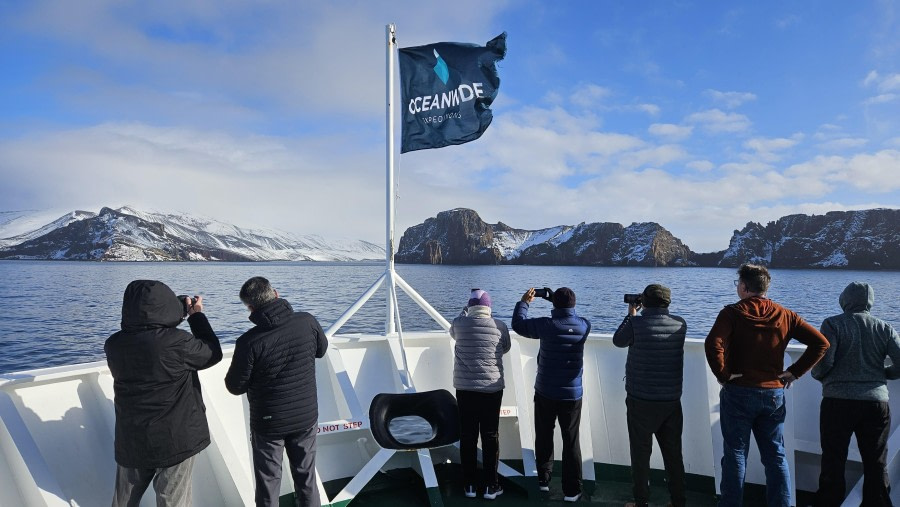
By late morning, we approached Cape Horn—the legendary sentinel at the southern tip of South America. Once dreaded by sailors, this rocky headland marks the point where the Atlantic and Pacific Oceans meet, and where countless ships have battled ferocious winds and towering waves. Though modern navigation has tamed much of its danger, the Horn still commands respect. As we passed it, cameras clicked and eyes lingered, each of us aware we were witnessing a place steeped in centuries of seafaring history.

Life onboard carried on with its usual rhythm, enriched by a series of engaging lectures. Pippa offered a glimpse into future adventures; the wide array of voyages Oceanwide Expeditions has to offer—each one a doorway to another remote corner of the planet. Lucia followed with an introduction to Argentina, painting a vivid picture of the country that awaited us just beyond the horizon.

After lunch, our guest lecturer Tyler transported us back south with a fascinating talk on NASA’s involvement in Antarctica—where space science meets Earth’s most extreme environment. His stories blurred the lines between polar exploration and cosmic discovery.

The afternoon brought a lighter mood with an Antarctica quiz, laughter echoing through the lounge as we tested what we had learned on this journey.

In the evening, we gathered for the captain’s farewell. Glasses were raised, gratitude shared, and a sense of camaraderie filled the room. One final dinner followed—a chance to savour not just the meal, but the moments and friendships forged along the way.

That night, as we returned to our cabins for the last time, the ship felt different—quieter, reflective. The voyage was ending, but its imprint would remain, carried with us long after we left the Drake Passage behind.

Day 12: Disembarkation Day, Ushuaia

Disembarkation Day, Ushuaia
Datum: 31.03.2026
Positie: 54°48.5 S, 068°17.9 W
Wind: Light air
Weer: Partly cloudy
Luchttemperatuur: +10

Our final morning arrived quietly as the ship had glided back into Ushuaia. Even before breakfast, suitcases lined the corridors outside our cabins, a quiet reminder that the voyage was ending. Breakfast was relaxed and comforting, filled with calm conversation and shared laughter as everyone revisited their most memorable moments of the journey.

Not long after, we went ashore where our luggage awaited us neatly arranged on the pier. Goodbyes echoed through the group as travellers embraced, shook hands, and offered heartfelt thanks to the crew who had cared for us so thoughtfully throughout the expedition.

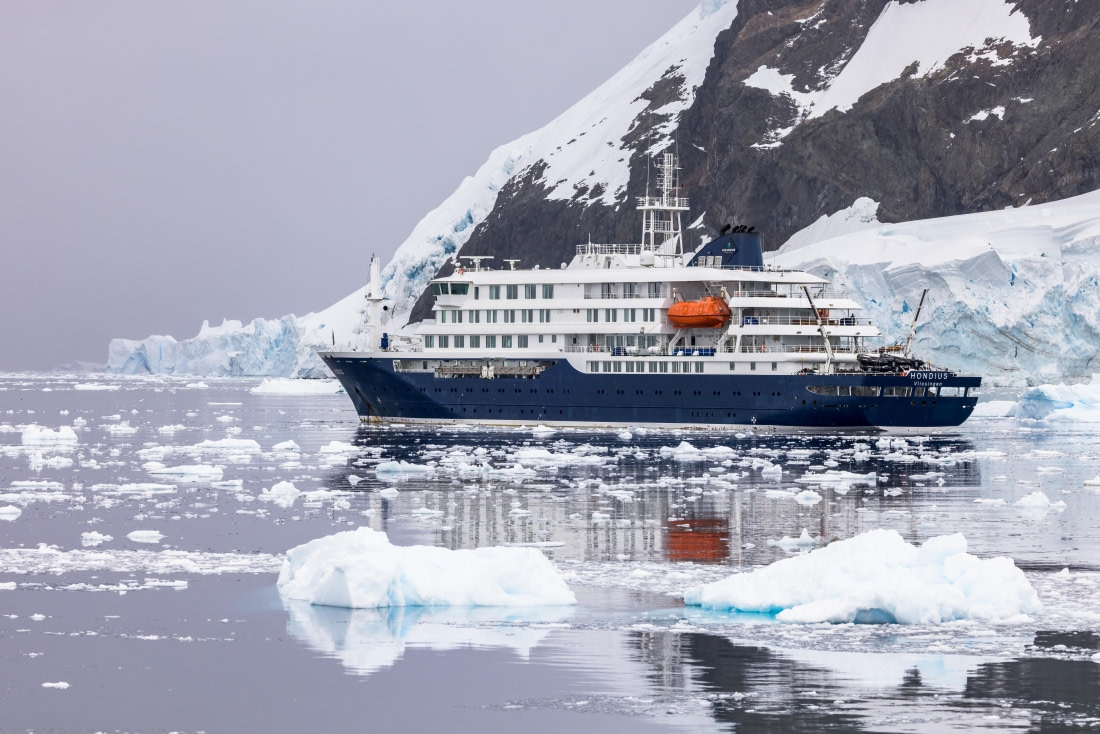
Casting one last look at our dear Hondius that had carried us across the Drake Passage and through extraordinary days among the ice, we stepped into the peaceful Ushuaia morning, taking the memories of Antarctica with us, for life.

Details

Reiscode: HDS31-26
Reisdatum: 20 mrt. - 31 mrt., 2026
Duur: 11 nachten
Schip: m/v Hondius
Inscheping: Ushuaia
Ontscheping: Ushuaia

Op deze reis geweest?

Aan boord van m/v Hondius

Hondius is 's werelds eerste geregistreerde Polar Class 6 schip en is van onder tot boven gebouwd voor expeditie cruises.

Meer over de m/v Hondius »
Loading