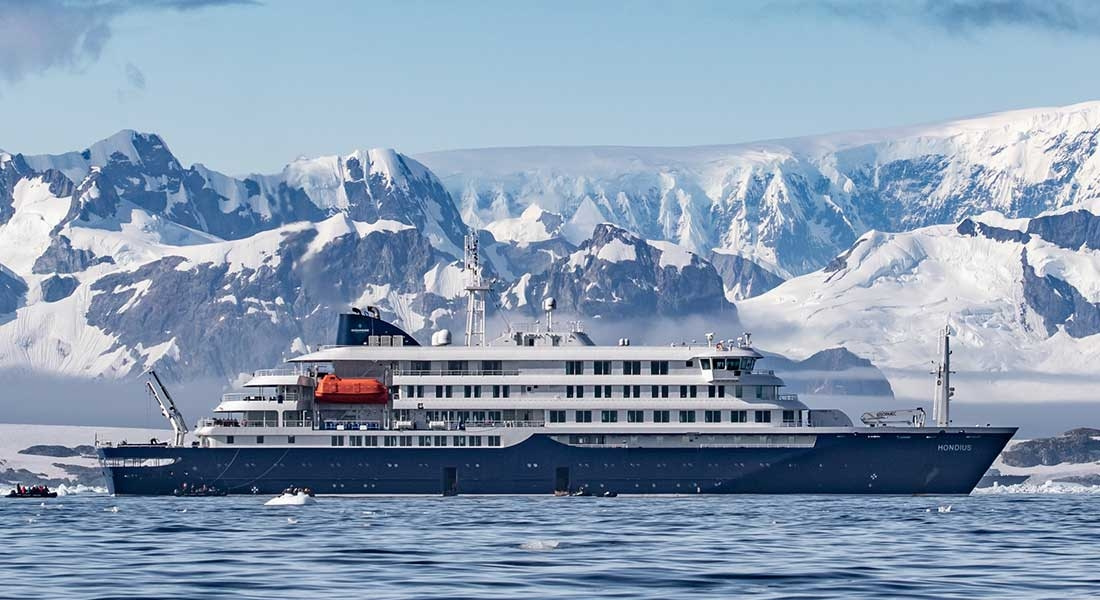
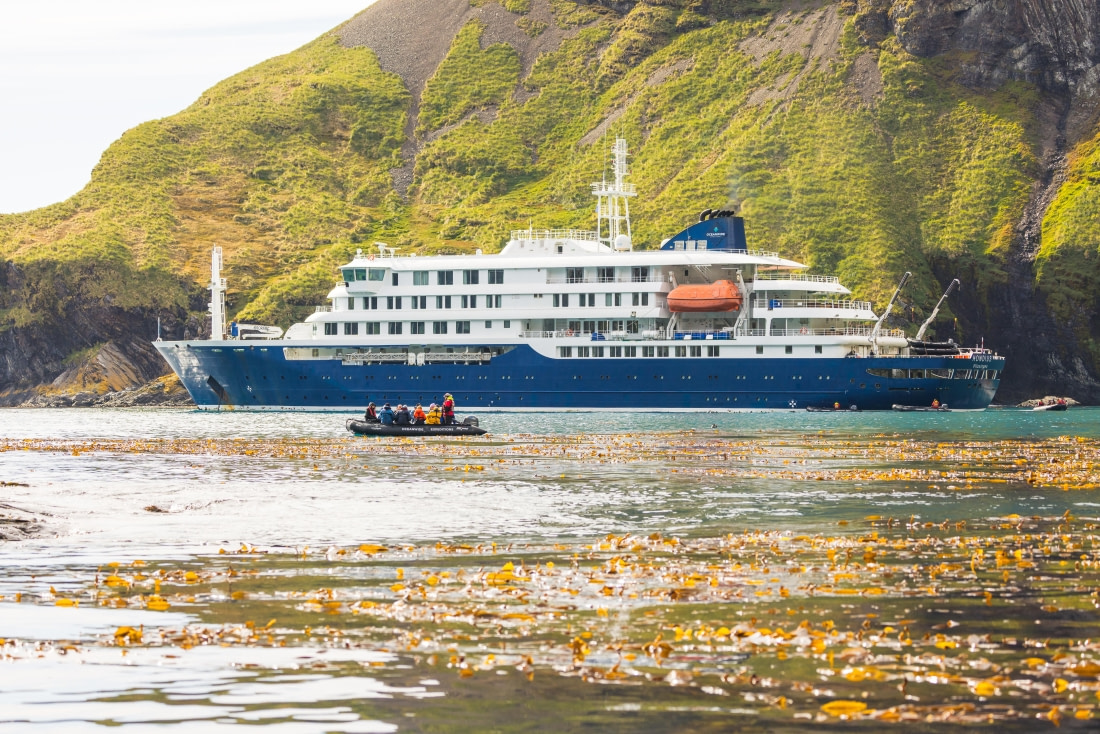
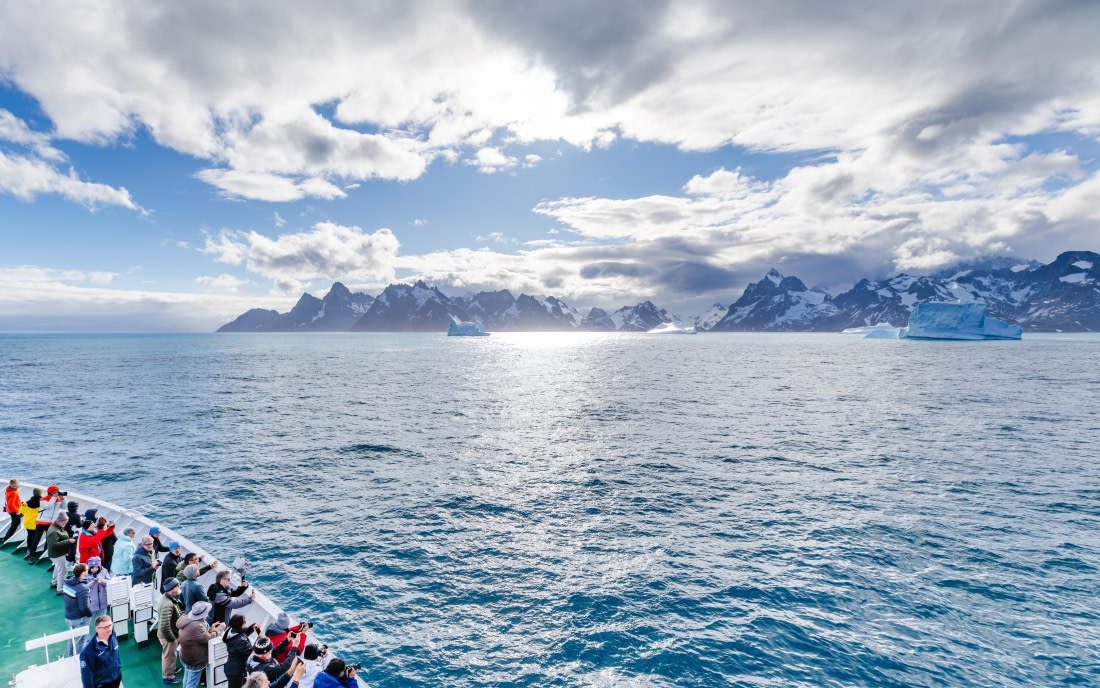
HDS10-26, trip log, Northeast Greenland – Solar Eclipse Explorer Voyage

by Oceanwide Expeditions

Fotogalerij

Logboek

Day 1: Embarkation Day

Embarkation Day
Datum: 02.08.2026
Positie: 78°13.8’N / 015°37.6’E
Wind: WE5
Weer: Partly cloudy
Luchttemperatuur: +10

Our Arctic adventure began beneath a blanket of cloudy skies, with a brisk breeze rippling the waters of Adventfjorden. Nestled between rugged mountains and the icy fjord, Longyearbyen—the world's northernmost town with a permanent population—served as our gateway to one of the planet's last great wildernesses. Once a bustling coal-mining settlement, it is now a vibrant centre for Arctic science, tourism, and exploration.

In the afternoon, we arrived and were transferred by Zodiac to MV Hondius, an exciting first taste of expedition life. The short journey across the fjord offered sweeping views of the surrounding mountains and glaciers, setting the tone for the adventure ahead. Once aboard, we settled into our cabins, explored the ship, and became acquainted with our home for the coming days as anticipation steadily grew.

With everyone safely on board, we gathered for the mandatory safety briefing. The bridge and hotel teams guided us through the essential procedures, ensuring we were well prepared before departing. Afterwards, our Expedition Leader introduced the voyage ahead, outlining the itinerary and offering a glimpse of the remarkable landscapes and wildlife awaiting us. The expedition team then introduced themselves, sharing the knowledge, experience, and enthusiasm they would bring to every landing, Zodiac cruise, and lecture throughout our journey.

As the evening progressed, the Hondius slipped quietly away from Longyearbyen and began her voyage north through Isfjorden. We lined the outer decks despite the cool breeze, watching the colourful buildings of the settlement gradually disappear against the dramatic mountain backdrop. Before long, signs of human habitation gave way to the immense Arctic wilderness—its towering peaks, ancient glaciers, and vast open spaces stretching towards the horizon. With the first miles behind us, the excitement on board was unmistakable. Our Arctic expedition had begun.

Day 2: Smeerenburg and Frambukta

Smeerenburg and Frambukta
Datum: 03.08.2026
Positie: 79°43.9’N / 011°04.1’E
Wind: SW1
Weer: Partly Cloudy
Luchttemperatuur: +9

What a way to begin our voyage aboard Hondius! With calm seas, clear skies, warm sunshine, and barely a breath of wind, the Arctic welcomed us in the best possible fashion. Our first day of exploration in the Northwest Spitsbergen National Park set the bar incredibly high—and left us wondering how the days ahead could possibly top it.

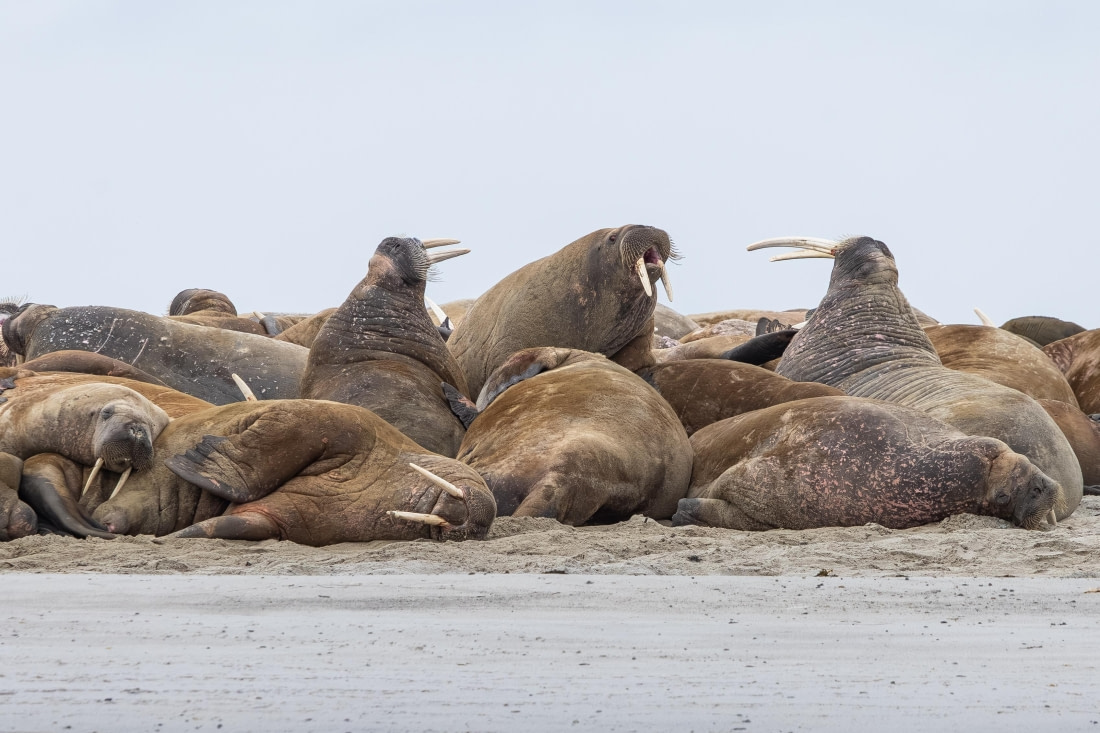
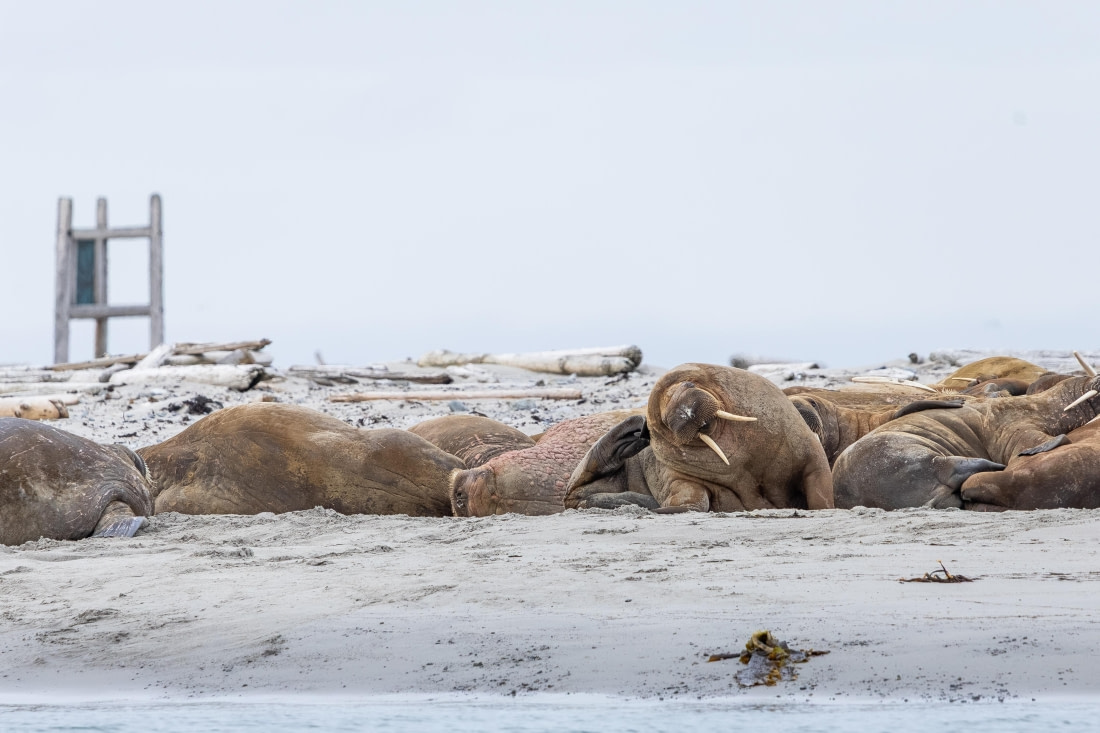
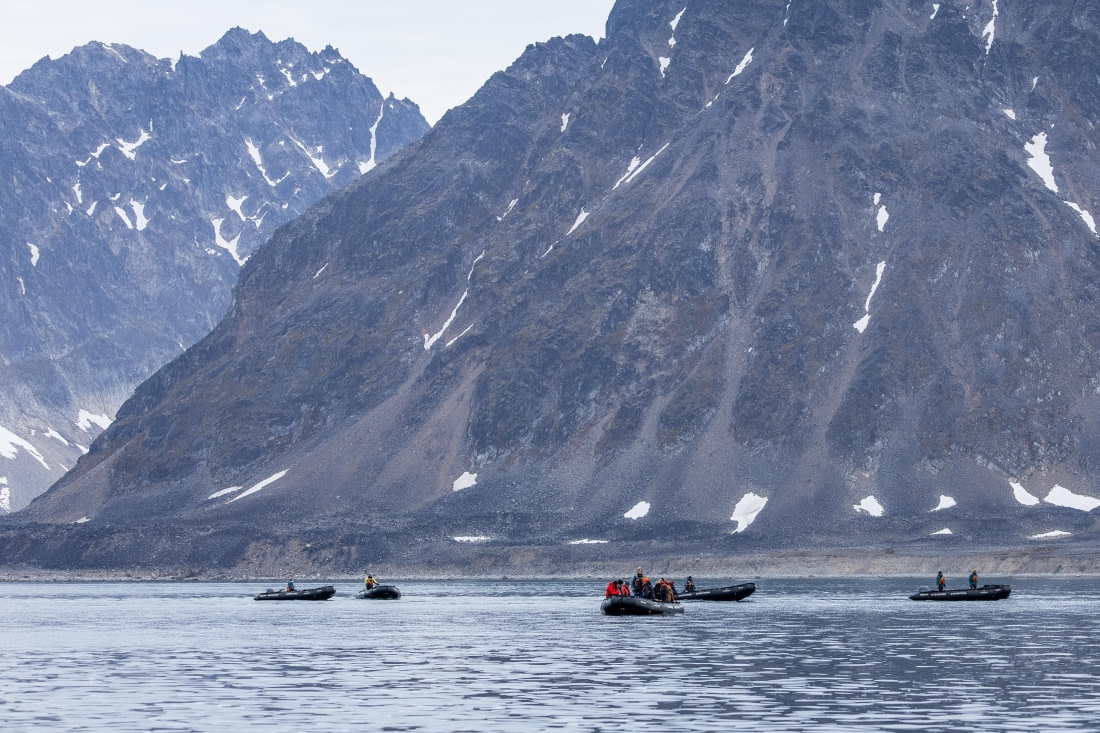
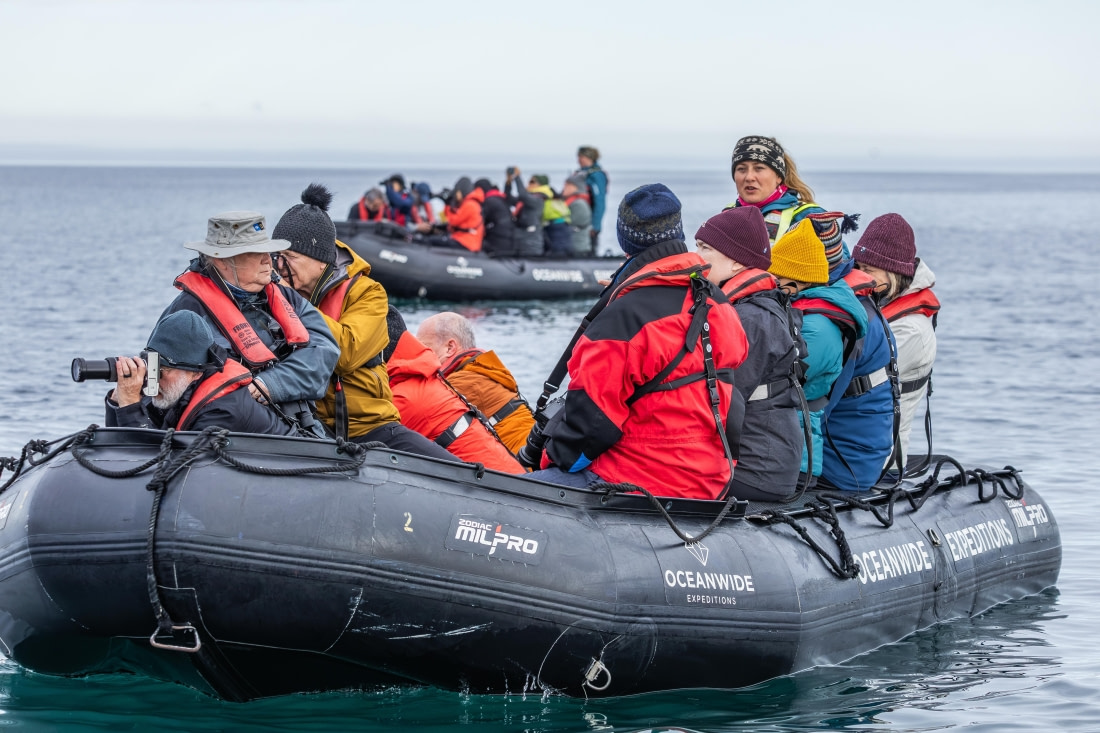
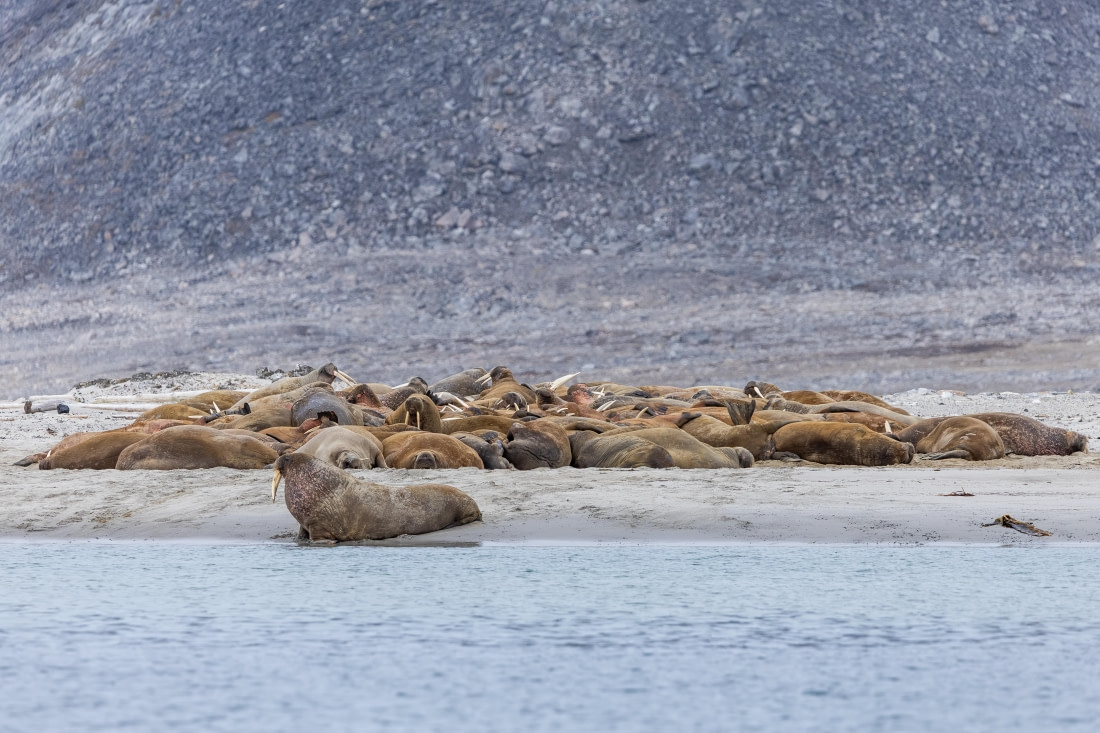
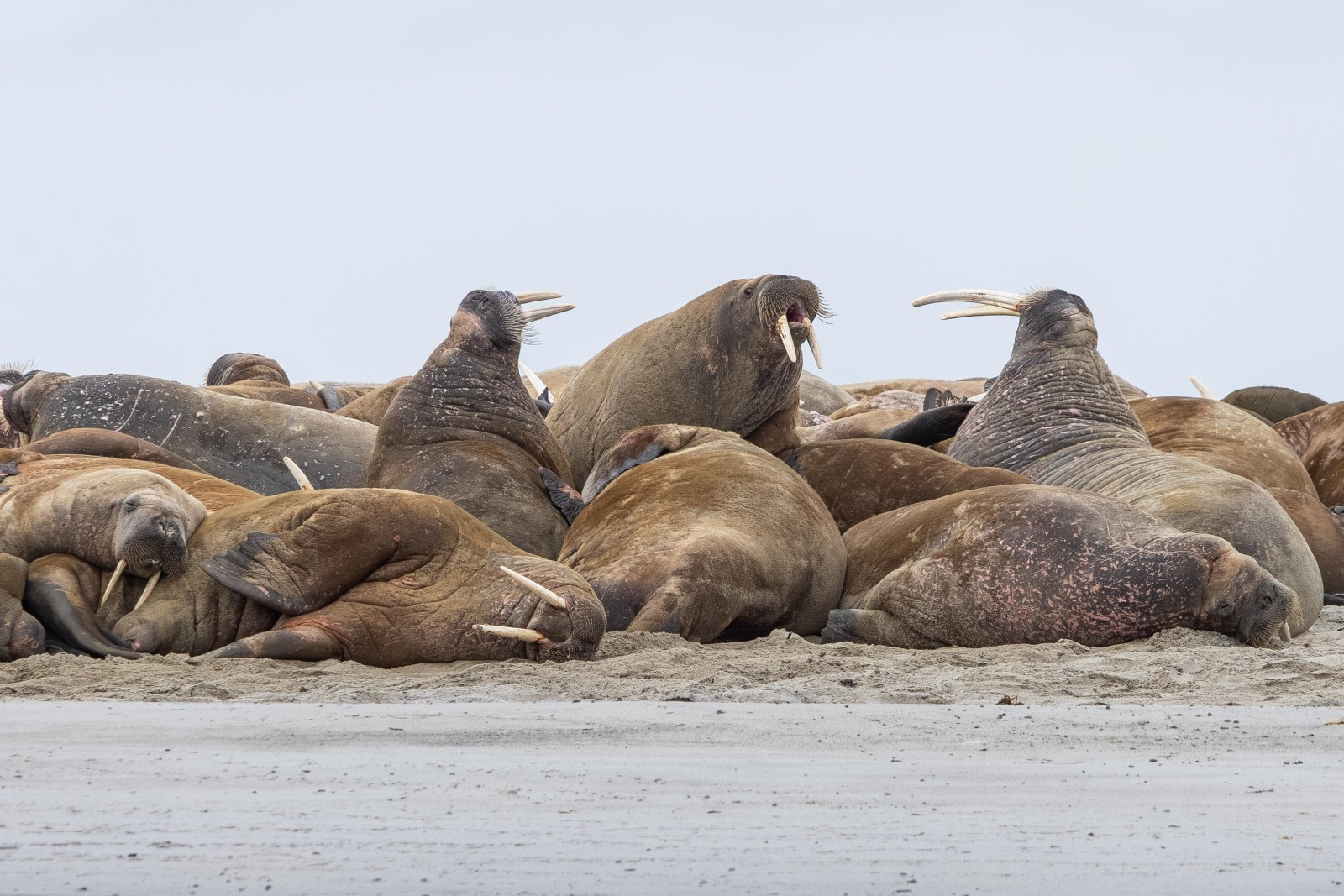
Our morning began with a Zodiac cruise around Smeerenburg, one of Svalbard's most fascinating historical sites. Today, the beaches are home to walruses, but four centuries ago this quiet corner of the Arctic echoed with the sounds of one of Europe's busiest whaling stations. Founded by the Dutch in the early 1600s, Smeerenburg—literally "Blubber Town"—was a seasonal settlement where bowhead whales were processed into valuable oil. Scattered remains of blubber ovens, graves, and building foundations are all that remain of this once-thriving outpost, serving as a reminder of both human ambition and the dramatic changes the Arctic has witnessed over the centuries.

The walruses, however, seemed blissfully unconcerned with history. Several animals were hauled out along the shoreline, occasionally lifting their heads to inspect our passing Zodiacs before settling back into a well-earned nap. These remarkable marine mammals can weigh more than 1,500 kilograms, and both males and females carry their impressive ivory tusks. Although their size might suggest otherwise, walruses are graceful underwater, using their sensitive whiskers to detect clams and other invertebrates buried in the seabed before sucking them from their shells with astonishing force.

As we continued exploring the area, we slipped into a quiet bay where a few Harbour seals rested close to the water's edge. Much smaller than walruses and often overlooked, harbour seals are perfectly adapted to life in the High Arctic. Their inquisitive faces and large dark eyes make them one of the Arctic's most endearing residents, although they remain ever watchful in a landscape where predators can appear at any moment.

After lunch we set off once again, this time for Frambukta, where a landing and Zodiac cruise offered a wonderful contrast to the morning's historical focus. Towering glacier ice dominated the landscape, its deep blues and brilliant whites glowing beneath the afternoon sun. Every so often, the silence was broken by a crack like distant thunder as the glacier reminded us that it is very much alive. We witnessed everything from small splashes as pieces of ice dropped into the sea to larger calving events that sent waves rolling across the fjord—a vivid demonstration of the constant reshaping of the Arctic landscape.

Wildlife continued to reward the patient observer. Some guests were fortunate enough to enjoy close views of Bearded seals, instantly recognisable by the long, elegant whiskers that give them their name. These whiskers are among the most sensitive of any marine mammal and allow the seals to locate prey on the seafloor with remarkable precision. Others watched Minke whales surface nearby, their sleek backs briefly breaking the mirror-like water before disappearing beneath the surface once more. In the calm conditions, every sighting felt especially intimate.

As we returned from the landing, the excitement reached another level. Chris, our Expedition Leader, announced over the radio that a Polar bear had been spotted swimming. At first, the bear blended perfectly into the shimmering landscape, and it took many of us a little while to pick it out. Then, slowly but surely, everyone found it. We watched in awe as it swam purposefully towards the shore before hauling itself onto land, allowing us to fully appreciate the immense size and effortless power of the Arctic's apex predator.

The story did not end there. During dinner, the keen-eyed observers among us continued following the bear from the ship and witnessed an extraordinary scene unfold. The bear stalked and successfully hunted a hauled-out seal—a dramatic reminder that survival in the Arctic is never easy. While nature can sometimes be harsh, moments like these offer a rare glimpse into the delicate balance of this remarkable ecosystem. Fortunately for the rest of us, one of the guests managed to capture the event on video, giving everyone on board the opportunity to witness this unforgettable encounter.

History, glaciers, sunshine, whales, seals, walruses, and a polar bear hunt—all on our very first day. It was an unforgettable introduction to the Arctic and a spectacular start to our journey from Svalbard towards Greenland. If today has taught us anything, it is to expect the unexpected in this wild and wonderful part of the world.

Day 3: Heading towards Greenland

Heading towards Greenland
Datum: 04.08.2026
Positie: 78°29.2’N / 002°28.6’E
Wind: E1
Weer: Overcast
Luchttemperatuur: +2

During the night, Hondius continued her steady journey westward across the Greenland Sea towards Greenland. The gentle motion of the ship, combined with yesterday's unforgettable wildlife encounters, made for a restful night on board. With a full sea day ahead, there was no wake-up call this morning—a welcome opportunity to enjoy a leisurely breakfast and ease into the day.

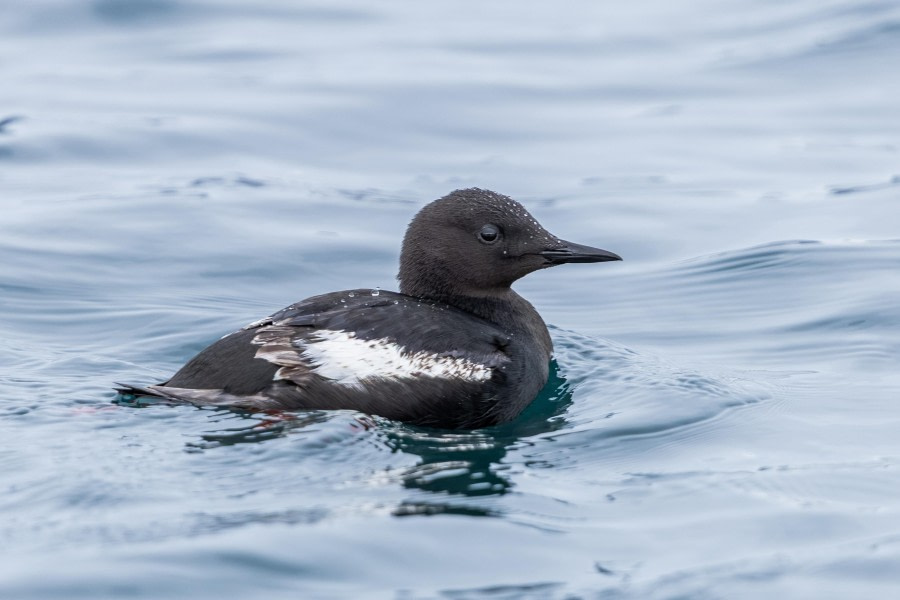
We awoke to calm seas, blue skies, and a welcome escort of northern fulmars and black-legged kittiwakes gliding effortlessly around the ship. Fulmars are true masters of ocean travel, capable of covering vast distances with hardly a wingbeat, while kittiwakes seemed to dance around the vessel, taking advantage of the updrafts created by our passage through the water.

The morning was dedicated to learning more about the Arctic we are travelling through. Tiphanie introduced us to the fascinating world of Arctic seals, exploring the different species we may encounter during our voyage and the remarkable adaptations that allow them to thrive in one of the planet's harshest environments. She was followed by Jakub, whose passion for ice is as impressive as the subject itself. His lecture revealed that Arctic ice is far more than frozen water—it is a dynamic and ever-changing landscape that shapes the lives of everything that depends upon it.

After lunch, Jonny and Karoline presented the exciting programme of all-day hikes that await us in Greenland. Their briefing gave everyone a taste of the adventures ahead, from longer treks across Arctic tundra to spectacular viewpoints overlooking Greenland's dramatic fjords and glaciers.

Later in the afternoon, Pierre completed our educational programme with an engaging lecture on the Arctic's most iconic resident: the polar bear. We learned about the challenges these magnificent predators face in a rapidly changing Arctic, their extraordinary adaptations for hunting on sea ice, and why every sighting is such a privilege.

Between lectures, there was plenty of time to simply enjoy being at sea. Some guests curled up with a good book, others caught up on sleep after yesterday's excitement, while many gathered on the bridge to watch the endless Arctic seascape drift by. These waters, where relatively warm Atlantic currents meet colder polar waters, are among the most productive marine environments in the High Arctic. The mixing of these water masses brings nutrients to the surface, supporting abundant plankton, fish, seabirds, seals, and the whales that we all hope to encounter during the days ahead.

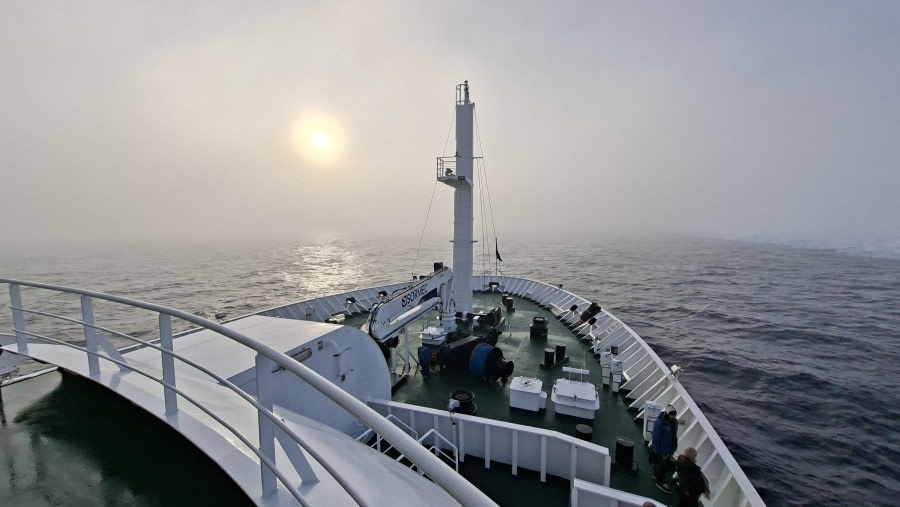
Nature provided another surprise during the afternoon when a delicate fogbow appeared off the starboard side of Hondius. At first glance it resembled a rainbow painted in shades of white. Unlike a traditional rainbow, which forms in raindrops, a fogbow is created when sunlight passes through countless tiny droplets suspended in fog. Because the droplets are so small, the colours become blurred by diffraction, leaving behind an elegant, ghostly white arc that is rarely seen and always appreciated by those lucky enough to witness it.

As the day drew to a close and dinner came to an end, another milestone of our voyage awaited us. Ahead lay our first sea ice of the expedition. Small floes began appearing around the ship, glowing softly in the evening light and hinting at the increasingly polar world we were entering. For many on board, seeing sea ice for the very first time was a memorable moment—an unmistakable reminder that Greenland, and all the adventures it promises, was now drawing ever closer.

Day 4: Approaching Greenland

Approaching Greenland
Datum: 05.08.2026
Positie: 75°35.6’N / 011°38.3’W
Wind: SW4
Weer: Overcast
Luchttemperatuur: +2

Today was our second full day at sea as we crossed from Svalbard to Greenland, a journey of about 450 nautical miles. As strange as it sounds, after reaching nearly 80° north in Svalbard, we were now heading south towards northern Greenland. Our destination is the Northeast Greenland National Park – the largest national park on Earth. It is an extraordinary place: remote, rarely visited, and home to the most spectacular Arctic wilderness.

The Greenland Sea reminded us that nature is always in charge. A steady swell of around three metres kept the ship rocking and rolling throughout the day. Fortunately, there was plenty to keep us entertained on board.

The morning began with a photography presentation by QB, who shared practical tips in her talk, Shooting the Frozen Wild. We learned how to get the best possible photos in the unique light and conditions of the polar regions.

As we were approaching Greenland, Koen gave a presentation, First Impressions of Greenland, introducing us to what we can expect during our expedition.

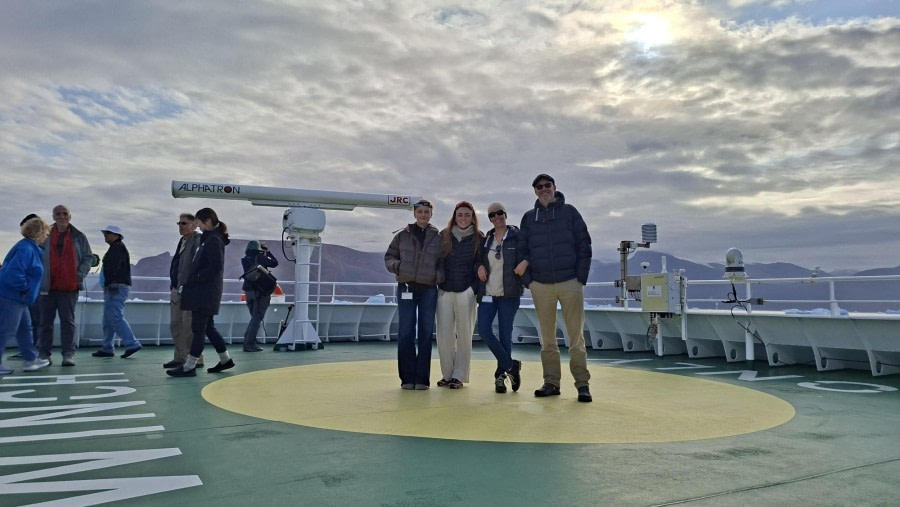
One of the great privileges of travelling with Oceanwide is the open bridge policy. Guests are welcome to visit the bridge at almost any time and enjoy what must be one of the world's best office views. After lunch, many of us took advantage of this opportunity, watching rain and storm clouds painting the Arctic sky.

The afternoon continued with more engaging lectures. Meike spoke about seabirds and their important role as indicators of marine pollution. Later, Karoline took us on a journey through the remarkable geology of Svalbard and Greenland. With her infectious enthusiasm and wonderful sense of humour, she made even the most complex rock formations easy to understand and enjoyable to learn about.

After dinner, two exciting announcements came over the speakers. First, Sasha invited us to hear the story of his extraordinary life as a keeper in the Ghost town of Pyramiden on Svalbard. Then came the news everyone had been waiting for—we had our very first views of Greenland!

Day 5: Ymer Ø, Kap Humbolt

Ymer Ø, Kap Humbolt
Datum: 06.08.2026
Positie: 73°06.1’N / 022°58.8’W
Wind: E3
Weer: Overcast
Luchttemperatuur: +7

Our first morning in Greenland began with Chris' familiar wake-up call, and before long everyone was peering eagerly through portholes to catch their first glimpse of the dramatic East Greenland coastline. Overnight, Hondius had sailed to the entrance of Kaiser Franz Joseph Fjord—the northernmost fjord system in Northeast Greenland National Park—and lay peacefully at anchor off Kap Humboldt on Ymer Ø.

Even breakfast couldn't distract us for long from the incredible scenery outside. Towering mountains rose straight from the sea, enormous icebergs drifted silently across the fjord, and everywhere we looked the landscape seemed to stretch endlessly into the Arctic wilderness. Excitement was high as we climbed into the Zodiacs for our very first Greenland landing.

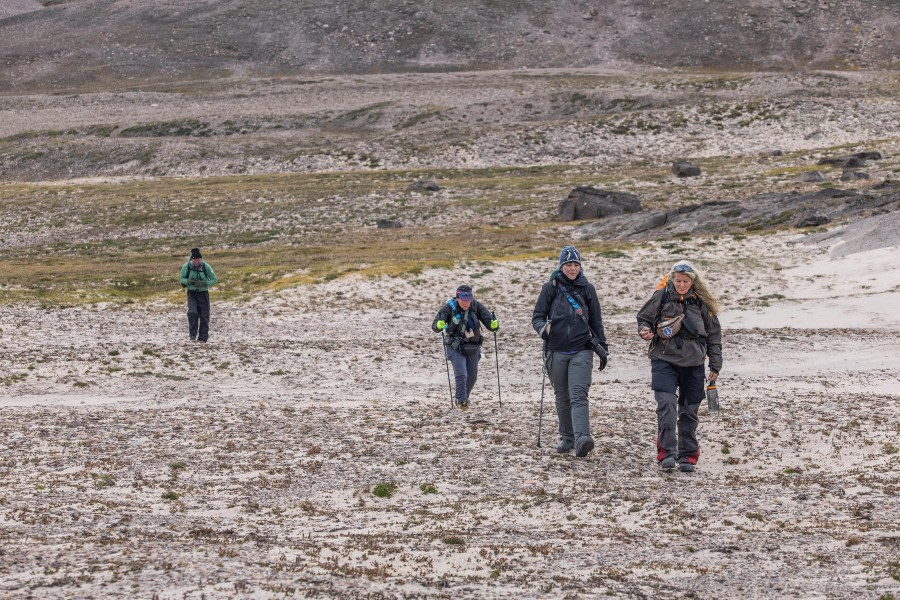
Once ashore, everyone headed off in different directions. The long hikers wasted no time and set off north across the tundra, enjoying bursts of sunshine whenever the clouds decided to cooperate. The medium and leisurely groups explored closer to the landing site, discovering a charming Norwegian hunting cabin from the 1920s and the remains of ancient Thule winter dwellings—a reminder that people had called this remote place home long before expedition ships ever arrived.

There was plenty to keep photographers busy. Musk ox skulls and scattered bones told stories of the Arctic's hardy wildlife, while brilliant patches of dwarf fireweed (Chamerion latifolium) added unexpected splashes of purple to the tundra. Every few steps seemed to reveal another perfect photo opportunity. As the morning went on, the sun finally won its battle with the clouds, and we lingered a little longer than planned, soaking up the views and listening to snow buntings singing around us. Just before we returned to the Zodiacs, a flock of pink-footed geese flew overhead, providing a fitting farewell to our first Greenland landing.

Back aboard Hondius, lunch came with spectacular panoramic views in every direction—and no one seemed to mind lingering over dessert while admiring the scenery.

The afternoon brought two very different adventures. The long hikers continued across Ymer Ø towards Kap Wijkander, where the wildlife stole the show. Several musk oxen appeared on the hillsides, and Arctic hares bounded across the tundra, keeping everyone reaching for their cameras. By the time the group reached the beautiful bay at the end of the hike, the wind had freshened considerably. The Zodiac ride back turned into a wonderfully splashy affair, with plenty of laughs as everyone arrived just a little wetter than when they had left.

For the medium and leisurely groups, however, the weather had other ideas. Building swell and stronger winds made an afternoon landing unsafe, so Plan B came into action. Instead of exploring ashore, we settled into the lounge with tea, coffee and freshly downloaded photographs, watching the waves dance outside while sharing stories from the morning's adventures.

As the day drew to a close, the recap sessions added another layer to everything we had seen. Meike and Hana introduced us to the remarkable world of Arctic plants, explaining how such colourful life thrived in such a challenging environment. Renno then brought the scattered bones we had found into context by telling the story of the East Greenland caribou, a unique animal that disappeared from these landscapes more than a century ago.

After another delicious dinner, tired legs and full camera cards sent everyone happily off to bed. Our Greenland adventure had only just begun, and already it had delivered breathtaking landscapes, fascinating history, wonderful wildlife, and just enough Arctic weather to remind us exactly where we were.

Day 6: Blomsterbugten & Renbugten

Blomsterbugten & Renbugten
Datum: 07.08.2026
Positie: 73°20.4’N / 025°20.1’W
Wind: VAR
Weer: Overcast
Luchttemperatuur: +7

This morning, we woke earlier than usual. Our Expedition leader Chris had told us yesterday that we were in for one of the most beautiful sights of the early morning, and it certainly did not disappoint. Some of us were so eager to see it that we ventured out on deck still wearing our pajamas!

Before us stood Teufelsschloss — Devil’s Castle, rising dramatically above Franz Josef Fjord. It was our first glimpse of a truly spectacular Greenlandic landscape, and sailing into the fjord was undoubtedly one of the best ways to wake up.

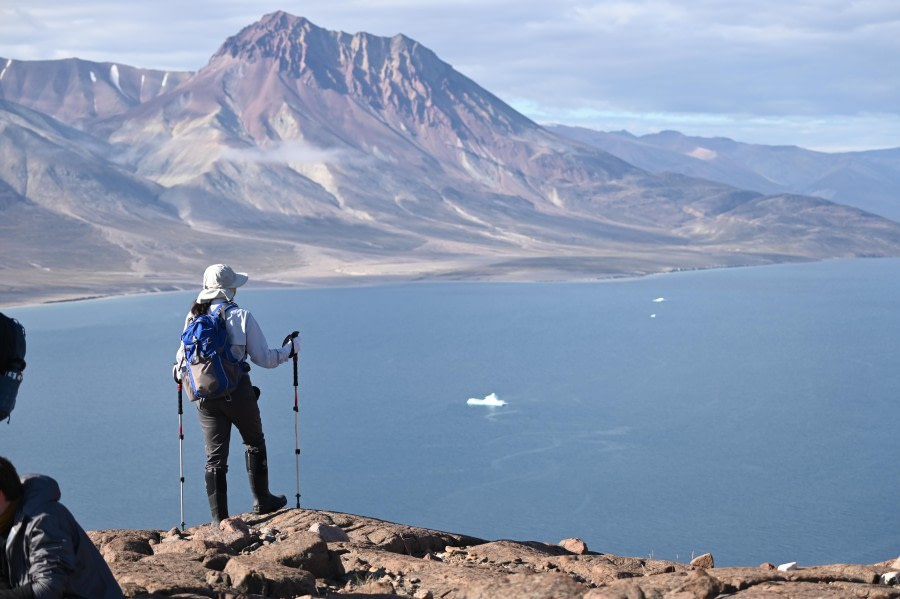
After breakfast, we headed out in the Zodiacs for our landing at Blomsterbugten. Most of us set off on foot to explore the hills of this beautiful valley. Flowers were blossoming everywhere, making it easy to understand how the area earned its name. From higher up, we were rewarded with wonderful views across the lake, framed by steep mountainsides.

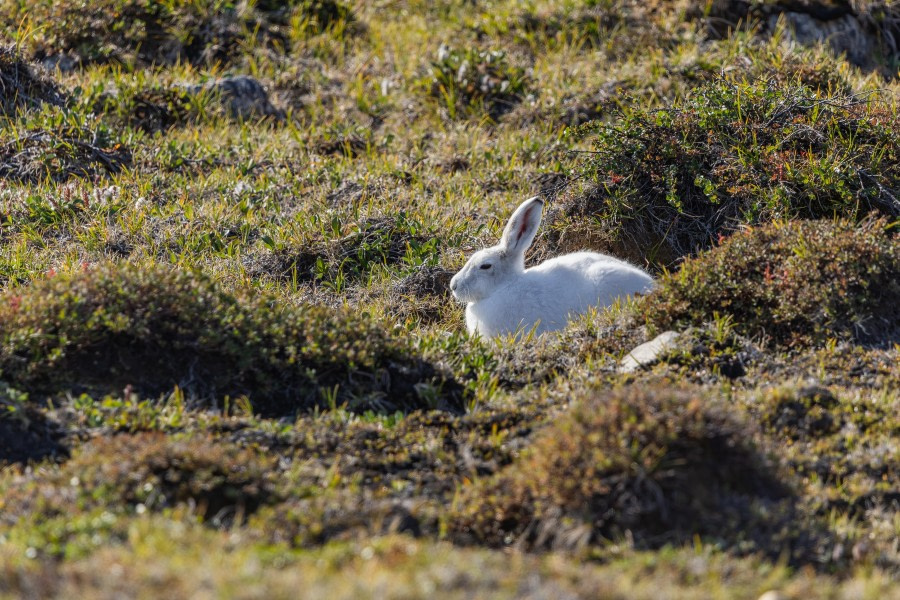
The landscape was quiet and incredibly peaceful. There was plenty of wildlife to keep us company, too. Arctic hares were hopping around the hills in such numbers that we quickly lost count. A few lucky hikers also had the chance to spot majestic musk oxen, grazing peacefully among the vegetation.

After lunch, some of us took the opportunity for a well-deserved nap, while others remained outside, unwilling to miss a moment of the ever-changing scenery. We continued our journey toward Renbugten, where the guides organized an unforgettable Zodiac cruise beneath towering, steep-sided mountains and among enormous icebergs.

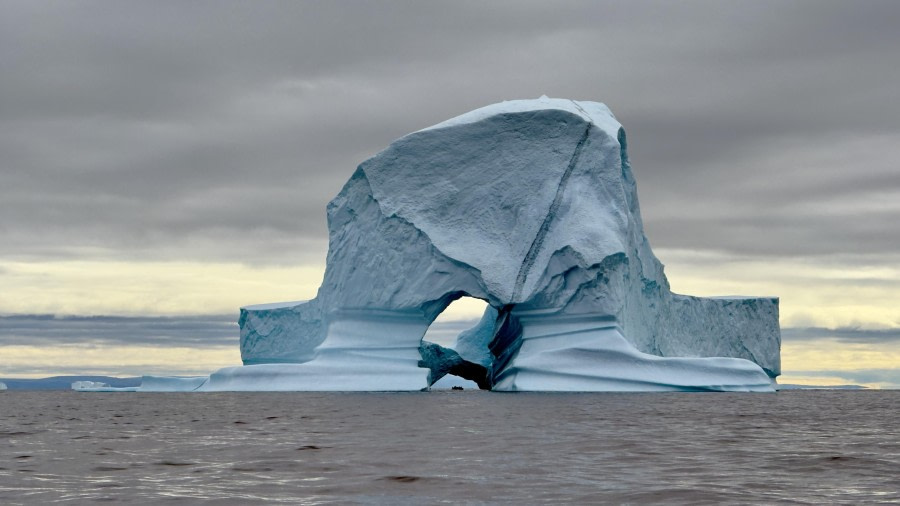
We all climbed into our Zodiacs and set off to explore. The icebergs seemed to take on endless shapes and shades of blue and white, each one different from the last. Some of us even ventured through the brash ice, weaving our way between the smaller pieces of floating ice. It was an experience in itself and made the landscape feel even more remote and wild.

For several hours, we simply cruised, explored and admired the scenery around us. Eventually, it was time to turn back toward Hondius — although, after such a spectacular afternoon, none of us found it easy to leave.

Back on board, we gathered for recap, where Chris introduced us to tomorrow’s program. We had barely had time to process everything we had experienced today before becoming excited about what was still to come.

Day 7: Segelsällskapets Fjord & Pohlen Dal

Segelsällskapets Fjord & Pohlen Dal
Datum: 08.08.2026
Positie: 72°25.4’N / 024°53.8’W
Wind: SW2
Weer: pARTLY Overcast
Luchttemperatuur: +7

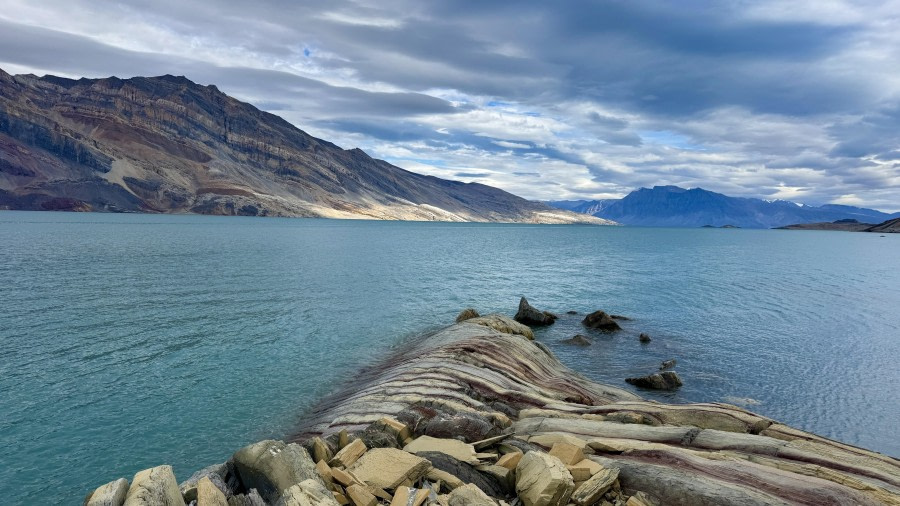
This morning we woke up in Segelsällskapets Fjord a stunning fjord famous for its brilliantly coloured and dramatic sedimentary rock formations.

The morning greeted us with calm waters, a sandy beach and towering mountain cliffs. With hikes in all different combinations and levels, there was something to suit everybody. Some of us headed up onto the mountain ridge, where a small freshwater lake revealed a beautiful family of Red-throated Divers with their two chicks.

It was one of those perfect Arctic moments: sitting quietly and taking in the view, with nothing but the sound of the river running through the valley, Snow Buntings flying overhead and the occasional call of a Ringed Plover.

Our hike took us across the tundra, through patches of dwarf birch and willow, with even a few mushrooms making an appearance. But, of course, the real stars of the morning were the extraordinary shapes and colours of the mountains and their ancient rocks.

Onboard geologist Karoline helped us understand the story written into these cliffs. The rocks here are around 950 million years old, with alternating layers of limestone, dolomite, mudrocks and quartzite creating the wonderfully vibrant, striped patterns along the fjord. Looking at the landscape afterwards, it was hard not to see the mountains a little differently.

Greenland’s flowers are also becoming increasingly familiar to us now, and our beloved Broad-leaved Fireweed seems to be everywhere, adding splashes of colour to the tundra.

Back onboard, the Galley Team and Chef Felix served up a varied lunch with a wonderful mix of flavours, giving us plenty of energy for another afternoon of exploring the fjord.

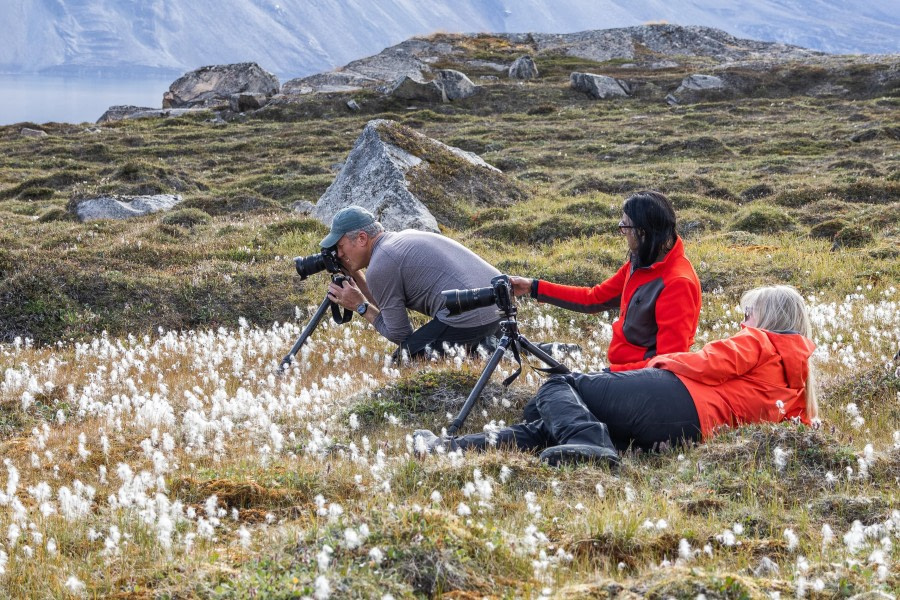
The afternoon brought full sunshine and breathtaking views as we hiked along the slopes. We encountered a few Arctic Hares, Long-tailed Skuas and fields of cotton grass swaying in the breeze. Others chose their own way to enjoy this beautiful place sitting quietly on the beach, leaning against a rock and simply taking in the landscape, or even sketching the mountains in front of them.

And then, for the brave among us, came the Polar Plunge.

The water temperature was a surprisingly mild 11°C although somehow it still felt absolutely freezing when we got in! A quick, refreshing dip, followed by a very happy zip back to the warmth of Hondius.

Another lovely dinner from the Galley Team rounded off the day.

As the evening light settled over the fjord and the mountains glowed in the late Greenland light, we returned to Hondius another extraordinary day in a voyage that still has so much more to discover

Day 8: Ittoqqortoormiit

Ittoqqortoormiit
Datum: 09.08.2026
Positie: 70°46.5’N / 020°47.2’W
Wind: No Wind
Weer: Overcast
Luchttemperatuur: +6

This morning, we were making our way towards Scoresby Sund, cruising southbound along the east coast of Greenland aboard Hondius. The weather was sunny, the sea was calm, and visibility was excellent. It was a beautiful morning to be at sea.

Shortly after Tyler’s lecture on the solar eclipse, we spotted several large blows in the distance. Hondius turned around so we could get a closer look, and what followed was a truly memorable wildlife encounter. We found a group of three fin whales, but among them was something even more spectacular: a Blue whale, the largest animal ever to have lived on our planet. We were incredibly lucky to have several good views of this enormous animal as it surfaced and disappeared again into the calm Greenlandic waters. Eventually, we had to turn back towards our planned route, but the sight of the blue whale will undoubtedly remain one of the highlights of the expedition.

Just before lunch, we had already entered Scoresby Sund and were approaching Ittoqqortoormiit, our landing destination for the afternoon. After lunch, we disembarked and set out to explore this beautiful Greenlandic settlement, known for its brightly coloured houses scattered across the landscape. As it was Sunday, many of the town’s attractions were closed, including the community centre, supermarket, two small souvenir shops, and even the church. This did not stop us from exploring. The settlement was remarkably quiet, with only a few people around.

Many locals were away visiting family in other settlements or on mainland Denmark, while others were spending the weekend out in the fjords.

We wandered through the settlement, visiting the football field, weather station and sled dogs, among other sights. With the weather so wonderfully calm and sunny, simply sitting at one of the viewpoints and looking out across the fjord, dotted with icebergs, was an experience in itself. The only convenience store that was open provided another charming glimpse into local life, as Greenlandic children arrived on bicycles to buy sweets and chips.

Around 5:30 pm, we all returned to Hondius and continued sailing deeper into Scoresby Sund towards our destination for the following day. As we sat down for dinner, the sun began to sink towards the horizon, bathing the fjord and its icebergs in beautiful golden light. For us, it was the first sunset we had seen since the beginning of the expedition. Although it lasted only briefly before the sun disappeared once more, it was a spectacular way to end an already unforgettable day.

Day 9: Sydkap

Sydkap
Datum: 10.08.2026
Positie: 71°11.3’N / 024°44.8’W
Wind: SW2
Weer: Partly Cloudy
Luchttemperatuur: +9

We woke up to another glorious, sunny, and warm day in East Greenland, with the MV Hondius arriving near Sydkap in Scoresby Sund, specifically at Nordostbugt.

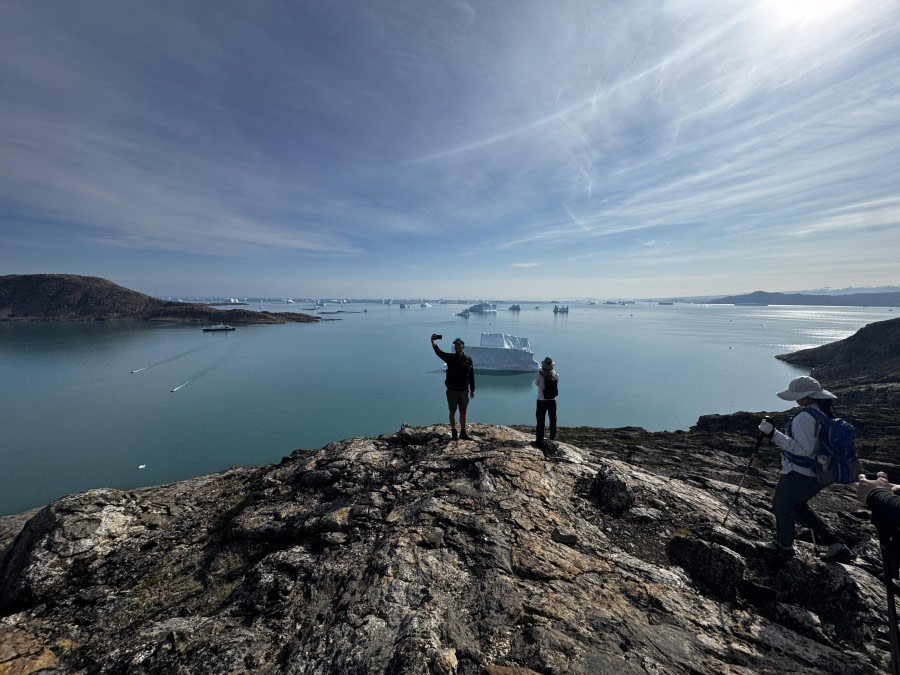
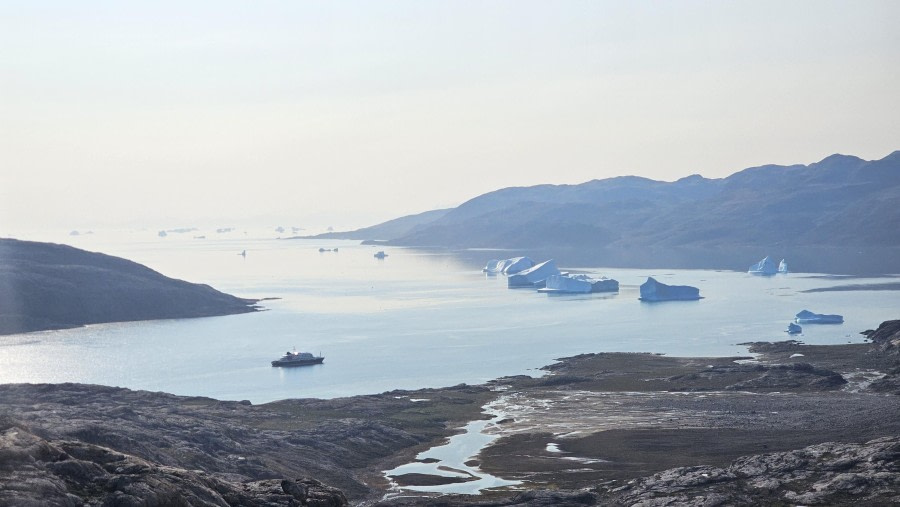
After a hearty breakfast, the landscape greeted us with gentle, hilly terrain blanketed in rich, vibrant tundra. Action began early for our adventurous spirits: our long hikers departed for an ambitious 8-hour trek across the rugged terrain. Shortly after, the rest of us headed ashore to soak in the serene beauty of the coast, taking our time to explore this remote wilderness. The morning set a lovely, leisurely tone as massive, sculptural icebergs drifted peacefully through the water around us.

Following a delicious lunch on board, the ship repositioned to a nearby small island called Immikkeerigajik. We stretched our legs with an afternoon climb up the rocky hills, wandering and exploring through fascinating canyon-like passages. The island offered incredible encounters with both nature and history. Some of us spotted a group of ptarmigans resting right on the boulders. Their phenomenal camouflage made them almost impossible to see until they moved! We also came across the stark, evocative remains of muskoxen skeletons and explored fascinating remnants of the ancient Thule culture, including their traditional winter houses built cleverly into the ground with stones designed to trap and keep warmth inside. After a thoroughly lovely stroll, we re-embarked and picked up our long hikers from their morning landing site, bringing everyone back together.

As evening settled, we gathered together in the lounge. Chris announced the exciting plans for the next day, followed by insightful recaps from our staff members. We wrapped up the day with dinner, feeling deeply grateful for another perfect day exploring the wonders of East Greenland.

Day 10: Milneland

Milneland
Datum: 11.08.2026
Positie: 71°02.5’N / 025°39.7’W
Wind: S1
Weer: Partly Cloudy
Luchttemperatuur: +8

Today’s expedition took us to Milneland, one of the islands within the vast Scoresby Sund fjord system of East Greenland. Scoresby Sund, known in Greenlandic as Kangertittivaq, extends roughly 350 kilometres inland and is one of the largest fjord systems in the world. Milneland itself is part of a landscape shaped by glaciers, with local ice caps and mountain terrain rising around the fjords.

We began with a morning landing on the shore. In the short Arctic summer, the coastline was surprisingly alive with colour. Broad-leaved fireweed grew across the shallow tidal flats, its pink flowers standing out against the muted greens and browns of the tundra. Beyond the shoreline, snow-covered mountains rose above the fjord, their slopes showing the marks of long-term glacial erosion.

Following the coast, we came across a narrow stream carrying clear meltwater from the surrounding ice and snow. It crossed the shore before reaching the sea, creating a small but active connection between the mountains and the fjord. Around it, Arctic skuas moved overhead, while snow buntings searched among the rocks and vegetation. Bumblebees were also busy among the flowers, a reminder that even in this high-latitude environment, the brief summer brings a burst of activity.

In the afternoon, we headed out by Zodiac into the fjord. The ice became increasingly prominent as we moved among the floating bergs. Each one had its own structure: smooth blue walls, layered folds, sharp ridges and occasional dark openings where meltwater and seawater had worked their way into the ice. The blue colour comes from the way dense glacier ice absorbs longer wavelengths of light, allowing more blue light to be scattered back to the eye.

Milne Land and the surrounding Scoresby Sund landscape also carry a long geological and glacial history. The region contains ancient crystalline rocks as well as younger volcanic and sedimentary formations, while glaciers have repeatedly advanced and retreated through the fjord system. The landscape we see today is therefore the result of both geological processes and repeated glacial activity.

The most memorable moment came when a glacier began to calve. A fracture travelled through the ice before a large section broke away with a deep, echoing roar. The event was brief, but its scale was unmistakable. Around the newly disturbed water, glaucous gulls remained on the floating ice, while a ringed seal rested on a nearby floe, seemingly undisturbed by the movement around it.

By the end of the day, the contrast was striking: flowers and bumblebees along the shore, birds moving through the clear Arctic air, seals resting on the ice, and glaciers slowly shaping the landscape around them. Milneland offered a close view of an Arctic environment where summer brings a short period of colour and activity, while the glaciers and mountains continue the much slower work of shaping the coast.

Day 11: Røde Ø & the Total Eclipse

Røde Ø & the Total Eclipse
Datum: 12.08.2026
Positie: 70°51.1’N / 027°45.8’W
Wind: SW1
Weer: Clear
Luchttemperatuur: +8

We enjoyed a slightly later start this morning as we prepared for the main event of the day: a total solar eclipse over the wild landscapes of Northeast Greenland. Excitement was palpable throughout Hondius as the bridge and expedition teams studied the latest weather forecasts, debated our options, and carefully considered where we should position the ship for the afternoon.

After a wonderful breakfast, the expedition team invited us outside for a morning Zodiac cruise. Under brilliant sunshine, we climbed aboard and set off among the enormous icebergs of Rødefjord in the Scoresby Sound. For a couple of hours, we explored this spectacular frozen landscape, weaving between towering walls of blue and white ice.

Our luck was in almost immediately. A radio call came through announcing that musk ox had been spotted nearby. We headed towards the shoreline and approached quietly, careful not to disturb them. Our patience was richly rewarded. Several magnificent adult musk ox appeared, accompanied by a number of calves. We spent a long time watching them as they slowly ambled across the tundra, stopping to graze on the sparse vegetation.

It was an incredibly special encounter. We were able to approach remarkably close without disturbing the animals, allowing us to quietly observe these iconic Arctic survivors in their natural environment. Eventually, we continued our exploration, once again surrounded by the spectacular icebergs scattered throughout the fjord.

The sunshine and unusually warm conditions made for a wonderful morning on the water. It was almost a moment of calm before the great celestial event that awaited us. All too soon, it was time to return to Hondius for lunch.

After a hearty meal, the expedition changed pace. Cameras, tripods and an array of specialist equipment appeared across the decks as everyone prepared to record the eclipse. The anticipation was growing by the minute. All eyes were on the weather, and all attention was focused on the clock. At 4:33 pm, the Moon would begin its passage across the face of the Sun.

Hondius continued to manoeuvre through the fjord, searching for the perfect position and, most importantly, a clear view of the sky for the entire two-hour event. As the crucial moment approached, the ship settled into position. Everyone found their chosen vantage point on the decks, cameras were prepared, eclipse glasses were donned, and we waited.

We were exactly at 70°53.5’N / 027°47.3’W when it began. Through our eclipse glasses, we watched as the Moon slowly started to take a bite out of the Sun. Across the ship, people watched in quiet fascination. Some carefully recorded the changing light and landscape, while others simply stood and marvelled at the extraordinary sight unfolding above us.

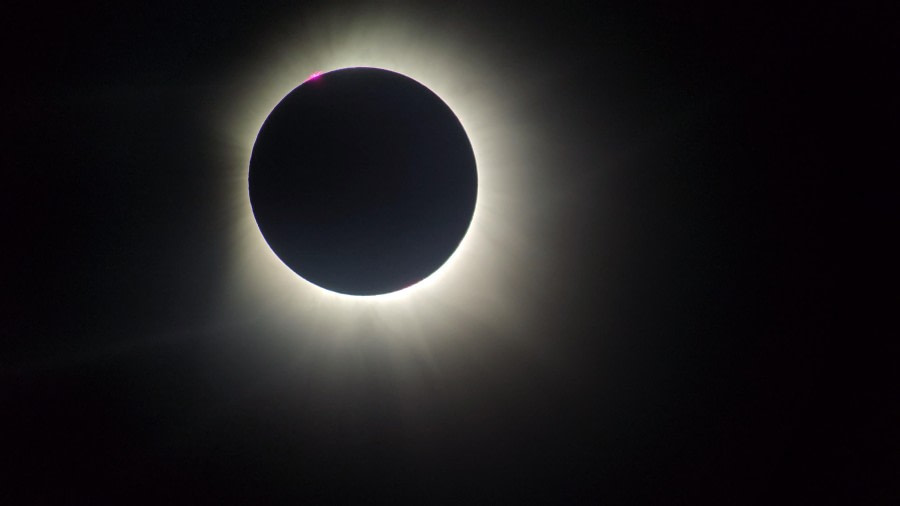
As totality approached, the atmosphere became increasingly tense. This year, we would have just two minutes of totality, and photographers across the ship were poised for the shot they had been waiting for: the solar corona.

And then, suddenly, daylight disappeared.

An eerie twilight descended over Scoresby Sound, with the delicate, ghostly light of the corona surrounding the black disc of the Moon. For those precious moments, the Arctic landscape seemed to fall completely silent. Then came the first glimpse of the diamond ring.

Glasses came off and shutters began firing. Across the decks there was a sudden flurry of activity as everyone tried to capture the fleeting spectacle. Two minutes had never passed so quickly. Almost as soon as totality had begun, it was over, and brilliant sunlight began to return to the fjord.

There was an almost collective sigh of relief across Hondius. We had done it. The clouds had stayed away, and we had been fortunate enough to witness the entire eclipse from beginning to end.

As the Moon continued its journey away from the Sun, the excitement slowly gave way to celebration. Everyone began making their way towards the lounge, ready to raise a glass with friends, share photographs and stories, and celebrate an unforgettable day in Northeast Greenland.

Among the icebergs and immense wilderness of Scoresby Sound, we had experienced something truly extraordinary: a morning spent alongside musk ox, an afternoon exploring one of the Arctic's greatest landscapes, and finally, a total solar eclipse beneath the Greenlandic sky.

A day that will remain etched in our expedition memories for many years to come.
Day 12: Makkorpalaap Nuua

Makkorpalaap Nuua
Datum: 13.08.2026
Positie: 70°55.4’N / 025°16.7’W
Wind: E4
Weer: Overcast
Luchttemperatuur: +7

Our final morning in East Greenland began at Bregne Pyat, where the long hikers headed ashore at 9:30 am after breakfast, ready to make the most of our final day in Greenland. Meanwhile, the rest of us climbed aboard the Zodiacs and set out among the spectacular icebergs, exploring the coastline and keeping watch for wildlife.

There was a wonderful atmosphere across the ship. The excitement of yesterday’s total solar eclipse was still very much with us, and there was a shared sense that we had been incredibly fortunate to experience such extraordinary moments together in one of the most remote corners of the Arctic.

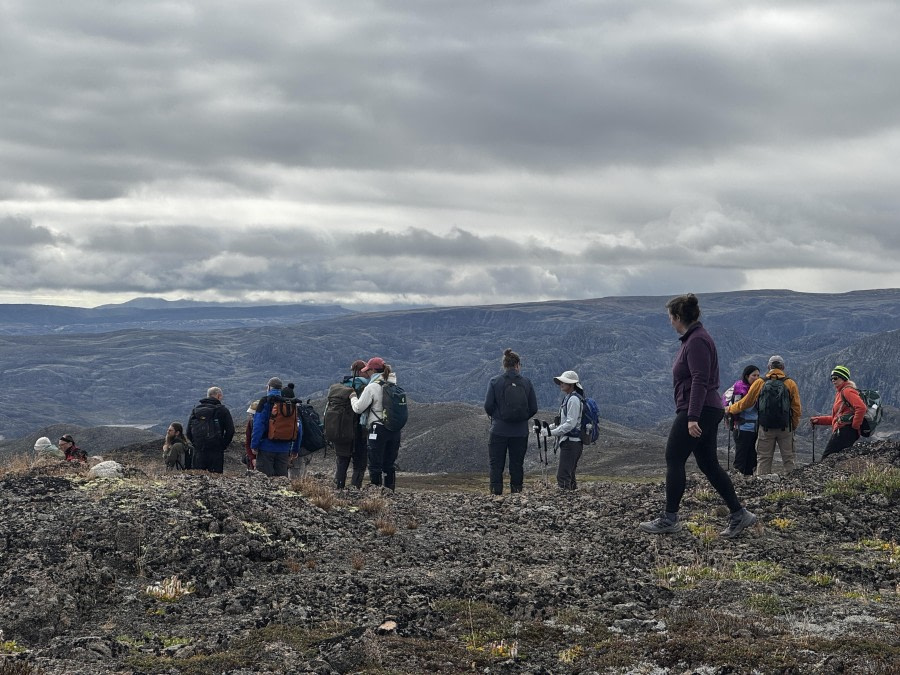
For the long hikers, the final morning became a true expedition. Their route covered almost 16 kilometres with around 600 metres of ascent, following an exploratory route that Oceanwide had never taken before. This was adventure in its purest form: heading into unfamiliar terrain, following the landscape rather than a well-trodden path, and never quite knowing what the day might bring. The Greenland wilderness rewarded their efforts with a wonderful selection of wildlife encounters. Ptarmigan were spotted along the route, along with a hare, geese and even butterflies. Against the immense scale and remoteness of the landscape, every encounter seemed all the more remarkable.

After lunch, the exploration continued. The long hikers pressed on with their route, while the short and medium hiking groups headed out around Makkorpalaad Nuua. They explored the beautiful surroundings and spent time enjoying the stunning beach, making the most of our final opportunity to set foot on the Greenlandic coast.

And then, almost before we were ready for it, it was time to leave.

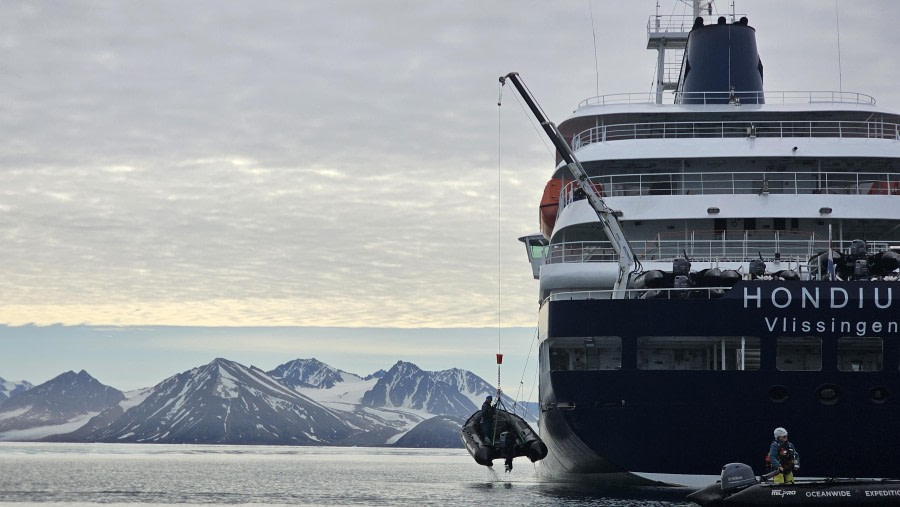
One by one, the Zodiacs returned to Hondius. Equipment was gathered, final photographs were taken and the last passengers climbed aboard. We watched as the final Zodiac was lifted from the water, marking the end of our last landing in Greenland.

There was a definite sense of sadness.

After all the places we had explored, the wildlife we had encountered and the adventures we had shared, it was difficult to believe that our time on the east coast was coming to an end. Greenland had become more than simply a destination. It had been the backdrop to an extraordinary expedition filled with discovery, challenge and moments none of us were likely to forget.

But alongside the sadness was an enormous sense of achievement. We had come to Greenland to explore, and explore we certainly had.

As Hondius finally turned towards out towards the open ocean, we gathered for our final expedition recap. QB shared some of her incredible imagery from yesterday’s total solar eclipse, transporting us back to that extraordinary afternoon and reminding us once again just how remarkable the experience had been.

Around the tables, stories were shared, photographs compared and favourite moments relived. There was plenty of laughter, some quiet reflection, and perhaps a growing realisation that somewhere along the way, this group of travellers had become part of something rather special.

Day 13: At sea to Iceland

At sea to Iceland
Datum: 14.08.2026
Positie: 69°09.2’N / 020°56.2’W
Wind: NNW4
Weer: Clear
Luchttemperatuur: +8

Our final day aboard Hondius began with the gentle, persistent rhythm of the Denmark Strait. After the landscapes of Svalbard and the vast fjords of East Greenland, there was something wonderfully humbling about waking to nothing but open ocean stretching in every direction. The swell was certainly feelable beneath our feet, but rather than unsettling, it seemed to soothe the ship into a steady oceanic rhythm as we continued south-east towards Iceland.

The Denmark Strait may appear as simply a stretch of blue on a map, but beneath us an extraordinary oceanographic drama was unfolding. The strait separates Greenland from Iceland and forms an important gateway between Arctic and Atlantic waters. Deep below the surface, cold, dense water tumbles over the Greenland-Iceland Rise in what is considered the world's largest waterfall by volume—an invisible cascade carrying millions of cubic metres of water every second into the deep Atlantic.

Our sea day was anything but empty. The lecture programme kept us busy with fascinating talks on humpback whales, eclipses, the hidden world beneath the ocean, and the far-flung destinations reached by Oceanwide expeditions. And, as if the lectures were not enough, the sea itself provided a spectacular final chapter.

Wildlife appeared throughout the day: fin whales slicing through the swell, humpbacks surfacing with their characteristic blows, and even a blue whale. A lively school of white-beaked dolphins joined the spectacle, racing through the water, while fulmars and gannets wheeled overhead, perfectly at home in the windswept North Atlantic.

Then came our final evening.

At the Captain's Farewell, glasses were raised and stories exchanged as we said goodbye to the crew and expedition staff who had guided us through this remarkable journey. One last beautifully plated dinner was served, and for a moment it was easy to forget that tomorrow we would step ashore in Akureyri.

From Svalbard, across the wild coast of East Greenland and now through the Denmark Strait, the voyage had carried us through some of the most remote landscapes and extraordinary waters on Earth.

Tonight, Hondius felt less like a ship—and more like a home we were not quite ready to leave.

Day 14: Disembarkation | Akureyri

Disembarkation | Akureyri
Datum: 15.08.2026
Positie: 65°68.6’N / 018°07.5’W
Wind: S1
Weer: Partly Clear
Luchttemperatuur: +6

After an unforgettable journey through the Arctic, today marked the end of our adventure aboard M/V Hondius. It was a bittersweet morning as we enjoyed one last hearty breakfast together, sharing stories, favourite moments and plenty of laughs from the past two weeks exploring Svalbard and North east Greenland.

Before long, it was time to gather ourselves and prepare to leave the ship that had been our home throughout the voyage. As we stepped ashore in Akureyri, there was a real mix of emotions. While everyone was looking forward to the next stage of their travels, it was also hard to say goodbye to the wonderful crew, Expedition Team and new friends who had become our Oceanwide family.

From towering icebergs and dramatic landscapes to the incredible solar eclipse and unforgettable Zodiac cruises, we've shared experiences that will stay with us for years to come. Together we've explored one of the most remote and spectacular places on Earth, creating memories that are sure to be retold long after we've returned home.
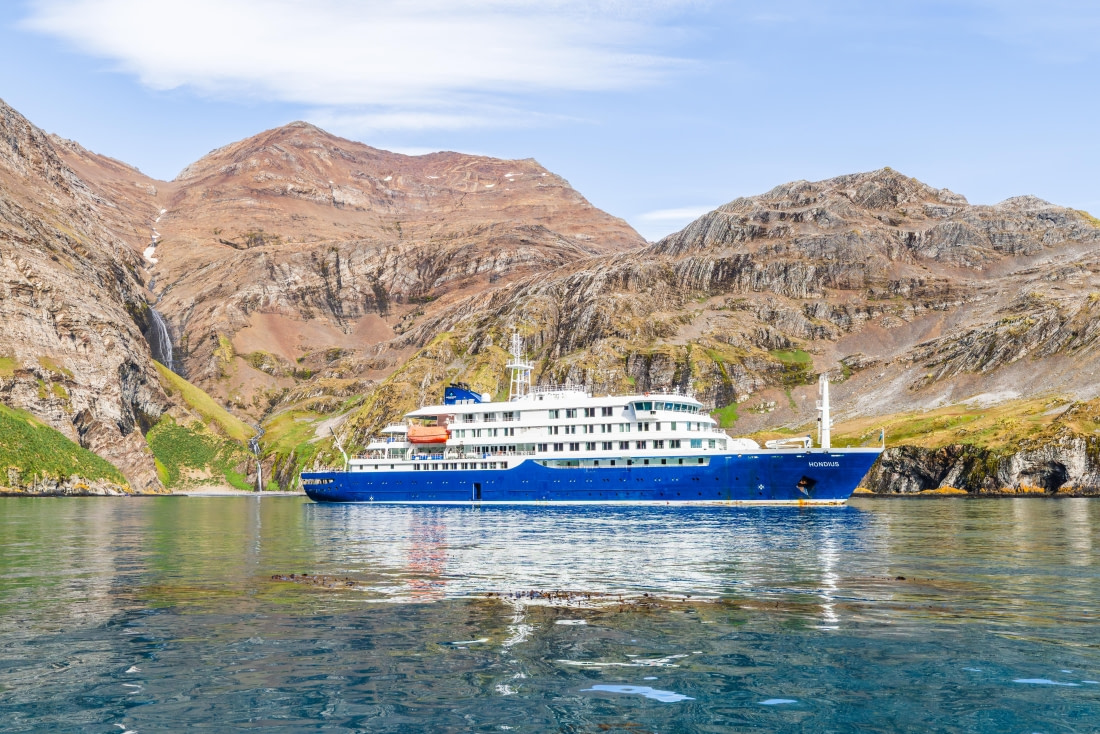
Although our expedition has come to an end, the memories, photographs and friendships made along the way will remain. We leave Hondius with full hearts, incredible stories to share and a deeper appreciation for the beauty and fragility of the Arctic. Safe travels, and we hope our paths cross again on another adventure.
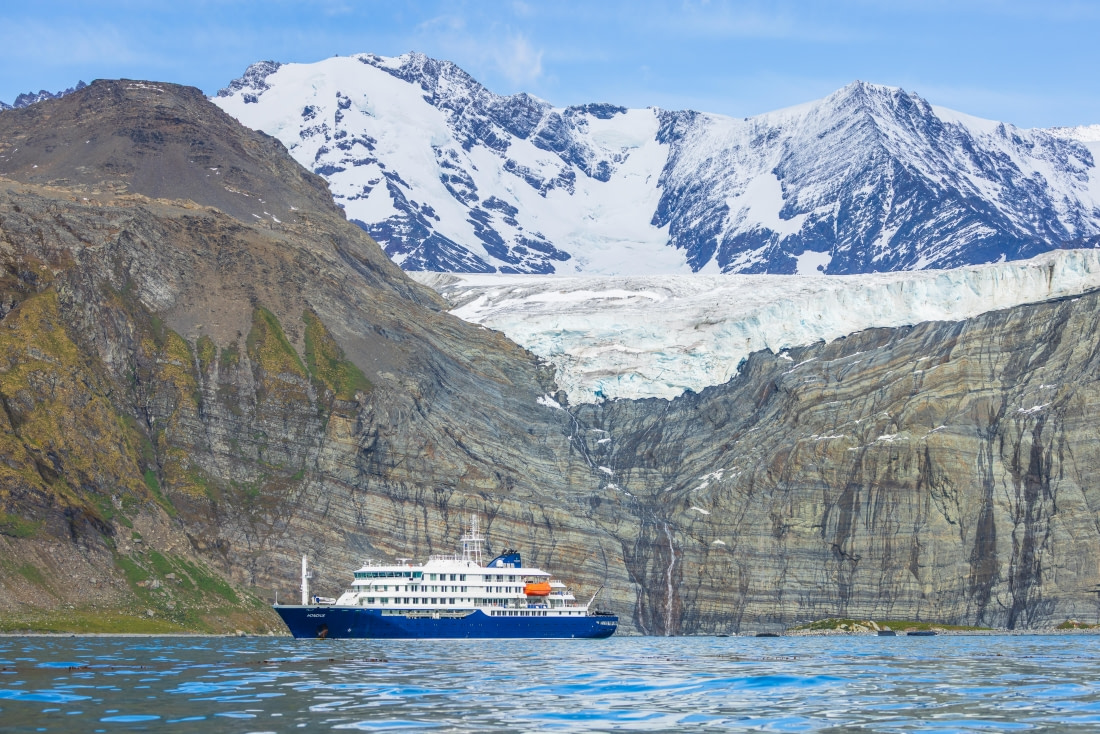
Total distance covered during our trip: 1891.2 nM (3502km\ 2176 miles)

Northernmost point: 79°43.5'N, 10°59′42’E

On behalf of Oceanwide Expeditions, Captain Dennis Rada, Expedition Leader Chris Long, Hotel Manager Albert Don and the entire crew and expedition team of the M/V Hondius, it was our great pleasure to travel with you.
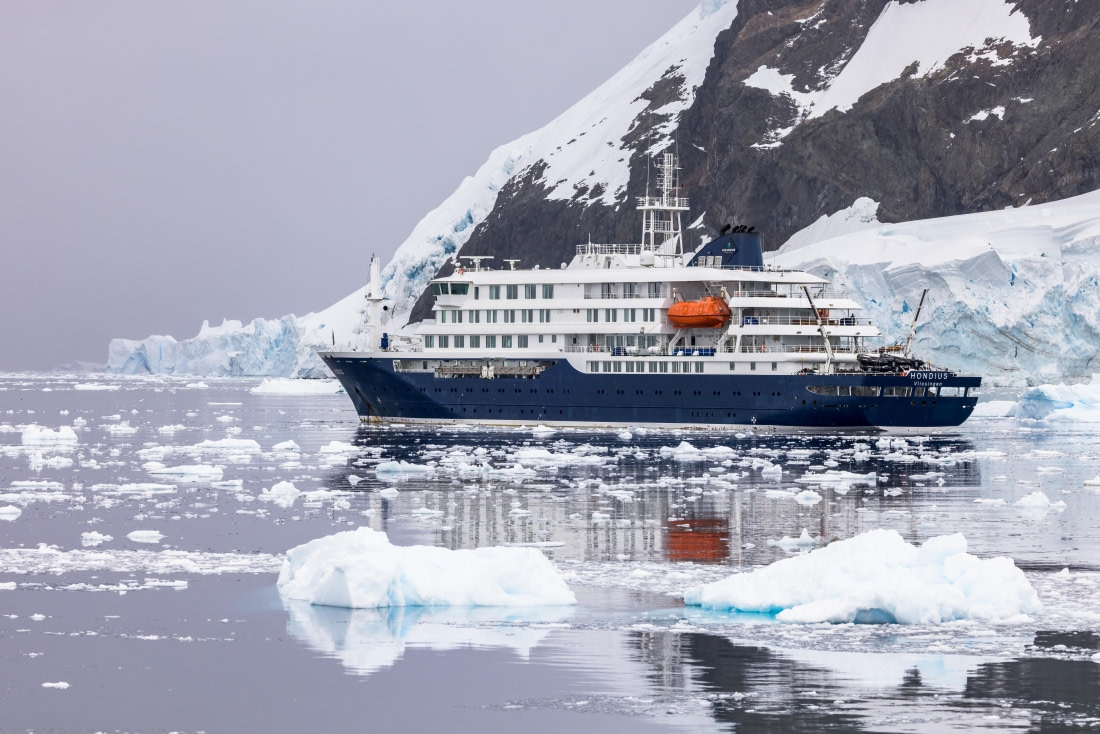
Details

Reiscode: HDS10-26
Reisdatum: 2 aug. - 15 aug., 2026
Duur: 13 nachten
Schip: m/v Hondius
Inscheping: Longyearbyen
Ontscheping: Akureyri

Op deze reis geweest?

Aan boord van m/v Hondius

Hondius is 's werelds eerste geregistreerde Polar Class 6 schip en is van onder tot boven gebouwd voor expeditie cruises.

Meer over de m/v Hondius »
Loading